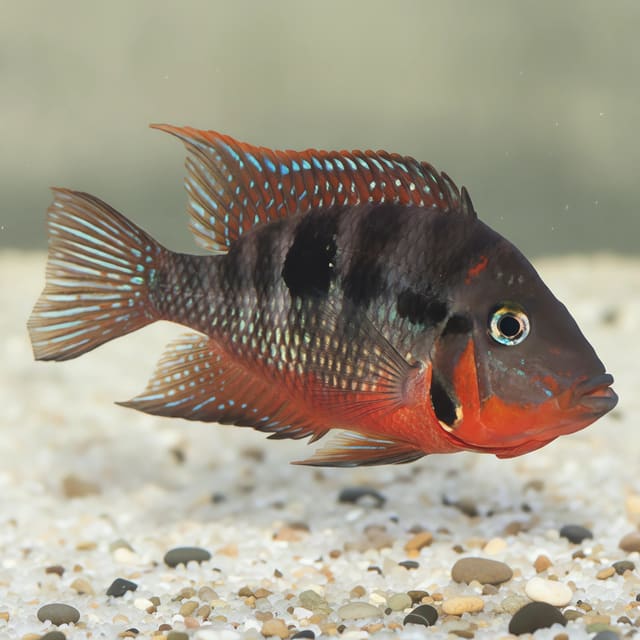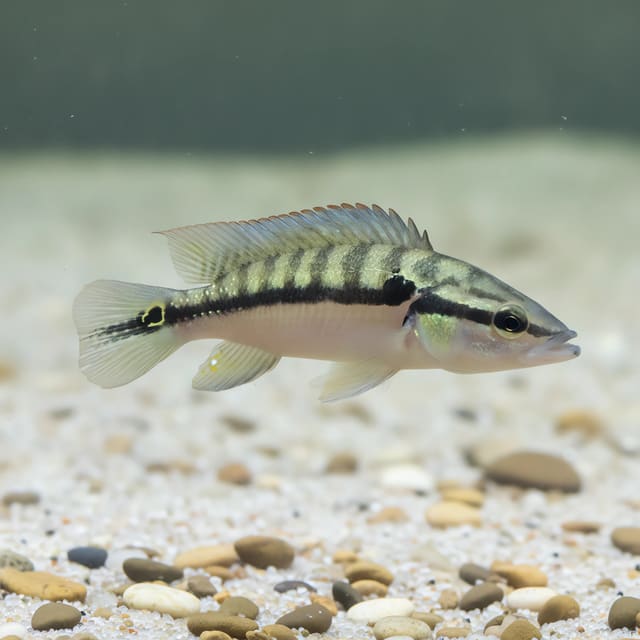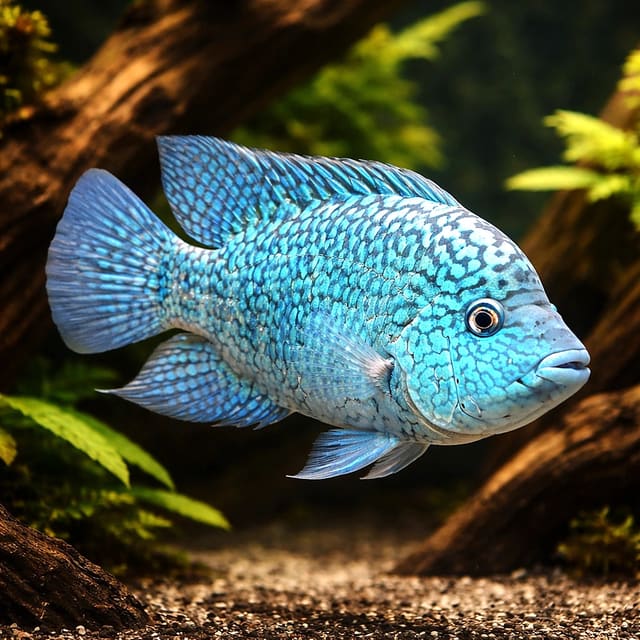
Pearlscale Texas Cichlid (Herichthys carpintis)
24–26°C · pH 7–8
£9.99

A striking emerald South American cichlid that grows large, shows strong personality, and rewards keepers with impressive color and behavior. Moderate care, semi-aggressive. 24-28C, pH 6.0-7.5.
Adult size is the maximum length this species reaches at full maturity (scientific sources). The livestock you receive will be younger and smaller — pick a size variant above for the actual shipping size. Product-photo provenance and any image-specific limitations are stated on the listing.
Hypselacara temporalis
Save when buying multiple fish. Each quantity is one fish; sex and pair formation are not guaranteed unless the selected variant explicitly states them.
Confirm your email, then we’ll send an availability message for this exact item if it returns within 180 days.
This request is only for this product—no newsletter or other promotions. A mail-provider retry may very rarely duplicate the same availability message. Unconfirmed addresses are removed after 48 hours. See our privacy policy.
A striking emerald South American cichlid that grows large, shows strong personality, and rewards keepers with impressive color and behavior. Moderate care, semi-aggressive. 24-28C, pH 6.0-7.5.
Adult size is the maximum length this species reaches at full maturity (scientific sources). The livestock you receive will be younger and smaller — pick a size variant above for the actual shipping size. Product-photo provenance and any image-specific limitations are stated on the listing.
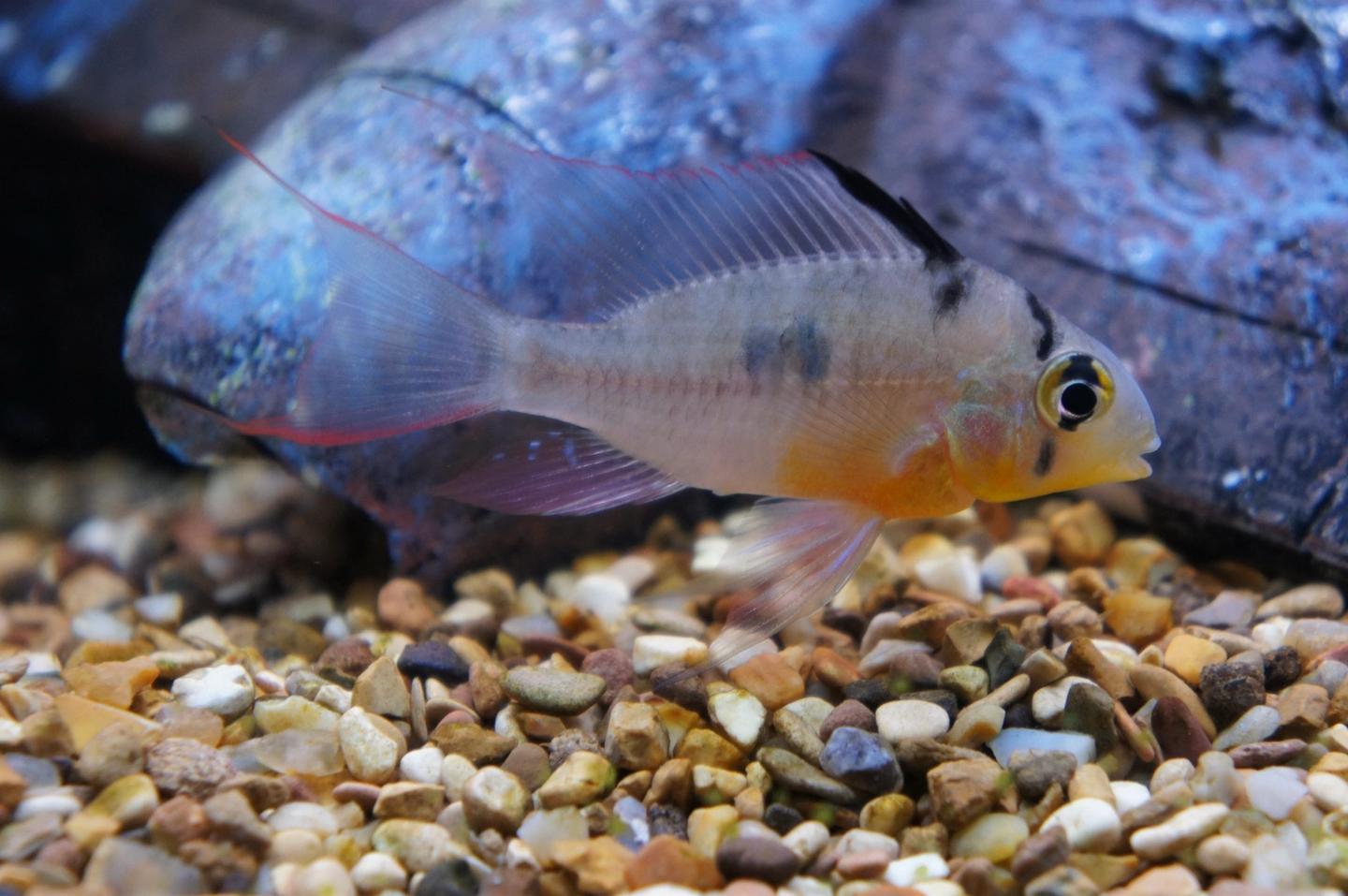
Cichlids are a family of roughly 1,800 accepted species, not one care type. Before buying, identify the exact species and source, then compare adult measurement, usable tank dimensions, social system, territory, tested water, diet and an exit plan. No family-wide minimum tank, water range or tank-mate list is safe.
Maintain these water conditions for optimal health and vibrant colors
Emerald / Chocolate Cichlid is the clearest customer-facing name for this listing. The accepted scientific name is Hypselecara temporalis, a large South American cichlid also sold under the hobby names Chocolate Cichlid, Emerald Cichlid and Smaragd Cichlid. The page title and care guidance use the accepted name and natural aquarium language.
This is not a small community cichlid. It is a broad-bodied, intelligent fish that grows into a real centrepiece, with warm orange, rose, bronze, olive-green and blue-green tones depending on mood, sex, maturity and lighting. It suits keepers who want a large South American cichlid with calmer behaviour than many aggressive Central American species, but it still needs space, structure, clean water and careful tank-mate choices.
| Customer name | Emerald / Chocolate Cichlid |
|---|---|
| Scientific name | Hypselecara temporalis |
| Also seen as | Chocolate Cichlid, Emerald Cichlid and Smaragd Cichlid |
| Current size options | 4-5 cm, 5-6 cm, 7-9 cm and XL variants on the same Shopify product |
| Adult planning size | Plan for 25-30 cm; sources record large adult size and males can become bulky |
| Care level | Moderate: hardy when settled, but too large and territorial for casual nano tanks |
| Temperature | 25-30C |
| pH / hardness | Soft to moderately hard water; pH about 5.0-7.5 and up to around 20 dH |
| Minimum adult setup | 450 litres or larger is a sensible adult target; a 2 m aquarium is better for a pair or community |
| Temperament | Usually manageable for a large cichlid, but territorial around pair bonds and spawning sites |
| Diet | Omnivore; quality cichlid foods, frozen foods and some vegetable-based foods |
| Best tank position | Middle and lower areas, especially around wood, roots, plants, stones and sheltered boundaries |
The spelling around this fish is often messy in supplier data and older aquarium labels. FishBase lists the accepted species as Hypselecara temporalis. Fishkeeper / Maidenhead Aquatics also uses Hypselecara temporalis and notes older synonym-style names such as Acara crassa, Cichlasoma crassum, Cichlasoma temporale and Heros temporalis. That explains why older catalogue rows may mix trade names and synonyms, while this public listing keeps the accepted identity clear.
For customers, the important point is simple: this listing is the Emerald / Chocolate Cichlid, a large South American cichlid. The word Smaragd means emerald in trade naming, so it is useful to keep it on the page, but it should not dominate the title in a way that hides the fish's better-known common names.
A settled Emerald / Chocolate Cichlid can be a beautiful display fish. The body is deep and rounded rather than torpedo-shaped, with a warm orange to rose base that can shift into mustard, olive, bronze and green. Many individuals show an orange-rimmed eye, blue-green sheen through the flanks and darker edging in the fins. Mature males may become larger and can develop a forehead hump, especially as they age.
Colour is strongly linked to confidence. In a bare bright aquarium, the fish can look pale and reserved. In a mature layout with driftwood, dark shaded areas, plant cover and calm open swimming space, it can show much more depth and personality. It is the kind of fish that moves slowly, watches the room, recognises feeding routines and becomes a visible centrepiece rather than a background shoaler.
FishBase records Hypselecara temporalis from South America, including Amazon and Ucayali basin records, and describes the habitat as slow-flowing, often turbid freshwater. Fishkeeper places the fish in Brazil, Colombia and Peru, while AquaInfo discusses Amazon-connected localities including Rio Negro and Ucayali drainage references. The common care theme is warm, calm, structured water with cover.
That does not mean the home aquarium should be dirty or dim in a neglected way. It means the fish benefits from visual security, subdued areas and stable water rather than a harsh, exposed setup. Mature biological filtration, regular water changes and a layout that breaks up sight lines are more important than trying to copy one exact river number.
Build the aquarium around adult size. A young 4-5 cm fish looks manageable, but this species should be planned as a large cichlid from the beginning. A 450 litre or larger adult aquarium is a safer target than a small grow-out tank, and a 2 m aquarium gives much better long-term room for a pair, large community or territorial boundaries. If you start juveniles in a smaller system, plan the upgrade before the fish forces the issue.
Use sand or smooth fine gravel, substantial driftwood, stones, root-style cover and strong filtration. Tough plants, floating plants or shaded planting can help settle the fish, but use robust planting because large cichlids may dig or rearrange the layout. Keep some open swimming room at the front, then build the rear and sides into sheltered zones. This lets the fish retreat without disappearing completely and helps tank mates avoid constant eye contact.
Filtration should be sized generously. Large cichlids produce real waste, and feeding rich frozen foods without strong filtration quickly damages water quality. Aim for steady temperature, zero ammonia and nitrite, low nitrate through water changes and oxygen-rich water without blasting the fish with harsh current.
A practical target is 25-30C, with a stable mid-to-warm tropical setting around 26-28C suiting many aquariums. FishBase records pH 5.0-7.5 and hardness from very soft up to around 20 dH. Fishkeeper gives pH 5.0-7.0 and up to 15 dH, while AquaInfo suggests soft, acidic conditions and regular water changes.
Do not chase numbers aggressively. Sudden pH or hardness changes are more dangerous than keeping a settled fish in stable, suitable tap water. If your water is very hard or alkaline, acclimate slowly and keep the environment clean. If your water is very soft, make sure pH remains stable. For breeding attempts, softer acidic water may help, but display aquariums should prioritise consistency.
Emerald / Chocolate Cichlids are omnivores. Use a varied diet built around quality cichlid pellets or sticks, then rotate frozen foods such as bloodworm, mysis, krill, brine shrimp and chopped mussel or prawn where appropriate. Add some vegetable or spirulina-based food so the diet is not only meaty.
Feed controlled portions. This fish is large enough to make a mess if overfed, and leftover food around wood or stones can quickly spoil the tank. A varied, sensible diet supports colour, body condition and immune strength without relying on exaggerated colour-boosting claims.
This species is often described as comparatively calm for a large cichlid, but it is not harmless. It can be territorial, especially when a pair forms or chooses a spawning site. A single specimen in a roomy aquarium is usually easier to manage than a pair in a crowded community. A compatible pair can be rewarding, but it needs room and escape routes for other fish.
Choose robust, similar-sized tank mates that are not slow, delicate or small enough to be eaten. Large characins, larger peaceful catfish and carefully chosen South American cichlids may work in a spacious layout. Avoid nano fish, dwarf shrimp, delicate long-finned fish, small bottom dwellers that cannot escape, and highly aggressive cichlids unless the aquarium is very large and deliberately planned.
The safest rule is to stock around territory. Give each large fish a visible zone, a retreat and open water. If all fish are forced into the same cave or corner, the problem is usually the layout, not just the temperament label.
Hypselecara temporalis is a substrate-spawning cichlid. FishBase describes spawning in holes or prepared substrate sites with parental care. Fishkeeper and AquaInfo both note pair bonding and guarded spawning behaviour. A pair may clean a site, display, lay eggs and defend eggs or young with much more intensity than they show day to day.
Breeding behaviour is fascinating, but it changes the aquarium. Fish that were tolerated before may be pushed away once a site is chosen. If breeding is your goal, use a dedicated large setup with several visual barriers and stable warm water. If breeding is not your goal, still plan for territorial behaviour because the fish does not ask permission before forming a pair.
A healthy fish should be balanced, alert and aware of the room. New arrivals may hide or show muted colour after transport, so judge them after they have had quiet time in a mature aquarium. Stress signs include clamped fins, heavy breathing, refusal to feed, constant hiding, faded colour or being pinned in one area by tank mates.
On delivery day, keep the lights low, receive the parcel promptly and acclimate with patience. Avoid heavy feeding on the first day. The Tropical Fish Co Live Arrival Guarantee applies to eligible livestock orders when the delivery and acclimation instructions are followed. New customers can use the 10% first-order code WELCOME10 where eligible, which is useful on a planned larger-fish order that may need food, water care and setup extras.
Choose this fish if you want a large South American cichlid with presence, colour and intelligent behaviour. It suits keepers who enjoy watching cichlid body language, pair formation, display and territory rather than only shoaling movement. It is a strong choice for a mature centrepiece aquarium, a large South American community or a planned pair setup.
Do not choose it for a small peaceful community, a shrimp tank, a bare aquarium, or a setup where the adult size cannot be accommodated. The juvenile sizes are attractive, but the buying decision should be based on the adult fish.
964.jpg, and supplier naming reviewed against the accepted Hypselecara temporalis identity.Max adult size is the length this species reaches at full maturity (from scientific sources). The livestock you receive will be younger and smaller — pick a size variant on the buy box for the actual shipping size. Product-photo provenance and any image-specific limitations are stated on the listing.
Can become territorial.
Always research specific species before adding them to your tank. Consider:
No reviews for this item yet. Bought one? Honest reviews only, good or bad.
What customers say about ordering from us
I have a small group of long finned mountain minnows. So was delighted to be able to order ten of this variety to increase the genetics in my tank . The ones I recieved are healthy but it’s to early to give a verdict on wether they are of a long finned type since they are small currently.
Gordon Walker · 23 Sept 2026
100% success travel and "installation". Pleased with quality of purchase. The Siamese fighter a bit "shy" so have not yet seen him at his best yet but looking good. Happy customer. GG
George E Garratt · 21 Sept 2026
Reviews of our shop, collected by Judge.me, an independent third-party review collector. Newest first.