Advanced
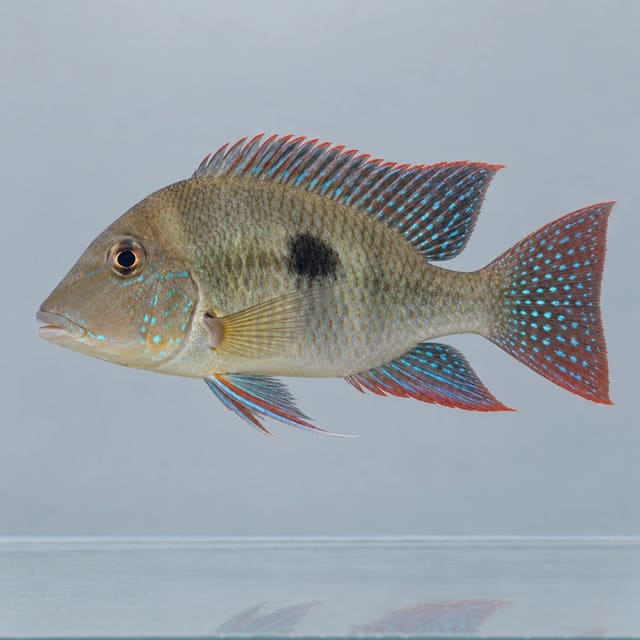
Haitian Cichlid (Nandopsis haitiensis)
24–27°C · pH 7–8 · 450L
£10.99
The Cuban Cichlid (Nandopsis tetracanthus, formerly Cichlasoma tetracanthus), known in Cuba as the biajaca, is a bold, meat-eating cichlid from the rivers, lakes and river mouths of Cuba. It reaches about 20 cm and needs an aquarium of around 120 cm and at least 300 litres with hard, alkaline fresh water and robust tank mates. Sold individually as one live fish.
Nandopsis tetracanthus
The Cuban Cichlid (Nandopsis tetracanthus, formerly Cichlasoma tetracanthus), known in Cuba as the biajaca, is a bold, meat-eating cichlid from the rivers, lakes and river mouths of Cuba. It reaches about 20 cm and needs an aquarium of around 120 cm and at least 300 litres with hard, alkaline fresh water and robust tank mates. Sold individually as one live fish.
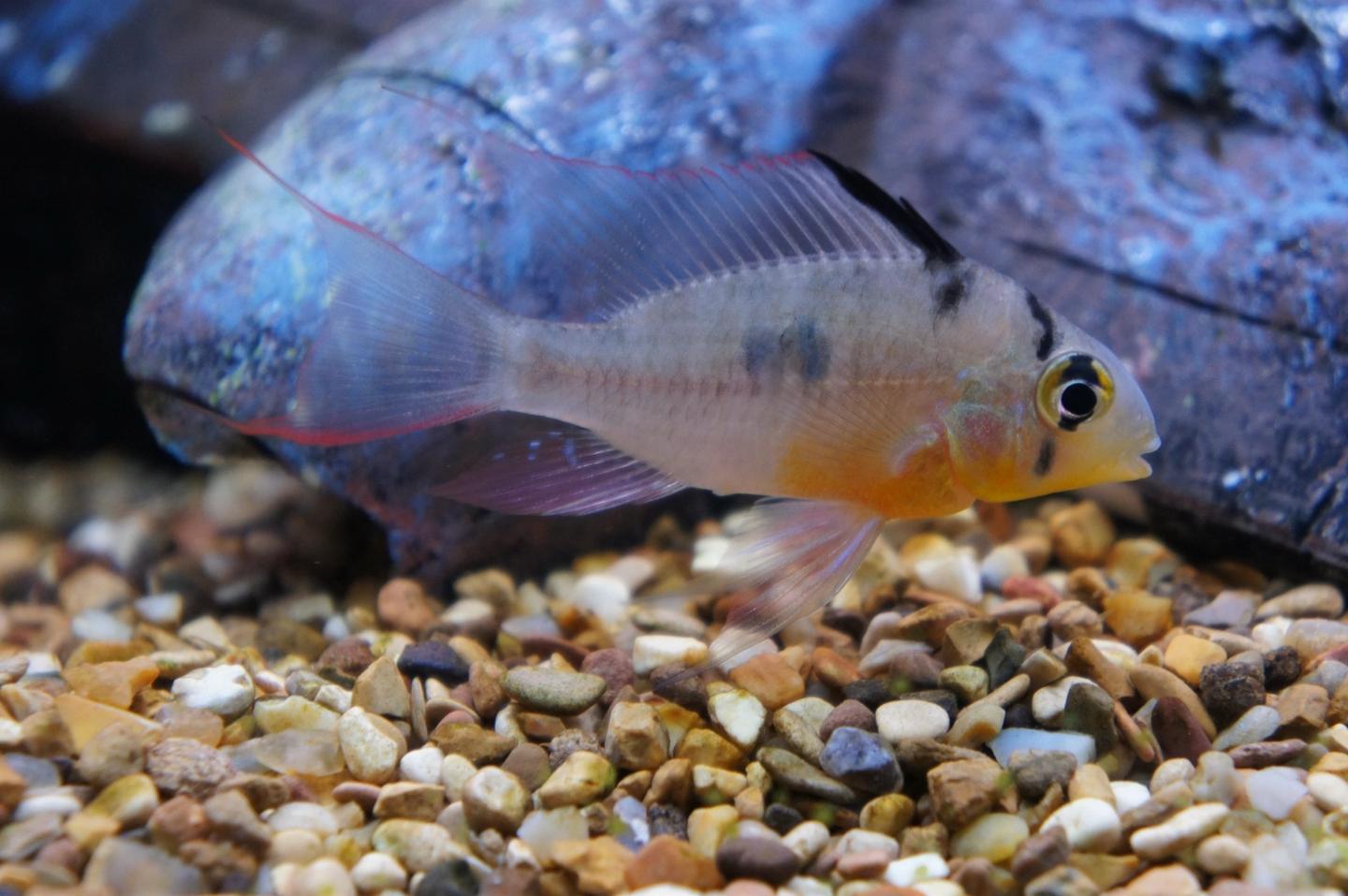
Cichlids are a family of roughly 1,800 accepted species, not one care type. Before buying, identify the exact species and source, then compare adult measurement, usable tank dimensions, social system, territory, tested water, diet and an exit plan. No family-wide minimum tank, water range or tank-mate list is safe.
The Cuban Cichlid (Nandopsis tetracanthus) is a bold, meat-eating cichlid from Cuba, where it is known as the biajaca. It is one of very few cichlids from the Caribbean islands and, at around 20 cm, one of the more manageable predatory cichlids from the region. FishBase records a maximum of 20 cm standard length, and Practical Fishkeeping describes typical females at around 13 cm with males a little bigger. For a keeper with a 120 cm aquarium and hard water, it is a hardy, characterful fish with a strong pattern.
FishBase records it from fast-flowing rivers and from lakes, often among plants, and also from brackish river mouths. Practical Fishkeeping gives its range as endemic to Cuba, with specimens also collected from Barbados, Haiti and the Dominican Republic. The species is assessed as Least Concern on the IUCN Red List.
| Name | What it means |
|---|---|
| Cuban cichlid, biajaca | Common names for the species |
| Nandopsis tetracanthus (Valenciennes, 1831) | The current scientific name |
| Cichlasoma tetracanthus | The older name, still widely used on labels |
| Centrarchus tetracanthus, Heros tetracanthus, Acara adspersa | Historic names now treated as the same species |
| Nandopsis haitiensis, N. ramsdeni | The two other living species in the genus |
Eschmeyer's Catalog of Fishes records that Achille Valenciennes described the fish in 1831 as Centrarchus tetracanthus, from Havana, based on a drawing rather than a preserved specimen. Several later names, including Acara adspersa from Barbados and a set of Heros names published in 1903 from localities across Cuba, are now treated as the same species. The name tetracanthus means "four-spined", and Říčan and colleagues (2016) list a reduced count of four anal-fin spines among the features of the genus.
Říčan and colleagues define Nandopsis as three living species, N. tetracanthus, N. haitiensis and N. ramsdeni, plus one fossil, found only in the Greater Antilles on Cuba and Hispaniola. Its closest relative on our list is the Haitian Cichlid. Browse our South American cichlids, the American cichlids directory, the Central American cichlids page and the cichlids formerly in Cichlasoma to compare it with other cichlids from the region.
One purchase supplies one live Cuban Cichlid. The size option is "Standard": the fish is sent at the size currently available, which is a young fish well below adult size. Sex is not chosen or guaranteed.
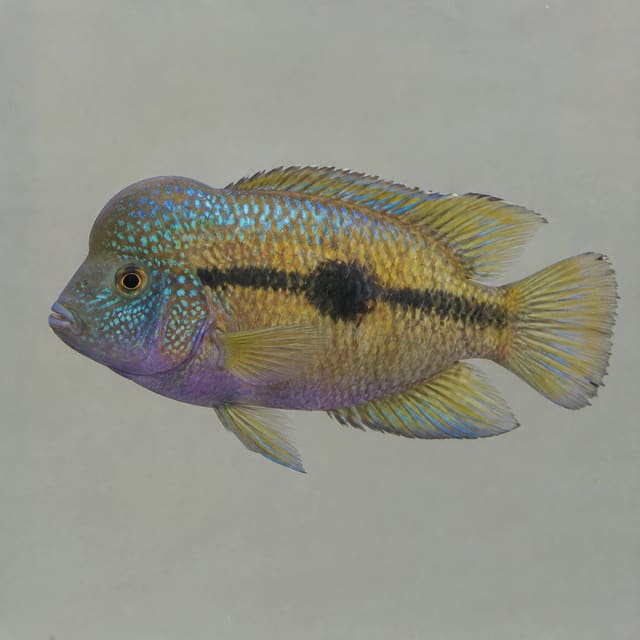
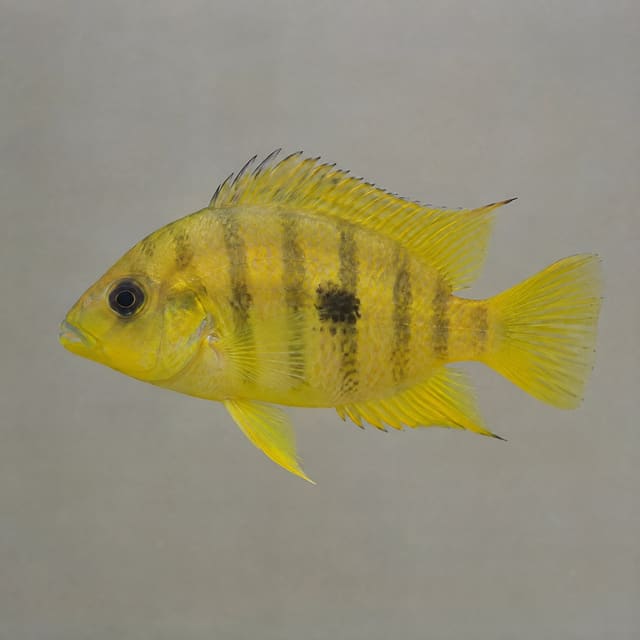
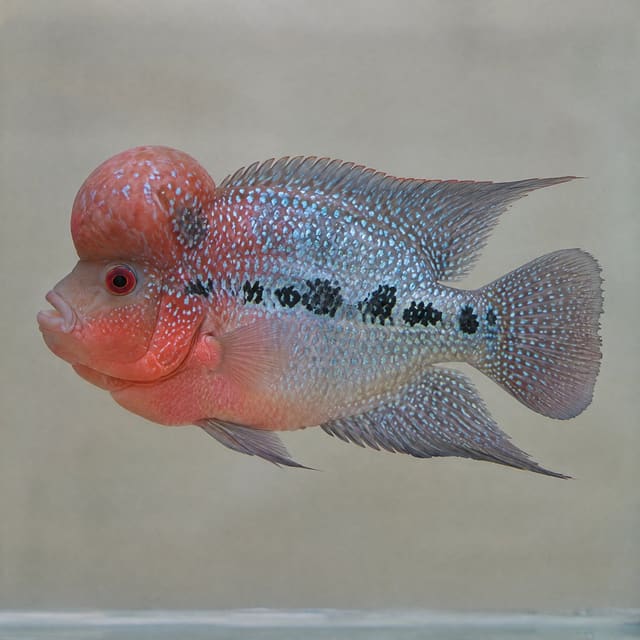
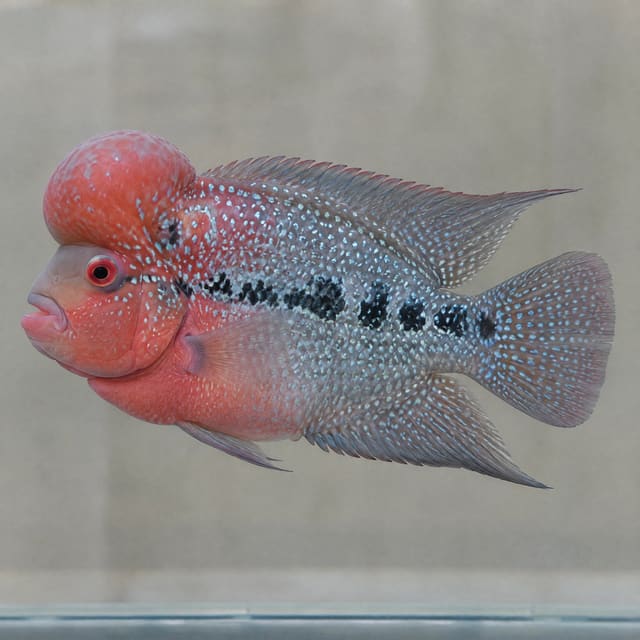
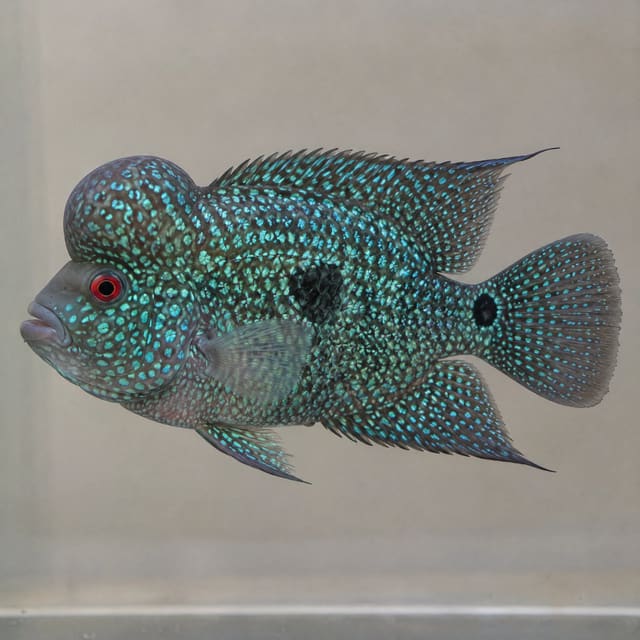
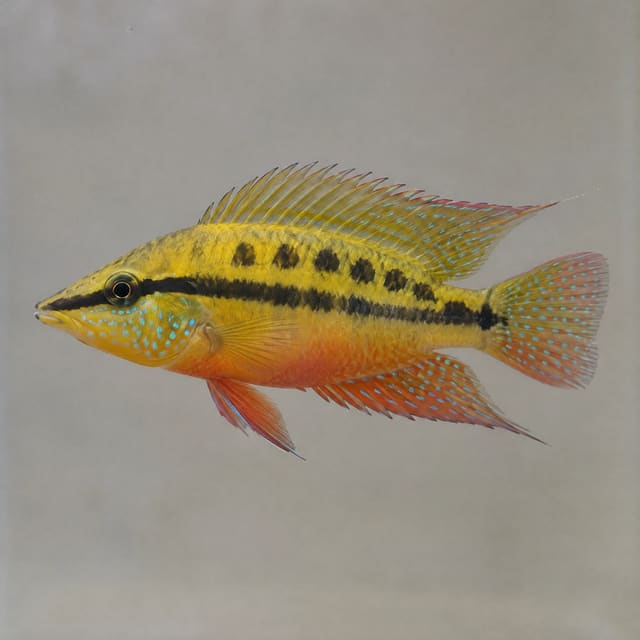
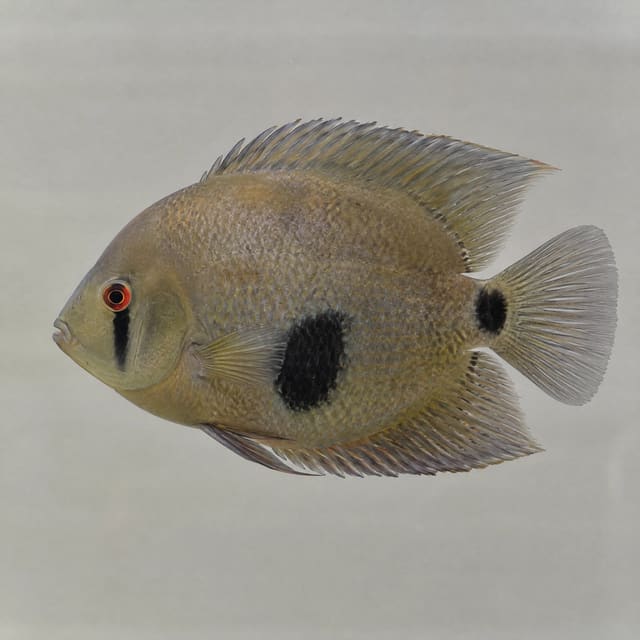
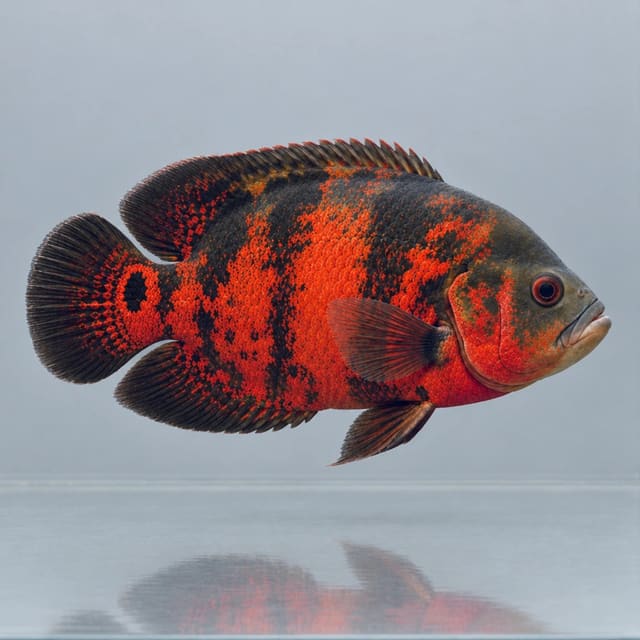
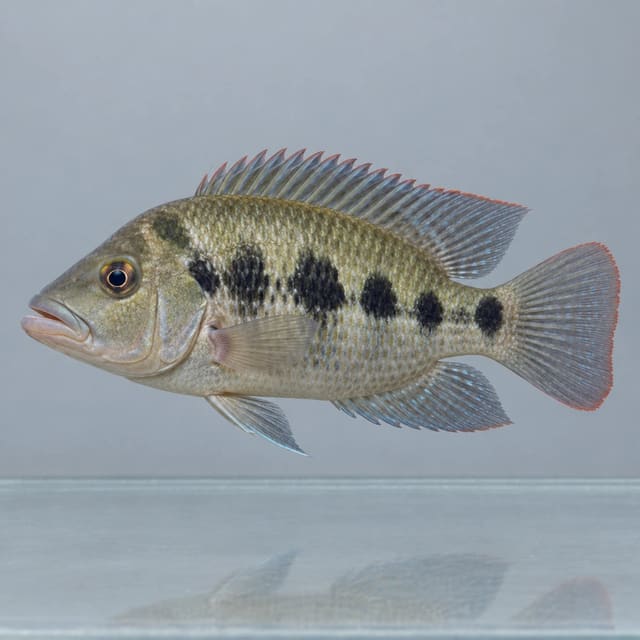
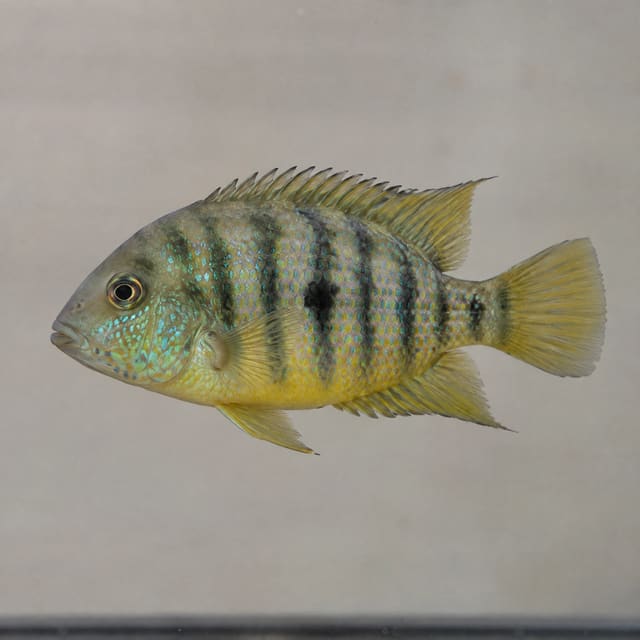
The photographs show the type of fish, not the individual you will receive. They show the barred pattern of a young fish: an olive-gold body crossed by dark vertical bars, with turquoise speckling on the cheek and gill cover. Říčan and colleagues explain that in adult Nandopsis these bars dissolve into an irregular pattern of dark blotches on a pale background, and that the bars become dominant again mainly in breeding colour. Expect your fish to change as it grows.
Before you order, read our delivery information and make sure the aquarium has matured and is at temperature.
FishBase gives a maximum of 20 cm standard length, which excludes the tail, and Practical Fishkeeping gives up to 20 cm. Practical Fishkeeping recommends a species aquarium of around 120 cm for a pair, and OATA recommends at least 300 litres for American cichlids over 15 cm. Both figures point the same way: plan an aquarium at least 120 cm long holding at least 300 litres. A 120 × 50 × 50 cm aquarium, for example, holds about 300 litres before décor.
OATA advises keeping the aquarium away from draughts, heat sources and direct sunlight, with a heater to hold the temperature all year. Fit a heater guard and a secure lid, and stand the aquarium on a cabinet rated for its full weight.
Practical Fishkeeping notes that Cuban cichlids mix well with other robust cichlids if they have plenty of room and places to shelter from more dominant fish. FishBase records it among plants in fast rivers and lakes. Design the aquarium around solid rock, wood and tough plants, with clear boundaries between territories and open water in front.
| Area | Purpose |
|---|---|
| Rock caves and stacked stone | Territories and spawning sites |
| Driftwood and roots | Broken sight lines that reduce chasing |
| Tough plants or artificial plants | Cover that survives digging |
| Open sand or fine gravel | Swimming and feeding space |
OATA recommends sand or fine gravel for American cichlids because many dig, and warns that they may uproot plants. Fix rocks firmly on the glass before adding sand, and choose sturdy plants such as those that grow on wood, or artificial ones. More hiding places than fish is a good rule: a subordinate fish with nowhere to go is the one that gets hurt.
FishBase gives 24–30°C and records the species in both fresh and brackish water. Practical Fishkeeping's author notes there is no need to add salt and that he kept the species in hard, alkaline fresh water for years without problems. OATA's general range for American cichlids is 22–27°C and pH 6.5–8.0, so we suggest 24–27°C and pH 7.0–8.0 in moderately hard to hard water.
| Reading | Target |
|---|---|
| Temperature | 24–27°C (FishBase 24–30°C; OATA 22–27°C) |
| pH | 7.0–8.0 |
| Hardness | Moderately hard to hard |
| Salt | Not needed |
| Ammonia and nitrite | 0 mg/l |
| Nitrate | No more than 20 mg/l above your tap water |
Much of southern and eastern England has hard, alkaline tap water that suits this fish once it is conditioned. In soft-water areas, raise hardness gradually with a buffering substrate or rock rather than with sudden chemical doses. Enter your tap-water readings in our water matcher, and read the water chemistry guide and our pH guide for tropical fish to understand how the readings fit together.
Meaty foods produce a heavy waste load, so filtration has to be generous. Seriously Fish's species profiles size filters at four to five times the tank volume per hour; for a 300-litre aquarium that is about 1,200–1,500 litres per hour. FishBase records the species in fast rivers as well as lakes, so a moderate current is welcome, but leave sheltered corners out of the flow.
Our article filtration explained covers how to choose a filter big enough for a large cichlid.
FishBase lists worms, small fish, shrimps and water insects as its wild food, and Practical Fishkeeping adds that stomach analyses of wild fish found livebearers and gobies among the small fishes eaten. In the aquarium, Practical Fishkeeping's author fed good-quality cichlid pellets, whole shrimp and earthworms.
OATA advises feeding American cichlids only what they eat within a few minutes, once a day, and warns that they can eat large amounts at once. A cichlid that always looks hungry is not underfed; keep portions small and remove leftovers.
Add the fish only to an aquarium whose filter has matured, with ammonia and nitrite at zero. If the aquarium is new, our article on cycling a new aquarium explains how to prepare it.
OATA's floating-bag method: lights off, float the sealed bag for about 10 minutes, add small amounts of aquarium water over up to 20 minutes, then release the fish with as little bag water as possible. Our acclimatisation guide covers every step. If other cichlids are already in the aquarium, rearrange the rocks just before adding the newcomer so that old territories are broken up.
| Checkpoint | What to do |
|---|---|
| Before arrival | Test the water, set 24–27°C and build the caves |
| Arrival | Acclimatise with lights off; no food until the next day |
| Day 2 | Offer a few small carnivore pellets and remove leftovers |
| Days 3–7 | Watch for chasing, torn fins and a fish that cannot reach food |
| Day 7 | Retest the water and do the normal weekly change |
Practical Fishkeeping describes the Cuban cichlid as moderately aggressive for its size. Given plenty of room and places to shelter from more dominant fish, it mixes well with other robust Central American cichlids such as Vieja. OATA adds that the more aggressive American cichlids must be kept alone or with equally robust fish, and all of them defend territory hard when breeding.
| Suits | Avoid |
|---|---|
| Robust Central American cichlids such as Vieja | Small fish, including livebearers, which it eats in the wild |
| A sexed pair of its own species in a species aquarium | Timid, slow or long-finned fish |
| Fish that share hard, alkaline water | Soft-water species |
| A layout with more shelters than fish | Small aquariums where a weaker fish cannot escape |
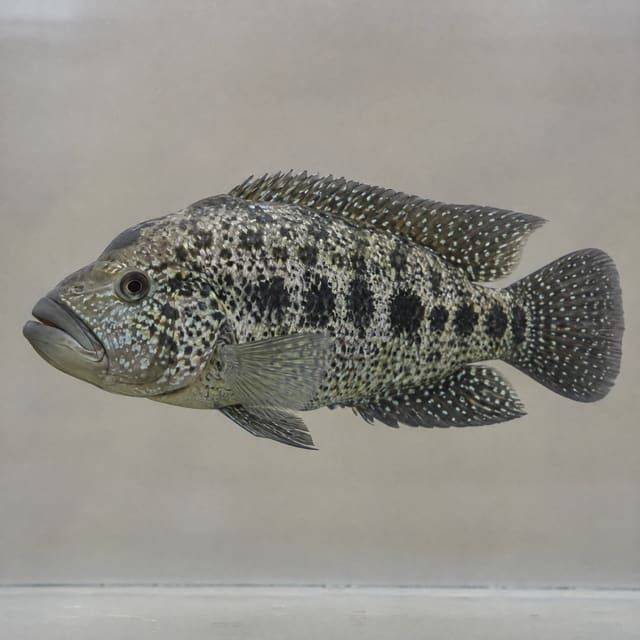
Following Practical Fishkeeping's advice, the Redhead Quetzal Cichlid and the Black Belt Cichlid are the Vieja on our list. Both grow larger than the Cuban cichlid, 350 mm and 254 mm standard length respectively according to Seriously Fish, so they need a much bigger aquarium than 120 cm. Practical Fishkeeping notes a strong resemblance to the Jaguar Cichlid and calls the Cuban cichlid one of the smaller guapotes, the group of predatory cichlids the jaguar belongs to; the jaguar grows far larger and is a separate choice, not a companion for a 120 cm tank. Check any mix with our tank mates tool, and see our cichlid care guide and Jack Dempsey guide for how we plan other medium-sized Central American cichlids.
OATA lists the signs of a healthy fish as clear, bright eyes, undamaged fins, intact scales, no ulcers or bumps, normal swimming and steady breathing. Warning signs include clamped fins, flicking against décor, shimmying, hiding more than usual and loss of appetite.
| If you see | Do this |
|---|---|
| Fast breathing or hanging at the surface | Test ammonia, nitrite and temperature at once |
| A fish hiding constantly with torn fins | Look for a bully and add shelters, or separate the fish |
| Loss of appetite | Test the water before changing the food |
| White spots, fluffy patches or ulcers | Test the water and seek fish-health advice before treating |
| Rubbing or shimmying | Check water quality and temperature, then get advice |
Most health problems in large cichlids start with water quality, so keep a record of test results and act on the first change you see.
Practical Fishkeeping records that wild Cuban cichlids spawn between April and June in weedy areas of fast-flowing rivers and lakes, and that aquarium spawnings are not very common because few people keep the species. OATA notes that American cichlids lay eggs on a cleaned surface and guard their young until the fry are free-swimming, and that their aggression when breeding calls for a dedicated set-up.
It is Nandopsis tetracanthus (Valenciennes, 1831), a medium-large predatory cichlid from Cuba, known there as the biajaca. It is one of only three living species in Nandopsis, the cichlid genus of the Greater Antilles.
FishBase records a maximum of 20 cm standard length. Practical Fishkeeping gives up to 20 cm, with typical females around 13 cm and males a little bigger.
Practical Fishkeeping recommends a species aquarium of around 120 cm for a pair, and OATA recommends at least 300 litres for American cichlids over 15 cm. A 120 × 50 × 50 cm aquarium meets both and holds about 300 litres.
No. It is found in both fresh water and brackish river mouths in the wild, but Practical Fishkeeping's author kept it for years in hard, alkaline fresh water without salt.
Wild fish eat shrimps, worms, aquatic insects and small fish. In the aquarium feed good cichlid pellets with whole shrimp, earthworms and frozen foods. Do not feed live fish.
Practical Fishkeeping describes it as moderately aggressive for its size. With plenty of room and shelter it can live with robust Central American cichlids such as Vieja, but never with small fish.
The pattern changes with age and mood. Young fish show dark vertical bars, while adults usually show irregular dark blotches on a pale background, with the bars returning mainly in breeding colour.
One live Cuban Cichlid of the standard size currently available. It is a young fish and is not sexed.
No reviews for this item yet. Bought one? Honest reviews only, good or bad.
What customers say about ordering from us
Easy website plenty of info on fish your buying great to pick a time slot
TRACEY DURRANT · 7 Oct 2026
Got some lovely fish thank you
Kevin Mackie · 7 Oct 2026
Reviews of our shop, collected by Judge.me, an independent third-party review collector. Newest first.
Moved by UK carriers licensed to handle live animals
Hand-packed with oxygen bags, poly box, heat pack
Email photos the same day; an optional unboxing video helps us review problems faster — claim terms apply
Klarna & PayPal Pay in 3 at checkout