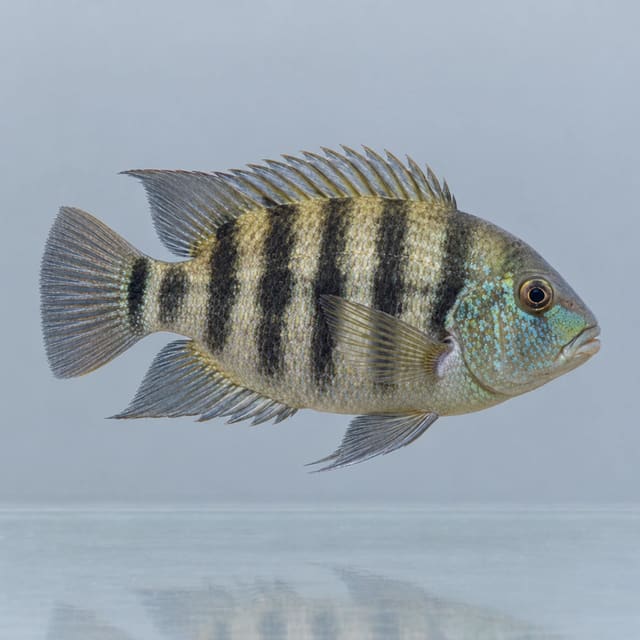
Moderate
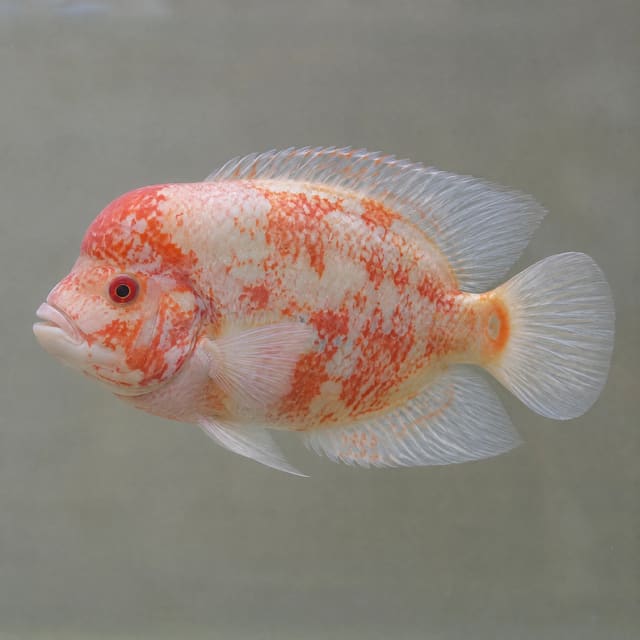
Albino Oscar Cichlid (Astronotus ocellatus)
20–28°C · pH 6–7.5 · 540L
£15.99
The Chilli Red Oscar is the most intensely red line of the oscar, Astronotus ocellatus, an intelligent South American cichlid that becomes a true pet fish. It grows to 30 cm or more and lives 10–20 years, so it needs a tank with a 150 × 60 cm base (about 540 litres), powerful filtration and big weekly water changes. Sold singly as one live fish.
Astronotus ocellatus
The Chilli Red Oscar is the most intensely red line of the oscar, Astronotus ocellatus, an intelligent South American cichlid that becomes a true pet fish. It grows to 30 cm or more and lives 10–20 years, so it needs a tank with a 150 × 60 cm base (about 540 litres), powerful filtration and big weekly water changes. Sold singly as one live fish.
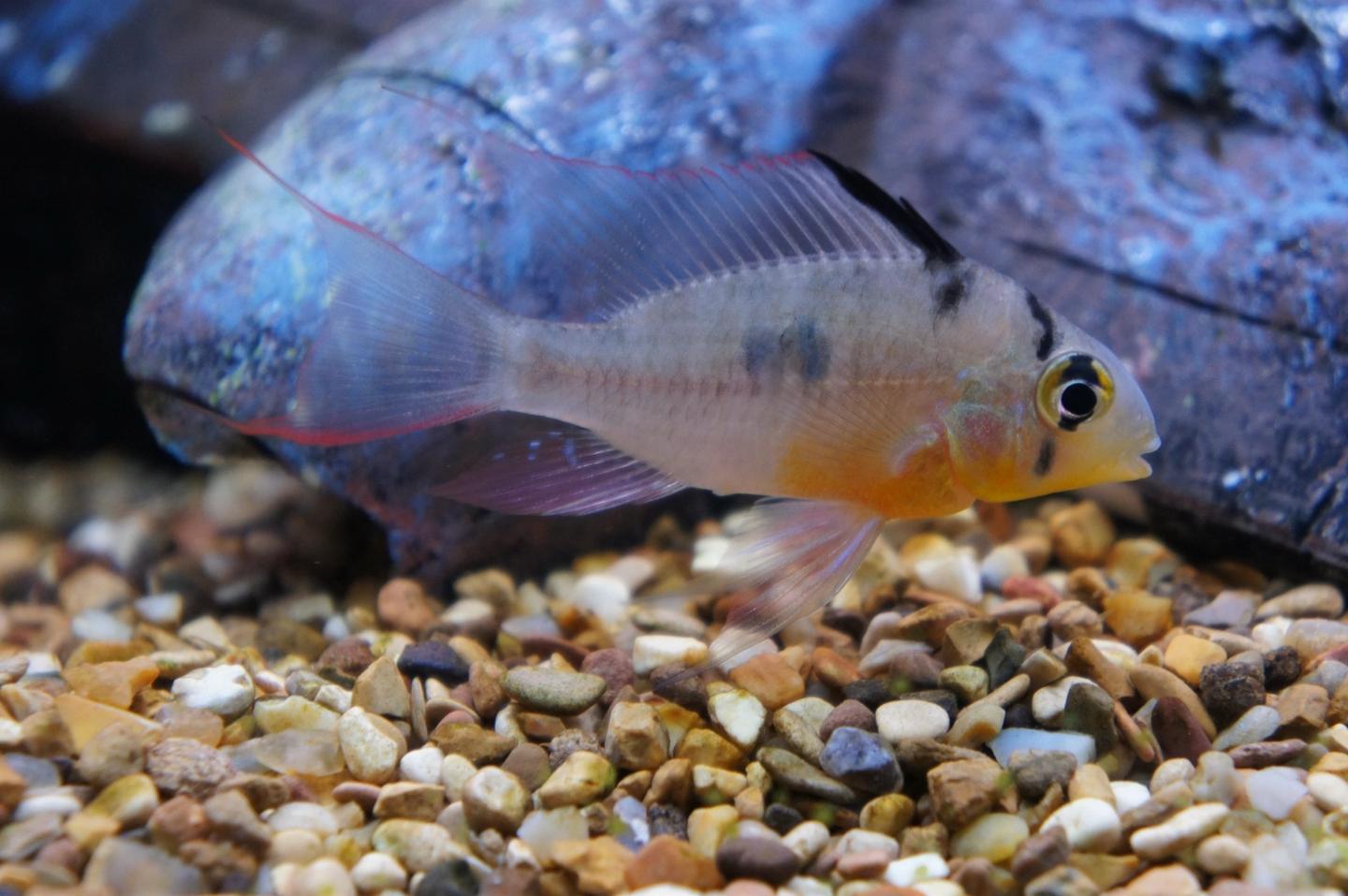
Cichlids are a family of roughly 1,800 accepted species, not one care type. Before buying, identify the exact species and source, then compare adult measurement, usable tank dimensions, social system, territory, tested water, diet and an exit plan. No family-wide minimum tank, water range or tank-mate list is safe.
Read the full care guidance when planning conditions for your aquarium.
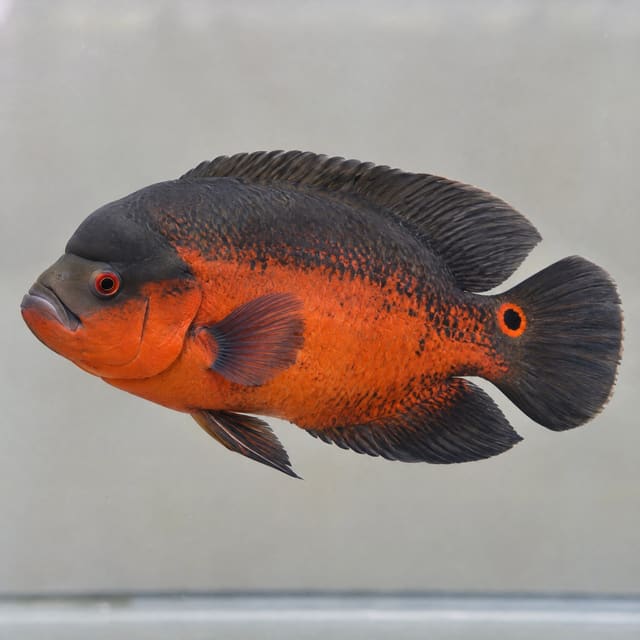
The Chilli Red Oscar is a selectively bred colour line of Astronotus ocellatus, the oscar, bred for the most intense red possible. The fish in our photographs shows a body of bright scarlet-red scales broken by dark charcoal marbling, a dark grey head with red on the cheeks and gill cover, dark fins edged with red, and the classic black eye-spot ringed in red at the base of the tail. Like every oscar it grows into a big, intelligent fish that learns to recognise its keeper; Aquarium Glaser describes oscars as becoming more of a pet than an aquarium fish.
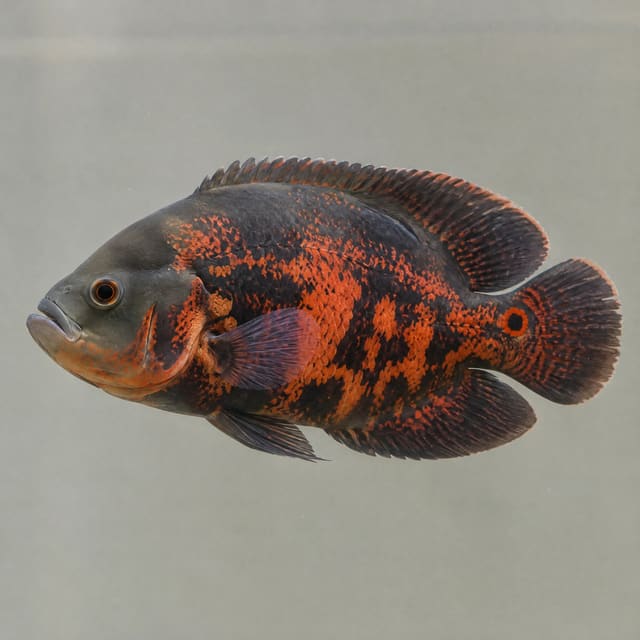
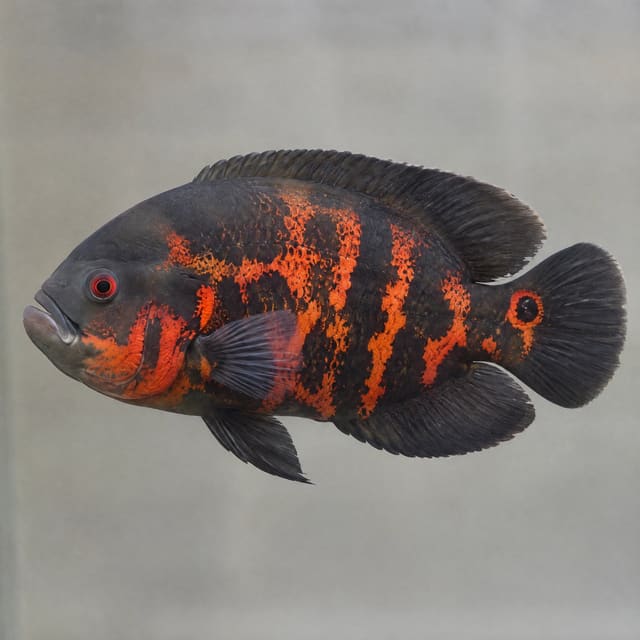
The species name ocellatus means "having small eyes", after that eye-spot on the tail base, as Seriously Fish explains. Seriously Fish also lists the common names velvet cichlid, red oscar, tiger oscar and marble cichlid. All the colour forms we sell are the same species with the same care; compare them in our Astronotus oscar range.
Aquarium Glaser describes three red lines. The Red Oscar has a dark head and dark fins with most body scales copper-red. The Albino Red has red eyes and a red body, with black patterning still visible in the fins. The Red Chili is coloured like the Albino Red but much more intensely, and is almost certainly descended from it. In practice sellers apply "chilli red" to their deepest red oscars, so the photographs are the best guide to what you are buying, and colour varies from fish to fish.
| Oscar form | How it looks |
|---|---|
| Chilli Red (this fish) | Deep, intense red; the most recent red line (Aquarium Glaser) |
| Red Oscar | Dark head and fins, copper-red body scales |
| Tiger Oscar | Dark body with red-orange tiger marbling |
| Albino Oscar | Pale body with red eyes |
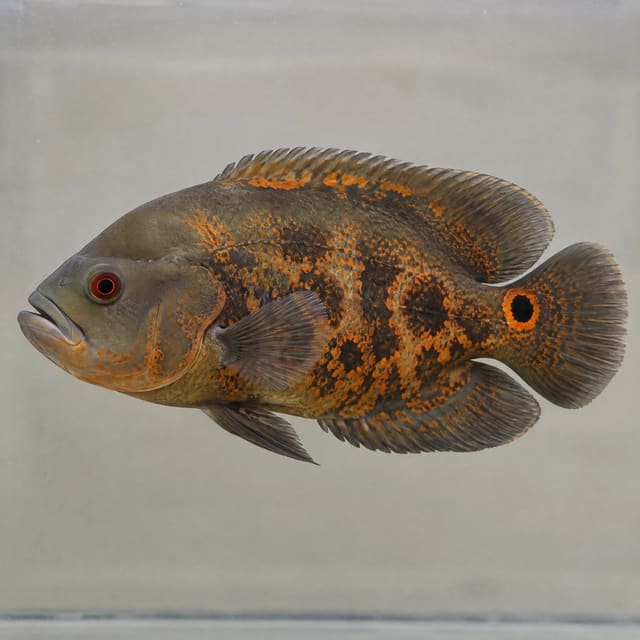
| Oscar Cichlid | The natural, wild-type pattern |
Wild oscars are widespread in South America. Seriously Fish records the species from the Amazon region and from Colombia and Venezuela south to Argentina, in river systems including the Ucayali, Solimões, Negro, Madeira, Tapajós, Tocantins and Orinoco; FishBase gives the western Amazon and Orinoco basins. In the wild they live in the shallows of slow or still water in forested areas, often around submerged tree roots or under marginal plants, and eat small fish, crayfish, worms, insect larvae, crustaceans and some plant material and fruit.
Seriously Fish adds that genetic studies suggest the genus may contain further species that look alike, and that feral oscars live in several countries outside their range, including the USA and Singapore. Never release an oscar, or its tank water, into the wild.
An oscar is sold small but grows quickly into one of the largest fish kept in home aquariums. The sources differ on maximum size, so plan for the top end.
| Measure | Figure | Source |
|---|---|---|
| Maximum standard length | 35 cm | Seriously Fish |
| Maximum total length | 45.7 cm; 1.6 kg | FishBase |
| Usual aquarium size | 25–30 cm | Aquarium Glaser |
| Size quoted for oscars | 40 cm | OATA |
| Lifespan | Typically 10–20 years | Seriously Fish |
Seriously Fish describes a tank with a 150 × 60 cm base, about 540 litres, as just about large enough for a single adult, with larger quarters needed for a pair or group. OATA recommends at least 300 litres for any American cichlid that grows beyond 15 cm. We follow the larger Seriously Fish figure for an adult oscar. Our tank volume calculator and stocking calculator help you check a tank before you commit.
Seriously Fish says oscars are unsuitable for a carefully designed planted layout because they dig, but are otherwise unfussy. A natural layout can use a soft sandy substrate, fairly dim lighting and large driftwood roots and branches. OATA adds that American cichlids may dig up or eat live plants, so artificial plants are a sensible way to add cover, and that open swimming space is important.
Seriously Fish calls efficient filtration essential and, for a 540 litre tank, suggests a turnover of four to five times the volume an hour, for example two filters each rated at 1,080–1,350 litres an hour, and roughly 150–225 W of heating split across two heaters in a room around 20°C.
Captive-bred oscars are not fussy about water chemistry. Seriously Fish notes that wild-caught fish may need more specific conditions, but ornamental strains like the Chilli Red do well across a broad range.
| Value | Seriously Fish | FishBase | OATA (American cichlids) | Plan for |
|---|---|---|---|---|
| Temperature | 20–28°C | 22–25°C | 22–27°C | 22–27°C |
| pH | 6.0–7.5 | 6.0–8.0 | 6.5–8.0 | 6.5–7.5 |
| Hardness | 5–20 dGH | 5–19 dH | 4–12 dGH | 5–12 dGH |
| Ammonia, nitrite | – | – | Zero | Zero |
| Nitrate | – | – | No more than 20 mg/l above tap | As low as possible |
Most conditioned UK tap water is suitable. Check yours with our water matcher, and always use a dechlorinator on new water.
A big oscar produces a lot of waste. Seriously Fish describes weekly water changes of 30–50% of the tank volume as essential, which is more than the 25% OATA suggests as a minimum for American cichlids. The heavier figure suits a large, heavily fed fish.
| Task | How often |
|---|---|
| Change 30–50% of the water (Seriously Fish) | Weekly |
| Siphon waste and food from the sand | Weekly |
| Test ammonia, nitrite, nitrate, pH and hardness (OATA) | Weekly |
| Rinse filter media in removed tank water, never under the tap (OATA) | When flow drops |
Our cichlid care guide and the oscar fish guide cover the routine in more depth.
Seriously Fish calls the oscar a generalised omnivore that prefers meatier foods. Use a good cichlid pellet as the staple and add live or frozen foods regularly. Earthworms are a favourite, and prawns, whitebait, river shrimp and crickets are useful alternatives. OATA suggests cockles, lance fish and prawns for larger American cichlids. Our Krill Gran XXL sinking food, frozen cockle meat and frozen mussel meat suit an adult.
OATA's floating-bag method works for oscars. Switch the lights off, float the bag for 10 minutes to match temperature, then add small amounts of tank water to the bag over up to 20 minutes before releasing the fish and discarding the bag water. Expect a new oscar to sulk or lie still for a day or two; this is normal while it settles.
| When | What to do |
|---|---|
| Arrival | Lights off, acclimatise slowly, release, discard bag water |
| Day 1 | Keep the lights low and do not feed |
| Days 2–3 | Offer a few pellets; test ammonia and nitrite |
| Days 4–7 | Normal feeding; keep testing as the fish eats more |
Seriously Fish notes that the oscar is not especially aggressive for a cichlid of its size, but as a predator it must not live with much smaller fish. Its adult size also rules out a community setup in all but the largest private aquariums. Suitable companions include characins, anostomids, other cichlids and larger armoured catfish. OATA adds that calmer cichlids such as severums can be mixed in a robust community, while more aggressive species should be kept alone or with equally robust fish.
| Suits a very large tank | Avoid |
|---|---|
| Calm large cichlids such as the Severum | Any fish small enough to swallow |
| Large armoured catfish such as the Gold Sailfin Pleco | Slow, long-finned or timid fish |
| Another oscar, if the tank is large enough for a pair | Small tetras, livebearers, shrimp |
Our tank mates checker helps test a mix. Long-finned oscars are less competitive at feeding times, Seriously Fish notes, so feed carefully if you mix forms.
Oscars are substrate spawners that form lasting pairs. Seriously Fish suggests starting with six or more young fish and letting a pair form, then rehoming the rest. The pair cleans a flat rock or similar surface, and a single female can lay as many as 2,000 eggs; FishBase notes eggs usually number in the thousands, are guarded by both parents and hatch in three or four days. Seriously Fish warns that oscars are among the fish most often abandoned once they grow large, so only breed them if you have homes for the young.
OATA lists the changes to watch in any American cichlid: hanging at the surface or sitting on the bottom, erratic swimming, colour darker or paler than normal, more hiding or more aggression, faster or slower breathing, white spots or fluffy growths, damaged fins or scales, weight change and loss of appetite. An oscar that stops eating or lies on its side for more than a day or two needs its water tested straight away.
| What you see | Check first |
|---|---|
| Fast breathing, gasping at the surface | Ammonia, nitrite and oxygen; change water |
| Off food for several days | Water tests and temperature |
| Pale colour and hiding | Stress from tank mates or recent changes |
| White spots or fluffy patches | Water tests first, then ask a fish vet before treating |
Browse every species in our South American cichlids range and the wider South American cichlids category, and check dispatch days and arrival advice on our delivery page before you order.
No. It is a selectively bred colour line of Astronotus ocellatus, the same species as the red, tiger and albino oscars. Seriously Fish confirms that care is more or less identical for all the ornamental strains.
Aquarium Glaser describes the Red Oscar as a fish with a dark head, dark fins and mostly copper-red body scales. The Red Chili line is said to descend from the Albino Red and to be coloured like it but far more intensely. Sellers use the name a little differently, so judge by the fish in the photographs.
Large. Seriously Fish gives up to 35 cm standard length and FishBase records 45.7 cm total length, while Aquarium Glaser says aquarium oscars usually reach 25 to 30 cm. Plan for a fish of at least 30 cm.
Seriously Fish says a tank with a 150 × 60 cm base, about 540 litres, is just about large enough for one adult, with more space needed for a pair or group. OATA asks for at least 300 litres for any American cichlid over 15 cm.
Seriously Fish gives a typical lifespan of 10 to 20 years, so an oscar is a long-term commitment. Think about where it will live as an adult before you buy.
No. Oscars are predators and will eat fish small enough to swallow. Good companions are large, robust fish such as other big cichlids, large characins and big armoured catfish.
Seriously Fish advises against both. Feeder fish such as small livebearers or goldfish can carry parasites and disease and are poor nutrition, and mammal or bird meat should not be fed. Use a good cichlid pellet with frozen and live foods instead.
It travels as a live fish, packed to suit its size, with our other livestock. Our delivery page lists the dispatch days and what to do on arrival. Have the large, cycled aquarium running before you order.
Every care figure on this page comes from these sources, checked in November 2026. Where they differ, the page shows each source's figure.
No reviews for this item yet. Bought one? Honest reviews only, good or bad.
What customers say about ordering from us
Easy website plenty of info on fish your buying great to pick a time slot
TRACEY DURRANT · 7 Oct 2026
Got some lovely fish thank you
Kevin Mackie · 7 Oct 2026
Reviews of our shop, collected by Judge.me, an independent third-party review collector. Newest first.
Moved by UK carriers licensed to handle live animals
Hand-packed with oxygen bags, poly box, heat pack
Email photos the same day; an optional unboxing video helps us review problems faster — claim terms apply
Klarna & PayPal Pay in 3 at checkout