Advanced
Flowerhorn Cichlid
22–27°C · pH 6.5–8
£90.99

Large, colourful Central American cichlid for spacious, well-filtered aquariums. Often sold under older Cichlasoma synspilus or Vieja synspila names; best for experienced cichlid keepers.
Adult size is the maximum length this species reaches at full maturity (scientific sources). The livestock you receive will be younger and smaller — pick a size above for the actual shipping size. Product-photo provenance and any image-specific limitations are stated on the listing.
Vieja melanurus
Save when buying multiple fish. Each quantity is one fish; sex and pair formation are not guaranteed unless the selected variant explicitly states them.
Confirm your email, then we’ll send an availability message for this exact item if it returns within 180 days.
This request is only for this product—no newsletter or other promotions. A mail-provider retry may very rarely duplicate the same availability message. Unconfirmed addresses are removed after 48 hours. See our privacy policy.
Large, colourful Central American cichlid for spacious, well-filtered aquariums. Often sold under older Cichlasoma synspilus or Vieja synspila names; best for experienced cichlid keepers.
Adult size is the maximum length this species reaches at full maturity (scientific sources). The livestock you receive will be younger and smaller — pick a size above for the actual shipping size. Product-photo provenance and any image-specific limitations are stated on the listing.
Cichlids are a family of roughly 1,800 accepted species, not one care type. Before buying, identify the exact species and source, then compare adult measurement, usable tank dimensions, social system, territory, tested water, diet and an exit plan. No family-wide minimum tank, water range or tank-mate list is safe.
Maintain these water conditions for optimal health and vibrant colors
Taxonomy note: this fish is widely sold under older trade names including Cichlasoma synspilus, Cichlasoma synspilum and Vieja synspila. Current source checks place the Redhead Cichlid under Vieja melanurus, so the page uses that name while keeping the older supplier wording for identification.
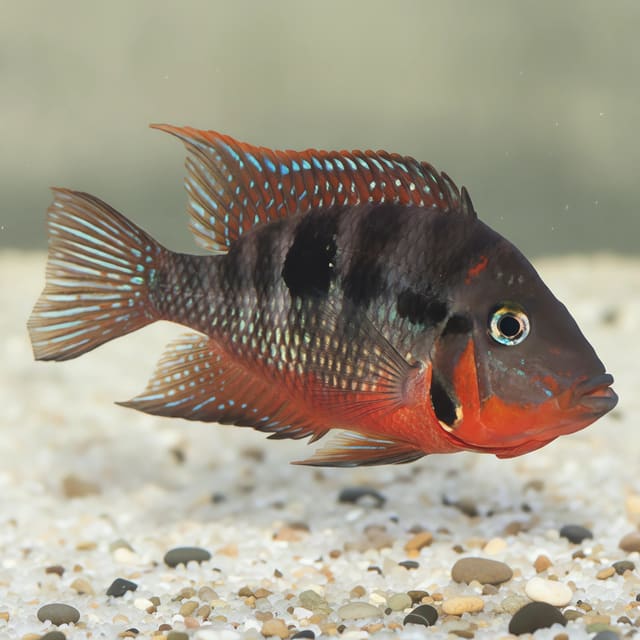
The Redhead Redhead Quetzal Cichlid (Vieja melanurus), also known as the Redheaded cichlid, is a striking, large Central American species from river systems of southern Mexico, Belize, and Guatemala. This impressive fish is prized for its bold red head coloration, strong personality, and commanding presence. With an adult size of approximately 20 cm, this species requires a spacious aquarium (minimum 550 litres) and experienced aquarists prepared to manage its semi-aggressive temperament. For those willing to provide the right environment, the Redhead Redhead Quetzal Cichlid offers an exceptional combination of beauty, intelligence, and fascinating natural behavior.
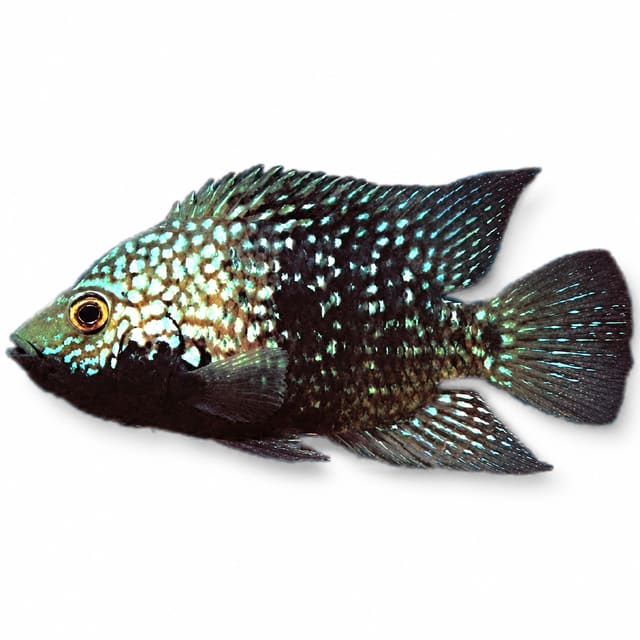
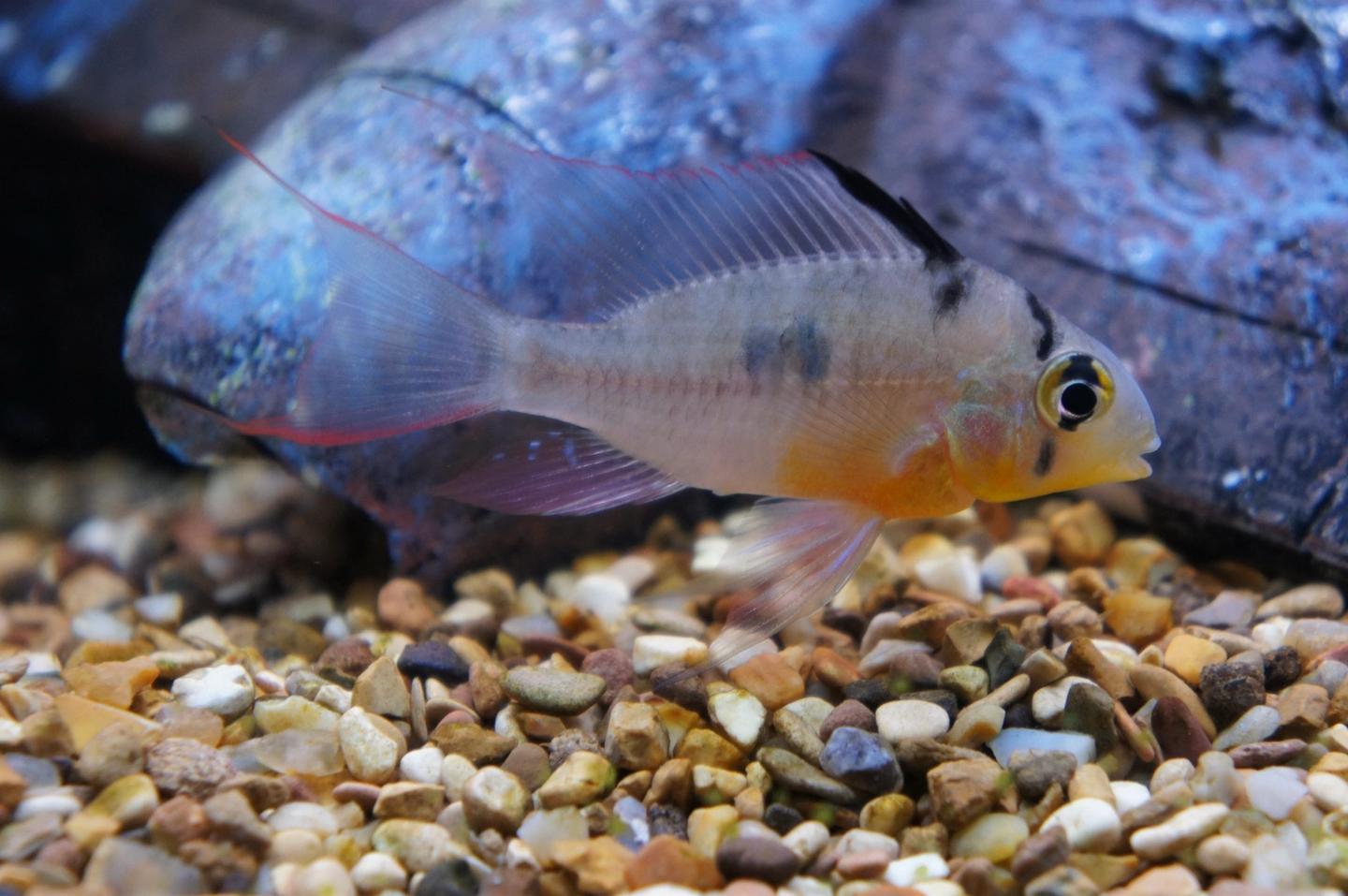
Vieja melanurus displays a striking appearance with a vivid red or orange head that contrasts beautifully against a pale grey or silver body. The body is marked with dark spots or irregular blotches that create an attractive pattern. Males are larger and develop more intense coloration and a prominent nuchal hump as they mature. The finnage is well-developed, and the eyes are large and expressive. Breeding individuals intensify their coloration dramatically, with the red head becoming even more vivid. The overall appearance is bold and eye-catching, making this species a true centerpiece in any large Central American cichlid aquarium.
Vieja melanurus is native to Central America, particularly river systems of southern Mexico, Belize, and Guatemala. These habitats consist of rivers and streams with moderate to strong flow, rocky or sandy substrates, and ample cover in the form of submerged roots and vegetation. The water is typically warm, neutral to slightly acidic, and moderately hard. The species is adaptable and can tolerate a range of conditions in the wild, but prefers well-oxygenated, clean water with stable parameters.
This is a large, territorial cichlid that needs a spacious aquarium, strong filtration, and regular water changes. A minimum tank size of 550 litres is recommended for the adult size and territorial requirements. Use a sand or gravel substrate with robust rockwork and driftwood to create caves and visual barriers. Provide sturdy decor and open swimming space—this species is a powerful swimmer and digger. Strong filtration is essential, and regular partial water changes (40-50% weekly) are critical for maintaining stable parameters. Expect aggression to increase as the fish matures, particularly during breeding.
As an omnivore, Vieja melanurus requires a varied diet. Offer high-quality cichlid pellets as the staple, supplemented with frozen or live foods such as shrimp, krill, worms, and insect larvae, plus some vegetable matter and spirulina-based foods to support health and coloration. Feed moderate to large portions once or twice daily, ensuring all food is consumed within a few minutes. A varied, balanced diet supports optimal health, coloration, and breeding behavior.
Vieja melanurus is semi-aggressive, with territorial behavior intensifying as the fish matures and especially during breeding. Males defend large territories and can be aggressive toward conspecifics and other large cichlids. Pairs form naturally and spawn on flat surfaces or in a cleaned cave area. Parents are typically attentive and highly territorial during breeding, so tankmates may need to be removed to prevent serious aggression. In the right setup—spacious quarters, robust tankmates, and proper territory management—their bold behavior becomes a fascinating aspect of their personality.
House with large robust cichlids of similar size, large catfish, large plecos, and other sturdy fish of similar size only in very large aquaria. Avoid small fish, shrimp and other small invertebrates, fin-nipping species, delicate or timid fish, and fish much smaller than the cichlid's mouth. Breeding pairs are best kept alone, as parental aggression can be extreme and dangerous to tankmates.
Pairs form naturally and spawn on flat surfaces or in a cleaned cave area. Both parents guard the eggs and fry with dedication, becoming highly territorial. Eggs hatch in approximately three days, and fry become free-swimming several days later. Parents will guard the fry for several weeks. Fry are large enough to accept newly hatched brine shrimp immediately and grow rapidly with frequent feedings and excellent water quality. A separate breeding tank is often needed to protect tankmates from parental aggression.
This product can carry several size variants under one Shopify page. When livestock is available again, eligible orders are packed for live-fish transport and covered by the Live Arrival Guarantee when the delivery and acclimation guidance is followed.
Care and naming notes were checked against FishBase for Vieja melanurus, Seriously Fish for the aquarium trade profile under Vieja synspila, USGS / FWS synonym references for Redhead Cichlid naming, and reference image records for the exact product media.
No reviews for this item yet. Bought one? Honest reviews only, good or bad.
What customers say about ordering from us
I have a small group of long finned mountain minnows. So was delighted to be able to order ten of this variety to increase the genetics in my tank . The ones I recieved are healthy but it’s to early to give a verdict on wether they are of a long finned type since they are small currently.
Gordon Walker · 23 Sept 2026
100% success travel and "installation". Pleased with quality of purchase. The Siamese fighter a bit "shy" so have not yet seen him at his best yet but looking good. Happy customer. GG
George E Garratt · 21 Sept 2026
Reviews of our shop, collected by Judge.me, an independent third-party review collector. Newest first.