Advanced
Flowerhorn Cichlid
22–27°C · pH 6.5–8
£90.99

A metallic Thai Silk Flowerhorn hybrid for experienced cichlid keepers. Best kept singly in a large, filtered aquarium with stable warm water.
Adult size is the maximum length this species reaches at full maturity (scientific sources). The livestock you receive will be younger and smaller — pick a size above for the actual shipping size. Product-photo provenance and any image-specific limitations are stated on the listing.
Flowerhorn cichlid hybrid
Confirm your email, then we’ll send an availability message for this exact item if it returns within 180 days.
This request is only for this product—no newsletter or other promotions. A mail-provider retry may very rarely duplicate the same availability message. Unconfirmed addresses are removed after 48 hours. See our privacy policy.
A metallic Thai Silk Flowerhorn hybrid for experienced cichlid keepers. Best kept singly in a large, filtered aquarium with stable warm water.
Adult size is the maximum length this species reaches at full maturity (scientific sources). The livestock you receive will be younger and smaller — pick a size above for the actual shipping size. Product-photo provenance and any image-specific limitations are stated on the listing.
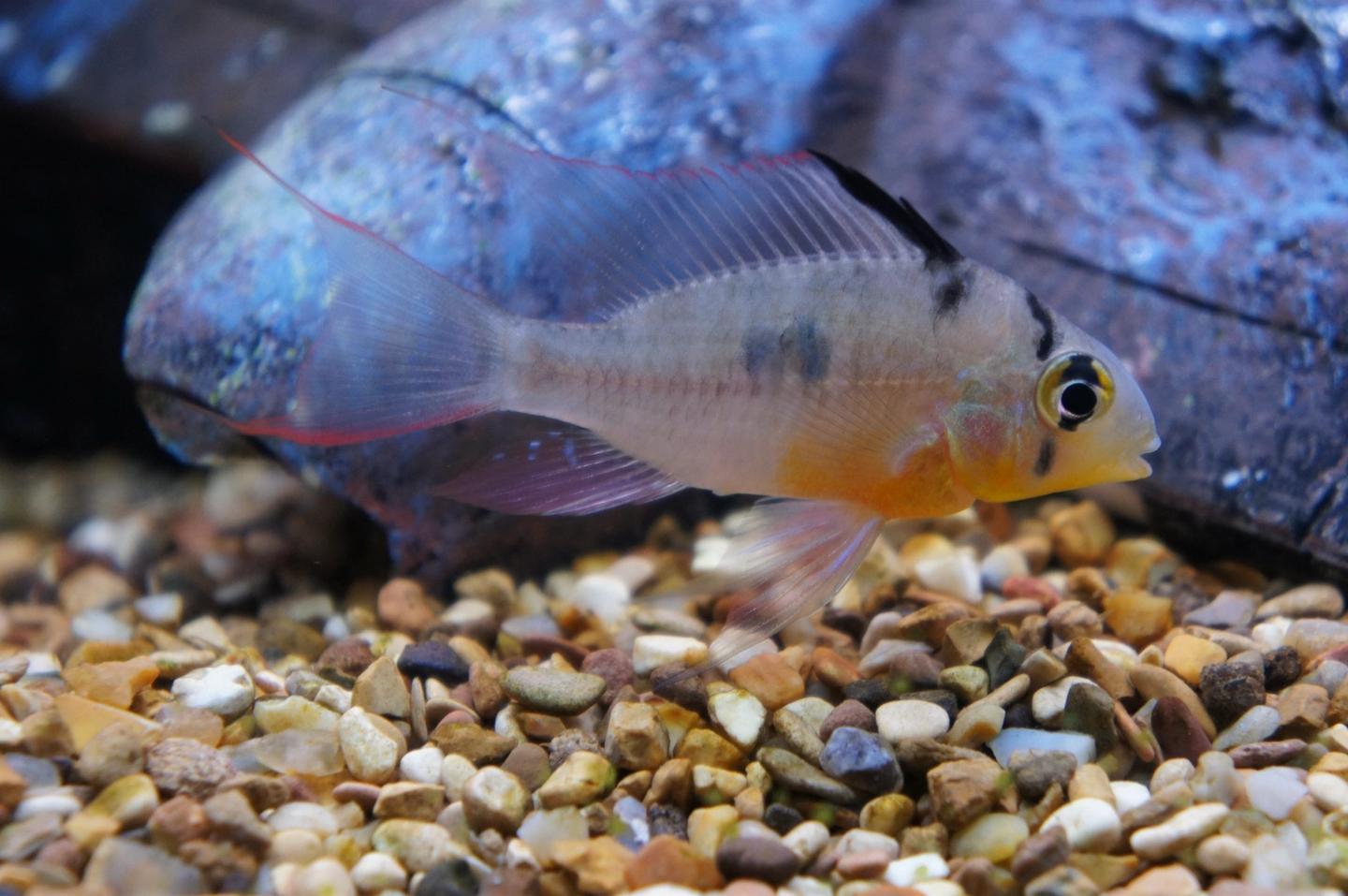
Cichlids are a family of roughly 1,800 accepted species, not one care type. Before buying, identify the exact species and source, then compare adult measurement, usable tank dimensions, social system, territory, tested water, diet and an exit plan. No family-wide minimum tank, water range or tank-mate list is safe.
Maintain these water conditions for optimal health and vibrant colors
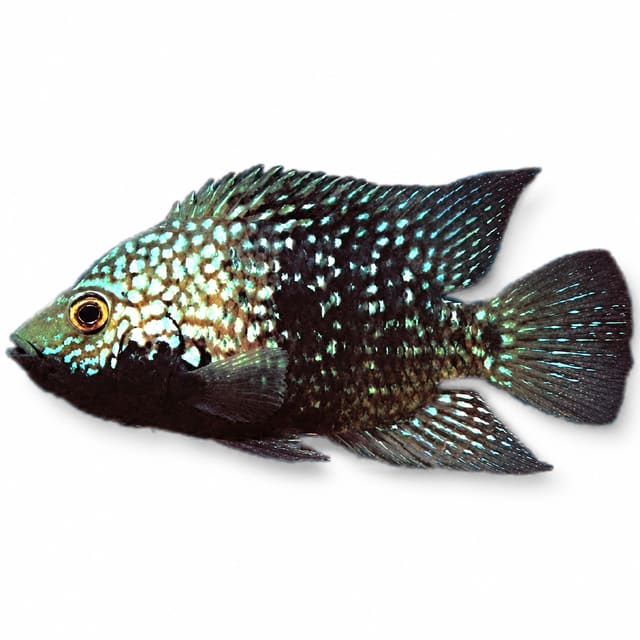
Thai Silk Flowerhorn Cichlid is an ornamental hybrid flowerhorn selected for a pale metallic blue-white sheen, pearling and the bold, interactive personality that makes flowerhorns such memorable display fish. The supplier phrase Cichlasoma sp. thai silk flowerhorn can mislead customers into thinking this is a neat wild species. It is better described as a flowerhorn hybrid with Central American cichlid ancestry, often associated in the trade with Amphilophus, trimac-type and related hybrid lines.
This is not a peaceful community cichlid. It is a statement fish for an experienced keeper who wants one confident centrepiece and can give it space, filtration and routine. A Thai Silk Flowerhorn is usually best kept alone, especially as it matures, because even juveniles can become territorial and adults may attack tank mates that look too similar, move too slowly or enter their chosen space.
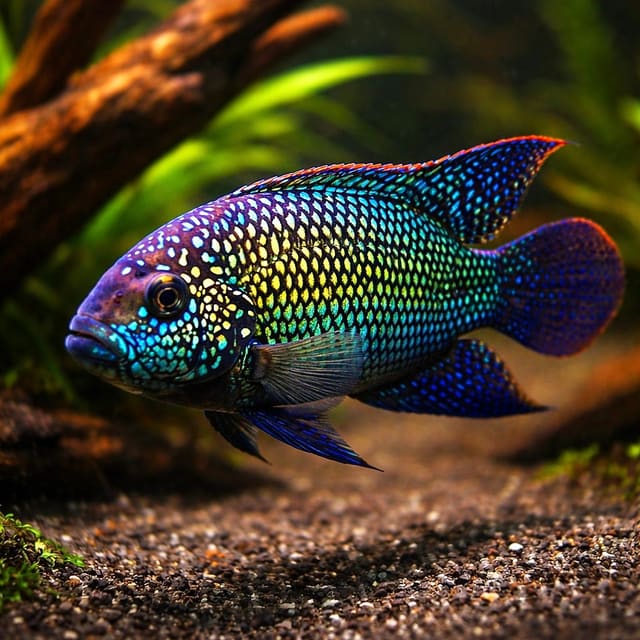
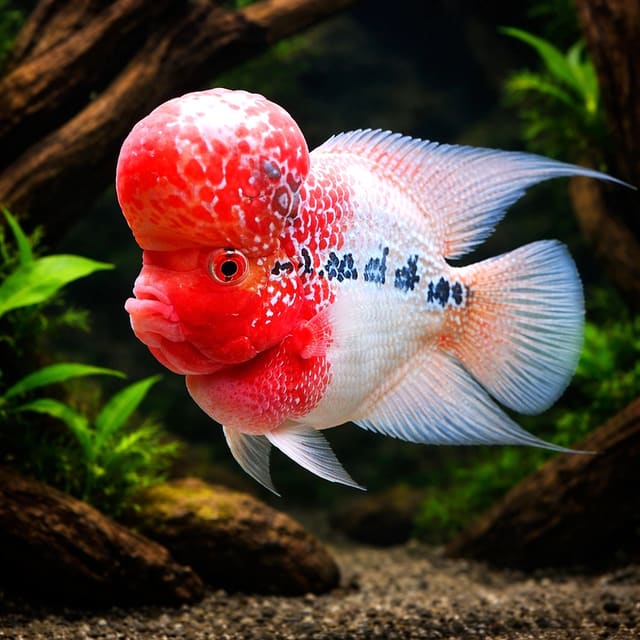
The Thai Silk line is prized for a pale metallic sheen that can look silver, blue, pearl or icy turquoise depending on light and maturity. Juveniles may not show their final colour or head shape immediately. Pattern, pearling, body depth, finnage and the nuchal hump develop with age, genetics, feeding and confidence.
Because flowerhorns are hybrids, individual variation is normal. Two fish sold under the same trade name can develop differently as they mature. That is part of the appeal, but it also means the customer should judge the fish as a living individual rather than expecting a fixed wild-species pattern.
Flowerhorn cichlids were developed from Central American cichlid stock and related hybrid lines rather than collected as a natural wild species. Trade names such as Thai Silk, Kamfa, Red Dragon and other flowerhorn forms describe breeder-selected looks, not a tidy scientific species. For clarity, this listing uses “Thai Silk Flowerhorn Cichlid (Hybrid)” in the title and keeps the older supplier wording only in the identification notes.
This honesty helps with care. Flowerhorns should be managed like powerful Central American-style cichlids: strong jaws, territorial behaviour, high waste output, digging, display behaviour and a need for secure aquarium decor. They are intelligent, responsive fish, but they are not gentle community stock.
Use a large aquarium with excellent biological and mechanical filtration. A flowerhorn produces far more waste than a small community fish, and poor water quality quickly shows as dull colour, fin issues, head pitting or general stress. Keep nitrate controlled with regular water changes, avoid overfeeding, and clean mechanical filter media before flow drops.
Decor should be simple and secure. Use smooth stones, sturdy wood or robust hardscape, and leave enough open swimming room for the fish to turn comfortably. Avoid sharp rock edges that can damage the forehead or flanks during territorial charges. Many flowerhorns dig and rearrange, so do not rely on delicate plants or unstable structures.
A good cichlid pellet should be the staple. Rotate in appropriate frozen foods such as shrimp, krill, mussel, bloodworm in moderation, mysis and similar high-quality items. Some vegetable matter or spirulina-based foods can help round out the diet. Avoid fatty feeder fish; they add disease and nutrition risk without improving long-term condition.
Feed for body condition, not just appetite. Flowerhorns often beg and can look hungry even when they have eaten enough. Several controlled meals are safer than heavy feeding, especially in warm water where waste builds quickly.
Expect a bold fish that watches movement outside the tank, patrols its area and may interact strongly with the keeper. That personality is the reason many people choose flowerhorns, but it comes with responsibility. Hands in the tank, nets, siphons and new decor can all trigger defensive behaviour from a settled adult.
Tank mates are optional and risky. If attempted, they need to be large, robust and housed in a much larger aquarium with escape routes and close monitoring. Do not mix Thai Silk Flowerhorns with small fish, shrimp, snails, peaceful community fish, delicate fish, or similar cichlids in a cramped tank. For many homes, the best welfare choice is a single-specimen display.
This parent listing can carry several size options. The smaller 4-5 cm size is the juvenile line, while larger sizes are further along in body development and may show stronger early display traits. Choose by tank readiness and experience, not only by price or immediate colour.
The product page should always be trusted over old local files for live stock. Eligible first orders can use WELCOME10, and livestock dispatch is covered by Tropical Fish Co's Live Arrival Guarantee under the current checkout terms.
Choose a Thai Silk Flowerhorn if you want a bold, interactive display cichlid and you can give it a large aquarium, warm stable water, strong filtration and a single-fish management plan. It is a poor fit for a peaceful community tank, but in the right setup it can become a striking, personable centrepiece with real presence.
No reviews for this item yet. Bought one? Honest reviews only, good or bad.
What customers say about ordering from us
I have a small group of long finned mountain minnows. So was delighted to be able to order ten of this variety to increase the genetics in my tank . The ones I recieved are healthy but it’s to early to give a verdict on wether they are of a long finned type since they are small currently.
Gordon Walker · 23 Sept 2026
100% success travel and "installation". Pleased with quality of purchase. The Siamese fighter a bit "shy" so have not yet seen him at his best yet but looking good. Happy customer. GG
George E Garratt · 21 Sept 2026
Reviews of our shop, collected by Judge.me, an independent third-party review collector. Newest first.