Pearlscale Texas Cichlid (Herichthys carpintis)
24–26°C · pH 7–8
£9.99

A hardy, striking North American cichlid with shimmering blue-green spotting and a bold personality that demands space and strong tankmates. Moderate care, aggressive. 22-28C, pH 6.5-8.0.
Adult size is the maximum length this species reaches at full maturity (scientific sources). The livestock you receive will be younger and smaller — pick a size above for the actual shipping size. Product-photo provenance and any image-specific limitations are stated on the listing.
Herichthys cyanoguttatus
Save when buying multiple fish. Each quantity is one fish; sex and pair formation are not guaranteed unless the selected variant explicitly states them.
Confirm your email, then we’ll send an availability message for this exact item if it returns within 180 days.
This request is only for this product—no newsletter or other promotions. A mail-provider retry may very rarely duplicate the same availability message. Unconfirmed addresses are removed after 48 hours. See our privacy policy.
A hardy, striking North American cichlid with shimmering blue-green spotting and a bold personality that demands space and strong tankmates. Moderate care, aggressive. 22-28C, pH 6.5-8.0.
Adult size is the maximum length this species reaches at full maturity (scientific sources). The livestock you receive will be younger and smaller — pick a size above for the actual shipping size. Product-photo provenance and any image-specific limitations are stated on the listing.

Cichlids are a family of roughly 1,800 accepted species, not one care type. Before buying, identify the exact species and source, then compare adult measurement, usable tank dimensions, social system, territory, tested water, diet and an exit plan. No family-wide minimum tank, water range or tank-mate list is safe.
Maintain these water conditions for optimal health and vibrant colors
The magnificent texas cichlid (Herichthys cyanoguttatus) holds the distinction of being North America's only native cichlid species, bringing unique geographical and biological significance to the aquarium hobby. This robust beauty originates from the Rio Grande drainage systems of Texas and northeastern Mexico, where it has evolved stunning pearl-like blue spotting and impressive size. Commonly known as the Pearl Cichlid, this species is now available for sale UK through specialist suppliers seeking to offer something beyond typical South and Central American cichlids. The texas cichlid combines striking appearance with hardy constitution and fascinating behavior, making it an excellent choice for experienced aquarists prepared to provide the spacious accommodation and appropriate tankmates this territorial beauty demands for long-term success.
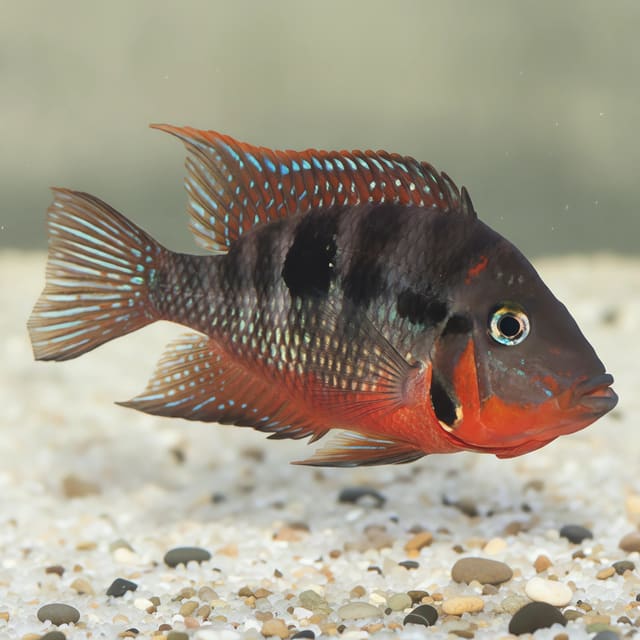
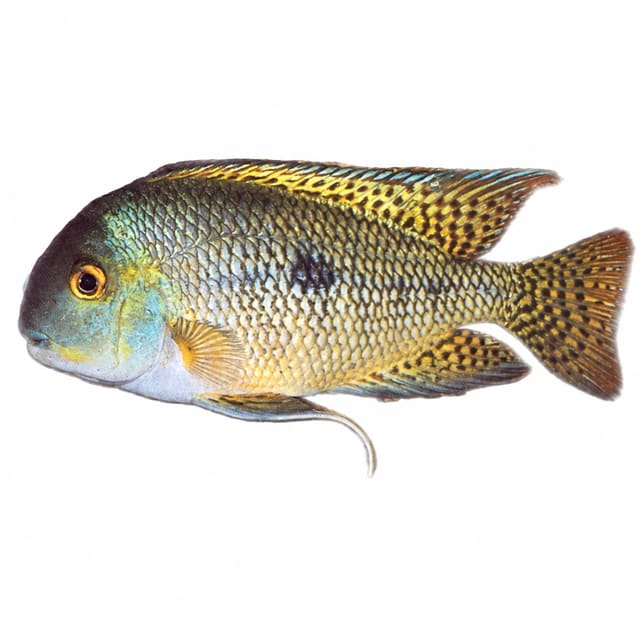
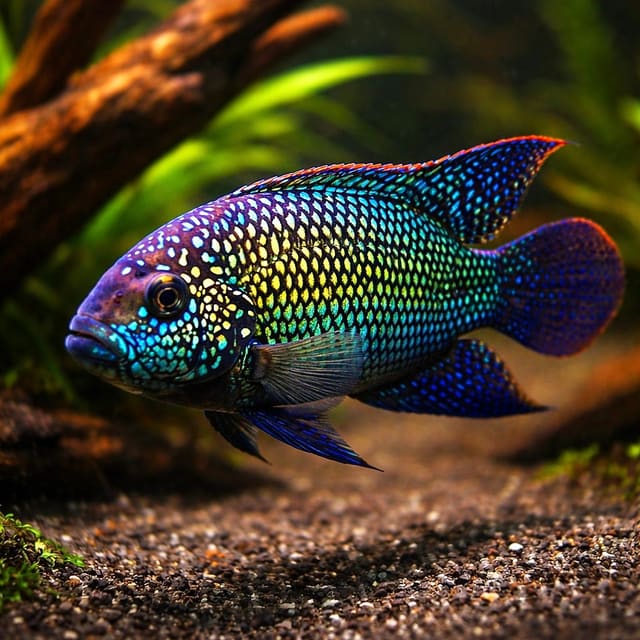
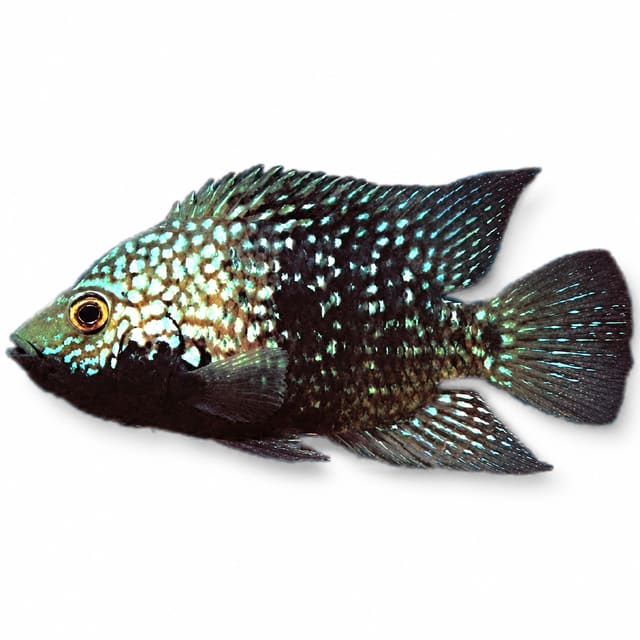
The Pearl Cichlid showcases spectacular coloration that justifies its common name and places it among the most attractive North American freshwater species. Adults reach impressive sizes of 25-30 cm, with robust, laterally compressed bodies displaying powerful musculature befitting their active nature. The base coloration ranges from grey-blue to olive-grey, overlaid with hundreds of shimmering pearl-white to electric-blue spots covering the entire body, head, and unpaired fins—this characteristic spotting creates a stunning "pearlescent" appearance that intensifies under appropriate aquarium lighting. Dark vertical barring may appear or fade depending on mood state and environmental conditions. Males develop a pronounced nuchal hump on the forehead as they mature, particularly prominent in breeding condition, while females remain slightly smaller with less pronounced humps. The dorsal and anal fins display impressive extension with blue spotting continuing across the membranes. Finnage overall is substantial and well-developed. Juvenile coloration is considerably more subdued, with the characteristic blue spotting developing gradually over 8-12 months as fish mature. Regional color variants exist, with some populations showing enhanced blue coloration or different spot patterns compared to others.
Throughout the lower Rio Grande drainage in southern Texas and northeastern Mexico, Herichthys cyanoguttatus inhabits a variety of freshwater environments including slow-moving rivers, streams, canals, lakes, and reservoirs. The species has proven remarkably adaptable, colonizing diverse habitat types from clear limestone streams to turbid lowland rivers and even brackish waters near river mouths. Natural substrates vary from sandy bottoms to rocky areas with caves and crevices providing shelter and spawning sites. Water chemistry varies considerably across the range, from slightly acidic in some tributaries to neutral or mildly alkaline in limestone-influenced waters. The species has adapted to significant seasonal temperature variation, tolerating cooler conditions during winter months than most tropical cichlids, though preferring warmer water during breeding season. Natural habitat features abundant aquatic vegetation in some areas, while others contain minimal plant growth. Introduced populations now exist in several central Texas watersheds, demonstrating the species' ability to thrive in new environments. The natural diet is omnivorous, including aquatic invertebrates, insects, plant matter, smaller fish, and organic detritus, reflecting the species' opportunistic feeding strategy.
A minimum 300-litre aquarium is essential for housing a Pearl Cichlid, with 400-500+ litres strongly recommended for pairs or any community arrangements. The tank must be robustly constructed with secure, well-fitted lids as these powerful fish can jump when startled. Substrate choice is flexible—sand allows natural digging behavior, though fine gravel works equally well; expect significant substrate movement and tank rearrangement as the fish establish and modify territories. Aquascaping must accommodate the species' size, strength, and destructive tendencies. Use large, smooth rocks, substantial driftwood pieces, and secure caves positioned directly on the tank base to prevent collapse when fish dig beneath them. Create distinct territories and visual barriers to help manage aggression if keeping pairs or attempting community setups. Planting is challenging but possible with robust, well-anchored species protected by rocks or positioned in areas the fish can't easily uproot—large Amazon swords, Vallisneria, and tough crypts may survive with determination and regular replacement. Filtration must be powerful and efficient, handling the substantial bioload these large, heavy-feeding cichlids produce—aim for turnover rates of 8-10 times tank volume hourly using canister or sump systems. Water movement should be moderate, providing good oxygenation without creating excessive current. Lighting can be moderate to bright as the species is not particularly light-sensitive. Maintain excellent water quality through regular large water changes of 40-50% weekly, as accumulated nitrates can stress even this hardy species over time. Secure all equipment and decor, as adult Pearl Cichlids possess considerable strength and may damage poorly secured items.
The Pearl Cichlid is an eager, opportunistic omnivore with substantial nutritional requirements befitting its large size and active metabolism. Quality cichlid pellets or sticks designed for large species should form the dietary foundation, providing balanced nutrition and essential vitamins. Supplement generously with varied protein sources including frozen bloodworms, krill, mysis shrimp, chopped prawns, mussel meat, and earthworms. Earthworms make an particularly excellent food source, providing both nutrition and behavioral enrichment. Include vegetable matter regularly through spirulina pellets, blanched spinach, peas, zucchini, or commercial herbivore preparations to support digestive health and natural behavior. Feed juvenile specimens 2-3 times daily with portions they can consume within 3-4 minutes, reducing to once daily or every other day as adults reach full size. Monitor body condition carefully—these cichlids can become obese if overfed, particularly with high-fat foods. Avoid excessive feeding of fatty meats like beef heart which can lead to fatty liver disease and reduced lifespan. The species displays enthusiastic feeding behavior, often learning to recognize feeding times and becoming quite interactive with their keeper. Remove uneaten food promptly to maintain water quality. Vary the diet regularly to provide complete nutrition and maintain the species' interest—monotonous diets can lead to color fading and reduced vigor.
Maximize the stunning blue spotting that makes this species so attractive by maintaining pristine water quality, providing a varied diet including color-enhancing foods with natural carotenoids and astaxanthin, and using LED lighting that emphasizes blue wavelengths while providing balanced full-spectrum output.
The Pearl Cichlid exhibits bold, territorial behavior characteristic of large cichlid species, with aggression levels increasing significantly as fish mature and particularly during breeding periods. Males establish and defend large territories encompassing substantial portions of available aquarium space, using impressive displays including fin spreading, lateral presentations, gill flaring, and body color intensification to intimidate rivals. When displays fail to resolve conflict, physical combat may occur involving mouth wrestling, ramming, and biting that can result in serious injury. Despite this intraspecific aggression, Pearl Cichlids often become remarkably interactive with their human keepers, learning to recognize individuals, begging enthusiastically for food, and even tolerating careful hand-feeding in some cases. The species demonstrates considerable intelligence and memory, quickly learning routines, territory boundaries, and even simple trained behaviors. Constant digging and territory rearrangement is typical behavior, with fish moving substrate, toppling plants, and repositioning smaller decor items according to their preferences. When a compatible pair bonds successfully, they become devoted partners, cooperatively defending territory and offspring with impressive coordination. The species' robust temperament and adaptability contribute to its hardiness in captivity, though prospective keepers must respect the size, strength, and territorial nature this North American cichlid brings to the aquarium.
Tankmate selection for Pearl Cichlids requires careful consideration of size, temperament, and available space. In practical terms, only large, robust, similarly assertive species stand realistic chances of successful coexistence, and even then only in very spacious aquaria exceeding 500 litres with substantial territory divisions. Possible companions include other large North and Central American cichlids of similar size and temperament—species like Jack Dempseys, Firemouths (with caution), or other Herichthys species, though compatibility is never guaranteed. Large, armored catfish including common plecos, sailfin plecos, or substantial Synodontis species may work if the aquarium provides adequate bottom territory. Some aquarists report success with large, fast-moving silver dollars or tinfoil barbs in spacious setups, as their non-competitive nature and swimming speed help them avoid conflict. Avoid all small fish which will be viewed as prey, mid-sized species that trigger territorial responses without adequate defense capabilities, and slow-moving fish with long fins vulnerable to aggression. Aggressive South American species like oscars or aggressive Central Americans may create constant conflict in undersized tanks. The safest approach for most aquarists involves maintaining Pearl Cichlids as a bonded pair in a species aquarium, where their magnificent appearance and engaging behavior can be fully appreciated without constant concern for tankmate welfare. Any community attempt should be considered experimental, with appropriate backup housing prepared in advance for inevitable compatibility issues.
Breeding Pearl Cichlids provides aquarists a fascinating window into biparental substrate-spawning behavior, though the process significantly intensifies the species' already substantial territorial aggression. Pairs typically form naturally from groups of juveniles raised together, as forced pairing of adults frequently results in violence and injury. Once bonded, pairs become strongly devoted to each other, cooperatively defending territory against all perceived threats. Spawning occurs on carefully selected flat surfaces—smooth rocks, cleaned slate, or even aquarium glass—which the pair meticulously cleans for several hours before egg deposition. The female lays adhesive eggs in neat rows while the male follows immediately behind to fertilize them, with typical spawns numbering 500-1000+ eggs. Both parents share guarding duties intensively, taking turns fanning eggs to provide oxygenation while aggressively repelling any potential threats. Eggs hatch in approximately 3-5 days depending on temperature, with fry becoming free-swimming 4-7 days later. Parents excavate shallow pits in the substrate and move fry between locations if they perceive danger. Free-swimming fry accept newly hatched brine shrimp and finely crushed prepared foods immediately, growing rapidly when fed abundantly 3-4 times daily. Parental care typically continues for 2-4 weeks, though in smaller aquariums males may harass females excessively and require temporary separation. For breeding success, provide pristine water quality, spacious accommodations (minimum 400 litres for breeding pair), stable temperature 26-28°C, and appropriate flat spawning surfaces. Condition both sexes heavily with high-protein foods for 2-3 weeks before anticipated spawning. In community setups, provide separate breeding tanks as parental aggression during spawning and fry care can be overwhelming for tankmates.
When you select your Pearl Cichlid from Tropical Fish Co, you receive a carefully quarantined, healthy specimen guaranteed for color, vigor, and genetic quality. Our North American cichlid facility maintains optimal water conditions calibrated for this species' specific requirements, ensuring your fish arrives in peak condition and ready to thrive in your established system. Each specimen undergoes comprehensive health screening during our mandatory quarantine period, and we provide accurate sizing information to help you select appropriate stock for your aquarium volume. We offer guidance on sexing when possible, assisting customers seeking to establish breeding pairs. Your Pearl Cichlid receives species-appropriate nutrition during its time in our care, including varied protein and vegetable matter that promotes vibrant coloration and robust health. Our packaging system accounts for large, powerful cichlids, utilizing thick bags, secure insulation, and heat packs calibrated for your delivery location. We include comprehensive care documentation covering tank requirements, aggression management, feeding protocols, and breeding guidance based on decades of combined staff experience with large cichlid species. When you purchase from Tropical Fish Co, you gain access to ongoing expert support from aquarists who personally maintain Pearl Cichlids and understand both the rewards and challenges this magnificent North American species presents. We're committed to ensuring your long-term success with one of our continent's most spectacular native freshwater fish.
No reviews for this item yet. Bought one? Honest reviews only, good or bad.
What customers say about ordering from us
I have a small group of long finned mountain minnows. So was delighted to be able to order ten of this variety to increase the genetics in my tank . The ones I recieved are healthy but it’s to early to give a verdict on wether they are of a long finned type since they are small currently.
Gordon Walker · 23 Sept 2026
100% success travel and "installation". Pleased with quality of purchase. The Siamese fighter a bit "shy" so have not yet seen him at his best yet but looking good. Happy customer. GG
George E Garratt · 21 Sept 2026
Reviews of our shop, collected by Judge.me, an independent third-party review collector. Newest first.