Moderate
Firemouth Cichlid (Thorichthys meeki)
20–32°C · pH 6.5–8.5 · 108L
£4.99

The Comb Pike Cichlid (Crenicichla lepidota) is a South American freshwater cichlid recorded at up to 20.9 cm total length. It suits keepers able to plan at least 300 litres under OATA’s American-cichlid guidance and maintain the FishBase/OATA overlap of 23–27°C, pH 7.0–8.0 and 12°dH. Sold individually in 5-6 cm, 6-7 cm, 7-9 cm and XL dispatch sizes.
Adult size is the maximum length this species reaches at full maturity (scientific sources). The livestock you receive will be younger and smaller — pick a size above for the actual shipping size. Product-photo provenance and any image-specific limitations are stated on the listing.
Crenicichla lepidota
Save when buying multiple fish. Each quantity is one fish; sex and pair formation are not guaranteed unless the selected variant explicitly states them.
The Comb Pike Cichlid (Crenicichla lepidota) is a South American freshwater cichlid recorded at up to 20.9 cm total length. It suits keepers able to plan at least 300 litres under OATA’s American-cichlid guidance and maintain the FishBase/OATA overlap of 23–27°C, pH 7.0–8.0 and 12°dH. Sold individually in 5-6 cm, 6-7 cm, 7-9 cm and XL dispatch sizes.
Adult size is the maximum length this species reaches at full maturity (scientific sources). The livestock you receive will be younger and smaller — pick a size above for the actual shipping size. Product-photo provenance and any image-specific limitations are stated on the listing.
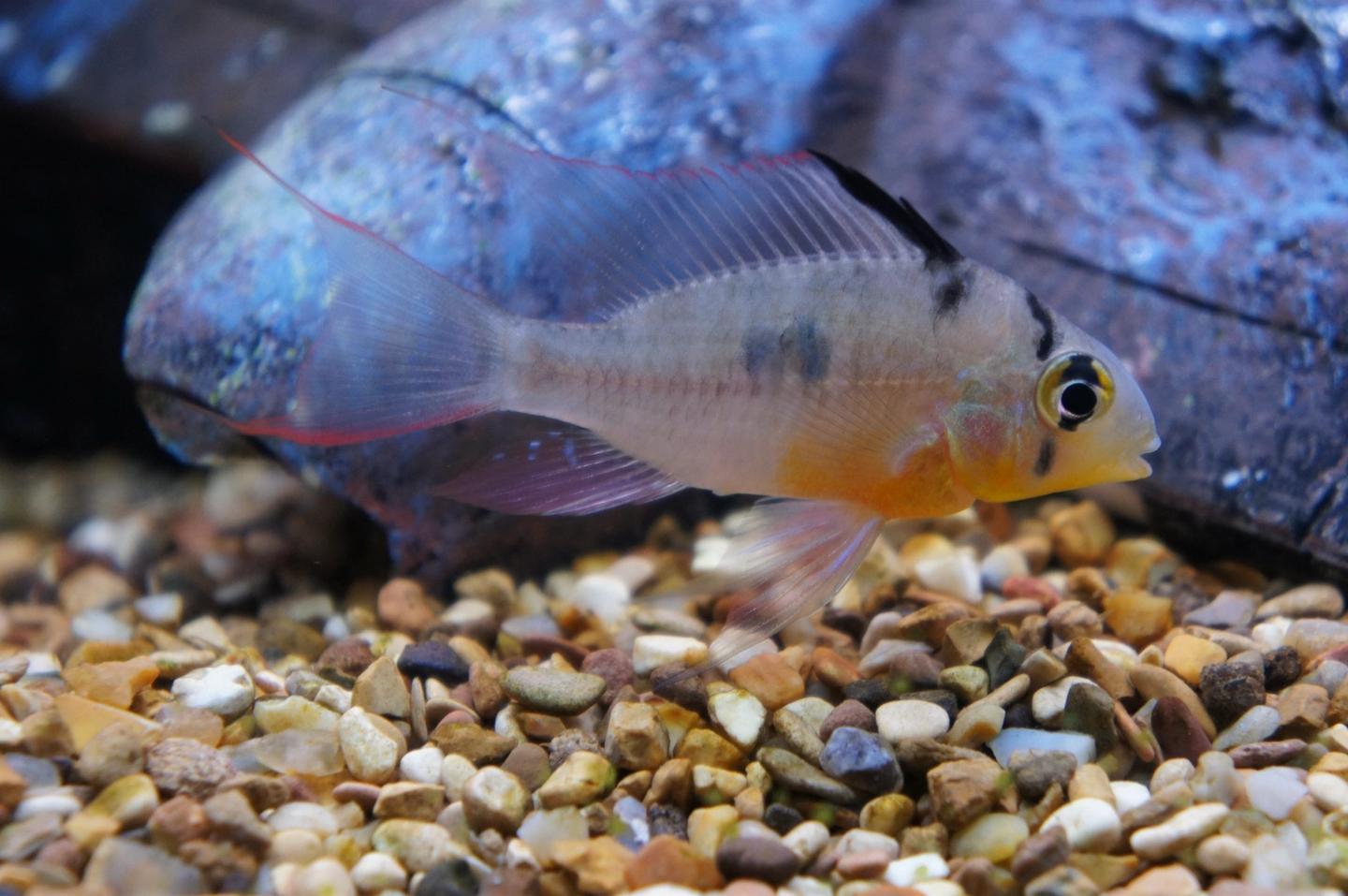
Cichlids are a family of roughly 1,800 accepted species, not one care type. Before buying, identify the exact species and source, then compare adult measurement, usable tank dimensions, social system, territory, tested water, diet and an exit plan. No family-wide minimum tank, water range or tank-mate list is safe.
Maintain these water conditions for optimal health and vibrant colors
The Comb Pike Cichlid (Crenicichla lepidota) is a freshwater member of the cichlid family. FishBase records this South American species as benthopelagic and potamodromous, with a maximum recorded length of 20.9 cm total length. Benthopelagic describes a fish associated with the bottom and the water above it; it does not mean the fish should be confined to a shallow or cramped aquarium.
Choose it when you can commit to an adult-scale aquarium, stable water, a mature biological filter and deliberate compatibility decisions. American cichlids vary considerably in temperament, so this is not a fish to add simply because another aquarium resident has the same regional label. It suits a keeper willing to observe interactions closely and change the stocking plan if behaviour becomes unsafe.
The 20.9 cm figure is the decisive planning number. It is a recorded maximum rather than a promise that every individual will reach precisely that length, but it gives a responsible basis for choosing the aquarium, filter and eventual stocking level. A small dispatch fish still needs a plan that works when its body length is several times greater.
A Wikipedia summary of the species places it across several South American river systems. These include the Paraná and Paraguay drainages, the lower Paraná in Paraguay and Argentina, coastal Rio Grande do Sul, the middle and lower Uruguay, and the Guaporé drainage of the Amazon basin in Brazil and Bolivia. Those locations describe the wild species rather than the origin of the individual supplied.
OATA’s American-cichlid guidance gives 22–27°C, pH 6.5–8.0 and general hardness of 4–12°dH for the group; these are group planning values, not a species-specific optimum. FishBase records this species in an environment of 23–28°C, from pH 7.0 and from 12°dH, without an upper pH or hardness value. Use the overlap as the routine target: 23–27°C, pH 7.0–8.0 and 12°dH. OATA also gives at least 300 litres as the planning baseline for American cichlids over 15 cm or those in the more aggressive part of the group.
| Suits | Not suited to |
|---|---|
| Adult-scale planning around 20.9 cm | A permanent setup chosen only for the dispatch length |
| A mature filtered aquarium with 0 mg/l ammonia and nitrite | An unfiltered or biologically immature aquarium |
| Individual assessment of every tank mate | Automatic community matching by regional label |
| A keeper able to act on unsafe interactions | A mixed setup with no way to separate fish |
You can also browse our South American cichlid collection when comparing identities and adult planning needs. Treat every animal as a separate compatibility decision rather than assuming members of one collection can share an aquarium.
One purchase supplies one animal of the selected option. The live size selector carries the labels 5-6 cm, 6-7 cm, 7-9 cm and XL; use that selector to see which choice can be ordered. The numeric labels describe the fish at dispatch, while XL is a nonnumeric grade.
The size you select is the size supplied, not the adult size. A 5-6 cm or 7-9 cm fish therefore needs the same adult planning exercise as an XL fish. The useful comparison is between the selected dispatch label and the recorded maximum of 20.9 cm total length, not between one dispatch option and another.
| Decision | What to use |
|---|---|
| Fish supplied | One animal from the selected option |
| Dispatch measurement | The selected numeric label, or the XL grade |
| Adult planning | Up to 20.9 cm total length |
| Sex | Only an explicitly sexed option can guarantee male or female |
Sex is guaranteed only when the selected option explicitly states male or female. This Comb Pike Cichlid listing has no sex-guaranteed option.
Do not infer sex, maturity or geographic origin from the size label, colour or gallery. Cichlid sex differences vary among species, and some become apparent only during breeding. The practical plan is to choose on identity, dispatch size and aquarium capacity rather than attempting to diagnose sex from appearance.
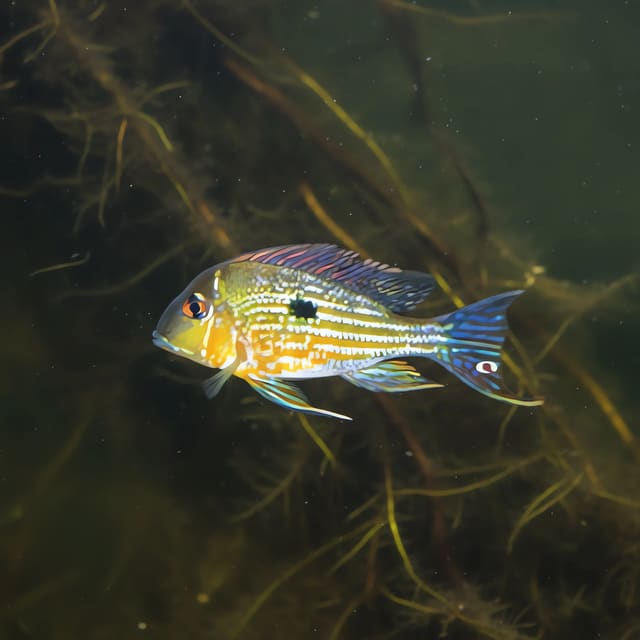
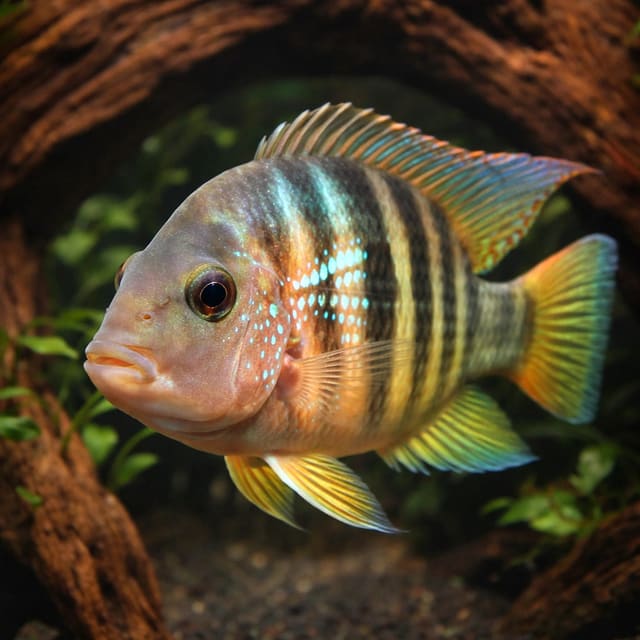
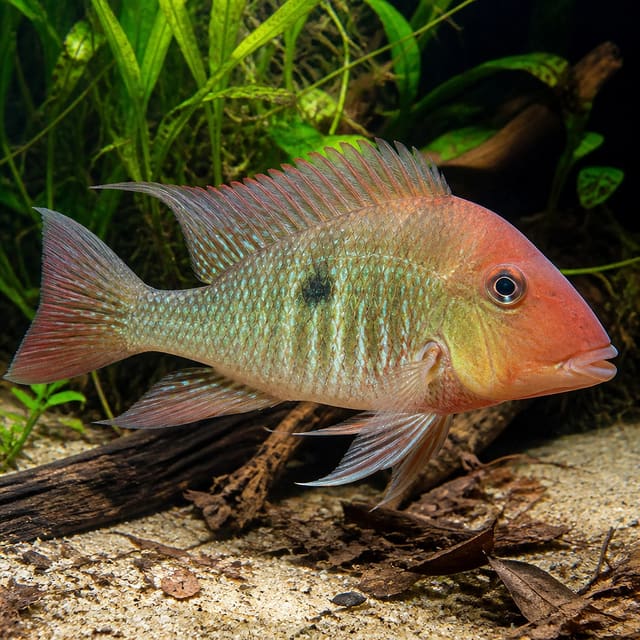
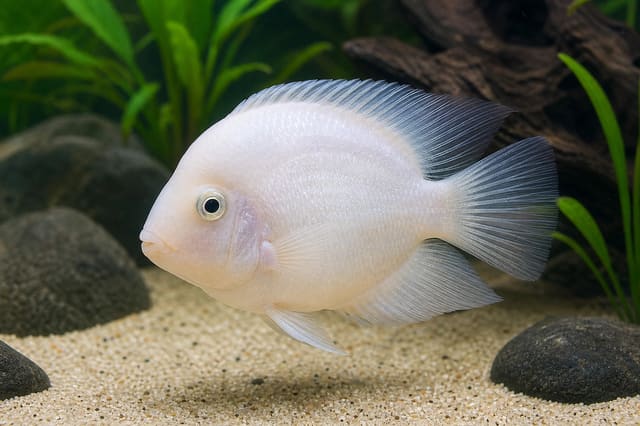
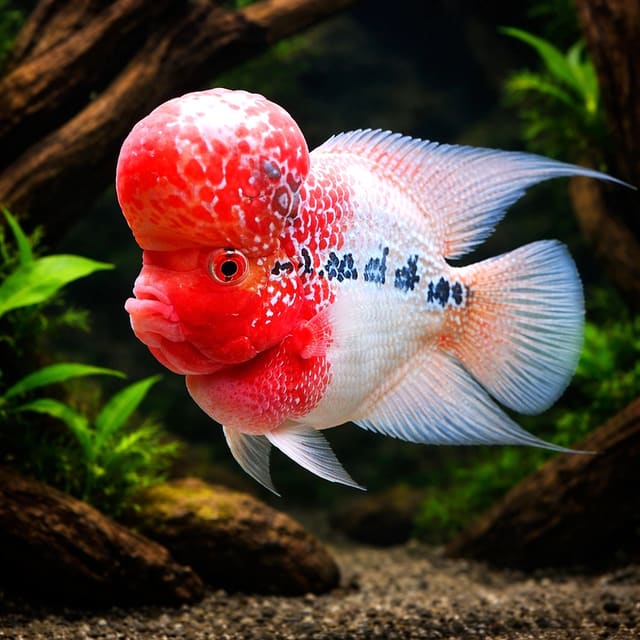
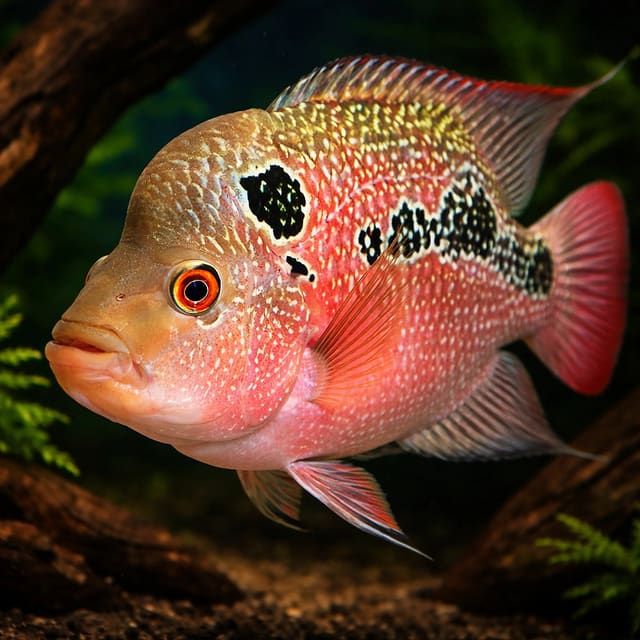
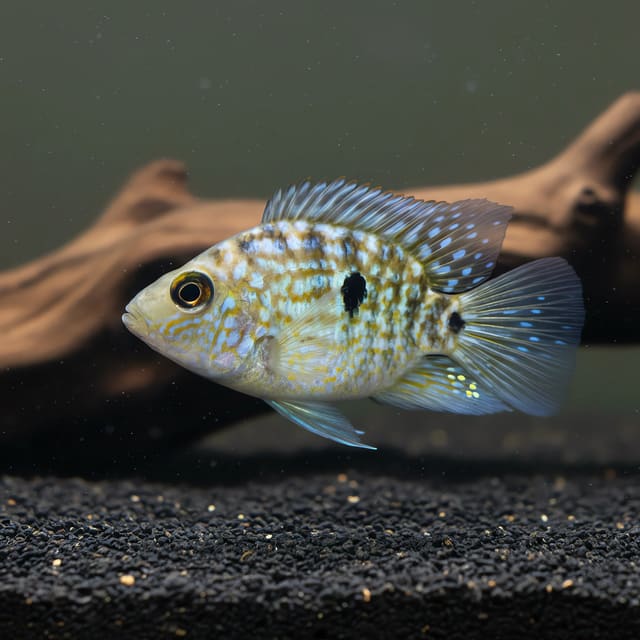
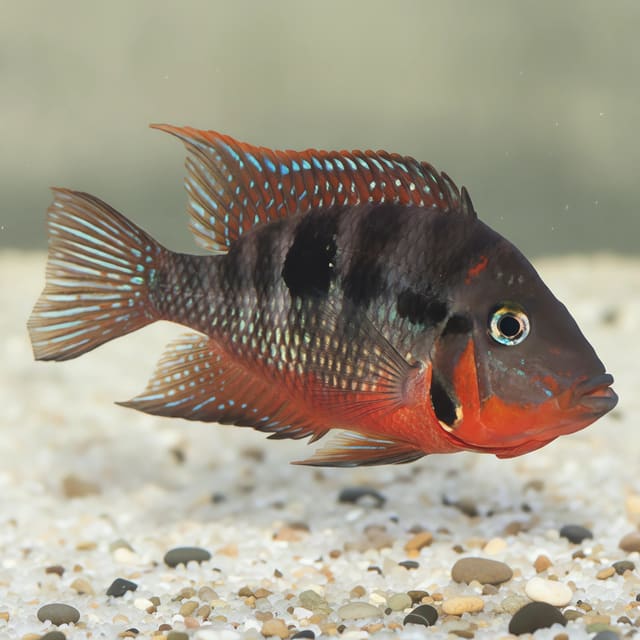
The gallery images are representative of this type of animal rather than photographs of the exact animal supplied, so colours can look slightly different from the live animal.
OATA recommends an aquarium of at least 300 litres for American cichlids that exceed 15 cm or belong to the more aggressive part of the group. Because this species is recorded at up to 20.9 cm, use 300 litres as the broad planning baseline rather than treating the small dispatch size as permission to start with an undersized permanent home.
This figure is not a species-specific minimum. Aquarium shape, usable floor area, filtration capacity, décor and the other residents all affect whether a particular 300-litre system is suitable. Extra water volume generally makes temperature and water quality more stable, but volume cannot compensate for an overloaded filter or an incompatible stocking plan.
A 300-litre aquarium that already carries a heavy fish load is not equivalent to an otherwise lightly stocked aquarium of the same volume. Likewise, a large system that has not developed enough beneficial bacteria remains unsuitable. Space and biological maturity must pass as separate checks.
If this is your first established system, use our guide to prepare and mature the aquarium before livestock arrives. Complete the cycle and test it rather than relying on the number of days the aquarium has been running.
Use the overlap rather than widening either range: set a routine aquarium target of 23–27°C, pH 7.0–8.0 and 12°dH. The single hardness value is intentional. It is the point where the recorded lower value for the species meets OATA’s upper value for American cichlids.
| Measurement | Routine target |
|---|---|
| Temperature | 23–27°C |
| pH | 7.0–8.0 |
| General hardness | 12°dH |
| Ammonia | 0 mg/l |
| Nitrite | 0 mg/l |
| Nitrate | Not more than 20 mg/l above the normal tap-water level |
Measure the aquarium and the conditioned replacement water before trying to alter either. Our water-chemistry guide explains the values to test, while the water matcher compares your measured results with this target. Record results consistently so a change is visible before it becomes severe.
Check the result with a correctly stored test, then examine recent water changes, replacement-water preparation, feeding and filter function. Do not chase pH or hardness with repeated abrupt adjustments. Establish what caused the shift and move conditions steadily, because stable values within the target are more useful than a number that repeatedly swings across it.
Temperature also needs consistency. Position and operate the heating equipment so the aquarium remains within 23–27°C, and confirm the actual water temperature with a thermometer rather than relying only on a heater setting.
A working biological filter is essential. The RSPCA explains that fish release toxic ammonia; filter bacteria convert it first to nitrite, which is also toxic, and then to the safer nitrate. A filter is therefore a living treatment system, not merely a device that collects visible debris.
Before introducing the Comb Pike Cichlid, test for 0 mg/l ammonia and 0 mg/l nitrite. Those readings need to reflect a genuinely matured aquarium capable of processing the waste created by its residents and their food. Clear-looking water alone cannot demonstrate that the nitrogen cycle is working.
Stocking too quickly can create new tank syndrome: ammonia and nitrite rise because the bacteria cannot process the additional waste. The same risk appears when feeding increases sharply, a filter is cleaned too aggressively or water flow becomes restricted.
If ammonia or nitrite rises above 0 mg/l, treat that as an immediate husbandry warning. Check filter operation, feeding, stocking and water-change practice. Continue measuring so you know whether corrective maintenance is reducing the reading rather than judging progress by appearance.
Choose filtration for the adult stocking plan, not just the dispatch-size fish. The biological load can rise as the animal grows, while uneaten food adds further waste. A large aquarium improves dilution and stability, but only an established and maintained filter carries out the biological conversion.
Use fine aquarium gravel or sand. OATA notes that many American cichlids dig or sift the substrate while feeding or breeding, so choose a material intended for aquarium use and arrange it so routine disturbance does not undermine the layout.
Provide cover without depending on delicate planting remaining untouched. American cichlids may dig up or eat live plants, making robust artificial planting a practical way to retain cover. Any décor should remain secure if substrate is moved around its base.
The layout should support observation as well as shelter. You need to see whether the fish is swimming appropriately, feeding, breathing normally and maintaining body condition. Dense decoration that prevents every inspection makes it harder to notice a problem early.
Review the arrangement whenever behaviour changes or substrate movement exposes an unstable edge. Make structural adjustments during maintenance rather than waiting for a piece to shift. If residents repeatedly meet in one narrow passage, changing the distribution of cover may reduce repeated encounters, but it cannot make an unsafe stocking combination suitable.
Do not use décor as a substitute for aquarium volume. At least 300 litres remains the planning baseline for this fish’s recorded adult length, and every additional resident adds its own demand for usable space and filtration. The interior must work inside an aquarium already chosen for the adult animal.
Use OATA’s feeding routine for American cichlids: offer only what the fish can finish within a few minutes, once a day. American cichlids are generally omnivorous but often prefer meaty items, so a specialised cichlid pellet or granule can form the routine food and be supplemented with frozen or freeze-dried items.
Suitable examples from that guidance include daphnia, brine shrimp and bloodworm for smaller fish. Larger American cichlids may take items such as cockles, lancefish or prawns. Match each piece to the animal’s current ability to take and finish it; the dispatch label helps with portion presentation, but it does not change the once-daily limit.
The aim is a finished ration, not the largest amount the fish will accept in one sitting. OATA warns that American cichlids can consume large quantities at once. Excess food creates extra faeces, while uneaten material breaks down and adds toxic waste to the water.
Judge the routine through both feeding response and body condition. Reduced intake, complete disinterest or a marked increase or decrease in condition can signal a health or environmental problem. Test ammonia and nitrite whenever appetite changes because poor water quality can accompany or drive altered feeding.
Do not respond to leftovers by changing several variables at once. First reduce the next portion, remove waste and check water readings. If a particular item is repeatedly ignored but the fish otherwise behaves and feeds normally, choose another item from the same balanced American-cichlid routine rather than allowing unwanted food to accumulate.
Carry out a partial water change of 25% at least once a week. Use a siphon to remove solid waste from the substrate, particularly around sheltered areas and places where uneaten food collects. Regular removal prevents organic debris from continuing to break down inside the aquarium.
Test the water at least weekly for ammonia and nitrite, and track nitrate against the normal level in your tap water. Ammonia and nitrite must remain at 0 mg/l. Nitrate should not exceed the tap-water baseline by more than 20 mg/l.
Clean filter media only when required for flow and function. Lightly rinse it in the removed aquarium water, never under the tap. Avoid replacing all established media at once because that discards much of the bacterial population responsible for processing ammonia and nitrite.
A weekly record turns isolated numbers into a useful trend. For example, nitrate that remains within the stated limit but rises week after week points towards increasing waste production, heavier feeding or insufficient removal. Review those causes before the reading reaches the limit.
Extra water changes may be needed when a test reveals a problem, but they do not replace finding the cause. Check feeding quantity, accumulated debris, stocking pressure and filter performance together. Continue testing after action so the next decision follows the water rather than assumption.
Arrange for someone to receive the parcel because live fish must not be left unattended. Follow our current delivery and Live Arrival Guarantee policy from the moment the sealed parcel is received.
Before delivery, use OATA’s aquarium guidance to confirm that the established aquarium remains within 23–27°C and that ammonia and nitrite are both 0 mg/l.
Keep observation focused on concrete signs. Check whether the animal can maintain its position, whether the gill covers move unusually quickly or slowly, and whether existing residents repeatedly pursue or displace it. A newly introduced fish needs a functioning environment immediately; introduction should not become a test of whether the aquarium was ready.
Add livestock slowly over time. Each addition increases feeding and waste, and the biological filter’s bacterial population needs to respond. Even when the aquarium has previously cycled, a rapid increase in animals can exceed its current processing capacity and create ammonia or nitrite.
After release, continue the normal testing routine rather than assuming clear water means stable water. A post-introduction ammonia or nitrite reading above 0 mg/l requires prompt attention to filtration, feeding and stocking pressure.
Learn the individual fish’s normal swimming, colour, temperament, breathing, appetite and body condition. Slight differences occur among fish, so a change from that individual baseline is often more useful than comparing it with a general expectation.
| If you see | First action |
|---|---|
| Surface hanging, bottom sitting or erratic swimming | Test temperature, ammonia and nitrite immediately |
| Faster or slower gill movement | Check water readings and filter function |
| Darker or paler colour | Check water and recent social interactions |
| More hiding or aggression | Observe which resident initiates each encounter |
| White spots, fluffy growths, damaged fins or missing scales | Record the appearance and test the aquarium |
| Reduced feeding or changing body condition | Check water, leftovers and the daily ration |
Begin with water quality because even small amounts of ammonia can stress American cichlids. Ammonia and nitrite must both be 0 mg/l. Also compare temperature, pH and hardness with the established routine target instead of checking only one parameter.
Look for a pattern before rearranging the whole aquarium. Note when the change began, whether it followed maintenance or a new resident, and whether it occurs near food or cover. Clear observations help distinguish a water-quality event from a repeated social conflict.
Do not start a disease treatment from appearance alone. Different problems can produce similar changes, while unnecessary treatment may add stress. If the condition persists, worsens or includes visible injury or growths, test the water and contact us for further health guidance.
Continue recording appetite and condition during recovery. Feed only the amount finished within a few minutes once daily, remove leftovers and maintain the weekly water-change routine unless a measured water problem requires earlier action.
Mixing American cichlids can be difficult because size and temperament vary widely. OATA notes that some calmer species can live in a robust community with larger shoaling fish, while more aggressive species may need to live alone or with equally aggressive cichlids. That broad distinction does not classify every individual Comb Pike Cichlid or guarantee any proposed pairing.
No universal tank-mate list applies here. A fish that passes the size screen can still fail on temperament, aquarium capacity or behaviour after introduction. Conversely, sharing a regional or family label does not make a pairing suitable.
For a stocking and compatibility assessment, ask us with the aquarium volume and dimensions, current residents with adult sizes, measured temperature, pH and hardness, and a description of the layout. Those details allow a specific decision instead of a generic match.
Introduce only after ammonia and nitrite read 0 mg/l, then observe access to food and cover as well as obvious chasing. A resident repeatedly forced away from food or confined to one area is not sharing the aquarium successfully, even if there is no visible injury yet.
Most American cichlids do better either singly or in pairs, but the correct arrangement varies by species and individual. Begin with a plan for one Comb Pike Cichlid unless the aquarium, proposed companion and separation arrangements have all been assessed for a pair.
Two purchases supply two individual fish; they do not create a bonded pair. The offer carries no sex guarantee, and appearance or size should not be used to infer sex. A pair plan must therefore remain conditional rather than assuming that two fish will form a stable social unit.
| Plan | Required decision |
|---|---|
| One fish | Provide adult space, cover, stable water and a mature filter |
| Two fish | Reassess adult capacity, interactions and the ability to separate them |
| Mixed aquarium | Screen every resident for size, temperament, waste load and observed behaviour |
| Conflict appears | Separate before repeated displacement becomes injury or feeding exclusion |
At least 300 litres is the starting volume for a fish over 15 cm under American-cichlid guidance. It is not an automatic approval for a pair. Two adult fish increase the space used, the amount fed and the waste processed, while social interactions can make part of the nominal aquarium volume unusable to one resident.
Watch the whole interaction rather than counting only direct attacks. Repeated hiding, colour change, a sudden rise in aggression, exclusion from food and confinement to one part of the aquarium all matter. If one animal cannot feed or move normally, the arrangement needs to change.
Do not add further fish to distract residents from conflict. Every addition increases biological load and introduces another interaction. Resolve the original problem through separation or a revised stocking plan while keeping ammonia and nitrite at 0 mg/l.
FishBase records the Comb Pike Cichlid at up to 20.9 cm total length. Plan its permanent aquarium around that adult reference rather than its dispatch length.
Use at least 300 litres as OATA’s American-cichlid planning baseline for a fish over 15 cm. Aquarium shape, filtration, décor and every other adult resident must also suit the complete stocking plan.
OATA says most American cichlids do better singly or in pairs, but the correct arrangement varies. Begin with one fish unless a proposed pair has enough adult space and can be separated if interactions become unsafe.
It suits a keeper able to plan around a 20.9 cm adult fish, maintain at least 300 litres under OATA’s group guidance, keep ammonia and nitrite at 0 mg/l and assess every social interaction individually.
OATA’s American-cichlid guidance recommends a specialised cichlid pellet or granule supplemented with suitable frozen or freeze-dried foods. Feed only what it finishes within a few minutes, once a day.
Keep it at the FishBase/OATA overlap of 23–27°C, pH 7.0–8.0 and 12°dH. Maintain ammonia and nitrite at 0 mg/l and nitrate no more than 20 mg/l above the normal tap-water level.
OATA notes that some American cichlids may be very aggressive. Assess this fish individually, and separate residents if chasing, repeated displacement, fin damage, injury or feeding exclusion develops.
OATA says calmer American cichlids can sometimes mix with larger shoaling fish, while more aggressive species may require equally aggressive cichlids. Screen every proposed match by adult size, temperament, aquarium capacity, filtration and observed behaviour.
Tropical Fish Co’s delivery policy requires someone to receive the parcel. Film every delivery continuously from the sealed parcel as it is opened, showing the fish still in the sealed bag; then float the bag for 20–30 minutes and never pour the bag water into the aquarium.
No reviews for this item yet. Bought one? Honest reviews only, good or bad.
What customers say about ordering from us
I have a small group of long finned mountain minnows. So was delighted to be able to order ten of this variety to increase the genetics in my tank . The ones I recieved are healthy but it’s to early to give a verdict on wether they are of a long finned type since they are small currently.
Gordon Walker · 23 Sept 2026
100% success travel and "installation". Pleased with quality of purchase. The Siamese fighter a bit "shy" so have not yet seen him at his best yet but looking good. Happy customer. GG
George E Garratt · 21 Sept 2026
Reviews of our shop, collected by Judge.me, an independent third-party review collector. Newest first.