Comb Pike Cichlid (Crenicichla lepidota)
23–27°C · pH 7–8
£44.99

A predatory South American pike cichlid for spacious, structured aquariums with strong filtration and carefully chosen tank mates.
Adult size is the maximum length this species reaches at full maturity (scientific sources). The livestock you receive will be younger and smaller — pick a size above for the actual shipping size. Product-photo provenance and any image-specific limitations are stated on the listing.
Saxatilia saxatilis
Save when buying multiple fish. Each quantity is one fish; sex and pair formation are not guaranteed unless the selected variant explicitly states them.
Confirm your email, then we’ll send an availability message for this exact item if it returns within 180 days.
This request is only for this product—no newsletter or other promotions. A mail-provider retry may very rarely duplicate the same availability message. Unconfirmed addresses are removed after 48 hours. See our privacy policy.
A predatory South American pike cichlid for spacious, structured aquariums with strong filtration and carefully chosen tank mates.
Adult size is the maximum length this species reaches at full maturity (scientific sources). The livestock you receive will be younger and smaller — pick a size above for the actual shipping size. Product-photo provenance and any image-specific limitations are stated on the listing.

Cichlids are a family of roughly 1,800 accepted species, not one care type. Before buying, identify the exact species and source, then compare adult measurement, usable tank dimensions, social system, territory, tested water, diet and an exit plan. No family-wide minimum tank, water range or tank-mate list is safe.
Maintain these water conditions for optimal health and vibrant colors
Spangled Pike Cichlid is the trade name used here for Saxatilia saxatilis, a South American pike cichlid long sold and indexed in the aquarium trade as Crenicichla saxatilis. The older name still matters because many supplier lists, hobby searches and scientific databases continue to use it, but the recent pike-cichlid revision places the saxatilis group in Saxatilia. This page keeps both names naturally so customers can recognise the fish without forcing keywords into the copy.
This is a predator with real presence. It has the long, low pike-cichlid body, a watchful hunting style and the territorial behaviour expected from a carnivorous South American cichlid. It is not a peaceful community fish, and it should not be mixed with small tank mates. It suits keepers who can provide space, cover, strong filtration, clean water and companions chosen around the fish rather than added casually.
The aquarium hobby has known this fish for many years as Crenicichla saxatilis. A 2023 revision of pike cichlids proposed Saxatilia for the saxatilis complex, with Saxatilia saxatilis as the type species. Some databases and supplier files still use Crenicichla saxatilis, so the older name is kept here as a synonym and search bridge.
For customers, the practical care message is unchanged: this is a ring-tailed / spangled pike cichlid from northern South American drainages, built for hunting around cover. The current scientific name helps with modern search understanding, while the older name helps customers match the fish to supplier labels and older care references.
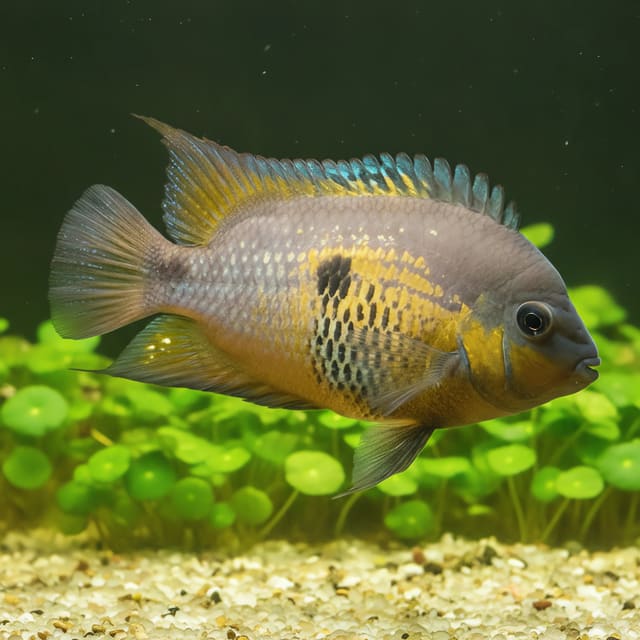
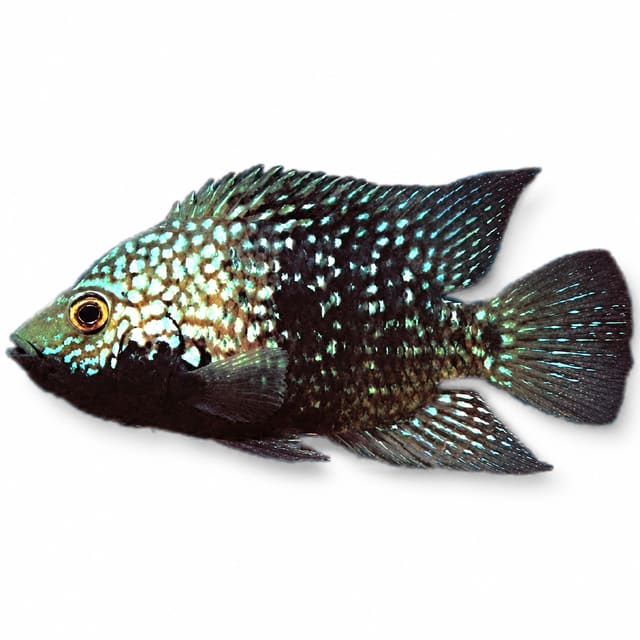
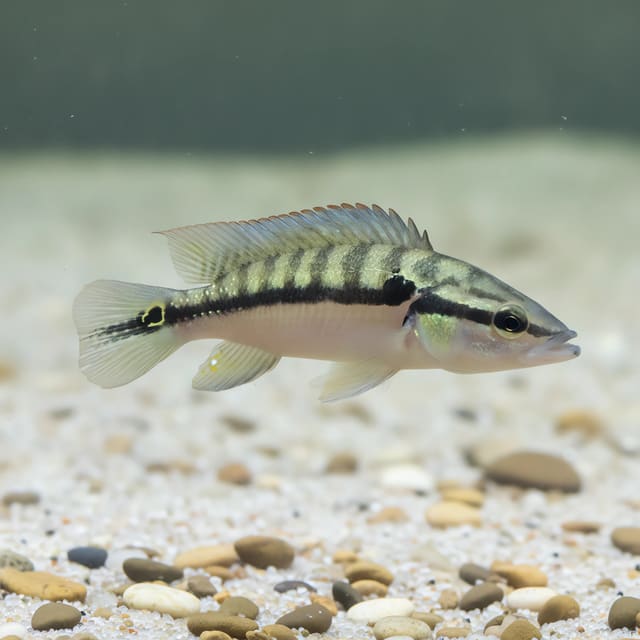
Spangled pike cichlids have the classic elongated predator shape: pointed head, large mouth, streamlined body and quick burst movement. The body can show grey, olive, gold or brown tones with fine spotting and a marked tail pattern that explains the ring-tailed name. Males are often larger and more strongly marked, while females can show richer belly colour when mature or in breeding condition.
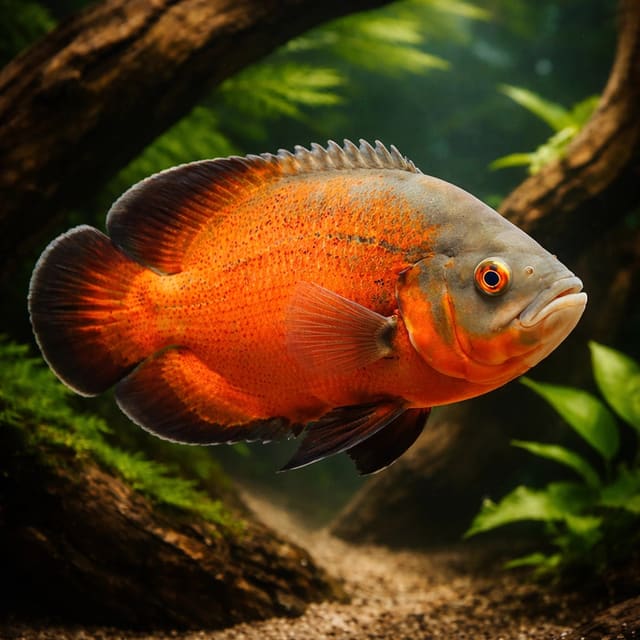
The original reference image has been added to this product so the supplied trade form is visible alongside the existing aquarium-style supporting images.
Source records place Saxatilia saxatilis / Crenicichla saxatilis in Atlantic coastal drainages of northern South America, including the Guianas, Venezuela and Trinidad. FishBase notes it is often found in creeks and can also be captured in rivers, especially during dry-season conditions. These habitats give the fish cover, edges, shadow and ambush opportunities rather than open bare water.
In the aquarium, that means the layout matters. A bare tank may make the fish unsettled and can make aggression harder to manage. Wood, roots, rocks, caves and shaded retreats give the fish places to hold territory and help break up lines of sight.
Use a mature aquarium with strong biological filtration and regular maintenance. Pike cichlids are carnivores and can be messy feeders, so water quality should be treated as part of the care plan, not an afterthought. Aim for stable warm water, good oxygenation and enough space for the fish to move without constantly meeting tank mates face to face.
A sand or fine-gravel base works well with wood, rockwork and caves. Build the hardscape so there are shaded stations and visual barriers. A single specimen is usually simpler than a mixed predator display. If tank mates are planned, use a larger aquarium and choose robust fish that cannot fit in the pike cichlid's mouth.
This is a carnivore, but that does not mean feeder fish are needed or recommended as the main diet. Offer quality cichlid or predator pellets as a staple, then rotate frozen meaty foods such as krill, mussel, prawn, earthworm pieces, insect larvae and similar suitably sized foods. The goal is variety without overfeeding.
Feed sensible portions and remove uneaten food. A settled pike cichlid often waits motionless and then strikes quickly, so do not mistake a still fish for an uninterested one. Regular, measured feeding keeps body condition better than heavy, infrequent meals.
Small fish, shrimp and delicate long-finned tank mates are not suitable. They may be eaten, harassed or stressed. This fish is best planned either as a feature predator or with carefully chosen robust companions in a large aquarium. Large armoured catfish and sturdy South American cichlids can sometimes work, but only when the tank is large enough and the individual fish are compatible.
Other pike cichlids are a special risk in cramped tanks because territorial pressure can become intense. Breeding behaviour can also make the fish more defensive around caves or chosen spawning areas. Give the aquarium structure, escape routes and enough floor area before attempting any mixed setup.
This Shopify product currently carries two size variants: 5-6 cm and > 7 cm. When livestock is available and weather/route conditions are suitable, eligible orders are packed for licensed live-animal courier dispatch and handled under our Live Arrival Guarantee terms.
Choose this fish if you want a distinctive South American predator and you are comfortable planning around its adult size and behaviour. It is a rewarding fish to watch because it is deliberate, watchful and full of character. It is not the right choice for small community aquariums, mixed nano fish or tanks where every fish needs to be peaceful.
No reviews for this item yet. Bought one? Honest reviews only, good or bad.
What customers say about ordering from us
I have a small group of long finned mountain minnows. So was delighted to be able to order ten of this variety to increase the genetics in my tank . The ones I recieved are healthy but it’s to early to give a verdict on wether they are of a long finned type since they are small currently.
Gordon Walker · 23 Sept 2026
100% success travel and "installation". Pleased with quality of purchase. The Siamese fighter a bit "shy" so have not yet seen him at his best yet but looking good. Happy customer. GG
George E Garratt · 21 Sept 2026
Reviews of our shop, collected by Judge.me, an independent third-party review collector. Newest first.