Moderate
Flag Acara (Laetacara curviceps)
20–28°C · pH 4.5–7.5
£6.99
Geophagus sveni — Rio Parana is one live Brazilian eartheater cichlid per purchase, offered in five dispatch grades from 2.5–9 cm. FishBase records 16.7 cm standard length; plan a mature, sand-bottomed aquarium with strong filtration and space for adult cichlid behaviour. OATA’s broad American-cichlid guidance is 22–27 °C, pH 6.5–8.0 and 4–12 °dGH, not a species-specific optimum.
Adult size is the maximum length this species reaches at full maturity (scientific sources). The livestock you receive will be younger and smaller — pick a size above for the actual shipping size. Product-photo provenance and any image-specific limitations are stated on the listing.
Geophagus sveni
Save when buying multiple fish. Each quantity is one fish; sex and pair formation are not guaranteed unless the selected variant explicitly states them.
Geophagus sveni — Rio Parana is one live Brazilian eartheater cichlid per purchase, offered in five dispatch grades from 2.5–9 cm. FishBase records 16.7 cm standard length; plan a mature, sand-bottomed aquarium with strong filtration and space for adult cichlid behaviour. OATA’s broad American-cichlid guidance is 22–27 °C, pH 6.5–8.0 and 4–12 °dGH, not a species-specific optimum.
Adult size is the maximum length this species reaches at full maturity (scientific sources). The livestock you receive will be younger and smaller — pick a size above for the actual shipping size. Product-photo provenance and any image-specific limitations are stated on the listing.

Cichlids are a family of roughly 1,800 accepted species, not one care type. Before buying, identify the exact species and source, then compare adult measurement, usable tank dimensions, social system, territory, tested water, diet and an exit plan. No family-wide minimum tank, water range or tank-mate list is safe.
Maintain these water conditions for optimal health and vibrant colors
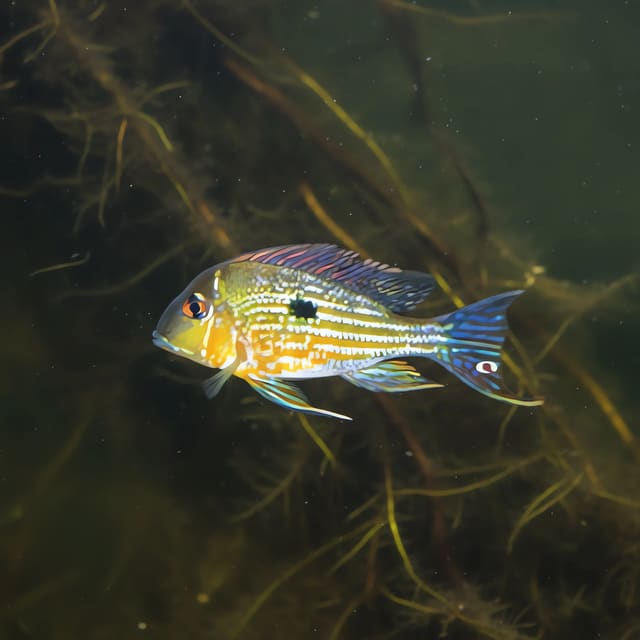
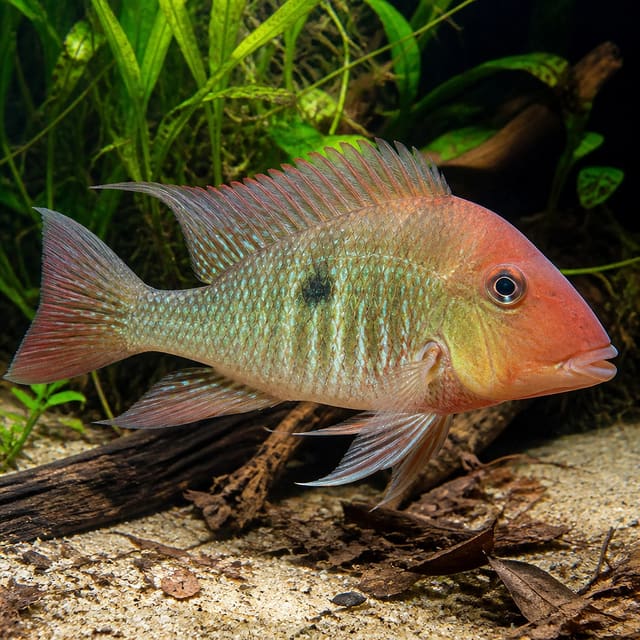
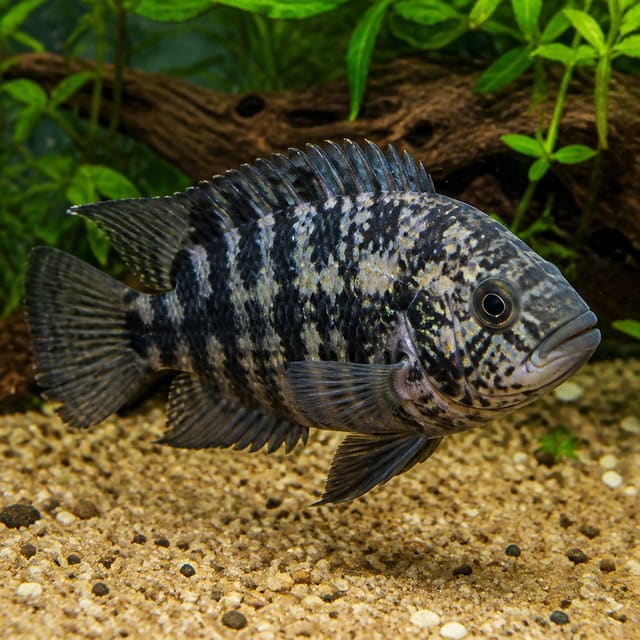
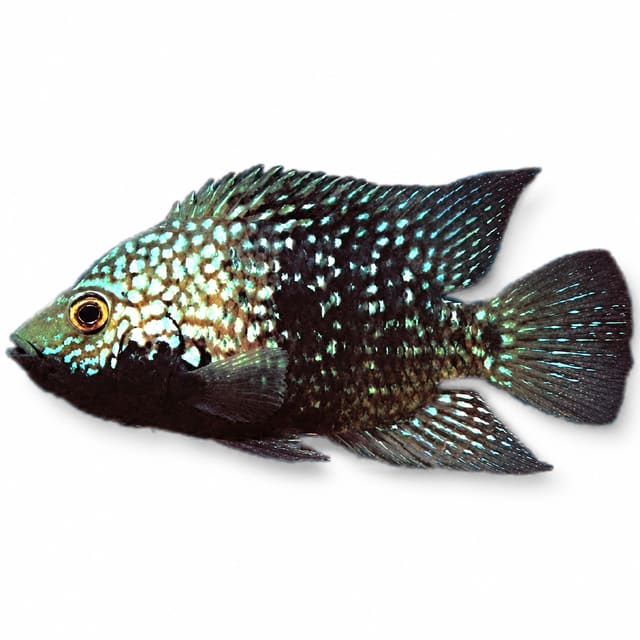
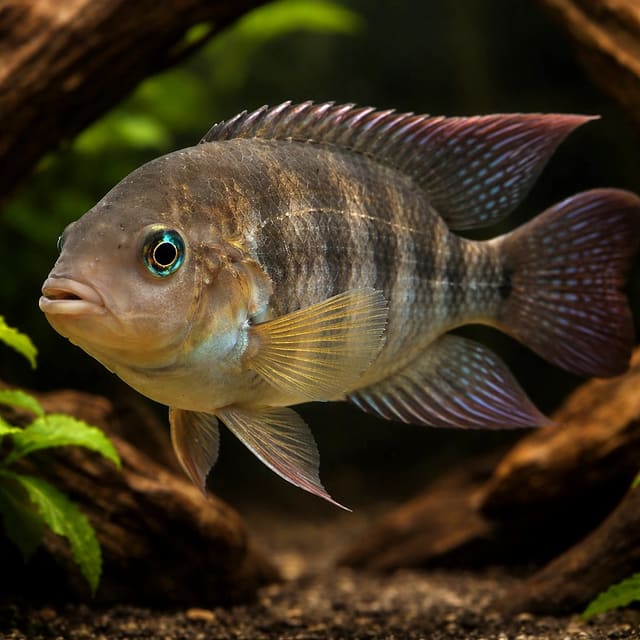
Geophagus sveni — Rio Parana is a substantial Brazilian cichlid for a keeper who can plan around adult size, bottom area, filtration and changing social behaviour. Its elongated profile, long dorsal fin and blue-green spangling can make it a striking centrepiece, while its association with substrate-focused cichlid behaviour makes the lower part of the aquarium especially important. It is not a small community fish simply because the younger dispatch grades arrive small.
This listing supplies one live fish per purchase. The selectable dispatch grades are approximately 2.5–3 cm, 3–4 cm, 4–5 cm, 5–6 cm and 7–9 cm. The size you select is the size supplied, not the adult size. FishBase records a maximum of 16.7 cm standard length, which excludes the tail fin and should be treated as an adult planning measurement rather than compared directly with a small whole-fish retail grade.
The name needs one useful clarification. Rio Parana is the retained supplier and aquarium-trade label for this offer; it is not evidence that the fish is native to the Paraná drainage. FishBase identifies Geophagus sveni from Brazil and records it from the middle Rio Tocantins drainage. A public species summary also places it in the Tocantins River drainage. Plan care around the identified species and verified husbandry principles, not a literal reading of the retail label.
Sex is guaranteed only when the selected option explicitly states male or female. This Geophagus sveni Rio Parana listing has no sex-guaranteed option. Colour, size, fin shape or one photograph cannot turn an unsexed choice into a male or female guarantee.
| Suits | Think carefully if |
|---|---|
| An experienced keeper planning for a 16.7 cm SL cichlid | The aquarium is being chosen around the smallest dispatch grade |
| A mature, strongly filtered tropical aquarium | Ammonia or nitrite is detectable, or the filter is newly established |
| A broad floor plan with fine, mouth-safe substrate and open routes | The base is coarse, sharp, crowded with unstable rock or hard to siphon |
| Carefully assessed companions with overlapping water and behaviour | The proposed community is cramped, highly aggressive or contains very small vulnerable animals |
| A keeper able to monitor feeding, hierarchy and changing cichlid behaviour | There is no alternative home if mature fish become incompatible |
OATA’s American-cichlid guide is intentionally broad. It offers useful group-level water, feeding, aquarium and maintenance principles, but it does not prove a precise species-specific social number or aquarium minimum for G. sveni. This page therefore separates the verified species facts—identity, Brazilian distribution and FishBase’s 16.7 cm SL record—from broad family guidance used for cautious planning.
The best reason to choose this fish is not a promise of effortless community behaviour. It is the opportunity to build a spacious, stable cichlid aquarium around a distinctive species and then observe it closely as it develops. Browse the South American cichlid collection when comparing the commitment, but assess each listing on adult needs rather than treating every cichlid as interchangeable.
Before choosing a grade, compare its immediate feeding and intake-safety needs with the long-term plan. A smaller fish needs guarded gaps and food it can swallow; a larger fish creates more immediate load. Either way, the aquarium must already have a realistic route to adult space, stable water, maintainable equipment and compatible company.
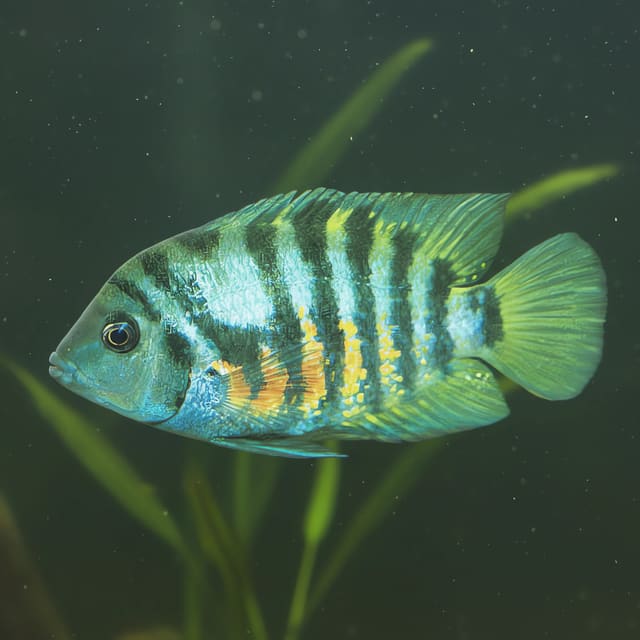
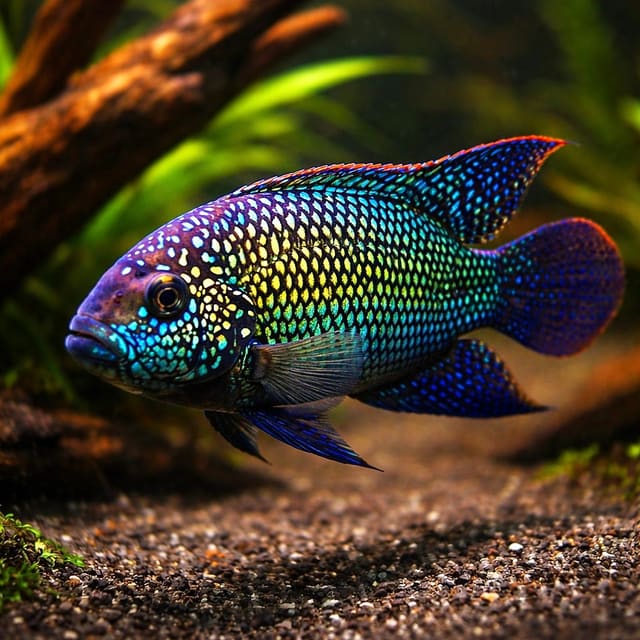
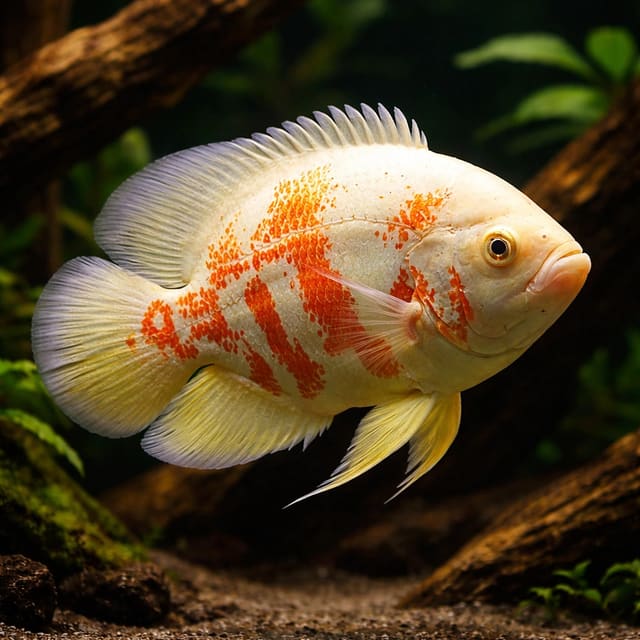
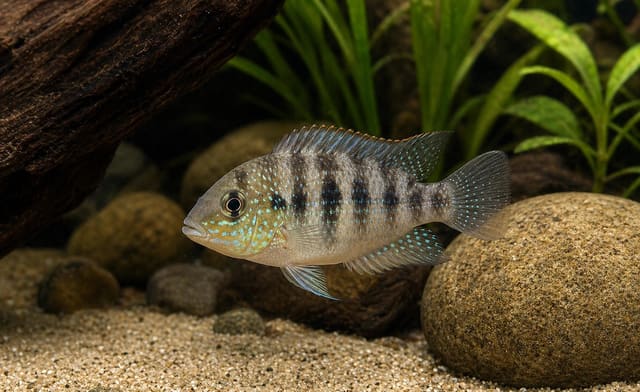
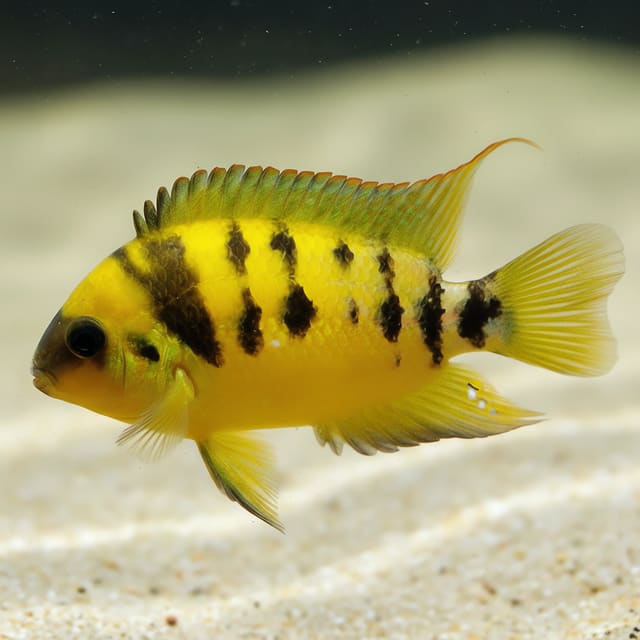
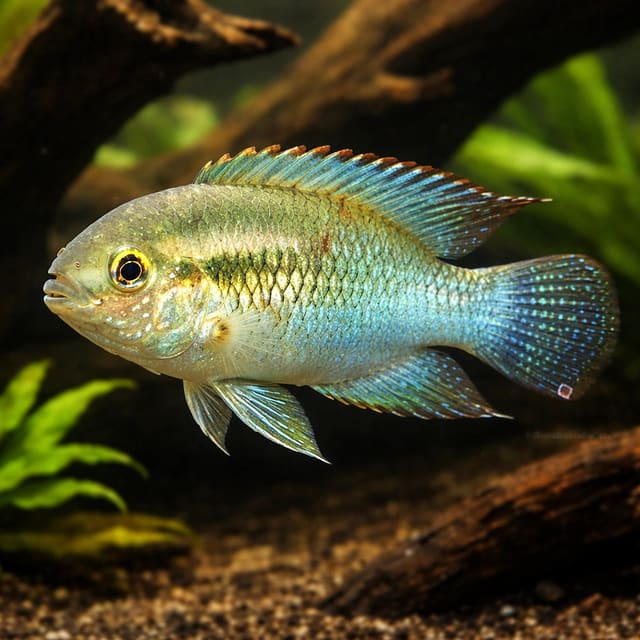
Gallery images have been digitally enhanced to improve image quality. Natural colour, pattern, size and maturity can vary between live animals.
FishBase’s 16.7 cm standard-length record is the firm species measurement used here. Standard length runs from the snout to the base of the tail, so the complete fish occupies more space than that number alone suggests. It also needs room to turn, feed and avoid pressure from companions. Do not use a 2.5–3 cm or 3–4 cm arrival grade to justify a temporary aquarium with no realistic adult plan.
OATA’s broad American-cichlid guide recommends at least 300 litres for larger or more aggressive species over 15 cm. That is group-level planning guidance, not a species-specific minimum for G. sveni. It is useful as a cautious starting reference because the FishBase record exceeds the guide’s 15 cm boundary, but the correct aquarium also depends on footprint, number of fish, companion load, filtration, decor and the availability of separate territories. A long, broad base is more useful than height that adds litres but little usable cichlid space.
Measure the actual clear floor area after wood and rock are installed. An aquarium can look large while leaving only a narrow corridor around a central structure. Preserve several open routes, quiet edges and feeding zones. Make sure a mature fish can turn without scraping its flanks or being forced through another cichlid’s defended space.
Geophagus sveni should enter an established aquarium with a functioning biological filter. Fish release ammonia, which is toxic; filter bacteria convert it to nitrite, also toxic, and then to less harmful nitrate. The first tropical tank guide explains the preparation sequence, and the RSPCA’s aquarium environment advice reinforces the need for a well set-up, maintained filter.
Test ammonia and nitrite before introduction: both should read zero. Add fish slowly so the bacterial population can adjust to increased feeding and waste. Test again during the first week, after filter interruptions and whenever appetite, breathing or activity changes. Clear water can still contain invisible toxic waste, so appearance is not a substitute for liquid testing.
Choose filtration for the completed adult aquarium, not merely the nominal tank volume. Cichlids can produce a meaningful waste load, and substrate-focused feeding may move debris into sheltered edges. Combine biological capacity with accessible mechanical filtration and sufficient circulation. Protect intakes for the smallest grade while keeping guards clear, and ensure mature fish cannot dislodge heaters or pipework.
OATA’s American-cichlid care sheet gives a broad range of 22–27 °C, pH 6.5–8.0, 4–12 °dGH and 3–10 °dKH. These are group-level figures, not a species-specific optimum for G. sveni. Use them as a planning envelope while prioritising stable, clean water and a compatible overlap with every other animal in the aquarium.
Ammonia and nitrite should remain at zero. OATA advises keeping nitrate no more than 20 mg/l above the normal tap-water level. Establish the baseline by testing the source water, then record aquarium results over time. The water chemistry guide explains pH, GH, KH and nitrogen waste, while the water matcher helps compare measured water with broad guidance.
Avoid chasing a central pH with repeated chemical adjustments. Know the stable supply, match livestock to it where possible and make any genuinely necessary change slowly and repeatably. Large temperature, pH or hardness swings are stressful even when the final reading falls inside a published range. Replacement water should be conditioned for chlorine or chloramine and reasonably temperature-matched.
Warm water holds less oxygen, while a large active cichlid and its companions consume oxygen continuously. Maintain surface movement and unobstructed flow. Rapid breathing, fish gathering at the surface or outlet, or a sudden loss of normal activity requires immediate water and equipment checks.
OATA notes that many American cichlids dig or sift while feeding or breeding and recommends fine gravel or sand. For this aquarium, choose a smooth, mouth-safe grade and leave generous open areas. Avoid sharp crushed material and pieces large enough to wedge in the mouth or gill area. Rinse new substrate appropriately and arrange it so waste can be removed without turning the entire base into a permanent debris trap.
Use wood, branches, smooth stones and caves to break sight lines, but anchor every heavy item securely. A digging fish can undermine decor that seemed stable on day one. Place major weight on a secure base rather than balancing it on loose substrate, and test that structures cannot roll or pinch a fish. Preserve open swimming and feeding routes between the sheltered zones.
Rooted plants may be disturbed by cichlid activity. Plants fixed to wood or stone, protected roots or removable planted containers can be easier to manage, but no layout is guaranteed to remain untouched. Design around the fish’s movement first. If plants are essential to the display, allow for replanting and choose methods that do not create sharp stakes or hidden traps.
Lighting should maintain a consistent day-night cycle without heating the aquarium or forcing every resting area into full brightness. Keep the tank away from direct sun, vibration, draughts and nearby heat sources. Provide shaded cover while retaining a clear view of the fish for daily health checks.
OATA describes American cichlids broadly as omnivorous and often inclined towards meaty foods. Use a quality cichlid pellet or granule appropriate to the fish’s current mouth size, supplemented with suitable frozen or freeze-dried foods. Treat that as group guidance rather than a species-specific feeding experiment. Variety should support condition without making every meal rich or excessive.
Place food where the fish can find it without swallowing rough substrate. Sinking or slowly sinking items help lower-feeding fish compete, but watch rather than assume that each individual has eaten. In a multi-fish aquarium, spread food across more than one area so a dominant animal cannot guard the whole ration.
OATA advises only what American cichlids can consume within a few minutes, generally once daily. The practical amount depends on fish size, temperature and the food’s density. Start modestly, watch body condition and remove persistent leftovers. Excess food becomes excess faeces or decomposes into nitrogen waste, creating exactly the instability a mature cichlid aquarium must avoid.
Do not use rapid growth as the sole measure of feeding success. A well-conditioned fish should have clear eyes, steady breathing, intact fins and a body that is neither pinched nor swollen. Track appetite alongside water results. A sudden refusal to eat can follow social pressure, poor water, transport or illness and deserves investigation rather than automatic extra feeding.
OATA strongly recommends a partial water change of 25% at least once each week, adjusted when tests and stocking show more is needed. Siphon accessible waste from the surface and open zones while preserving mature biological media. Replace water with conditioner appropriate to the local supply. Keep buckets and hoses for aquarium use and never start a siphon by mouth.
Check filter flow and intakes every week. When media needs cleaning, rinse it lightly in removed aquarium water rather than the tap, which can damage the beneficial bacteria. Do not replace all established media at once. If power or flow has been lost for a prolonged period, restore oxygenation safely, inspect the filter before restarting and test ammonia and nitrite.
Substrate maintenance needs balance. Remove accumulated food and waste, but do not repeatedly dismantle every territory or chase the fish around the aquarium. Clean different zones in rotation where appropriate. If debris always collects behind the same rock, improve access or circulation rather than accepting a stagnant pocket.
Prepare the aquarium and review the store’s delivery and Live Arrival information before the parcel comes. Confirm temperature, zero ammonia and nitrite, secure decor and a quiet settling area. Keep a clean transfer net or container ready.
Temporary hiding, reduced colour or delayed feeding can follow transport, but persistent rapid breathing, loss of balance, visible injury or worsening condition needs prompt attention. Test the water first, retain the arrival evidence and contact the retailer on the day of arrival when the policy requires it. Do not add medication casually to a display aquarium.
The five grades describe the approximate fish supplied, not five different care levels. A smaller juvenile may fit through gaps that are harmless to a 7–9 cm fish, lose food to larger companions and be harder to observe in a vast decorated aquarium. A larger grade creates more immediate waste and may attract different social attention. Choose according to the prepared aquarium and its residents, not on the assumption that smaller always means easier.
Check intake guards, overflow slots and gaps behind backgrounds for the smallest fish. Make food size appropriate to the mouth and confirm swallowing rather than simply seeing the fish approach. In a mixed-size group, use dispersed feeding points and compare body condition weekly. Rapid growth is not a reason to overfeed; steady condition in clean water is the safer aim.
As the fish develops, review the layout instead of leaving juvenile-sized routes unchanged. Enlarge clear passages, remove narrow caves that can trap a growing cichlid and check that territories have not compressed around permanent decor. Reassess filtration capacity and water-change effort before adding companions. The adult plan should already exist, but these reviews catch practical problems while they are still easy to correct.
A large warm aquarium depends on electricity for heat, circulation and biological filtration. Make a safe plan for outages: keep filter media wet in aquarium water, restore aeration as soon as possible and reduce feeding while circulation is unavailable. After a prolonged stoppage, inspect stagnant filter compartments before restarting and test ammonia and nitrite as the system recovers.
Use a thermometer that can be checked independently of the heater setting. Position heaters where flow distributes warmth, protect them from direct impact and never expose a running heater during a water change. Cables should form drip loops and plugs should be accessible without moving the aquarium. Heavy tanks need a level, suitable stand and a position where routine siphoning can be carried out without unsafe lifting.
Keep essential consumables ready: conditioner for the actual tap-water treatment, working ammonia and nitrite tests, a nitrate test, spare airline and a clean aquarium-only bucket. Check expiry dates and learn the test instructions before an urgent problem. A written normal-temperature and water-result range helps another household member respond sensibly if the keeper is away.
Daily checks can be brief and calm. Confirm that equipment is running, temperature is plausible, every fish is accounted for and breathing is steady. Watch before feeding, during feeding and a few minutes afterwards. This reveals whether a fish is excluded, struggling to take the offered food or retreating whenever a particular companion approaches.
Do not repeatedly move decor simply to make a shy newcomer visible. Use predictable lighting and fixed observation points, then verify water quality and food access. If an individual remains hidden while losing condition or breathing rapidly, intervene on the basis of those welfare signs. Calm observation is different from ignoring a fish because cichlids sometimes use cover.
Record meaningful changes: dates, water test results, maintenance, appetite, injuries and social rearrangements. Photographs taken from a similar angle can reveal gradual weight loss or fin damage that is easy to miss day by day. This small record also prevents repeated unnecessary changes when the aquarium simply needs stable time to settle.
Learn the individual’s normal posture, feeding response and resting areas. OATA suggests watching swimming, colour, temperament, breathing, physical appearance, body condition and appetite. A change in several of these at once is more informative than one brief odd movement. Use dated photographs and a simple water log to follow a concern.
Inspect fins for splits, clamping, white edges or progressive loss; check the skin for spots, growths, reddening or ulcers; and compare the abdomen over time. First correct measurable water or social problems. If the cause remains unclear, seek experienced professional or aquatic-veterinary guidance before combining treatments. The safe dose depends on the actual water volume and the product label.
Compatibility is conditional, not a fixed list. Match adult size, water range, temperament, feeding style and use of floor space. OATA warns that mixing American cichlids can be difficult: calmer species may work in a robust community, while more aggressive animals may need to be kept alone or with equally robust cichlids. That broad principle is more reliable than naming any animal as universally safe with G. sveni.
For social planning, OATA’s broad guide says most American cichlids do better singly or in pairs, while recognising exceptions; this group advice does not set a fixed number for G. sveni. A single purchase supplies one animal, not a pair or group. If more than one G. sveni is planned, provide substantial additional floor area, several separated retreats and a fully cycled alternative home in case the mature social arrangement fails.
These choices are not sex-selected. Buying two does not guarantee a male and female or a compatible pair. Do not use colour, size or the held gallery image as a sex test. Adult hierarchy and breeding behaviour can change a previously calm arrangement, so observe more closely as fish mature.
Avoid very small fish or invertebrates vulnerable to predation, persistent fin nippers and animals likely to compete aggressively for the same lower territory. Avoid highly aggressive cichlid mixtures unless the keeper has the space and experience to manage them. Do not add this fish to an already crowded aquarium because a juvenile appears to fit between the existing adults.
Other sizeable, calm fish may be considered only after comparing adult behaviour and water requirements. OATA names larger shoaling fish as possible companions for some calmer American cichlids, but it does not guarantee a match for this species. Introduce new residents with a contingency plan and watch feeding, breathing and spatial use rather than waiting for torn fins.
A short display or brief displacement is not the same as chronic pressure. Act when one fish is repeatedly chased across the aquarium, trapped behind equipment, denied food or prevented from using every refuge. Darkening, clamped fins, rapid breathing and persistent hiding can accompany stress. Rearranging sight lines may help only when the aquarium already has sufficient space; decor cannot cure overcrowding.
Observe at feeding time and after the main lights settle. Social pressure often becomes clearer when fish compete for food or preferred resting areas. Keep a mature spare system or a realistic rehoming route available before combining large cichlids. That contingency is part of compatibility planning, not an admission of failure.
FishBase records a maximum of 16.7 cm standard length, measured to the base of the tail. Plan for the complete adult fish and its turning and territorial space, not the selected 2.5–9 cm dispatch grade.
No species-specific minimum is established here. OATA’s broad American-cichlid guide recommends at least 300 litres for larger or more aggressive species over 15 cm; use that as cautious group-level planning, then increase space for multiple fish, companions, decor and adult behaviour.
Use OATA’s broad planning: most American cichlids do better singly or in pairs, with exceptions. This is not a fixed species number, so any multi-fish plan needs extra floor area, separated retreats and a cycled alternative home if mature fish become incompatible.
It is better suited to an intermediate keeper who understands cycling, large-aquarium maintenance and cichlid behaviour. Its small dispatch size should not disguise the need to plan around a 16.7 cm SL adult, strong filtration and possible social changes.
OATA’s broad American-cichlid guidance describes the group as omnivorous and often inclined towards meaty foods. Offer an appropriately sized quality cichlid pellet or granule with suitable frozen or freeze-dried variety, feed modestly and remove persistent leftovers.
OATA’s broad American-cichlid guidance is 22–27 °C and pH 6.5–8.0, with 4–12 °dGH and 3–10 °dKH. Those are group-level figures, not a species-specific optimum; stable cycled water, zero ammonia and nitrite and a match with all companions remain essential.
Cichlid behaviour can change with maturity, territory and breeding condition. Do not promise that this species is harmless or assume it will nip. Provide space and sight breaks, avoid persistently aggressive or nipping companions, and separate fish if chasing or damage becomes sustained.
Consider calm, appropriately sized fish with overlapping water needs and different pressure on the lower territory. OATA notes that larger shoaling fish can accompany some calmer American cichlids, but every proposed mix must be assessed individually; avoid tiny vulnerable animals and highly aggressive cichlid combinations.
Tropical Fish Co’s policy says live fish are hand-bagged in oxygen, placed in an insulated box with a heat pack when weather requires it and carried by a licensed live-animal courier on a confirmed Thursday or Friday. Someone must receive the parcel; film continuously from the sealed box through the fish in its sealed bag and contact the store the same day with any concern.
No reviews for this item yet. Bought one? Honest reviews only, good or bad.
What customers say about ordering from us
Easy website plenty of info on fish your buying great to pick a time slot
TRACEY DURRANT · 7 Oct 2026
Got some lovely fish thank you
Kevin Mackie · 7 Oct 2026
Reviews of our shop, collected by Judge.me, an independent third-party review collector. Newest first.