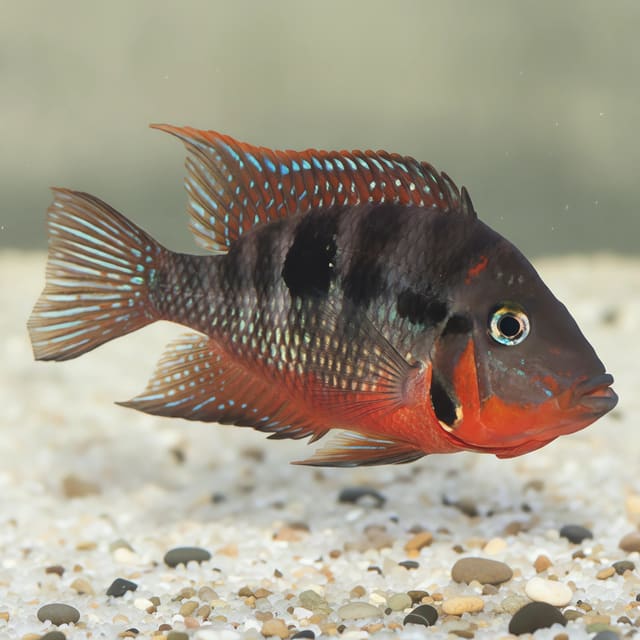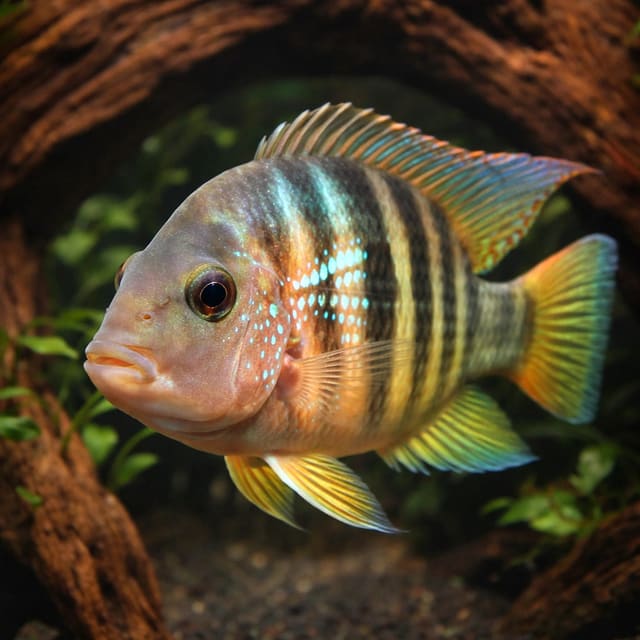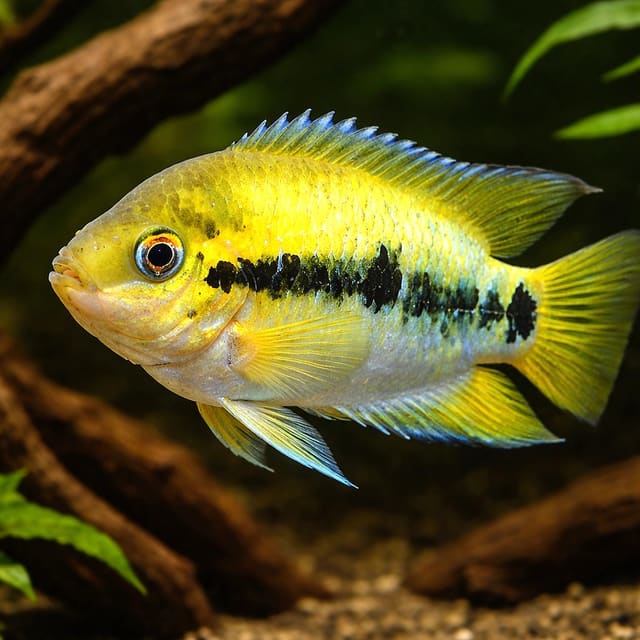
Rainbow Cichlid (Herotilapia multispinosa)
22–27°C · pH 7–8 · 103L
£6.99

A delicate soft-water checkerboard cichlid sold under the Crenicara maculata trade name, best kept in a mature planted aquarium with sand, leaf litter, cover and peaceful tank mates.
Crenicara maculata
Shoaling fish: kept in a group they feel safer, stay calmer and show their best colour.
Confirm your email, then we’ll send an availability message for this exact item if it returns within 180 days.
This request is only for this product—no newsletter or other promotions. A mail-provider retry may very rarely duplicate the same availability message. Unconfirmed addresses are removed after 48 hours. See our privacy policy.
A delicate soft-water checkerboard cichlid sold under the Crenicara maculata trade name, best kept in a mature planted aquarium with sand, leaf litter, cover and peaceful tank mates.
Cichlids are a family of roughly 1,800 accepted species, not one care type. Before buying, identify the exact species and source, then compare adult measurement, usable tank dimensions, social system, territory, tested water, diet and an exit plan. No family-wide minimum tank, water range or tank-mate list is safe.
Maintain these water conditions for optimal health and vibrant colors
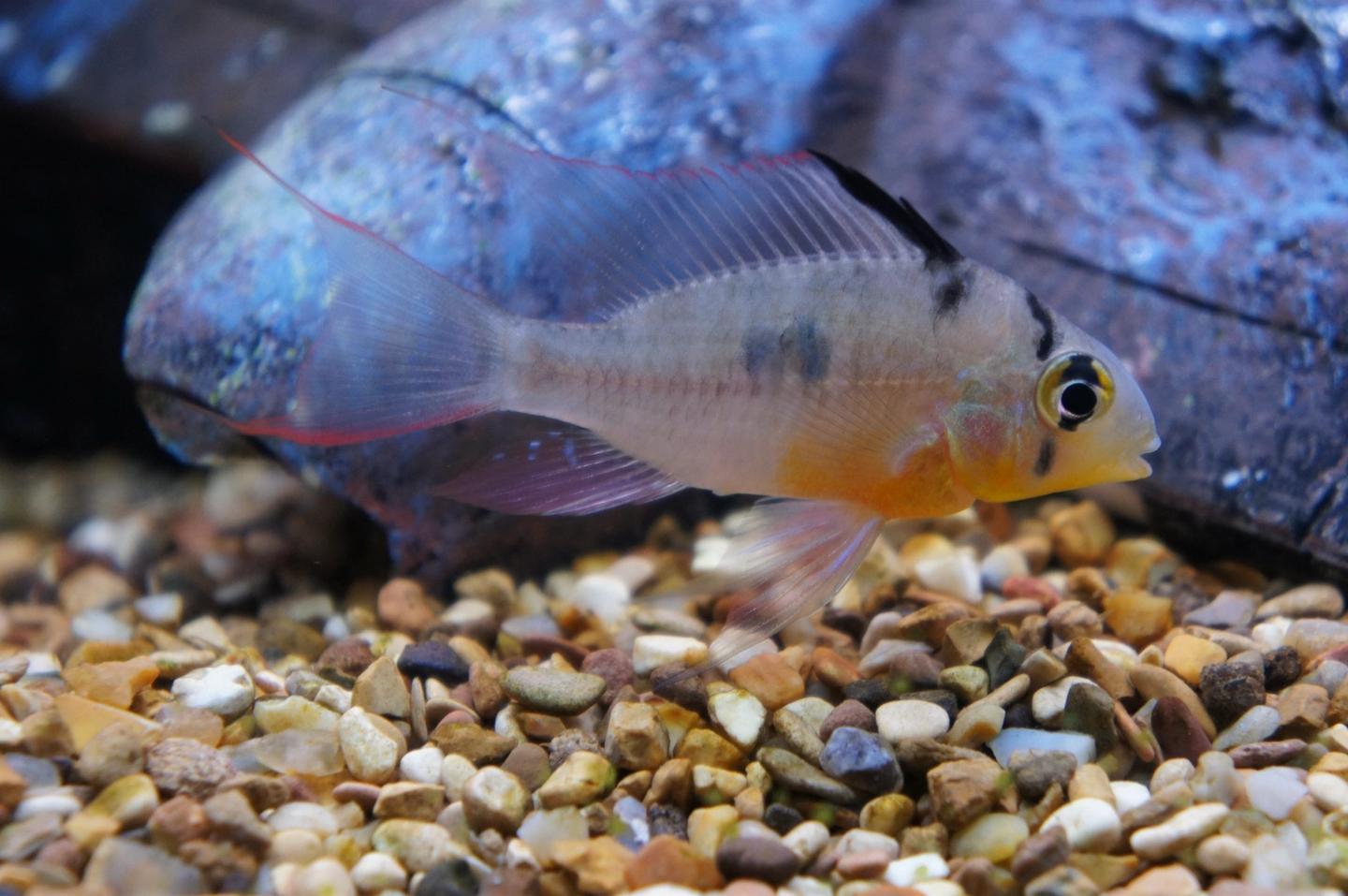
The Checkerboard Cichlid listed here is the line supplied as Crenicara maculata. It is a specialist South American cichlid for aquarists who enjoy soft-water, leaf-litter aquariums rather than a generic community setup. The exact source photograph is now used on the product page, with the existing habitat images kept as supporting visuals. That matters for this fish because checkerboard cichlids are often traded under older or overlapping scientific names, and the safest listing is one that keeps the supplier identity visible while explaining the care requirements clearly.
This is not a hard-water beginner fish. It suits a mature aquarium with stable warm water, fine sand, driftwood, shaded planting and calm tank mates. In the right setup it becomes a subtle but fascinating cichlid: patterned flanks, a delicate green-gold body tone, careful bottom-level foraging and quiet territorial behaviour around chosen shelters. It is a much better choice for a thoughtful South American biotope than for a bright, busy mixed tank.
The name on this product is intentionally conservative. This line is supplied as Crenicara maculata, so the Shopify title, SKU history and supplier provenance keep that name. At the same time, current taxonomy sources commonly treat Crenicara maculata as an older combination or synonym of Dicrossus maculatus. FishBase also separates the larger Crenicara punctulata, another fish widely called a checkerboard cichlid. Because the trade name can cover more than one closely related-looking cichlid, this listing avoids overclaiming and focuses on the care profile these fish need: soft, acidic, clean water; quiet cover; and gentle tank mates.
For the customer, the practical point is simple: treat this as a delicate checkerboard-type South American cichlid, not as a robust general community cichlid. If you are matching it to other cichlids, check the scientific names carefully and avoid mixing similar males or territorial pairs in a small aquarium.
The source image shows the traits that make this fish so appealing: a pale green-gold body, broken dark side markings, turquoise-green patterning through the dorsal and tail, and a bright eye set into a slender cichlid profile. The checkerboard effect is more subtle than a painted domestic strain; it looks best in a settled aquarium with darker substrate, floating shade and tannin-stained water. Under harsh lighting, these fish can look washed out. In a calm, planted layout, the colours become cleaner and the fish behave more naturally.
Sale-size labels can be confusing with imported cichlids, especially when supplier sizes include tail length or mixed batches. Use the variant selector as the stock-size guide for the fish being offered, and plan the aquarium around adult behaviour rather than only the smallest juvenile size.
Checkerboard cichlids in the Crenicara and Dicrossus group are associated with South American river systems, forest creeks, sandy margins, submerged plants, roots and leaf litter. FishBase records soft, acidic conditions for these fishes, with low hardness and shaded habitats close to plants, leaves or river margins. That habitat explains their aquarium needs better than any sales phrase can: they want shelter, low stress and water chemistry that does not swing.
A good home setup uses fine sand, pieces of driftwood, Indian almond leaves or similar botanicals, and plants that tolerate softer water. Java fern, Anubias, Amazon swords and floating plants can all help break up the light. The aquarium should feel visually complex at fish level, with several quiet routes through the bottom and mid-levels, not one open display space.
Use a mature aquarium of at least 90 litres for a pair or small group, and go larger if you are adding other dwarf cichlids. Stability is more important than chasing numbers every day. A soft-water setup based on RO water and careful remineralisation is often the most reliable route if your tap water is hard or alkaline. Keep ammonia and nitrite at zero, keep nitrate low, and make water changes small enough that the chemistry stays steady.
Filtration should be efficient but not violent. These fish are not built for constant strong current. A sponge pre-filter, gentle canister flow or well-baffled outlet works better than a blasting return. Add multiple shelters so weaker fish can leave a dominant fish's line of sight. If you keep a pair, provide more than one possible spawning or resting site so they can choose naturally.
Feed small foods that match the fish's mouth and natural foraging style. Good choices include frozen cyclops, daphnia, baby brine shrimp, enriched adult brine shrimp, finely chopped bloodworm, small blackworm where appropriate, and high-quality micro granules for dwarf cichlids. Offer modest portions and let the food reach the lower part of the tank, because shy fish may not compete well at the surface.
Variety matters. A checkerboard cichlid kept only on dry food may survive, but it will rarely show its best colour or condition. Rotate frozen and prepared foods, watch that each fish feeds, and remove waste promptly. Soft acidic tanks can be beautiful, but excess organic waste still causes problems.
This is a calm but intelligent cichlid, best described as peaceful with territory. It may ignore unrelated fish most of the time, then defend a patch of cover or a breeding site when settled. Do not keep it with rough Central American cichlids, large predatory fish, fast fin-nippers or boisterous barbs that dominate feeding. It also should not be used as a clean-up fish; it needs planned care.
Good companions are small, peaceful fish that enjoy similar soft-water conditions: pencilfish, small tetras, gentle rasboras in compatible water, Otocinclus, and carefully chosen Corydoras in larger tanks. Other dwarf cichlids can work only when the aquarium has enough floor space, broken sight lines and several territories. Shrimp fry may be eaten, and very small ornamental shrimp are not a safe match.
Breeding behaviour varies across checkerboard cichlid species and trade lines, but the pattern is usually territorial and cover-focused. Soft acidic water, excellent conditioning foods and a quiet aquarium are the starting points. Some Crenicara references describe eggs attached to plants or stones with female care, while Dicrossus-type checkerboard cichlids are also known for careful brood behaviour in soft water. The important practical advice is to give the fish choice: leaves, shaded plants, wood, stones and sheltered sites, rather than a bare tank with one cave.
Fry, if produced, need very small first foods and extremely clean water. Do not attempt breeding in an unstable or newly set aquarium. This is a fish for patient aquarists who enjoy observing detail.
This product currently has multiple size variants in Shopify, but live stock can change with supplier availability. When a variant is available, Tropical Fish Co packs live fish for specialist courier delivery with insulated packaging and weather-aware dispatch. The Live Arrival Guarantee applies to eligible live-fish orders when the delivery instructions are followed. First-time customers can also use the welcome discount when it is active at checkout. When the product is out of stock, use the listing as a care reference and check back for the next supplier update.
This listing was manually reviewed against our stock records and image, FishBase pages for checkerboard cichlid taxonomy and care ranges, GBIF/Catalogue of Life synonym data for Crenicara maculata, and Aquarium Glaser notes on the Crenicara checkerboard group.
No reviews for this item yet. Bought one? Honest reviews only, good or bad.
What customers say about ordering from us
I have a small group of long finned mountain minnows. So was delighted to be able to order ten of this variety to increase the genetics in my tank . The ones I recieved are healthy but it’s to early to give a verdict on wether they are of a long finned type since they are small currently.
Gordon Walker · 23 Sept 2026
100% success travel and "installation". Pleased with quality of purchase. The Siamese fighter a bit "shy" so have not yet seen him at his best yet but looking good. Happy customer. GG
George E Garratt · 21 Sept 2026
Reviews of our shop, collected by Judge.me, an independent third-party review collector. Newest first.