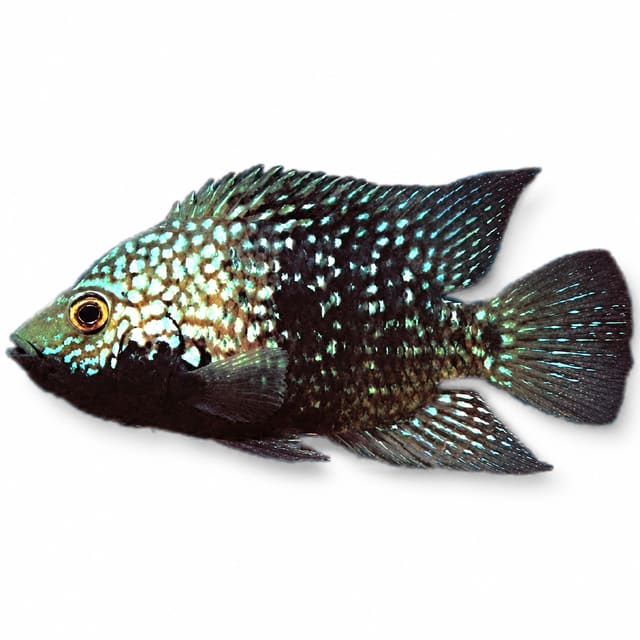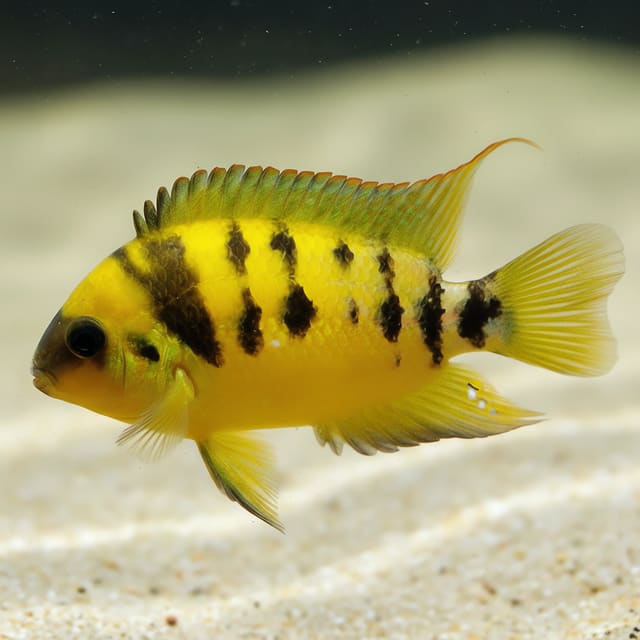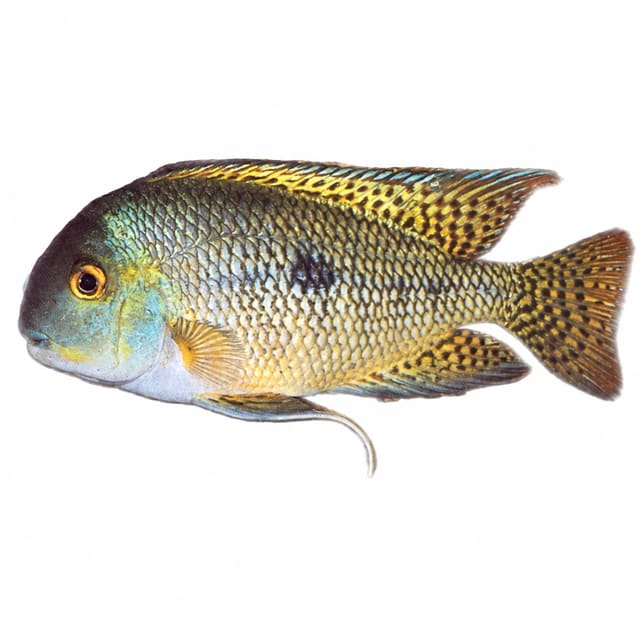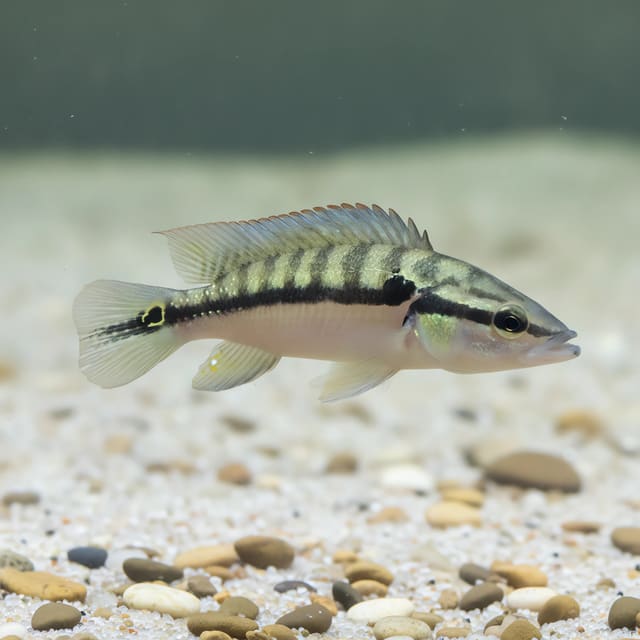
Comb Pike Cichlid (Crenicichla lepidota)
23–27°C · pH 7–8
£44.99

A small, territorial Rio Negro dwarf pike cichlid for experienced keepers with soft, stable, well-covered aquariums. Best kept with carefully chosen tank mates too large to swallow.
Adult size is the maximum length this species reaches at full maturity (scientific sources). The livestock you receive will be younger and smaller — pick a size above for the actual shipping size. Product-photo provenance and any image-specific limitations are stated on the listing.
Wallaciia notophthalmus
Save when buying multiple fish. Each quantity is one fish; sex and pair formation are not guaranteed unless the selected variant explicitly states them.
Confirm your email, then we’ll send an availability message for this exact item if it returns within 180 days.
This request is only for this product—no newsletter or other promotions. A mail-provider retry may very rarely duplicate the same availability message. Unconfirmed addresses are removed after 48 hours. See our privacy policy.
A small, territorial Rio Negro dwarf pike cichlid for experienced keepers with soft, stable, well-covered aquariums. Best kept with carefully chosen tank mates too large to swallow.
Adult size is the maximum length this species reaches at full maturity (scientific sources). The livestock you receive will be younger and smaller — pick a size above for the actual shipping size. Product-photo provenance and any image-specific limitations are stated on the listing.
Cichlids are a family of roughly 1,800 accepted species, not one care type. Before buying, identify the exact species and source, then compare adult measurement, usable tank dimensions, social system, territory, tested water, diet and an exit plan. No family-wide minimum tank, water range or tank-mate list is safe.
Maintain these water conditions for optimal health and vibrant colors
The Two-Spotted Dwarf Pike Cichlid (Wallaciia notophthalmus) is a small South American pike cichlid for keepers who enjoy intelligent, predatory cichlids but do not want one of the much larger Crenicichla-type bruisers. It is still not a beginner fish. It needs calm handling, soft and stable water, plenty of cover, and tank mates chosen around its mouth size and territorial behaviour.
This listing came through our stock records as Crenicichla notophtalmus / "Two-Spoted". Those spellings are useful to retain as supplier and search context, but the corrected public name is Wallaciia notophthalmus, often still sold in the trade as Crenicichla notophthalmus. The fish is associated with the lower Rio Negro / Amazon basin and is best treated as a specialist blackwater-style dwarf pike cichlid rather than a general community cichlid.
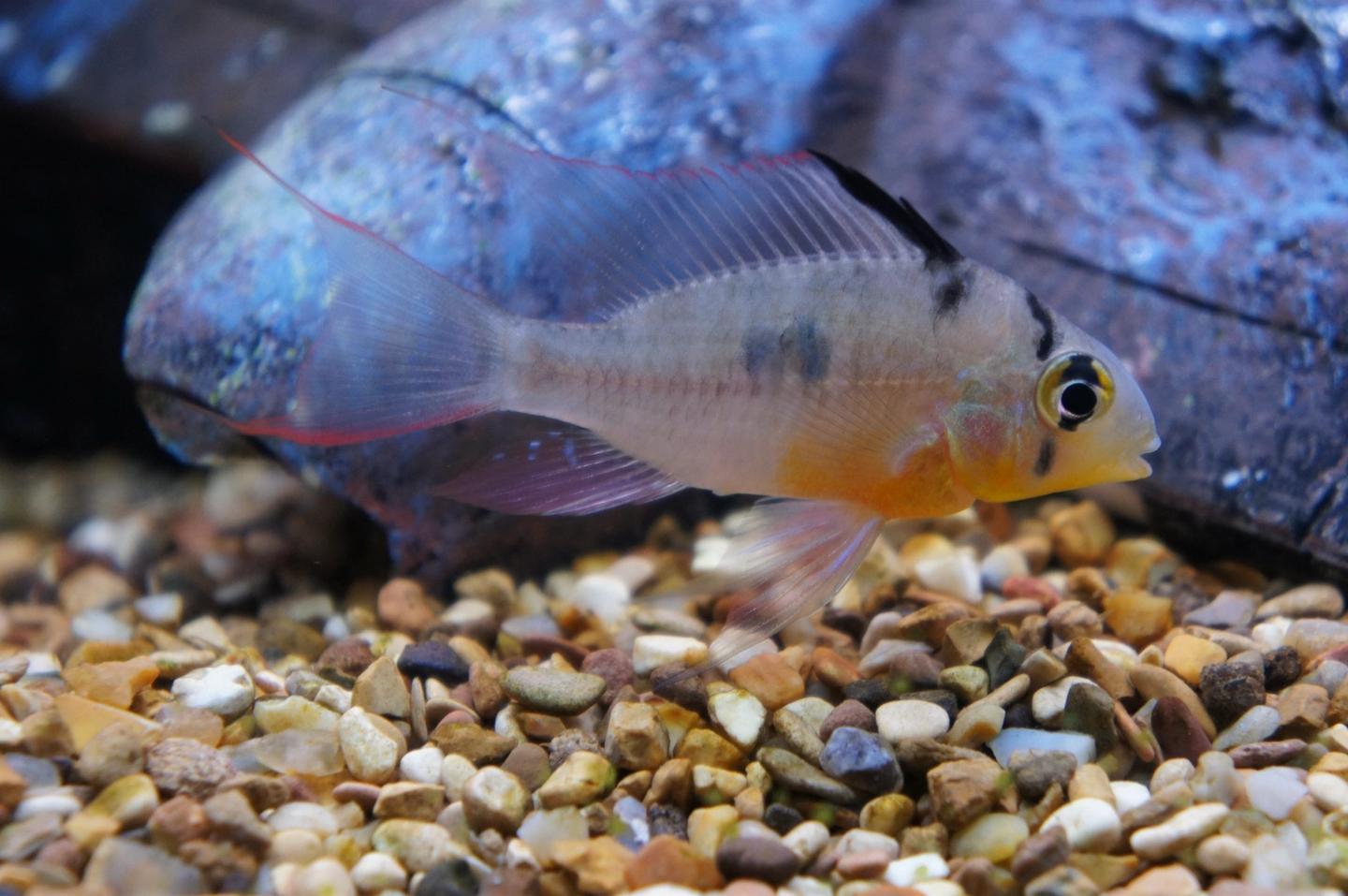
Wallaciia notophthalmus has the elongated, torpedo-shaped outline that makes pike cichlids so recognisable, but in a much smaller body. Expect a slim fish with a pointed head, large alert eyes, a deep mouth for its size, and a pattern designed for waiting among roots, leaf litter and shaded wood.
The corrected "two-spotted" name is tied to eye-spot markings, especially the female dorsal-fin ocelli that make this species distinctive. Males are often recognised by the extended first dorsal-fin rays described in specialist trade notes, while females can show more obvious eye-spot detail when mature or in breeding condition. Juveniles and newly imported fish can look more subdued until settled, so clean water, dim cover and patient feeding matter if you want the best colour and posture.
This dwarf pike cichlid is associated with South American Amazon drainage habitats, especially the lower Negro River basin. These are not bright, hard-water display-fish conditions. Think shaded forest water, submerged branches, root tangles, leaf litter, gentle movement and a lot of cover. In that environment the fish can hold still, watch, and launch quick ambushes at small invertebrates or tiny fish.
A practical aquarium does not need to copy every chemistry extreme from the wild, but it should respect the pattern: soft water, low stress, subdued light and stable water quality. A mature filter, careful acclimation and regular small water changes are safer than chasing numbers with sudden chemistry swings.
For a single specimen, start from a mature aquarium of at least 75 litres with generous cover. For a pair or a carefully planned community, give more floor space and more broken sight lines. Aquarium Glaser's trade notes for this fish emphasise that the species may be small but still needs meaningful floor area and cover when kept as a pair.
Use fine sand or smooth substrate, branching wood, caves, roots, and leaf litter from suitable aquarium-safe leaves such as catappa, oak or beech. Floating plants or dimmed lighting help the fish feel secure. Leave a few open lanes for movement, but do not make the tank bare; a bare tank makes dwarf pike cichlids nervous and can concentrate aggression.
For layout, think in territories rather than ornaments. A half coconut cave, a narrow slate cave, root tunnels and leaf piles all give the fish places to choose from. Two similar caves at opposite ends of the aquarium are better than one impressive centrepiece because they reduce direct disputes. If the fish is kept with other bottom-oriented species, add more cover than you think you need.
Leaf litter is not just decoration. It darkens the visual field, gives the fish confidence, traps tiny food particles, and supports a film of microorganisms that suits a natural blackwater-style aquarium. Replace a portion of the leaves as they break down instead of removing the whole layer at once. Sudden layout changes can unsettle territorial dwarf pike cichlids, so maintenance should be steady and gentle.
Filtration should be efficient without blasting the fish around the tank. A secure lid is sensible because pike cichlids can jump when startled or when chasing food. Keep the water warm and stable at about 24-27C, with soft water and a slightly acidic to neutral pH. If your tap water is hard, plan the setup before buying rather than trying to force the fish to adapt.
Wallaciia notophthalmus is a carnivore. Offer small frozen and live foods such as bloodworm, mosquito larvae, daphnia, brine shrimp, chopped mysis, blackworm, grindal worm and similar high-protein foods. Newly arrived specimens may ignore dry foods at first, so use movement and familiar frozen/live foods to get them feeding confidently.
Once settled, many pike cichlids can be taught to accept small carnivore pellets or granules, but a varied frozen/live rotation is still the better core diet. Feed modest portions and keep the substrate clean. Overfeeding is a fast way to spoil the soft, low-mineral water this fish needs.
Do not keep this fish with tiny ornamental fish or shrimp you would be upset to lose. If something is small enough to fit in its mouth, the pike cichlid may eventually treat it as food.
New arrivals can be cautious, so watch body shape and feeding response rather than simply adding more food. A healthy settled fish should hold its position confidently, watch the room, and move decisively when food appears. Sunken belly, clamped fins, rapid breathing or hiding in an exposed corner are signs to review water quality, tank mate pressure and acclimation stress.
Because this is usually a wild or supplier-collected specialist cichlid rather than a mass-produced community fish, quarantine and slow acclimation are sensible. Match temperature carefully, avoid sudden pH or hardness swings, and give the fish dim cover immediately after introduction. It may take several days before the fish behaves normally in the open.
This is a compact predator with real cichlid confidence. It often spends time watching from cover, then moves quickly when food or a rival appears. It can be shy at first, especially under bright light, but a settled specimen is observant and often becomes very responsive at feeding time.
Tank mates should be chosen for size, temperament and water preference. Possible companions include calm, fast mid-water fish that are too large to swallow and peaceful bottom fish that will not compete for caves, provided the aquarium is large enough and the water suits all species. Avoid very small tetras, tiny rasboras, fry, shrimp, delicate slow fish, fin-nippers, aggressive cichlids and cramped groups of similar dwarf pike cichlids.
If you try a pair, provide multiple caves and visual barriers. Like many cave-spawning cichlids, pair behaviour can be fascinating, but territorial pressure can increase quickly in a small or plain tank.
A good community plan is usually built around this fish, not around adding it last to an already busy aquarium. Mid-water fish should be calm, alert and large enough to avoid being viewed as prey. Bottom fish should be armoured or confident enough to ignore occasional territorial displays. Avoid mixing with boisterous Central American cichlids, large predatory catfish or fast fin-nippers that remove the quiet, shaded conditions this species needs.
In a species-focused setup, a single fish can be the main attraction. That is often the safest route for a keeper who wants to observe stalking, display, feeding and cave behaviour without managing aggression between several cichlids.
FishBase records cave spawning for this species group: eggs are placed in caves, the female tends the eggs, and the male defends the territory. In the aquarium, that means breeding attempts should be planned around privacy, soft stable water, several suitable caves and a backup plan if one fish becomes too forceful.
Do not buy this species only because it is small. Buy it because you want the behaviour of a dwarf pike cichlid and can provide the calm, covered environment it deserves.
The two size options on this Shopify product should be treated as the same species and care profile, not as separate care categories. The larger option will simply need more respect at feeding time and should not be placed with smaller tank mates.
Treat this page as a specialist care and availability page until the variant selector shows stock again. When available, Tropical Fish Co packs live fish for eligible UK livestock courier delivery, and our Live Arrival Guarantee applies to qualifying shipments under the published delivery terms. First-time customers can use WELCOME10 when the discount is active and the product is available at checkout.
If you are planning a soft-water Rio Negro-style aquarium, this is a rewarding fish to shortlist. If you are building a mixed community tank with small peaceful fish, choose a non-predatory dwarf cichlid instead.
No reviews for this item yet. Bought one? Honest reviews only, good or bad.
What customers say about ordering from us
I have a small group of long finned mountain minnows. So was delighted to be able to order ten of this variety to increase the genetics in my tank . The ones I recieved are healthy but it’s to early to give a verdict on wether they are of a long finned type since they are small currently.
Gordon Walker · 23 Sept 2026
100% success travel and "installation". Pleased with quality of purchase. The Siamese fighter a bit "shy" so have not yet seen him at his best yet but looking good. Happy customer. GG
George E Garratt · 21 Sept 2026
Reviews of our shop, collected by Judge.me, an independent third-party review collector. Newest first.