Advanced
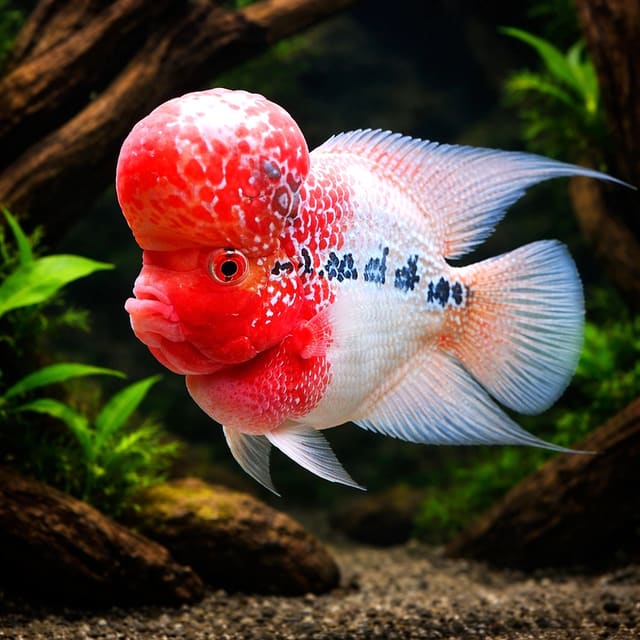
Flowerhorn Cichlid
22–27°C · pH 6.5–8
£90.99

A larger South American Pearl Eartheater / Brazilian High-Hat cichlid with blue-green pearling, bottom-foraging behaviour and a need for spacious sand-bottom adult housing.
Geophagus brasiliensis
Save when buying more.
Confirm your email, then we’ll send an availability message for this exact item if it returns within 180 days.
This request is only for this product—no newsletter or other promotions. A mail-provider retry may very rarely duplicate the same availability message. Unconfirmed addresses are removed after 48 hours. See our privacy policy.
A larger South American Pearl Eartheater / Brazilian High-Hat cichlid with blue-green pearling, bottom-foraging behaviour and a need for spacious sand-bottom adult housing.
Maintain these water conditions for optimal health and vibrant colors
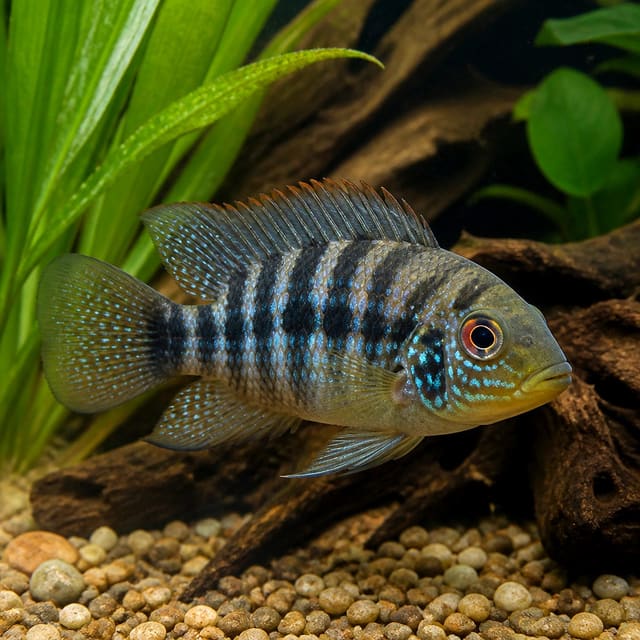
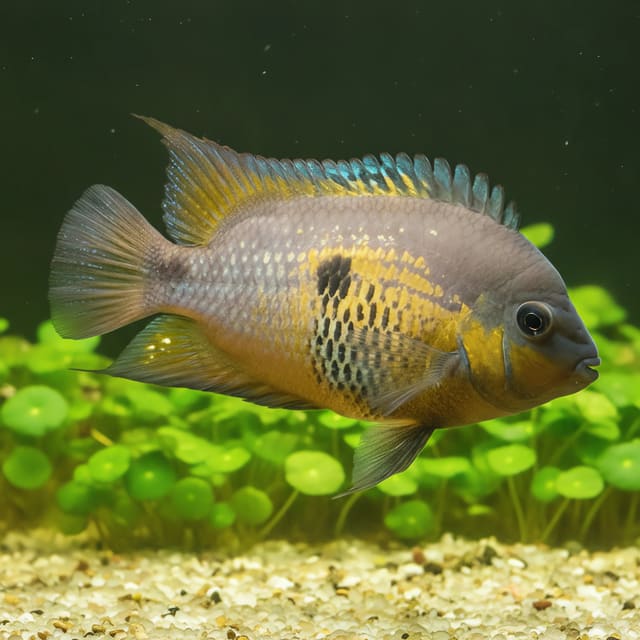
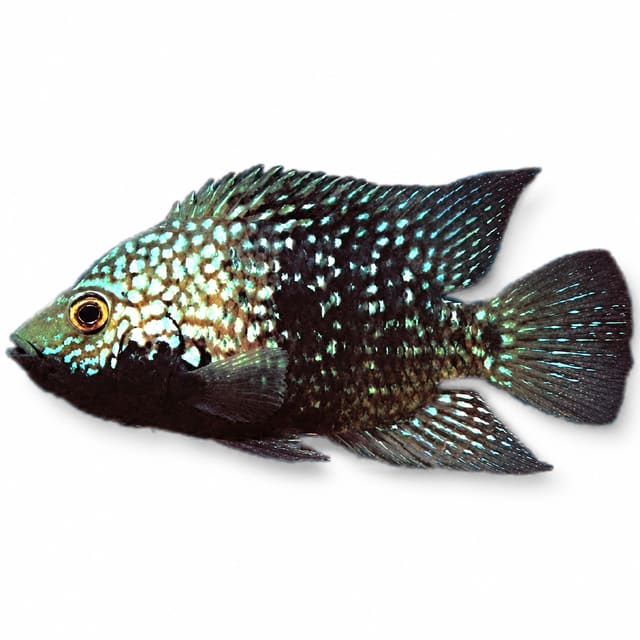
The Pearl Eartheater, Geophagus brasiliensis, is the substantial South American cichlid sold in the trade as Brazilian High-Hat, and in older trade wording for this SKU as “Brasilian High-Hat”. It is not a small community fish. It is a confident, bottom-working cichlid with a broad head, blue-green pearling, yellow-gold highlights and a habit of sifting through the substrate while it searches for food.
This listing covers the 0405 parent product and its size variants: 4-5 cm, 5-6 cm, 7-9 cm and XL. Those sizes are juvenile to part-grown sale sizes, not adult size. A well-kept G. brasiliensis can reach around 28 cm, so plan the adult aquarium first and then choose the size that fits your stocking plan.
The substrate is the heart of the setup. This fish spends much of its time near the bottom, investigating sand and fine gravel, so give it a smooth, clean substrate that will not damage the mouth or gill covers. A bare, sharp or dirty floor turns a natural behaviour into a stress point; a soft sand area lets the fish feed and display properly.
Use a spacious aquarium with open swimming room, sturdy wood or stonework and clear territorial boundaries. Plants can work if they are robust, protected or attached to hardscape, but delicate stems may be disturbed by digging. Filtration should be strong enough for a large cichlid that eats well and produces real waste, while flow should still leave calmer patches near the bottom.
The species is adaptable for a South American cichlid, which is useful for UK keepers with established heated aquariums. Keep the water clean and stable rather than chasing extremes. Regular water changes matter more than trying to hold a single exact number inside the range.
Pearl Eartheaters do best on a varied omnivorous diet. Use quality sinking cichlid pellets or granules as the base, then rotate in frozen or live foods such as bloodworm, brine shrimp, mysis and chopped seafood where appropriate. Add some vegetable matter through spirulina, algae-based foods or blanched greens. The goal is not just colour, but steady growth without a heavy, fatty diet.
Feed in a way that suits a bottom forager. Smaller portions that reach the lower half of the tank are usually more useful than one large surface feed that faster midwater fish steal before the eartheater gets involved.
This is a robust cichlid for a robust community, not a peaceful nano-fish companion. Suitable tankmates include similarly sized South American cichlids with enough space, larger peaceful catfish such as many plecos, and sturdy midwater fish that are too large to be treated as food. Avoid tiny tetras, shrimp, timid species, slow long-finned fish and very aggressive cichlids that would turn every boundary into a fight.
Adults can become territorial, especially as pairs mature. If you keep more than one cichlid, build the layout with sight breaks and more than one defensible area. A single specimen can be a strong centrepiece; a pair or group needs more room and more careful observation.
When a size is available again, choose with the adult 28 cm fish in mind. A juvenile may look manageable in a shop bag, but the adult needs a serious aquarium and tankmates chosen around its final size.
After arrival, keep the lights low, avoid immediate chasing or netting, and offer food only once the fish is settled. Watch the first week for heavy breathing, hiding, bullying or refusal to feed. In a clean, roomy aquarium with suitable companions, this species becomes an active, visible cichlid with much more character than a generic “large fish” listing suggests.
No reviews for this item yet. Bought one? Honest reviews only, good or bad.
What customers say about ordering from us
I have a small group of long finned mountain minnows. So was delighted to be able to order ten of this variety to increase the genetics in my tank . The ones I recieved are healthy but it’s to early to give a verdict on wether they are of a long finned type since they are small currently.
Gordon Walker · 23 Sept 2026
100% success travel and "installation". Pleased with quality of purchase. The Siamese fighter a bit "shy" so have not yet seen him at his best yet but looking good. Happy customer. GG
George E Garratt · 21 Sept 2026
Reviews of our shop, collected by Judge.me, an independent third-party review collector. Newest first.