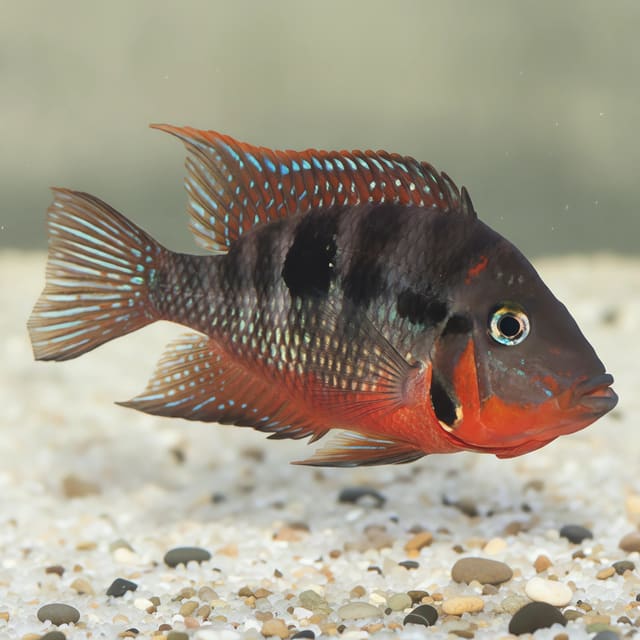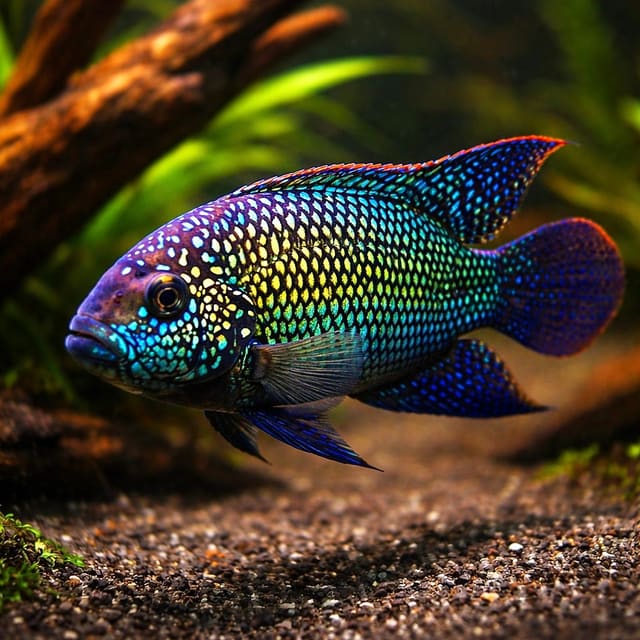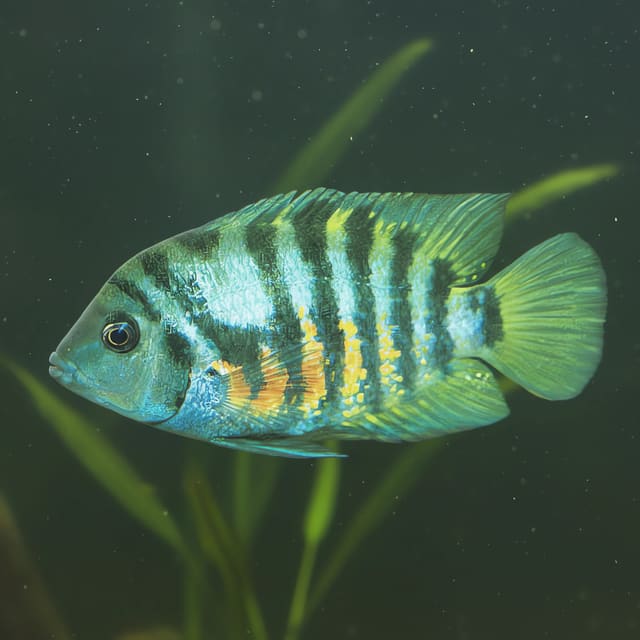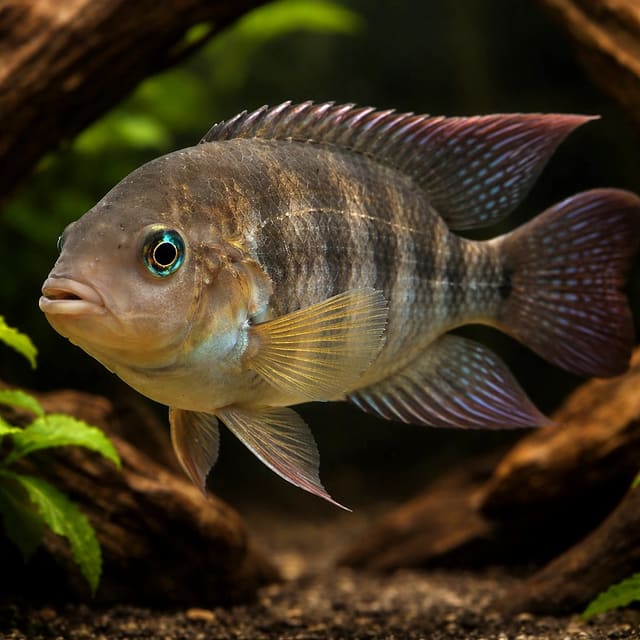
T-Bar Cichlid (Cichlasoma sajica)
23–27°C · pH 7–8
£5.99

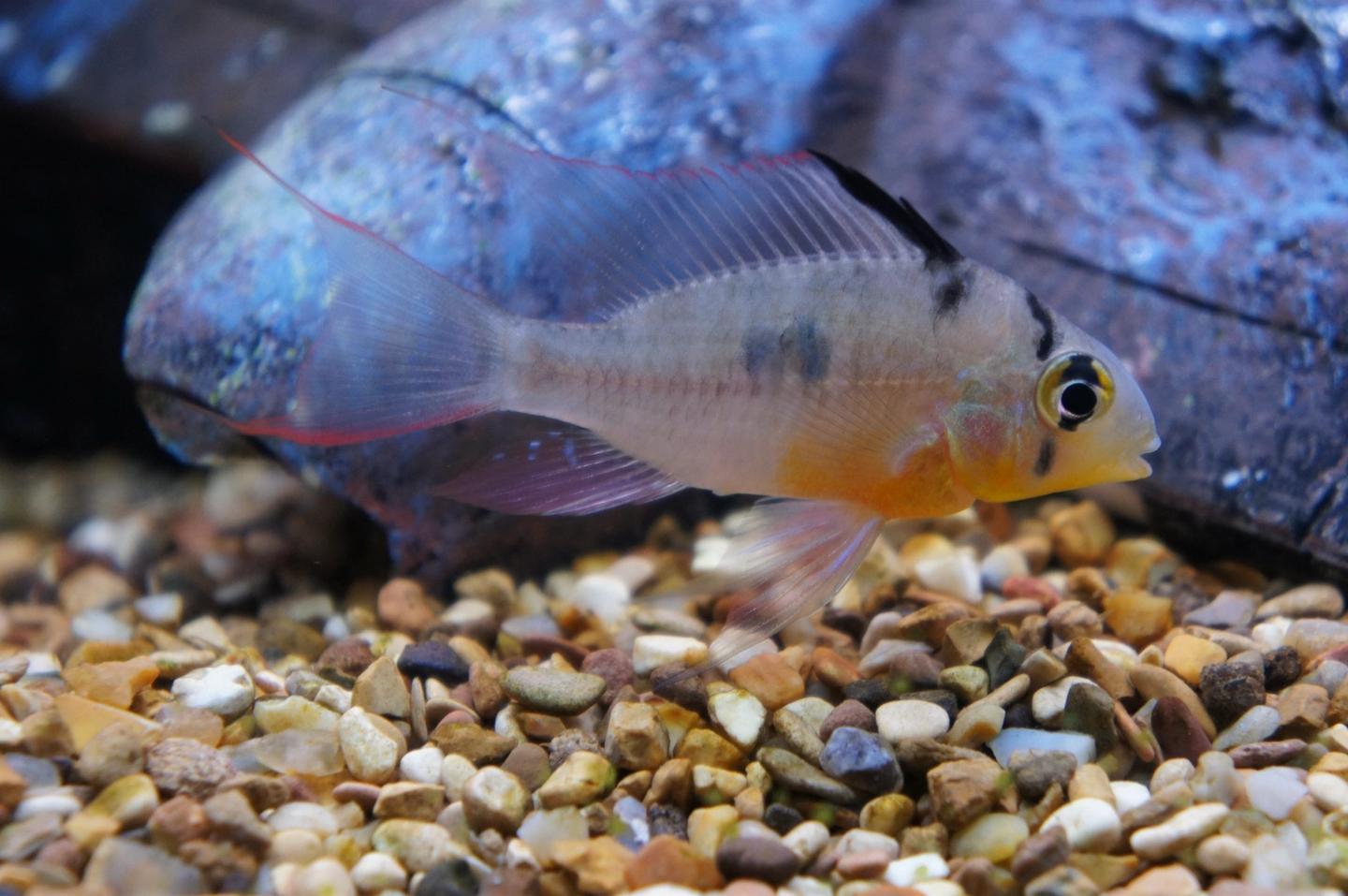
Golden colour form of the T-Bar Cichlid, a compact Central American cichlid with cave-spawning behaviour, adaptable water needs and a territorial but manageable temperament.
Amatitlania sajica
Save when buying multiple fish. Each quantity is one fish; sex and pair formation are not guaranteed unless the selected variant explicitly states them.
Confirm your email, then we’ll send an availability message for this exact item if it returns within 180 days.
This request is only for this product—no newsletter or other promotions. A mail-provider retry may very rarely duplicate the same availability message. Unconfirmed addresses are removed after 48 hours. See our privacy policy.
Golden colour form of the T-Bar Cichlid, a compact Central American cichlid with cave-spawning behaviour, adaptable water needs and a territorial but manageable temperament.
Cichlids are a family of roughly 1,800 accepted species, not one care type. Before buying, identify the exact species and source, then compare adult measurement, usable tank dimensions, social system, territory, tested water, diet and an exit plan. No family-wide minimum tank, water range or tank-mate list is safe.
Maintain these water conditions for optimal health and vibrant colors
Taxonomy note: this fish is still widely sold under older supplier and aquarium-trade names such as Cichlasoma sajica, Cryptoheros sajica and Archocentrus sajica. Current reference checks use Amatitlania sajica for the T-Bar Cichlid, so this page uses the current name while keeping the older names for identification.
The Gold T-Bar Cichlid (Amatitlania sajica) is a golden colour form of the T-Bar or Sajica Cichlid, a compact Central American cichlid with a bold shape, alert behaviour and strong parental instincts. It is much more manageable than the very large Central American cichlids, but it is still a territorial fish rather than a soft community species. Keep it for its character, colour and breeding behaviour, and plan the aquarium around caves, rocks, cover and enough space for a pair or specimen to hold a territory.
This product covers the current Shopify size options on the same parent listing: SKU 0232 at 3-4 cm, SKU 0233 at 5-6 cm, SKU L232 at 6-7 cm and SKU L233 as the XL option. All care notes below apply to the same gold T-Bar Cichlid line; choose the size that best fits your existing fish and available space when Shopify shows stock available.
| Common names | Gold T-Bar Cichlid, Gold Sajica Cichlid, T-Bar Cichlid colour form |
|---|---|
| Scientific name | Amatitlania sajica |
| Older trade names | Cichlasoma sajica, Cryptoheros sajica, Archocentrus sajica |
| Origin | Wild-type species from the Pacific slope of Costa Rica; aquarium gold colour form in trade |
| Adult size | Usually around 7-10 cm in aquarium planning, with males capable of being larger and deeper-bodied |
| Minimum aquarium | Plan around 120 litres for a pair, with more space for groups or mixed cichlid setups |
| Temperature | 23-27 C for the supplier line; stable mid-20s water suits most home aquariums |
| pH and hardness | Adaptable, roughly pH 6.0-7.8 and soft to hard water if conditions are stable |
| Temperament | Generally manageable for a cichlid, but territorial and much more defensive when breeding |
| Diet | Omnivore: quality cichlid foods plus frozen/live variety and some plant or algae content |
The gold form replaces much of the wild-type tan and grey pattern with a warm yellow to golden body colour. The classic T-Bar marking may still show as a darker vertical bar and lateral mark, especially as the fish settles or displays. Mature males usually become larger and more extended in the dorsal and anal fins, while females can show stronger metallic colour in the fins and a more compact body. Colour is influenced by mood, sex, dominance, breeding condition, diet and background, so expect a living fish rather than a static ornament.
Wild Amatitlania sajica is associated with Central American streams and rivers with gravel, smaller rocks and moderate current. In the aquarium, that translates to a secure hardscape with caves, stones, wood, open swimming room and efficient filtration. Arrange the layout so there are visual breaks rather than one open arena. A pair will often choose a cave, crevice or sheltered surface and defend it, so a stable aquascape matters more than delicate planting.
Use sand or smooth gravel, robust rockwork and pieces of wood that cannot collapse if the fish digs underneath. Java fern, Anubias and other tough epiphyte plants tied to wood or rock are safer than delicate rooted stems. Keep water well oxygenated and avoid sudden swings. This is a hardy fish when settled, but cichlids reward consistent maintenance: test new tanks, keep nitrates controlled and make regular partial water changes part of the routine.
Feed as an adaptable omnivore. A good cichlid pellet or granule can be the staple, supported by flake, frozen bloodworm, brineshrimp, mysis, daphnia, chopped prawn or similar meaty foods. Include spirulina, algae-based foods or vegetable content in the rotation rather than feeding only rich protein. Small, sensible portions keep water quality steadier and reduce waste, especially if the aquarium contains a pair preparing to breed.
The Gold T-Bar Cichlid is often described as one of the more reasonable Central American cichlids, but it is still a cichlid with a territory. A single fish can work in the right robust community. A compatible pair can be fascinating, showing courtship, cave cleaning, egg guarding and fry care, but the same behaviour can make them pushy toward tank mates. Breeding adults may darken, intensify their markings and defend a patch of the aquarium with real determination.
Good tank mates are confident, similarly sized fish that enjoy comparable water and will not be swallowed, shredded or constantly intimidated. Robust livebearers, larger tetras in roomy tanks, suitable bottom dwellers and other calmer Central American cichlids can work when space allows. Avoid tiny community fish, ornamental shrimp, very slow long-finned fish and mixing with closely related Amatitlania or Cryptoheros-type cichlids where hybridisation is a concern.
Choose this fish if you want a colourful, interactive cichlid that stays smaller than many headline Central American species, but still gives you real cichlid behaviour. It suits aquarists who can provide a mature tank, secure decor, strong filtration and a stocking plan built around territory. It is not the right choice for a peaceful nano tank or a delicate planted community where every fish must ignore each other.
Add this cichlid only to a cycled aquarium with stable temperature and hiding places ready before release. Keep lights low during acclimation, match temperature carefully, and give the fish time to settle before heavy feeding. Watch breathing, posture, colour and appetite during the first week. Treat this page as care and planning guidance until the live variant selector shows availability again. When livestock is available, Tropical Fish Co packs eligible fish for specialist live-animal courier service with the Live Arrival Guarantee when the delivery and acclimation conditions are followed.
Smaller juveniles are easier to grow on with existing young fish, while larger sizes make more sense for established cichlid aquariums where a tiny juvenile could be outcompeted. Do not choose purely by price or immediate colour. Choose by compatibility, tank space and the size of fish already in the aquarium. If you want a pair, allow room for the relationship to form and have a backup plan if two individuals do not tolerate each other.
No reviews for this item yet. Bought one? Honest reviews only, good or bad.
What customers say about ordering from us
I have a small group of long finned mountain minnows. So was delighted to be able to order ten of this variety to increase the genetics in my tank . The ones I recieved are healthy but it’s to early to give a verdict on wether they are of a long finned type since they are small currently.
Gordon Walker · 23 Sept 2026
100% success travel and "installation". Pleased with quality of purchase. The Siamese fighter a bit "shy" so have not yet seen him at his best yet but looking good. Happy customer. GG
George E Garratt · 21 Sept 2026
Reviews of our shop, collected by Judge.me, an independent third-party review collector. Newest first.