Easy
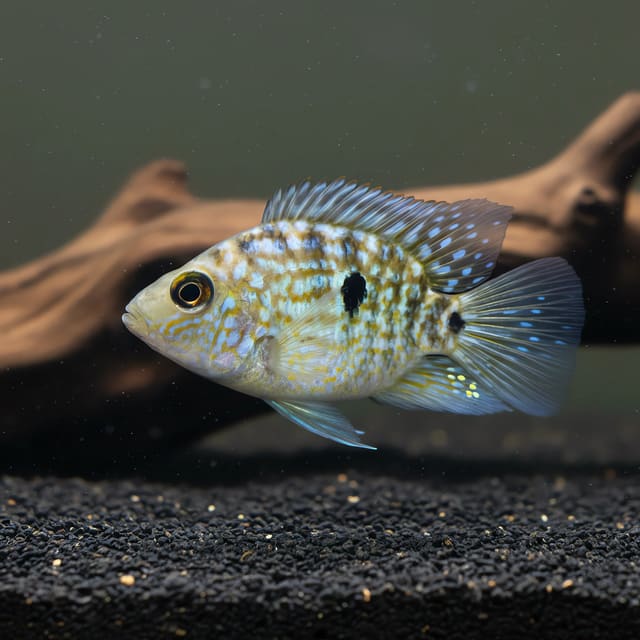
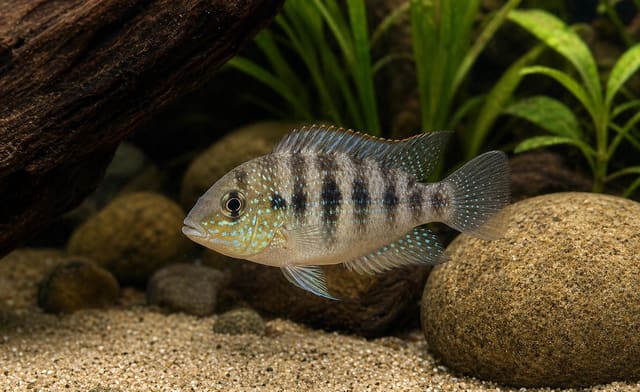
Electric Blue Acara (Andinoacara pulcher) – Neon Blue, 2–7cm Sizes
22–23°C · pH 6.5–8
£6.19
Photo coming soon
The size, price and care details on this page are for this listing.
One Manacapuru Blue Severum, an undescribed Heros cichlid traded under the name of a town on Brazil's Solimões River. Plan for a fish of around 20 cm, a tank with at least a 120 x 45 cm base, soft water at 24-28 °C and a varied diet with plenty of vegetable food.
Adult size is the maximum length this species reaches at full maturity (scientific sources). The livestock you receive will be younger and smaller — pick a size above for the actual shipping size. Product-photo provenance and any image-specific limitations are stated on the listing.
Heros sp.
One Manacapuru Blue Severum, an undescribed Heros cichlid traded under the name of a town on Brazil's Solimões River. Plan for a fish of around 20 cm, a tank with at least a 120 x 45 cm base, soft water at 24-28 °C and a varied diet with plenty of vegetable food.
Adult size is the maximum length this species reaches at full maturity (scientific sources). The livestock you receive will be younger and smaller — pick a size above for the actual shipping size. Product-photo provenance and any image-specific limitations are stated on the listing.
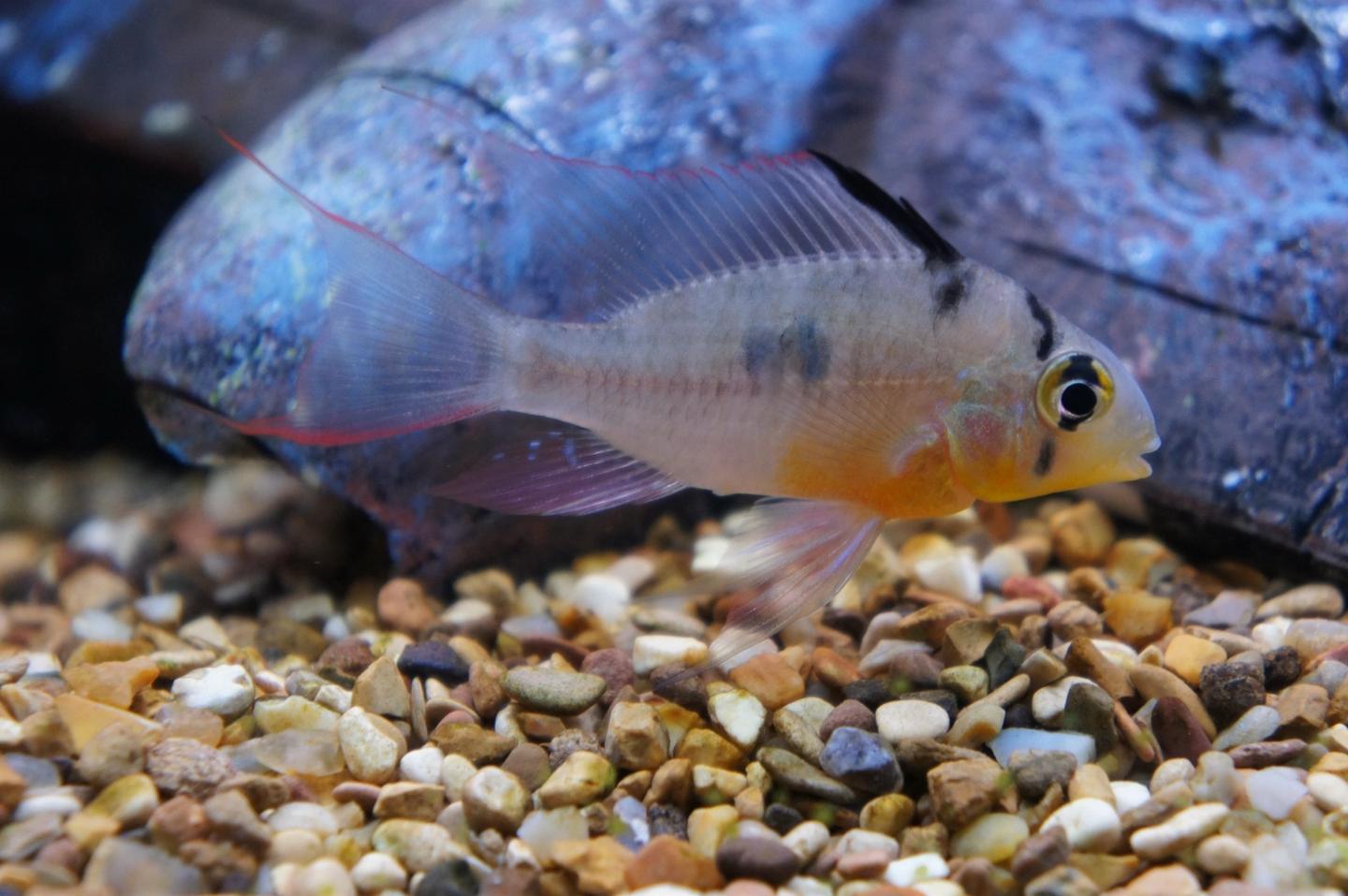
Cichlids are a family of roughly 1,800 accepted species, not one care type. Before buying, identify the exact species and source, then compare adult measurement, usable tank dimensions, social system, territory, tested water, diet and an exit plan. No family-wide minimum tank, water range or tank-mate list is safe.
Maintain these water conditions for optimal health and vibrant colors
This listing is for one Manacapuru Blue Severum, a South American cichlid from the genus Heros. You order a single fish. The listing has one option only: there are no size grades and no sex is stated, so we don't promise a male or a female and we don't quote a length here. If the size of the fish matters to your plans, for instance because it is joining established residents, send us a message before you order and we will tell you what we can.
The name is a trade name rather than a scientific one. The same fish is also listed as Heros sp. "Manacapuru blue Brasil", and some people search for it under exactly that spelling. Manacapuru itself is a real place: a town in the Brazilian state of Amazonas, on the banks of the Solimões River, about 93 kilometres from Manaus by road. The trade name points there. We hold no collection records that pin down where these fish, or their parents, were caught, so we won't claim more than the name itself says.
Why "sp." and not a full species name? Because no formal identification of this form has been published that we can point you to. FishBase and Wikipedia carry no species-level entry for a Manacapuru blue severum. The genus currently holds five described species, and this blue fish has not been formally assigned to any of them. Until somebody does that work properly, Heros sp. is the honest label, and it is the one we use.
In practice that changes very little about how you keep it. Everything below on size, water, food, temperament and breeding comes from the described severums, chiefly Heros efasciatus and Heros severus, as recorded by FishBase, Seriously Fish and Wikipedia. Their published care ranges overlap closely, so a tank that suits one suits the other, and that is the basis we suggest you plan on. Where the sources disagree we tell you, and we give the range we would actually aim for in a home aquarium.
One more thing to be straight about: there is no photograph on this listing at the moment. The word "blue" in the name is the colour this form is traded for, but we won't describe a pattern, a shade or a set of markings we can't show you. What we can describe is what severums as a group look like, how the described species are told apart, and what a healthy fish of this kind should be doing when it arrives.
Severums are the cichlids of the genus Heros, and "severum" is the general name the aquarium trade uses for them. Wikipedia describes the genus as native to the Amazon, Orinoco and Essequibo river basins of South America. Five species are recognised at present:
| Species | Described | Range given by Wikipedia |
|---|---|---|
| Heros efasciatus | Heckel, 1840 | Amazon basin |
| Heros liberifer | Staeck & Schindler, 2015 | Orinoco basin |
| Heros notatus | (Jardine), 1843 | Rio Negro and Essequibo River |
| Heros severus | Heckel, 1840 | Upper Orinoco and Rio Negro basins |
| Heros spurius | Heckel, 1840 | Guaporé River drainage, Amazon basin |
The names have had a muddled history in the hobby. Wikipedia notes that the severums most commonly met in the trade are fish referable to Heros efasciatus, and that true H. severus is rarely seen. It also records that, until 2015, aquarium fish going under the name H. severus were misidentified: they belonged to a separate species, which Staeck and Schindler described that year as Heros liberifer. True H. severus can be told from it by a partly formed seventh band on the flank, a feature noted in the original 1840 description and then disregarded until 2015.
So when you see "severum" on a label, it can mean several different fish. On top of the five described species there are undescribed forms traded under place names or descriptive names. Wikipedia mentions one of them, Heros sp. "Rotkeil" or "Red Shoulder", which hobby specialists think represents an undescribed species. Our Redneck Severum (Heros sp. Rotkeil) listing covers that fish, and it is worth reading alongside this one if you are comparing severum forms before you buy. The Manacapuru Blue sits in the same situation: a recognisable trade form without a published species name.
The traits below come from the sources on the described species. They tell you what to expect from the genus; they are not a promise about the exact colouring of the fish you receive.
Males and females are covered in the breeding section further down, because the differences only really show once the fish are well grown.
The most widespread severum, Heros efasciatus, is the best documented. Seriously Fish describes it as widespread through the main channel of the Amazon and the Rio Solimões, with records from the Rio Xingu as well. FishBase gives its range as tributaries of the Ucayali and Amazon in Peru, plus the Solimões-Amazon in Brazil. Manacapuru, the town in this form's trade name, sits on the Solimões, inside that documented range. That is as far as the evidence goes. It doesn't prove what species the Manacapuru Blue belongs to, and it is the reason we keep the cautious name.
The habitat descriptions agree with each other well. Seriously Fish lists slow-moving rivers, tributaries and floodplain lakes, with the fish favouring deeper, calm water full of submerged tree roots and branches. FishBase adds that the species has been caught sporadically in still-water zones such as flooded ground, and in estuaries with a noticeable tidal current, along banks with thick riverside vegetation. Wikipedia describes the same pattern from the feeding side: in the wet season, when the riverside zones flood, H. efasciatus feeds heavily on fruit, making it one of the few cichlids that act as regular fruit-eaters.
The other species fill in the picture. FishBase places H. severus in the upper Orinoco drainage of Colombia and Venezuela and the upper Rio Negro basin. Seriously Fish describes H. notatus as a Rio Negro fish from blackwater rivers and tributaries, where the water is stained brown with tannins from decaying plant material and is very acidic. You can see why the aquarium advice for the whole genus leans towards soft, slightly acidic water, sand, wood and subdued light.
Two other points from the sources are worth knowing. FishBase lists both H. efasciatus and H. severus as Least Concern on the IUCN Red List, assessed in November 2020, and notes that both have some value to fisheries as well as to the aquarium trade. Wikipedia adds a note of caution for H. efasciatus: it could be susceptible to over-exploitation because it naturally lives at low densities and has low fecundity. That is one more reason to look after a fish like this properly for the whole of its life.
This is the part people get wrong with severums, and Seriously Fish says as much: the severum is one of the most popular cichlids in the hobby, but not everyone realises how large it can grow. FishBase records a maximum of 20 cm standard length for H. severus and 17 cm standard length for H. efasciatus. Standard length is measured from the snout to the base of the tail, so the fish looks bigger than that number once the tail is included. Seriously Fish gives an even larger figure of 300 mm standard length for H. efasciatus and says the species reaches 20 to 25 cm in aquariums. Those figures disagree. Our advice is to plan for a fish of 20 cm or more and be pleasantly surprised if it stops short.
For one adult, Seriously Fish recommends a tank with a base of at least 120 x 45 cm, which works out at roughly 243 litres. For H. notatus it gives 120 x 38 cm, about 173 litres. We would treat the larger of the two as the starting point for a Manacapuru Blue, and go bigger if the fish is sharing with other large species or if you hope to grow on a pair. A young fish looks lost in a tank that size, but it will not stay small, and moving a big cichlid between tanks later is far more stressful for everyone than giving it room from the start.
| Planning point | What we suggest | Where it comes from |
|---|---|---|
| Minimum footprint | 120 x 45 cm base, about 243 litres | Seriously Fish, H. efasciatus |
| Adult length to plan for | 20 cm or more | FishBase 17-20 cm SL; Seriously Fish 20-25 cm in aquariums |
| Substrate | River sand | Seriously Fish biotope advice |
| Decor | Driftwood branches and twisted roots | Seriously Fish biotope advice |
| Lighting | Dim | Seriously Fish |
Seriously Fish describes a very simple biotope set-up: a substrate of river sand with a few driftwood branches and twisted roots, and dim lighting. It points out that aquatic plants are not a feature of the severum's natural waters, and suggests peat in the filter if you want to imitate blackwater conditions. That layout also mirrors the wild habitat, where the fish lives among submerged roots and branches in calm, deep water.
We would add some shop-floor practicalities. Big cichlids produce a lot of waste, so choose a filter rated well above the tank's volume and keep the flow gentle at the surface rather than turning the tank into a river. Use pieces of wood large enough that they can't be shoved around, and leave a clear swimming lane along the front. If you love plants, bear in mind that a fish recorded as mainly a fruit and plant eater may treat soft leaves as food; tougher plants tied to wood are the safer bet, and we would not build an expensive planted layout around one.
The published ranges for severums cluster in warm, soft, slightly acidic water. Here is what each source we read says, side by side, so you can see where they agree and where they don't:
| Source | Temperature | pH | Hardness |
|---|---|---|---|
| Seriously Fish, H. efasciatus | 22.2-28.9 °C | 5.5-7.0 | 1-8 dGH |
| Seriously Fish, H. notatus | 22.2-28.9 °C | 6.0-7.0 | 0-10 dGH |
| FishBase, H. severus | 23-29 °C | 5.0-6.5 | 0-6 dH |
| FishBase, H. efasciatus | 24-32 °C | 7.0 (lower figure only) | 20 (lower figure only) |
The FishBase entry for H. efasciatus stands apart. It lists only a lower pH of 7.0 and a lower hardness of 20, with no upper figures, which does not match the soft, acidic water described for the genus everywhere else. We have treated it as an outlier rather than a target. Its temperature range also runs to 32 °C, which describes what the species has been recorded in, not what you should run a tank at.
Our working range for a Manacapuru Blue is 24-28 °C, pH 5.5-7.0 and soft to moderately soft water, around 1-8 dGH. That sits inside the Seriously Fish figures and overlaps every FishBase range. Stability matters more than chasing a perfect number: a steady pH and hardness close to these figures is better than water that swings about while you try to correct it. If your water sits well outside these figures, talk to us before you order and we will help you work out whether it needs adjusting.
The Ornamental Aquatic Trade Association's freshwater care sheet sets out the basics we would hold any tank to. Ammonia and nitrite should both read zero. Check water quality at least once a week. Do partial water changes of up to 25% every week, and dechlorinate the new water, either by letting it stand for 24 hours or by using a commercial dechlorinator. When the filter needs cleaning, rinse the media in old tank water from a water change, never under the tap, because tap water kills the beneficial bacteria the filter depends on.
In real numbers, on a tank of about 243 litres a 25% change is roughly 60 litres a week. Bring the new water close to the tank temperature before it goes in, treat it with dechlorinator, and siphon from the sand surface as you go so waste doesn't build up under the wood. A big severum leaves enough behind that you will see the difference in the bucket, and that is the waste you are removing before it turns into nitrate.
The same sheet is clear that a new tank is not ready for fish just because it is full and warm. After an initial 24 to 48 hours to settle, the tank has to be cycled, by either the fish-in or the fishless method, until ammonia and nitrite have dropped to zero and stay there. For a fish that will grow to this size and eat this much, we would only ever add it to a fully cycled tank.
Severums are not pure carnivores, and it is worth feeding them with that firmly in mind. FishBase describes H. efasciatus as omnivorous but mainly frugivorous, meaning fruit makes up much of its natural diet. Wikipedia makes the same point, calling it one of the few cichlid species that acts as a regular fruit-eater, especially in the wet season when the riverside forest floods. For H. severus, Wikipedia describes a diet of small bottom-living invertebrates and plant material.
In the aquarium, Seriously Fish calls the severum omnivorous and unfussy. It recommends good quality dried foods as the base, with meatier foods such as bloodworm, chopped earthworms and prawns, plus vegetable matter such as blanched spinach and spirulina-based foods. Put together, that gives a sensible weekly plan:
Feed what the fish clears in a few minutes and take out anything left over. Uneaten food breaks down quickly in a warm tank and pushes up ammonia, which undoes all the good your weekly water changes are doing. A young fish settling in may be shy for the first few feeds; offer small amounts, keep the light low, and don't panic if it waits until you have walked away before it eats.
A word on plants again. Because the wild diet leans so heavily on fruit and plant material, a severum in a planted tank may well browse on soft leaves. We would rather you knew that before the fish arrives than discover it with a bare stem the following week.
Severums have a reputation as one of the calmer large cichlids, and the sources back that up with a sensible caveat. Seriously Fish describes the severum as fairly mild-mannered for a cichlid of its size, except when spawning, which makes it a good choice for a community of large, peaceful species. It also warns that some specimens can develop a nasty streak as they mature when kept singly, and that keeping them with others of their own kind prevents this in most cases.
That second point matters for a listing that sells one fish. Ordering a single Manacapuru Blue is perfectly sensible if it is going into a community of large, peaceful fish, or if you already keep severums. If you want a group to grow on and pair off, order more than one and size the tank for them from the start. What we would not do is plan a single severum as the only fish in a big, bare tank and expect it to stay sweet-tempered forever.
The rule from the sources is simple: large and peaceful. In practice that means other fish of similar size and calm temperament that like the same warm, soft water. Spawning is the exception the sources flag; a pair guarding eggs or fry will defend a territory, so in a smaller tank give the other fish somewhere to go.
At the other end of the scale, we would keep very small fish away from a grown severum. A fish that happily takes chopped earthworms and prawns can swallow a tiny tetra, even if it isn't a hunter by nature. Equally, we wouldn't put a severum in with much larger, rough cichlids that will bully a mild-mannered fish off its food.
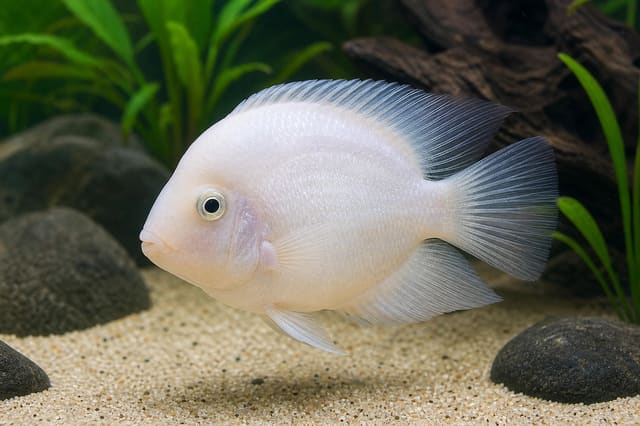
If you are comparing other South American cichlids, our Electric Blue Acara (Andinoacara pulcher) and Blue Angelfish (Pterophyllum scalare) listings describe their own size, water and temperament needs. Read them side by side with this page and check that the requirements genuinely overlap before you mix species; we haven't found a source that sets out how these particular fish get on together, so we won't make that promise for you.
This fish is sold unsexed. Young severums of either sex look much alike, and the differences the sources describe are the kind that develop as the fish grows. Seriously Fish lists them as follows: the male is bigger, has markings on the gill covers, and may develop a nuchal hump on the forehead and extensions to the dorsal and anal fins. None of that is reliable on a young fish, which is why this listing doesn't offer a sexed fish.
No source we have read documents breeding in the Manacapuru Blue specifically, so what follows is the pattern recorded for the described species. Seriously Fish advises anyone hoping to breed severums to buy a group of young fish and grow them on, letting a pair form naturally. The fish spawn on a flat stone, both parents guard the eggs, and both parents then brood the fry in their mouths. The fry are relatively large and can take brine shrimp and powdered food.
FishBase gives more detail by species:
Bear the naming story in mind when you read older breeding reports. Because aquarium fish called H. severus turned out to include a different species, accounts written under one name may describe another, and a locality form like this one may differ in small ways from any of them.
If a pair does form, expect the calm temperament to change while they have eggs or fry. The sources are clear that spawning is when severums are least peaceful, so give the pair space and plenty of wood to divide the tank, and keep the water quality excellent while they are raising fry.
A healthy severum is not hard to spot once you know what you are looking for. The OATA freshwater care sheet lists the signs: clear, bright eyes; undamaged fins; intact scales; no ulcers or lumps; normal swimming; and steady breathing. Those are the things to check on the day the fish arrives and in the weeks after.
The same sheet lists the warning signs that something is wrong:
Many problems in big cichlids start with the water rather than with the fish. A severum eats heavily and produces plenty of waste, so the first thing to do when it looks off colour or stops eating is to test for ammonia, nitrite and nitrate, and change water if anything is creeping up. Diet is the next thing to look at: given how much plant food this genus eats in the wild, a menu of meaty food alone is worth correcting before you reach for treatments.
If you already keep fish, a few weeks in a separate quarantine tank before the new arrival joins the main display is good practice for any fish, and especially for one that will live with you for years. Watch the new fish in quarantine for the signs listed above, feed it well, and move it over only when it is eating confidently and behaving normally.
Finally, plan for growth as a health issue in its own right. A fish of this size crammed into a tank that is too small spends its life stressed and in poor water. Upgrading in good time, before the fish has outgrown the tank, avoids a lot of the trouble people blame on bad luck.
A severum is a long-term fish, and it is far easier to answer a few honest questions now than to rehome a 20 cm cichlid later. Before you order, run through this list:
If you found this page searching for a "blue severum", it is worth knowing that the phrase describes a colour, not a species. This listing is specifically the form traded as Manacapuru Blue, kept under the cautious name Heros sp. If you can tick every line above, it is a rewarding fish to keep: calm for a cichlid of its size, and one of the few cichlids with a regular taste for fruit.
Before you order, have the aquarium fully ready: filter running, water tested, and the temperature matched to what the fish will need. Someone must be at the delivery address to receive the parcel, because live animals cannot be left on a doorstep. Please read our delivery and live-arrival information before you order so you know exactly how it works.
Your severum travels in an oxygen-filled bag inside insulated packaging, with heat packs added when conditions call for them, and goes by a tracked courier licensed to carry live animals. We email you the confirmed delivery date and the tracking details.
Start a continuous unboxing video while the parcel is still sealed, and open it in the same take so the fish is shown inside the bag before the bag is opened. If the fish arrives dead, dying or clearly compromised, email hello@tropicalfishco.co.uk on the day of delivery with your order number and that video. Photos alone do not meet the policy. The resolution is a replacement with your next order or a refund for the affected fish, subject to the guarantee terms.
Over the first week, watch breathing, appetite and behaviour. New fish often hide at first and may ignore food for a day or so; that is normal. Offer small meals, remove what isn't eaten, and keep up your water testing. Once it is cruising the front of the tank and coming up for food, it has settled in.
These are the sources behind the care figures on this page. Because the Manacapuru Blue has no species-level record of its own, they cover the described severums it is kept like.
No reviews for this item yet. Bought one? Honest reviews only, good or bad.
What customers say about ordering from us
Easy website plenty of info on fish your buying great to pick a time slot
TRACEY DURRANT · 7 Oct 2026
Got some lovely fish thank you
Kevin Mackie · 7 Oct 2026
Reviews of our shop, collected by Judge.me, an independent third-party review collector. Newest first.