Advanced
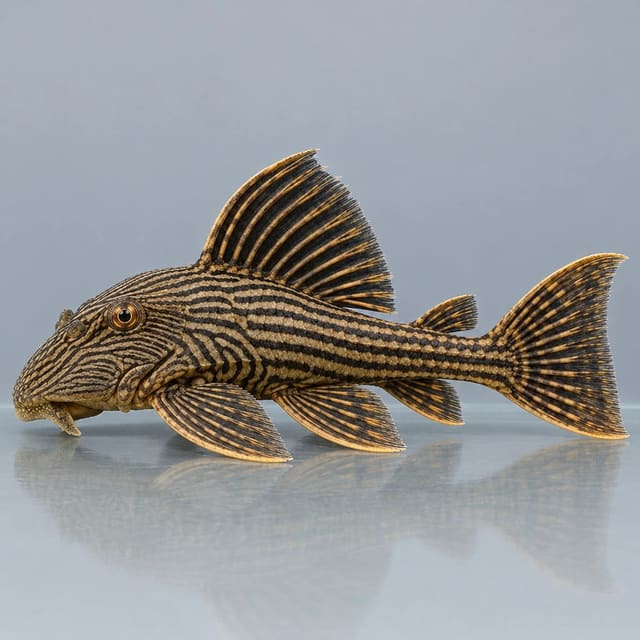
L027D Tapajos Royal Pleco (Panaque armbrusteri)
£76.59
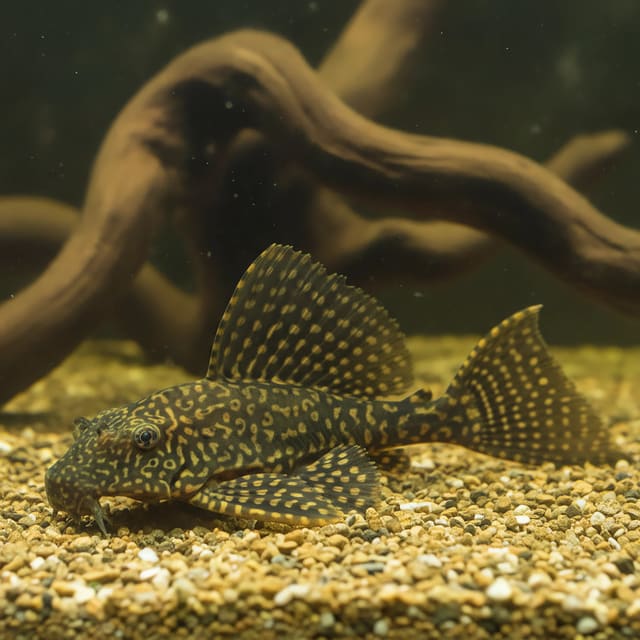
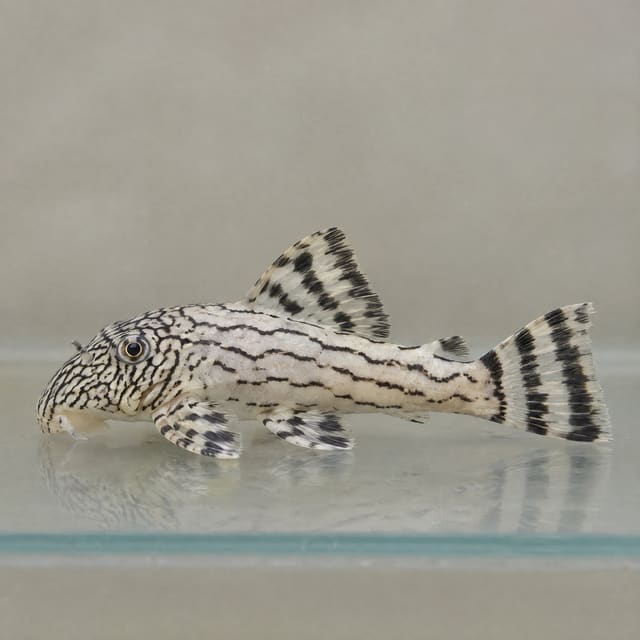
The L330 Watermelon Pleco is the boldly spotted royal pleco from the Guaviare River basin in Colombia, described in 2020 as Panaque nigrolineatus laurafabianae. It is a peaceful but territorial wood-eating catfish that grows to about 40 cm and needs an aquarium at least 180 cm long, full of real bogwood. One live fish per purchase.
Panaque nigrolineatus laurafabianae
The L330 Watermelon Pleco is the boldly spotted royal pleco from the Guaviare River basin in Colombia, described in 2020 as Panaque nigrolineatus laurafabianae. It is a peaceful but territorial wood-eating catfish that grows to about 40 cm and needs an aquarium at least 180 cm long, full of real bogwood. One live fish per purchase.
‘Pleco’ is a loose aquarium-trade label, not one species or one care sheet. Before buying, confirm the scientific name or defensible L-number, adult size and measurement method, required footprint, temperature and water, diet, social plan and source. No universal pleco tank size, menu or algae result is honest.
Read the full care guidance when planning conditions for your aquarium.
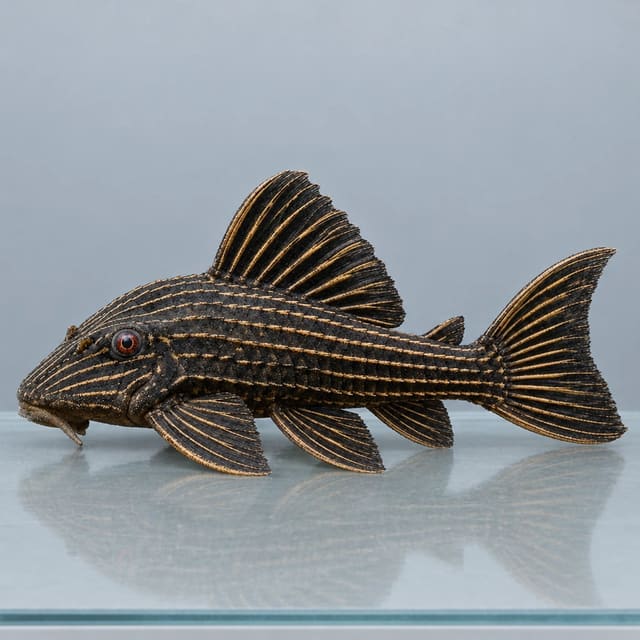
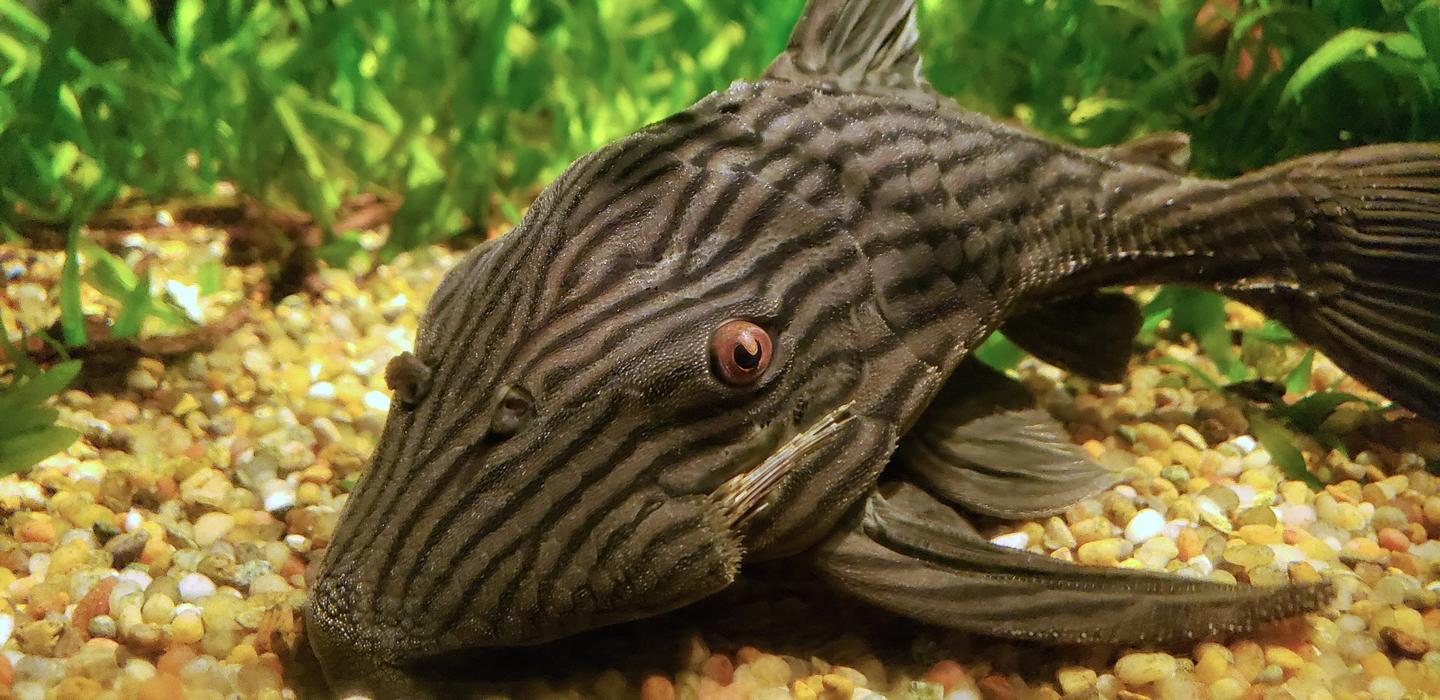
The L330 Watermelon Pleco is the spotted royal pleco of the Guaviare River basin in Colombia, at the south-western corner of the Orinoco system. Royal plecos, Panaque nigrolineatus, are normally boldly striped. Fish from the Guaviare are usually boldly spotted instead, which earned them the trade name watermelon pleco. In 2020 Armando Ortega-Lara and Nathan Lujan described this population as the subspecies Panaque nigrolineatus laurafabianae, named after Ortega-Lara's daughter, Laura Fabiana. You will also see it sold as the Royal Panaque Spotted, the spotted royal pleco and L027a.
The describers found the Guaviare fish distinct in range, colour pattern and body proportions, but the genetic differences were very small: under 0.5% divergence in the mitochondrial markers they examined. They therefore named it a subspecies rather than a full species, and Eschmeyer's Catalog of Fishes still lists it as a synonym of P. nigrolineatus. For a keeper the practical point is simple. An L330 needs royal pleco care, planned for a heavy-bodied, wood-eating catfish that grows to around 40 cm.
| Feature | What to look for |
|---|---|
| Teeth | Spoon-shaped teeth, wider at the tip than at the base, set in a V-shaped row |
| Mouth | A broad, oval sucker mouth without the small flap of skin (the buccal papilla) that most plecos have inside the mouth |
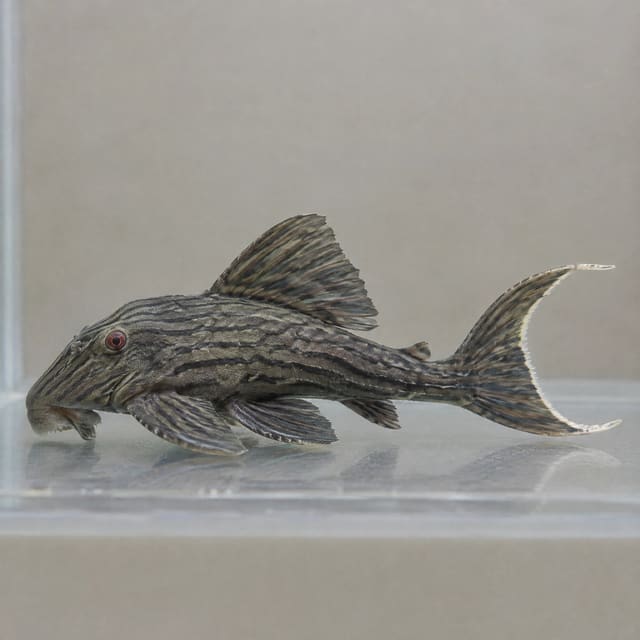
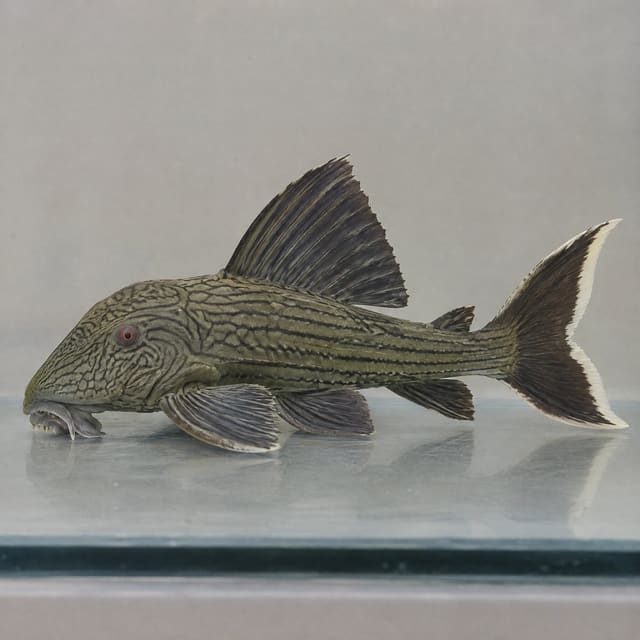
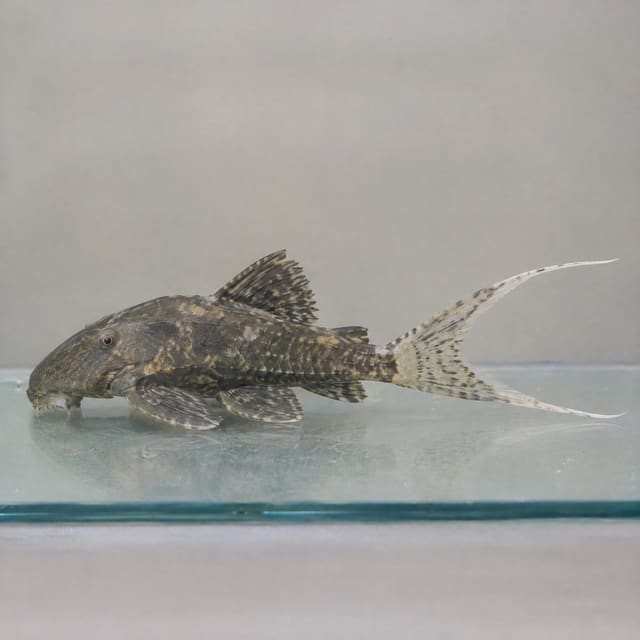
| Pattern | Spots that stay fairly constant from juvenile to sub-adult; fully grown fish become more or less striped, sometimes keeping a few spots |
| Eyes | In royal plecos the eye colour ranges from bright orange to dull red |
| Sex | Males show more yellow at the edges of the unpaired fins, but only from sub-adult size |
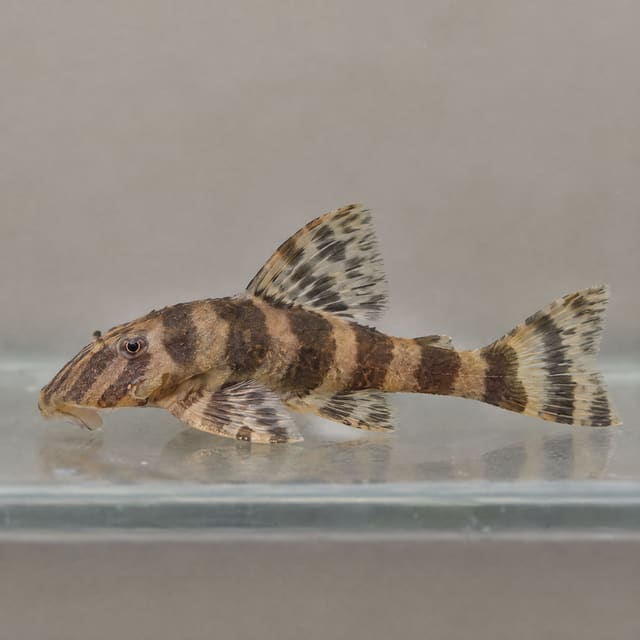
The gallery images are representative, prepared from a reference photograph, and do not show the exact fish supplied. Spot size and density vary between individuals, and the pattern changes as the fish matures.
| Suits | Not suited to |
|---|---|
| An aquarium at least 180 cm long | A standard community tank or a small "starter" pleco set-up |
| A layout built around large pieces of real wood | A bare or rock-only aquarium with no wood to rasp |
| A keeper ready for heavy filtration and large weekly water changes | A lightly filtered tank or irregular maintenance |
| Peaceful or robust midwater fish | Other large plecos or catfish competing for the same wood |
One purchase quantity supplies one live L330 Watermelon Pleco in the standard size offered. Sex is not specified: the yellow fin edges that mark males appear only in sub-adult fish, so a young L330 cannot be sexed by eye. The fish you receive will be far smaller than an adult, and OATA warns that an off-the-shelf aquarium is unlikely to be big enough for the larger plecos in the long term.
Buy for the adult, not for the juvenile. A young L330 fits easily into a modest aquarium, but over its life it needs the space, filtration and wood supply of a 40 cm fish.
Measure first, then order. Arrival times and packing details are on our delivery page.
Planet Catfish gives a maximum of 430 mm standard length for the watermelon pleco, and Scotcat gives 40 cm. FishBase records 43 cm standard length for P. nigrolineatus as a whole. Standard length is measured without the tail, so an adult is longer still from snout to tail tip. All three sources agree that this is one of the large plecos.
For tank size the sources differ. Scotcat recommends an aquarium of at least 180 cm (6 ft) for a single individual, while FishBase gives a minimum of 120 cm for the species. We follow the larger figure, because a 40 cm wood-eater needs room to turn, a territory of its own and enough water to dilute its waste. OATA notes that the very large aquarium fish it calls tankbusters, which include the larger plecos, often need aquariums of more than 500 litres. As an example, a tank measuring 180 × 60 × 60 cm holds about 648 litres before decor; our tank volume calculator works out the figure for your own measurements.
If your aquarium cannot reach that size, choose a smaller species from our L-number plecos instead.
Planet Catfish describes the natural habitat of the watermelon pleco as fallen trees and wood tangles. For the royal pleco it calls bogwood essential, both as food and as the fish's preferred hiding place. Build the layout around several large pieces of real aquarium wood, arranged so that the pleco can wedge itself into a dark gap or rest under an overhang during the day.
Large royal plecos rearrange the aquarium to their own liking, and Planet Catfish warns that rocks must be secured so they cannot topple against the glass. OATA gives the same advice for big fish: fix ornaments and rocks firmly and protect heaters from damage. Use sand or fine gravel without sharp edges, which OATA recommends for catfish to protect their sensitive barbels. Where fish may eat or uproot live plants, OATA suggests artificial plants and ornaments instead, so in an L330 tank treat plants as optional.
| Area | Purpose |
|---|---|
| Large wood pieces at the back and sides | Food to rasp and a dark daytime refuge |
| One overhang or cave sized for an adult | A territory the fish can hold without constant disputes |
| Open sand along the front | Feeding space, and easy siphoning of fine waste |
| Heater guard and rocks resting on the glass | Protection from a strong fish that pushes decor around |
Replace wood as it wears down. A royal pleco slowly rasps its wood away, and a piece too small to hide under no longer does its job. Browse our Panaque plecos to compare the other wood-eaters that need the same kind of layout.
The three sources give slightly different ranges. The target column uses the band where they overlap, which suits the fish whichever figure you trust.
| Value | Planet Catfish (royal pleco) | Scotcat (L330) | FishBase (royal pleco) | Target |
|---|---|---|---|---|
| Temperature | 22–30°C | 24–29°C | 22–26°C | 24–26°C |
| pH | 6.5–7.5 | 6.0–7.5 | 6.5–7.5 | 6.5–7.5 |
| General hardness | Not given | Not given | 2–15 dH | 2–15 dGH |
UK tap water ranges from very soft to very hard depending on where you live, and your water company publishes hardness and pH figures for your postcode. If your supply is harder than about 15 dGH, blending it with reverse-osmosis water is the usual way to bring it into range; make any change gradually and keep it steady from one water change to the next. Our water matcher compares your tap water with this fish, our water chemistry guide explains each reading, and our guide to pH in tropical aquariums covers how to adjust it safely.
| Reading | Target |
|---|---|
| Ammonia | Zero mg/l |
| Nitrite | Zero mg/l |
| Nitrate | No more than 20 mg/l above your tap water |
These waste limits come from OATA's catfish care sheet. A tank can sit inside the right temperature and pH and still be unsafe if ammonia or nitrite are present, so test both kinds of reading every week, and again after any change in feeding or stocking.
Scotcat links this pleco's need for plenty of water changes and powerful filtration directly to its wood-eating habits. A Panaque spends much of its time rasping wood, and much of what it scrapes off passes through as fine, fibrous waste that settles on the sand and clogs filter sponges. For very large fish, OATA advises several large aquarium filters, or even a pond filter, to cope with the volume of solid waste. Our guide to aquarium filtration explains how mechanical and biological filtration share that work.
If ammonia or nitrite ever read above zero, reduce feeding, change water and find the cause before adding more fish.
Planet Catfish describes the classic pleco diet of greens: royal plecos can be weaned onto most vegetables, with tinned peas a favourite, and they eat bogwood. Scotcat adds cucumber, courgette and sinking tablets, and stresses that wood must be part of the set-up. Some prepared foods should supplement the vegetables. OATA advises buying organic vegetables or washing them thoroughly, because residual pesticides can harm fish.
New royal plecos can be fussy feeders. Planet Catfish advises waiting until the fish is feeding well before adding large, boisterous tank mates that might take its food.
Add an L330 only to a biologically mature aquarium with zero ammonia and nitrite, water at 24–26°C and pH 6.5–7.5, and the wood already in place. Catfish have sharp fin spines, and OATA recommends double bagging them for that reason, so open the bag with care.
Use the floating bag method OATA describes: switch off the aquarium lights, float the bag for about 10 minutes to equalise the temperature, then add small amounts of tank water to the bag over up to 20 minutes. Release the fish with as little bag water as possible. Our guide to acclimatising new fish covers each step. Guide the pleco out of the bag into a container rather than lifting it in a net, because its spines and rough skin snag easily in netting.
| Checkpoint | What to do |
|---|---|
| Before arrival | Test the water, place the wood, settle rocks on the glass and fit a heater guard |
| Release | Lights off; let the fish find cover and do not feed that evening |
| Days one to three | Offer a small vegetable portion each evening and remove leftovers next morning |
| Every day | Find the fish in its wood and check its breathing and belly |
| End of the week | Full water test and the first weekly water change |
Planet Catfish describes the royal pleco as very secretive, so daily checks need a little patience: look into its wood and caves rather than expecting it out in the open. OATA lists the general warning signs for catfish: hanging at the surface, sitting on the bottom or swimming erratically, turning darker or paler, hiding more or becoming more aggressive, breathing faster or slower than normal, white spots or fluffy growths, lost fins or scales, a change in body condition and reduced interest in food.
| If you see | Do this |
|---|---|
| A hollow or sunken belly | Check that it can reach vegetables and wood without competition, and feed after the lights go out |
| Hanging at the surface or fast breathing | Test ammonia, nitrite and temperature at once and increase aeration |
| Refusing food after the first week | Check the water readings, try a different vegetable and remove boisterous feeders |
| Chasing other catfish away from its wood | Normal territorial behaviour; add more wood and break up the sight lines |
| White spots, fluffy growths or damaged fins | Test the water and seek fish-health advice |
Record your readings and any changes before treating anything, and contact us with them if a problem continues.
Planet Catfish describes the watermelon pleco as generally peaceful but ready to defend its territory against its own kind. For the royal pleco it adds that it is territorial with other similarly sized catfish and otherwise peaceful with smaller fish. Because the pleco is so secretive, Planet Catfish suggests livelier fish to give the aquarium movement during the day.
| Suits | Avoid |
|---|---|
| Active midwater fish that share 24–26°C and pH 6.5–7.5 | Another L330, royal pleco or similarly sized catfish without very large space and separate wood |
| Robust schooling fish in a tank of the size this pleco needs | Large, boisterous feeders added before the pleco is feeding well |
| Fish that use the upper and middle water, leaving the wood to the pleco | Fish that need cool water or a very different pH |
In an aquarium of the size this pleco needs, good companions from our range include the Tinfoil Barb and the Spotted Red-Cheek Silver Dollar for movement in the upper water, and the Giant Danio for a fast-swimming school. Check any mix with our tank mates tool before you buy.
To compare related plecos, see our L027 Royal Pleco, the striped Royal Pleco (Panaque nigrolineatus), the L190 Golden Royal Pleco and the L090 Papa Panaque, or browse all our catfish and plecos, South American catfish and centrepiece fish. Our pleco care guide covers the basics every pleco shares.
Planet Catfish lists breeding of the watermelon pleco as unreported in the aquarium, so the fish in the trade are collected from the wild. Ortega-Lara and Lujan note that the spotted Guaviare population is heavily exploited for export because of its popularity, which is a good reason to buy one only when you can give it a home for life. FishBase lists P. nigrolineatus as Least Concern on the IUCN Red List (assessed 2020); the subspecies itself has not been evaluated.
It is the boldly spotted royal pleco from the Guaviare River basin in Colombia. Ortega-Lara and Lujan described it in 2020 as the subspecies Panaque nigrolineatus laurafabianae, although some catalogues still treat it simply as P. nigrolineatus. It is also sold as the Royal Panaque Spotted and as L027a.
Planet Catfish gives 430 mm standard length and Scotcat gives 40 cm, both measured without the tail. Plan for a heavy-bodied catfish of around 40 cm or more.
Scotcat recommends at least 180 cm (6 ft) for a single fish. FishBase gives a 120 cm minimum for the species, but for a 40 cm adult we follow the larger figure.
Yes. Panaque are wood-eating plecos, and both Planet Catfish and Scotcat say real bogwood must be in the aquarium. The wood is part of its diet as well as its hiding place, so add vegetables and sinking foods alongside it.
Planet Catfish says the spotted pattern stays fairly constant from juvenile to sub-adult, but fully grown fish become more or less striped, sometimes keeping a few spots.
Only in a very large aquarium with separate wood and hiding places for each. They are generally peaceful but defend their territory against their own kind and other similarly sized catfish.
Aim for 24–26°C and pH 6.5–7.5, the range where Planet Catfish, Scotcat and FishBase overlap. Keep ammonia and nitrite at zero and nitrate no more than 20 mg/l above your tap water.
Not reliably. It is mainly a wood and vegetable eater and produces a lot of waste. OATA points out that no algae-eating fish is a substitute for regular maintenance.
No reviews for this item yet. Bought one? Honest reviews only, good or bad.
What customers say about ordering from us
Easy website plenty of info on fish your buying great to pick a time slot
TRACEY DURRANT · 7 Oct 2026
Got some lovely fish thank you
Kevin Mackie · 7 Oct 2026
Reviews of our shop, collected by Judge.me, an independent third-party review collector. Newest first.
Moved by UK carriers licensed to handle live animals
Hand-packed with oxygen bags, poly box, heat pack
Email photos the same day; an optional unboxing video helps us review problems faster — claim terms apply
Klarna & PayPal Pay in 3 at checkout