Easy
Harlequin (Rasbora heteromorpha)
21–28°C · pH 5–7.5 · 54L
£2.99

The Giant Danio (Devario malabaricus) is a freshwater danionid from the west coast of India and Sri Lanka that reaches 12 cm total length. It suits keepers with a long, well-maintained aquarium: the overlap of Seriously Fish’s species profile and OATA’s danio guidance is 18–25°C, pH 6.5–8.0 and 4–12 dGH, with a shoal of 8–10 or more. Sold individually in 2 cm, 3 - 4 cm, 4 - 5 cm and XL dispatch sizes.
Adult size is the maximum length this species reaches at full maturity (scientific sources). The livestock you receive will be younger and smaller — pick a size above for the actual shipping size. Product-photo provenance and any image-specific limitations are stated on the listing.
Devario malabaricus
Shoaling fish: kept in a group they feel safer, stay calmer and show their best colour.
Minimum of 2 per order.
The Giant Danio (Devario malabaricus) is a freshwater danionid from the west coast of India and Sri Lanka that reaches 12 cm total length. It suits keepers with a long, well-maintained aquarium: the overlap of Seriously Fish’s species profile and OATA’s danio guidance is 18–25°C, pH 6.5–8.0 and 4–12 dGH, with a shoal of 8–10 or more. Sold individually in 2 cm, 3 - 4 cm, 4 - 5 cm and XL dispatch sizes.
Adult size is the maximum length this species reaches at full maturity (scientific sources). The livestock you receive will be younger and smaller — pick a size above for the actual shipping size. Product-photo provenance and any image-specific limitations are stated on the listing.
Maintain these water conditions for optimal health and vibrant colors
The Giant Danio (Devario malabaricus), also traded as the Malabar Danio, is a freshwater member of the Danionidae family from the west coast of India and Sri Lanka. It reaches 12 cm total length and suits keepers who can provide a long aquarium, a substantial shoal, clean oxygen-rich water and companions able to cope with constant movement.
FishBase records adults forming medium-sized shoals and favouring flowing water. Wild fish occur in varied habitats ranging from boulder-strewn mountain torrents to pools in dry-zone streams, although they are more common in flowing water than in reservoirs and tanks. Their recorded natural food includes terrestrial insects and detritus.
This is an active community fish rather than an aggressive one. Seriously Fish describes it as straightforward to keep in a well-maintained aquarium, but its constant activity and vigorous feeding can unsettle slow-moving or timid fish. Robust, similarly sized companions are the better starting point.
We rate its care level as intermediate. The routine itself is manageable, but success depends on meeting the 120 × 45 cm minimum base, keeping a proper shoal, maintaining high dissolved oxygen, fitting a tight cover and preventing organic waste from accumulating.
One purchase supplies one live fish. Use the live size selector to choose 2 cm, 3 - 4 cm, 4 - 5 cm or XL. The size you select is the size supplied, not the adult size. Treat XL as a named dispatch grade rather than a centimetre measurement, and plan every choice around an adult length of 12 cm.
Sex is guaranteed only when the selected option explicitly states male or female. This Giant Danio listing has no sex-guaranteed option.
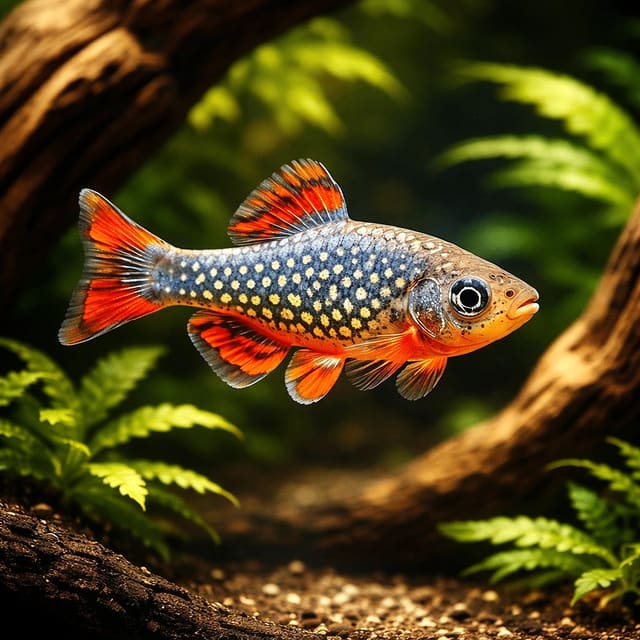
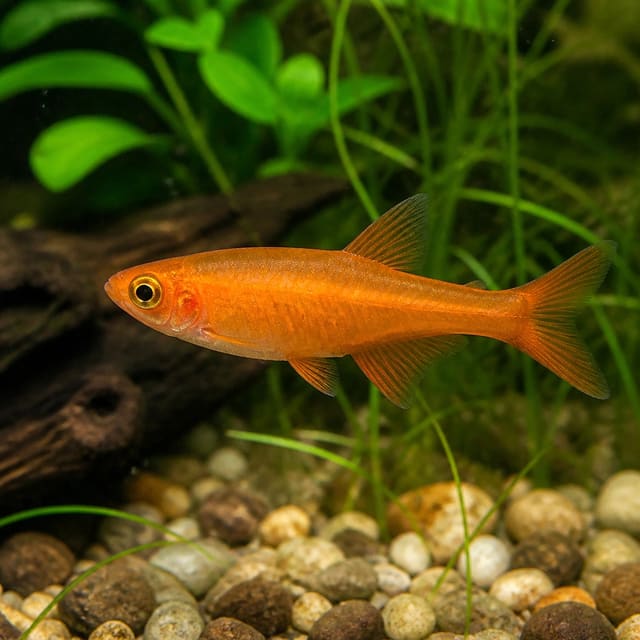
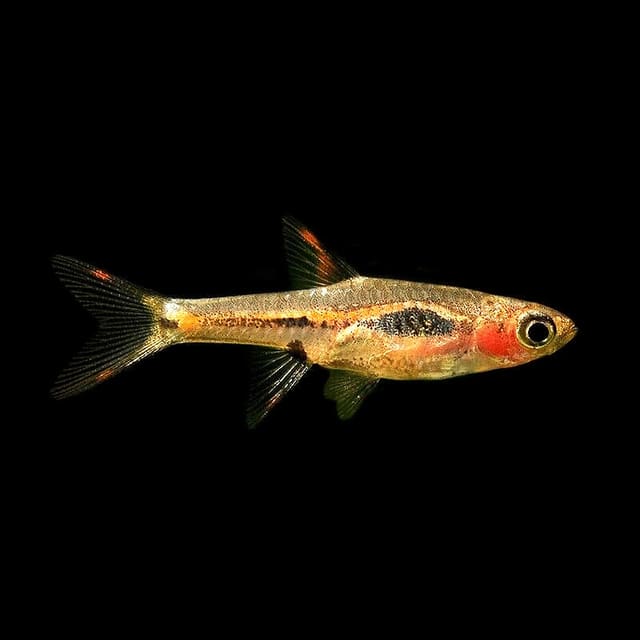
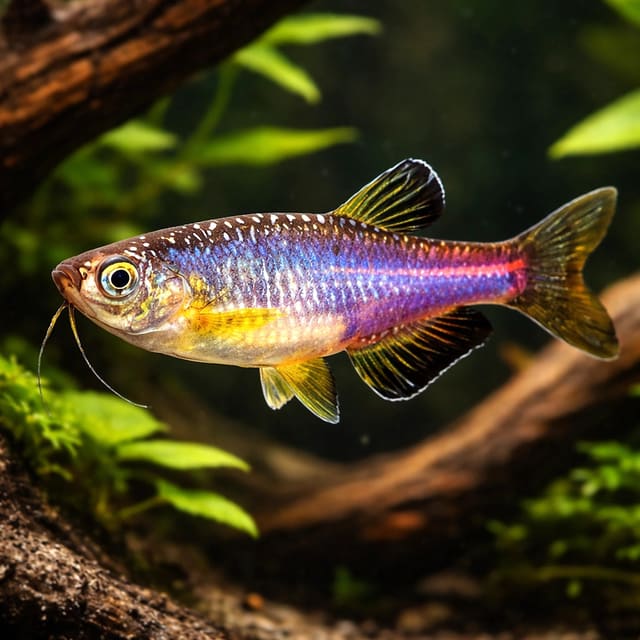
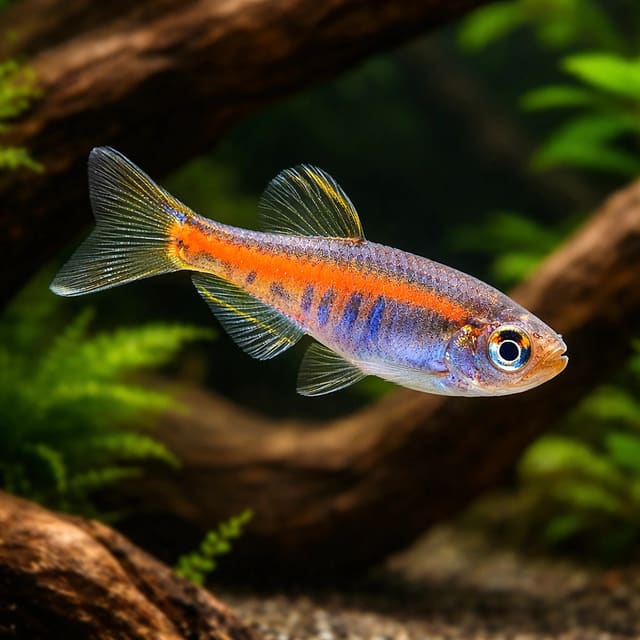
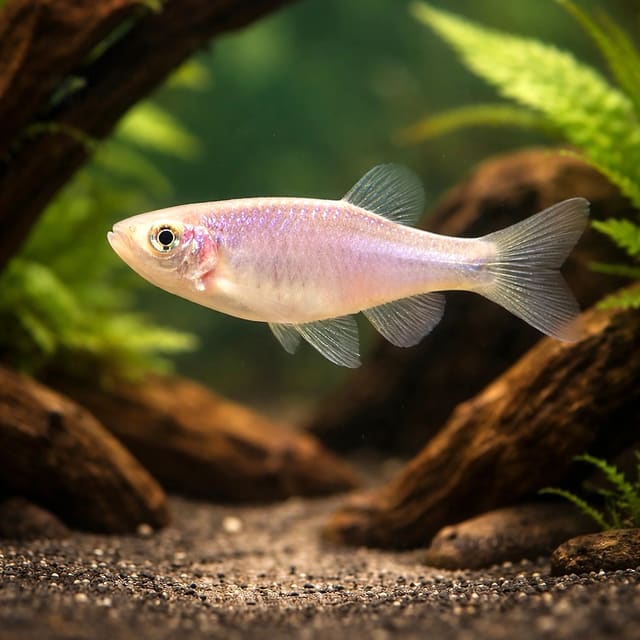
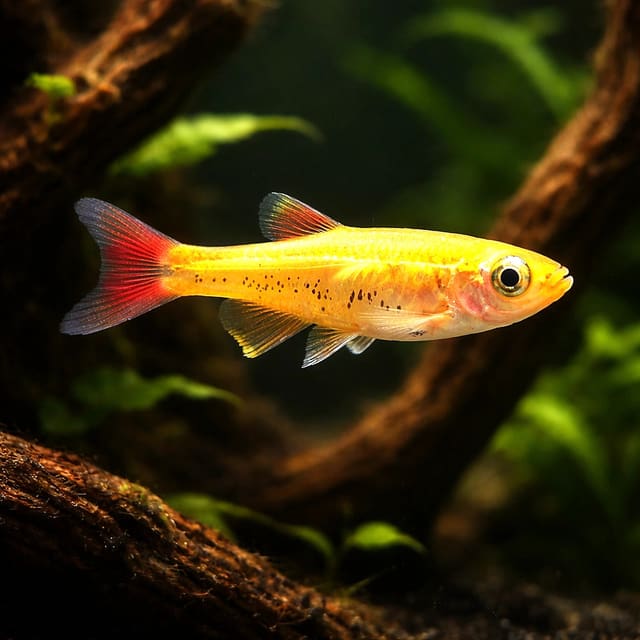
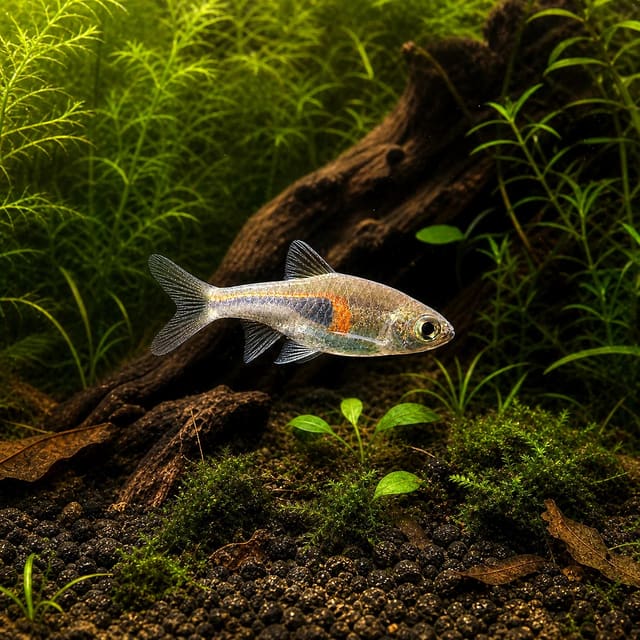
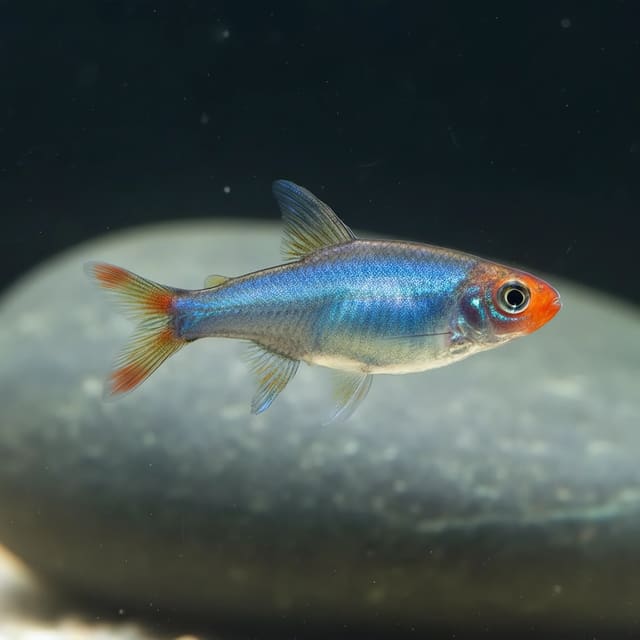
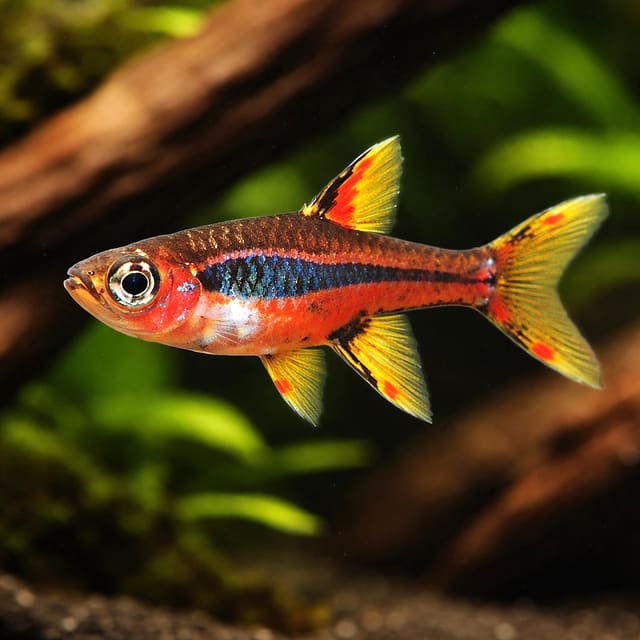
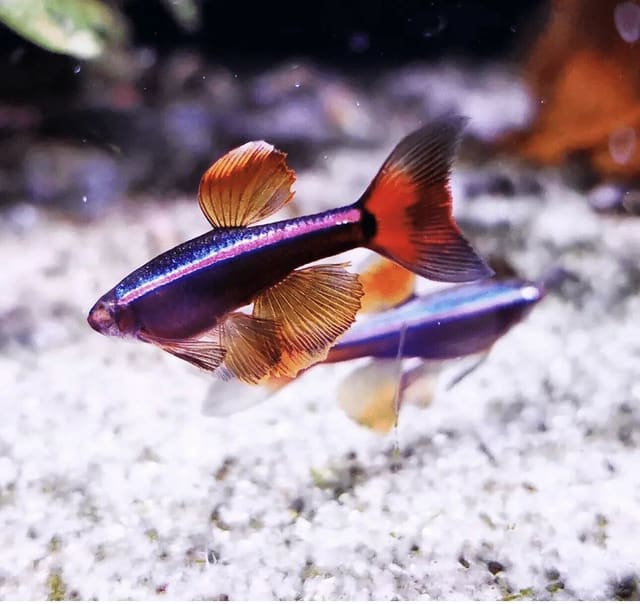
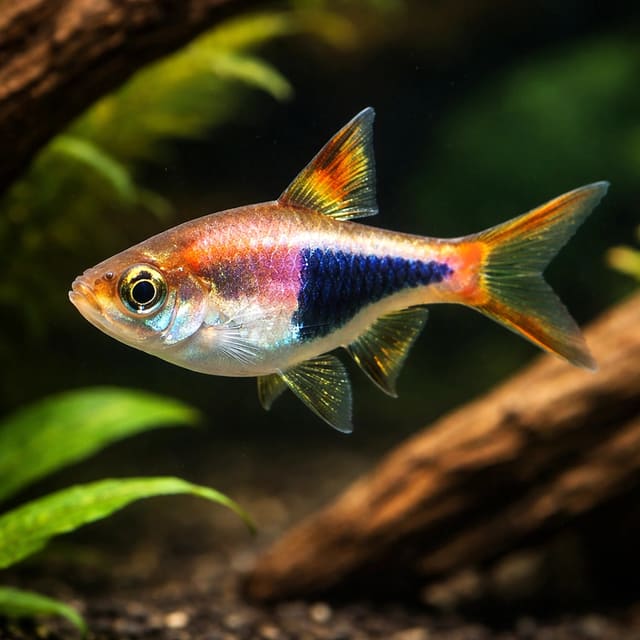
The gallery illustrates the fish’s streamlined form, forked tail and striped appearance in several aquarium scenes. Some gallery images have been digitally enhanced to improve image quality. They show the listed type of animal rather than guaranteeing the exact markings of the individual supplied, so natural colour and pattern can vary.
Choose by aquarium capacity and the needs of the whole shoal, not by how small one dispatch fish appears. A smaller dispatch size still needs the same adult swimming footprint, group plan and water conditions. If this aquarium is too compact for those requirements, browse the Rasboras and Danios collection for other identities to assess against your setup.
Plan for a fish reaching 12 cm total length, a shoal of 8–10 or more, and an aquarium with a base of at least 120 × 45 cm, equivalent to approximately 243 litres. These are the figures that decide whether the aquarium has enough adult swimming room.
House 8–10 or more together. Seriously Fish recommends this range because a larger school makes the fish less nervous, produces more natural group behaviour and helps keep social aggression focused within the shoal’s hierarchy. OATA likewise warns that danios kept singly or in groups that are too small often become stressed.
Keep the aquarium at 18–25°C, pH 6.5–8.0 and 4–12 dGH. These routine values are the overlap of Seriously Fish’s species aquarium range and OATA’s danio group guidance.
| Suits | Not suited to |
|---|---|
| A long aquarium of at least 120 × 45 cm | Compact aquaria without the stated base |
| A shoal of 8–10 or more | Solitary keeping or a very small group |
| Clean, oxygen-rich water with moderate movement | Conditions where organic waste accumulates |
| Robust, similarly sized companions | Slow-moving or timid fish unsettled by constant activity |
| A keeper ready for weekly testing and maintenance | An unfiltered or poorly maintained aquarium |
Start with an aquarium base of at least 120 × 45 cm, or an equivalent aquarium of approximately 243 litres. Treat this as the minimum considered for the species, not spare capacity for unrestricted extra stocking. A shoal, its companions, the filter and the layout must all fit within the same aquarium.
Arrange the aquarium to resemble a flowing stream or river while preserving a long swimming route. Seriously Fish recommends variably sized water-worn rocks, sand, fine gravel and perhaps small boulders, with driftwood roots or branches adding structure. Place substantial décor so it creates interest without breaking the aquarium into short, confined sections.
Plants must suit the chosen layout. Hardy Microsorum, Bolbitis and Anubias can be attached to décor, while many other aquatic plants may struggle in a stream-style arrangement. Use the fish’s swimming requirement as the first design constraint and add planting around it.
View the planned route from one end of the aquarium before adding water. If rocks, branches or planting divide the 120 cm base into several short passages, move them towards the rear or ends. Check that a group can turn without being forced through one narrow gap and that the cover will still close around every cable and pipe. This dry check is easier than rebuilding the layout after the aquarium has matured.
Aim for moderate water movement and a relatively high proportion of dissolved oxygen. Very fast flow across the entire aquarium is unnecessary. The goal is clean, moving, oxygen-rich water that reflects the species’ preference for flowing habitats while still allowing the shoal to use the whole aquarium.
Fit a very tightly fitting cover and close openings around filtration and other equipment. Check the cover whenever equipment is moved. If this is your first setup, use our first tropical aquarium guide to prepare and mature the aquarium before livestock is introduced.
Keep the temperature at 18–25°C, pH at 6.5–8.0 and general hardness at 4–12 dGH. These routine values are the overlap of Seriously Fish’s species aquarium range and OATA’s danio guidance. Stability within those targets is more useful than repeatedly adjusting the aquarium towards a single point.
Use a reliable thermometer and test the aquarium rather than estimating conditions from room temperature or appearance. Record the result so that gradual movement is visible before it becomes a large change. Our water chemistry guide explains the values to measure, while the water matcher helps compare measured aquarium water with the stated targets.
A heater is needed when the room cannot hold the aquarium steadily within 18–25°C. For an aquarium of approximately 243 litres in a room around 20°C, Seriously Fish gives roughly 100–150 W as a heater-planning example. Check the aquarium’s measured temperature rather than treating wattage alone as proof of the result.
If a test gives 23°C, pH 7.2 and 8 dGH, all three readings sit within the routine targets, so preserve stability rather than adjusting them. If one value moves outside its target, repeat the measurement and compare it with the previous record before making a change. Check replacement water as part of that decision because a large difference can move the aquarium sharply during maintenance.
Maintain ammonia at 0 mg/L and nitrite at 0 mg/L. OATA advises keeping nitrate from exceeding the normal tap-water level by more than 20 mg/L. Test at least weekly and test again whenever swimming, breathing, feeding, colour or behaviour changes.
Use conditioned replacement water whenever tap water contains chlorine or chloramine. Match routine maintenance to measured conditions and stocking pressure so that waste is removed before it accumulates.
Run a well-established biological filter continuously. The RSPCA explains that fish release toxic ammonia, which filter bacteria convert first to toxic nitrite and then to the safer nitrate. A working filter and regular waste removal are therefore essential parts of the care plan.
Seriously Fish uses a turnover of four to five times the aquarium volume per hour for an aquarium of approximately 243 litres. That calculation gives a filter rating of about 970–1,215 litres per hour. Treat the worked figure as a planning check for that aquarium size while also providing the moderate movement and high dissolved oxygen the fish prefers.
For example, a stated filter rating of 800 litres per hour falls below that worked range for 243 litres, while 1,000 litres per hour sits inside it. The rating is only the first check: confirm that the operating filter maintains steady movement after media and pipework are installed, and inspect it for blockages during maintenance.
If filter media needs cleaning, rinse it lightly in aquarium water removed during the water change. Do not wash it under the tap, because chlorine or chloramine may damage the beneficial bacterial population.
Test again after adding fish, increasing food or cleaning the filter because each event can alter the load handled by the bacterial population. If ammonia or nitrite rises above 0 mg/L, stop further stocking and restore safe water quality before making another change. Keep a short weekly record of readings and water-change volume so repeated movement is easier to identify.
Increase aquarium stocking gradually. OATA warns that adding fish too quickly can exceed the capacity of established filter bacteria, allowing ammonia or nitrite to rise. Test after a stocking change and keep feeding measured while the biological filter adjusts to the increased waste.
Plan around an adult length of 12 cm total length. FishBase records 12 cm as the maximum length and notes that individuals rarely reach that figure. Seriously Fish gives 8 cm standard length. Use 12 cm consistently for aquarium planning.
Count the complete adult group when judging space. Eight fish at a small dispatch size are still an adult shoal in planning terms, and companions must fit alongside that future requirement. The 120 × 45 cm base and approximately 243-litre volume are the starting minimum for the species, so adding more fish must not remove its usable swimming route.
During the first week, confirm that all fish can join the group, move through the full swimming route and feed without one individual being persistently displaced. During the first month, reassess the route, filter flow and weekly water readings. If added biomass or companion groups make maintenance readings less stable, pause further additions and protect the shoal’s swimming space.
Expect constant swimming, quick position changes and vigorous feeding. FishBase records adults forming medium-sized shoals in the wild, while Seriously Fish explains that social attention is directed towards maintaining position within the group. Movement within a properly sized shoal is therefore expected, but sustained changes in aggression, hiding, breathing or feeding call for a water and stocking check.
Review adult capacity before adding to the shoal. Include the final group count, companion fish, filtration and décor in the same calculation rather than treating each decision separately.
Use a good-quality dried fish food as the staple, then supplement it regularly with appropriately sized live or frozen foods such as bloodworm, Daphnia and Artemia. FishBase records terrestrial insects and detritus in the wild diet, while Seriously Fish considers insects and their larvae likely to be the principal natural prey.
Seriously Fish describes this species as readily accepting dried food in captivity. OATA’s danio guidance recommends good-quality flake or granules and adds small live or frozen foods for variety. Choose a particle size the fish can take promptly and use the named live or frozen foods to support conditioning and colour.
Offer only the amount the shoal can finish within a few minutes, once a day. Watch the complete group during that feeding period. Constant activity and vigorous feeding can allow the fastest fish to dominate the event, so check that food is being taken throughout the shoal rather than increasing the total portion automatically.
Stop adding food when the few-minute feeding window has passed. Remove obvious uneaten food because decomposing leftovers add toxic waste to the water and increase the load on the biological filter. If food remains, reduce the next measured portion instead of relying on extra maintenance to correct repeated overfeeding.
If food remains after a few minutes on two consecutive days, reduce the next portion and check whether the particle size is suitable. If the quickest fish feed while others repeatedly miss out, distribute the same measured amount across more than one point and watch the whole shoal. Do not double the portion merely because feeding looks energetic; vigorous feeding is characteristic of this species and leftovers still affect water quality.
A reduced appetite or lack of interest in food is one of OATA’s signs that deserves attention. If the shoal’s response changes, check ammonia, nitrite, temperature and the filter before changing foods repeatedly. Also compare breathing, swimming and colour with the group’s usual pattern.
Live fish are hand-bagged in pure oxygen and placed in an insulated poly box, with a heat pack used when conditions call for one. Transport is handled by a licensed live-animal service.
These steps come from the Tropical Fish Co delivery and Live Arrival Guarantee policy. That page also explains the packing process and the short unboxing video needed with a claim.
OATA’s danio guidance supports these separate aquarium checks:
Completing these checks beforehand keeps the arrival sequence focused on the bag and avoids moving equipment while the fish is being introduced.
OATA advises increasing livestock numbers slowly because the population of beneficial bacteria must grow when fish numbers and feeding rise. Confirm ammonia and nitrite are both 0 mg/L before introduction, then continue the established testing and maintenance routine.
At the first daily feed, check whether the new fish can join the shoal and take food within the usual few-minute window. Observe swimming, breathing, colour and interaction rather than adding extra food to provoke a response. Keep the aquarium within the routine water targets throughout the introduction.
Use the fish’s normal daily activity as the baseline. At each feed, look at swimming, breathing, colour, body condition, fins, scales, appetite and interaction with the shoal. OATA identifies changes in these areas as practical early warnings.
A healthy fish should have bright, clear eyes, intact scales and undamaged fins, without ulcers or abnormal growths. Compare the whole shoal because a group-wide change can point towards an aquarium condition, while one affected fish still requires prompt attention.
Check ammonia and nitrite first and keep both at 0 mg/L. Confirm temperature, inspect filter flow and compare nitrate with the normal tap-water level. Correct husbandry problems through the established maintenance routine rather than adding food or livestock.
If several fish change their breathing, swimming or feeding at once, test the aquarium immediately and inspect filtration because the shared environment affects the entire shoal. If one fish changes while the rest behave normally, record what differs and continue checking the shared water. In either case, avoid adding more fish until readings, behaviour and feeding have returned to their normal pattern.
Continue weekly testing even when the fish appear normal. Check the filter for blockages during maintenance and rinse media only in removed aquarium water. If a health or behaviour change continues after the water and equipment checks, contact us with the test results and a clear description of the change.
Choose robust, similarly sized fish that can live within the same water conditions and cope with constant swimming and vigorous feeding. Seriously Fish describes the Giant Danio as non-aggressive but warns that its activity may upset slow-moving or timid tank mates.
| More promising profile | Needs caution |
|---|---|
| Robust and similarly sized | Slow-moving or timid |
| Comfortable at 18–25°C | Needs conditions outside the stated range |
| Able to feed alongside an active shoal | Easily displaced during vigorous feeding |
| Has enough space after every group is counted | Would crowd the 120 × 45 cm swimming base |
Quick swimming and social position changes within the shoal do not by themselves make this an aggressive species. A group of 8–10 or more helps direct social attention towards other Giant Danios. The same activity can still be disruptive to a quiet companion, so judge the effect on the other fish rather than relying only on the non-aggressive label.
Compatibility must continue at mealtimes. Feed one measured daily portion that can be eaten within a few minutes and check whether every species can take its appropriate food. A companion that repeatedly withdraws or misses food is not sharing the aquarium successfully, even when there is no direct attack.
During the first week, compare where each group swims, whether all animals use their normal space and whether every fish feeds. Recheck after décor, flow or stocking changes because those changes can alter access to the swimming route and food. Persistent hiding, missed meals or displacement during ordinary movement means the combination needs reassessment.
Potential companion groups named by Seriously Fish include cyprinids, loaches, cichlids, catfishes and characins. These are categories for assessment, not universal pairings. Every proposed species still needs suitable adult size, water conditions, group space, feeding access and temperament.
Cichlids vary widely, so the category name alone is not a compatibility decision. Apply the same individual assessment to cyprinids, loaches, catfishes and characins. Robust body size helps, but matching water, space and feeding behaviour remains essential.
A proposed companion that tolerates 18–25°C still needs a pH and hardness overlap, enough room for its complete adult group and a feeding style that works beside vigorous danios. Passing the temperature check alone is not enough. Write down the shared water point, both adult group counts and the space each group uses, then reject the plan if any requirement conflicts.
Assess combinations with invertebrates case by case using the same adult-size, behaviour, water and feeding checks. Observe any mixed community during normal swimming and the daily feed, then act if one animal is persistently displaced, hiding more than usual or missing food.
It reaches 12 cm total length. Plan the aquarium around that adult figure regardless of the dispatch size selected.
Use a base of at least 120 × 45 cm or an equivalent aquarium of approximately 243 litres, with a long swimming route and a tightly fitting cover.
Keep a shoal of 8–10 or more. Seriously Fish recommends this range to reduce nervousness, support natural group behaviour and contain social aggression within the shoal.
We rate it intermediate. Seriously Fish describes it as not difficult in a well-maintained aquarium, but it needs a 120 × 45 cm base, 8–10 or more fish, high dissolved oxygen, weekly maintenance and a tight cover.
Use a good-quality dried food as the staple and regularly add bloodworm, Daphnia or Artemia. OATA’s danio guidance says to feed once daily, offering only what the fish finish within a few minutes.
Keep it at 18–25°C, pH 6.5–8.0 and 4–12 dGH. These routine values are the overlap of Seriously Fish’s species aquarium range and OATA’s danio guidance.
Seriously Fish describes it as non-aggressive, but constant activity and vigorous feeding may upset slow-moving or timid fish. Choose robust, similarly sized companions and monitor their interactions and feeding access.
Potential fish categories include suitable cyprinids, loaches, cichlids, catfishes and characins. Screen each species for adult size, water requirements, group space, temperament and feeding pace before combining it.
It is hand-bagged in pure oxygen, packed in an insulated poly box with a heat pack when conditions call for one, and carried by a licensed live-animal service. Be home to receive it, start filming before opening the sealed parcel, float the bag for 20–30 minutes, release the fish and never pour bag water into the aquarium.
No reviews for this item yet. Bought one? Honest reviews only, good or bad.
What customers say about ordering from us
I have a small group of long finned mountain minnows. So was delighted to be able to order ten of this variety to increase the genetics in my tank . The ones I recieved are healthy but it’s to early to give a verdict on wether they are of a long finned type since they are small currently.
Gordon Walker · 23 Sept 2026
100% success travel and "installation". Pleased with quality of purchase. The Siamese fighter a bit "shy" so have not yet seen him at his best yet but looking good. Happy customer. GG
George E Garratt · 21 Sept 2026
Reviews of our shop, collected by Judge.me, an independent third-party review collector. Newest first.