Microrasbora kubotai - Tropical Fish for Sale UK
22–26°C · pH 6–7.5 · 30L

Striking Silver Dollars with a sleek, reflective look, ideal for spacious community aquariums. Order online today with live arrival guarantee and UK delivery.
Adult size is the maximum length this species reaches at full maturity (scientific sources). The fish you receive will be younger and smaller — pick a size variant above for the actual shipping size. Photos are AI-enhanced, so the live fish may show subtle colour or marking differences.
Metynnis maculatus (SPOTTED)
Not home? Message us and we'll delay delivery.
Striking Silver Dollars with a sleek, reflective look, ideal for spacious community aquariums. Order online today with live arrival guarantee and UK delivery.
Adult size is the maximum length this species reaches at full maturity (scientific sources). The fish you receive will be younger and smaller — pick a size variant above for the actual shipping size. Photos are AI-enhanced, so the live fish may show subtle colour or marking differences.
Maintain these water conditions for optimal health and vibrant colors
Silver Dollars are one of those fish that make a large freshwater aquarium look instantly alive. Their deep, disc-shaped bodies flash like polished metal as the group turns together, yet their nature is far calmer than many people expect from a member of the Serrasalmidae family. Metynnis hypsauchen is a peaceful South American shoaling species that grows to around 15 cm, lives for up to 10 years, and rewards good care with confident midwater swimming and impressive group movement. For aquarists planning a bold display of silver dollars fish, this species stands out for its size, durability, and easy-going temperament.
Native to the Amazon and Paraguay systems, these fish are best kept in groups, making them ideal for a spacious tropical fish UK freshwater setup with other robust, non-aggressive species. A proper silver dollars care guide always starts with scale: silver dollars tank size, diet, and group number matter far more than many first-time keepers realise. If you are researching how to care for silver dollars, wondering about silver dollars minimum tank size, or comparing them with other south american tropical fish UK hobbyists keep, you are looking at a species that is easy to maintain once its space and feeding needs are understood. See our detailed photos showing body shape, fin condition, and the bright reflective sheen that makes Silver Dollars so popular in larger community aquariums. For fishkeepers wanting active, peaceful, large shoalers, they are an excellent choice.
Metynnis hypsauchen belongs to the same wider family as pacus and piranhas, which often surprises aquarists seeing their calm behaviour for the first time. In the aquarium hobby, Silver Dollars have long been valued as a hardy freshwater tetra UK-type characin for larger tanks, though they are much bigger than the small tetra species many keepers start with. They are especially popular in spacious display aquariums where their schooling movement can be appreciated properly.
Silver Dollars come from tropical South America, especially river systems linked to the Amazon basin, Paraguay basin, and parts of the Guiana Shield. In the wild, silver dollars habitat includes slower-moving river margins, floodplain areas, and vegetated waters where fallen fruit, soft plant matter, algae, and organic debris are available. That background explains a lot about silver dollars behaviour in captivity: they are social, alert, and constantly on the move in search of edible plant material.
Wild water conditions vary by season, but aquarium keepers generally do best by aiming for stable, soft-to-moderately hard water with a slightly acidic to neutral profile. In practical terms, silver dollars pH level can range from 5.5 to 7.5, while silver dollars water hardness of 4-15 dGH suits most healthy captive groups. Their natural environment is warm year-round, so silver dollars temperature and silver dollars water temperature should stay between 24 and 28°C for long-term health.
These fish are often described as good choices for larger community aquariums, and that is true, but only if their natural habits are respected. They are not ideal for tiny tanks, sparse stocking, or delicate aquascapes. Anyone asking how many silver dollars in a tank should think in terms of a proper shoal of six or more, not a pair or trio. In the wild they rely on numbers for security, and a small group usually leads to nervous, skittish fish.
Because they browse heavily on vegetation, many hobbyists quickly learn that silver dollars plant destruction is not a myth. If you want silver dollars in planted tank conditions, choose very tough species or accept that most soft plants will be eaten. This is one reason they are often recommended for fishkeepers who want bold, active display fish rather than delicate aquascaping species. Although some people search odd terms like buy silver dollars from bank, silver dollar ebay, eisenhower silver dollars, peace dollar, peace silver dollar, silver dollar 1972, silver dollar 1976, or silver dollar bill, in the aquarium world Silver Dollars are valued for movement, personality, and presence rather than coin collecting.
Mimicking the natural habitat of Silver Dollars improves colour, feeding response, and confidence. Use open swimming space, subdued décor around the edges, and a group of at least six so the fish feel secure enough to display natural shoaling behaviour.
A successful silver dollars aquarium setup starts with one core rule: think big from day one. These are not small tetras that can be upgraded later. A proper silver dollars minimum tank size is 300 litres, and many experienced keepers prefer 375 litres or more for a settled adult group. When people ask about silver dollars tank size, the answer depends on group size and tank mates, but six adults need generous swimming length more than extra height. A long tank is better than a tall one.
For six juveniles, 300 litres is the practical minimum. For adults with other silver dollars tank mates, 450 litres gives a much better margin for swimming room and filtration. If you are wondering what to do with silver dollars as they grow, the answer is to plan the adult setup before purchase. They reach a notable silver dollar size of around 15 cm, have deep bodies, and produce a reasonable bioload for a herbivorous shoaling fish.
Stable water matters more than chasing exact numbers. Ideal silver dollars water parameters are 24-28°C, pH 5.5-7.5, and hardness 4-15 dGH. In day-to-day care, the best silver dollars ideal conditions are warm, clean, oxygen-rich water with low nitrate and no sudden swings. Keepers searching silver dollars temperature, silver dollars water temperature, silver dollars pH level, and silver dollars water hardness should note that consistency is the real key.
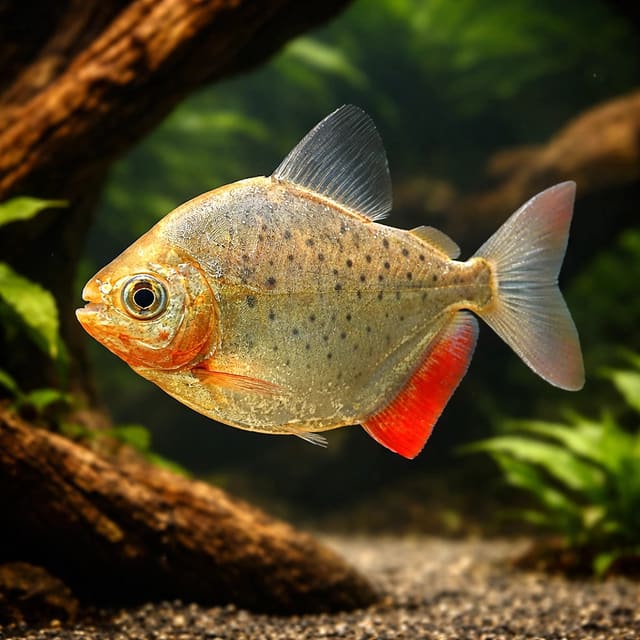
Silver dollars filtration needs are moderate to high because they are active, messy eaters and often kept in groups. A quality external canister filter is usually the best option for tanks this size. Strong biological filtration and steady circulation help keep the water clear and oxygenated without creating a harsh river-torrent effect. If you are building a larger South American display around Silver Dollars and species such as Piaractus Brachypomus - Red-Bellied Pacu, over-filtering is safer than under-filtering.
Sand or smooth fine gravel works well. A darker base often helps the fish appear calmer and can make the metallic body shine stand out more strongly in photos and in person. Avoid sharp gravel that can trap waste or damage fish during startled dashes.
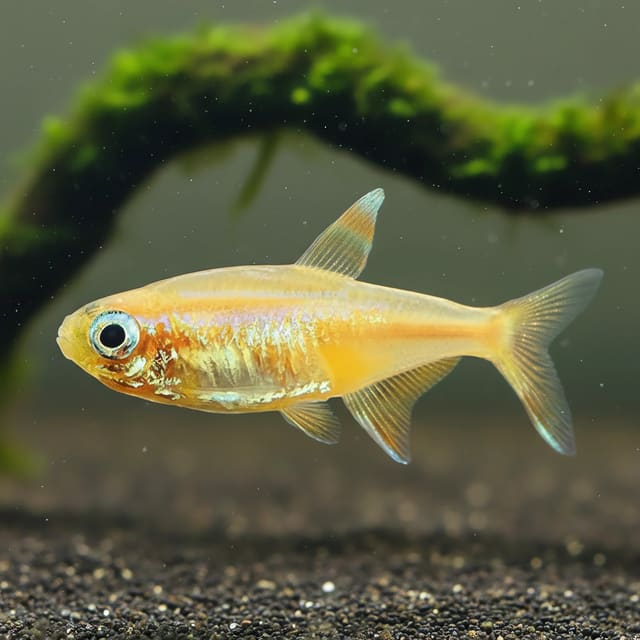
This is where many aquarists make mistakes. Silver dollars in planted tank setups are difficult because these fish browse constantly. Soft-leaved stems are usually eaten. If you want greenery, use hardscape, floating cover, and robust plants attached to décor rather than delicate rooted species. Many keepers instead build an open display with wood, rounded stones, and clear midwater space. If you want other South American characins for contrast, consider shoals like Glass Bloodfin Tetras - Prionobrama, or smaller colour accents such as Yellow Neon Tetras - Paracheirodon in a separate, more plant-focused aquarium.
Moderate lighting is ideal. Very bright light in a bare tank can make the fish nervous. A natural day cycle of 7-9 hours works well, especially if broken up by floating cover or shaded wood. This helps maintain a calm, natural look in a silver dollars tank setup.
Always cycle the aquarium for 4-6 weeks before adding Silver Dollars. In large tanks, immature biological filtration can hide problems at first, then suddenly lead to ammonia or nitrite spikes once a full shoal is introduced.
Silver Dollars are primarily herbivorous, and understanding that is essential to long-term success. In nature they graze on plant matter, fallen fruits, algae, and soft vegetation. In captivity, a good silver dollars diet should reflect that by focusing on quality vegetable-based foods rather than making bloodworm or meaty pellets the staple. If you want a practical silver dollars feeding guide, think greens first, protein second.
The best daily silver dollars food includes spirulina flake, quality herbivore pellets, algae wafers, and vegetable-based granules. Blanched spinach, lettuce, courgette, shelled peas, and cucumber can all be offered in rotation. This keeps the fish full, reduces plant-nipping pressure, and supports digestion.
Occasional protein is useful, especially for growing juveniles or conditioning adults. Bloodworm, daphnia, and similar foods can be given once or twice a week, but not as the main diet. Too much rich protein often leads to unnecessary waste and poorer water quality in a heavily stocked display.
Variety matters. Rotating greens and prepared foods helps maintain body condition and reduces boredom-related pecking at décor. This is especially important in mixed displays where silver dollars with other fish may outcompete slower feeders. Watch that every fish gets a share.
| Time | Food | Amount |
|---|---|---|
| Morning | Spirulina flake or herbivore pellet | Only what the group clears in 2-3 minutes |
| Evening | Blanched greens or algae wafers | Small portion, remove leftovers after a few hours |
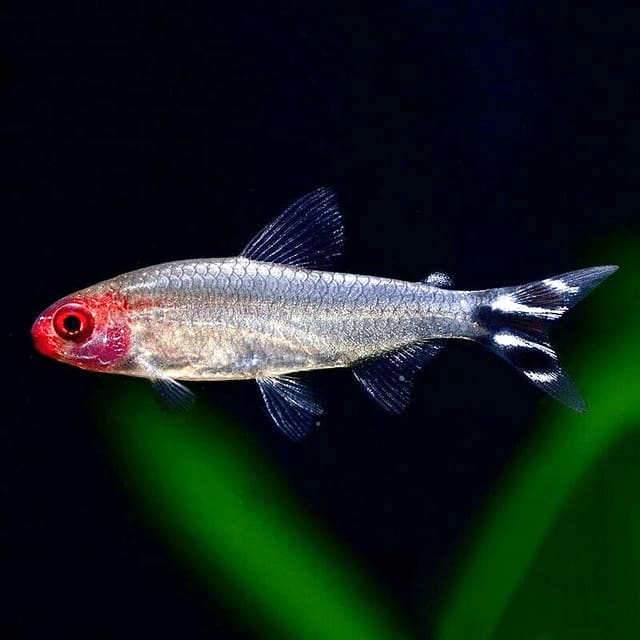
For aquarists browsing tropical fish uk for sale, buy live fish online uk, buy tropical fish online uk free delivery, buy tetra UK, tetra for sale UK, or live tetra UK, Silver Dollars are often grouped with tetras because of their order and body style, but their feeding needs are very different from tiny community species. They are not the best tetra for community tank if your tank is small or heavily planted, but they are outstanding in a large open setup. They also differ clearly in comparisons such as silver dollars vs neon tetra, silver dollars vs cardinal tetra, silver dollars or ember tetra, and silver dollars vs rummy nose tetra: Silver Dollars need more space, more vegetable matter, and tougher companions.
Both species appreciate roomy tanks, warm water, and a plant-heavy feeding approach, though Pacu need far more adult space.
Their slimmer shape and schooling behaviour complement the round-bodied profile of Silver Dollars.
Overfeeding causes ammonia spikes, cloudy water, and excess waste trapped in décor. Silver Dollars are enthusiastic feeders, so it is easy to give too much. Feed small portions twice daily rather than one heavy meal.
The classic appeal of Silver Dollars is simple: a near-circular body, bright metallic sheen, and coordinated group movement that catches the light from every angle. Adult silver dollars size is usually around 15 cm, though body depth makes them appear even larger. They have a compressed, disc-like shape with a forked tail, smooth profile, and clear to slightly tinted fins.
Well-settled fish show a clean silver body with reflective highlights that can look almost mirror-like under aquarium lighting. Depending on mood, age, and strain, some individuals may show a faint green, bronze, or smoky cast. Males can develop stronger red tones in the anal fin edge, especially in breeding condition, which helps when studying silver dollars male vs female differences. Females are often a little fuller-bodied when mature.
Because the body is so reflective, background and substrate make a visible difference. A dark base and moderate lighting usually improve contrast and make the silver flash more dramatic. Our photos show the polished metallic effect these fish develop under stable water, a vegetable-rich diet, and calm surroundings. Some search terms online around silver markets such as silver price usd prediction, silver price usd reddit, silver price usd spot, silver spot price daily, spot price of silver in dollars, spot price of silver in us dollars, spot price of silver in usd, and spot price of silver in canadian dollars are obviously coin-related, but in aquarium terms the real value is the fish’s striking natural shine and group symmetry.
Silver Dollars are peaceful, but they are not suitable for every community tank. Their size, speed, and appetite mean the best silver dollars tank mates are medium to large, non-aggressive fish that enjoy similar warm water and do not fit into the “bite-sized” category. When people ask about silver dollars compatible fish, the answer is usually robust characins, peaceful cichlids, larger catfish, and plecos.
Good companions include larger South American species that can handle active midwater movement. In a spacious display, Silver Dollars can work alongside Sailfin Tetra - Crenuchus Spilurus in suitably planned communities, and more specialist characins such as Splash Tetra - Copella Arnoldi in separate or carefully structured regional themes. For predatory contrast in very large aquariums, some advanced keepers also explore species like Gar Characins - Ctenolucius Hujeta, though feeding style and tank design must be considered carefully.
They can also be housed with larger catfish and peaceful cichlids that are not fin-nippers. If you are building a true south american tropical fish UK display, Silver Dollars make an excellent centrepiece shoal among wood, open water, and broad-bodied companions.
Avoid tiny tetras, shrimp, and very slow fish. Although Silver Dollars are peaceful, very small fish can be stressed by their speed and feeding rush. Shrimp are not suitable. Delicate plants are also poor companions, because silver dollars plant browsing is constant. Aggressive fin-biters should be avoided too, as the broad body shape makes Silver Dollars an easy target.
In a 300-litre tank, keep a group of 6 Silver Dollars as the main feature. In 450 litres or more, you can add larger bottom dwellers and a second robust schooling species. In very large systems, experienced keepers may compare them with bigger relatives such as Red-Bellied Pacu - Piaractus Brachypomus, but Pacu need dramatically more room as adults.
| Species | Compatible? | Notes |
|---|---|---|
| Glass Bloodfin Tetras - Prionobrama | ✅ Yes | Works in larger characin communities where size difference is sensible and swimming space is generous. |
| Gar Characins - Ctenolucius Hujeta | ⚠️ Caution | Only for advanced aquarists with very large tanks and careful feeding management. |
| Shrimp and very small fish | ❌ Avoid | Too delicate for the activity level and feeding style of Silver Dollars. |
Searches like silver dollars fish for sale, silver dollar fish for sale, silver dollars for sale, buy silver dollars UK, silver dollars for sale UK, silver dollars online UK, where to buy silver dollars UK, and silver dollars shop UK usually come from aquarists wanting a peaceful large shoaler. The key is not just finding them, but matching them with the right tank and companions. Terms such as silver dollars value, silver dollar value, price of silver dollar fish, and silver dollar price fish matter less than total long-term suitability.
Always quarantine new arrivals for 2-4 weeks before adding them to an established Silver Dollar group. This reduces the risk of introducing parasites into a large display where catching fish later can be difficult.
Silver dollars breeding is possible in captivity, but it is usually classed as moderate rather than easy. Most success comes in larger, mature aquariums where a healthy group has been conditioned well on greens and varied foods. If you are researching silver dollars male vs female, males tend to show stronger red in the anal fin and may appear slightly slimmer, while females are often fuller when carrying eggs.
A separate breeding tank is helpful, ideally spacious, warm, and very clean. Soft, slightly acidic water often encourages spawning behaviour. Dense spawning mops or fine-leaved substitute materials can help collect eggs, especially because adults may eat them if left in the main tank. A calm environment and excellent filtration support breeding condition.
Conditioned fish often become more active, with males displaying more colour and pursuing females in short bursts. Spawning usually happens in the water column, with eggs scattered rather than carefully guarded. This is one reason a dedicated setup improves results.
Once eggs are laid, remove the adults or transfer the eggs to a rearing tank with gentle aeration. Clean water and low stress are critical. Fungus can be a problem if dead eggs are not removed quickly.
Newly free-swimming fry need very small foods at first, followed by crushed flake, fine vegetable-based foods, and baby brine shrimp as they grow. Frequent small water changes support steady growth. Because silver dollars lifespan can reach a decade, raising juveniles properly is a long-term commitment rather than a short project.
For buyers searching live silver dollars UK, order silver dollars UK, silver dollars delivery UK, cheap silver dollars UK, or silver dollars price UK, breeding at home can be rewarding, but most aquarists prefer to start with a healthy group and focus first on mastering silver dollars health, diet, and social behaviour. Once the fish are mature and settled, breeding attempts become far more realistic.
Condition adult Silver Dollars heavily on spirulina foods, blanched greens, and occasional live or frozen protein for 2-3 weeks before attempting to spawn them. Large water changes with slightly softer water can act as a seasonal trigger in some mature groups.
Comparison matters because Silver Dollars are often bought by aquarists who originally planned a smaller tetra community. They are related to characins, but their adult size, appetite, and tank demands place them in a very different category. If you are weighing up a best tetra species comparison, Silver Dollars are best thought of as a large shoaling show fish rather than a nano community species.
| Feature | Silver Dollars | Yellow Neon Tetras |
|---|---|---|
| Max Size | 15 cm | Small community size |
| Care Level | Easy | Easy |
| Temperature | 24-28°C | Tropical community range |
| Price | £66.00 | Varies by group size |
| Best For | Large open shoaling displays | Smaller planted community tanks |
| Feature | Silver Dollars | Red-Bellied Pacu |
|---|---|---|
| Max Size | 15 cm | Very large |
| Care Level | Easy | Moderate to advanced long-term |
| Temperature | 24-28°C | Warm tropical |
| Price | £66.00 | Varies |
| Best For | Large community aquariums | Huge specialist tanks |
If you are comparing silver dollars vs neon tetra, silver dollars vs cardinal tetra, silver dollars or ember tetra, or silver dollars vs rummy nose tetra, the answer depends almost entirely on tank size and planting style. Choose Silver Dollars if you want a bold, peaceful, reflective shoal in a large tank. Choose smaller tetras if you want a planted aquascape with delicate leaves and fine-scale stocking. If you like the family resemblance but want a giant relative, compare them with Red-Bellied Pacu - Piaractus Brachypomus. If you want a more unusual characin display, look at Bucktooth Tetra - Exodon Paradoxus or Splash Tetra - Copella Arnoldi for very different behaviour and care demands.
Some online searches confuse fish with coins, including morgan silver dollar, morgan silver dollars, american silver eagle, and silver dollar 1979. For aquarium keepers, the meaningful comparison is not coin rarity but whether your tank can support a fast-moving shoal of large herbivorous characins.
Healthy Silver Dollars are active, alert, and eager to feed. They should swim in a loose group, hold their fins well, and show a smooth body profile without pinching behind the head. Good silver dollars health depends mainly on water quality, enough swimming space, and a proper plant-based diet.
Look for clear eyes, intact fins, even breathing, and strong interest in food. Their metallic body should appear clean and reflective rather than dull and patchy. A settled shoal should move confidently through the middle of the tank rather than hiding in corners.
The most common silver dollars diseases in captivity are the same issues seen in many tropical fish: ich, bacterial fin damage, stress-related fungal problems, and digestive trouble caused by poor diet. Because they are large and active, they also show stress quickly in cramped tanks or unstable water.
Start with diagnosis, not guesswork. Test water first, increase aeration, and perform partial water changes if quality is poor. Move affected fish to quarantine when possible. Use medications carefully and always check whether they are suitable for the full tank population. Many health problems improve simply by correcting overcrowding, diet, and maintenance.
The best prevention is stable routine: weekly water changes, strong filtration, varied herbivore feeding, and avoiding incompatible tank mates. Keep the shoal large enough to reduce stress. Quarantine all new arrivals. Many keepers asking silver dollars for beginners are relieved to learn that this species is hardy, but only when basic husbandry is not overlooked.
Some search terms such as which dollars are silver, which silver price dollars are worth money, which silver price dollars are worth more, which silver price dollars are worth the most, which silver price dollars is best, which silver price dollars to usd, where to purchase silver dollars, half dollar, and silver dollar coin value belong to coin collecting rather than fishkeeping. For live fish, “value” comes from health, correct acclimation, and long-term survival rather than rarity charts.
Never use medication blindly in a display tank. Test water first and isolate the cause where possible. Poor water quality is far more common than true disease, especially in under-filtered tanks housing large shoaling fish.
Silver dollars behaviour is one of the main reasons people fall in love with this species. They are active midwater shoalers that look best when kept in a proper group. A lone fish or pair often becomes nervous and withdrawn, while six or more usually settle into a confident rhythm of cruising, turning, and feeding together.
They are peaceful rather than timid, and they rarely bother similarly sized fish. Most conflict comes from poor stocking choices rather than aggression. During feeding they become lively and competitive, which is why slower species can struggle if meals are not spread out. In a well-planned silver dollars aquarium setup, they spend much of the day exploring open water and browsing any edible plant material they can find.
If you want natural behaviour, provide a large group, open swimming lanes, and stable water. This is also the best answer to questions like how many silver dollars in a tank and whether silver dollars with other fish work well. They do, provided the tank is large, the shoal is complete, and the companions are chosen for size and temperament.
Our Silver Dollars are selected for active shoaling behaviour, clean body shape, and strong feeding response before they are listed as available. That matters with this species because a healthy group should move confidently and eat eagerly from the start. We do not treat them as a generic “large tetra”; we assess them as a social, plant-browsing characin that needs correct group handling and stable conditioning before sale.
Each group is observed in quarantine, checked for external issues, and settled onto a varied feeding routine based around vegetable matter. This helps prepare them for life in a home aquarium and reduces the stress that can follow transport. For UK fishkeepers searching best place to buy tropical fish online uk, silver dollars online UK, silver dollars for sale UK, live silver dollars UK, or order silver dollars UK, proper pre-sale conditioning is one of the biggest differences between fish that merely arrive and fish that thrive.
Fish are packed for silver dollars delivery UK using insulated boxes, secure fish bags, and seasonal heat packs when required. Tracked delivery helps reduce transit time, and the broad body shape of Silver Dollars means careful packing density is especially important. If you are comparing silver dollars price UK, cheap silver dollars UK, or wondering where to buy silver dollars UK, remember that the cheapest fish are rarely the best value if they have been poorly conditioned. The same is true when people search unrelated phrases like 3 ounces of silver price, 4 ounces of silver price, 5 gram silver coin price, 7 day silver price, 85 dollars silver price, 85 dollars silver price in india, are silver price dollars going up, are silver price dollars worth anything, are silver price dollars worth anything today, are silver price dollars worth more, can price of silver, or can silver price dollars and cents; live fish value is measured in health, not metal charts.
Order your Silver Dollars today with confidence if you have the space, filtration, and group plan they need. They are one of the most rewarding peaceful large shoalers in the hobby when housed correctly.
If you are building a South American display, consider adding or comparing a few related species and themes. Glass Bloodfin Tetras - Prionobrama add a lighter, more delicate schooling contrast in larger characin communities. Yellow Neon Tetras - Paracheirodon are a great choice for a separate smaller planted tank if you enjoy tetra movement but do not want the plant-eating habits of Silver Dollars. For aquarists interested in larger relatives, Piaractus Brachypomus - Red-Bellied Pacu and Red-Bellied Pacu - Piaractus Brachypomus show how the family scales up dramatically. If unusual characins appeal, Sailfin Tetra - Crenuchus Spilurus - and Splash Tetra - Copella Arnoldi - offer very different behaviour and display style.
Dispatched Tue or Wed, delivered Wed or Thu — every order tracked and insured.

22–26°C · pH 6–7.5 · 30L

24–28°C · pH 7.5–8.5 · 150L


24–28°C · pH 7.5–8.5 · 200L

18–25°C · pH 6–8 · 100L


24–27°C · pH 7.5–8.8 · 150L

22–26°C · pH 6–7.5 · 60L

24–28°C · pH 5.5–7 · 60L

18–28°C · pH 6.5–8 · 20L

24–28°C · pH 7.5–8.5 · 40L

24–28°C · pH 7.5–8.5 · 400L

22–26°C · pH 6–7.5 · 150L

22–28°C · pH 7–8.5 · 10L

23–27°C · pH 5.5–7.5 · 80L

24–27°C · pH 7.5–9 · 250L