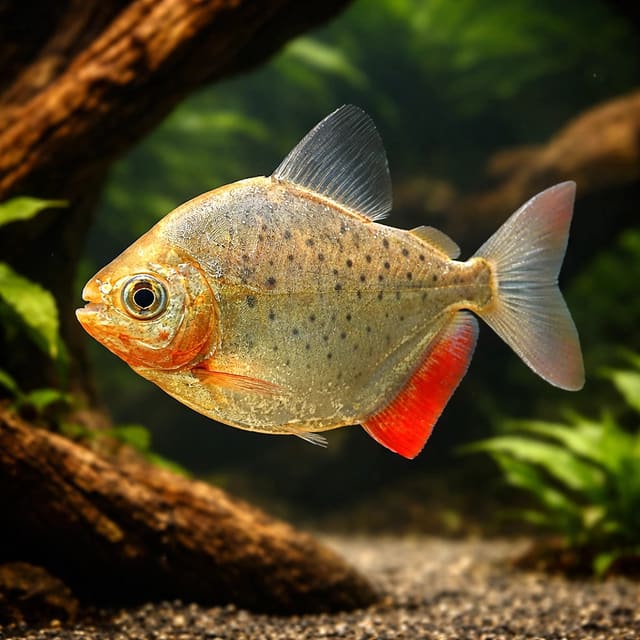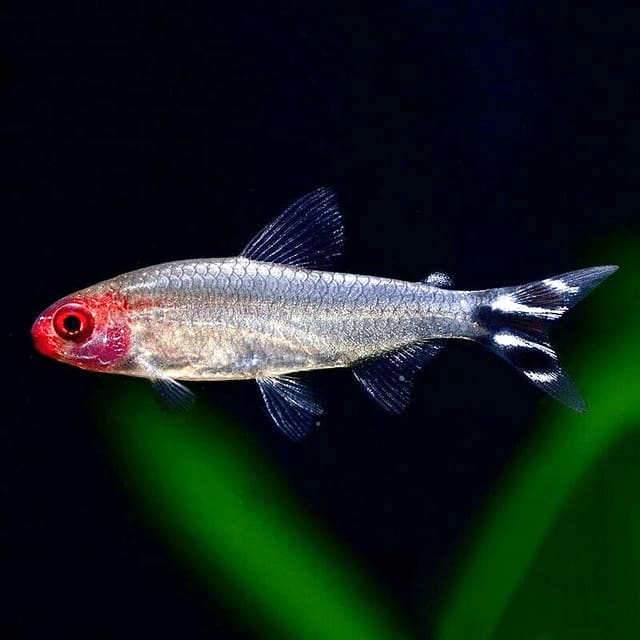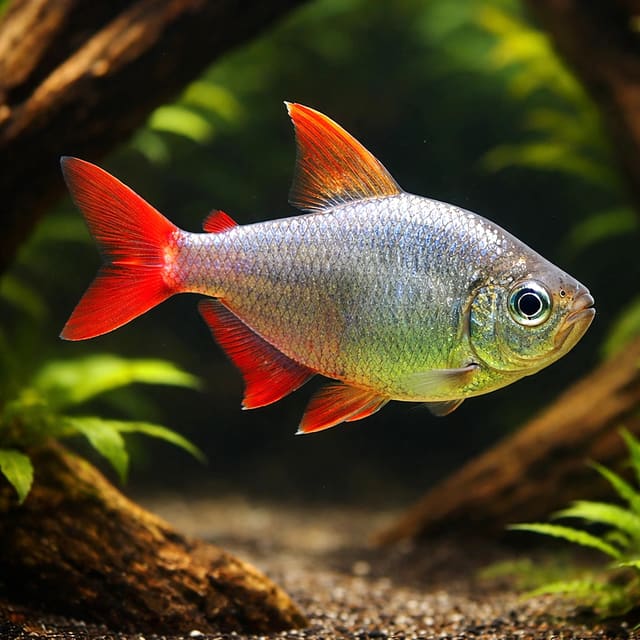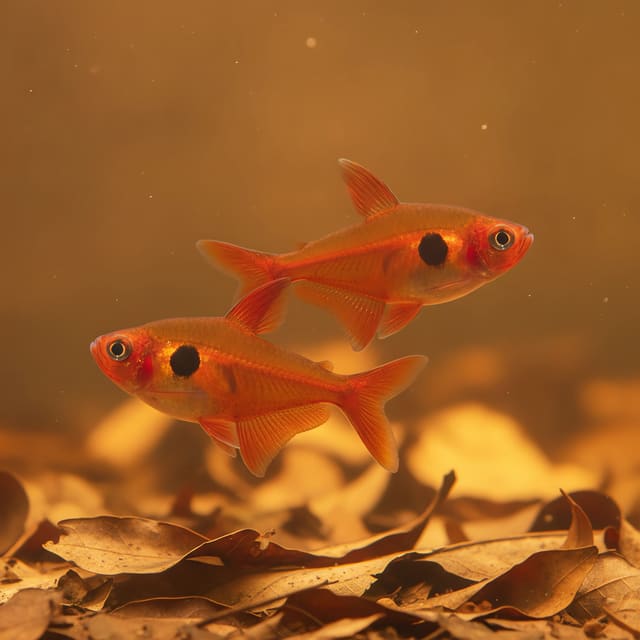
Red Phantom Tetra (Megalamphodus sweglesi)
£5.99

A striking striped South American headstander that brings active grazing behavior and unique personality to a spacious community aquarium. Moderate care, semi-aggressive. 24-28C, pH 6.0-7.5.
Adult size is the maximum length this species reaches at full maturity (scientific sources). The livestock you receive will be younger and smaller — pick a size above for the actual shipping size. Product-photo provenance and any image-specific limitations are stated on the listing.
Anostomus anostomus
Save when buying multiple fish. Each quantity is one fish; sex and pair formation are not guaranteed unless the selected variant explicitly states them.
Confirm your email, then we’ll send an availability message for this exact item if it returns within 180 days.
This request is only for this product—no newsletter or other promotions. A mail-provider retry may very rarely duplicate the same availability message. Unconfirmed addresses are removed after 48 hours. See our privacy policy.
A striking striped South American headstander that brings active grazing behavior and unique personality to a spacious community aquarium. Moderate care, semi-aggressive. 24-28C, pH 6.0-7.5.
Adult size is the maximum length this species reaches at full maturity (scientific sources). The livestock you receive will be younger and smaller — pick a size above for the actual shipping size. Product-photo provenance and any image-specific limitations are stated on the listing.
Maintain these water conditions for optimal health and vibrant colors
The Striped Headstander (Anostomus anostomus) is a striking South American species celebrated for its bold horizontal stripes and unique head-down swimming posture. Native to the Amazon and Orinoco river basins, this active, semi-aggressive fish brings personality and visual interest to spacious community aquariums. Available for sale UK-wide, the Striped Headstander is an excellent choice for aquarists seeking an unusual, herbivorous species that adds movement and character to well-filtered tropical setups.
Anostomus anostomus displays a sleek, torpedo-shaped body adorned with three bold, horizontal black stripes against a golden to cream background. This striking pattern is most pronounced in healthy, well-conditioned individuals. The species swims in a characteristic head-down posture, using its underslung mouth to graze algae and biofilm from rocks, driftwood, and plant surfaces. Males and females are similar in appearance, though males may be slightly more slender.
The Striped Headstander inhabits rivers, streams, and floodplain habitats across the Amazon and Orinoco river basins in northern South America. These environments feature soft to moderately hard water, moderate to strong current, abundant submerged wood, and rocky areas with algae growth. The fish graze constantly on biofilm and vegetation, often in small groups, and shelter among roots and wood during rest periods.
A minimum 250-litre aquarium is essential for the Striped Headstander, with larger tanks preferred for community setups. Provide ample driftwood, smooth rocks, and hardy plants such as Anubias, Java Fern, or Vallisneria. Strong oxygenation and filtration are critical, as this species is active and produces substantial waste. Open swimming areas combined with structured hiding places reduce territorial behavior. A secure lid is essential, as headstanders can jump when startled.
Maintain soft to moderately hard water with pH 5.5-7.5 and temperatures between 24-28°C. General hardness (GH) of 5-12 dGH is ideal. The Striped Headstander performs best in well-oxygenated water with strong circulation. Perform weekly water changes of 25-30% to control nitrate and maintain stable parameters. Avoid stagnant water or poor filtration, which stress this active species and lead to health issues.
Anostomus anostomus is primarily herbivorous with some omnivorous tendencies. Offer algae-based foods, spirulina flakes or wafers, blanched vegetables such as zucchini, spinach, or cucumber, and occasional small frozen or live foods like brine shrimp or bloodworms. The species grazes constantly, so provide regular small meals or allow natural algae growth on surfaces. Avoid high-protein diets, which can cause digestive issues.
Provide plenty of driftwood and smooth rocks with natural algae growth to encourage natural grazing behavior. This reduces territorial aggression by keeping the fish occupied and well-fed.
The Striped Headstander is an active, semi-aggressive fish that can be territorial, particularly toward conspecifics or similar-looking species. This species swims in a head-down posture and grazes constantly on surfaces throughout the aquarium. While not overly aggressive, it may harass smaller or slower tankmates, especially in undersized tanks with insufficient hiding places. Larger, robust community fish are generally tolerated well.
Suitable tank mates include peaceful to semi-robust South American community fish such as larger tetras, Corydoras catfish, larger peaceful characins, and peaceful loricariids. Avoid very small fish, long-finned species, slow-moving fish, aggressive cichlids, and fin-nippers. The Striped Headstander coexists well with similarly sized, active fish in spacious, well-structured aquariums.
Breeding in home aquaria is uncommon and poorly documented. Spawning likely occurs in soft, warm water with seasonal changes, ample space, and excellent water quality. If breeding is attempted, provide a large, well-filtered tank with strong water movement and spawning media such as fine-leaved plants. Little reliable information exists on parental care or fry rearing in captivity.
At Tropical Fish Co, we specialize in healthy, vibrant South American species sourced from trusted suppliers and quarantined for your peace of mind. We provide expert guidance on tank setup, water chemistry, and compatible stocking to help you create a thriving community aquarium. With fast, reliable delivery across the UK and a commitment to quality fishkeeping, Tropical Fish Co is your premier destination for unique and engaging freshwater fish.
No reviews for this item yet. Bought one? Honest reviews only, good or bad.
What customers say about ordering from us
I have a small group of long finned mountain minnows. So was delighted to be able to order ten of this variety to increase the genetics in my tank . The ones I recieved are healthy but it’s to early to give a verdict on wether they are of a long finned type since they are small currently.
Gordon Walker · 23 Sept 2026
100% success travel and "installation". Pleased with quality of purchase. The Siamese fighter a bit "shy" so have not yet seen him at his best yet but looking good. Happy customer. GG
George E Garratt · 21 Sept 2026
Reviews of our shop, collected by Judge.me, an independent third-party review collector. Newest first.