−12%
Moderate
Leporinus affinis
23–27°C · pH 6.5–7.8
£15.83£17.99

A striking, active South American schooling fish with bold black bands and a lively personality that needs plenty of space. Moderate care, semi-aggressive. 24-28C, pH 6.0-7.5.
Adult size is the maximum length this species reaches at full maturity (scientific sources). The livestock you receive will be younger and smaller — pick a size above for the actual shipping size. Product-photo provenance and any image-specific limitations are stated on the listing.
Leporinus fasciatus
Confirm your email, then we’ll send an availability message for this exact item if it returns within 180 days.
This request is only for this product—no newsletter or other promotions. A mail-provider retry may very rarely duplicate the same availability message. Unconfirmed addresses are removed after 48 hours. See our privacy policy.
A striking, active South American schooling fish with bold black bands and a lively personality that needs plenty of space. Moderate care, semi-aggressive. 24-28C, pH 6.0-7.5.
Adult size is the maximum length this species reaches at full maturity (scientific sources). The livestock you receive will be younger and smaller — pick a size above for the actual shipping size. Product-photo provenance and any image-specific limitations are stated on the listing.
Maintain these water conditions for optimal health and vibrant colors
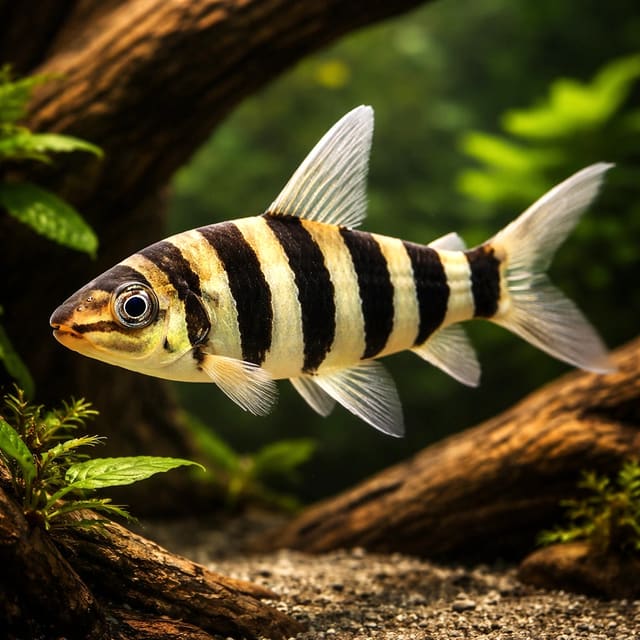
The Striped Leporinus (Leporinus fasciatus), also known as the banded leporinus or black-banded leporinus, is a bold and visually striking South American fish that commands attention in any large aquarium. Native to the Amazon Basin, this distinctive species displays dramatic vertical black bands across a silver-gold body, creating an unmistakable pattern that has made it a sought-after oddball species. Growing to an impressive 25 cm in captivity, L. fasciatus requires spacious housing and experienced care but rewards dedicated aquarists with its unique torpedo-shaped profile, active swimming behavior, and fascinating personality. This species is available for sale UK from specialist suppliers and represents an excellent choice for those seeking a characterful centerpiece fish that stands apart from typical community species.
The Striped Leporinus exhibits a powerful, streamlined body shape perfectly adapted for fast swimming in river currents. Its most distinctive feature is the pattern of bold, evenly spaced black vertical bands that cross the body from dorsal to ventral surfaces, contrasting sharply against the silvery-gold or yellowish base coloration. Adult specimens typically display 9-10 complete bands, though this can vary among individuals. The head is relatively small with a terminal mouth adapted for grazing, and the eyes are positioned high on the head. The fins are generally clear to amber-tinted, with the caudal fin showing a forked shape that aids in rapid acceleration. Males and females are difficult to distinguish visually, though mature females may appear slightly fuller when viewed from above. The scales have a subtle metallic sheen that catches light beautifully in well-lit aquariums.
Leporinus fasciatus inhabits the vast Amazon Basin across multiple South American countries, where it occupies medium to large rivers, flooded forests, and tributary streams. During the wet season, these fish move into flooded vegetation zones to feed on plant matter, fruits, and seeds, while retreating to main river channels as water levels drop. They are typically found in areas with moderate to strong current, often in midwater zones where they form loose aggregations while foraging. The natural substrates range from sandy bottoms to rocky areas with submerged wood, and the water is typically soft, slightly acidic, and stained with tannins from decomposing organic matter. Populations have also been introduced in Florida and Hawaii, though Hawaiian records are likely now extirpated. Understanding these natural conditions helps replicate appropriate aquarium environments.
A minimum aquarium capacity of 450 liters is essential for this active, sizeable species, with larger volumes strongly preferred for long-term success. The tank should emphasize horizontal swimming space with a length of at least 150 cm, as Striped Leporinus are powerful swimmers that require room to exercise. Decor should include smooth rocks, driftwood, and robust artificial or hardy live plants (such as Anubias or Bolbitis), as soft-leaved species will likely be eaten. A sandy or fine gravel substrate is ideal, and the aquarium must have a tightly fitting lid or cover glasses, as these fish are known jumpers. Moderate to strong water movement from powerheads or filter outlets helps replicate their riverine origins and maintains high oxygen levels. Lighting can be moderate, and floating plants can help diffuse bright lights if fish appear skittish initially.
Striped Leporinus thrive in warm, soft to moderately hard water that mirrors their Amazonian origins. Maintain temperatures between 24-28°C, with 26°C representing an ideal midpoint. The pH should be slightly acidic to neutral, ranging from 6.0-7.5, though pH 6.5-7.0 is optimal. Water hardness can vary from soft (3-8 dGH) to moderately hard (up to 15 dGH), providing some flexibility. However, stability is more critical than exact parameters—avoid sudden fluctuations in temperature or chemistry. Ammonia and nitrite must always register zero, while nitrates should be kept below 40 ppm through regular water changes. Good oxygenation is essential; ensure strong surface agitation and consider supplemental aeration if stocking levels are high or temperatures rise during summer months.
The Striped Leporinus is an omnivore with a pronounced herbivorous tendency, requiring a diet centered on plant-based foods to maintain health and vitality. Offer high-quality sinking herbivore or omnivore pellets as the staple, supplemented daily with blanched vegetables such as zucchini, cucumber, spinach, or shelled peas. Spirulina-based flakes, algae wafers, and fresh fruits (such as melon or apple) can provide variety. To balance the diet and ensure optimal nutrition, include protein sources 2-3 times per week: frozen or live bloodworms, brine shrimp, chopped prawns, or earthworms. Feed twice daily in portions that can be consumed within 3-5 minutes, adjusting quantities based on fish activity and body condition. Remove uneaten vegetables after 24 hours to prevent water quality deterioration, and fast the fish one day per week to support digestive health.
Leporinus fasciatus display a semi-aggressive temperament and are best described as boisterous rather than outright aggressive. In the wild, they form loose schools, and in captivity they are most confident when kept in small groups of 3-5 individuals, though space limitations often mean they are housed singly or in pairs. When kept alone, they may become territorial toward similarly shaped or sized fish, occasionally nipping fins or chasing tankmates during feeding. They are most active during daylight hours, constantly on the move exploring all levels of the aquarium, though they show a preference for midwater zones. These fish have strong feeding responses and may become food-aggressive if underfed or housed with overly timid species. Their curious nature means they will investigate all new additions to the tank, and they may rearrange lightweight decorations.
Suitable tank mates for Striped Leporinus must be large, robust, and confident enough to hold their own alongside this active species. Excellent companions include silver dollars (Metynnis species), which share similar environmental and dietary needs; large peaceful South American cichlids such as Geophagus, Satanoperca, or Uaru species of comparable size; and large plecos like common plecos or sailfin plecos. Avoid housing with small fish (anything under 8 cm), as these will be viewed as prey or become stressed by constant activity. Slow-moving, long-finned species such as angelfish or bettas are also poor choices, as their fins may be nipped. Shrimp, snails, and other invertebrates will be eaten. Highly aggressive or territorial species such as Oscars, large pike cichlids, or red devil cichlids should be avoided, as confrontations can lead to injury.
Breeding Leporinus fasciatus in home aquaria is uncommon and challenging, with little reliable captive-breeding information available to hobbyists. In their natural habitat, spawning is believed to be seasonal and triggered by environmental cues such as rising water levels, increased water flow, and changes in temperature or water chemistry that accompany the rainy season. Observations suggest they are egg scatterers, releasing eggs over vegetation or substrate without parental care. Successful captive breeding would likely require a very large breeding aquarium (1000+ liters), environmental manipulation to simulate seasonal changes, and the provision of fine-leaved plants or spawning mops. Adults will consume eggs and fry if given the opportunity, so separation or egg collection is essential. Fry would require very small live foods such as infusoria initially, progressing to newly hatched brine shrimp and finely crushed vegetable matter as they grow.
Tropical Fish Co is the UK's premier destination for rare and unusual South American species, including healthy, acclimatized Striped Leporinus specimens. Every fish is quarantined upon arrival and carefully conditioned on a varied, high-quality diet to ensure robust health before dispatch. Our expert team provides comprehensive care sheets, personalized stocking advice, and ongoing support to help you create the ideal environment for these impressive fish. We offer a live arrival guarantee on all orders, backed by secure, insulated packaging and tracked courier delivery to your door. Whether you're an experienced aquarist seeking an unusual centerpiece or building a large South American biotope, our commitment to quality, transparency, and customer service ensures you receive the finest livestock available. Order your Striped Leporinus today and experience the difference that specialist expertise makes.
No reviews for this item yet. Bought one? Honest reviews only, good or bad.
What customers say about ordering from us
I have a small group of long finned mountain minnows. So was delighted to be able to order ten of this variety to increase the genetics in my tank . The ones I recieved are healthy but it’s to early to give a verdict on wether they are of a long finned type since they are small currently.
Gordon Walker · 23 Sept 2026
100% success travel and "installation". Pleased with quality of purchase. The Siamese fighter a bit "shy" so have not yet seen him at his best yet but looking good. Happy customer. GG
George E Garratt · 21 Sept 2026
Reviews of our shop, collected by Judge.me, an independent third-party review collector. Newest first.