Moderate
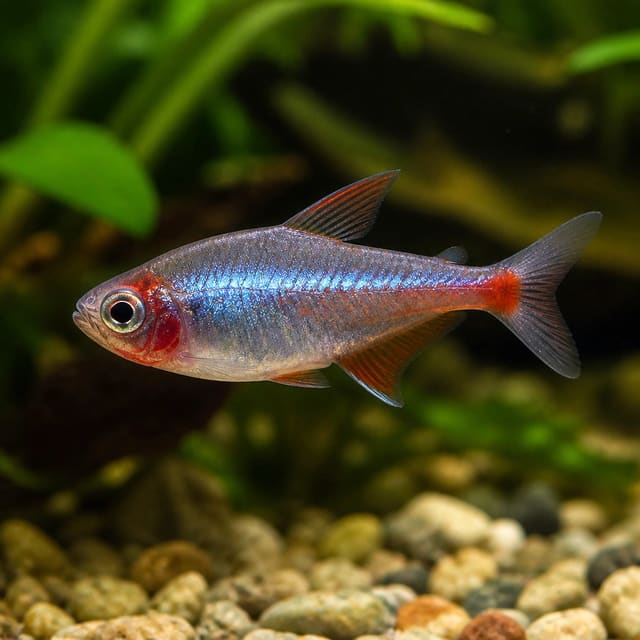
Neon Tetra (Paracheirodon innesi)
21–25°C · pH 5–7
£2.99

Photo coming soon
The size, price and care details on this page are for this listing.
Bucktooth Tetra (Exodon paradoxus) is a fast, predatory South American characin for an advanced keeper planning a large, mature species aquarium. Keep at least twelve, provide strong filtration and refuges, and do not treat it as a peaceful community tetra.
Exodon paradoxus
Shoaling fish: kept in a group they feel safer, stay calmer and show their best colour.
Bucktooth Tetra (Exodon paradoxus) is a fast, predatory South American characin for an advanced keeper planning a large, mature species aquarium. Keep at least twelve, provide strong filtration and refuges, and do not treat it as a peaceful community tetra.
Maintain these water conditions for optimal health and vibrant colors
The Bucktooth Tetra, Exodon paradoxus, is a compact-looking fish with unusually demanding social and compatibility needs. It is an active South American characin whose natural feeding behaviour includes taking scales from other fish. That single fact changes the whole stocking plan: this is best approached as a dedicated species display, not added to an ordinary mixed tetra aquarium.
One purchase supplies one Bucktooth Tetra in the size chosen. The recurring dispatch grades are 3–4 cm and 6 cm. The size you select is the size supplied, not the adult size. Plan the mature aquarium before ordering the first fish, because a small temporary group or a short holding tank does not meet the long-term social plan.
Seriously Fish recommends a minimum group of twelve and a base measuring 120 × 45 cm. Its worked example is a 120 × 45 × 45 cm aquarium of about 243 litres for a shoal. Smaller groups tend to direct pressure towards weaker individuals, while cramped quarters remove the distance and refuges that let a targeted fish get away. This is why we assess the species as advanced care: the water range is manageable, but the group, feeding response and risk to other fish require deliberate decisions.
Sex is guaranteed only when the selected option explicitly states male or female. This Bucktooth Tetra listing has no sex-guaranteed option.
Exodon paradoxus belongs to the family Characidae. FishBase records it from the Amazon and Tocantins basins and Guyana, and describes it as a tropical freshwater, pelagic species. The genus Exodon is monotypic in the supplied profile, meaning this is the only species currently placed in that genus.
The two adult-size records need their labels kept. FishBase gives a maximum of 7.5 cm standard length for male or unsexed fish. Standard length stops at the base of the tail; it is not total length. Seriously Fish gives 150 mm standard length. Those records conflict too strongly to collapse into a single unqualified adult-size card, so this listing keeps both measurements with their source and scope. Use the proven aquarium footprint and group requirements for planning rather than assuming the dispatch grade is close to the final size.
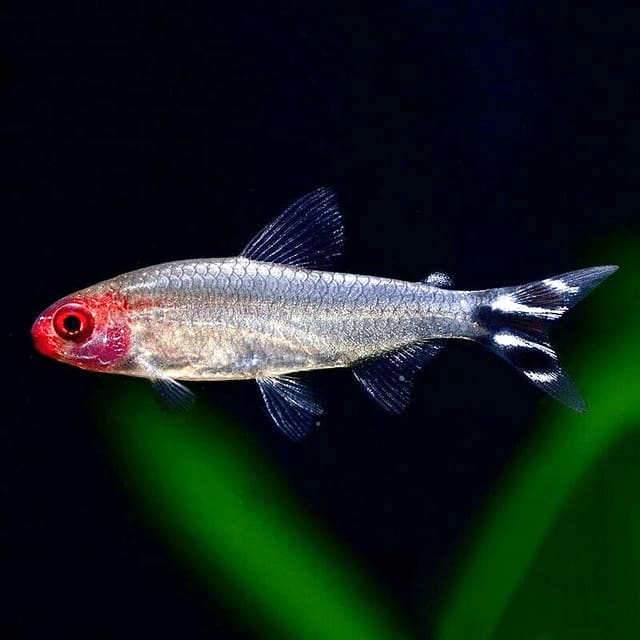
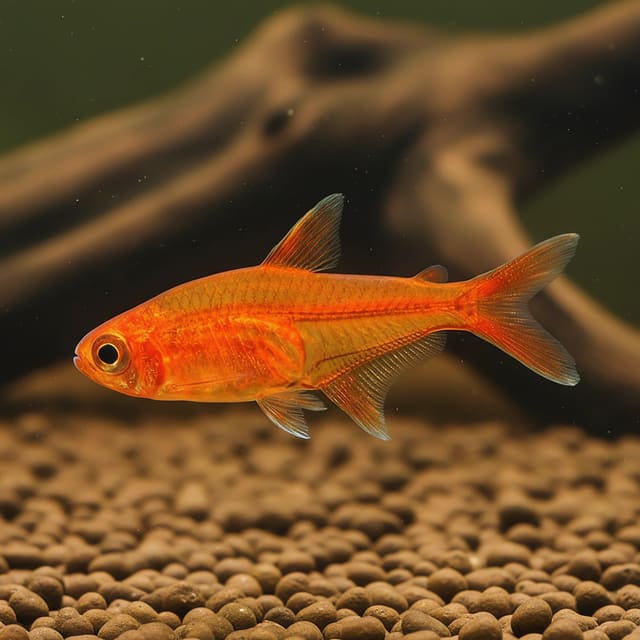
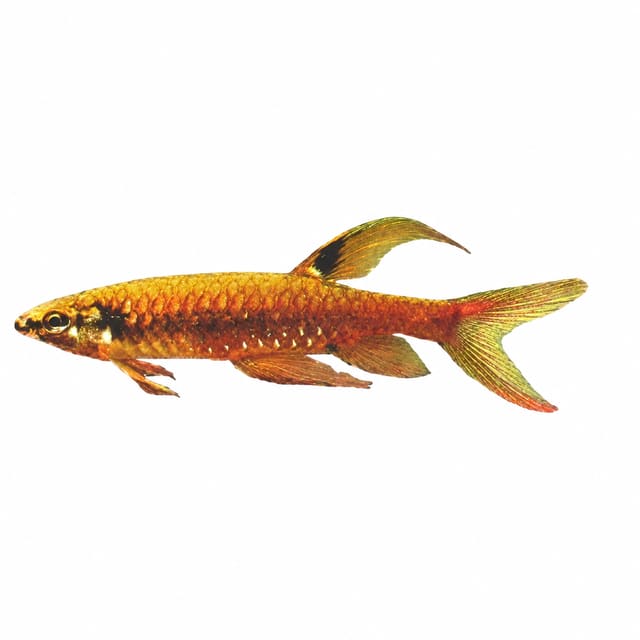
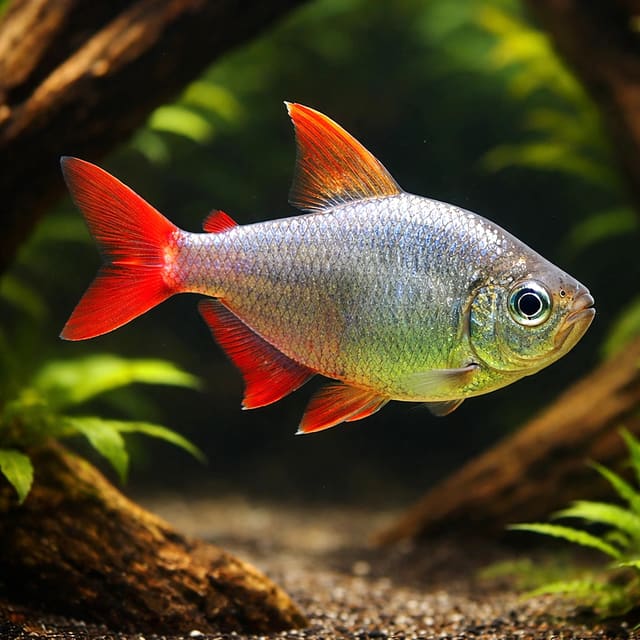
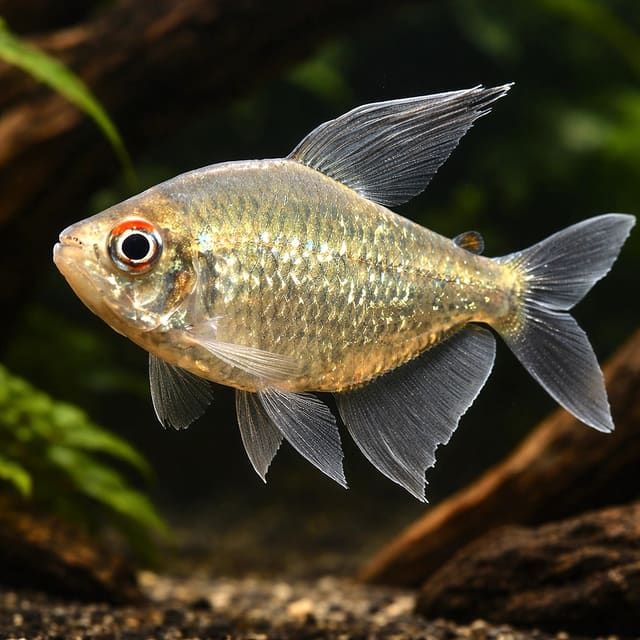
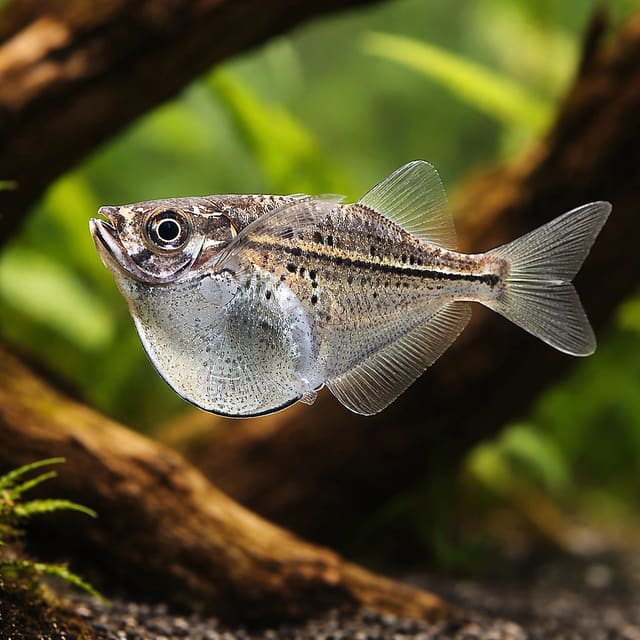
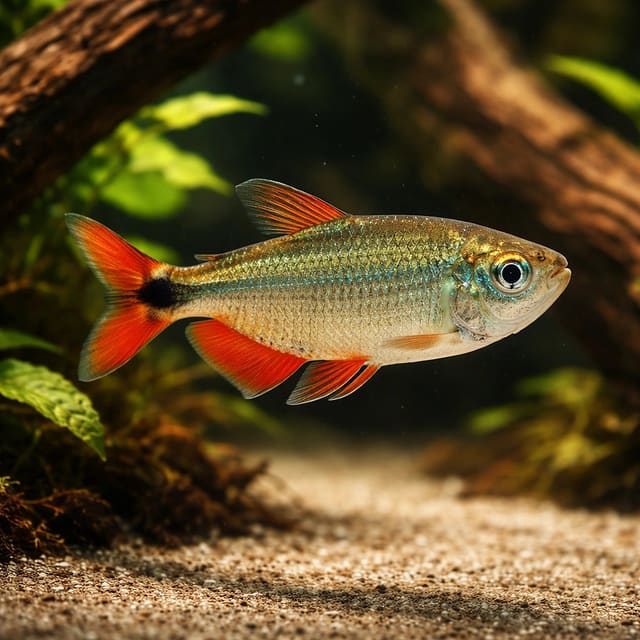
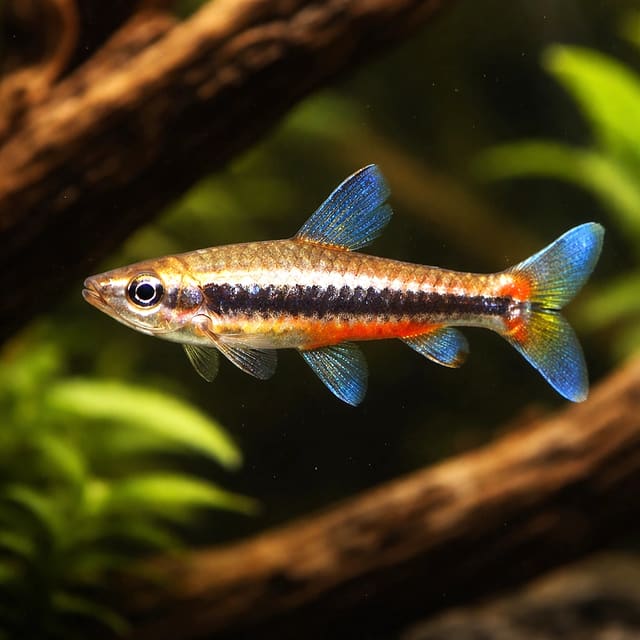
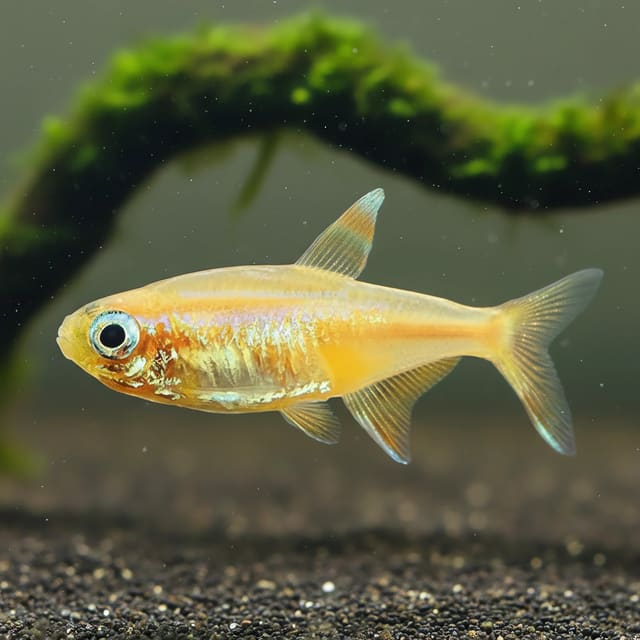
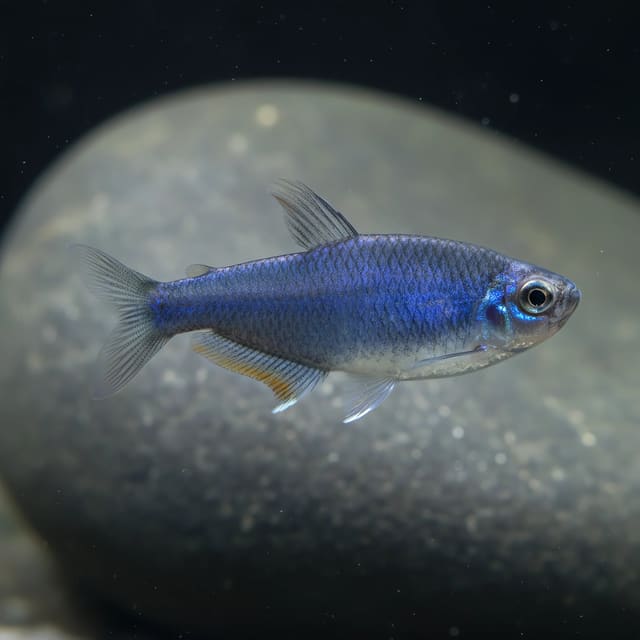
Visually, the gallery shows silver-bodied fish with large dark flank and tail-base marks and orange-red tones in several fins. Those observations describe the images, not a promise that every live fish will have identical colour or markings. Gallery images have been digitally enhanced to improve image quality. Natural colour, pattern, size and maturity can vary between live animals.
If this level of aggression is not right for your aquarium, the tetras collection is the better place to compare different temperaments and care plans. Being another tetra does not make a fish a safe tank mate for Exodon.
| A good match | Reconsider this species |
|---|---|
| You can dedicate a mature aquarium of about 243 litres with a 120 × 45 cm base. | You need a fish for a small, temporary or newly started tank. |
| You can keep at least twelve and monitor every fish at feeding time. | You want to buy a pair or add one fish to a peaceful community. |
| You are comfortable testing water and maintaining efficient filtration. | You want a low-observation setup with ordinary companion choices. |
That is a more demanding starting point than for a familiar peaceful tetra, but it also explains the appeal: a properly housed group is an energetic, coordinated display with behaviour that is genuinely different from a conventional community shoal.
Begin with floor area, not just the litre number. Seriously Fish specifies a 120 × 45 cm base and illustrates that footprint with a 45 cm height, giving about 243 litres. The long front-to-back space gives a fast midwater group room to turn, change position and escape focused attention. A narrow aquarium with a similar nominal volume can still be a poor shape for this species.
Twelve is the stated minimum group, not a target to squeeze into the smallest possible vessel. The same profile notes that 25–50 fish would not be unreasonable in the aquarium it describes, but that is not an instruction to maximise numbers. Stocking capacity also depends on filter maturity, oxygenation, feeding, waste output and the actual usable space around décor. Start with a coherent plan for the full group and increase only when measured water quality and behaviour remain sound.
A small group is not a gentle introduction. When too few fish are present, a dominant animal can repeatedly select the same weaker individual. Look for one fish being driven into a corner, excluded from food or kept away from open water. More fish may spread interactions, but it also adds waste and feeding competition; both the social and biological load have to be solved together.
If this is your first mature livestock system, use the first tropical tank guide to check the cycle, equipment and measured water before bringing the group home. Elapsed time alone does not prove that a filter can process the planned load.
The species profile gives 23–28°C, pH 5.5–7.5 and 0–20 dGH for aquarium care. FishBase records the same numerical range in its environmental data, while the species profile supplies the practical aquarium guidance. These are boundaries, not a reason to move the aquarium repeatedly from one end to the other. Choose conditions your source water and established system can hold steadily, then acclimatise gradually.
Test before purchase and again after the full group is feeding. Ammonia and nitrite should be undetectable. OATA’s broader guidance for tetras and pencilfish advises keeping nitrate no more than 20 mg/l above the level in the normal tap water. That nitrate figure is group-level husbandry guidance; it is useful as a maintenance trigger rather than a species-specific optimum.
Temperature, pH and hardness describe different parts of the water. A pH result does not tell you the general hardness or buffering capacity, and a heater setting does not prove the water temperature. The water chemistry guide explains the tests, while the water matcher helps compare measured aquarium values with the stated range. Measure before changing chemistry; abrupt correction can be more stressful than a stable value within that range.
| Planning point | Guidance |
|---|---|
| Temperature | 23–28°C |
| pH | 5.5–7.5 |
| General hardness | 0–20 dGH |
| Ammonia and nitrite | Zero detectable under OATA’s general tetra guidance |
| Nitrate | No more than 20 mg/l above normal tap water under the same group guidance |
A large, actively feeding group needs very efficient filtration. The species profile’s 243-litre example uses turnover of four to five times the aquarium volume each hour, corresponding to a nominal filter rating around 970–1,215 litres per hour. Treat that as a worked equipment example, not a promise that every filter delivers its box rating once media, pipework and head height are involved.
Arrange the return so the tank has circulation and surface movement without forcing every fish to hold against a harsh jet. Open midwater lanes can carry useful flow, while plants and wood create calmer pockets. Watch the fish rather than assuming that maximum pump speed is automatically better. Continual bunching behind décor, laboured station-holding or avoidance of one side can show that the pattern needs adjustment.
The RSPCA’s general aquarium guidance explains why filtration is a welfare requirement: fish release toxic ammonia; a mature biological filter supports bacteria that convert it first to nitrite and then to safer nitrate. That process does not remove the need for testing or water changes. A filter can be running yet immature, blocked, undersized or damaged by inappropriate cleaning.
Check intakes and outlets during every maintenance session. OATA’s general tetra guidance says not to rinse filter media under the tap because chlorine or chloramine may kill beneficial bacteria; rinse it lightly in removed aquarium water instead. Never replace all biological media at once simply because it looks stained. The aim is stable function, not visually pristine filter material.
A sand substrate with driftwood branches and roots is one species-profile option. A heavily planted aquarium is also recommended because it creates many refuges for fish singled out within the group. Those two aims are compatible: keep the centre and front useful for swimming, while using robust planting and wood around the sides and back to interrupt long sight lines.
Refuges should be distributed, not reduced to one cave that a dominant fish can control. Tall planting, branching wood and shaded edges give several escape routes. Secure every hard item so a fast-moving group cannot dislodge it, and leave enough clearance for fish to turn without scraping fins or flanks.
Subdued areas can help the group settle. Choose a maintainable layout that lets you see every fish at feeding time and inspect the base for waste; sand, wood, roots and dense planting are practical options rather than a mandatory decorative recipe. Dense décor that hides problems or prevents siphoning can work against the same welfare goal it was meant to support.
Plants also need to be chosen around maintenance and circulation. Leave space to clean behind wood and avoid packing the filter intake with leaves. The practical test is whether the aquarium offers open movement, several sheltered routes and accessible cleaning areas at the same time.
Wild gut analyses cited by Seriously Fish found a diet made up largely of insects and the scales of other fish. Captive fish do not need live fish. The same profile says dead alternatives are readily accepted and recommends predominantly meaty variety such as bloodworm, chopped prawns, mussel, earthworms and lancefish; most individuals also accept dried foods.
Use a suitable complete dried food as part of the routine, then rotate appropriate frozen or prepared meaty items. Variety matters more than building the entire diet around one favourite treat. Live prey is not required to preserve natural behaviour, and feeding live fish would add avoidable welfare and disease concerns without support from the husbandry evidence.
Distribute food across more than one point and watch the whole group. Exodon are described as violent, greedy feeders, so the quickest fish can monopolise a single food cloud. A good feeding session is one in which you can confirm that quieter animals eat and remove uneaten food before it decays. Do not keep adding food because the boldest fish still respond.
OATA’s general tetra guidance advises one daily portion eaten within a few minutes and warns that overfeeding leaves waste that breaks down and releases toxic compounds. That is a useful group-level starting routine. Adjust portion size from body condition, feeding access and water tests; do not invent extra meals to stimulate growth or use fasting as a treatment.
OATA’s guidance for tetras and pencilfish recommends a partial water change of about 25% at least weekly, regular testing, dechlorinated replacement water and a check for filter blockages. Use that as a starting routine, then adjust around the real aquarium’s stocking, feeding, plant growth and test results. Match replacement water closely enough to avoid a rapid temperature or chemistry swing.
Siphon settled waste from accessible areas, but do not turn every service into a complete disturbance of the group. Stagger deeper cleaning and filter attention so beneficial bacteria and stable territory cues are not disrupted at once. Record test results; a trend is more useful than a single memory that the water looked clear.
Observe before feeding, while food is offered and again after the fish settle. OATA’s broad warning signs include hanging at the surface, sitting on the bottom, erratic swimming, darker or paler colour, unusual hiding or aggression, altered breathing, white spots or fluffy growths, fin or scale loss, changing body condition and reduced appetite. Those are prompts to test the water and seek competent advice, not diagnoses by themselves.
With this species, separate normal rapid feeding from persistent harm. Short chases within a group can occur; one individual repeatedly cornered, damaged or excluded needs a husbandry response. Recheck group size, usable space, refuges, feeding distribution and water quality before assuming medication is the answer.
Have the mature, heated species aquarium ready before the parcel arrives. Tropical Fish Co’s current policy says fish are hand-bagged in pure oxygen, packed in an insulated poly box and supplied with a heat pack when the weather calls for it. Delivery uses a tracked, licensed live-animal courier, with the confirmed Thursday or Friday date sent by email so someone can be present.
Open the parcel on the day it arrives and inspect the fish before disturbing the bag. The policy advises floating the bag for 20–30 minutes and acclimatising slowly before release. Do not add a newly arrived group to an untested aquarium or make an abrupt chemistry correction while they are already coping with transport.
For a Live Arrival Guarantee claim, the unboxing video is evidence rather than part of fish care. Record one continuous take showing the parcel still sealed, the outer box, the opening and the fish still inside the sealed bag. Contact the team the same day with the order number before releasing the fish if something has gone wrong.
After release, keep observation calm and make sure food access is checked once the group is ready to feed. Rapid movement alone is not proof that everything is settled; breathing, balance, fin position and whether one animal is isolated are more useful. Avoid adding unrelated livestock at the same time, because that makes both social and water-quality changes harder to interpret.
Seriously Fish describes mature males as slimmer than females, with slightly elongated dorsal and anal-fin rays. That is biological context for mature fish, not a guarantee about the animal supplied and not a reliable basis for ordering a particular sex from this listing.
Breeding has been achieved but is described as rare. The profile calls the species an egg scatterer and recommends a separate spawning aquarium around 24 × 12 × 12 inches, using fine-leaved plants or a mesh through which eggs can fall beyond the adults’ reach. It gives soft, slightly acidic spawning water of pH 6.0–6.5 and 1–5 dGH, and describes conditioning adults together before selecting a pair.
Those breeding figures belong to a dedicated spawning attempt; they should not replace the main display guidance. The report that a large water change with slightly warmer water may stimulate spawning is presented as an observation, not a guaranteed recipe. A keeper should first be able to maintain the full social group and stable water before considering a separate breeding project.
A fixed hatch schedule, fry menu or success rate is not promised. If breeding is your aim, prepare separate mature filtration, a safe way to protect eggs and a plan for rearing space before moving adults.
Seriously Fish is direct: this is not a community fish and is best kept in a species setup. Bucktooth Tetras can strip scales and fins from silver or shiny fish, and even larger predatory species are not automatically safe. Size alone does not solve the problem.
A properly sized group of Exodon paradoxus is the central stocking plan. Keeping at least twelve spreads attention more effectively than a pair or small group, while plants and wood give a pressured fish a route out of sight. That does not make internal aggression disappear, so continue watching fin condition, feeding access and persistent exclusion.
Do not interpret “species aquarium” as permission to overstock. Every additional fish increases oxygen demand, waste and competition. Group size, tank footprint and filtration capacity must grow together. If the aquarium cannot carry the full group, choose a different species rather than buying a token number of Bucktooth Tetras.
The profile says scaleless and non-reflective fish are generally left alone and reports some success with various loaches, loricariids and larger characins such as Anostomus. It immediately qualifies those examples as unpredictable. They are reports of possible outcomes, not a list of dependable companions.
Any experienced keeper attempting a mixed system would need substantial space, visual barriers, feeding control and a ready separation plan. The profile advises adding Exodon last because a new arrival may be treated as food. Even that sequence cannot remove the risk, and a fish that appears ignored at first may still be targeted later.
Silver-bodied, reflective, slow or long-finned fish are especially poor choices because the natural feeding response is directly relevant to them. Larger predators are also unsafe simply by being larger. The responsible comparison is not “can it survive?” but whether each fish can feed, rest and move without repeated injury or chronic avoidance.
The related-product suggestions attached to this listing are alternative shopping routes, not tank-mate endorsements. They let a customer compare a different tetra plan without suggesting that those animals belong in the same aquarium.
Normal activity should not be confused with relentless pressure. A cohesive group may move quickly and show brief chases, but the same fish should not be pinned behind one object, denied food or repeatedly lose scales and fins. Check the aquarium at quiet times as well as during feeding, because problems can be missed when every fish rushes to the front.
If one animal is repeatedly targeted, first test water quality and inspect the group plan. Add or reposition sight breaks only when this can be done without creating unstable décor or removing essential swimming room. A larger group is not an instant cure if the filter and footprint are already at capacity. Separation may be the safer response.
New fish should be added only to a stable plan. OATA’s general guidance warns that stocking too quickly can outpace the filter bacteria and cause new-tank syndrome. For a species whose welfare already depends on a substantial group, prepare the biological capacity before the final animals arrive rather than building the shoal through repeated emergencies.
FishBase records 7.5 cm standard length for male or unsexed Exodon paradoxus, while Seriously Fish gives 150 mm standard length. Standard length excludes the tail, and the conflict is why we do not turn either record into an unqualified whole-fish maximum.
Seriously Fish gives a 120 × 45 cm base and uses a 120 × 45 × 45 cm aquarium of about 243 litres for a shoal. The footprint, refuges, filtration and actual group load matter as much as the headline volume.
Keep at least twelve Bucktooth Tetras, and only add more when the aquarium can support their space, oxygen and waste load. Smaller groups tend to focus aggression on a few weaker fish.
It suits an advanced keeper who can plan a large species aquarium, a group of at least twelve, efficient filtration and controlled feeding. A peaceful first community tank is a poor match for this scale-feeding species.
Offer a varied, predominantly meaty diet such as bloodworm, chopped prawn, mussel, earthworm and lancefish, with suitable dried food. Live fish are not required; distribute food so every animal can feed.
The species profile gives 23–28°C, pH 5.5–7.5 and 0–20 dGH. Choose stable conditions inside that range, confirm zero detectable ammonia and nitrite, and avoid abrupt chemistry changes.
Exodon paradoxus has specialised teeth and its natural diet includes scales from other fish. Silver or shiny companions are especially vulnerable, and even large predatory fish are not automatically safe.
A species aquarium is the safest recommendation. Loaches, loricariids and some larger characins have been kept with them, but the source describes mixed outcomes as unpredictable, so those are cautions rather than guaranteed tank mates.
Tropical Fish Co hand-bags fish in pure oxygen, uses an insulated poly box and adds a heat pack when weather calls for it, then sends the parcel by a tracked licensed live-animal courier. Read the delivery and Live Arrival Guarantee policy; a qualifying claim needs same-day contact and a continuous unboxing video beginning with the sealed parcel.
FishBase: Exodon paradoxus supports the accepted identity, family, distribution, environmental record and its specifically scoped 7.5 cm standard-length measurement.
Seriously Fish: Exodon paradoxus supplies the species-level aquarium guidance used for footprint, volume, group size, water, layout, feeding, compatibility, sexing and the cautious breeding context.
OATA: how to look after tetras and pencilfish is broad group guidance used for cycling, testing, maintenance, feeding control and warning signs. Its group figures are presented in that group context.
RSPCA aquarium environment guidance supports the general explanation of biological filtration and toxic nitrogen waste.
No reviews for this item yet. Bought one? Honest reviews only, good or bad.
What customers say about ordering from us
I have a small group of long finned mountain minnows. So was delighted to be able to order ten of this variety to increase the genetics in my tank . The ones I recieved are healthy but it’s to early to give a verdict on wether they are of a long finned type since they are small currently.
Gordon Walker · 23 Sept 2026
100% success travel and "installation". Pleased with quality of purchase. The Siamese fighter a bit "shy" so have not yet seen him at his best yet but looking good. Happy customer. GG
George E Garratt · 21 Sept 2026
Reviews of our shop, collected by Judge.me, an independent third-party review collector. Newest first.