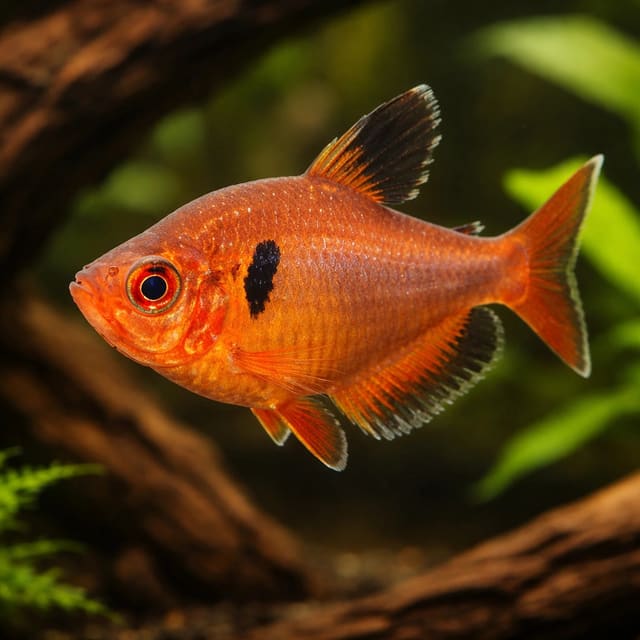
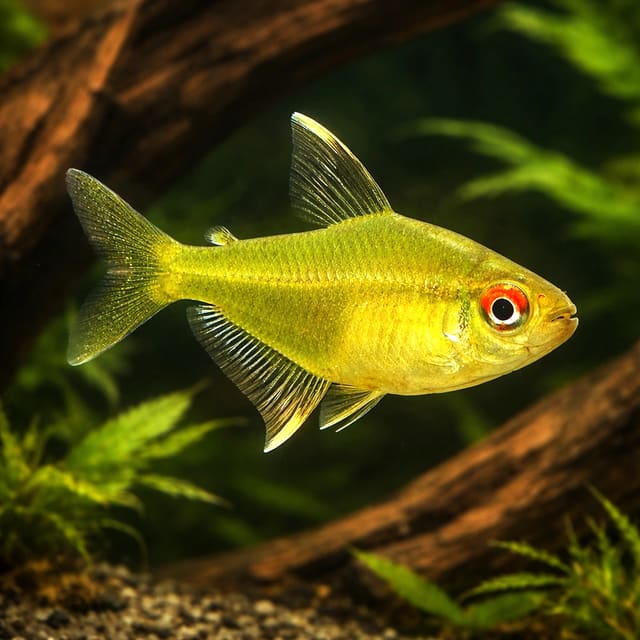
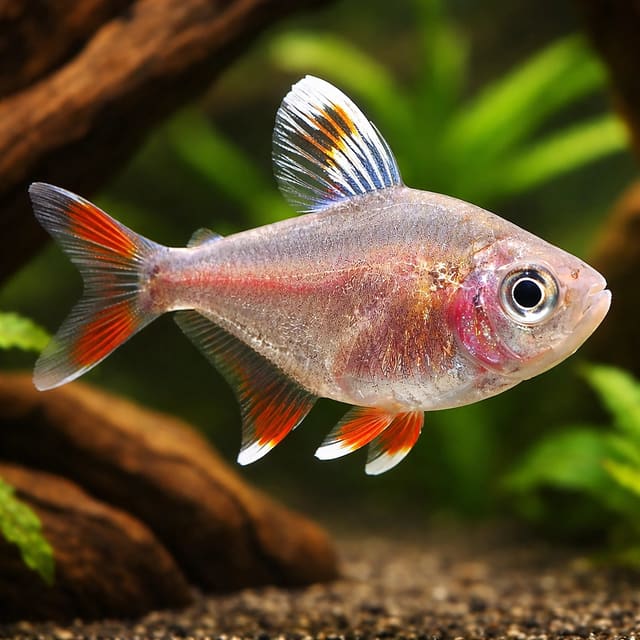
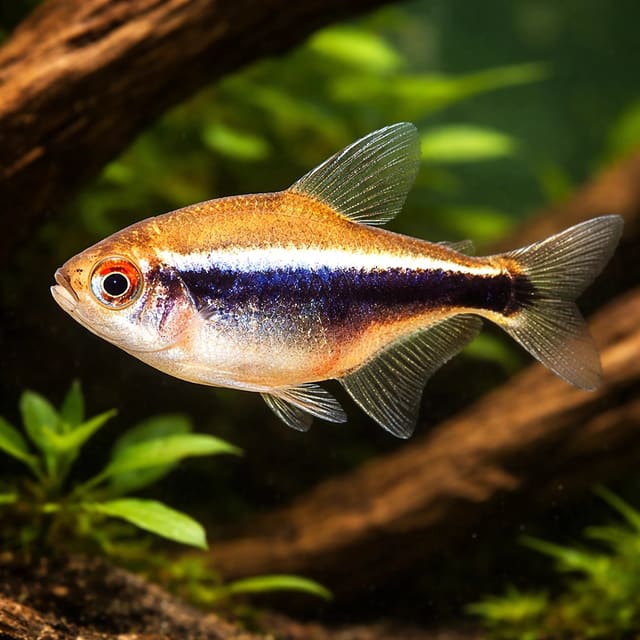
Moderate
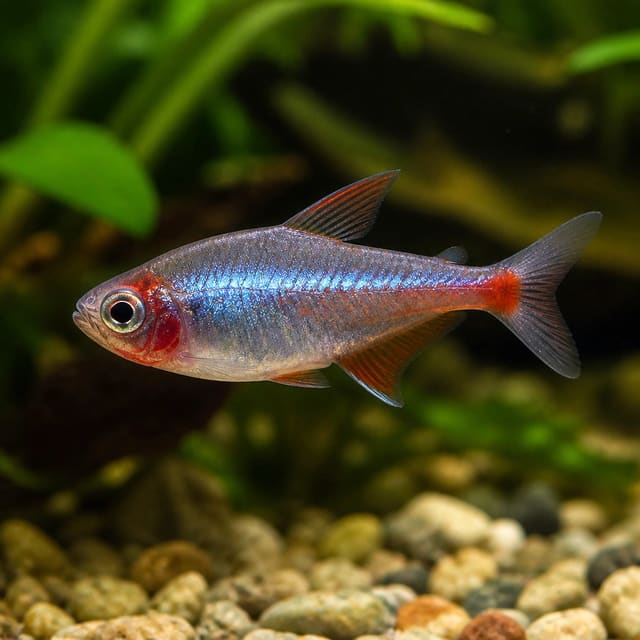
Neon Tetra (Paracheirodon innesi)
21–25°C · pH 5–7
£2.99

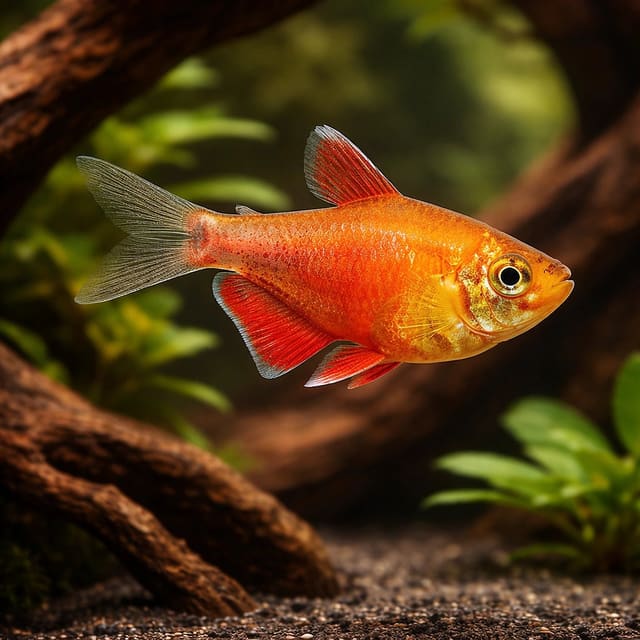
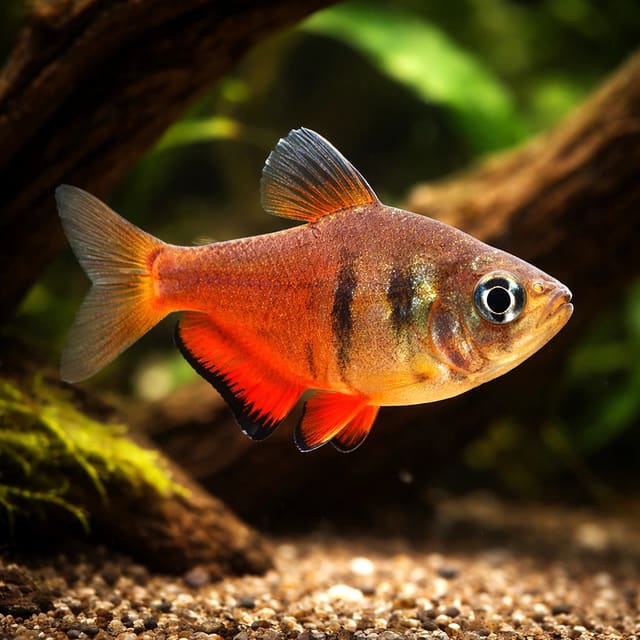
Hyphessobrycon ecuadoriensis is a small South American tetra for a mature, filtered aquarium. One purchase supplies one unsexed fish in the chosen dispatch size; plan a shoal, calm companions and stable water rather than treating it as a solitary display fish.
Adult size is the maximum length this species reaches at full maturity (scientific sources). The livestock you receive will be younger and smaller — pick a size above for the actual shipping size. Product-photo provenance and any image-specific limitations are stated on the listing.
Hyphessobrycon ecuadoriensis
Shoaling fish: kept in a group they feel safer, stay calmer and show their best colour.
Hyphessobrycon ecuadoriensis is a small South American tetra for a mature, filtered aquarium. One purchase supplies one unsexed fish in the chosen dispatch size; plan a shoal, calm companions and stable water rather than treating it as a solitary display fish.
Adult size is the maximum length this species reaches at full maturity (scientific sources). The livestock you receive will be younger and smaller — pick a size above for the actual shipping size. Product-photo provenance and any image-specific limitations are stated on the listing.
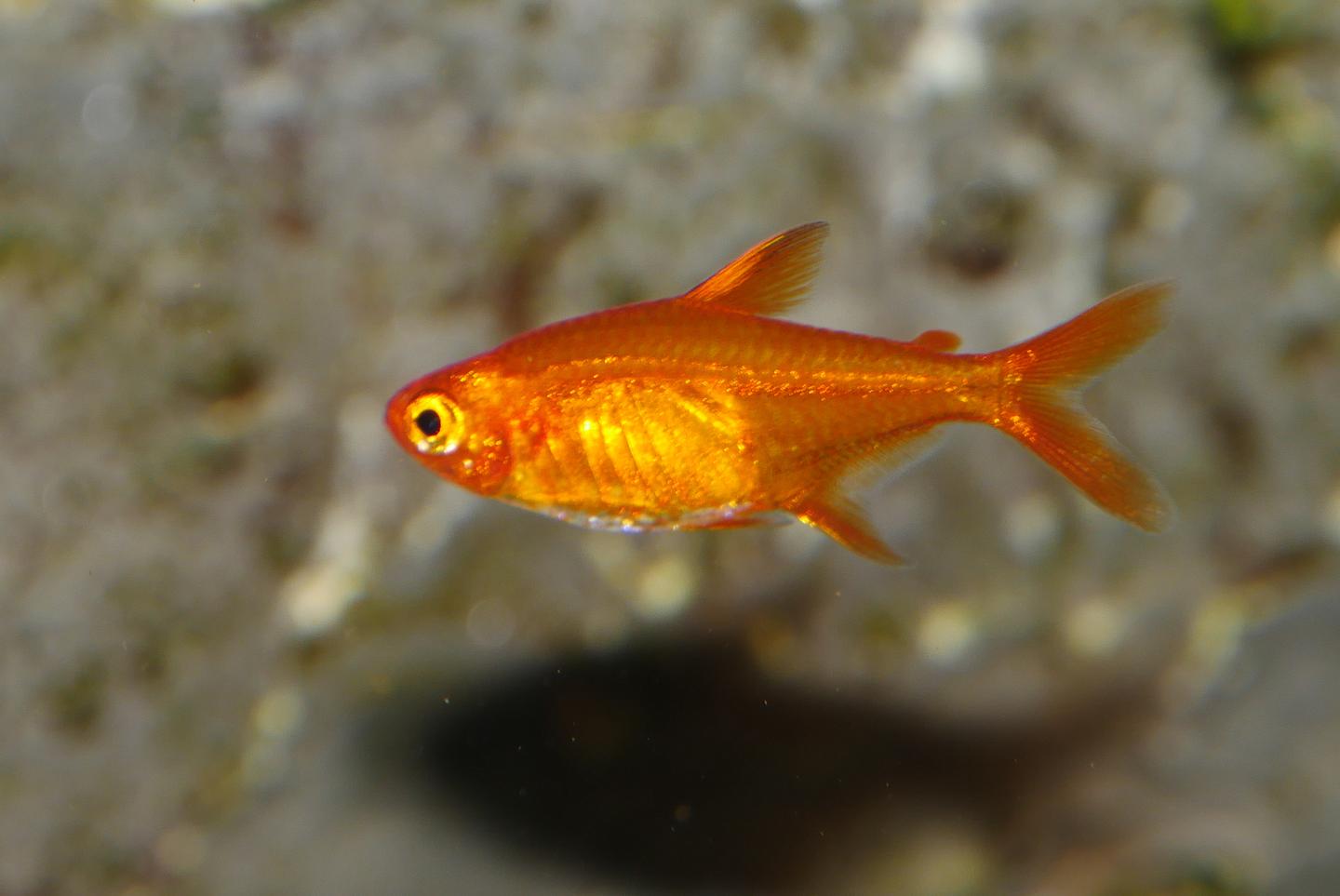
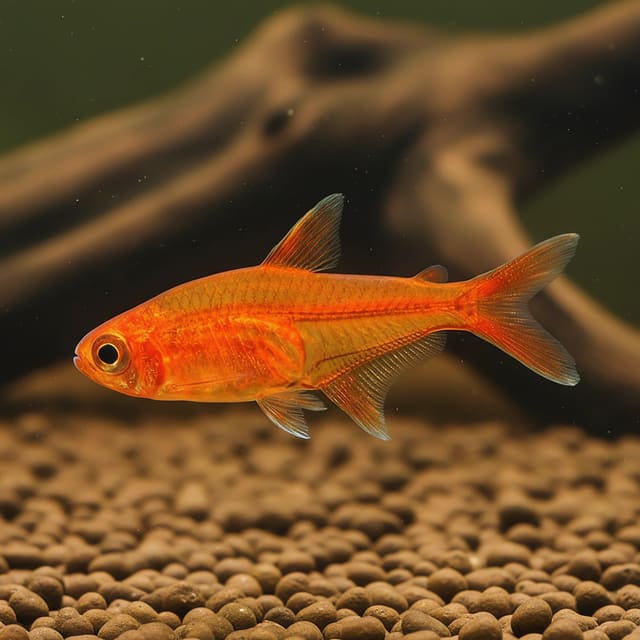
Ember tetras are very small Brazilian social fish, with a maximum recorded length of 2.0 cm excluding the tail. Keep them only in a fully cycled, stable aquarium. We recommend a group of at least 10 and about 45 litres with a 45 × 30 cm footprint rather than using a litres-per-fish formula.
Maintain these water conditions for optimal health and vibrant colors
Hyphessobrycon ecuadoriensis is a small freshwater American tetra with a very limited documented natural range. FishBase records it from the type locality at Vinces in Ecuador, where the species is associated with forest pools, and gives a maximum recorded length of 3.1 cm total length. That makes it a genuinely small fish, but its modest dimensions should not be mistaken for a reason to keep it alone or in an immature nano aquarium. Tetras are social, active animals whose welfare depends on stable water, suitable companions and room for a group to move together.
This listing is for one live fish per purchase. The page shows two dispatch sizes: 1.5–2 cm and 2.5–3 cm. The size selected is a dispatch grade, while 3.1 cm is the species' maximum recorded adult length in the scientific identity source. The size you select is the size supplied, not the adult size. Sex is guaranteed only when the selected option explicitly states male or female. This Hyphessobrycon ecuadoriensis listing has no sex-guaranteed option. Natural variation in colour, pattern, body condition and maturity is normal between individual live animals.
| Scientific name | Hyphessobrycon ecuadoriensis |
|---|---|
| Animal supplied | One live, unsexed fish per purchase |
| Dispatch sizes | 1.5–2 cm or 2.5–3 cm |
| Recorded adult length | Up to 3.1 cm total length |
| Social plan | A shoal of at least five, with more where space and filtration allow; this is broad tetra guidance |
| Water guide | 22–27°C, pH 6.5–8.0 and 4–12°dH as broad captive-tetra guidance, not a measured species optimum |
| Suits | A mature, filtered aquarium with planting, open swimming room and similarly sized, similarly tempered companions |
This is a sensible prospect for a keeper who enjoys small shoaling fish and is willing to make decisions conservatively where species-specific aquarium information is sparse. The exact identity is well supported, yet the most useful husbandry figures available here come from a UK trade-body care sheet covering tetras and pencilfish as a group. A good keeper therefore uses those figures as a practical starting range, watches the fish closely and values steadiness over constant adjustment. The fish is less suitable for someone wanting a single centrepiece, a newly filled tank, a community of much larger predators or a display dominated by slow, long-finned fish.
Browse the Tropical Fish Co tetra collection to compare this species with other tetras, but compare adult size, temperament, feeding speed and water needs individually rather than assuming every fish in the collection belongs in one community.
The scientific source establishes a freshwater tropical tetra, its accepted name, family, Ecuadorian type locality, forest-pool habitat and recorded maximum length. Practical aquarium planning comes from the broad OATA care sheet for captive tetras: a mature filtered aquarium, planting and cover, swimming room, a gentle current for smaller species, a shoal of at least five, daily modest feeding and a general water range. Those points work as cautious group-level starting guidance, while the fish's condition and measured water inform sensible adjustments.
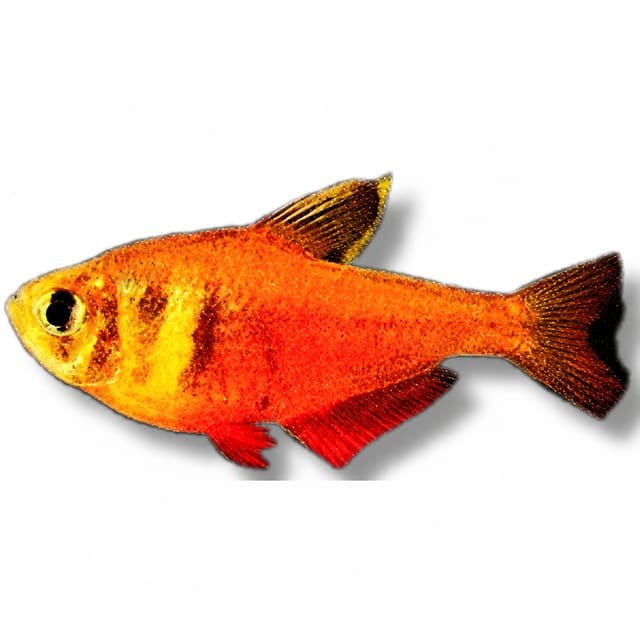
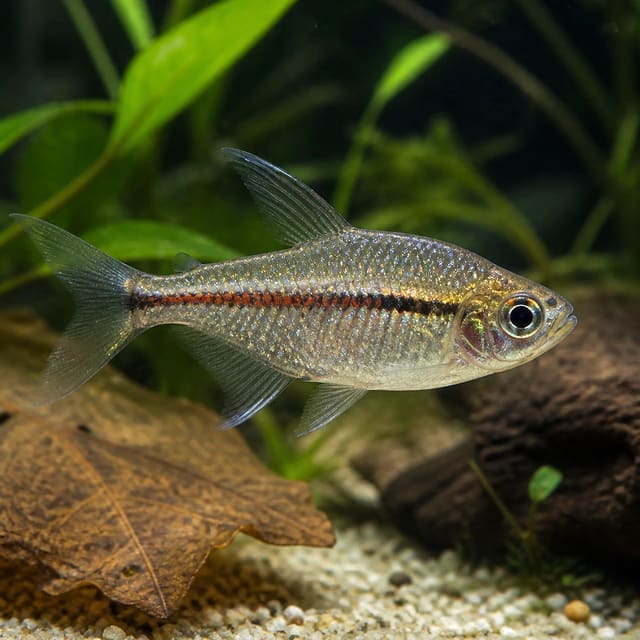
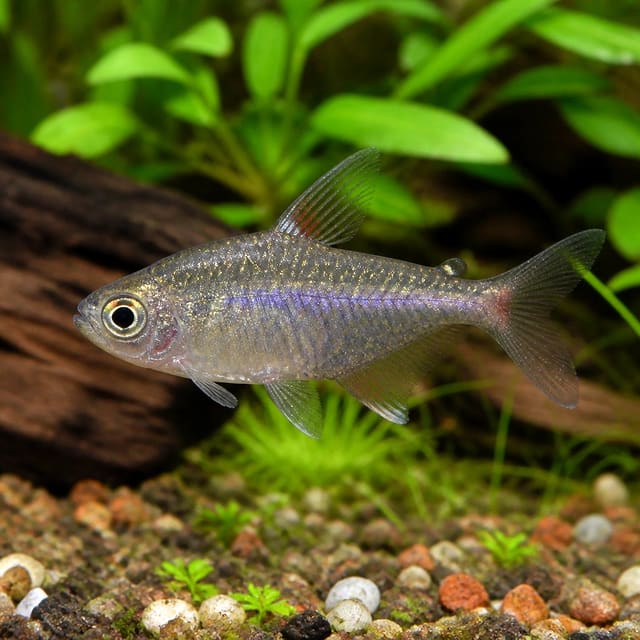
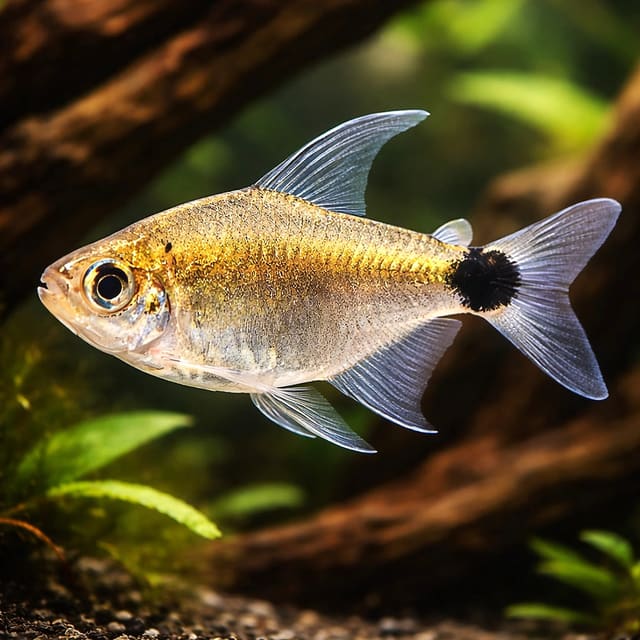
Gallery images have been digitally enhanced to improve image quality. Natural colour, pattern, size and maturity can vary between live animals.
Start with a properly cycled aquarium, not a container that has only just been filled and heated. Fish excrete ammonia, which is toxic; a mature biological filter supports bacteria that convert ammonia to nitrite and then to the less harmful nitrate. Before adding the shoal, test that ammonia and nitrite are both zero and confirm that the heater, filter and thermometer hold steady through a normal day. The first tropical aquarium guide is a useful preparation checklist, but the fish's actual behaviour and measured water should guide your routine after arrival.
For small tetras as a group, OATA recommends at least 45 litres for a small shoal of a smaller species. Treat that as a broad planning minimum rather than a species-specific threshold. Tank shape, usable swimming length, the final number of fish, companion stock and filtration capacity all matter. A cramped tall aquarium can offer less useful group-swimming space than a longer tank of similar volume. If the community is busy or the shoal is larger, choose more room. The goal is not to squeeze a numerical rule; it is to give the group space to spread, regroup and feed without every movement ending at a wall.
FishBase associates H. ecuadoriensis with forest pools. That is a natural-history clue, not a command to recreate one exact biotope. In a home aquarium, combine planted margins or other smooth cover with a clear route for group swimming. Live plants are useful, while well-made artificial plants can also provide shelter if live planting is impractical. Wood and suitable ornaments may break up exposed areas, but keep all edges safe for a small-bodied fish. Leave enough open midwater that the shoal can move as a unit.
Use aquarium sand or gravel that can be maintained without trapping excessive waste. Smaller tetras generally benefit from a gentle rather than punishing current. Aim the filter return so there is circulation and surface movement without forcing the fish to swim hard all day. A filter is essential; do not reduce water movement so far that waste settles everywhere or oxygen exchange becomes poor. Check intakes and any gaps around equipment so a small dispatch-size fish cannot enter a compartment where it may be injured.
Provide a normal light-and-dark rhythm and areas of shade or plant cover. Observe where the group chooses to rest, feed and school. Persistent hiding, surface-hanging, erratic swimming or a sudden loss of colour can be an early sign to test water and review the surroundings. Those observations are prompts to investigate, not diagnoses of a particular disease.
OATA's broad guidance for captive-bred tetras and pencilfish gives 22–27°C, pH 6.5–8.0, general hardness of 4–12°dH and carbonate hardness of 3–10°dKH. These are useful group ranges, not a species-specific optimum for H. ecuadoriensis. FishBase identifies the species as tropical freshwater; the water figures above remain broad captive-tetra guidance. Begin by measuring your source water and aquarium, then judge whether it sits within the broad guide without abrupt chemical correction. The water chemistry guide explains the purpose of common tests, while the water matcher helps compare real readings with stated guidance.
| Measure | Practical interpretation |
|---|---|
| Temperature | 22–27°C is broad captive-tetra guidance; choose a stable point that also suits every companion. |
| pH | 6.5–8.0 is the broad group guide. Avoid chasing a particular decimal with repeated chemical swings. |
| General hardness | 4–12°dH is group-level guidance. Know your tap-water baseline before altering it. |
| Ammonia and nitrite | Both should remain at zero mg/l in the occupied aquarium. |
| Nitrate | OATA advises no more than 20 mg/l above the normal tap-water level for this group. |
Stability does not mean ignoring an unsafe result. If ammonia or nitrite is detected, investigate promptly, reduce feeding pressure where appropriate and seek knowledgeable help. It means avoiding needless fluctuations when the tank is already within a suitable range. Match replacement water for temperature as reasonably as possible and treat tap water with an aquarium water conditioner so chlorine or chloramine does not damage fish or filter bacteria.
OATA strongly recommends a 25% partial water change at least once every week for tetras and pencilfish. Use that as the starting routine, then let testing, stocking and waste production show whether the aquarium needs more frequent attention. Siphon visible waste from accessible substrate without stripping the whole aquarium bare. Clean the glass as needed and remove dead plant matter before it decomposes.
Check the filter for reduced flow or blockages. When filter media needs cleaning, rinse it lightly in water removed from the aquarium during a water change, not under the tap, because chlorine or chloramine may harm the established bacterial population. Avoid replacing all mature media at once. Inspect the heater, thermometer and filter at the same time so gradual equipment failures are caught before the fish show distress.
OATA describes tetras and pencilfish as omnivorous and recommends a good-quality flake or granule, supplemented with small live or frozen foods such as daphnia, small bloodworm or tubifex. Choose pieces that the smallest fish can take easily. If flakes are large, crush them rather than expecting a 1.5–2 cm dispatch-size fish to wrestle with an oversized piece. Fine granules should soften without immediately disappearing into the substrate.
Feed only what the fish can consume within a few minutes, once a day under the broad group guidance. Watch whether food reaches the whole shoal. A shy or newly arrived individual may hang behind while bolder fish take every mouthful. Distribute small portions across the swimming area instead of dropping a large heap in one place. Variety can add nutritional and behavioural interest, but more kinds of food do not excuse overfeeding. Uneaten material decomposes and adds to the filter's workload.
Do not make colour enhancement or rapid growth the priority. A steady appetite, normal swimming, clear eyes, intact fins and maintained condition are more useful routine observations. If appetite drops, test the water before assuming the solution is a different food. Changes in feeding can result from stress, inappropriate companions, unstable temperature or poor water quality as well as illness.
Arrange for someone to be at the delivery address and prepare the aquarium before the parcel arrives. Under the Tropical Fish Co Live Arrival Guarantee policy, inspect the parcel on the day it arrives. If anything appears wrong, make a continuous unboxing video beginning with the sealed parcel, showing the outer box, the opening and the fish still inside the sealed bag before anything is disturbed. Keep the order number available and contact the shop the same day. The full conditions are on the delivery and Live Arrival Guarantee page.
Keep the introduction calm. Use temperature equalisation and transfer without bag water. Keep the procedure simple, without unmeasured chemicals or an elaborate timed mixing routine. After release, look for steady upright swimming and gradual engagement with cover or the shoal. Test water if behaviour causes concern. Feeding should resume conservatively rather than using a large meal as a test.
Learn the group's normal pattern so changes stand out. OATA suggests watching swimming behaviour, colour, temperament, breathing, external appearance, body condition and food intake. One brief chase is different from constant harassment; a moment near the surface is different from repeated gasping. Take the whole situation into account and test the basics first. Seek qualified aquatic-veterinary or experienced retailer advice when a health concern persists instead of guessing a treatment from appearance alone.
Tetras and pencilfish are shoaling fish under the OATA group guide, which recommends at least five together and says more is better. Apply that social starting point to this fish unless better species-specific evidence becomes available. A group gives members the opportunity to direct normal social attention towards one another rather than relying on unrelated tank mates as substitutes. The aquarium must still have enough swimming area and biological capacity for the chosen number.
Additions should be paced so the mature filter can adapt to increased waste. Buying a social number does not make rapid overstocking safe. If building the shoal in stages, keep the welfare goal in view and avoid leaving one fish isolated for an extended period. Watch for an individual that is continually chased away from food or cover; the correct response may involve layout, space, group structure or companion choice rather than simply adding more fish without checking capacity.
OATA advises that smaller tetras should not share an aquarium with fish large enough to eat them. This species' maximum recorded length is only 3.1 cm, so that warning matters even in communities described casually as peaceful. A predator does not become safe because both animals accept the same temperature. Mouth size, feeding response and nocturnal behaviour deserve attention.
The same group source says tetras and pencilfish mix best with species of similar size and temperament. That is a decision rule, not a universal tank-mate list. Select calm animals that will neither hunt a tiny tetra nor monopolise every meal. A comparison product is not automatically a safe companion, so assess every proposed community on its own merits.
| Situation | How to assess it |
|---|---|
| Much larger fish | Avoid any animal capable of swallowing a 3.1 cm adult or a smaller newly supplied fish. |
| Slow, elaborate-finned fish | Use caution because some more boisterous tetras can nip; observe the actual group rather than assuming this poorly documented species is risk-free. |
| Very fast feeders | Use caution if the tetra shoal cannot obtain fine food before companions consume it. |
| Similarly sized calm fish | Potentially suitable when water, space, diet and behaviour all overlap and no species is predatory. |
| Other small shoals | Check total stocking and swimming space; several groups can make a modest aquarium crowded even when each species is small. |
Treat fin-nipping risk conditionally for H. ecuadoriensis. OATA notes that larger or more boisterous tetra species may nip timid or long-finned fish. Choose companions conservatively and use the group's observed behaviour rather than attaching a fixed aggression label. House it conservatively, keep an appropriate shoal and monitor interactions.
Choose companions with normal, confident feeding and swimming behaviour rather than animals likely to be stressed by activity. Provide cover that breaks sight lines while retaining open group-swimming space. If one fish repeatedly pursues another, if fins become damaged or if a timid species stops feeding, intervene early. Rearranging some cover may help, but persistent incompatibility may require separation into appropriate established aquariums.
A technically compatible community can still fail at mealtimes. Small flakes, granules and tiny frozen foods must remain accessible to this species. Bottom-only feeders do not automatically solve competition, because vigorous midwater fish may still take everything before the tetra group settles. Feed in controlled small portions across more than one point, then watch each fish rather than judging success by how quickly food disappears.
When assessing a new companion, compare adult size, likely mouth size, normal feeding speed, preferred water level, temperature, pH and hardness. Think about the smaller dispatch grade as well as the adult. A companion unable to swallow an adult may still threaten a newly supplied 1.5–2 cm fish. Never use sex or a photograph to predict temperament; this listing provides no sex selection.
Compatibility is an ongoing observation, not a one-time label. Reassess it as fish grow and the community changes. A combination that appears calm with juveniles may alter when a companion reaches adult size. Equally, a new arrival may initially hide without the community being inherently unsuitable. Give the group a stable environment, observe patterns over several feeding and resting periods, and respond to repeated behaviour rather than one moment.
FishBase records a maximum length of 3.1 cm total length for Hyphessobrycon ecuadoriensis. The 1.5–2 cm and 2.5–3 cm figures on the shop page are dispatch sizes, not two different adult sizes. Growth and body condition vary between individuals, so use 3.1 cm as the documented maximum rather than a promise that every fish will reach exactly that length.
OATA's broad guide recommends at least 45 litres for a small shoal of smaller tetras. Treat that as a planning floor rather than a species-specific threshold, then allow more space for a larger shoal, companion fish or a busy layout. A long swimming area, mature filter, planting and stable water matter alongside the headline litre figure.
Use OATA's broad tetra guidance of at least five, with more generally better when the aquarium has enough space and filtration. Hyphessobrycon ecuadoriensis should not be planned as a solitary display fish. Add livestock at a pace the mature biological filter can support, and make sure every member of the shoal reaches food.
It can suit a careful newer keeper who already has a mature filtered aquarium, can test water and understands shoaling behaviour. Species-specific aquarium data are limited, so it is a poor choice for anyone wanting a fish that can be kept alone or placed into a brand-new tank without preparation. The store's intermediate label reflects that planning responsibility rather than a scientific difficulty rating.
Broad tetra guidance recommends a good-quality flake or small granule, with small live or frozen foods such as daphnia, small bloodworm or tubifex as useful variety. Offer suitably fine pieces and only what the shoal can finish within a few minutes once daily. Remove leftovers and confirm that quieter Hyphessobrycon ecuadoriensis individuals are not being excluded by faster fish.
Use 22–27°C and pH 6.5–8.0 as broad captive-tetra guidance, not a measured species-specific optimum. The same group guide gives 4–12°dH general hardness. Choose a stable point within a range that also suits the companions, and test ammonia and nitrite at zero rather than continually changing chemistry to chase one precise number.
Treat aggression and fin-nipping risk conditionally for Hyphessobrycon ecuadoriensis. OATA warns that some larger or more boisterous tetras may nip timid or long-finned fish. Keep a proper shoal, choose similarly tempered companions and monitor repeated chasing, food exclusion or fin damage instead of assuming either perfect peacefulness or inevitable aggression.
OATA advises mixing tetras with species of similar size and temperament and keeping small tetras away from fish large enough to eat them. Calm, non-predatory fish with overlapping water needs may be suitable after a full stocking check. Avoid universal tank-mate claims: adult size, mouth size, feeding speed, available swimming room and the smaller dispatch grade all affect the decision.
Tropical Fish Co hand-bags live animals in oxygen, uses an insulated box and adds a heat pack when weather calls for it, then sends the parcel by a licensed live-animal courier. Someone must be present to receive it. For a Live Arrival Guarantee concern, make a continuous unboxing video from the sealed parcel through to the fish still in the sealed bag, and contact the shop the same day.
One purchase supplies one animal in the chosen dispatch size, without sex selection. Those retail facts are kept separate from biological care values. Delivery and claim steps come only from Tropical Fish Co's linked policy in the care section. This separation matters because dispatch size is not adult length, and broad tetra guidance is not proof of a species-specific optimum.
No reviews for this item yet. Bought one? Honest reviews only, good or bad.
What customers say about ordering from us
I have a small group of long finned mountain minnows. So was delighted to be able to order ten of this variety to increase the genetics in my tank . The ones I recieved are healthy but it’s to early to give a verdict on wether they are of a long finned type since they are small currently.
Gordon Walker · 23 Sept 2026
100% success travel and "installation". Pleased with quality of purchase. The Siamese fighter a bit "shy" so have not yet seen him at his best yet but looking good. Happy customer. GG
George E Garratt · 21 Sept 2026
Reviews of our shop, collected by Judge.me, an independent third-party review collector. Newest first.