Moderate
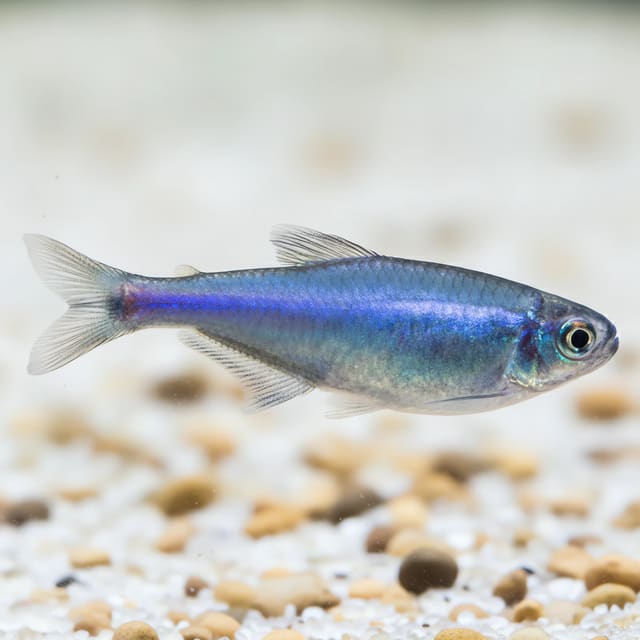
Neon Tetra (Paracheirodon innesi)
21–25°C · pH 5–7
£2.99

The Beckfordi Pencilfish (Nannostomus beckfordi) is a Lebiasinidae pencilfish from Guyana to the Amazon and Negro basins that reaches 6.5 cm standard length. It suits newcomers with a mature, planted aquarium; keep ideally 10 or more at 24–26°C, pH 6.5–8.0 and 5–12 dGH, the overlap of FishBase, Seriously Fish and OATA guidance. Sold individually in sizes from 1.5–2 cm to 4.5–5 cm.
Adult size is the maximum length this species reaches at full maturity (scientific sources). The livestock you receive will be younger and smaller — pick a size above for the actual shipping size. Product-photo provenance and any image-specific limitations are stated on the listing.
Nannostomus beckfordi
Shoaling fish: kept in a group they feel safer, stay calmer and show their best colour.
Minimum of 2 per order.
The Beckfordi Pencilfish (Nannostomus beckfordi) is a Lebiasinidae pencilfish from Guyana to the Amazon and Negro basins that reaches 6.5 cm standard length. It suits newcomers with a mature, planted aquarium; keep ideally 10 or more at 24–26°C, pH 6.5–8.0 and 5–12 dGH, the overlap of FishBase, Seriously Fish and OATA guidance. Sold individually in sizes from 1.5–2 cm to 4.5–5 cm.
Adult size is the maximum length this species reaches at full maturity (scientific sources). The livestock you receive will be younger and smaller — pick a size above for the actual shipping size. Product-photo provenance and any image-specific limitations are stated on the listing.
Maintain these water conditions for optimal health and vibrant colors
The Beckfordi Pencilfish (Nannostomus beckfordi), also called the Golden Pencilfish or Beckford’s pencil fish, is a small freshwater member of the Lebiasinidae family. It comes from South America, from rivers in Guyana south to the Amazon basin and up the Amazon River to the Negro River. FishBase records a maximum of 6.5 cm standard length. Seriously Fish describes it as an excellent newcomer choice that is less demanding than most related pencilfish, provided its social, space and water needs are met.
In nature it inhabits small rivers with little current and swamps, where it forms groups and feeds on worms, crustaceans and insects. In an aquarium it occupies the middle-to-upper region and benefits from dense planting, shaded areas and gentle filtration. Its relatively peaceful character suits a carefully planned community, but it will not compete well with very boisterous or much larger fish.
Keep at least five Beckfordi Pencilfish, with 10 or more preferred. FishBase supports groups of five or more, while Seriously Fish recommends an ideal group of at least 10 because larger groups are bolder, show more natural behaviour and spread aggression between individuals. Males may defend territories within the group, so broken lines of sight and additional space are useful.
For routine aquarium care, keep the water at 24–26°C, pH 6.5–8.0 and 5–12 dGH. These values are the overlap of FishBase’s recorded environment, Seriously Fish’s aquarium range and OATA’s pencilfish guidance. Plan for an aquarium at least 60 cm long; Seriously Fish also specifies a base of at least 45 × 30 cm, about 41 litres, or equivalent, with larger housing recommended for multiple males.
| Suits | Not suited to |
|---|---|
| A mature, filtered and planted freshwater aquarium | An unfiltered or biologically immature aquarium |
| A group of at least five, ideally 10 or more | Being kept alone or in too small a group |
| Similarly sized, peaceful companions | Fish large enough to eat it |
| Gentle flow and broken sight lines | Very boisterous or much larger tankmates |
One purchase supplies one Beckfordi Pencilfish in the size chosen from the live selector. The size labels are 1,5 - 2 cm, 3 - 4 cm and 4.5-5 cm. These measurements describe the fish at dispatch and should be used to judge its immediate feeding access and the size of its present tankmates. The size you select is the size supplied, not the adult size.
Plan the permanent aquarium around the recorded adult length of 6.5 cm standard length rather than the selected dispatch grade. A smaller fish still needs the mature, filtered aquarium, social group and compatible stocking plan required by the adult. Avoid using a compact temporary layout on the assumption that the fish can move later; the social group needs suitable swimming room and cover from the beginning.
Sex is guaranteed only when the selected option explicitly states male or female. This Beckfordi Pencilfish listing has no sex-guaranteed option.
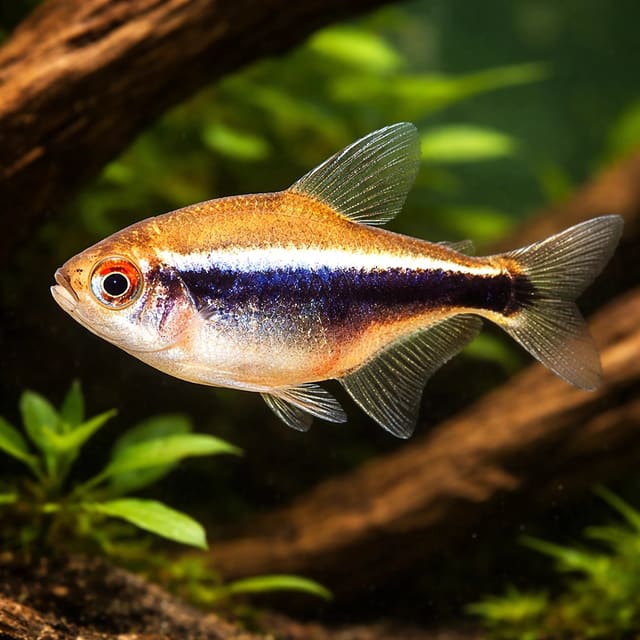
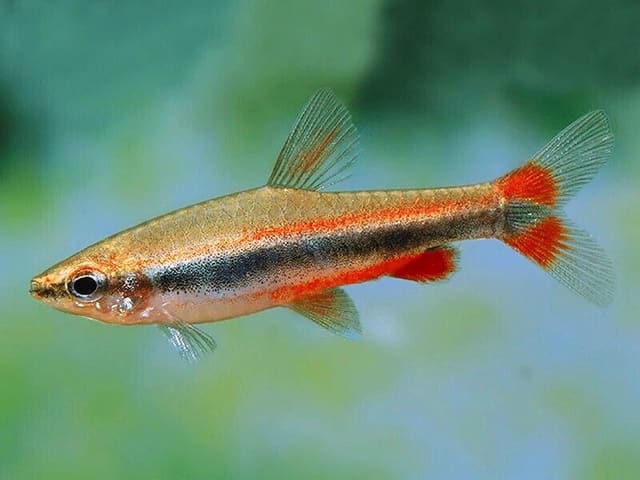
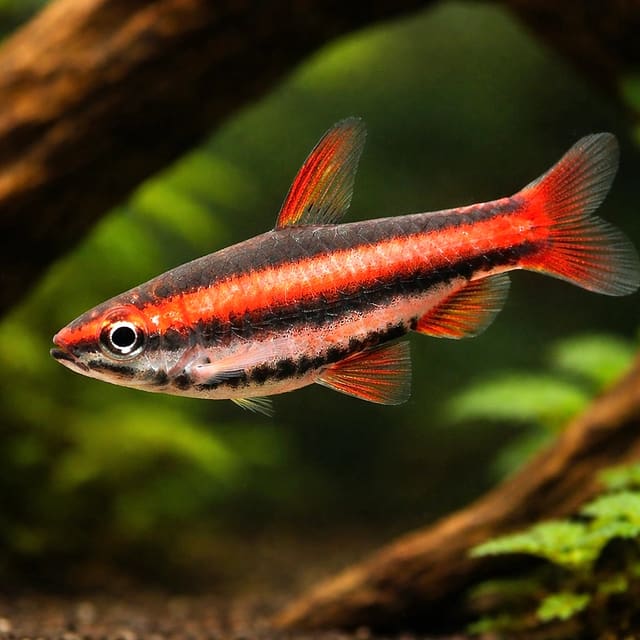
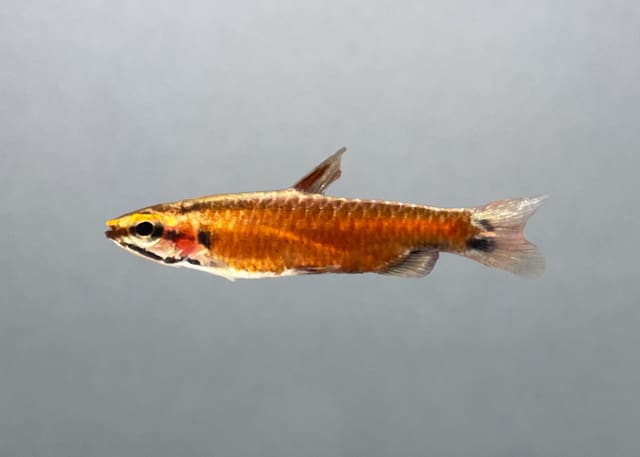
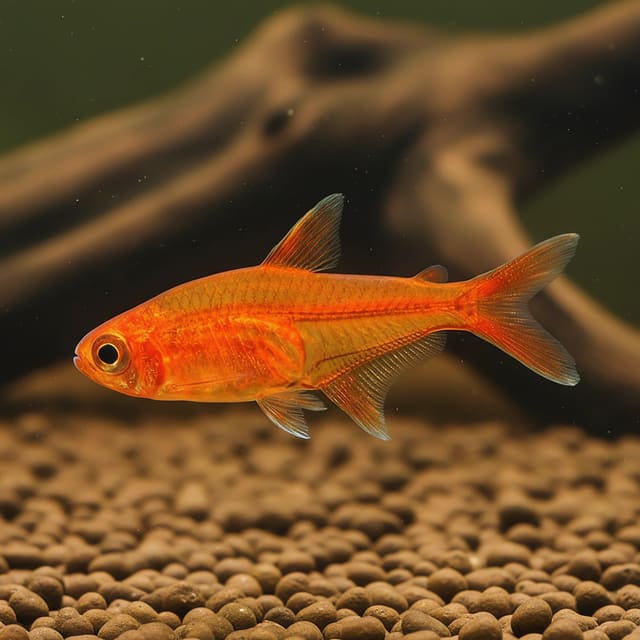
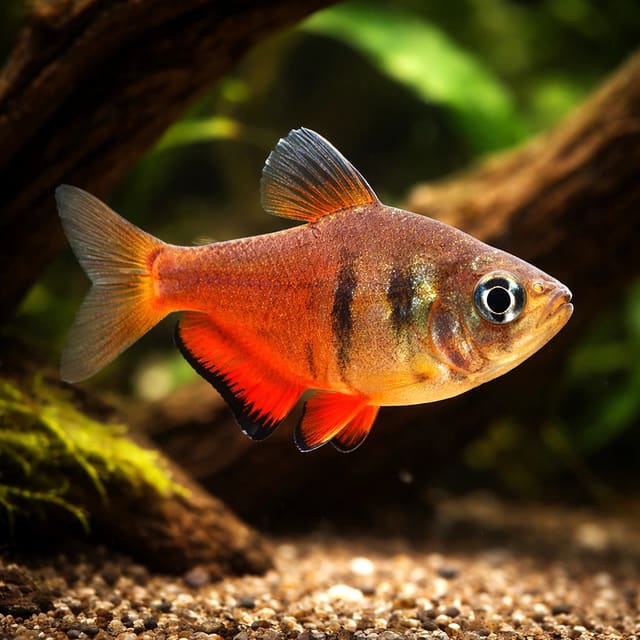
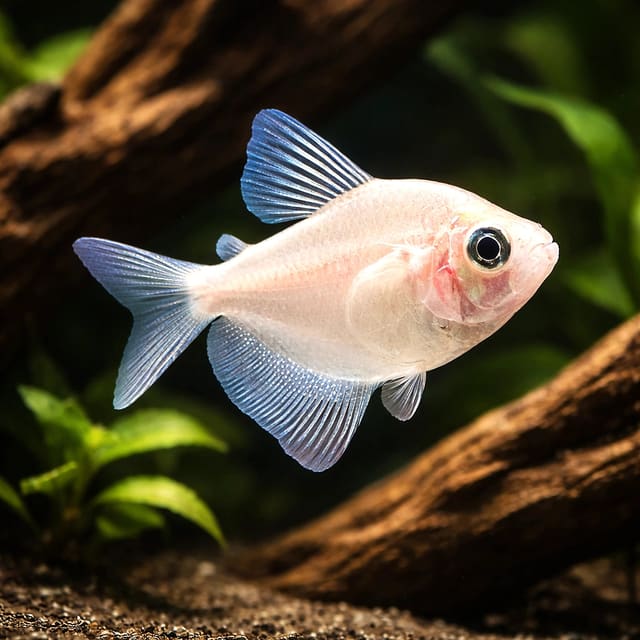
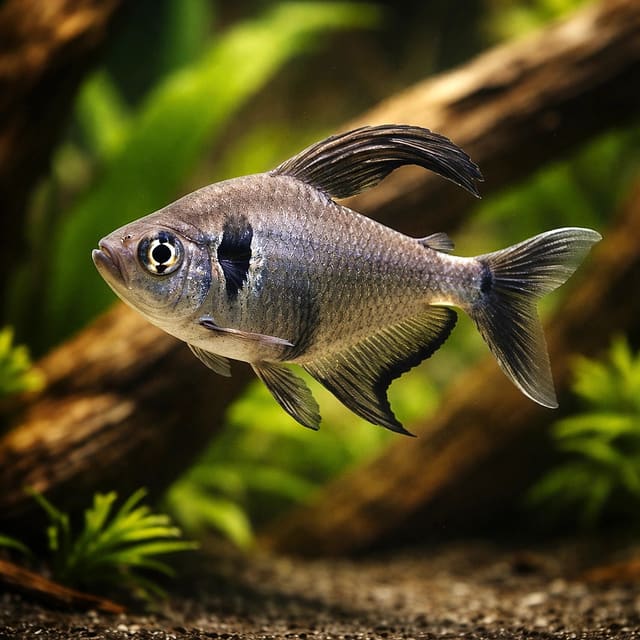
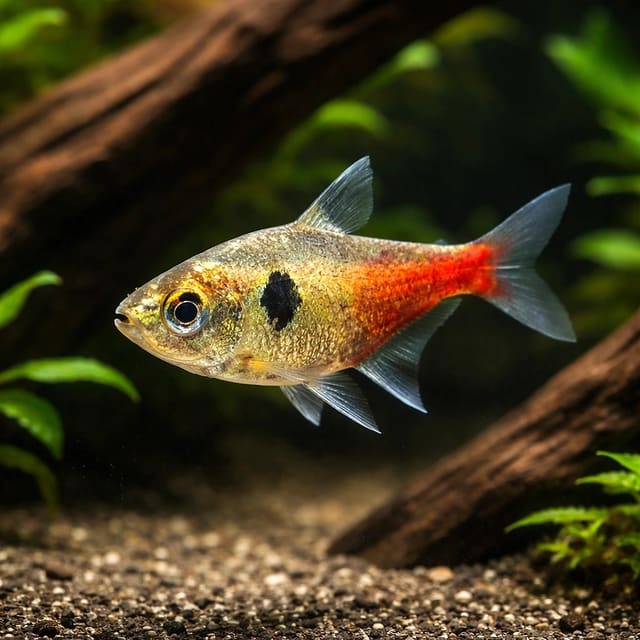
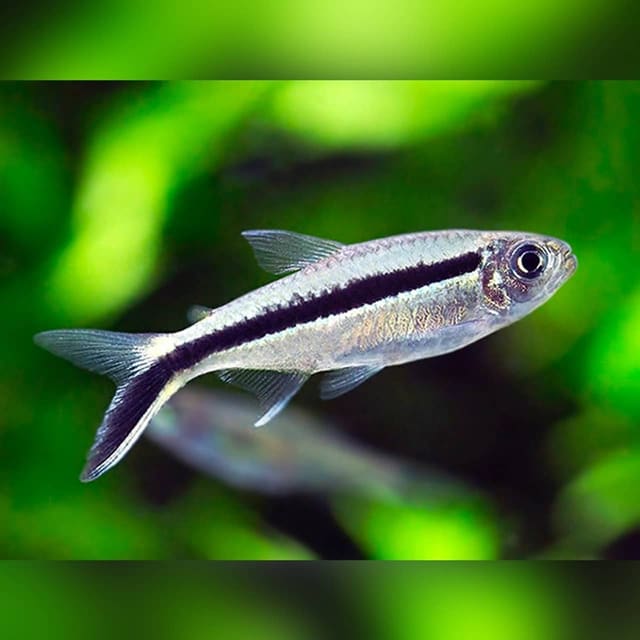
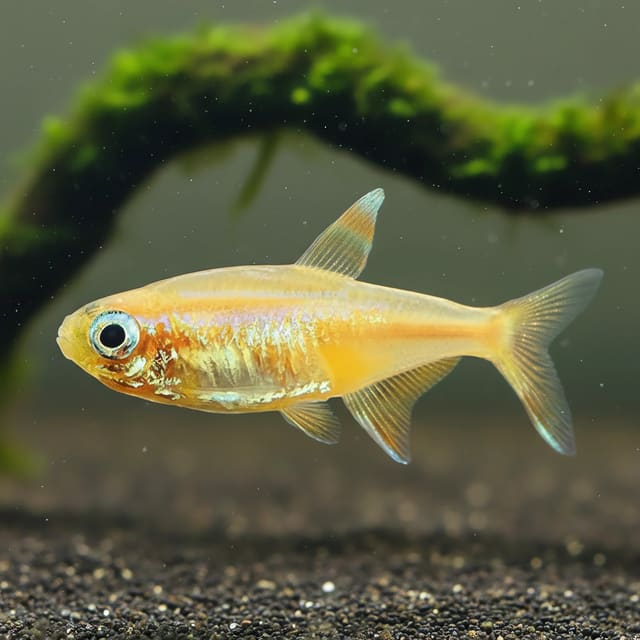
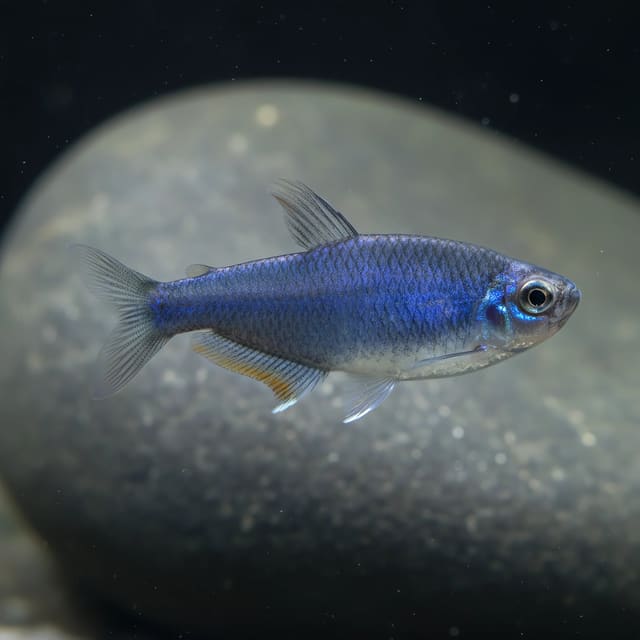
Some gallery images have been digitally enhanced to improve image quality. They show the listed type of animal rather than guaranteeing the exact markings of the individual supplied, so natural colour and pattern can vary.
This species belongs to the pencilfish family rather than the tetra family, although both groups share many community-aquarium planning needs. You can browse the current tetras collection when comparing other small shoaling fish, but assess each candidate against the Beckfordi Pencilfish’s water, temperament, feeding and space requirements before mixing them.
Use an aquarium at least 60 cm long for Beckfordi Pencilfish. FishBase gives 60 cm as the minimum aquarium size, while Seriously Fish specifies base dimensions of at least 45 × 30 cm, about 41 litres, or an equivalent footprint. A practical plan should satisfy the 60 cm length and provide at least that base area rather than relying on volume alone.
The 6.5 cm recorded maximum is standard length, which excludes the tail. Use that figure consistently when judging swimming space, group numbers and the size of companions. A fish selected at 1,5 - 2 cm, 3 - 4 cm or 4.5-5 cm is still growing, so the aquarium should be ready for its permanent group from arrival.
Larger housing is recommended when keeping multiple males together. FishBase records males defending territories within groups, while Seriously Fish explains that a larger group spreads aggression and encourages bolder, more natural behaviour. Space alone does not replace planting: combine the footprint with broken sight lines so individuals can move out of one another’s view.
As a worked check, a tank that is about 41 litres but shorter than 60 cm meets the approximate volume in one profile but not the FishBase length. A 60 cm aquarium must still be checked for a base of at least 45 × 30 cm or equivalent. If several males are present, move beyond these minimum dimensions rather than filling the remaining space with additional species.
The main planning decision is therefore a combination of length, footprint, group size and structure. An aquarium can look spacious while offering little usable horizontal room, and heavy decoration can reduce access to the middle-to-upper region. Arrange cover around open routes rather than creating one exposed area and one dense corner.
Build a heavily planted aquarium with gentle filtration, shaded cover and open middle-to-upper swimming space. Seriously Fish recommends a dark substrate, floating plants, driftwood branches and dried leaf litter. These features break lines of sight, reduce skittishness and allow the fish to show more natural group behaviour.
Start with plants around the back and sides, then use floating growth to soften exposed areas. Keep a clear feeding and swimming route beneath the cover. Broken sight lines are particularly useful where males defend small territories, because a fish can leave another individual’s view without abandoning the whole upper part of the tank.
| Feature | Purpose |
|---|---|
| Dark substrate | Supports the shaded, planted presentation recommended for the species |
| Floating plants | Add cover above the middle-to-upper swimming area |
| Driftwood branches | Create structure and interrupt long sight lines |
| Dried leaf litter | Adds cover and supports microbial colonies as it decomposes |
| Open routes | Preserve room for group movement and feeding |
Microorganisms associated with decomposing leaf litter may provide a secondary food source for fry. Tannins and other substances released by the leaves are also thought beneficial. Treat leaf litter as part of the habitat rather than the fish’s main diet, and remove or replace material as part of routine aquarium maintenance when its condition requires attention.
Filtration can be gentle. Seriously Fish notes that an air-powered sponge-style unit is normally adequate and that some water movement is acceptable. For an aquarium around 41 litres, its profile suggests a filter rated at approximately 80–125 litres per hour. Position the outlet so it circulates water without forcing the group away from its preferred area.
A bare aquarium removes the structure used to reduce skittishness, while a completely overgrown one can restrict movement and feeding. Balance shelter with clear routes and adjust plants when observation shows that one fish is repeatedly excluded from a useful area.
Keep Beckfordi Pencilfish at 24–26°C, pH 6.5–8.0 and 5–12 dGH. This routine target is the overlap of FishBase’s recorded environmental range, Seriously Fish’s species aquarium range and OATA’s tetra and pencilfish group guidance. OATA gives 22–27°C, pH 6.5–8.0 and 4–12 dGH for the group; those figures are not a species-specific optimum.
The overlap provides a clear target for everyday care: 24°C, pH 6.5 and 5 dGH sit at its lower boundaries, while 26°C, pH 8.0 and 12 dGH sit at its upper boundaries. A reading beyond any boundary falls outside the combined routine target even if it remains inside one wider profile. Measure all three values rather than judging water by temperature alone.
Keep ammonia at zero mg per litre and nitrite at zero mg per litre. OATA advises that nitrate should not exceed 20 mg per litre above the normal tap-water level. Test at least weekly and whenever behaviour, breathing, colour or appetite changes. The water chemistry guide explains what each measured value means.
OATA also gives a carbonate-hardness range of 3–10 dKH for tetras and pencilfish. Carbonate hardness is separate from the 5–12 dGH routine general-hardness target, so record the two results under their correct units. Use the water matcher to compare measured aquarium values with the stated ranges.
Assess companion species against the same measured water, not a label such as “tropical” or “community”. Every animal in the aquarium needs a compatible range. If a proposed companion requires conditions outside this routine target, choose a different companion rather than operating at the edge of two conflicting plans.
Use a well-set-up and maintained biological filter from the beginning. The RSPCA explains that fish release toxic ammonia, which beneficial filter bacteria convert first to toxic nitrite and then to safer nitrate. A filter therefore has to support an established bacterial population, not merely move water around the aquarium.
Prepare and mature the aquarium before livestock arrives. The first tropical aquarium guide covers the preparation sequence. Before adding Beckfordi Pencilfish, test for zero ammonia and zero nitrite. Increase the aquarium population slowly because the beneficial bacterial population must grow as fish numbers and feeding increase.
Stocking too many fish too quickly can lead to new tank syndrome, when the filter bacteria cannot process the increased waste. This can raise ammonia and nitrite to levels that may cause illness or death. A mature aquarium is still affected by a sudden increase, so test after additions and keep portions controlled.
If the filter needs cleaning, do not run it under the tap. Rinse it lightly in aquarium water removed during the partial water change. This reduces the loss of beneficial bacteria that could be killed by chlorine or chloramine.
Watch for hanging at the surface, sitting on the bottom, erratic swimming, faster or slower gill movement, unusual hiding, altered aggression, darker or paler colour, white spots, fluffy growths, damaged fins or scales, body-condition changes and reduced feeding. These are prompts to test the water rather than diagnoses.
If a change appears, measure ammonia, nitrite, nitrate, temperature and pH, check the filter flow and review recent stocking or feeding changes. Contact us for guidance if the fish’s health or behaviour remains concerning. Avoid choosing a disease treatment from appearance alone; the first useful action is to establish the aquarium conditions accurately.
Base the diet on foods appropriate for a small micropredator. FishBase records worms, crustaceans and insects in the wild diet, while Seriously Fish describes Beckfordi Pencilfish as feeding on tiny invertebrates and other zooplankton. In the aquarium it accepts suitably sized dry foods but should also receive small live or frozen foods every day.
Useful live or frozen choices named for this species include Artemia nauplii, Moina and grindal worm. OATA’s group guidance also names daphnia, small bloodworm and tubifex for tetras and pencilfish. Choose pieces that fit the fish’s small mouth and remain accessible in the middle-to-upper feeding area.
Feed once a day and offer only what the group can eat within a few minutes. Combine a suitable dry product with a small live or frozen invertebrate food so the meal reflects the recorded diet while retaining practical variety. Distribute the food across more than one point when a confident individual blocks access.
| Observation | Action |
|---|---|
| Food remains after a few minutes | Reduce the next portion and remove uneaten material |
| One fish reaches everything first | Spread the same controlled portion across the group’s swimming area |
| Food pieces are ignored | Check that the pieces are suitably small and review water quality |
| Interest in food falls | Test the water and check breathing, colour and swimming behaviour |
Overfeeding adds waste when uneaten food breaks down. That extra waste places more demand on the biological filter and can contribute to harmful ammonia or nitrite. Portion control is therefore part of water-quality management, especially after the group size changes.
Do not judge the right amount by the size of a pinch alone. Watch the whole group for the few-minute feeding period and adjust the next meal from what was actually consumed. A useful portion reaches every fish but leaves no persistent food on the substrate or among plants.
Keep at least five Beckfordi Pencilfish and aim for 10 or more. OATA warns that pencilfish kept singly or in groups that are too small often become stressed. Seriously Fish recommends the larger group because aggression is spread between individuals and the fish become bolder and display more natural behaviour.
FishBase records groups in which males dominate while defending territories. This does not turn the species into a generally aggressive community fish, but it makes planting, sight-line breaks and adequate space important. Observe where disputes occur. If one individual repeatedly controls an open area, rearrange plants or wood to create additional visual boundaries and feeding points.
| What you see | What to check |
|---|---|
| The group remains hidden | Group size, boisterous companions, cover and water values |
| One fish is repeatedly displaced | Sight lines, feeding access and space for multiple males |
| The group struggles in the current | Filter direction and whether gentle swimming areas remain |
| Feeding response declines | Ammonia, nitrite, temperature, pH and competition |
Adult males are more intensely coloured, particularly in spawning condition, and their anal fins have a curved rear edge. Adult females are rounder-bodied and have a straight rear edge to the anal fin. These adult characteristics can be observed in a settled group, but body colour in a gallery image or a dispatch measurement should not be used to assign a fish’s sex.
The species is an egg-scattering free spawner and provides no parental care. Adults in good condition may spawn regularly, and small numbers of fry may appear in a mature aquarium without intervention. Dense fine cover and the microorganisms associated with decomposing leaves can benefit fry, but adult group care should remain the priority unless a separate breeding plan is being made.
A larger group only helps when the aquarium has the space and filtration to support it. Add fish gradually, allow the biological filter to adjust and keep monitoring ammonia and nitrite rather than increasing the group in one abrupt stocking event.
Be present to receive the parcel because live fish cannot be left unattended. The fish is hand-bagged in pure oxygen and placed in an insulated poly box, with a heat pack used when the weather calls for it. Inspect the parcel on the day it arrives and film the complete unboxing sequence from the sealed parcel onward.
Keep the order number with the video. The continuous recording should show the sealed parcel, the opening and the fish inside the sealed bag. Complete these steps before releasing the fish, because its condition needs to be visible while the bag remains sealed.
Read the current delivery and Live Arrival Guarantee policy before the arrival date. The policy contains the claim requirements and the current packing and receipt details.
Finish water testing, temperature checks and filter preparation before the parcel arrives. Those aquarium-care tasks should not interrupt the unboxing sequence. Have the mature aquarium ready at 24–26°C, pH 6.5–8.0 and 5–12 dGH, with zero ammonia and zero nitrite, then carry out the policy steps in order.
After release, observe swimming, breathing and the way the fish uses cover. Keep the established filtration and maintenance routine steady, and use measured water values when investigating any change. The selected fish may be smaller than existing group members, so confirm that it can reach suitably sized food at the next daily meal.
Choose similarly sized, peaceful companions that will not eat or outcompete the Beckfordi Pencilfish. Seriously Fish describes the species as relatively peaceful but says it competes poorly with very boisterous or much larger tankmates. OATA’s direct rule is that Beckford’s pencilfish should not be kept with any fish large enough to eat them.
Suitable categories named by Seriously Fish include similarly sized peaceful characids and smaller callichthyid or loricariid catfishes. It can also be combined with smaller rasboras, barbs and anabantoids in a general community. These are categories for screening rather than automatic approvals: each candidate still needs compatible water, temperament, adult size, feeding behaviour and space.
Apistogramma species and other dwarf cichlids are also named as potential companions. Beckfordi Pencilfish can act as a dither fish because it usually occupies the middle-to-upper region and does not often prey on fry. Check the cichlid’s own aquarium requirements and territorial plan before combining the two groups.
Hatchetfishes are not omitted because they are aggressive. Seriously Fish advises omitting these sedate surface-dwellers, particularly in smaller aquaria, where the species occupy a similar part of the aquarium. Treat that as a space and activity-zone decision rather than trying the combination after other checks.
Watch the first daily meals after any stocking change. Every pencilfish should reach suitably sized food within the few-minute feeding period. If a companion takes the entire portion before the group feeds, adding more food increases waste without solving the compatibility problem. Separate the feeding points or revise the stocking plan.
Screen every proposed companion against five points: adult size, temperament, swimming region, water overlap and feeding access. A shared South American origin or a “community” label is not enough. The companion must remain unable to eat a 6.5 cm standard-length pencilfish and must not overwhelm this relatively peaceful group.
| Check | Decision |
|---|---|
| Adult size | Reject any fish large enough to eat the pencilfish |
| Temperament | Prefer similarly sized peaceful species; treat boisterous fish with caution |
| Swimming region | Preserve usable middle-to-upper space and omit hatchetfishes, especially in smaller aquaria |
| Water | Require overlap with 24–26°C, pH 6.5–8.0 and 5–12 dGH |
| Food | Confirm that every pencilfish can feed within a few minutes |
Start with the Beckfordi Pencilfish group, its permanent space and its planted structure. Then calculate what room remains after at least five, ideally 10 or more, have been accommodated. Adding a companion category should not reduce the group below its social requirement or remove the open routes and visual barriers used by territorial males.
A match that passes the initial screen still needs observation. Watch whether the pencilfish remain visible, reach food, use more than one area and move away from disputes successfully. Test ammonia and nitrite after stocking increases because compatible behaviour does not remove the extra biological load.
Do not solve competition by increasing feeding beyond what the fish consume within a few minutes. Uneaten food adds waste and may raise ammonia or nitrite. If food access remains unequal after distributing the controlled portion across several points, revise the combination.
Invertebrate compatibility should be assessed cautiously because the recorded wild diet includes small crustaceans and other tiny invertebrates. No universal shrimp or snail pairing is included in this plan. Contact us for a stocking assessment using the proposed animal’s adult size, the aquarium dimensions, measured water values and the complete current livestock list.
It reaches 6.5 cm standard length. FishBase records this maximum, so plan the aquarium and companions around 6.5 cm rather than the dispatch grade.
Use an aquarium at least 60 cm long. Seriously Fish also sets a base of at least 45 × 30 cm, about 41 litres, or equivalent, with larger housing for multiple males.
Keep at least five; ideally 10 or more. FishBase supports five or more, while Seriously Fish recommends 10 or more because larger groups are bolder, behave more naturally and spread aggression.
Yes. Seriously Fish describes it as an excellent newcomer choice and less demanding than most related pencilfish, but it still needs a mature filtered aquarium, steady water and a suitable social group.
Offer small live or frozen invertebrate foods daily, such as Artemia nauplii, Moina, grindal worm or daphnia, alongside suitable dry food. Feed once daily only what it can eat within a few minutes.
Keep it at 24–26°C and pH 6.5–8.0, with 5–12 dGH. These values are the overlap of FishBase, Seriously Fish and OATA guidance.
It is relatively peaceful. The fin-nipping warning in OATA guidance applies to larger or more boisterous tetra species, while male Beckfordi Pencilfish may defend territories within their own group.
Screen similarly sized peaceful characids, smaller callichthyid or loricariid catfishes, smaller rasboras, barbs, anabantoids and dwarf cichlids. Avoid fish large enough to eat it and omit hatchetfishes, especially in smaller aquaria.
Start filming the sealed parcel before opening it, keep one continuous take and show the fish inside the sealed bag. It is packed in pure oxygen in an insulated box; float the bag for 20–30 minutes before release. Contact us the same day with the video and order number for a Live Arrival Guarantee claim.
No reviews for this item yet. Bought one? Honest reviews only, good or bad.
What customers say about ordering from us
I have a small group of long finned mountain minnows. So was delighted to be able to order ten of this variety to increase the genetics in my tank . The ones I recieved are healthy but it’s to early to give a verdict on wether they are of a long finned type since they are small currently.
Gordon Walker · 23 Sept 2026
100% success travel and "installation". Pleased with quality of purchase. The Siamese fighter a bit "shy" so have not yet seen him at his best yet but looking good. Happy customer. GG
George E Garratt · 21 Sept 2026
Reviews of our shop, collected by Judge.me, an independent third-party review collector. Newest first.