Moderate
Neon Tetra (Paracheirodon innesi)
21–25°C · pH 5–7
£2.99

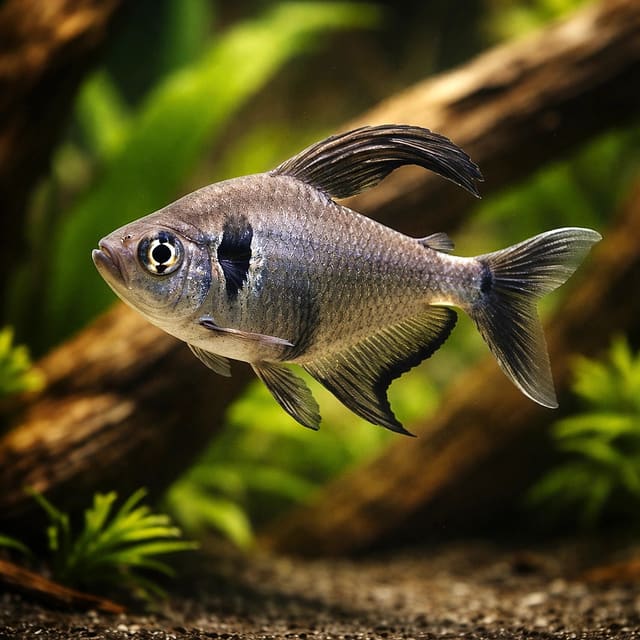
The Black Widow long fin (Gymnocorymbus ternetzi) is a long-finned American tetra from South America’s Paraguay and Guaporé River basins to Argentina that reaches 7.5 cm standard length. It suits beginners who can keep at least five—ideally at least 12 to reduce fin nipping—and maintain the FishBase, Seriously Fish and OATA overlap of 22–26°C, pH 6.5–7.0 and 5–12 dGH. Sold individually in sizes from 2.5–3 cm to 3–4.5 cm.
Adult size is the maximum length this species reaches at full maturity (scientific sources). The livestock you receive will be younger and smaller — pick a size above for the actual shipping size. Product-photo provenance and any image-specific limitations are stated on the listing.
Gymnocorymbus ternetzi
Minimum of 2 per order.
The Black Widow long fin (Gymnocorymbus ternetzi) is a long-finned American tetra from South America’s Paraguay and Guaporé River basins to Argentina that reaches 7.5 cm standard length. It suits beginners who can keep at least five—ideally at least 12 to reduce fin nipping—and maintain the FishBase, Seriously Fish and OATA overlap of 22–26°C, pH 6.5–7.0 and 5–12 dGH. Sold individually in sizes from 2.5–3 cm to 3–4.5 cm.
Adult size is the maximum length this species reaches at full maturity (scientific sources). The livestock you receive will be younger and smaller — pick a size above for the actual shipping size. Product-photo provenance and any image-specific limitations are stated on the listing.
Maintain these water conditions for optimal health and vibrant colors
The Black Widow long fin (Gymnocorymbus ternetzi) is a long-finned American tetra in the family Acestrorhamphidae. It is a freshwater, middle-to-upper-water fish whose species occurs in South America, from the Paraguay and Guaporé River basins to Argentina. FishBase records a maximum of 7.5 cm standard length, so plan its aquarium around that adult figure rather than its dispatch size.
This is a lively, generally peaceful community fish and a practical choice for a newcomer who is ready to maintain a shoal, stable water and enough open swimming room. Its activity and possible fin nipping make group planning important: keep at least five, while a shoal of at least 12 can usually contain squabbling within the group and rectify fin nipping. It feeds in nature on worms, small crustaceans and insects, while aquarium specimens accept suitable dried, live and frozen foods.
The long-finned form belongs to the same species as the black skirt tetra, black tetra and butterfly tetra. Its extended fins change its appearance, but plan its adult space, water and social conditions around the species requirements described below. Browse the current tetra collection when comparing its adult size and behaviour with other tetra choices.
| Suits | Not suited to |
|---|---|
| A mature, filtered freshwater aquarium | An unfiltered or biologically immature aquarium |
| A group of at least five, with at least 12 preferred for fin-nipping control | A solitary display or a group below five |
| Open swimming space with planted, quieter areas | A layout that leaves little open swimming room |
| Compatible community fish screened for size, temperament and water needs | Timid or long-finned fish whose fins it may nip |
Use 7.5 cm standard length, the maximum FishBase records, as the adult planning figure. The long fins are part of a selectively bred aquarium form; a dispatch measurement remains a starting size rather than a limit on growth.
Seriously Fish gives a 75 × 30 cm aquarium base and about 68 litres, stating that a group can be kept in a 75 × 30 cm, roughly 70-litre aquarium. FishBase gives a minimum aquarium length of 60 cm. Use the 75 × 30 cm footprint and around 68–70 litres as the practical starting plan because this lively fish benefits from room to move as a group.
Keep the central swimming route open and place denser planting around selected areas. Floating vegetation can soften the light, while planted or otherwise sheltered sections create quieter places away from the main swimming lane. The species is fairly unfussy about décor, but the layout still needs to serve both activity and retreat.
Measure the usable base after allowing for décor. A nominal volume cannot compensate for a crowded swimming route, and a long open run is more useful to this active tetra than filling the entire aquarium with ornaments.
The live size selector lists two dispatch sizes, 2.5–3 cm and 3–4.5 cm. One purchase supplies one fish of the selected size. The size you select is the size supplied, not the adult size. Both choices therefore need an aquarium planned for a fish reaching 7.5 cm standard length and for the complete adult shoal.
Sex is guaranteed only when the selected option explicitly states male or female. This Black Widow long fin listing has no sex-guaranteed option. Do not use dispatch size, colour or fin shape as a substitute for an explicit sex choice.
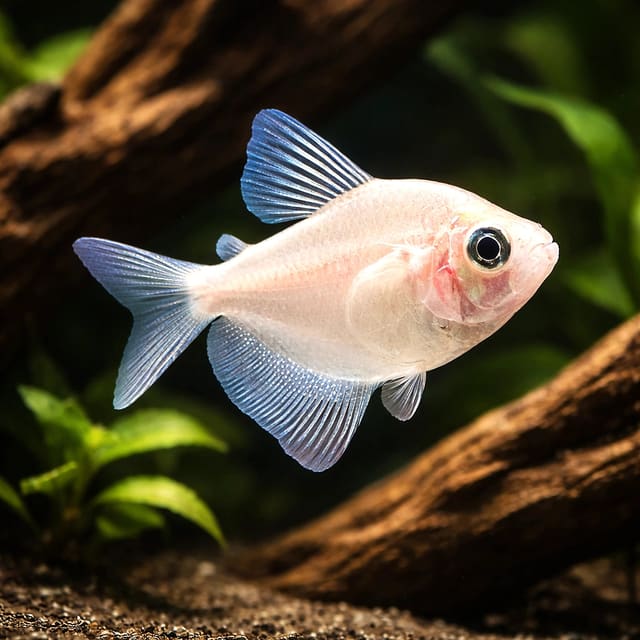
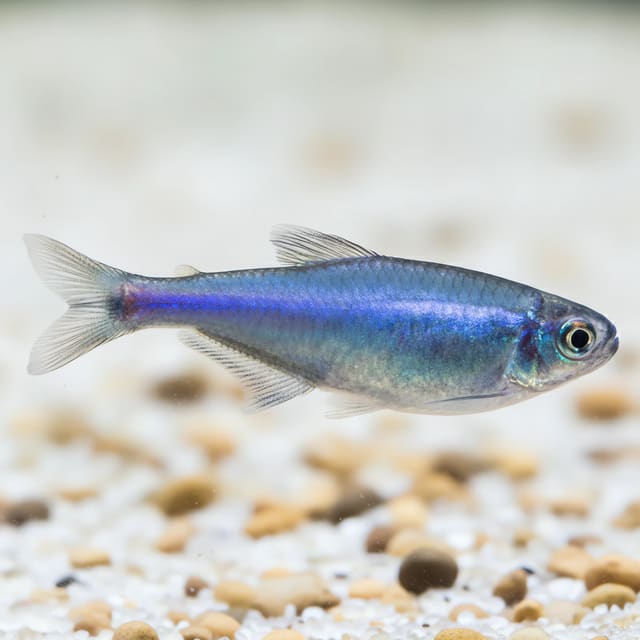
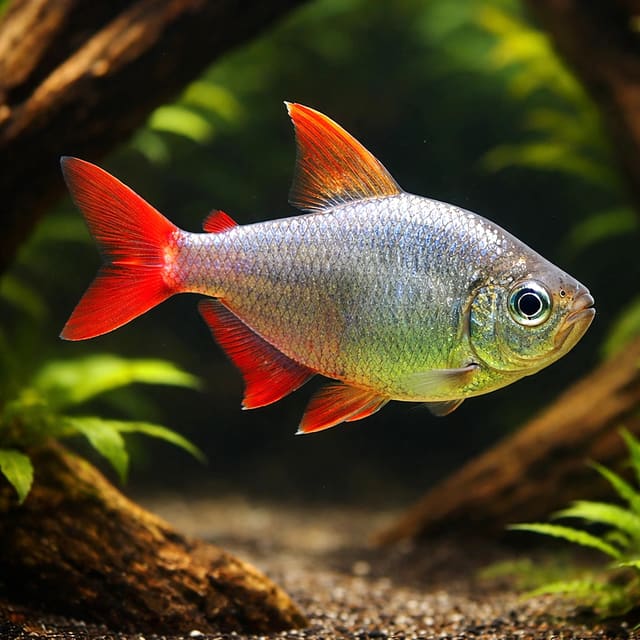
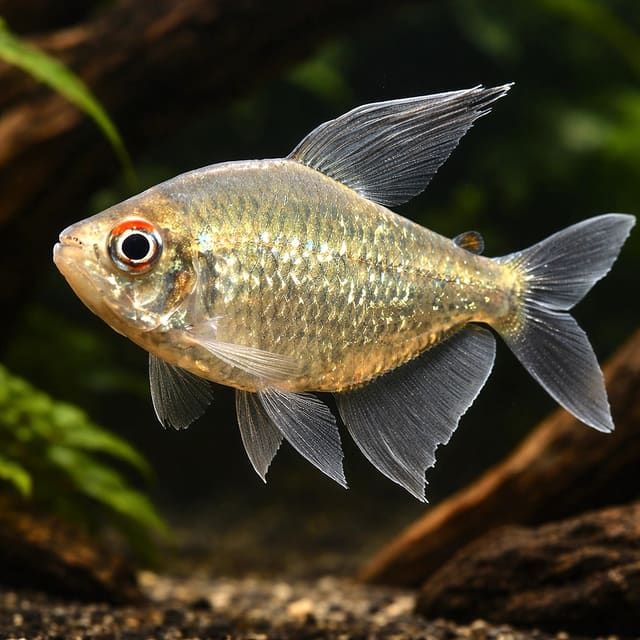
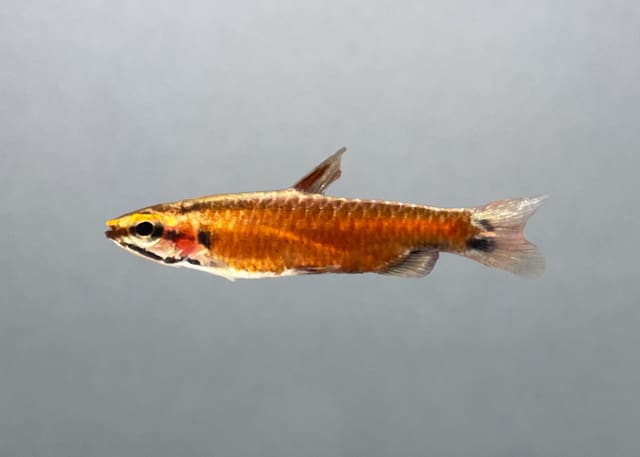
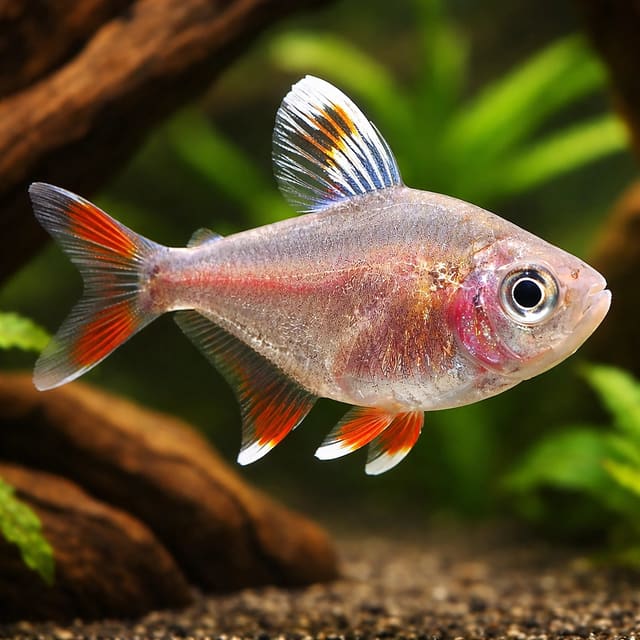
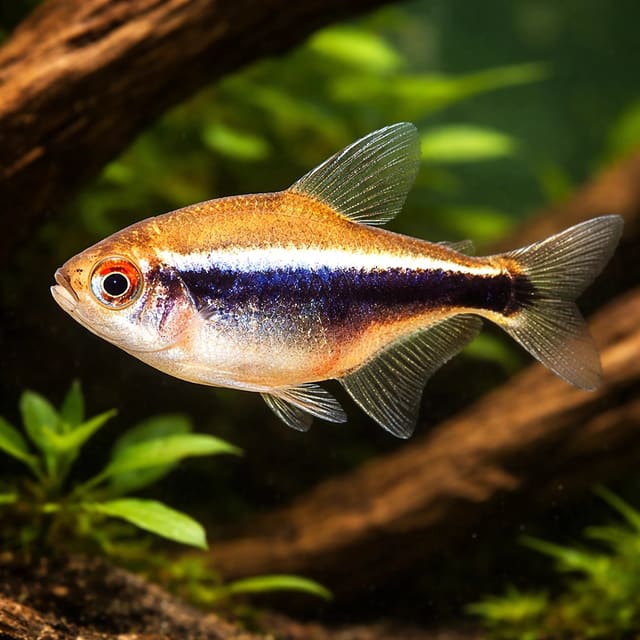
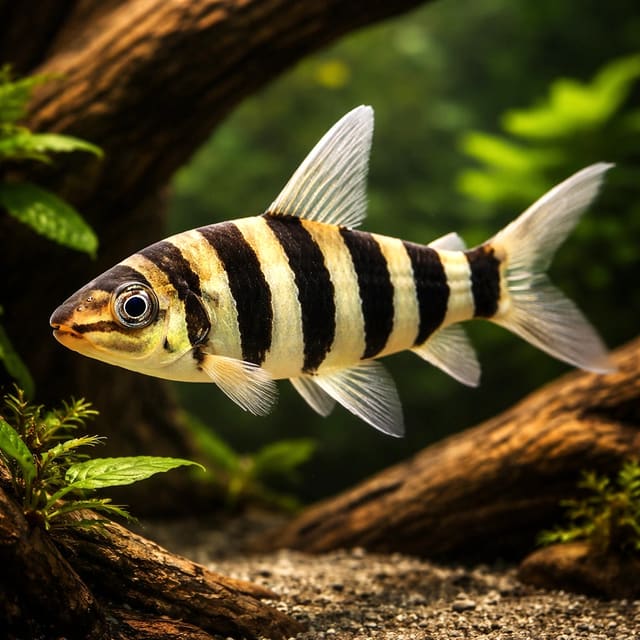
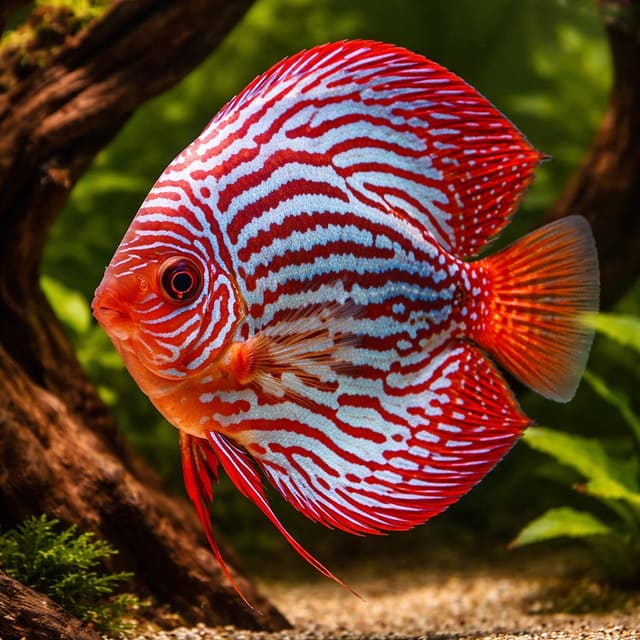
The gallery images are representative illustrations of this type of animal, not photographs of the animal supplied, so pattern and colours can differ from the live animal. Use the written identity and care requirements when deciding whether the fish suits your aquarium.
Keep this tetra at 22–26°C, pH 6.5–7.0 and 5–12 dGH. These routine targets are the overlap of FishBase’s recorded environment, Seriously Fish’s species-level aquarium values and OATA’s tetra guidance. OATA’s group guidance gives 22–27°C, pH 6.5–8.0 and 4–12 dGH; the narrower routine targets also remain inside the species ranges.
| Parameter | Routine target |
|---|---|
| Temperature | 22–26°C |
| pH | 6.5–7.0 |
| General hardness | 5–12 dGH |
| Ammonia | Zero mg per litre |
| Nitrite | Zero mg per litre |
| Nitrate | Not more than 20 mg per litre above the normal tap-water level |
OATA recommends zero ammonia and zero nitrite for tetras. It also places the nitrate limit at no more than 20 mg per litre above the normal tap-water level. Those waste measurements tell you whether the biological filter and maintenance routine are coping with the fish and its food.
Use the water chemistry guide to understand what each test measures, then enter the measured values into the water matcher. A reading near an edge of the target range calls for careful monitoring; repeated movement outside it calls for a controlled correction rather than a sudden change.
Record the aquarium’s temperature, pH, hardness, ammonia, nitrite and nitrate before introducing the fish. Repeat the same tests after the shoal is added and compare the results with that baseline. Readings inside the temperature, pH and hardness targets do not make the aquarium ready while ammonia or nitrite reads above zero. If temperature remains within range while nitrate climbs, review waste removal and the weekly water-change routine rather than changing every parameter together.
Start with a 75 × 30 cm base and around 68–70 litres for a group. This fish is active, so preserve a clear horizontal swimming route rather than judging the setup by volume alone. Place plants, wood or suitable ornaments around the sides and rear, leaving the centre or front open for movement.
Seriously Fish describes the species as fairly unfussy about décor but says it prefers plenty of open swimming space together with quieter areas. Seriously Fish says it shows its best colours when some dense planting and floating vegetation dim the light. Gravel or sand can be used as the substrate, and plants or suitable ornaments should form cover without blocking the swimming lane.
| Zone | Purpose |
|---|---|
| Open middle | Allows the shoal to use the middle and upper water layers |
| Planted sides | Creates quieter areas away from constant group movement |
| Surface cover | Floating vegetation can reduce the intensity of light |
| Accessible substrate | Leaves room to siphon settled waste during maintenance |
Secure the swimming route before adding extra décor. If plants spread across the open section, trim or reposition them rather than allowing the usable footprint to shrink gradually. Keep filter intakes and outlets clear of leaves so circulation remains consistent.
A working heater is needed to hold 22–26°C. For an aquarium of about 68 litres in a room around 20°C, Seriously Fish says you need roughly 50 W. Check the heater against the actual aquarium volume and room conditions, then confirm its result with a thermometer rather than relying on the setting alone.
If this is your first setup, follow the first tropical aquarium guide before livestock arrives. Complete the aquarium, establish the biological filter and confirm stable test results before using the space for the shoal.
Stand in front of the aquarium and trace an uninterrupted route through the middle and upper water layers. The shoal should be able to cross the tank without weaving through dense décor, while quieter planted areas remain accessible at the edges. During the weekly water change, check whether growth has covered the swimming lane, restricted the filter intake or made the substrate impossible to siphon. Reposition or trim plants when any of those functions is lost.
Use a well-established biological filter and keep it running continuously. The RSPCA explains that aquarium filters allow beneficial bacteria to process toxic ammonia into nitrite and then into safer nitrate. The filter therefore supports living bacteria as well as moving water and collecting debris.
For an aquarium of about 68 litres, Seriously Fish suggests turnover of four to five times the aquarium volume per hour and a filter rated around 270–340 litres per hour. Treat the rating as part of the decision: the outlet should maintain circulation without removing the open, usable swimming character of the aquarium.
If filter media needs cleaning, rinse it lightly in aquarium water removed during the partial water change. Do not rinse it under the tap, because chlorine or chloramine may kill the beneficial bacterial population established in the media.
Increase the fish population slowly. Every added fish and every increase in feeding produces more waste, while the beneficial bacterial population needs time to adjust. Adding too many fish too quickly can cause new tank syndrome, with ammonia or nitrite rising beyond safe levels.
Clear water can still contain ammonia or nitrite. If either rises above zero, check the filter for interruption or blockage, review recent additions and feeding, and make water quality the immediate priority. A rising nitrate trend points to the need to review water changes, stocking and uneaten food before it becomes a persistent problem.
Compare the next weekly results with the readings taken before fish were added. Zero ammonia and zero nitrite show that the biological filter is coping at that checkpoint; a rise in either means it is not keeping up with the waste, which can happen when fish or food are added too quickly or when the filter is interrupted. Do not use clear water or strong flow as a substitute for those tests. Check for blockages, confirm the filter has remained running and review how quickly fish and food were added.
Feed a good-quality flake or granule as the regular aquarium food, supported by small live or frozen foods such as Daphnia, bloodworm or tubifex. Seriously Fish describes this species as an unfussy omnivore, while FishBase records worms, small crustaceans and insects in its natural diet. That combination supports small live or frozen items alongside a good-quality flake or granule.
Feed once a day and offer only what the group can finish within a few minutes. OATA gives that amount and frequency for tetras and pencilfish. The time limit matters because uneaten food breaks down, adds waste and increases the load on the biological filter.
Rotate suitable small live or frozen items instead of relying on one treat. Keep every item appropriately small for the fish to take cleanly. A varied routine is useful, but variety does not justify increasing the total daily amount beyond what the shoal consumes within a few minutes.
Observe breathing, swimming and interest in food while feeding. A sudden reduction in appetite can be an early sign that water quality, health or social pressure needs attention. Test the water before changing the diet or increasing the portion, because food cannot correct ammonia, nitrite or an unsuitable temperature.
Watch from the moment food enters the water until the few-minute feeding period ends. The useful portion is the amount the group takes cleanly in that time, not the amount that produces the strongest feeding rush. If flakes or granules settle uneaten, reduce the next meal. If one fish hangs back while the others feed, distribute the same modest portion across more than one point in the swimming area and observe whether it gains access.
Complete the aquarium checks before the parcel arrives: the filter should be established, temperature should be 22–26°C, pH should be 6.5–7.0, hardness should be 5–12 dGH, and ammonia and nitrite should both be zero. This keeps arrival focused on receiving and acclimatising the fish rather than making hurried changes to the aquarium.
Fish are bagged with pure oxygen in an insulated box, with a heat pack when weather conditions call for one, and travel through a licensed live-animal courier. Be present to receive the parcel because live fish must not be left unattended.
These are the steps in the Tropical Fish Co delivery and Live Arrival Guarantee policy. For a Live Arrival Guarantee claim, contact us the same day with the order number and continuous unboxing video showing the sealed parcel, the opening and the fish in the sealed bag.
Keep the arrival sequence distinct from routine aquarium care. Water tests, filter checks and stocking decisions belong before the parcel is opened; filming, inspecting, floating and releasing belong to the delivery procedure. Once released, allow the fish to use the prepared swimming and shelter areas while you observe its condition.
Learn the group’s normal swimming, colour, breathing, appetite and use of cover. Individual fish vary, so a change from the usual pattern is more useful than a single isolated pose. Watch particularly closely after introduction and after any later increase in group size.
| If you see | Do this |
|---|---|
| Hanging at the surface, sitting on the bottom or erratic swimming | Test temperature, ammonia and nitrite, then inspect filter flow |
| Faster or slower gill movement than normal | Check water quality and observe whether several fish are affected |
| A darker or paler appearance | Review water values, social pressure and recent aquarium changes |
| More aggression or hiding | Check group size, swimming space, cover and tank-mate behaviour |
| White spots, fluffy growths, ulcers, bumps or damaged fins and scales | Test the water and seek prompt guidance before choosing any treatment |
| Reduced food intake or changing body condition | Observe the next measured feed and review water quality |
Make water testing the first practical response because ammonia and nitrite can harm fish and may rise when filtration is interrupted or stocking increases too quickly. Check whether the heater is holding the routine range and whether the filter intake or outlet is obstructed.
Record what changed, when it began, the measured water values and whether one fish or the whole group is affected. Do not choose a medicine from appearance alone. Similar outward signs can accompany different problems, while an unsuitable water value still needs correction even if a health product is later used.
If the concern continues after immediate water and equipment checks, contact us for further guidance with the measured values and a clear description of the change. Keep maintenance controlled rather than making several abrupt alterations at the same time, because stable conditions make the fish’s response easier to judge.
When a change appears, determine whether it affects one fish or several. One fish missing food while the rest feed normally points to a different immediate observation task from the whole shoal breathing faster than usual. In both cases, record the measured temperature, ammonia and nitrite first. Then note swimming position, breathing rate, colour, appetite and any visible fin or scale damage so the pattern can be followed clearly.
Match tank mates by adult size, temperament, water requirements and activity. The Black Widow long fin is generally peaceful and lively, but it has a reputation for fin nipping. A community decision therefore needs to account for both its usual behaviour and the welfare cost if nipping develops.
Seriously Fish names most livebearers, danios, rasboras, other tetras and peaceful bottom dwellers such as Corydoras or smaller Loricariids as suitable possibilities. It also names robust dwarf cichlids such as kribensis.
| Potential match | Screening decision |
|---|---|
| Most livebearers, danios and rasboras | Match adult size, temperament and the 22–26°C, pH 6.5–7.0 range |
| Other tetras | Compare activity and fin-nipping risk rather than relying on the shared group name |
| Corydoras or smaller Loricariids | Choose peaceful bottom dwellers whose water requirements overlap |
| Robust dwarf cichlids such as kribensis | Assess the individual aquarium, territory use and adult size |
| Timid or long-finned fish | Avoid: OATA says larger or more boisterous tetras should not be kept with timid or long-finned fish because they may nip their fins, and this 7.5 cm tetra has a fin-nipping reputation |
No community mix is automatic. Check the complete adult group, usable footprint and filtration capacity before adding another species. Ensure every proposed companion can remain within the same temperature, pH and hardness targets without forcing either fish to the edge of its requirements.
Observe the aquarium after introduction. Look for repeated pursuit, damaged fins, hiding, missed meals or a fish being displaced from its usual area. If those patterns persist, reassess group size, layout and the particular mix rather than assuming that a named combination will behave identically in every aquarium.
Begin with the unconditional exclusions: do not keep this tetra with timid or long-finned fish. For another named possibility, compare its adult size, temperament and full water range with the Black Widow long fin’s 22–26°C, pH 6.5–7.0 and 5–12 dGH routine targets. Next, check whether the 75 × 30 cm footprint still leaves open swimming room after both adult groups and their territory needs are considered. Finally, confirm that filtration can carry the added feeding and waste before increasing stock.
Avoid keeping this tetra singly or in a group below five. FishBase gives aquarium keeping in groups of five or more, and OATA warns that tetras kept singly or in groups that are too small often become stressed. Five is the minimum social plan, not the strongest fin-nipping plan.
For fin-nipping control, plan a small shoal of at least 12 specimens. Seriously Fish says this number can usually rectify fin nipping and keep squabbling within the group. A group of twelve can improve the plan, but individual behaviour can still vary.
Do not add the whole increase without considering biological load. OATA advises raising fish numbers slowly because the beneficial bacteria in a mature filter must adjust as waste and feeding rise. Test ammonia and nitrite after additions and keep both at zero.
Group size is only one part of compatibility. A crowded footprint, blocked swimming route or mismatched tank mate can still create pressure in a larger shoal. Use the 75 × 30 cm base and around 68–70 litres as the starting aquarium plan, then judge any extra stocking against the actual space and filter capacity.
Keep the decision sequence simple: meet the minimum group first, plan at least 12 to reduce fin nipping, preserve open swimming room, and monitor the real fish after every change.
It can reach 7.5 cm standard length, the maximum FishBase records, so plan the aquarium and complete shoal around that adult figure rather than the dispatch size.
Plan a 75 × 30 cm base and around 68–70 litres; Seriously Fish says a group can be kept at that footprint and approximate volume.
Keep at least five as recorded by FishBase; Seriously Fish says a shoal of at least 12 can usually rectify fin nipping and contain squabbling within the group.
Yes. Seriously Fish calls it one of the best choices for the newcomer to fishkeeping; plan a mature filtered aquarium, a group of at least five and stable water.
Feed good-quality flake or granules with small live or frozen Daphnia, bloodworm or tubifex; OATA advises one daily portion eaten within a few minutes.
Keep this fish at 22–26°C, pH 6.5–7.0 and 5–12 dGH; this is the overlap of FishBase, Seriously Fish and OATA guidance.
It is generally peaceful and lively but has a fin-nipping reputation; Seriously Fish says keeping at least 12 can usually rectify that behaviour.
Seriously Fish names most livebearers, danios, rasboras, other tetras, Corydoras, smaller Loricariids and robust dwarf cichlids such as kribensis; do not keep it with timid or long-finned fish, and screen each match for adult size, temperament and shared water requirements.
It is bagged with pure oxygen in an insulated box, with a heat pack when weather calls for one, and carried by a licensed live-animal courier; receive it in person, start a continuous video before opening the sealed parcel, and float the bag for 20–30 minutes before release.
No reviews for this item yet. Bought one? Honest reviews only, good or bad.
What customers say about ordering from us
I have a small group of long finned mountain minnows. So was delighted to be able to order ten of this variety to increase the genetics in my tank . The ones I recieved are healthy but it’s to early to give a verdict on wether they are of a long finned type since they are small currently.
Gordon Walker · 23 Sept 2026
100% success travel and "installation". Pleased with quality of purchase. The Siamese fighter a bit "shy" so have not yet seen him at his best yet but looking good. Happy customer. GG
George E Garratt · 21 Sept 2026
Reviews of our shop, collected by Judge.me, an independent third-party review collector. Newest first.