Moderate
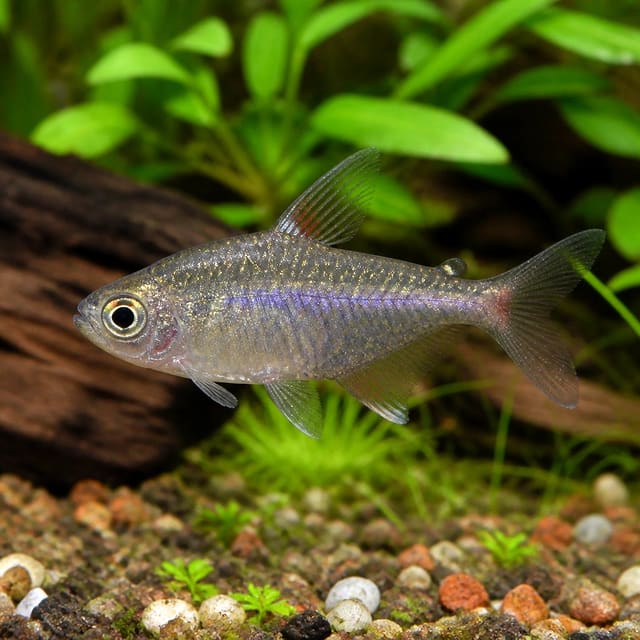
Neon Tetra (Paracheirodon innesi)
21–25°C · pH 5–7
£1.89
Lapis Blue-Tailed Tetra (Hyphessobrycon cyanotaenia) is a small Brazilian tetra recorded to 3.7 cm SL. One purchase supplies one fish at the 2–2.5 cm dispatch grade; build a shoal of at least five under broad OATA tetra guidance, with mature filtration and calm, similarly sized companions.
Adult size is the maximum length this species reaches at full maturity (scientific sources). The livestock you receive will be younger and smaller. Product-photo provenance and any image-specific limitations are stated on the listing.
Hyphessobrycon cyanotaenia
Shoaling fish: kept in a group they feel safer, stay calmer and show their best colour.
Lapis Blue-Tailed Tetra (Hyphessobrycon cyanotaenia) is a small Brazilian tetra recorded to 3.7 cm SL. One purchase supplies one fish at the 2–2.5 cm dispatch grade; build a shoal of at least five under broad OATA tetra guidance, with mature filtration and calm, similarly sized companions.
Adult size is the maximum length this species reaches at full maturity (scientific sources). The livestock you receive will be younger and smaller. Product-photo provenance and any image-specific limitations are stated on the listing.
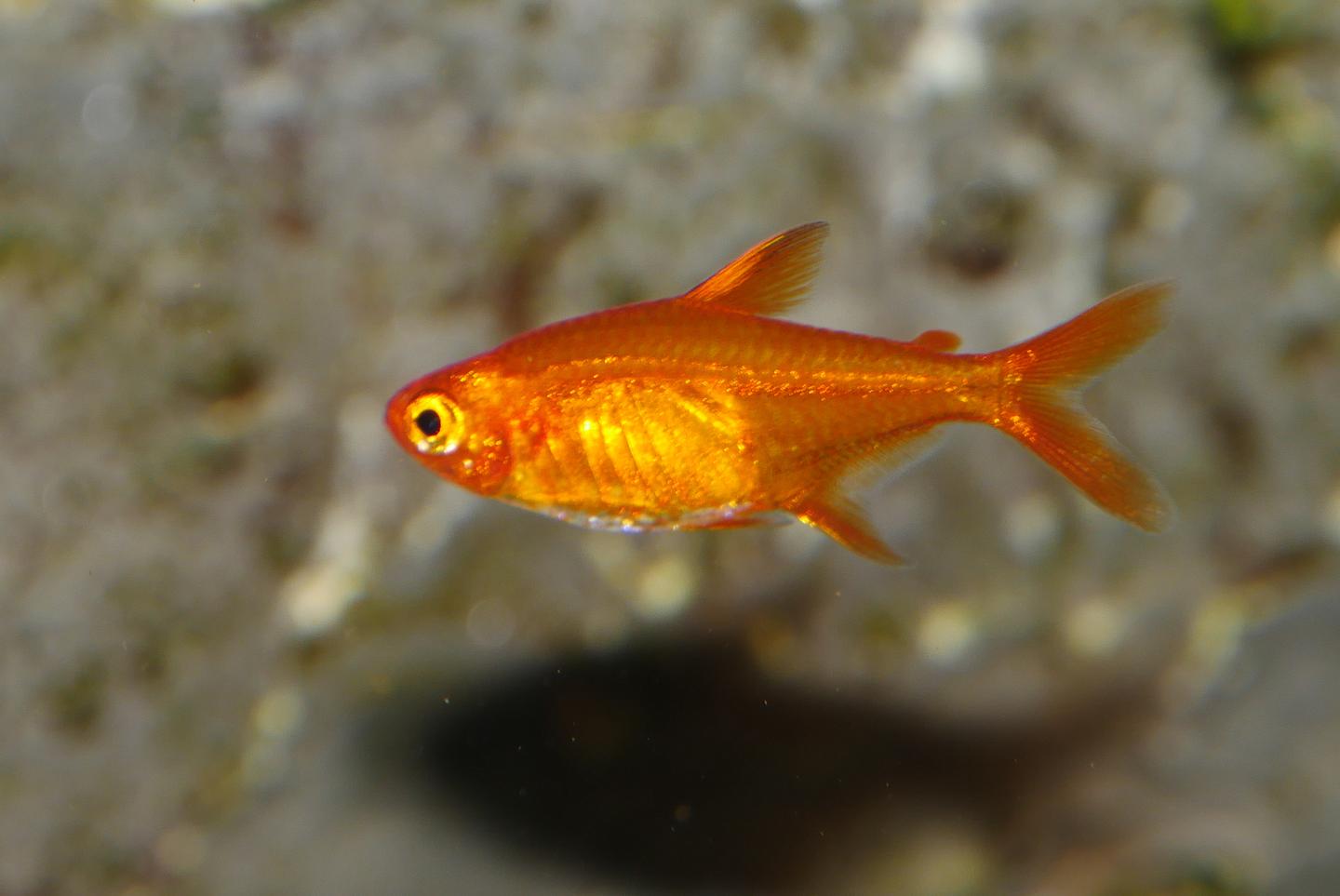
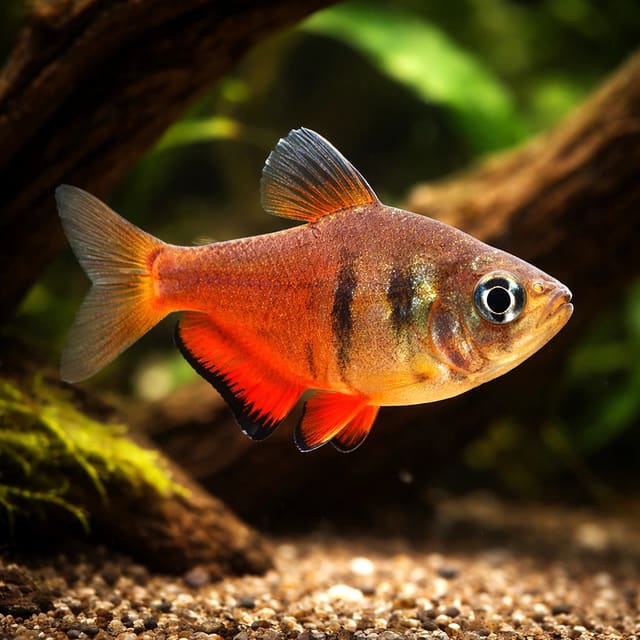
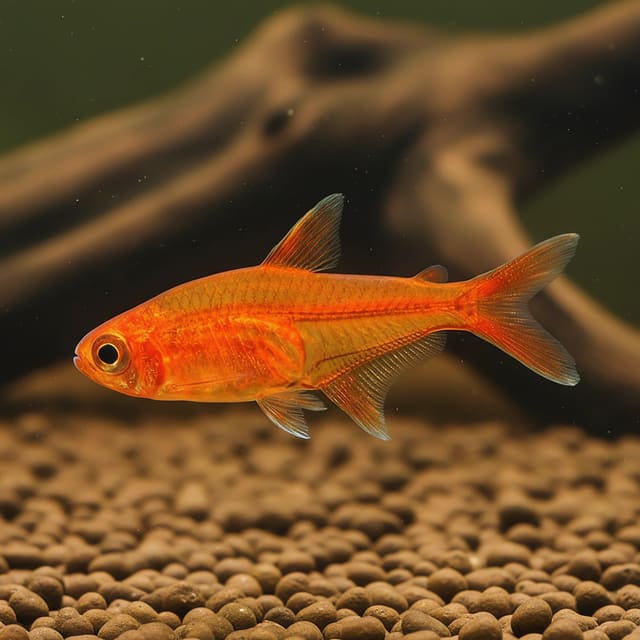
Ember tetras are very small Brazilian social fish, with a maximum recorded length of 2.0 cm excluding the tail. Keep them only in a fully cycled, stable aquarium. We recommend a group of at least 10 and about 45 litres with a 45 × 30 cm footprint rather than using a litres-per-fish formula.
Maintain these water conditions for optimal health and vibrant colors
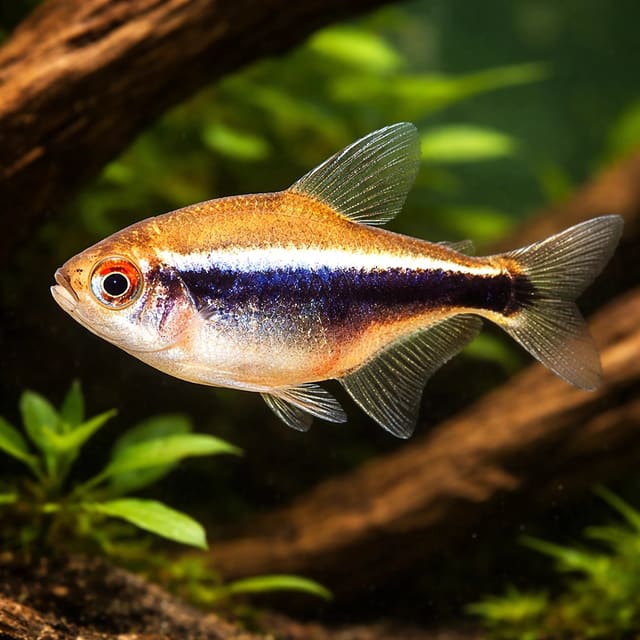
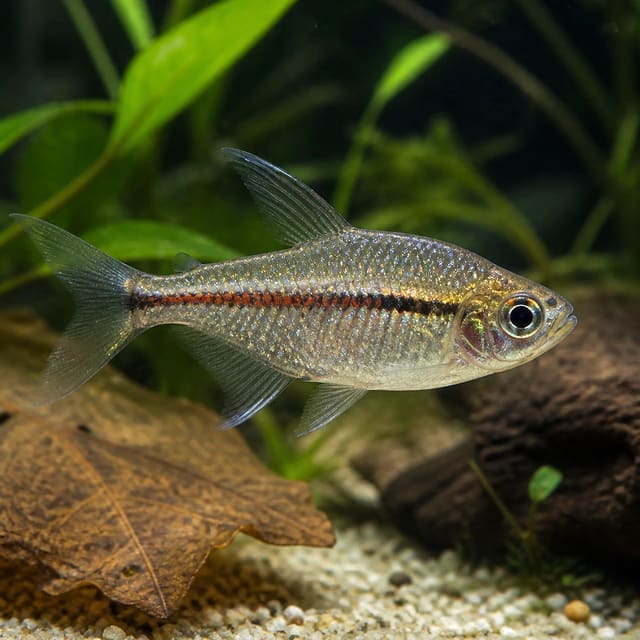
The Lapis Blue-Tailed Tetra is Hyphessobrycon cyanotaenia, a small Brazilian freshwater fish in the American tetra family Acestrorhamphidae. FishBase records a broad blue longitudinal band running from the snout towards the middle rays of the tail. That blue line is the defining visual feature: it catches the light across an otherwise restrained silver-grey body rather than producing the block colour of a neon sign.
This is a shoaling fish, so the appeal comes from repeated flashes moving through open water, not from treating one animal as a solitary centrepiece. A mature planted aquarium with swimming room, shelter and gentle current gives the group somewhere to move together and somewhere to settle. The fish is small, but the social commitment is larger than the body size suggests.
One purchase quantity supplies one live fish. The fish is supplied at the 2–2.5 cm dispatch grade. FishBase records a maximum of 3.7 cm standard length for male or unsexed fish; the dispatch grade and adult record answer different questions.
Sex is guaranteed only when the selected option explicitly states male or female. This Lapis Blue-Tailed Tetra listing has no sex-guaranteed option. The available species record does not supply a reliable retail sexing rule, and the photograph is not used to infer sex. Buy the fish for its species, shoaling behaviour and visual line rather than for a promised male or female.
The species identity, Brazilian distribution, tropical freshwater environment, blue band and 3.7 cm SL maximum come from FishBase. The detailed aquarium numbers on this page come from OATA's tetra and pencilfish guidance, which covers a broad group rather than H. cyanotaenia alone. That distinction matters because a group range is a conservative starting point, not proof of one species' exact optimum.
Within that broad scope, plan a shoal of at least five, with more generally better; use a mature biological filter; and begin with 22–27°C, pH 6.5–8.0 and 4–12 dGH. OATA gives at least 45 litres for a small shoal of a smaller tetra. Swimming length, calm companions and stable water remain as important as the number on the tank.
| Suits | Why |
|---|---|
| A mature small-fish community | The aquarium is already cycled, filtered and able to hold a proper shoal without crowding. |
| A planted display with open midwater | Plants and wood provide security while clear lanes allow the group to move visibly. |
| A keeper who tests and maintains stable water | A shoal needs mature filtration, regular water testing and measured maintenance. |
| Calm, similarly sized companions | OATA advises mixing tetras with fish of similar size and temperament and avoiding predators. |
It is a weaker fit for an uncycled aquarium, a tank that can hold only one fish, a hard-charging community or a collection containing fish large enough to swallow a 3.7 cm tetra. Explore the wider tetra collection when comparing species, but decide from adult size, social needs and water rather than colour alone.
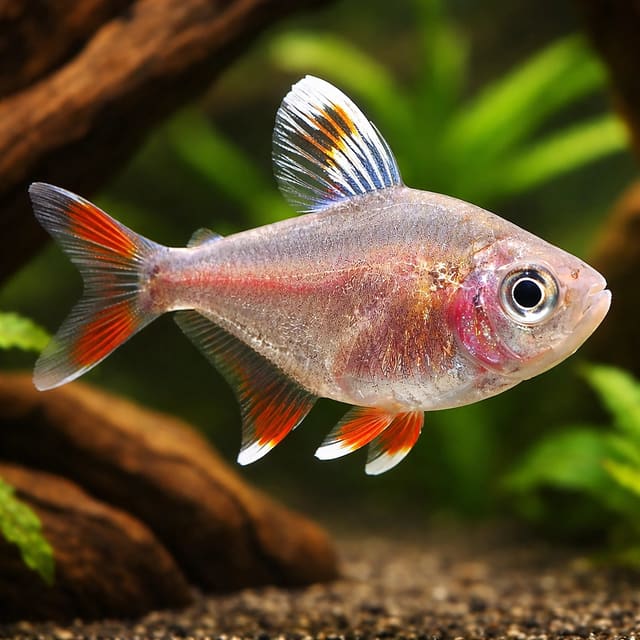
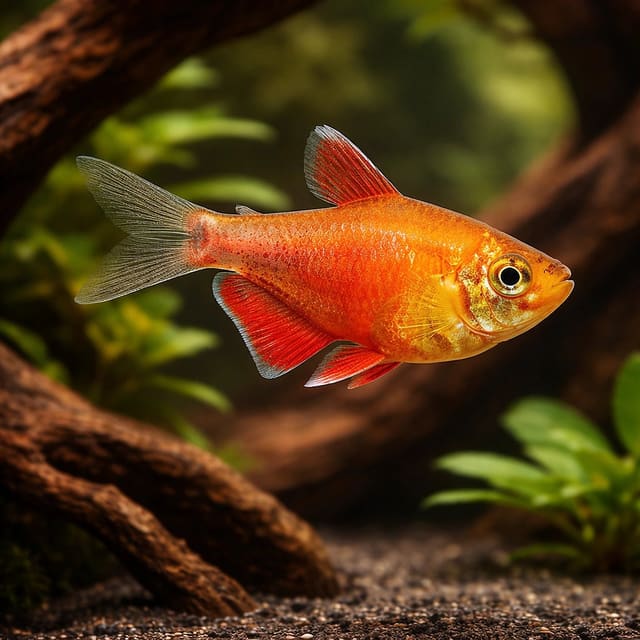
The single gallery image shows one silver-grey tetra in side view, with a bright electric-blue stripe along the flank, in a planted aquarium with wood and gravel. It is useful for reading the visual character of the page, not for promising an exact specimen, sex or final colour intensity.
Gallery images have been digitally enhanced to improve image quality. Natural colour, pattern, size and maturity can vary between live animals.
Choose this fish when you can commit to the group and value subtle movement. A shoal in a settled aquarium should be planned as a whole: enough individuals, enough open water, enough filtration and enough calm around them. The result is less about one show fish and more about a fine blue line repeatedly appearing as the group turns.
FishBase confirms Hyphessobrycon cyanotaenia as a tropical freshwater, pelagic species from Brazil and records a 3.7 cm SL maximum. Detailed aquarium temperature, water, shoal, diet and volume guidance therefore comes from the broader OATA group sheet.
The current OATA care sheet for tetras and pencilfish supplies a practical UK group baseline. It says most tetras and pencilfish are small, colourful, peaceful shoaling fish, while acknowledging exceptions and telling keepers that its water values are general guidance rather than species-specific requirements. This page keeps that caveat beside every material number.
The supplier grade is 2–2.5 cm, while FishBase gives 3.7 cm SL as the maximum recorded length for male or unsexed fish. The supplier grade describes the animal at dispatch. The FishBase figure is the adult species record used for growth and stocking plans. Neither value should be turned into a promise that every individual arrives or grows to exactly one measurement.
Small adult size does not make one fish an appropriate social unit. Filtration, swimming space and group behaviour still need room. Plan the aquarium around the shoal and its companions rather than calculating litres from the body length of a single fish.
OATA's broad guidance says tetras and pencilfish should be kept in groups of at least five, with more being better, because individuals kept alone or in too small a group often become stressed. Apply that as the supported welfare floor for this offer. A larger group may look more cohesive and distribute social attention, but its final size must still fit the aquarium's biological capacity and swimming length.
Buy or add the group only as quickly as the mature filter can support it. If building numbers over time, keep water quality stable and avoid leaving a single fish isolated for an extended period. Observe whether the group uses open water, feeds readily and recovers after ordinary disturbance. Persistent hiding, frantic movement or one fish being excluded deserves investigation of water, layout, companions and group size.
OATA recommends at least 45 litres for a small shoal of a smaller tetra and at least 80 litres for larger species over 5 cm. H. cyanotaenia is recorded at 3.7 cm SL, so the 45-litre figure is the relevant broad small-tetra baseline, not a species-specific minimum. Choose more room when adding another shoal, bottom fish or territorial fish, or when the aquarium is short and crowded with hardscape.
A longer aquarium offers more usable swimming distance than a tall narrow one with the same volume. Keep an open midwater route through the planting. Plants, wood and other shelter around the sides and back can help the fish settle, while a clear foreground or central lane makes the shoal visible and simplifies observation.
Use aquarium sand or smooth gravel and stable decorations. OATA's group guidance supports live plants for cover and says suitable artificial plants and ornaments can provide shelter when live plants are not used. Avoid sharp edges and unstable stacks. The layout should be easy enough to clean that shelter does not become a trap for waste.
For captive-bred tetras and pencilfish generally, OATA gives 22–27°C, pH 6.5–8.0, general hardness 4–12 dGH and carbonate hardness 3–10 dKH. These figures are broad tetra-group guidance, not a species-specific optimum for the Lapis Blue-Tailed Tetra. Use them as a conservative operating envelope while keeping the actual aquarium stable.
Measure the aquarium rather than assuming it matches the tap. The water-chemistry guide explains pH, hardness and nitrogen waste, and the water matcher helps compare measured values with stated guidance. Avoid abrupt changes made solely to chase the centre of a range; a stable, suitable value is more useful than daily correction.
Use a reliable heater where the room cannot maintain a stable suitable temperature, verify it with a separate thermometer and keep good surface movement. Warmer water carries less dissolved oxygen, while a larger shoal increases the total oxygen and filtration demand. Gentle current is appropriate for smaller tetras under the OATA guidance, but gentle should still move water through the filter and around the aquarium.
The general RSPCA fish-environment guidance explains that fish release toxic ammonia and that an established biological filter supports bacteria that convert it to nitrite and then safer nitrate. Ammonia and nitrite should remain at zero. A filter is therefore not just a device that clears visible particles; its biological colony is part of the life-support system.
If this is the first aquarium, use the first tropical tank guide and complete the cycle before the fish arrives. Adding a whole shoal to an immature filter can overwhelm it. After introduction, test more often until the aquarium has demonstrated that it can process the new load.
OATA's broad tetra guidance recommends weekly testing, a 25% partial water change and tap-water conditioner for replacement water. It also says to inspect filters for blockages and, when cleaning is needed, rinse them lightly in removed aquarium water rather than running them under the tap. These steps protect water quality while retaining the beneficial bacteria in the filter media.
Match replacement-water temperature reasonably closely and add it without blasting the shoal. Siphon open substrate and accessible pockets around wood. Do not dismantle the whole layout at every change; routine cleaning should leave the fish with familiar shelter while preventing waste from building up.
Track nitrate over time rather than waiting for cloudy water or distressed fish. A small body does not mean negligible waste when the animal is kept correctly in a group. Feed, stocking, plant growth and filter maintenance all affect how quickly nitrate rises.
OATA describes tetras and pencilfish generally as omnivorous and supports a quality flake or granule, with small live or frozen foods such as Daphnia, small bloodworm or tubifex. It advises feeding only what the fish consume within a few minutes, once a day, and warns that overfeeding leaves waste to break down in the water.
For a fish supplied at 2–2.5 cm, particle size matters. Crush flake if needed and choose micro-granules or small frozen items that the fish can swallow without repeated spitting. Spread food across the shoal so the quickest fish do not take everything. Watch the less assertive individuals and confirm that they are feeding rather than assuming a busy surface means every fish ate.
Remove uneaten food. More food does not compensate for a nervous group, unsuitable companions or poor water. A sensible routine leaves the fish active and gently filled, without swollen bellies or a layer of debris sinking into the plants.
OATA recommends watching changes in swimming, colour, temperament, breathing, appearance, body condition and feeding. Those observations are valuable because they can be compared with water tests and recent changes. A fish hanging at the surface, breathing rapidly or leaving the group may be reacting to water, oxygen, aggression or illness; test first and look at the whole aquarium.
Healthy-looking behaviour for a small tetra includes balanced swimming, clear eyes, intact fins, interest in food and participation in the group. Colour can change with lighting and stress, so the blue band should not be the only welfare measure. A straight body, steady breathing and consistent appetite matter more than maximum colour at every moment.
Have the shoal-sized aquarium ready before dispatch: mature filter, stable temperature, measured water and calm companions. On arrival, follow the current store policy for receiving and acclimatising livestock. Avoid adding other new fish or rebuilding the aquascape at the same time; fewer simultaneous changes make it easier to notice whether the new fish are settling.
For the first few days, keep a simple record of feeding response, group position and water tests. Small tetras can look subdued after travel, but the trend should move towards steadier swimming and feeding. If the group remains distressed, correct the underlying water, oxygen, social or compatibility issue rather than trying a succession of unnecessary products.
The useful theme is steadiness. With a rare or lightly documented species, careful observation and conservative group-level care are more responsible than filling every blank with a precise-sounding number.
OATA's broad guidance says tetras and pencilfish mix best with species of a similar size and temperament. That is the sound rule for this page. Start with adult size: a 3.7 cm SL fish can be viewed as prey by much larger animals even if both are sold as community fish. Then compare activity and feeding style. A constantly charging companion can keep a quieter shoal away from food and open water without ever biting it.
Finally, compare temperature, pH and hardness. Two peaceful species are not a good match when one needs conditions outside the other's useful range. Build the community around one stable water plan and enough filtration for the total stock.
| Community type | Decision rule |
|---|---|
| Calm small fish | Potentially suitable when adult size, temperament and broad water requirements overlap and the aquarium has enough swimming room. |
| Another shoal | Add only when the tank has the length, filtration and open midwater for both groups; two undersized shoals are not better than one proper shoal. |
| Long-finned or timid fish | Use caution and observe. OATA notes that larger or more boisterous tetra species can nip timid or long-finned fish, so individual behaviour still matters. |
| Large predatory fish | Avoid. Smaller tetra species should not be kept with fish large enough to eat them. |
| Aggressive or persistently boisterous fish | Avoid when they chase, outcompete or keep the shoal compressed into cover. |
| Very small invertebrate young | Use caution. Under the broad omnivore guidance, treat tiny invertebrate young as potentially vulnerable. |
A group of at least five is the broad supported floor. A tetra kept alone may hide, dart or attach itself awkwardly to another species. A proper group gives it conspecific social cues and lets the keeper judge normal movement more fairly. More can be better, but only while swimming space and water quality remain generous.
Do not solve a stressed single fish by adding several more into poor water or an overcrowded tank. Correct the environment first, then build the group within the aquarium's capacity. A biological requirement and a stocking limit must be considered together.
Compatibility is confirmed by behaviour over time. Check whether the shoal occupies open water, whether every fish eats and whether fins stay intact. Notice companions that repeatedly scatter the group, monopolise food or force it into one corner. The absence of visible wounds is not enough if the fish never relaxes.
At feeding time, use a food size and distribution method that allows a small mouth to compete. If faster tank mates take everything, scatter the food over a wider area or reconsider the mix. Do not simply add extra food, because uneaten excess becomes a water-quality problem.
Plants and wood can make a community feel less exposed, while an open route lets the shoal move. Keep the front or centre clear enough to observe the fish and to siphon waste. Floating cover can soften bright light, but the surface still needs gas exchange and access for feeding.
A calm community is not necessarily an empty one. It is a community where each species can use its preferred area without constant interruption. For the Lapis Blue-Tailed Tetra, that means a group in usable midwater, food it can reach and no large animal waiting to turn a 3.7 cm fish into prey.
Respond to the cause: improve water, adjust stocking, change the layout or separate an incompatible animal. This is more effective than treating a social or environmental problem as if it were automatically a disease.
FishBase records Hyphessobrycon cyanotaenia at a maximum of 3.7 cm standard length for male or unsexed fish. The supplier dispatch grade is 2–2.5 cm, so the fish may still have growing to do after arrival. The two figures have different jobs: 2–2.5 cm describes the supplied grade, while 3.7 cm SL is the adult record used for planning. Individual fish can be smaller than a recorded maximum, and the offer does not promise an exact final measurement.
OATA's broad guidance recommends at least 45 litres for a small shoal of a smaller tetra. Use that as a group-level baseline, not a proven species optimum, and increase space for extra shoals or companions. A longer tank with open swimming room is more useful than a tall narrow one. The mature filter must support the entire group, and ammonia and nitrite should remain at zero.
OATA's broad tetra guidance says at least five, with more being better, because tetras kept alone or in too small a group often become stressed. Plan the group before ordering and confirm that the aquarium has enough swimming length and biological capacity. More fish are helpful only while water quality, feeding access and space remain good. One purchase supplies one fish, so choose a purchase quantity that supports an appropriate shoal without overcrowding the aquarium.
It is rated intermediate here as a store assessment. The fish is small, but it needs a proper shoal, a mature biological filter and stable water, and species-specific aquarium literature is limited. A careful newer keeper can do well by cycling the tank fully, using the broad tetra guidance conservatively, choosing calm companions and testing water regularly. It is a poor choice for an uncycled tank, a single-fish purchase or a community containing predators.
OATA's broad tetra guidance describes tetras as omnivorous and supports a quality flake or granule with small live or frozen foods such as Daphnia, small bloodworm or tubifex. Choose particles suitable for a fish supplied at 2–2.5 cm, feed only what the group consumes within a few minutes once daily under that guidance, and remove leftovers. Spread food so slower members of the shoal also eat.
OATA gives 22–27°C, pH 6.5–8.0 and 4–12 dGH as broad group guidance for captive-bred tetras and pencilfish, not a species-specific optimum for H. cyanotaenia. Keep measured conditions stable within a suitable plan, avoid abrupt chemical adjustments, and maintain zero ammonia and nitrite with a mature filter.
Published species accounts leave aggression and fin-nipping behaviour unresolved. OATA describes most tetras as peaceful while noting exceptions and warning that larger or more boisterous tetra species may nip timid or long-finned fish. Keep this fish in its own shoal with calm, similarly sized companions and observe the actual group. Repeated chasing, compressed hiding, missed meals or damaged fins means the community plan needs changing.
Use calm fish of similar adult size and temperament whose temperature, pH and hardness requirements overlap. Avoid fish large enough to eat a 3.7 cm SL tetra and aggressive or persistently boisterous species that dominate food or swimming space. Another shoal is possible only when the aquarium has enough length and filtration for both full groups. Compatibility is an observed result, not a promise attached to a species name.
Live fish are hand-bagged in oxygen, placed in an insulated box and given a heat pack when weather calls for it, then carried by a licensed live-animal courier. Someone must be present to receive the parcel. For a Live Arrival Guarantee claim, contact Tropical Fish Co on the day of arrival with the order number and a continuous unboxing video showing the sealed parcel being opened and the fish still in the bag. Read the full delivery and Live Arrival Guarantee policy before dispatch.
No reviews for this item yet. Bought one? Honest reviews only, good or bad.
What customers say about ordering from us
Easy website plenty of info on fish your buying great to pick a time slot
TRACEY DURRANT · 7 Oct 2026
Got some lovely fish thank you
Kevin Mackie · 7 Oct 2026
Reviews of our shop, collected by Judge.me, an independent third-party review collector. Newest first.