Moderate
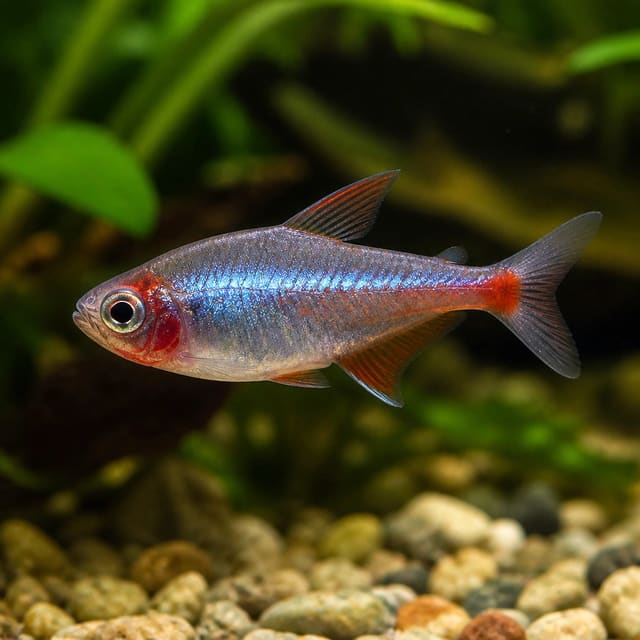
Neon Tetra (Paracheirodon innesi)
21–25°C · pH 5–7
£1.89
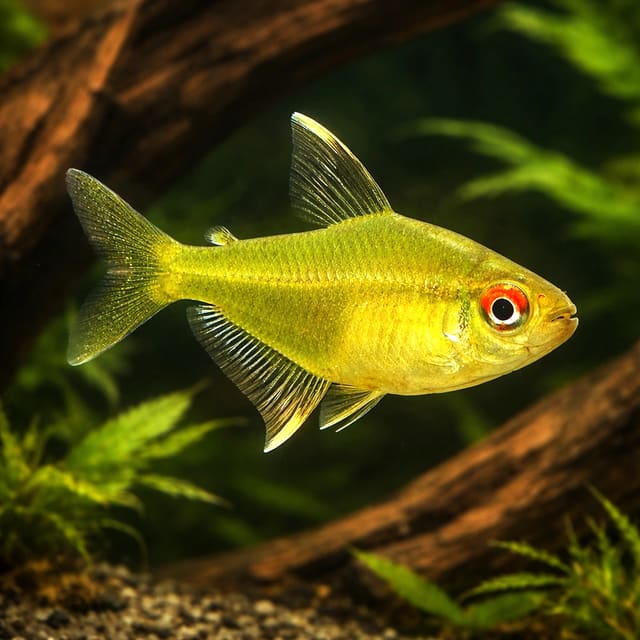
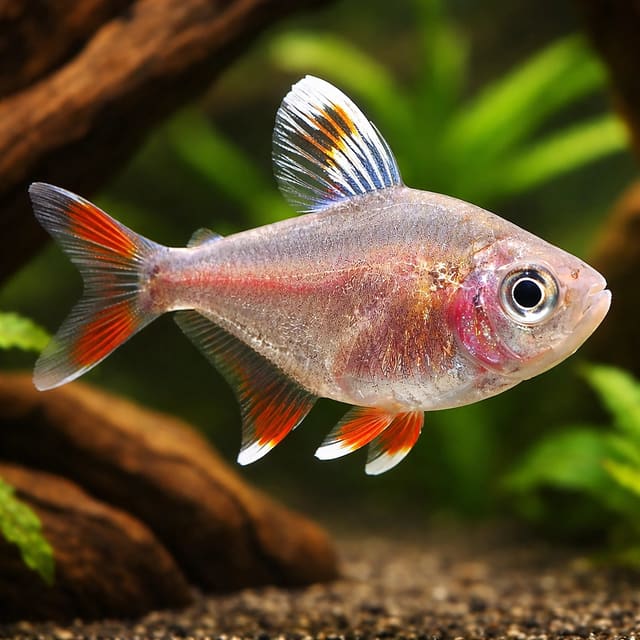
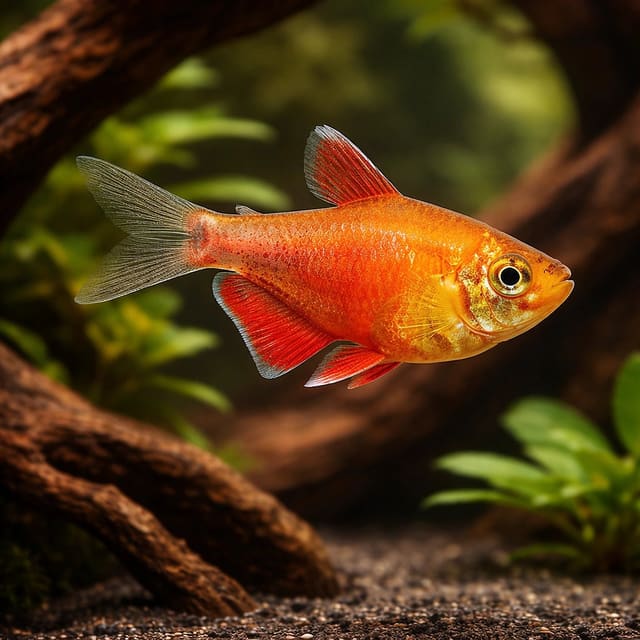
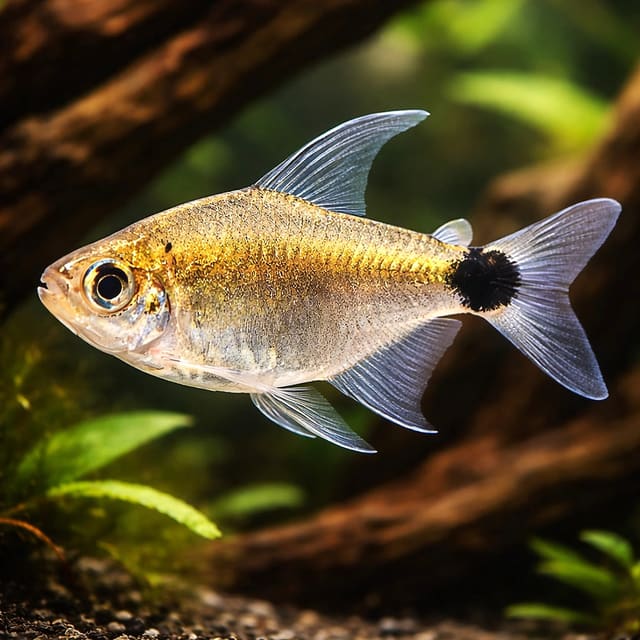
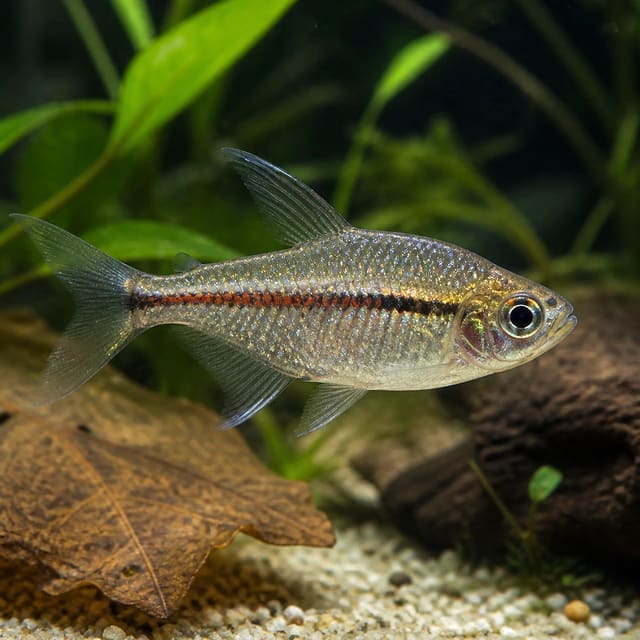
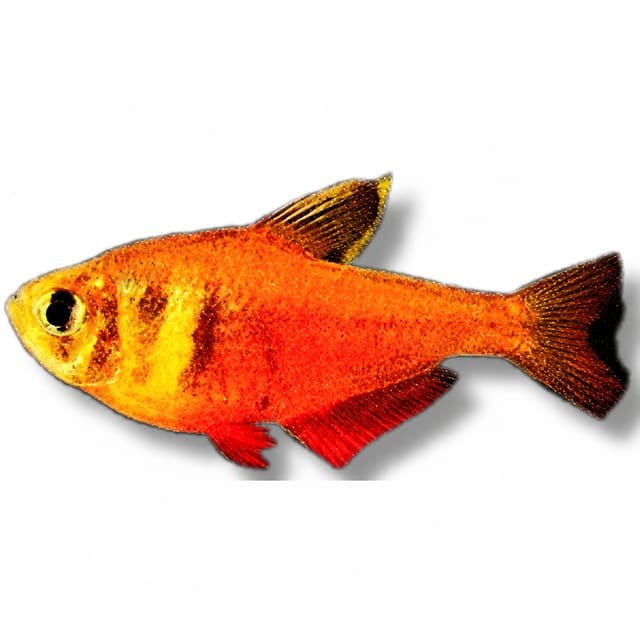
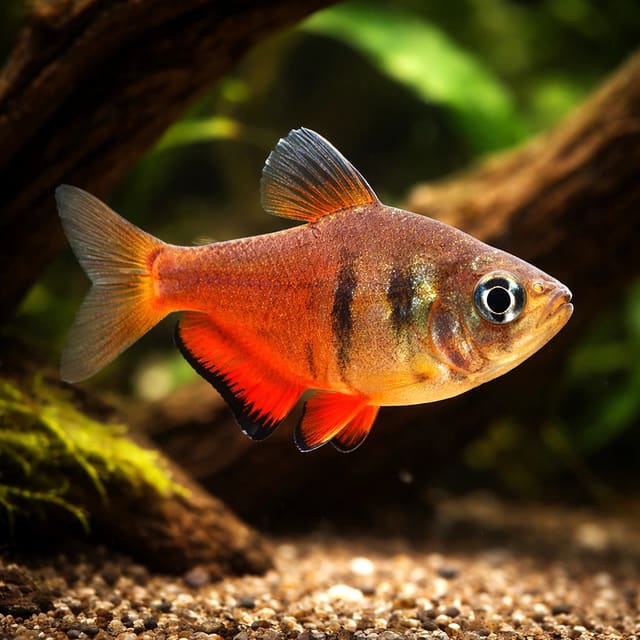
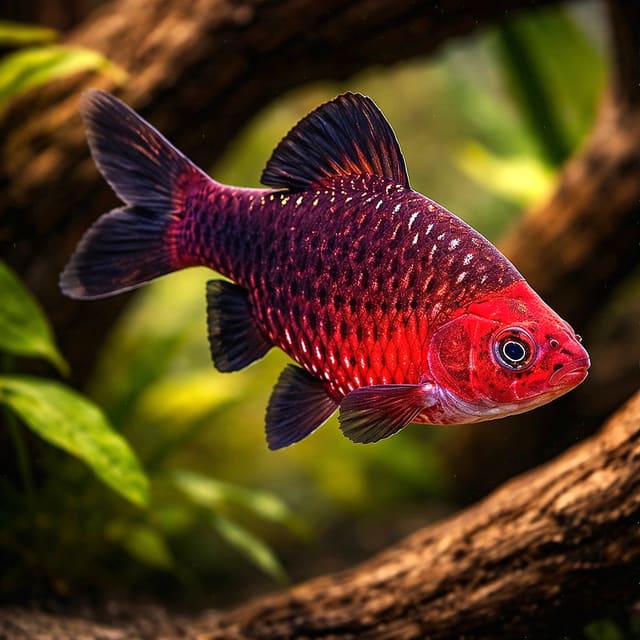
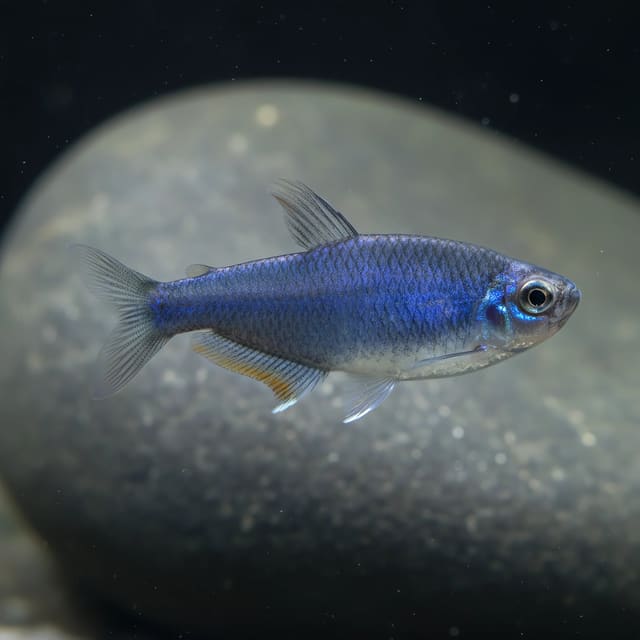
Hyphessobrycon sp. peru is a tetra of the genus Hyphessobrycon whose exact species has not been identified, sold as one live fish at 3–3.5 cm. Keep it in a group of at least five in an established, filtered aquarium with peaceful companions of a similar size.
Hyphessobrycon sp.
Shoaling fish: kept in a group they feel safer, stay calmer and show their best colour.
Hyphessobrycon sp. peru is a tetra of the genus Hyphessobrycon whose exact species has not been identified, sold as one live fish at 3–3.5 cm. Keep it in a group of at least five in an established, filtered aquarium with peaceful companions of a similar size.
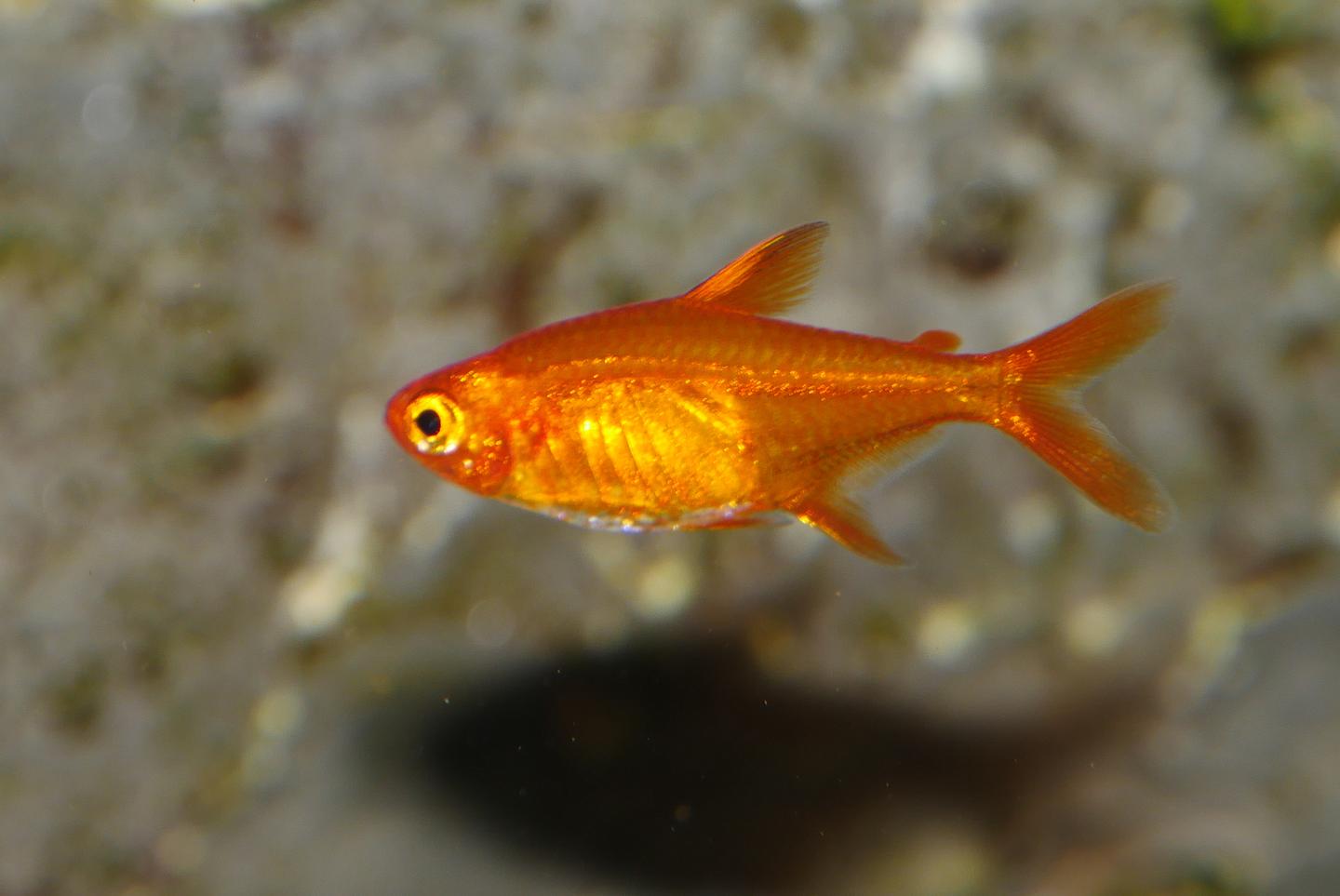
Ember tetras are very small Brazilian social fish, with a maximum recorded length of 2.0 cm excluding the tail. Keep them only in a fully cycled, stable aquarium. We recommend a group of at least 10 and about 45 litres with a 45 × 30 cm footprint rather than using a litres-per-fish formula.
Maintain these water conditions for optimal health and vibrant colors
Hyphessobrycon sp. peru is a freshwater tetra from the characin genus Hyphessobrycon, traded under a label that points to Peru. Each purchase is one live fish, supplied at 3–3.5 cm. It belongs in an established, filtered community aquarium where it can live in a group of at least five alongside calm fish of a similar size.
This is a tetra for keepers who like something less familiar and are comfortable planning around one honest unknown: the species behind the trade name. Hyphessobrycon itself is an accepted genus, which the World Register of Marine Species genus record places in the family Acestrorhamphidae within the order Characiformes. The words "sp. peru" identify the fish in the aquarium trade but do not name a described species. The exact species has not been identified, so the care advice here follows the genus Hyphessobrycon and its care group.
| Suits | An established, cycled freshwater aquarium with peaceful fish of similar size |
|---|---|
| Supplied | One live fish per purchase at 3–3.5 cm |
| Identity | Genus Hyphessobrycon; exact species not identified |
| Group | At least five of its own kind, and a larger group is better |
| Water | 22–27 °C, pH 6.5–8.0, 4–12 °dH (OATA's general guide for tetras) |
| Aquarium | 80 litres or more, with open swimming space and plant cover |
| Diet | Omnivore: quality flake or granules plus small live or frozen foods |
The 3–3.5 cm figure describes the fish we send, not the length it will reach. Without a confirmed species there is no reliable adult length to quote, so this guide plans on the cautious side. OATA's tetra care sheet notes that most tetras stay between 2 and 5 cm, while some larger species reach nearer 10 cm. Setting the aquarium up for a larger tetra from the start costs little and saves rehoming a group later.
Each purchase supplies one fish, so order five or more if you are starting a group. Buying the group together means the fish travel and settle as one shoal, which suits a shoaling tetra better than adding them one at a time. It also matters for an unidentified fish: we cannot promise that fish sold under this label in a later batch will be identical, so buying the whole group at once is the surest way to keep a matching shoal. The exception is an aquarium that is already well stocked. There, OATA's advice to raise numbers slowly matters more, so add the group in two stages and test ammonia and nitrite between them.
Sex is guaranteed only when the selected option explicitly states male or female. This Hyphessobrycon sp. peru listing has no sex-guaranteed option. OATA points out that most species of fish are difficult to sex unless they are breeding, so plan the group on numbers rather than on a particular balance of males and females.
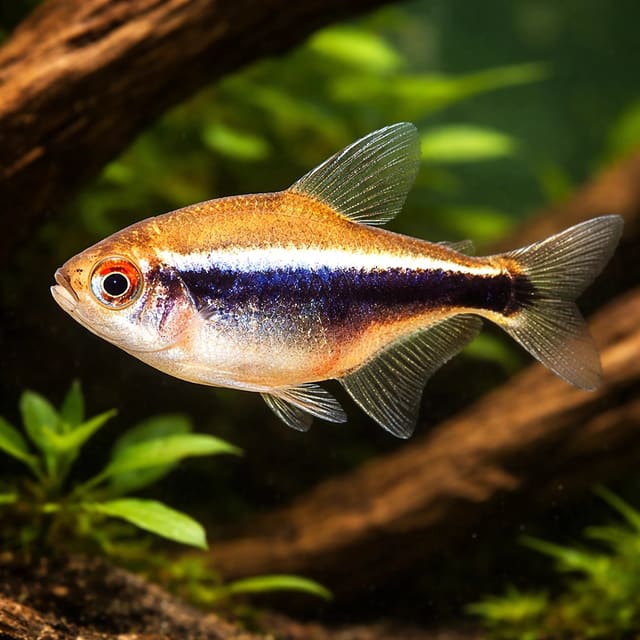
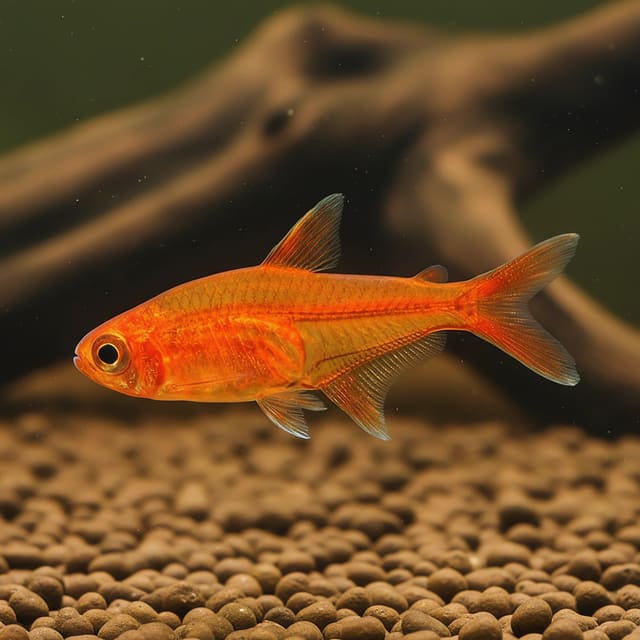
Gallery images have been digitally enhanced to improve image quality. Natural colour, pattern, size and maturity can vary between live animals. Judge new arrivals on their behaviour and condition first; the care tab describes what a healthy tetra looks like.
Aquarium fish are sometimes traded before anyone has matched them to a described species. When that happens they are sold under the genus name, the abbreviation "sp." for a species that is not named, and a word that tells traders which fish is meant, often a place. Hyphessobrycon sp. peru follows that pattern: the genus is certain, the species is not, and "peru" is part of the trade label rather than a documented collecting site.
The genus Hyphessobrycon is accepted by WoRMS, which classifies it in the family Acestrorhamphidae. OATA's care sheet, written for tetras as a whole, describes tetras as members of the family Characidae. You may therefore see either family name attached to a tetra like this one; the fish is the same, and the care it needs does not change with the label.
Because the species is unconfirmed, each care figure here comes from one of three places: OATA's general guidance for tetras, the RSPCA's general aquarium welfare advice, or a clearly labelled comparison with a documented relative. That relative is Hyphessobrycon bentosi, which Seriously Fish profiles in detail. It shows what one member of the genus needs in the aquarium. It is not a statement that this fish is the same species or will behave in exactly the same way.
Where OATA and the H. bentosi profile agree, you can plan with confidence. Where they differ, this guide takes the more cautious option, such as a larger aquarium, and says so.
OATA notes that most species are hard to sex outside breeding, although in some tetras, such as the Congo tetra, males are more colourful and have longer fins. For an unidentified fish no reliable sexing guide can be given, so treat any guess based on shape or colour as a guess. A group of five or more gives the best chance of a natural mix.
Seriously Fish describes H. bentosi as an egg-scattering free spawner that shows no parental care, and notes that adults in good condition spawn often, so small numbers of fry may appear in a mature aquarium without any intervention. The same profile explains that decaying leaf litter supports microbe colonies that can be a valuable secondary food source for fry. That is a fair expectation for a related tetra kept well, but spawning in this unidentified fish is a possibility to enjoy rather than something to plan a purchase around.
Because the species is unconfirmed, the practical starting point is the Ornamental Aquatic Trade Association's care sheet for tetras and pencilfish. OATA describes captive-bred tetras as usually undemanding of water chemistry and gives the figures below as a general guide for the group. It also asks keepers to check any species-specific requirements with their retailer before buying, and to seek advice on parameters for wild-caught fish.
| Measure | OATA general guide for tetras |
|---|---|
| Temperature | 22–27 °C |
| pH | 6.5–8.0 |
| General hardness | Soft to medium, 4–12 °dH |
| Carbonate hardness | Soft to medium, 3–10 °dKH |
| Ammonia | Zero mg per litre |
| Nitrite | Zero mg per litre |
| Nitrate | No more than 20 mg per litre above your tap water level |
Seriously Fish gives 20–28 °C, pH 5.0–7.5 and 1–12 dGH for H. bentosi, which reaches softer and more acidic water than OATA's window. The two sets of figures overlap at 22–27 °C, pH 6.5–7.5 and 4–12 °dH. If your tap water already falls inside that overlap, you have a comfortable margin whichever way this fish's own preferences lean. If your water is harder or more alkaline, stay inside OATA's range and aim for steady readings rather than trying to force the numbers down.
OATA stresses that good husbandry is essential because tetras can be stressed by even the smallest amounts of ammonia. Common risks include a heater that drifts, a large top-up of untreated water, and waste that builds up in a tank that is overstocked or overfed. Choose a temperature within the range that your heater can hold day and night, match the temperature of replacement water to the aquarium, and treat it with a tap water conditioner to remove chlorine or chloramine before it goes in.
The trade name does not tell you whether a fish was bred in captivity or collected. OATA's figures are written for captive-bred tetras, so if you plan to run the aquarium near either end of the range, for example at pH 8.0 or in very soft water, contact us first and we will tell you what we know about the fish in the current batch.
Test the water at least once a week, as OATA recommends, and more often while a new group settles. Our guide to which aquarium water values to test and why explains each reading, and the water parameter matcher compares your own results with the figures above so you can see whether any adjustment is worth making.
OATA's rule of thumb is to buy an aquarium as large as is reasonable: at least 45 litres for a small shoal of a smaller tetra species, and at least an 80 litre aquarium for larger species of 5 cm and over. With the adult size of this fish unknown, plan on 80 litres or more. For comparison, Seriously Fish suggests a base of 90 × 30 cm, roughly 81 litres, as the smallest aquarium to consider for H. bentosi. A larger volume also keeps temperature and water quality more stable, which OATA highlights as a benefit in its own right.
Tetras need space to swim, so leave open water along the length of the tank rather than filling every corner with decoration. A long aquarium usually gives a shoal more useful room than a tall one of the same volume.
For the 90 × 30 cm, roughly 81-litre aquarium it recommends for H. bentosi, Seriously Fish suggests a filter rated at about 325–405 litres per hour, which is a turnover of four to five times the tank volume each hour, and roughly 50–75 W of heating to hold the temperature in a room of around 20 °C. Those figures scale with volume, so they are a useful cross-check when you choose equipment for a similar-sized tank. With a filter of that strength, use plants and décor to break up the flow so the fish can rest out of the current.
A filter is essential. The RSPCA's aquarium environment guidance explains why: fish release ammonia, which is toxic, and a working biological filter grows beneficial bacteria that turn it into nitrite, which is also toxic, and then into nitrate, which is safer. No fish should be kept in a tank without a well set up and maintained filter. OATA adds that smaller tetras appreciate a gentle current, so choose a filter that moves the whole volume without pushing the fish around.
OATA recommends aquarium gravel or sand and, ideally, live plants to give the fish cover. If you use artificial plants, add ornaments such as plant pots or model caves alongside them so the group always has somewhere to retreat.
The Seriously Fish profile of Hyphessobrycon bentosi gives a useful picture of how one related tetra is kept at its best. It reports better colour in a well-furnished tank with live plants and a dark substrate, and suggests a soft, sandy base with wood roots and branches arranged to create plenty of shady spots. Dried leaf litter adds a natural feel and supports beneficial microbes as it breaks down; the leaves can be left to decompose fully or replaced every few weeks. The same profile says the species does best under relatively dim lighting and appreciates floating plants.
That arrangement is a sensible template to try with this fish. Start with plants, some wood and a patch of floating cover, then watch where the group spends its time and adjust the layout from there.
A new filter needs time to build its bacterial population before any fish arrive. If you are starting from scratch, our guide to setting up and maturing a first tropical tank walks through the process step by step. Before you order, check that ammonia and nitrite both read zero, as OATA advises for any new fish.
OATA describes tetras as omnivores that take most food types. A good quality flake or granule makes a sensible base, with small items of live or frozen food such as daphnia, small bloodworm or tubifex added for variety. For a fish supplied at 3–3.5 cm, choose a flake that crumbles small or a granule fine enough to be swallowed whole.
The Seriously Fish account of H. bentosi points the same way. In nature that species is likely to eat small invertebrates, crustaceans, filamentous algae and fallen fruit, and in the aquarium it does best on a varied menu that includes live and frozen bloodworm, mosquito larvae, Daphnia and Moina alongside a quality dried food. Freeze-dried bloodworm and Daphnia are convenient ways to add that variety if you prefer not to handle live food.
Variety does not need to be complicated. Use the dried food as the everyday base and let live or frozen food replace it on some days of the week, changing between daphnia, bloodworm and similar small items so that no single food dominates. Thaw frozen portions before use and offer pieces small enough for a 3 cm fish to take in one bite.
Offer only what the group can eat within a few minutes, once a day, as OATA recommends. Uneaten food breaks down and releases toxic waste into the water, so overfeeding is one of the quickest ways to undo careful maintenance. If food is still drifting or lying on the substrate after a few minutes, reduce the next portion.
Mealtimes are the easiest moment to count the group and look at each fish. OATA lists reduced intake or lack of interest in food among the early signs of a problem, together with changes in body condition. A fish that hangs back at every meal, or looks thinner than its companions, deserves a closer look and a water test.
All fish vary a little in behaviour and appearance, but OATA's watch list helps you spot a problem before it becomes a real health issue. Look for changes in:
If you are concerned about any fish, test your water quality first, as OATA advises, then contact us for further guidance.
A notebook or phone note beside the tank makes every other check easier. Record the date, the temperature, your ammonia, nitrite and nitrate readings, how much water you changed and how many fish you counted at feeding time. After a few weeks you will know what normal looks like for your aquarium, and a reading that drifts or a fish missing from the count will stand out straight away.
OATA describes healthy fish as having clear, bright eyes, undamaged fins, intact scales and no ulcers or bumps. Use that as your baseline on arrival day and at each weekly check, so that any change stands out quickly.
Tetras are shoaling fish, and OATA advises keeping them in groups of at least five, adding that more is better. Tetras kept singly or in too small groups will often become stressed. If the group shrinks over time, top it up gradually rather than leaving one or two fish on their own.
Every order is hand-packed by our team. Fish are bagged in pure oxygen and packed in an insulated poly box, with a heat pack when the weather calls for it. We email you the tracking number and your confirmed delivery date, and a licensed live-animal courier carries the parcel. Someone needs to be at the delivery address to receive it, because live fish cannot be left unattended. The full terms are set out on our delivery and Live Arrival Guarantee page.
New fish add to the work the filter has to do. OATA explains that the beneficial bacteria established while the filter matured need to increase every time more fish are added and feeding increases, which is why numbers should rise slowly. Overstocking, or stocking too quickly, can result in new tank syndrome: not enough nitrifying bacteria to cope with the extra waste, leading to unhealthy levels of ammonia and nitrite, which may cause fish to become ill or die.
So test ammonia and nitrite more often than usual while the new group settles, keep meals small, and wait for zero readings before adding more fish. If you are building up to a larger shoal, bringing it together in stages protects both the newcomers and the fish already in the tank.
OATA's advice for tetras is that they mix best with species of a similar size and temperament. For Hyphessobrycon sp. peru, supplied at 3–3.5 cm and with an unconfirmed adult size, that means peaceful fish that stay small to medium and will neither bully it nor treat it as food.
Long-finned or very timid fish are best added only after you have watched this group for a few weeks. OATA describes tetras as generally small, colourful and peaceful fish, but with some exceptions, and without a confirmed species there is no way to rule out fin-nipping in advance. If you see ragged fins or constant chasing, separate the fish before damage builds up.
Seriously Fish describes H. bentosi as very peaceful and suggests keeping it alongside similarly sized characins, hatchetfish (gasteropelecids), pencilfish (lebiasinids), smaller callichthyid or loricariid catfishes and non-predatory, small-to-medium cichlids. That makes a helpful shortlist of fish types to research for a South American-style community. Check each candidate's own adult size and water needs against your aquarium before assuming it will suit this tetra.
Plan space for the tetras first and add companions afterwards. OATA's minimum is a group of five, and more is better; for H. bentosi, Seriously Fish recommends a mixed-sex group of at least 8–10, noting that the species shows more interesting behaviour and better colour when kept in numbers. In an aquarium of around 80 litres, a group of that size leaves room for only a modest number of other small, peaceful fish, and each addition should be made gradually so the filter keeps pace.
It is supplied at 3–3.5 cm, but its adult length is unknown because the exact species has not been identified. OATA notes that most tetras stay between 2 and 5 cm and some larger species reach nearer 10 cm, so plan the aquarium for a larger tetra.
Plan on at least 80 litres. OATA suggests at least 45 litres for a small shoal of a smaller tetra species and at least 80 litres for larger species of 5 cm and over, and the larger figure is the safer choice while the adult size is unknown.
Keep a group of at least five, and more if space allows. OATA describes tetras as shoaling fish and notes that tetras kept singly or in too small groups will often become stressed.
It suits a keeper with an established, stable aquarium rather than a brand-new set-up. OATA describes most tetras as undemanding and easy to keep, but this fish's species and adult size are unknown, and stocking a new tank too quickly risks new tank syndrome.
It is an omnivore. Feed a good quality flake or granule as the base, add small live or frozen foods such as daphnia, small bloodworm or tubifex, and offer only what the group eats within a few minutes, once a day, following OATA's tetra guidance.
OATA's broad guidance for tetras is 22–27 °C, pH 6.5–8.0 and soft to medium water of 4–12 °dH, with ammonia and nitrite at zero. That is group guidance rather than a species optimum, so keep conditions steady inside it.
Tetras are generally peaceful, with some exceptions: OATA notes that larger or more boisterous species may nip the fins of timid or long-finned fish. Because this fish's species is unconfirmed, add long-finned companions only after you have watched the group settle.
Choose peaceful fish of a similar size and temperament, as OATA recommends for tetras, and never keep it with any fish large enough to eat it. Seriously Fish suggests similarly sized characins, hatchetfish, pencilfish, smaller catfishes and non-predatory small-to-medium cichlids for the related Hyphessobrycon bentosi.
It is hand-packed, bagged in pure oxygen inside an insulated poly box, with a heat pack when the weather calls for it, and carried by a licensed live-animal courier. Be in to receive it, film a continuous unboxing video from the sealed parcel onwards, then float the sealed bag for 20–30 minutes before releasing the fish without the bag water.
These public sources support the care, identity and arrival information on this page.
No reviews for this item yet. Bought one? Honest reviews only, good or bad.
What customers say about ordering from us
Easy website plenty of info on fish your buying great to pick a time slot
TRACEY DURRANT · 7 Oct 2026
Got some lovely fish thank you
Kevin Mackie · 7 Oct 2026
Reviews of our shop, collected by Judge.me, an independent third-party review collector. Newest first.