Moderate
Neon Tetra (Paracheirodon innesi)
21–25°C · pH 5–7
£1.89
Photo coming soon
The size, price and care details on this page are for this listing.
The Gold Widow long fin (Gymnocorymbus ternetzi) is an American tetra from South America’s Paraguay and Guaporé River basins to Argentina that reaches 7.5 cm standard length. It suits beginner community keepers who can provide a group of at least 12, a 75 × 30 cm aquarium and the FishBase, Seriously Fish and OATA overlap of 22–26°C and pH 6.5–7.0. Sold individually; choose 2,5 - 3 cm or > 3 cm.
Adult size is the maximum length this species reaches at full maturity (scientific sources). The livestock you receive will be younger and smaller — pick a size above for the actual shipping size. Product-photo provenance and any image-specific limitations are stated on the listing.
Gymnocorymbus ternetzi
Minimum of 2 per order.
The Gold Widow long fin (Gymnocorymbus ternetzi) is an American tetra from South America’s Paraguay and Guaporé River basins to Argentina that reaches 7.5 cm standard length. It suits beginner community keepers who can provide a group of at least 12, a 75 × 30 cm aquarium and the FishBase, Seriously Fish and OATA overlap of 22–26°C and pH 6.5–7.0. Sold individually; choose 2,5 - 3 cm or > 3 cm.
Adult size is the maximum length this species reaches at full maturity (scientific sources). The livestock you receive will be younger and smaller — pick a size above for the actual shipping size. Product-photo provenance and any image-specific limitations are stated on the listing.
Maintain these water conditions for optimal health and vibrant colors
The Gold Widow long fin (Gymnocorymbus ternetzi) is a freshwater American tetra for beginner and experienced community keepers who can provide an active shoal with open swimming room. The underlying species comes from South America, where its range extends through the Paraguay and Guaporé River basins to Argentina. FishBase records a maximum of 7.5 cm standard length and places it in Acestrorhamphidae, the American tetra family.
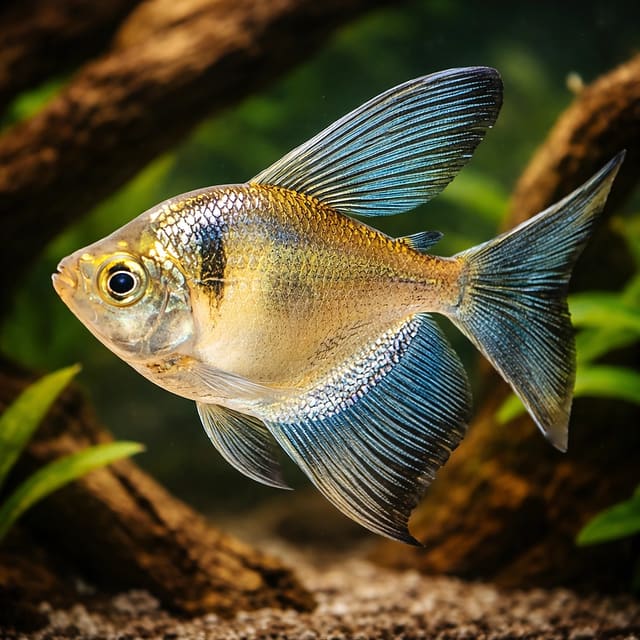
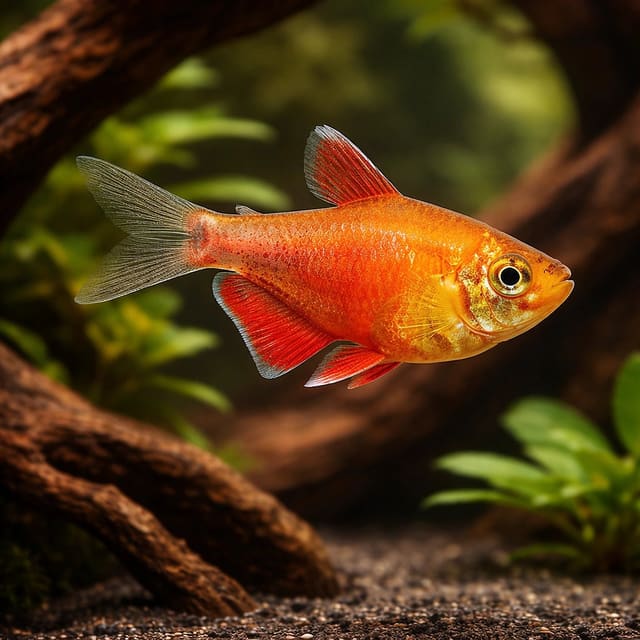
This aquarium form is sold as a golden, long-finned Gymnocorymbus ternetzi. Seriously Fish describes golden and long-finned forms as selectively bred varieties of Gymnocorymbus ternetzi. Plan its care around the needs of the species: a lively shoal, a long swimming area, quieter planted cover and companions selected with possible fin nipping in mind.
Adults use the middle and upper water layers in nature. Their recorded wild foods include worms, small crustaceans and insects, which helps explain why suitable aquarium feeding includes quality prepared food alongside small live or frozen invertebrate foods. This is not a fish to plan as a solitary centrepiece; its behaviour is best expressed within a properly sized group.
Choose this tetra when you want visible shoaling activity and can maintain stable water in a mature, filtered aquarium. Seriously Fish calls the species one of the best choices for the newcomer to fishkeeping; give it the full group, enough swimming length and a consistent maintenance routine. You can also browse the current tetra collection when comparing body shape, activity and group requirements.
One purchase supplies one Gold Widow long fin from the option selected on the live size selector. The choices are labelled 2,5 - 3 cm and > 3 cm. The size you select is the size supplied, not the adult size. Use that dispatch measurement to judge the fish you will receive, then design the aquarium and community around its recorded adult length of 7.5 cm standard length.
A smaller dispatch fish is not a different species, a guaranteed age or a promise of a particular sex. It still needs the same adult swimming space, shoal plan, water range and compatible community. The open-ended > 3 cm label gives a lower boundary rather than a precise measurement, so do not use it as an adult-size estimate.
Sex is guaranteed only when the selected option explicitly states male or female. This Gold Widow long fin listing has no sex-guaranteed option.
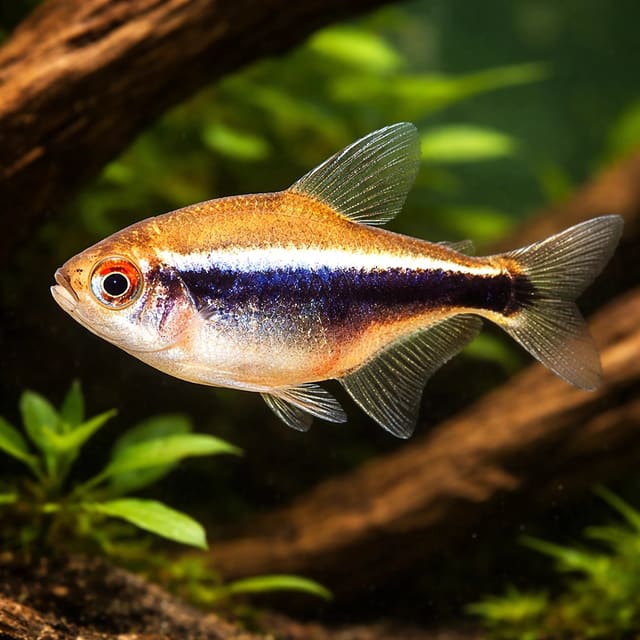
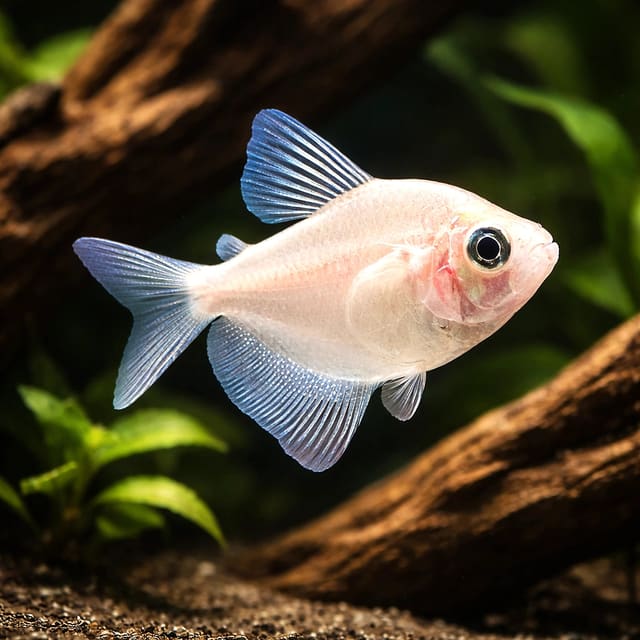
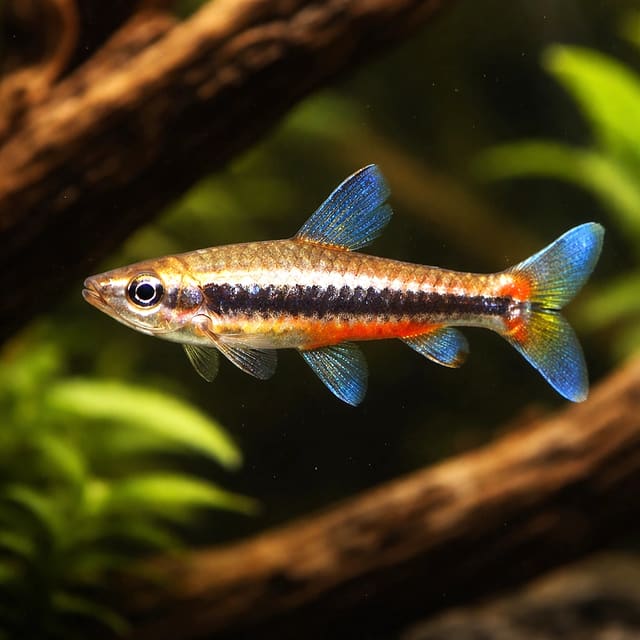
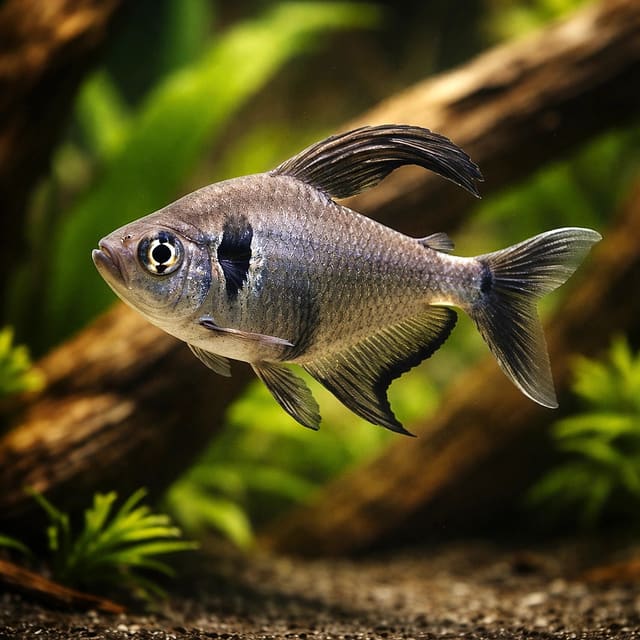
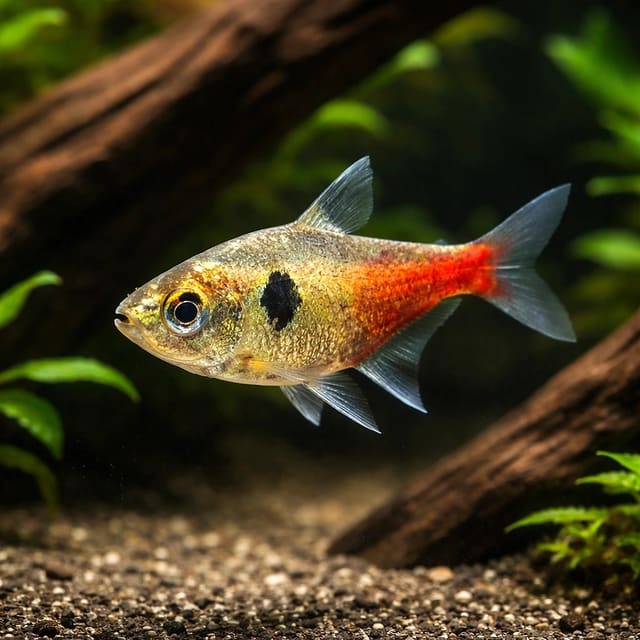
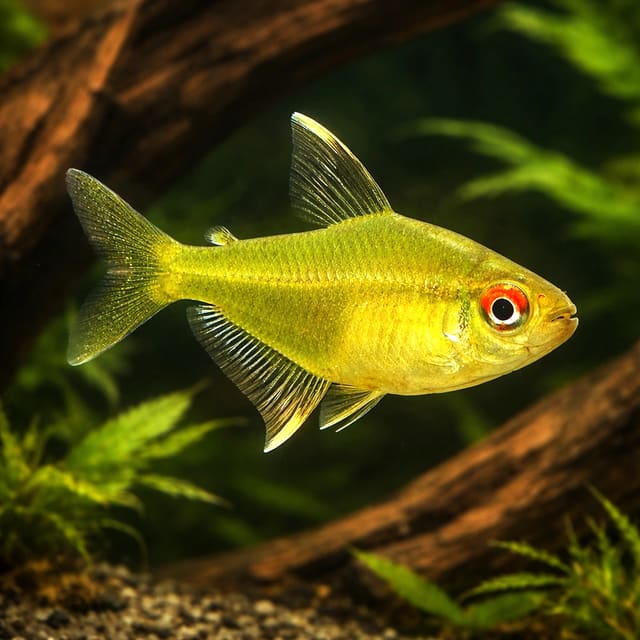
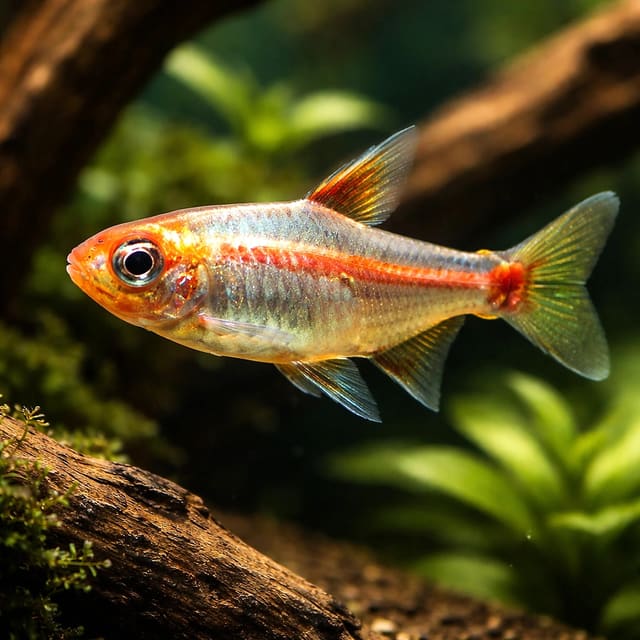
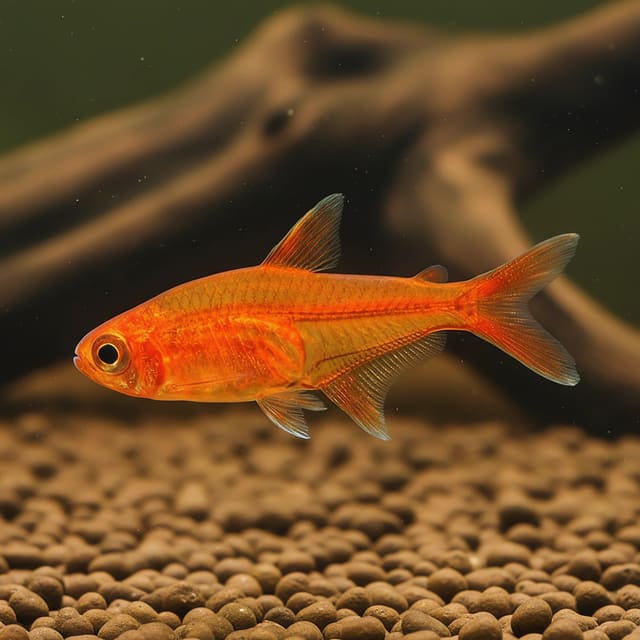
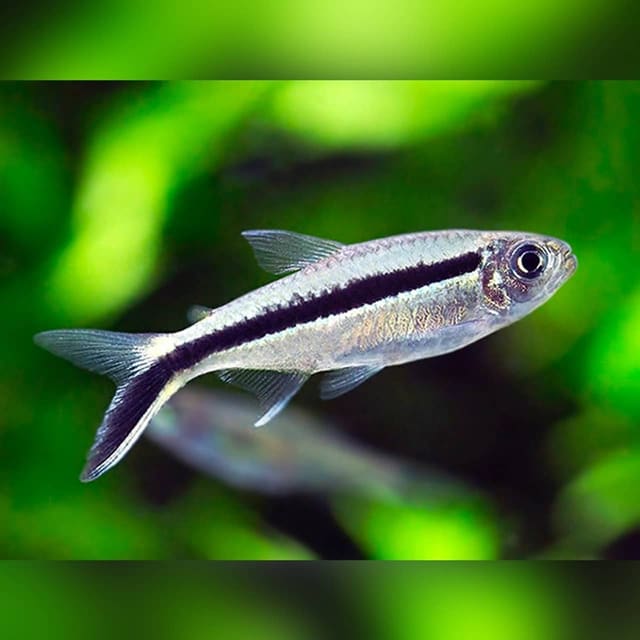
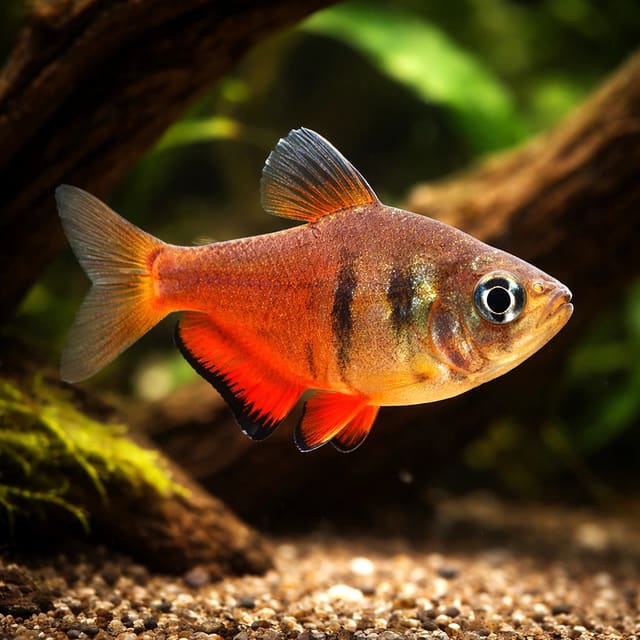
The gallery images are representative of this type of animal rather than photographs of the exact animal supplied, so colours can look slightly different from the live animal.
Keep routine aquarium water at 22–26°C, pH 6.5–7.0 and 5–12 dGH. These figures are the overlap of the FishBase environmental range, the Seriously Fish species aquarium range and OATA’s tetra guidance. OATA’s figures are guidance for tetras as a group, while the FishBase and Seriously Fish figures are for Gymnocorymbus ternetzi itself.
Provide a base of at least 75 × 30 cm, equivalent to around 68–70 litres in the example aquarium described by Seriously Fish. Keep a shoal of at least 12. That larger group is important because the species has a reputation for fin nipping; Seriously Fish says a shoal of at least 12 can usually rectify fin nipping, and any squabbling then generally stays within the group.
| Suits | Not suited to |
|---|---|
| A mature, filtered community aquarium | An unfiltered or newly filled aquarium |
| A group of at least 12 | Solitary keeping or a very small group |
| A 75 × 30 cm or larger base | A tank without enough horizontal swimming room |
| Open water with planted quieter areas | A layout that blocks the main swimming area |
| Peaceful companions matched for water and activity | Timid or long-finned companions |
It is an easy tetra to keep once those conditions are in place. Keep testing the water, maintaining the biological filter and watching the group after introduction.
Plan for a maximum of 7.5 cm standard length, measured without the tail fin. Use 7.5 cm for every space and stocking decision.
A suitable starting footprint is 75 × 30 cm, with an example volume of around 68–70 litres for a group. Footprint matters because these tetras are active middle- and upper-water swimmers. A taller aquarium with a short base can hold a similar volume yet provide less useful horizontal swimming distance.
For example, an aquarium meeting the 75 × 30 cm base is a reasonable species starting point for the Gold Widow group. If it also contains livebearers, Corydoras or another named companion type, assess the adult space, waste production and social requirement of every group before deciding the total stocking level.
Do not treat dispatch size as spare capacity. Twelve small arrivals still grow, eat and add waste, while resident fish already use part of the aquarium’s biological and physical capacity. Make the permanent plan before introduction so growth does not force a rushed move later.
Keep the aquarium at 22–26°C, pH 6.5–7.0 and 5–12 dGH. This routine range is the shared overlap of FishBase, Seriously Fish and OATA, so all three values belong together when checking whether an aquarium is suitable.
A reading within one limit does not compensate for another reading outside the target. Use the water-chemistry guide to understand what each measurement means, then compare your readings with the water matcher.
Test the aquarium before adding the group and at least weekly during normal maintenance. Test again when behaviour, breathing, colour or appetite changes, because water quality is the first practical factor to check. A measured result gives you a decision; appearance alone cannot tell you whether ammonia or nitrite has risen.
Match replacement water to the established aquarium as closely as practical and treat tap water with conditioner before adding it. Stable conditions are easier to maintain in a sufficiently large aquarium, but volume never replaces testing or water changes.
Use a mature aquarium with a well-set-up, maintained filter before adding the Gold Widow long fins. The RSPCA explains that fish release toxic ammonia and that a working biological filter supports bacteria which convert ammonia to nitrite and then to the safer nitrate. This bacterial process is what makes a mature filter different from a newly installed filter running in freshly filled water.
Prepare the aquarium before livestock arrives rather than expecting fish to mature the filter safely. Our first tropical tank guide covers the preparation sequence. Confirm ammonia and nitrite are both 0 mg/l before introduction, and increase stocking gradually so the bacterial population can respond to additional waste and feeding.
Seriously Fish gives a turnover of four to five times the aquarium volume per hour for its approximately 68-litre example, corresponding to a filter rated around 270–340 litres per hour. Treat that as a planning example for this footprint, then account for the actual filter’s media, the effect of décor on circulation and the needs of the full community.
Never respond to cloudy water, reduced flow or poor test results by adding more fish. Pause additions, test ammonia and nitrite and restore stable filtration first. OATA warns that stocking too quickly can create new tank syndrome when bacteria cannot process the increased waste.
Give the shoal a broad, unobstructed route through the middle and upper water while retaining planted or decorated areas where activity is lower. Seriously Fish describes the species as fairly unfussy about décor but specifically notes its preference for open swimming space alongside quieter areas.
Dense patches of planting can provide cover without turning the entire aquarium into an obstacle course. Floating vegetation may reduce the light entering parts of the tank, while rooted plants, suitable artificial plants or ornaments can provide shelter. Keep plants and décor secure and leave the central swimming route open.
Filter flow should circulate the aquarium without removing every calm area. Watch the group after introduction: steady movement through open water with voluntary use of cover is different from every fish being forced into one low-flow corner. If the whole shoal continually struggles against the current, redirect the outlet while preserving adequate turnover.
Seriously Fish says an aquarium of about 68 litres needs roughly a 50 W heater when the room is around 20°C. A different volume or room temperature needs a heater sized for that aquarium. Choose equipment for the actual aquarium volume, room temperature and required 22–26°C range, and use a separate thermometer to check the result.
A secure, practical layout also makes weekly maintenance easier. Leave access for siphoning waste, inspecting the filter intake and viewing the fish from several angles without dismantling their cover.
Use a quality flake or granule as the regular prepared food and add small live or frozen foods such as Daphnia, small bloodworm or tubifex for variety. Seriously Fish describes Gymnocorymbus ternetzi as an unfussy omnivore and recommends flakes and granules with regular small live or frozen foods. That menu also fits the wild record of worms, small crustaceans and insects.
OATA’s tetra guidance sets the feeding routine: offer only what the fish can finish within a few minutes, once a day. This schedule applies to the group, so divide the portion across the shoal rather than feeding each fish a separate full portion.
Overfeeding leaves uneaten food to break down and release toxic waste into the water. A larger meal is therefore not a shortcut to faster growth or better condition. Use body condition, feeding response and weekly water tests to judge whether the routine is working.
If several fish feed strongly while one repeatedly hangs back, first check whether group interactions are excluding it. Spread the next portion over a wider area and observe breathing, posture and body condition. A sudden group-wide loss of appetite calls for immediate ammonia, nitrite, temperature and pH checks.
Do not replace the varied omnivorous diet with a single treat food. Daphnia or bloodworm adds variety, while the quality flake or granule provides the dependable prepared-food base recommended for aquarium care.
Carry out a 25% partial water change at least once every week.
Use a siphon to remove solid waste from accessible areas of gravel or sand. Treat replacement tap water with conditioner to remove harmful chlorine or chloramine before it enters the aquarium. Check temperature during the process and avoid a sudden change that moves the tank outside 22–26°C.
Daily observation should be brief but specific. Look for changes in swimming position, erratic movement, unusual hiding, darker or paler colour, altered breathing rate, damaged fins, missing scales, white spots, fluffy growths, body-weight change or reduced feeding. Compare each fish with its normal pattern and with the rest of the group.
If a health change appears, test water quality immediately and contact us for further guidance. Do not treat a symptom by guessing at medication or changing several water values at once. The first useful distinction is whether a measurable water problem affects the whole group or whether one fish shows a localised change.
Keep a simple log of test results, water changes and unusual observations. Dates and measurements reveal a trend more reliably than memory, especially after a stocking change or filter clean.
Before arrival, confirm the aquarium is mature, the filter is running, ammonia and nitrite are 0 mg/l and the water is within 22–26°C, pH 6.5–7.0 and 5–12 dGH.
Follow the Tropical Fish Co delivery and Live Arrival Guarantee policy in this order:
If something has gone wrong, contact us the same day with the order number and continuous unboxing video. The policy requires the sealed parcel, opening and fish in the sealed bag to be shown for a Live Arrival Guarantee claim.
Once the group has been introduced, watch how it uses the open water and quieter cover. Check that all fish join the shoal at times, breathe at a similar rate and reach food. Test ammonia and nitrite after the stocking increase because the filter’s bacterial population must process the extra waste.
During the first month, continue the normal once-daily feeding and weekly 25% water-change routine rather than reacting to every small movement with a new adjustment. Act on persistent changes: repeated surface hanging, bottom sitting, erratic swimming, unusual hiding, fin damage, rapid breathing or loss of appetite all justify immediate water tests and closer inspection.
Keep at least 12 Gold Widow long fins together. The species is generally peaceful and lively, but it has a reputation for fin nipping. Seriously Fish says keeping at least 12 can usually rectify the nipping, and any squabbling then generally stays within the group.
A group of five avoids solitary keeping but does not reduce fin nipping the way a shoal of 12 does. Plan 12 as the minimum from the start.
When trouble appears, check the whole setup before blaming one individual. Confirm that the group has at least 12 members, the 75 × 30 cm base remains genuinely usable, the central swimming route is open and food reaches more than one point. Then inspect water quality, because stress from ammonia, nitrite or unsuitable values can coincide with changed behaviour.
Its normal community reputation is peaceful, while the nipping risk is real enough to shape group size and companion selection. The best plan prevents attention from being concentrated on one fish or on the fins of another species.
Match companions by adult size, peaceful temperament, water requirements and activity. Seriously Fish names most livebearers, danios, rasboras, other tetras and peaceful bottom dwellers such as Corydoras or smaller Loricariids as suitable possibilities. It also names robust dwarf cichlids such as kribensis.
These are candidate types, not automatic approvals for every aquarium. Each planned companion must fit 22–26°C, pH 6.5–7.0 and 5–12 dGH, have enough room for its own adult size and social group, and leave sufficient capacity for at least 12 Gold Widow long fins.
| Usually suitable after checks | Use caution |
|---|---|
| Most livebearers, danios and rasboras | Fish of a very different adult size |
| Other tetras with matching requirements | Fish of a very different temperament |
| Peaceful Corydoras and smaller Loricariids | Any community already short of swimming space |
| Robust dwarf cichlids such as kribensis | Species whose water range does not overlap |
| Other lively community fish of a similar size | Individuals showing persistent pursuit or fin damage |
OATA advises that tetras and pencilfish mix best with animals of similar size and temperament. It also says more boisterous tetras should not be kept with timid or long-finned fish because they may nip fins. Do not keep this tetra with timid or long-finned fish, because it may nip their fins.
Choose bottom dwellers carefully: peaceful Corydoras and smaller Loricariids suit this tetra, not every catfish. Likewise, the livebearer and cichlid suggestions still require a water and space match. If the planned mix goes beyond these types, choose companions of a similar size and temperament that share 22–26°C, pH 6.5–7.0 and 5–12 dGH.
FishBase records a maximum of 7.5 cm standard length, measured without the tail fin. Use 7.5 cm when planning permanent swimming space and community stocking.
Seriously Fish gives a 75 × 30 cm base and an example volume of around 68–70 litres for a group. Check the footprint as well as the volume because this active tetra needs horizontal swimming room.
Keep at least 12. Seriously Fish says this group size can usually rectify fin nipping, and any squabbling then generally stays within the shoal.
Yes, Seriously Fish calls it one of the best choices for the newcomer to fishkeeping. It still needs a mature filtered aquarium, a group of at least 12 and stable weekly maintenance.
Feed a quality flake or granule with regular small live or frozen foods such as Daphnia or bloodworm. OATA’s tetra guidance says to offer only what the group finishes within a few minutes, once a day.
Keep it at 22–26°C, pH 6.5–7.0 and 5–12 dGH. These routine values are the overlap of FishBase, Seriously Fish and OATA’s tetra guidance.
It is generally peaceful and lively, but it may nip fins. Keep at least 12, and do not keep it with timid or long-finned fish.
Seriously Fish names most livebearers, danios, rasboras, other tetras, peaceful Corydoras, smaller Loricariids and robust dwarf cichlids such as kribensis. Do not keep it with timid or long-finned fish, and screen every other combination for adult space, temperament and matching water requirements.
Tropical Fish Co packs it by hand in a bag with pure oxygen, an insulated box and a heat pack when weather calls for one, then uses a licensed live-animal courier. Receive the parcel in person, begin a continuous video while it is sealed, inspect it the same day, float the bag for 20–30 minutes and release the fish without adding bag water.
No reviews for this item yet. Bought one? Honest reviews only, good or bad.
What customers say about ordering from us
Easy website plenty of info on fish your buying great to pick a time slot
TRACEY DURRANT · 7 Oct 2026
Got some lovely fish thank you
Kevin Mackie · 7 Oct 2026
Reviews of our shop, collected by Judge.me, an independent third-party review collector. Newest first.