−11%
Advanced
Blackberry Silver Dollar (Myleus sp. "Lamax III")
24–28°C · pH 6–7.5 · 500L
£140.61£157.99
Photo coming soon
The size, price and care details on this page are for this listing.
Myloplus schomburgkii, also known as the Disk tetra and sold under the trade name Myleus schomburgki, is a plant-eating serrasalmid from the Amazon and upper Orinoco basins that FishBase records at up to 42 cm standard length. Plan a very large, long, tightly lidded aquarium for a group of at least five, feed plenty of vegetables and handle it with care, because its powerful teeth can cause serious bites. Each purchase is one fish of the size you choose, from 3–4 cm to 6–7 cm or XL.
Adult size is the maximum length this species reaches at full maturity (scientific sources). The livestock you receive will be younger and smaller — pick a size above for the actual shipping size. Product-photo provenance and any image-specific limitations are stated on the listing.
Myloplus schomburgkii
Myloplus schomburgkii, also known as the Disk tetra and sold under the trade name Myleus schomburgki, is a plant-eating serrasalmid from the Amazon and upper Orinoco basins that FishBase records at up to 42 cm standard length. Plan a very large, long, tightly lidded aquarium for a group of at least five, feed plenty of vegetables and handle it with care, because its powerful teeth can cause serious bites. Each purchase is one fish of the size you choose, from 3–4 cm to 6–7 cm or XL.
Adult size is the maximum length this species reaches at full maturity (scientific sources). The livestock you receive will be younger and smaller — pick a size above for the actual shipping size. Product-photo provenance and any image-specific limitations are stated on the listing.
Maintain these water conditions for optimal health and vibrant colors
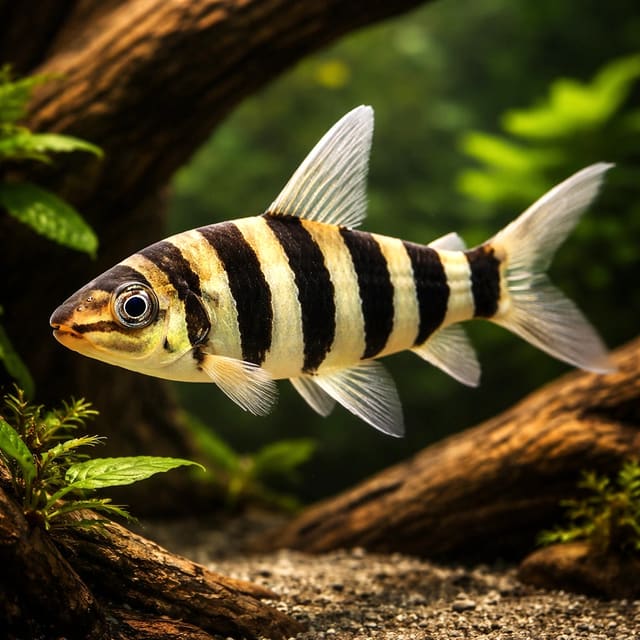
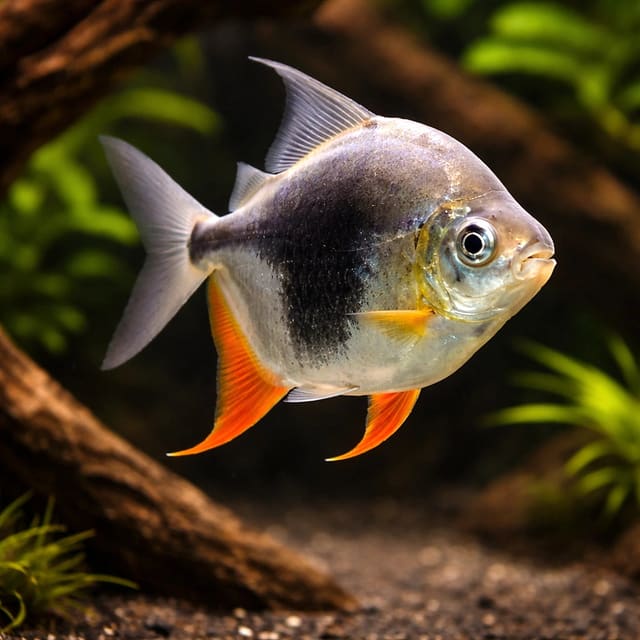
Myloplus schomburgkii is a deep-bodied South American fish from the Serrasalmidae, the family of piranhas and pacus. In English it is known as the Disk tetra, the Black-barred Myleus, the Black-ear Pacu or the Disc Pacu, and it is sold here under the trade name Myleus schomburgki. Its silver, disc-shaped body carries a broad black vertical bar across the flank, and a group of these black-barred discs moving through open water makes a striking display for a big aquarium.
The fact that matters most before buying is size. FishBase records a maximum length of 42 cm standard length, so whichever size you buy, plan for a large, quick fish that belongs in a group of at least five, in a very large and long aquarium under a tight-fitting lid. It is mainly herbivorous and eats aquarium plants, and its powerful teeth can cause serious bites. We class it as an advanced fish for keepers who can plan for the adult group from the first day.
| Suits | Experienced keepers with room for a very large, long, lidded aquarium and a group |
|---|---|
| Adult size | Up to 42 cm standard length (FishBase maximum) |
| Group | At least five of its own kind |
| Water | 23–27 °C, pH 6.0–7.0, up to 10 dGH |
| Diet | Mainly vegetables and plant-based foods |
| Companions | Larger peaceful fish; never much smaller fish |
| Plants | Hardy or artificial; delicate plants get eaten |
| Handling | Always with a net; the teeth can bite seriously |
| Our care level | Advanced |
In the wild it lives in the middle and lower Amazon basin, including the Nanay River, and in the upper Orinoco basin; a record from Suriname is treated as doubtful. FishBase notes minor commercial fisheries and game-fishing interest as well as the aquarium trade, and the species has not been evaluated for the IUCN Red List.
This is a fish to choose deliberately. It rewards keepers who want a group of large, silver fish cruising open water, and it disappoints anyone expecting a small tetra for a planted community tank.
Once the aquarium is right, day-to-day care is manageable: it accepts most aquarium foods, and the routine is weekly water changes, steady water values and plenty of greens.
Each purchase is one live fish of the size you choose: 3–4 cm, 4–6 cm, 6–7 cm or XL. The XL size has no stated length, so ask us for a measurement before ordering if you need one, and the product page shows which sizes can be ordered at any given time. The size you select is the size supplied, not the adult size.
Because a group of at least five is the right way to keep this fish, most keepers buy several together or add to a group they already have. Order once the aquarium that will house the adult group is set up and running.
When you build a group, choosing one size for all of it makes the fish easier to compare as they grow, so a fish falling behind stands out. When you add to an existing group, pick the size closest to the fish you already keep.
You will find it in our tetras collection because it is a South American characiform and one of its common names is Disk tetra. It is not a small shoaling tetra, though. Many fish in that collection are exactly the much smaller fish it may eat, and advice written for small tetras, such as compact tanks and lush live planting, does not suit it.
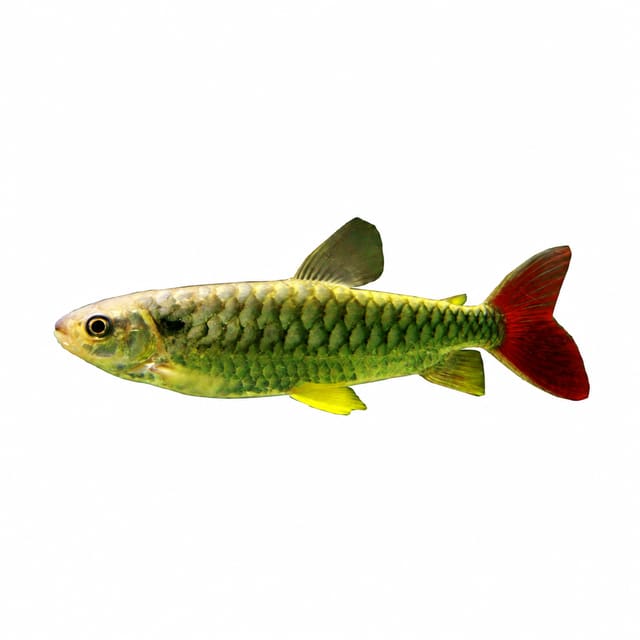
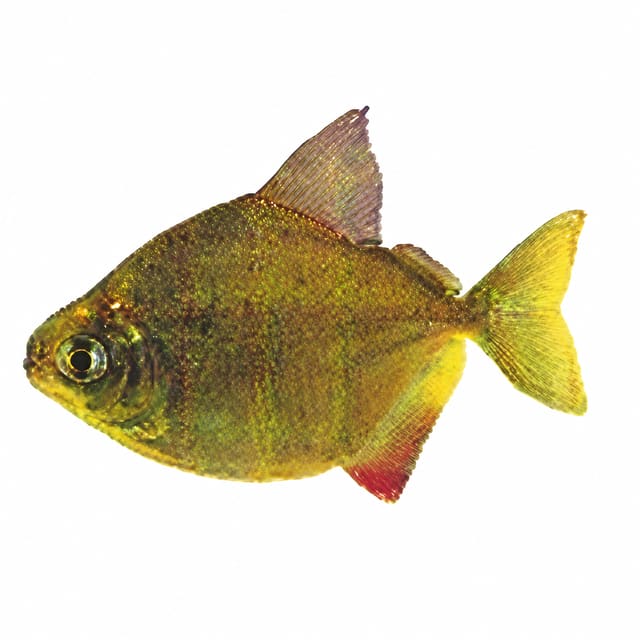
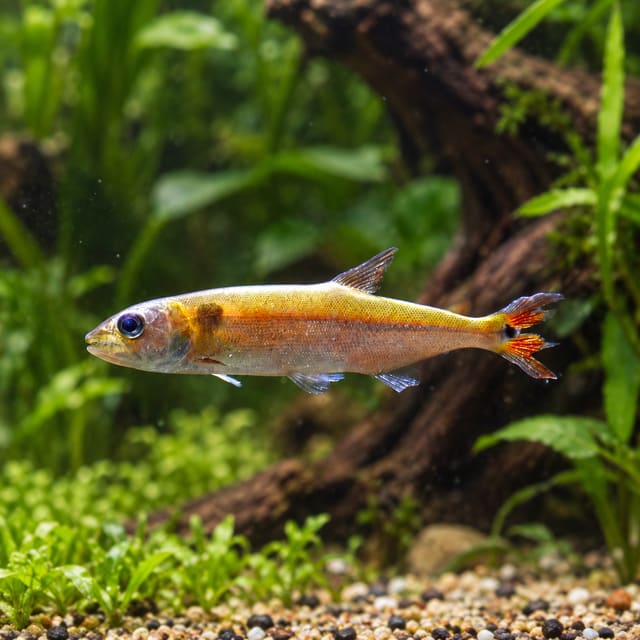
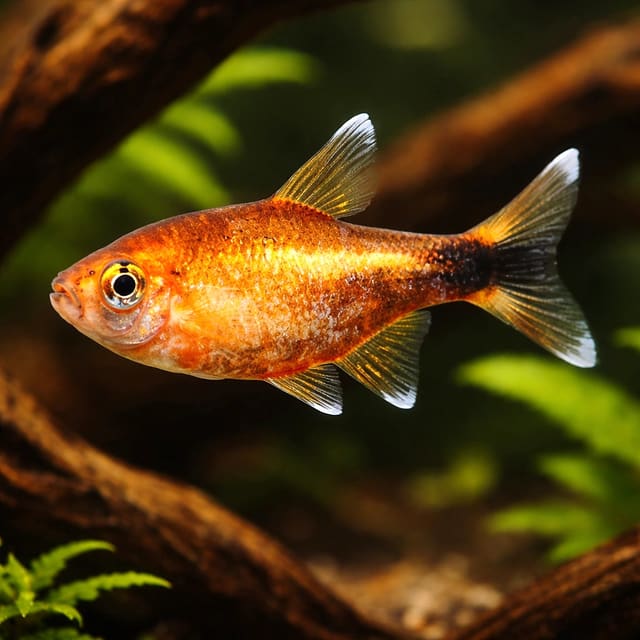
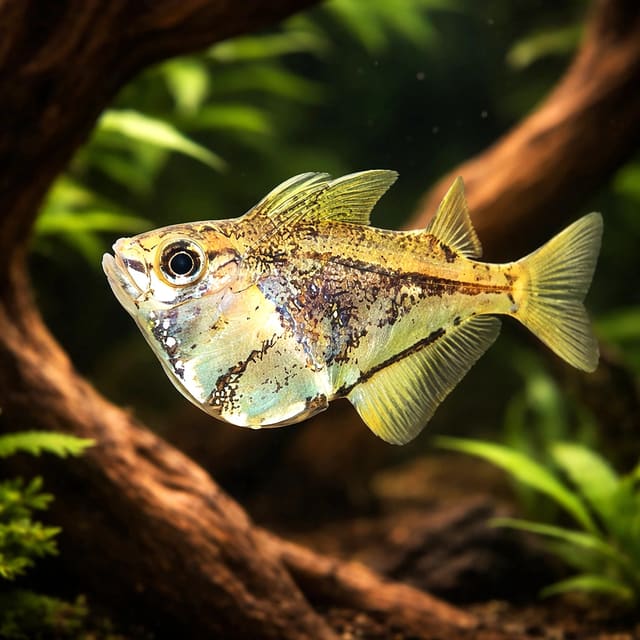
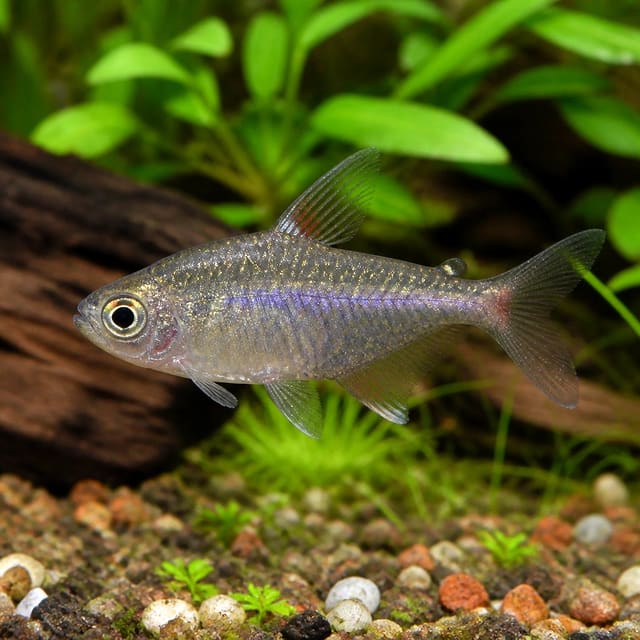
The photographs show three fish together so you can see the body shape, the black flank bar and the orange-red anal fin. Gallery images have been digitally enhanced to improve image quality. Natural colour, pattern, size and maturity can vary between live animals.
The accepted scientific name is Myloplus schomburgkii (Jardine, 1841). FishBase places it in the subfamily Myleinae of the Serrasalmidae, the piranhas and pacus, within the order Characiformes.
You will meet several names for this one fish:
| Name | Where you will see it |
|---|---|
| Myloplus schomburgkii | Accepted scientific name used by FishBase |
| Myleus schomburgkii | Older combination, still used by Seriously Fish |
| Myleus schomburgki | Trade spelling used on this product page |
| Disk tetra | FishBase common name |
| Black-barred Myleus, Black-ear Pacu, Disc Pacu | Other common names noted by Seriously Fish |
Seriously Fish describes this species as a close relative of the Redhook, Myloplus rubripinnis, and notes that it is sometimes sold under that name. The black vertical bar across the flank tells the two apart, and Myloplus schomburgkii has the smaller adult size of the pair. A fish offered as a Redhook that shows a clear black flank bar deserves a second look.
Seriously Fish describes the species as generally peaceful. It mainly occupies the middle and top of the aquarium, and the fish move extremely quickly when startled. Those two facts shape daily life with a group: an open upper swimming area, a lid that stays closed and a calm spot for the aquarium away from constant passing traffic.
Dim lighting and areas of refuge boost the group's confidence. If the fish bolt at every movement near the glass, more refuge and softer lighting are the first things to try, since those are the conditions linked with a confident group.
The group itself is part of normal behaviour, not an optional extra. Seriously Fish recommends at least five, so if losses ever shrink the group, top it up with fish of a similar size once the aquarium and filter can take them.
FishBase gives a maximum length of 42.0 cm standard length for Myloplus schomburgkii, recorded for males and unsexed fish. Standard length is measured from the snout to the base of the tail and excludes the tail fin, so a fish at that length is longer overall.
A maximum is the largest fish on record, and individual fish may stay smaller. What it tells you is that you cannot plan on this species staying small. Build the plan around 42 cm fish, and any fish that finishes smaller simply has more room.
The 3–4 cm, 4–6 cm and 6–7 cm juveniles are a small fraction of the recorded maximum. An aquarium that looks spacious for five 6 cm fish will not stay suitable as they grow, so the adult set-up comes first and the fish come second.
If any answer is no, this fish is best left until the set-up is in place. Buying juveniles first and hoping to upgrade later is how large fish end up cramped.
Rehoming a group of large, fast fish is hard, so the aquarium you plan now should be the one they live in as adults. Keep a simple log of water tests, water changes and feeding from the first week; over months, a log makes slow changes in growth, appetite or water quality easy to spot.
Size the aquarium from the fish rather than from a stock figure. Five fish that may each approach 42 cm standard length need room to turn, cruise and bolt without striking the glass. Seriously Fish notes that they mainly occupy the middle and top of the aquarium, so give priority to length, width and open swimming water.
That takes the set-up far beyond an ordinary community tank. If you are unsure whether a system is big enough, measure it against five adults at the recorded length, not against the juveniles you are buying.
Seriously Fish advises a tight-fitting lid because these fish move extremely quickly when startled and may jump out. Cover feeding holes and cable gaps as well as the main opening, and put the lid back as soon as maintenance is finished.
Dim lighting and areas of refuge help the fish feel confident. Place refuges around the sides and back so the centre stays open for swimming, and keep décor stable and heavy enough that a startled group cannot shift it.
This species eats plants. Seriously Fish suggests hardy plants, which will still need replacing regularly, or artificial plants instead. A planted display of delicate live plants will not last with this fish, so treat any live plants as part of the menu rather than permanent decoration.
A filter is essential. The RSPCA says no fish should be kept without a well set up and maintained filter, because fish release ammonia, which is toxic. In a working biological filter, beneficial bacteria convert ammonia to nitrite, which is also toxic, and then to nitrate, which is safer. Plan filtration and heating for the adult group, with a heater and thermometer to hold 23–27 °C.
If this is your first large system, our guide to setting up and maturing a tropical tank explains how to establish the filter before any fish arrive.
| Temperature | 23–27 °C |
|---|---|
| pH | 6.0–7.0 |
| General hardness | Up to 10 dGH |
| Ammonia and nitrite | Zero |
| Nitrate | No more than 20 mg per litre above your tap water |
The temperature, pH and hardness are aquarium values from the Seriously Fish species profile, which files the fish under the older name Myleus schomburgkii. FishBase records it in water of 23–27 °C, pH 5.0–7.0 and up to 10 dH in the wild, so the aquarium range sits inside its natural conditions. Aim for stable water within these values rather than chasing a single number.
Hold the temperature steady with a heater suited to the aquarium's volume and a thermometer you check every day. OATA notes that the larger the aquarium, the more stable temperature and water quality will be, which works in your favour with a system built for this fish.
The ammonia, nitrite and nitrate targets are general water-quality guidance from OATA, the UK ornamental fish trade body. Ammonia and nitrite should read zero once the filter is mature.
Test your tap water for pH and general hardness before you buy, then compare the readings with the values above in our water parameter matcher. If your tap water already sits within pH 6.0–7.0 and up to 10 dGH, routine changes are simple. If it is harder or more alkaline, decide how you will bring replacement water into range before the fish arrive, and make any adjustment gradually so the aquarium stays stable.
A 25% change on an aquarium sized for five large adults is a lot of water, so plan the practical side: enough conditioned replacement water at the right temperature, a hose or siphon long enough to reach a drain, and a routine you can keep up every week. Changes that are easy to do are the ones that get done.
Our guide to aquarium water parameters explains what each test measures and why it matters.
Seriously Fish describes Myloplus schomburgkii as mainly herbivorous and recommends a large amount of vegetable matter. Greens and plant-based foods should make up most of what the group eats, with meaty foods kept as extras.
It accepts most aquarium foods, so the task is balance rather than persuasion: keep vegetable matter as the bulk of every week's feeding and rotate the greens so no single food dominates.
Because the group eats plants, any hardy plants in the aquarium will be grazed and, as Seriously Fish notes, will need replacing regularly. Grazed plants add to the vegetable intake, but budget for replacements; artificial plants give lasting cover without feeding the fish.
Feed what the group clears without leaving debris, and take out leftover vegetables before they start to break down. OATA warns that overfeeding leads to a build-up of uneaten food, which breaks down and releases toxic waste into the water.
OATA also lists reduced intake or lack of interest in food among the changes to watch for, and feeding time is the easiest moment to check every fish in the group. Count heads, look for any fish hanging back, and note it if one stops competing for food.
FishBase notes that this species has powerful dentition that can cause serious bites, and it lists the fish as traumatogenic, meaning it is able to wound people. Treat that as a practical handling rule rather than a reason to fear the fish: Seriously Fish describes it as generally peaceful with larger peaceful species.
Plan routine jobs so your hands spend as little time in the water as possible. Clean the glass with a long-handled scraper or a magnetic cleaner, move décor with tools rather than fingers, and do bigger jobs when the group is calm. When you must reach in, move slowly and keep the net between your hand and the fish.
Catching a group of large, fast fish is easier with a large net and a second person. Plan how you would do it before you need to, for example ahead of a house move or if one fish has to be separated.
Every order is hand-bagged in pure oxygen and packed in an insulated poly box, with a heat pack when the weather calls for it, then carried by a licensed live-animal courier. We email the tracking number and your confirmed delivery date so you know when to be in. The full terms are on our delivery and Live Arrival Guarantee page.
The Live Arrival Guarantee requires someone to receive the parcel, the parcel to be opened and inspected on the day it arrives, and the continuous unboxing video from the sealed parcel onwards.
Add fish to the aquarium gradually. OATA explains that the filter's beneficial bacteria need to increase each time fish are added and feeding goes up; stocking too quickly can cause new tank syndrome, when ammonia and nitrite climb to levels that can make fish ill or kill them.
Look over the group every day and watch for changes in:
If you notice a change, test the water first. Healthy fish have clear, bright eyes, undamaged fins, intact scales and no ulcers or bumps.
FishBase records Myloplus schomburgkii as an egg-laying species, but there are no reports of it breeding in home aquariums (Seriously Fish). Buy it as a display group rather than a breeding project.
Seriously Fish notes that males have a more pointed dorsal fin than females. Sex is guaranteed only when the selected option explicitly states male or female. This Myleus schomburgki listing has no sex-guaranteed option. Choose fish to build a healthy group of at least five rather than to reach a particular mix of males and females.
The first companions for Myloplus schomburgkii are more of the same species. Seriously Fish recommends groups of at least five, and that group is what every other choice has to fit around, both in space and in feeding.
Seriously Fish describes the species as generally peaceful and able to live with other larger peaceful species, and it suggests larger peaceful catfish such as plecos and doradids. Because this fish mainly uses the middle and upper water, catfish that keep to the lower levels make use of space the group leaves free.
Much smaller fish may be eaten. That rules out most small community fish, including the small tetras sold alongside it, and the rule applies to the adult size rather than the size you buy: a companion that looks safe beside a 6 cm juvenile can become food for a large adult.
Add companions after the group has settled, a few at a time, and keep testing ammonia and nitrite while the filter adjusts to each addition. Watch the first feeds closely: vegetables should reach the whole group, and sinking foods should reach any catfish on the bottom.
The powerful teeth described in the care section are a handling risk for people. They do not make the species aggressive towards suitable tank mates. Products suggested alongside this listing are browsing ideas rather than tested companions, so check every choice against these rules.
FishBase records a maximum length of 42 cm standard length for Myloplus schomburgkii, measured without the tail fin, so the whole fish is longer still. Plan the aquarium for fish of that size, not for the size supplied.
Plan a very large, long aquarium around a group of at least five adults at up to 42 cm standard length, with open swimming space in the middle and upper water and a tight-fitting lid, because these fish move extremely quickly when startled and may jump out. Have that adult set-up running before you buy.
Keep at least five. Seriously Fish recommends groups of at least five fish, so buy enough for a group and plan the aquarium for five adults from the start.
We class it as an advanced fish. The adult size of up to 42 cm standard length, the need for a group of five, its appetite for plants and its powerful teeth all call for experience with large aquariums and careful handling.
It is mainly herbivorous. Offer plenty of vegetable matter such as courgette, cucumber, peas and spring greens, alongside algae wafers, spirulina and vegetable flake, with bloodworm or brineshrimp as occasional extras. It also eats aquarium plants, so choose hardy or artificial ones.
Keep the water at 23–27 °C with a pH of 6.0–7.0 and a general hardness of up to 10 dGH. These are aquarium values from the Seriously Fish species profile; FishBase records the same temperature range and a pH range of 5.0–7.0 in the wild. Test your tap water before buying so you know how much adjustment, if any, it needs.
Seriously Fish describes it as generally peaceful and suitable for keeping with other larger peaceful species. The main risk to other fish is size: much smaller fish may be eaten.
Yes. FishBase notes powerful teeth that can cause serious bites. Use a net rather than your hands, keep fingers away from the fish during maintenance and never hand-feed it.
Choose other larger peaceful species, such as larger peaceful catfish like plecos and doradids, and leave out much smaller fish because they may be eaten. Pick companions for the adult size of this fish, not the size it arrives at.
Each order is hand-bagged in pure oxygen, packed in an insulated poly box with a heat pack when the weather calls for it and carried by a licensed live-animal courier, and we email the tracking number and confirmed delivery date. Someone must be in to receive it. Film a continuous unboxing video from the sealed parcel to the fish still in the bag, then float the sealed bag for 20–30 minutes before netting the fish into the aquarium. Our Live Arrival Guarantee needs that video for any claim, reported the same day.
No reviews for this item yet. Bought one? Honest reviews only, good or bad.
What customers say about ordering from us
Easy website plenty of info on fish your buying great to pick a time slot
TRACEY DURRANT · 7 Oct 2026
Got some lovely fish thank you
Kevin Mackie · 7 Oct 2026
Reviews of our shop, collected by Judge.me, an independent third-party review collector. Newest first.