−11%
Moderate
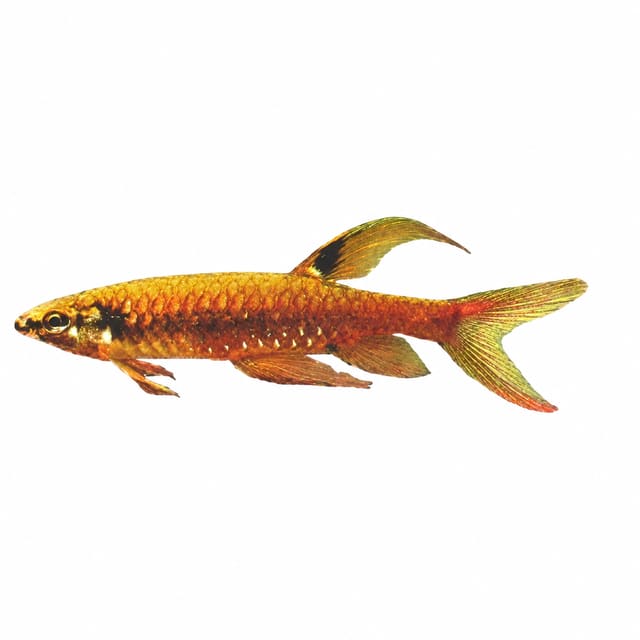
Splash Tetra (Copella arnoldi)
24–28°C · 60L
£7.11£7.99

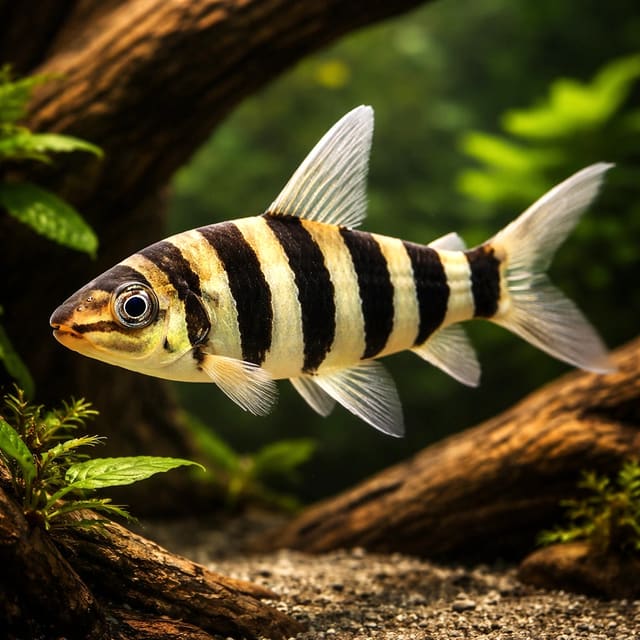
Gar Characin / Hujeta Gar is a long-bodied South American surface predator for a spacious, securely covered aquarium, offered in three juvenile size choices for keepers prepared for its adult footprint, group needs and feeding style.
Ctenolucius hujeta
Gar Characin / Hujeta Gar is a long-bodied South American surface predator for a spacious, securely covered aquarium, offered in three juvenile size choices for keepers prepared for its adult footprint, group needs and feeding style.
Maintain these water conditions for optimal health and vibrant colors
The Gar Characin or Hujeta Gar (Ctenolucius hujeta) is a long, streamlined South American pike-characid built to hunt near the surface. It is also traded as the blunt-nosed gar, slant-nosed gar, rocket gar and freshwater barracuda. Those names describe its shape and behaviour; it is a freshwater member of the family Ctenoluciidae rather than a true gar. Its silver flanks, elongated snout and deliberate top-level movement make it a striking display fish, but its adult dimensions and predatory diet put it firmly in the planned-specialist category.
One purchase supplies one live fish in the size chosen. The genuine dispatch choices are 4–6 cm, 6–7 cm and 8–9 cm. The live selector shows which size can be ordered at the time; permanent care copy does not claim that every choice is always available. The size you select is the size supplied, not the adult size. None of the choices guarantees male or female. Sex is guaranteed only when the selected option explicitly states male or female. This Gar Characin / Hujeta Gar listing has no sex-guaranteed option.
Plan from the adult records, not the juvenile dispatch range. FishBase records a maximum of 26 cm standard length for male or unsexed fish. The species aquarium profile gives 25 cm standard length. Standard length, or SL, excludes the tail fin. These values are close numerically but are not interchangeable labels: one is a FishBase maximum with male/unsexed scope and the other is an aquarium-profile record. Both point to the same practical conclusion—a 4–9 cm juvenile needs a much larger adult aquarium than its dispatch size suggests.
The species profile recommends a base of at least 180 × 60 cm, approximately 648 litres, with water depth no less than 30 cm. Length and surface area matter because this fish occupies the upper water column and needs open horizontal room. A securely fitted cover is essential; ctenoluciids are noted as excellent jumpers. Surface and overhanging vegetation can provide reassurance, while the main swimming lane remains open.
This fish is an obligate predator. In nature it feeds mainly on smaller fish and insects, while captive specimens often adapt to dead alternatives. Juveniles can take bloodworm, small earthworms and chopped prawn. Larger fish can be offered suitable pieces of fish flesh, whole prawns or shrimp, mussel and larger earthworms. Avoid mammalian and bird meat such as beef heart or chicken because the profile warns that their lipids are not properly metabolised by predatory fish.
Gar Characins are surprisingly peaceful with animals they cannot swallow, but that does not make them general community fish. Small fish are prey. Aggressively territorial or highly competitive tank mates should be avoided, as should other surface dwellers competing for the same zone. The profile favours placid substrate-feeding companions and notes that juveniles show a strong schooling instinct. Although adults become more solitary, they still group periodically, and the recommendation is to keep four or more.
That group recommendation has a major space implication. Four long surface predators need substantially more clear horizontal room, filtration and waste capacity than a single juvenile. Do not buy one merely because the current fish is small or because an aquarium can physically hold its body. The suitable setup is long, mature, covered, efficiently filtered and designed before the fish arrives.
For a broader look at fish sold in the store's tetra and characin area, browse the tetra collection. Compare adult size, diet and social behaviour carefully: the Hujeta Gar is not managed like a small schooling tetra.
| Suits | Essential commitment |
|---|---|
| Advanced keepers planning a specialist large-fish display | A 180 × 60 cm or larger base, secure cover and mature high-capacity filtration |
| Keepers able to maintain a social group | Four or more adults with generous open surface room |
| Predator keepers using controlled dead foods | Appropriate meaty foods, even group feeding and no small tank mates |
Gallery images have been digitally enhanced to improve image quality. Natural colour, pattern, size and maturity can vary between live animals.
A juvenile measuring only a few centimetres can make a modest aquarium look spacious, but that picture changes quickly. FishBase gives 26 cm SL for male or unsexed fish, and the species aquarium profile gives 25 cm SL. SL excludes the tail fin, so neither number is a total-length conversion. Do not add an estimated tail length or turn one source's figure into the other's measurement.
The species profile recommends a minimum base of 180 × 60 cm and estimates about 648 litres for the worked aquarium. Water depth matters less than base dimensions, but it should not be below 30 cm. Treat those dimensions as the start of an adult plan, not as a stocking target for every possible group and tank-mate combination. Four or more adults, additional large fish and bulky décor all increase the room required.
Measure the usable surface lane after wood, pipes and equipment are installed. A nominally long aquarium can still feel cramped when large branches block the top third. Keep the upper route largely open, with cover around or above it rather than a wall of décor across it. The fish should be able to turn and cruise without repeatedly meeting glass or another fish.
| Care point | Species record or aquarium guidance |
|---|---|
| Adult size records | 26 cm SL male/unsexed in FishBase; 25 cm SL in the aquarium profile |
| Minimum base | 180 × 60 cm |
| Approximate worked volume | 648 litres |
| Minimum water depth | 30 cm |
| Temperature | 22–28 °C |
| pH | 5.0–7.5 |
| Hardness | 1–15 dGH |
| Social plan | Four or more |
The aquarium figures above come from the species profile. FishBase separately records 22–25 °C for the fish's environment and a hardness record with an unknown lower bound up to 22 dH; that field information is context rather than the routine aquarium recommendation used here.
FishBase places this freshwater pelagic fish in the Río Magdalena and Río Sinú basins of northern Colombia and in rivers draining towards Lago de Maracaibo in northwestern Venezuela. That range establishes the South American identity and the fish's open-water ecology. For daily aquarium management, use the species-profile ranges and dimensions on this page, which address captive temperature, pH, hardness, footprint and group care directly.
A tight-fitting cover is non-negotiable. Check around filter hoses, cables, feeding flaps and automatic feeders: a gap that appears narrow can be enough for a slim, fast surface fish. Use fitted covers or purpose-made guards rather than temporary cloth or loose mesh that can shift.
Keep the waterline far enough below the lid to provide a safe air gap and reduce collision risk. If branches or emergent plants are used, make sure they do not prop the cover open. Inspect the fit after every maintenance session; lids often become unsafe when a cable is moved or a corner is left slightly raised.
Reduce sudden startle events. Approach the aquarium calmly, avoid switching from total darkness to intense light in one step and give the fish shaded areas or floating cover. A startled surface predator can accelerate with little warning, so the aquarium and lid must remain safe even when no one is watching.
This species is described as a near-exclusive upper-water inhabitant. Floating or overhanging vegetation gives cover without occupying the full swimming lane. If floating plants are used, leave generous open patches for feeding and observation and keep them away from filter overflows.
The rest of the aquarium can be simple. A sandy substrate, leaf litter, large driftwood branches and twisted roots create a natural appearance. Plants rooted in sand can be combined with species attached to wood or rock, including genera such as Microsorum, Taxiphyllum and Anubias. Lighting can be chosen for the plants, provided some subdued areas remain available.
A deeper aquarium can be arranged with emergent branches and plants, but the species profile notes that water depth is less important than the broad base. Decorative height should never come at the cost of the long horizontal route the fish uses most.
Use 22–28 °C, pH 5.0–7.5 and 1–15 dGH as the species-level aquarium guidance. Before purchase, test the established tank and the replacement water you normally use. The aquarium water guide explains what pH, hardness, ammonia, nitrite and nitrate mean, and the water matcher helps compare actual readings with the intended range.
Select a stable point inside the range rather than repeatedly altering the aquarium. Rapid changes in temperature or chemistry are stressful even when the final result falls inside the published limits. Large fish produce substantial waste, so zero ammonia and zero nitrite depend on adequate biological filtration and disciplined stocking.
OATA's tetra and pencilfish sheet supplies broad trade guidance for those aquarium groups: 22–27 °C, pH 6.5–8.0, 4–12 dGH and 3–10 dKH. The Hujeta Gar's species profile supplies the operating recommendation on this page because this pike-characid is far larger and predatory. The OATA sheet remains useful for its general actions—test water, add fish gradually and maintain the filter carefully.
Predatory fish generate a considerable waste load. The species profile calls efficient filtration essential and suggests one or more external canister filters or a sump. In its approximately 648-litre worked example, it discusses a turnover of four to five times the volume per hour and two filters rated around 1295–1620 litres per hour each. Those figures describe that example; flow at the fish depends on head height, media, plumbing and outlet position.
Use more than a pump rating to judge the system. The filters must provide biological media, capture solid waste and maintain oxygen exchange while leaving the surface fish a controllable swimming zone. Aim returns along the length or across the surface rather than firing a narrow jet into the fish's preferred position.
Build redundancy where practical. Two independently maintained filters reduce the risk of losing all biological capacity during cleaning or failure. Alternate maintenance so some mature media always remains undisturbed. Never rinse biological media under the tap; use removed aquarium water for a light rinse when flow is reduced.
Test ammonia and nitrite after any significant change in feeding, group size or filtration. Both should remain zero. If either appears, reduce feeding, protect oxygenation and address the cause promptly. Clear water is not proof that a biological filter is coping.
The aquarium must be fully cycled and stable before this fish arrives. If this is a new installation, use the first tropical aquarium setup guide and prove the filter can process waste before ordering livestock. A large uncycled tank is still uncycled.
Add the eventual community in stages so the filter and keeper can respond. A juvenile Hujeta Gar may have a smaller immediate waste output, but the maintenance plan must scale as it grows and as its food portions increase. Record tests and feeding so the gradual change is visible.
Ctenolucius hujeta is an obligate predator that eats mostly smaller fish and insects in nature. Many captive fish adapt well to dead alternatives. This is useful because a varied prepared rotation lets the keeper control food quality and portion size more reliably than indiscriminate live feeding.
For smaller specimens, the species profile suggests bloodworm, small earthworms and chopped prawn. Offer pieces narrow enough to swallow cleanly and present them near the upper water where the fish naturally feeds. Watch the group: a bold individual can take several pieces while a quieter fish gets none.
Adults may take strips of suitable fish flesh, whole prawns or shrimp, mussel, live river shrimp and larger earthworms. Insects such as crickets can be used; the profile recommends feeding those insects nutritious fish flakes or vegetable matter before offering them. Rotate foods rather than depending on one item.
Do not feed mammalian or bird meat such as beef heart or chicken. The profile explains that some of their lipids cannot be properly metabolised by predatory fish and can contribute to abnormal fat deposits and organ damage. A food being meaty does not automatically make it appropriate for a fish.
Take care not to overfeed. Hujeta Gar can gorge when given the opportunity. Use the fish's body condition and behaviour, not begging, to decide whether the ration is appropriate. Remove uneaten pieces promptly because rich animal foods spoil water quickly and add avoidable strain to filtration.
Do not describe small tank mates as part of the feeding plan. A community should be selected to prevent predation, not used as a supply of feeder fish. The practical goal is a predator that accepts suitable, controlled foods while every companion remains safe.
Set a consistent water-change routine based on tests and actual waste production. OATA broadly recommends a weekly 25% partial change for tetras and pencilfish, while a large predator system may need its own tested schedule. Siphon visible waste from open areas and beneath feeding zones without dismantling all established cover.
Treat new tap water with a conditioner that addresses chlorine or chloramine and bring it close to the aquarium temperature. Add it in a controlled way so the fish is not hit by a sudden current or temperature pocket. Inspect hoses, seals, lids and intake guards before restarting equipment.
Check filter flow and prefilters frequently because meaty food fragments can block them. Clean mechanical media as needed, but stagger biological-media work. Confirm both filters or the sump restart properly after a power interruption or water change.
Prepare the tank before dispatch day and ensure someone is present to receive the parcel. Keep the cover ready and the water tested. Follow the current delivery instructions and acclimatise slowly. Float the sealed bag for 20–30 minutes to equalise temperature, then release without pouring transport water into the aquarium.
Once released, give the fish a quiet upper-water route and avoid tapping or sudden movement. It may take time to orient and feed. Watch breathing, balance, fin position and whether every fish can maintain a normal place in the group.
Warning signs include hanging unusually, erratic swimming, darker or paler colour, rapidly moving gill covers, white spots, fluffy growths, damaged fins, ulcers, weight loss or reduced interest in food. Test the water first when anything changes. If concern remains, contact Tropical Fish Co or an aquatic veterinary professional with the readings and clear photographs or video rather than guessing at treatment.
Hujeta Gar are described as surprisingly peaceful with animals too large to swallow. The critical condition is the second half of that sentence. This is an obligate predator with a long mouth and rapid surface strike; small fish are prey even when the Gar Characin shows no territorial hostility.
Judge a potential companion by adult and current body depth, behaviour, feeding zone, speed and water requirements. A long but very slender fish may still fit in the predator's mouth. A companion safe at one growth stage can become vulnerable after a size change, and a newly added juvenile may be at risk even when the established adults are not.
The best examples are placid fish that use the substrate, including Geophagus species, Acarichthys heckelii and medium-sized doradid or loricariid catfish, provided the aquarium is large enough and water needs overlap. The profile also names medium characins from genera such as Hemiodus, Mylossoma and Myloplus, and reports successful maintenance with discus.
These are examples to evaluate, not a universal shopping list. Each species brings its own adult size, social number, diet and territory. A group of Hujeta Gar plus a group of large characins can exceed the capacity of an aquarium that meets only the Gar's minimum base.
Juveniles show a marked schooling instinct. Older fish become more solitary but still group from time to time, and the species profile recommends keeping four or more. A lone juvenile may fit physically into a smaller plan, but that does not meet the stated social recommendation.
Provide enough surface length for all members to cruise without constant overlap. At feeding time, distribute food across more than one point and verify that each fish eats. Size disparities can create unequal access even when there is no obvious fighting.
The offer does not guarantee sex. Mature females tend to be larger and rounder-bodied, while mature males have thicker anal-fin rays and a proportionally larger anal fin with a convex rather than concave margin. Those adult differences should not be used to promise sex from a juvenile photograph or dispatch size.
Quarantine new fish where practical and match temperature and water chemistry before mixing established groups. Additions should not be made to an aquarium with detectable ammonia or nitrite. Ensure the cover remains secure during transfer; moving a fast surface fish is exactly when gaps are most likely to be left open.
Observe after lights are reduced. Watch for repeated surface displacement, one fish excluded from open water, uneven feeding or persistent pursuit. The absence of fin damage does not prove the group is working if one fish hides continuously or loses weight.
Keep four or more Hujeta Gar in a very large, securely covered aquarium with placid companions too deep-bodied to swallow, avoiding territorial competitors, other surface specialists and any community whose adult space or filtration needs cannot be met.
FishBase records 26 cm standard length for male or unsexed fish, while the aquarium profile gives 25 cm standard length. Standard length excludes the tail fin. Both are adult records, not the 4–9 cm dispatch range.
The species profile recommends a base of at least 180 × 60 cm, approximately 648 litres, with water depth no less than 30 cm. A group or additional large tank mates may require more space.
Keep four or more. Juveniles show a strong schooling instinct; adults become more solitary but still group periodically. Plan the aquarium and filtration for the whole adult group before buying juveniles.
It is best for an advanced keeper prepared for a very large covered aquarium, a group of four or more, substantial filtration, predatory feeding and careful tank-mate selection. Its juvenile size should not be mistaken for an easy small-fish setup.
It is an obligate predator. Juveniles can take bloodworm, small earthworms and chopped prawn; adults may accept fish flesh, whole prawns or shrimp, mussel and larger earthworms. Avoid beef heart and chicken, and do not overfeed.
Use the species aquarium range of 22–28 °C, pH 5.0–7.5 and 1–15 dGH. Keep ammonia and nitrite at zero and favour stable conditions over frequent adjustments.
It is not generally aggressive towards fish too large to swallow, but it is predatory. Avoid small fish, aggressively territorial or highly competitive species and other surface dwellers competing for the same space.
The species profile favours placid substrate-feeding fish such as Geophagus, Acarichthys and medium doradid or loricariid catfish, plus suitably sized characins. Every companion still needs enough adult space and must be too large to swallow.
Tropical Fish Co hand-bags live fish in pure oxygen, uses an insulated box and sends them with a licensed live-animal courier. Someone must receive the parcel. For a Live Arrival Guarantee claim, contact the team the same day with the order number and a continuous unboxing video starting with the sealed parcel and showing the fish still in the bag.
Identity, distribution and the 26 cm SL male/unsexed maximum are supported by the FishBase species summary. The adult aquarium record, 180 × 60 cm footprint, water range, group size, feeding and compatibility are drawn from the Seriously Fish profile for Ctenolucius hujeta.
General introduction and maintenance actions are supported by OATA's tetra and pencilfish care sheet and the RSPCA's aquarium environment guidance. The species profile provides the operating figures for this unusually large predatory pike-characid.
Read the current Tropical Fish Co delivery and Live Arrival Guarantee policy before dispatch. It explains attendance, packing, acclimation and the evidence required if a claim is necessary.
No reviews for this item yet. Bought one? Honest reviews only, good or bad.
What customers say about ordering from us
I have a small group of long finned mountain minnows. So was delighted to be able to order ten of this variety to increase the genetics in my tank . The ones I recieved are healthy but it’s to early to give a verdict on wether they are of a long finned type since they are small currently.
Gordon Walker · 23 Sept 2026
100% success travel and "installation". Pleased with quality of purchase. The Siamese fighter a bit "shy" so have not yet seen him at his best yet but looking good. Happy customer. GG
George E Garratt · 21 Sept 2026
Reviews of our shop, collected by Judge.me, an independent third-party review collector. Newest first.