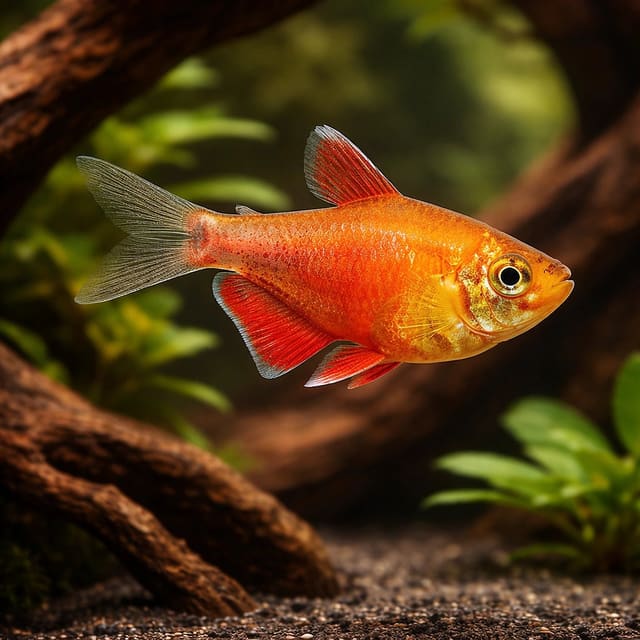
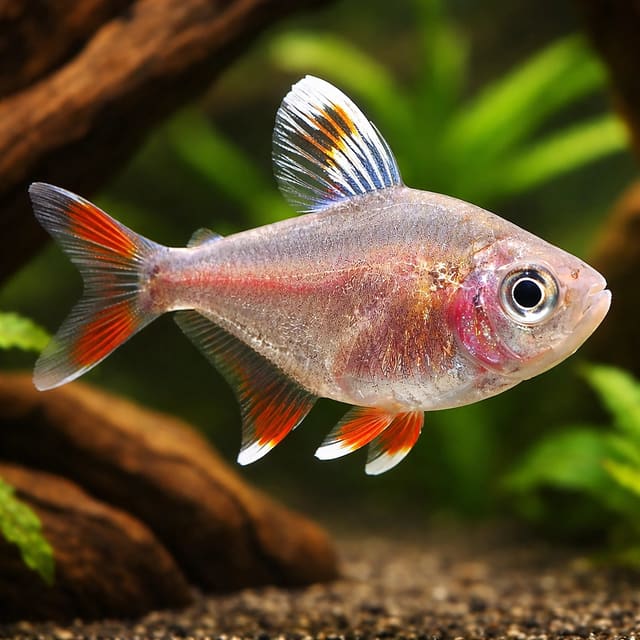
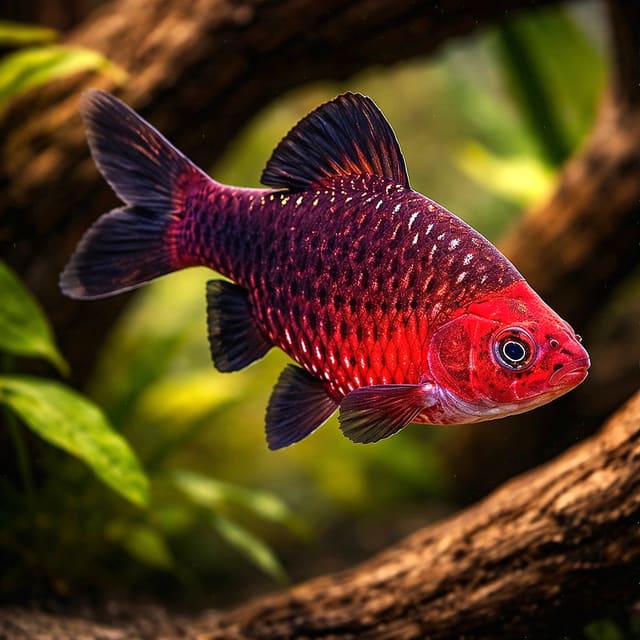
Moderate
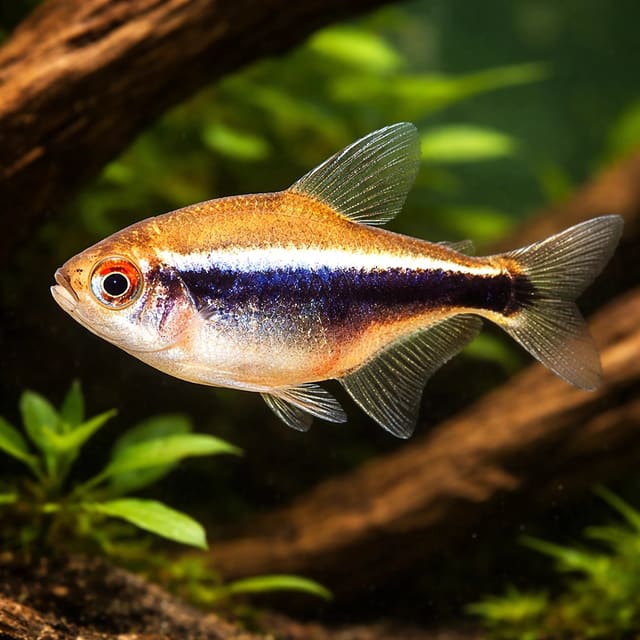
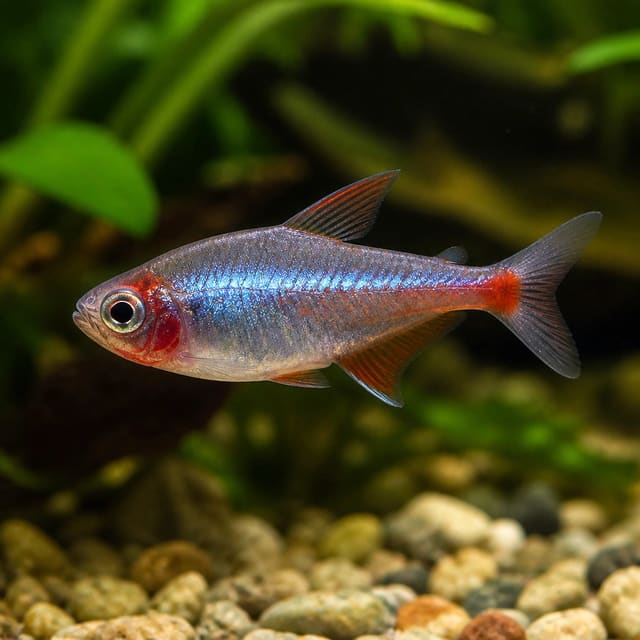
Neon Tetra (Paracheirodon innesi)
21–25°C · pH 5–7
£1.89
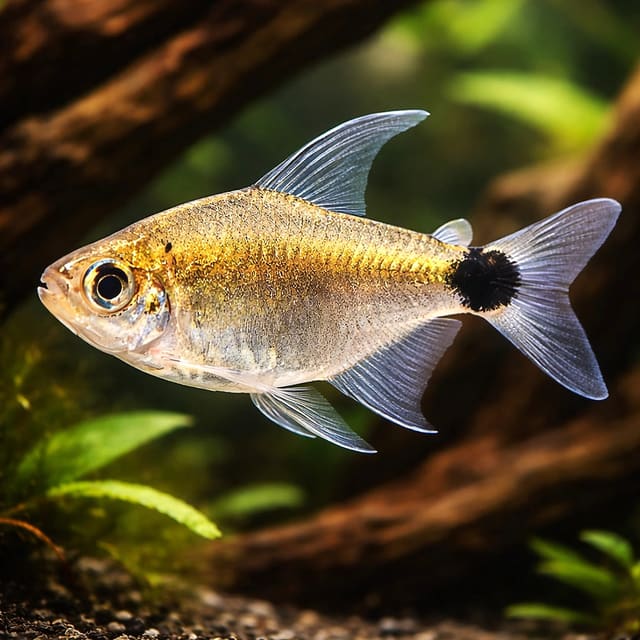
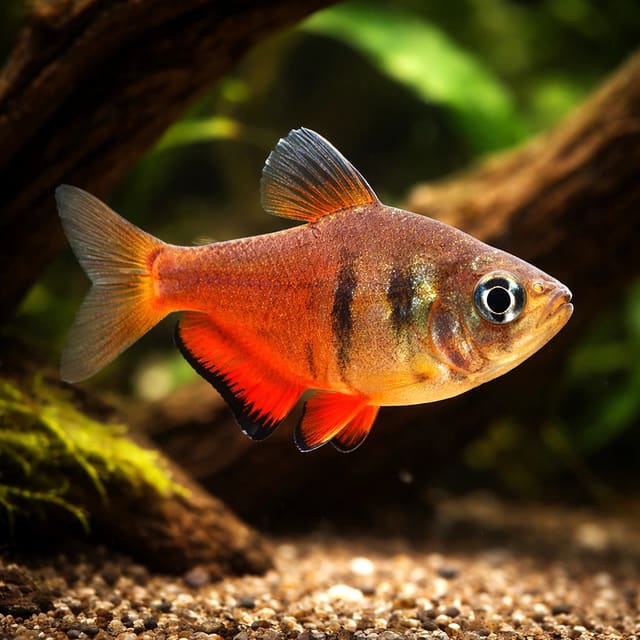
Hyphessobrycon wadai is a compact American tetra supplied as one 3–4 cm fish. Keep it in a mature, filtered aquarium as a shoal of at least five under broad tetra guidance, with stable water and similarly sized, compatible companions.
Adult size is the maximum length this species reaches at full maturity (scientific sources). The livestock you receive will be younger and smaller. Product-photo provenance and any image-specific limitations are stated on the listing.
Hyphessobrycon wadai
Shoaling fish: kept in a group they feel safer, stay calmer and show their best colour.
Hyphessobrycon wadai is a compact American tetra supplied as one 3–4 cm fish. Keep it in a mature, filtered aquarium as a shoal of at least five under broad tetra guidance, with stable water and similarly sized, compatible companions.
Adult size is the maximum length this species reaches at full maturity (scientific sources). The livestock you receive will be younger and smaller. Product-photo provenance and any image-specific limitations are stated on the listing.
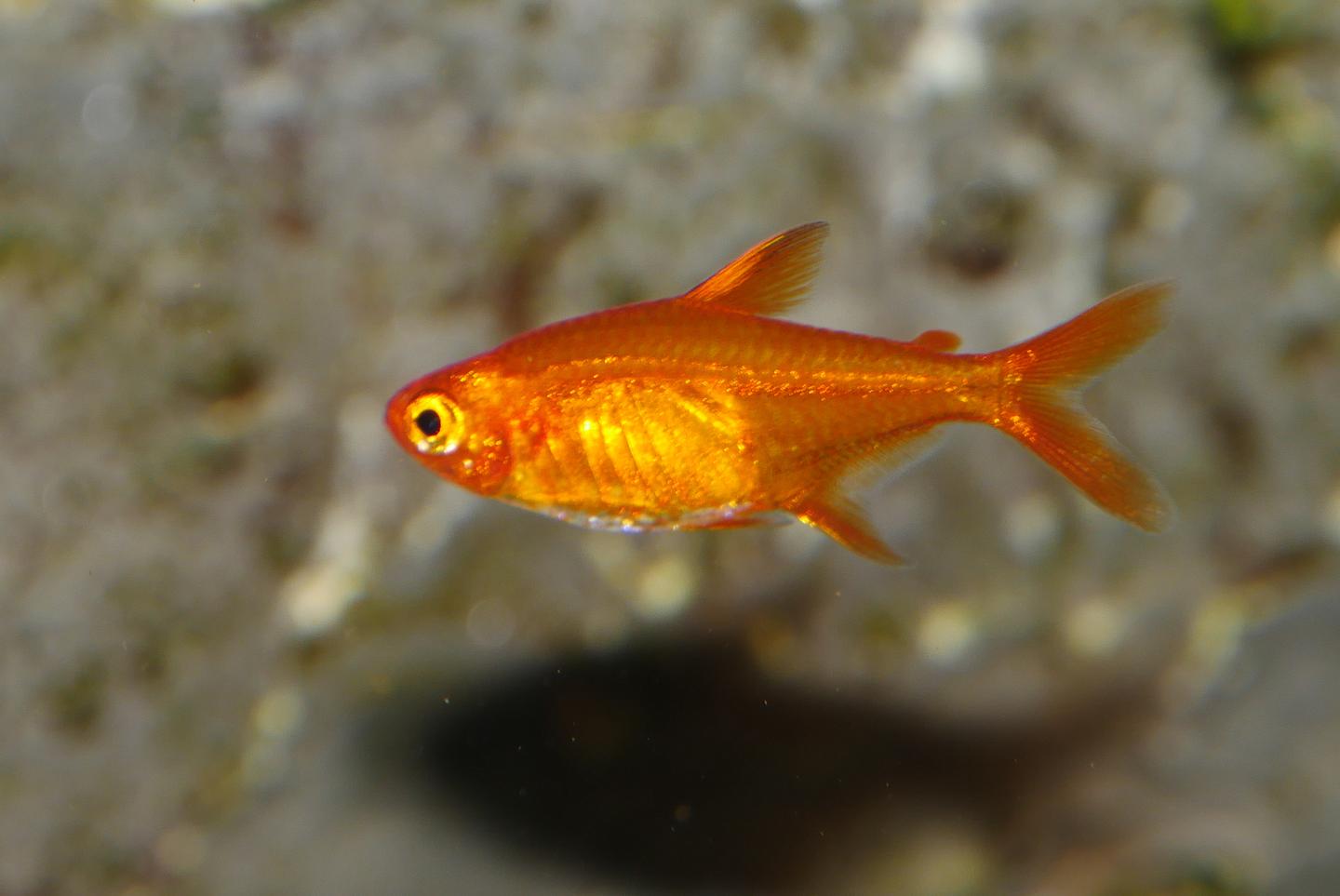
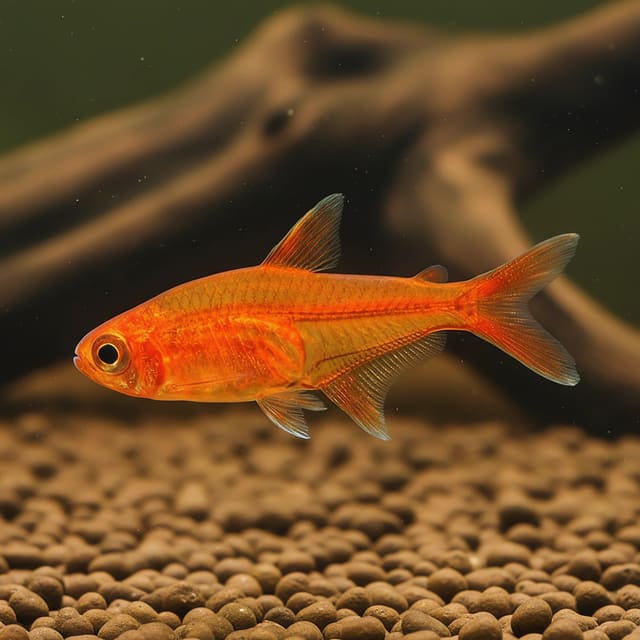
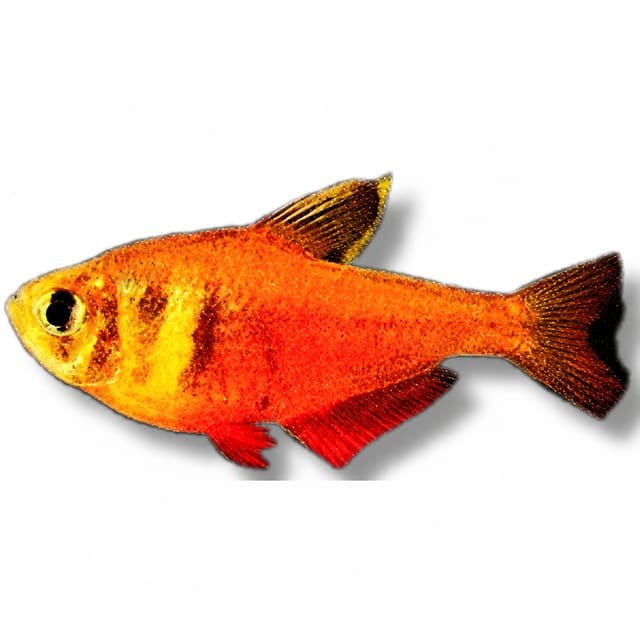
Ember tetras are very small Brazilian social fish, with a maximum recorded length of 2.0 cm excluding the tail. Keep them only in a fully cycled, stable aquarium. We recommend a group of at least 10 and about 45 litres with a 45 × 30 cm footprint rather than using a litres-per-fish formula.
Maintain these water conditions for optimal health and vibrant colors
Hyphessobrycon wadai is a small American tetra for a mature freshwater aquarium. One purchase supplies one fish, and the dispatch grade is 3–4 cm. That grade describes the fish sent, not a promise about adult length. FishBase records a maximum of 3.5 cm standard length for the species; standard length excludes the tail fin, so it should not be treated as the same measurement as an informal nose-to-tail figure.
This is a sensible choice for a keeper who wants a compact shoal and is prepared to match the aquarium to a small, active tetra rather than choosing companions by appearance alone. FishBase records it in clear streams of the upper Rio Tapajós basin in Brazil, with moderate to rapid current over sand. That is useful context for creating clean, oxygenated water, swimming room and a stable routine, but a wild collection record is not an instruction to reproduce a river current at full force in the aquarium.
Aquarium numbers need to keep their stated scope. OATA’s current care sheet gives broad guidance for captive-bred tetras and pencilfish: 22–27°C, pH 6.5–8.0, general hardness 4–12°dH and carbonate hardness 3–10°dKH. It also recommends a group of at least five, with more being better, and at least 45 litres for a small shoal of a smaller species. These are group-level planning values, not a measured species-specific optimum for H. wadai. Use them as a starting framework and favour a longer, larger aquarium when possible, especially if other fish will share the space.
Before choosing this fish, check the aquarium’s actual temperature, pH and hardness rather than relying on how the water looks. Ammonia and nitrite should both be zero, and OATA advises keeping nitrate no more than 20 mg/L above the normal tap-water level. The practical decision is whether the established aquarium can hold those conditions steadily and whether all intended companions fit the same water, size and temperament plan. The water matcher can help compare measured values with the stated broad guidance.
| Good fit when | Choose something else when |
|---|---|
| The aquarium is mature, filtered and already stable within the broad tetra water range. | The aquarium is newly filled, uncycled or too small for a proper shoal. |
| There is a long, open route for group swimming plus planted or decorated shelter. | Large predators, strongly territorial fish or incompatible water requirements define the community. |
| The keeper can maintain at least five and monitor feeding access, water tests and behaviour. | The plan is for one specimen, an untested mixed community or a tank without regular maintenance. |
A shoal needs more than a nominal litre figure. Give the fish a clear route for group swimming, a mature filter, areas of shelter and a current that does not pin small fish against the glass. Sand or aquarium gravel is suitable under the broad tetra guidance, and live plants can supply cover. Keep enough open water that the fish can move together without weaving continuously through dense décor. A secure lid is a worthwhile precaution around small active fish.
FishBase records wild H. wadai feeding on filamentous algae, organic debris, insect larvae, fragments of adult terrestrial insects and other arthropods. In the aquarium, OATA’s group guidance supports a good-quality flake or granule, with suitably small live or frozen items such as daphnia, small bloodworm or tubifex. The goal is a varied, correctly sized diet that the fish can finish within a few minutes, not repeated heavy feeds that leave waste for the filter to process.
Compatibility should be decided conditionally. OATA advises mixing tetras with fish of similar size and temperament, keeping small species away from fish large enough to eat them, and not combining boisterous tetra species with timid or long-finned fish that may be nipped. It does not establish a universal list of safe companions for this species. Compare adult size, behaviour, swimming pace, feeding access and water needs before combining animals, then watch the actual group after introduction.
Sex is guaranteed only when the selected option explicitly states male or female. This Hyphessobrycon wadai listing has no sex-guaranteed option.
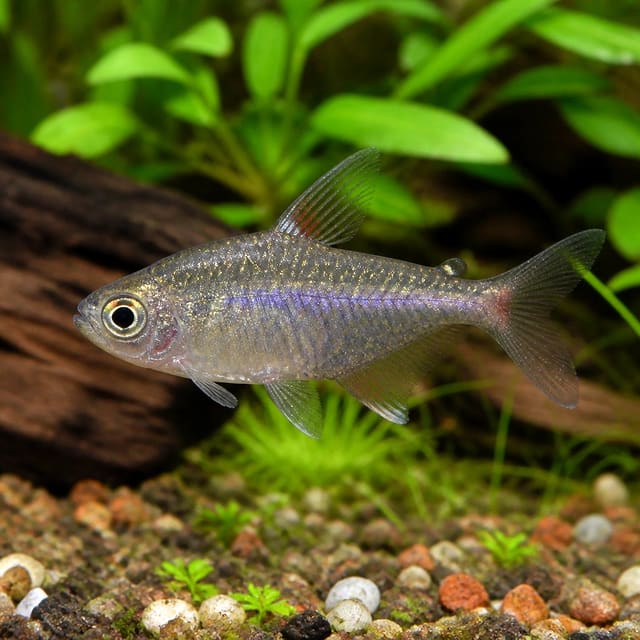
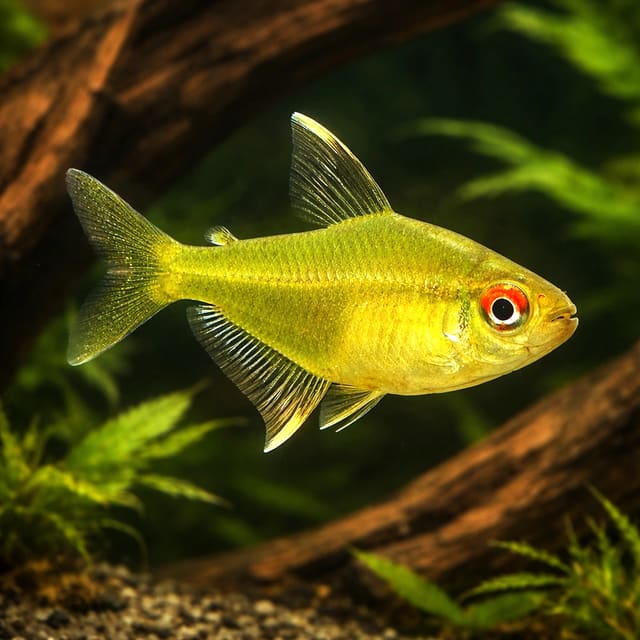
Gallery images have been digitally enhanced to improve image quality. Natural colour, pattern, size and maturity can vary between live animals.
For other small-characin choices, browse the tetra collection. Treat those products as alternatives to compare, not automatic tank mates for this fish.
OATA describes tetras and pencilfish as shoaling fish and recommends at least five in the home aquarium, with more being better. A fish kept alone or in too small a group will often become stressed. For Hyphessobrycon wadai, that group-level advice is the defensible starting point because it is the applicable group-level social guidance. Plan the whole group before purchase: space, filtration capacity, feeding access and the effect on the aquarium’s existing biological load all matter.
The 45-litre figure in OATA’s sheet is a broad lower planning guide for a small shoal of a smaller tetra species. It is not a species-specific minimum and it is not a target to squeeze a mixed community into. A longer aquarium gives a small active group more useful swimming distance than a tall tank with the same volume. Extra water also changes more slowly when room temperature, feeding or maintenance varies. If the aquarium will contain other fish, choose its size from the complete adult community and the available swimming footprint, not from this species in isolation.
New aquariums should be matured before livestock is added. A biological filter needs time and an ammonia source to build the bacterial population that converts ammonia to nitrite and then nitrate. If this is a first setup, work through the first tropical tank guide before setting an arrival date. Add livestock gradually after cycling; a filter that copes with an empty tank does not instantly gain capacity for a full community.
| Planning point | Supported guidance |
|---|---|
| Temperature | 22–27°C, broad OATA guidance for captive-bred tetras and pencilfish |
| pH | 6.5–8.0, broad OATA group guidance |
| General hardness | 4–12°dH, described by OATA as soft to medium |
| Carbonate hardness | 3–10°dKH, broad OATA group guidance |
| Ammonia and nitrite | 0 mg/L |
| Nitrate | No more than 20 mg/L above the normal tap-water level under OATA’s guidance |
| Group | At least five under broad tetra guidance; more is better |
| Aquarium planning | At least 45 litres for a small shoal of a smaller species under broad group guidance; larger and longer is preferable |
Keep these figures tied to their group-level scope. FishBase identifies the species and describes its wild habitat, but it does not provide an aquarium temperature, pH, hardness or volume. OATA supplies a practical aquarium envelope for the broader group and explicitly says it is general guidance. Keep that label attached whenever the numbers appear. Do not turn the wild current description into a precise pump setting or the group range into a claimed species optimum.
Test the source water and the aquarium. A stable reading near the middle of the workable group range is usually easier to manage than repeatedly changing chemistry to chase a single number. More important, the values in the destination aquarium should not shift sharply during introduction. The water chemistry guide explains what pH, hardness, ammonia, nitrite and nitrate mean so the numbers can be used as a connected system rather than a checklist.
Temperature matching alone is not the whole introduction. A floating bag equalises temperature, but it does not equalise pH or hardness. OATA’s complete introduction method temperature-matches the bag, then slowly adds small amounts of aquarium water for up to 20 minutes before releasing the fish while adding as little transport water as possible. Tropical Fish Co’s arrival guidance says to float the bag for 20–30 minutes and not pour bag water into the aquarium. Put those instructions together: be ready before opening, match temperature, adjust gradually to the aquarium water and transfer the fish without adding the shipping water.
FishBase describes wild H. wadai in clear-water streams with moderate to rapid flow over sand. That tells us the fish is not documented only from still, tannin-dark pools. In captivity, however, current must be judged against the fish’s small body size and the entire shoal’s behaviour. Aim for circulation that carries oxygen and waste towards the filter while leaving calmer places where fish can hold position without continuous effort. If the group crowds into one sheltered corner or struggles to feed, redirect or diffuse the return.
Use aquarium sand or smooth gravel, plants and other aquarium-safe shelter, while leaving a continuous open route through the middle of the tank. Plants around the ends and rear can break sightlines and give newly introduced fish somewhere to settle. Avoid creating a solid wall of décor that fragments the swimming lane. Secure wood and stones so maintenance cannot undermine them, and protect the filter intake if its openings are large enough to draw in a 3–4 cm fish.
A heater is needed where room temperature cannot keep the chosen range steady. Position the aquarium away from direct sun, radiators, draughts, loud vibration and sudden movement. Overhead lighting on a consistent day-night cycle is more useful than leaving the tank illuminated late into the evening. A lid reduces the chance of an active fish leaving the aquarium and also limits airborne contamination, while still allowing safe gas exchange around the filter return.
A filter is essential. The RSPCA explains that fish waste releases ammonia, which is toxic; established biological filtration converts it first to toxic nitrite and then to the safer but still manageable nitrate. Clear water is not proof of safe water, because dissolved waste can be invisible. Test ammonia and nitrite, particularly after livestock is added, after a filter problem or whenever feeding or behaviour changes.
Surface movement improves gas exchange. Match it to the group: there should be visible circulation and no stagnant film, but the fish should also be able to hover, turn and feed without being swept away. Do not solve low oxygen by simply increasing current until the shoal struggles. Review stocking, temperature, filter cleanliness, surface agitation and decaying waste together.
Never rinse biological filter media under the tap. Chlorine or chloramine can damage the bacteria the aquarium depends on. During a water change, lightly rinse dirty media in removed aquarium water, preserve some mature media whenever the filter is serviced and avoid replacing every biological component at once. Check the impeller and intake for blockages so reduced flow is noticed before water quality deteriorates.
OATA recommends testing at least weekly and changing about 25% of the water each week; the RSPCA likewise stresses regular partial changes and filter maintenance. The exact volume may need adjusting to the aquarium’s nitrate trend, stocking and feeding, but a repeatable routine is better than waiting for the water to look dirty. Record temperature, pH, ammonia, nitrite, nitrate and, when source water varies, hardness. The pattern over time often reveals a problem earlier than one isolated test.
Condition replacement tap water to neutralise chlorine or chloramine and bring it close to the aquarium’s temperature before it enters. Siphon settled debris from accessible substrate without stripping every planted area in one session. Inspect the filter return, heater, lid and electrical equipment. Count the fish and note whether the shoal is using its normal area, meeting food promptly and breathing evenly.
Daily observation should be brief but deliberate. OATA lists changes such as surface hanging, bottom sitting, erratic swimming, darker or paler colour, unusual aggression or hiding, faster or slower gill movement, damaged fins or scales, white spots, fluffy growths, loss of condition and reduced feeding. Those signs do not identify one diagnosis. They are reasons to test the water immediately, review recent changes and seek qualified help rather than adding medication blindly.
The wild diet provides helpful context for feeding. FishBase records filamentous algae, organic debris, insect larvae, fragments of terrestrial insects and other arthropods in the natural diet. That supports variety, but it does not mean algae alone is a complete aquarium food or that every wild prey item must be copied. OATA’s tetra guidance recommends a good-quality flake or granule plus small live or frozen foods such as daphnia, small bloodworm or tubifex.
Choose particles the fish can take easily and distribute them so the group can feed without one corner monopolising the meal. OATA advises feeding once a day, only what can be eaten within a few minutes. Watch the food rather than relying on a fixed pinch: remove persistent leftovers, reduce the next portion and check that timid individuals are not being crowded out. A varied rotation can include a suitable staple and occasional small live or frozen items without making rich foods the whole diet.
Overfeeding is a water-quality problem as well as a nutrition problem. Uneaten food decays, adds to ammonia production and consumes filter capacity. If nitrate climbs, algae increases abruptly or debris collects after meals, review portion size, stocking and maintenance before buying another additive. Healthy feeding is visible as prompt interest, steady body condition and little residue.
Measure the aquarium rather than trusting a model name. Note the usable volume after substrate and décor, the uninterrupted swimming length, the filter’s established capacity and the space already occupied by other fish. A shoal of five is the broad minimum social plan, not the whole stocking calculation. If adding that group would leave no room for growth, maintenance error or calm retreat, choose a larger aquarium or change the community plan.
Write down the tap-water pH and hardness as well as the established aquarium readings. A keeper whose normal water sits within the broad tetra range can usually prioritise stability and routine. If the source and destination water differ greatly, repeated large corrections can create more fluctuation than they solve. Decide how replacement water will be conditioned and temperature-matched before the first weekly change is due.
Check practical details: the lid closes around cables, the heater is guarded or positioned safely, the intake cannot trap a small fish, the return produces surface movement, and the tank has both cover and an open route. Prepare a small net or transfer container, conditioner, test kits and a clean bucket used only for aquarium work. Keep soap, aerosols and household cleaners away from this equipment.
Consider feeding before choosing companions. The staple must be small enough for this fish, and the delivery method must reach the whole shoal. If existing fish rush every meal, plan multiple small feeding points and watch body condition over time. Compatibility that looks peaceful between meals can still fail when one group repeatedly takes all the food.
Transport can temporarily change colour, posture and feeding interest, but observation still needs structure. In the first hour, look for steady breathing, balance and the ability to move away from the transfer point. Later, check whether the fish join the group, respond to a very small meal and use more than one part of the aquarium. Record what you see so gradual improvement or deterioration is not lost between casual checks.
Test ammonia and nitrite after the addition even if the aquarium was stable beforehand. The biological filter has a new load, and an early reading allows action before behaviour becomes dramatic. Also confirm temperature and review the filter return. If fish gather at the surface, breathe unusually or sit in the current, check oxygenation and water chemistry immediately rather than treating the posture as personality.
A missed first meal is not a reason to add repeated food. Remove leftovers and offer a small amount at the next planned feed. Persistent refusal, clamped fins, erratic swimming, lesions or a worsening breathing rate need prompt investigation. Separate an injured or bullied fish only into a prepared, heated and filtered environment; an uncycled emergency container can exchange one risk for another.
After the first week, compare the aquarium with its baseline: nitrate trend, feeding access, shoal behaviour, fin condition and the places fish choose to rest. That review tells you whether the maintenance interval, current pattern or companion mix needs adjustment. Keep changes measured and one at a time where safety allows, so their effect can be understood.
Read the current delivery and Live Arrival Guarantee before the parcel is due. Someone must be at the delivery address, the parcel must be opened and inspected the same day, and any claim needs the continuous sealed-parcel unboxing record described in the policy.
The safest compatibility rule is conditional: combine Hyphessobrycon wadai only with animals of similar adult size and temperament whose water needs overlap, and keep it away from fish large enough to eat it. OATA gives that advice for smaller tetras as a group. It also warns that larger or more boisterous tetra species can nip timid or long-finned fish. Because that warning covers the broader group, use it as a screening question and continue to observe the actual fish.
Do not turn a related product into a compatibility recommendation. Neon and cardinal tetras may be useful alternatives for a buyer comparing small shoaling fish, but a product relationship does not establish that two species should share a tank. Every proposed combination still needs checks for adult size, water chemistry, group requirements, feeding speed, swimming space and behaviour.
| Question | Decision rule |
|---|---|
| Could the companion swallow a 3–4 cm fish? | If yes or uncertain, do not combine them. |
| Is it highly territorial or boisterous? | Avoid combinations that would keep a small shoal displaced or hiding. |
| Does it have long fins or a timid feeding style? | Use caution; observe for chasing or fin attention and have a separation plan. |
| Do its temperature, pH and hardness needs overlap? | Use the overlap that is suitable for both, not the edge of one animal’s range. |
| Will both groups fit at adult size? | Count the complete adult community and preserve an open swimming route. |
| Can every fish reach appropriate food? | Watch an actual meal; distribute small food rather than assuming equal access. |
Similar size does not automatically mean similar temperament. A fast, pushy fish may dominate food without biting, while a territorial fish may claim the shoal’s only sheltered area. Conversely, a very timid or slow-feeding companion can lose condition even when no obvious aggression occurs. Observe where each animal rests, swims and feeds, and intervene before chronic displacement becomes injury.
Keep the tetra group at five or more under the available group guidance and plan for more where the aquarium comfortably supports it. A larger group is not permission to overstock; it needs corresponding water volume, filtration and swimming space. Avoid splitting the social requirement into a token group because many other species are present. A mixed tank can look busy to a person while still leaving a shoaling fish without enough of its own kind.
Additions should be gradual. Test water before and after the biological load changes, and do not add several complete groups to a newly cycled aquarium at once. Quarantine practice should be decided before the purchase so the keeper is not improvising with an unsuitable container on arrival day. Any isolation aquarium still needs heat, oxygenation, cover and mature biological filtration appropriate to the fish.
During the first days, check for repeated chasing, one fish being held away from food, torn fins, hiding that persists through the normal light cycle, surface hanging or laboured breathing. Test water whenever behaviour changes. If one species is persistently displaced, rearranging décor may help with sightlines, but it cannot fix a predator-prey mismatch or incompatible water requirements. Separate unsafe combinations rather than waiting for injury.
Compatibility is an ongoing husbandry result, not a permanent label attached at checkout. Adult growth, breeding condition, group size and a changed layout can all alter behaviour. Recheck the community when fish mature or new animals are introduced.
FishBase records a maximum of 3.5 cm standard length. Standard length excludes the tail fin, so it should not be treated as an exact nose-to-tail measurement. This product is dispatched at 3–4 cm, not a separate adult-size claim.
OATA’s broad guidance recommends at least 45 litres for a small shoal of a smaller tetra species. Treat that as a group-level lower planning guide and choose a longer, larger aquarium when companions are included.
OATA’s broad tetra guidance recommends at least five, with more being better, because tetras kept alone or in too small a group will often become stressed. Plan the entire shoal’s space and filter load before purchase.
A prepared beginner can consider it if the aquarium is fully cycled, filtered and stable, and if they can test water and keep a proper shoal. It is not suitable for an uncycled new setup or a tank chosen without checking pH, hardness and adult compatibility.
FishBase records algae, organic debris, insect larvae and other arthropod material in the wild diet. For aquarium feeding, OATA’s tetra guidance supports a good-quality small flake or granule with suitably small live or frozen foods such as daphnia, small bloodworm or tubifex.
Use OATA’s broad captive-bred tetra guidance as a planning range: 22–27°C, pH 6.5–8.0 and 4–12°dH general hardness. These are group-level values rather than a species optimum. Keep ammonia and nitrite at zero and conditions stable.
Treat fin safety as something to observe rather than assume. OATA warns that larger, boisterous tetra species may nip timid or long-finned fish. Provide a proper shoal, swimming room and a separation plan if chasing persists.
Consider similarly sized fish of comparable temperament only where temperature, pH and hardness requirements overlap. Avoid fish large enough to eat a 3–4 cm tetra, and use caution with boisterous, territorial, timid or long-finned companions. No named species is universally safe.
Tropical Fish Co hand-packs live fish in oxygen-filled bags inside an insulated box and uses a tracked courier licensed for live animals. Someone must receive the parcel. Start a continuous video before opening the sealed box and keep the unopened bag in view in case a Live Arrival Guarantee claim is needed.
FishBase: Hyphessobrycon wadai records the accepted identity, upper Rio Tapajós distribution, clear-stream habitat, wild food items and 3.5 cm maximum standard length. Its wild observations provide context rather than aquarium target values.
OATA: how to look after tetras and pencilfish presents group-level water ranges, group planning, aquarium volume guidance, setup, feeding, compatibility, maintenance and an introduction method.
RSPCA aquarium environment guidance explains biological filtration, ammonia, nitrite, nitrate, cycling, testing, oxygen exchange and careful filter maintenance.
Policy details for packing, receipt, acclimatisation and claim evidence are available on the linked Tropical Fish Co delivery page.
No reviews for this item yet. Bought one? Honest reviews only, good or bad.
What customers say about ordering from us
Easy website plenty of info on fish your buying great to pick a time slot
TRACEY DURRANT · 7 Oct 2026
Got some lovely fish thank you
Kevin Mackie · 7 Oct 2026
Reviews of our shop, collected by Judge.me, an independent third-party review collector. Newest first.