Moderate
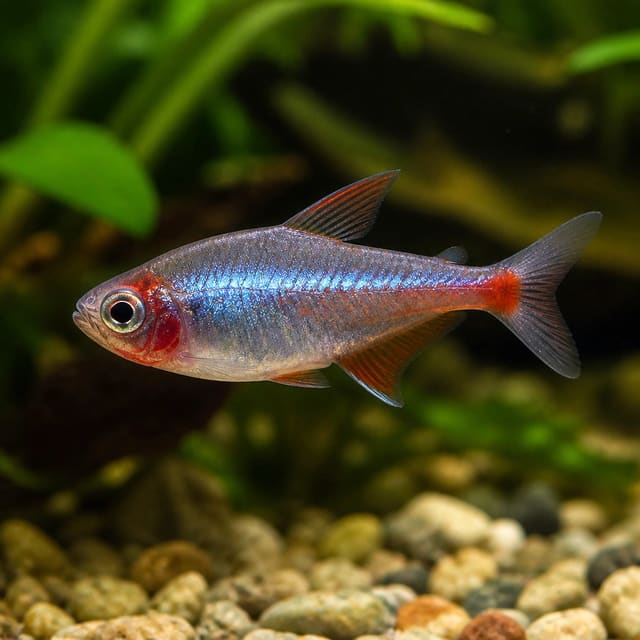
Neon Tetra (Paracheirodon innesi)
21–25°C · pH 5–7
£2.99

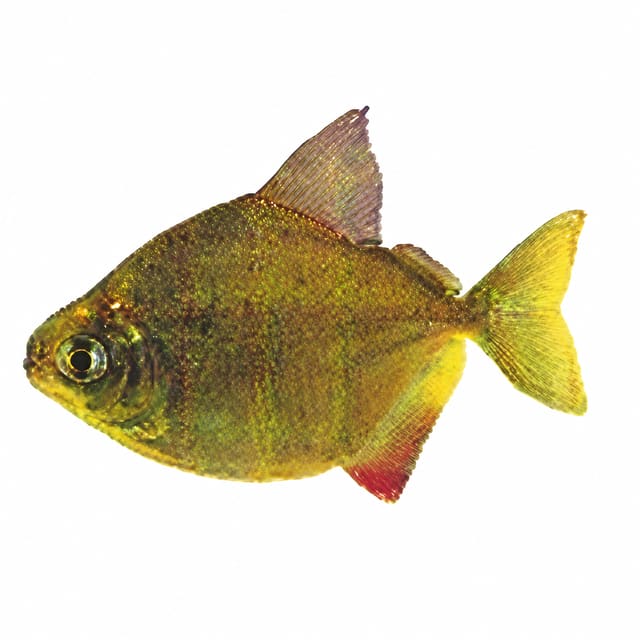
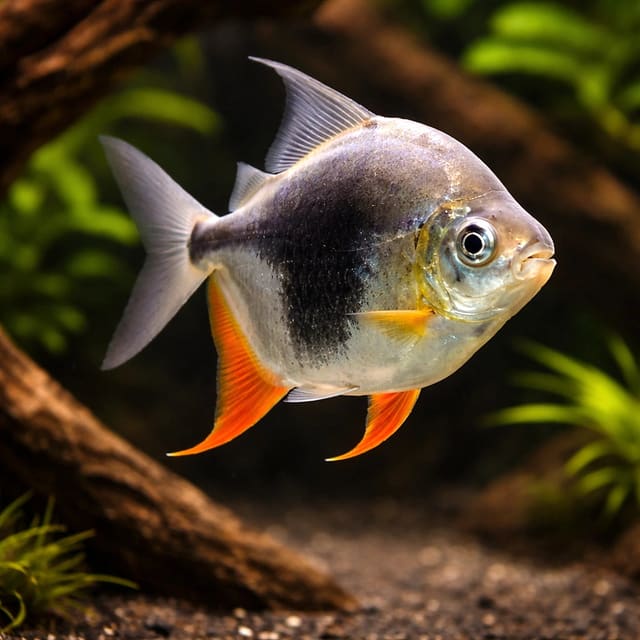
Red-Bellied Pacu (Piaractus brachypomus) is a giant South American freshwater fish sold here as one animal per quantity in the juvenile size selected. It can reach 88 cm and needs at least a 300 × 90 × 90 cm, 2,550-litre aquarium for life, preferably larger, with robust filtration; plan solitary keeping unless an enormous shared system passes a full compatibility assessment.
Adult size is the maximum length this species reaches at full maturity (scientific sources). The livestock you receive will be younger and smaller — pick a size above for the actual shipping size. Product-photo provenance and any image-specific limitations are stated on the listing.
Piaractus brachypomus
Red-Bellied Pacu (Piaractus brachypomus) is a giant South American freshwater fish sold here as one animal per quantity in the juvenile size selected. It can reach 88 cm and needs at least a 300 × 90 × 90 cm, 2,550-litre aquarium for life, preferably larger, with robust filtration; plan solitary keeping unless an enormous shared system passes a full compatibility assessment.
Adult size is the maximum length this species reaches at full maturity (scientific sources). The livestock you receive will be younger and smaller — pick a size above for the actual shipping size. Product-photo provenance and any image-specific limitations are stated on the listing.
Maintain these water conditions for optimal health and vibrant colors
Red-Bellied Pacu, Piaractus brachypomus, is a giant freshwater fish in the family Serrasalmidae, the family containing piranhas and pacus. Pirapitinga and Freshwater Pompano are other established names for the same animal. Its scale, activity and waste production make it an advanced-care choice for a keeper who can provide a purpose-built lifelong system rather than an ordinary community aquarium.
FishBase records a maximum of 88 cm total length. It places the species in the Amazon and Orinoco river basins of South America and also reports it from Argentina. Treat that maximum as the decisive planning figure: an animal approaching this length needs room to swim and turn without meeting the walls, décor or exposed equipment at every movement.
A juvenile can be housed temporarily in a smaller grow-on aquarium, but it will grow quickly when well fed. The lifelong enclosure, filtration capacity and maintenance routine therefore need to be realistic before the fish is chosen. Delaying the decision until the juvenile looks cramped transfers the risk to an animal that is already difficult to accommodate.
| Suits | Not suited to |
|---|---|
| Advanced keepers with at least 300 × 90 × 90 cm and 2,550 litres for one adult | Ordinary community aquariums |
| Systems holding 23–28°C, pH 4.8–7.5 and 0–15 dGH | Systems outside the species aquarium range |
| Large, efficient biological filtration sized for heavy waste | Unfiltered or immature aquariums |
| A one-fish plan unless an enormous system can support a group | Groups without lifelong adult space |
| Individually assessed larger companions | Much smaller fish |
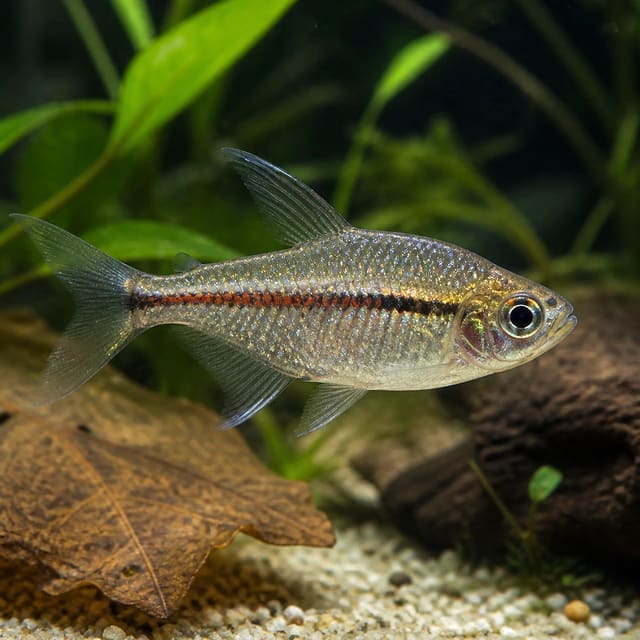
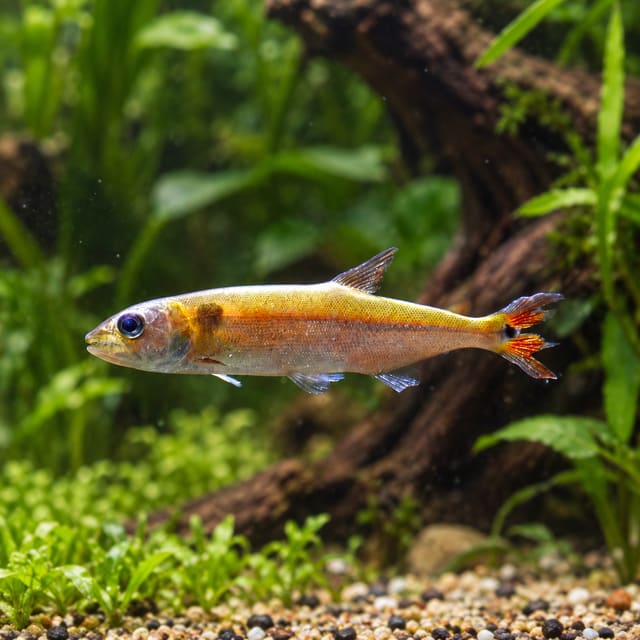
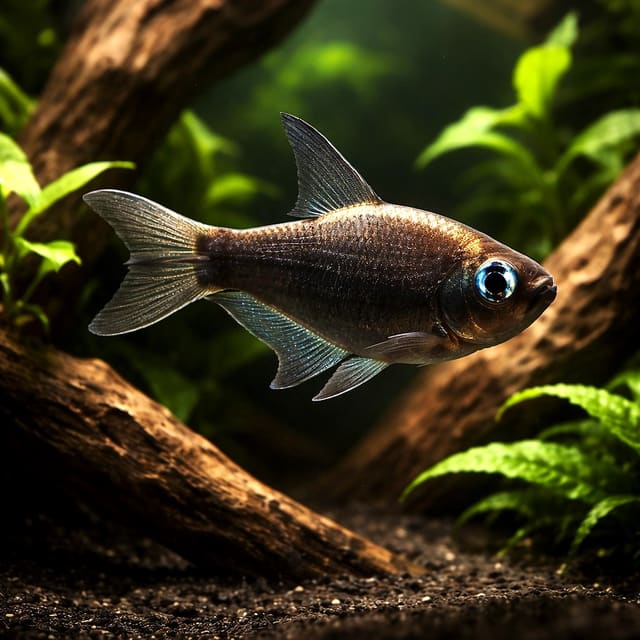
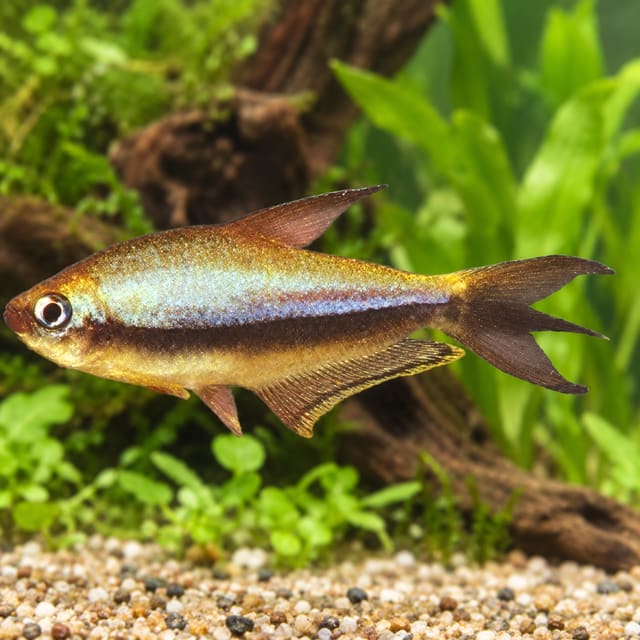
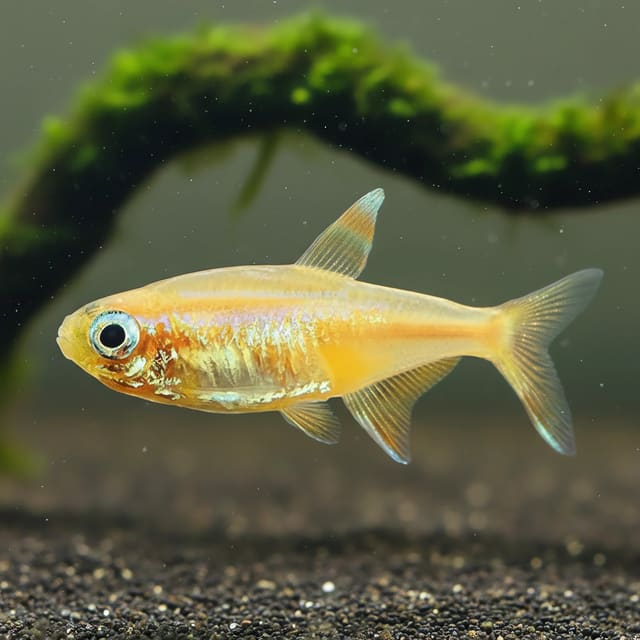
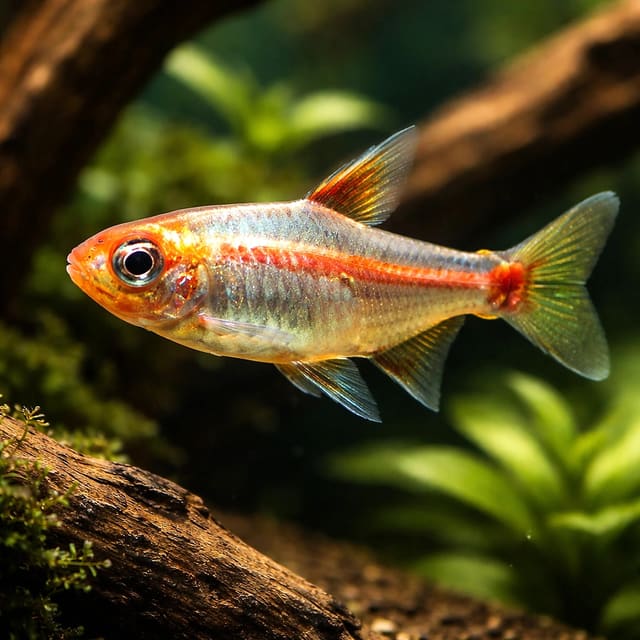
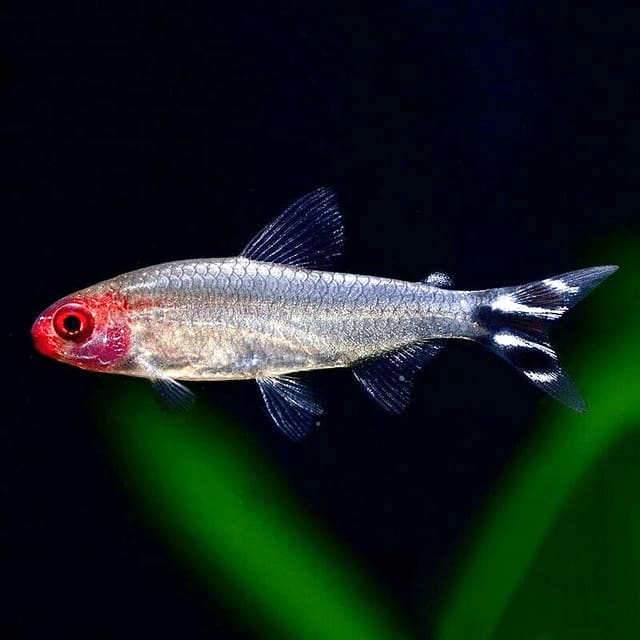
Some gallery images have been digitally enhanced to improve image quality. They show the listed type of animal rather than guaranteeing the exact markings of the individual supplied, so natural colour and pattern can vary.
One purchase quantity supplies one Red-Bellied Pacu of the selected option. The juvenile dispatch sizes are 2–3 cm, 3–4 cm, 5–6 cm, 7–8 cm and 10–15 cm. Use the live size selector to see which option can be chosen when you order rather than relying on static wording elsewhere on the page.
The size you select is the size supplied, not the adult size. These measurements are dispatch grades, so they describe the animal at the point of supply rather than its final potential. A larger juvenile option may reduce the length of an early grow-on stage, but every option leads to the same lifelong adult-space decision.
Sex is guaranteed only when the selected option explicitly states male or female. This Red-Bellied Pacu listing has no sex-guaranteed option.
Seriously Fish advises at least 300 × 90 × 90 cm and 2,550 litres for one adult, preferably larger. The 300 cm length provides a long swimming run, while the 90 cm front-to-back dimension is part of the requirement rather than an interchangeable amount of water. A taller but narrower aquarium does not replace turning width.
The same profile gives an aquarium range of 23–28°C, pH 4.8–7.5 and 0–15 dGH. These are broad tolerances within which extremes should be avoided. Choose a stable part of the range that matches the conditioned aquarium and make any adjustment gradually.
Before placing an order, read the current delivery and Live Arrival Guarantee policy and prepare the receiving aquarium around the selected dispatch grade.
Start with the lifelong minimum of 300 cm length, 90 cm front-to-back width and 90 cm height, holding at least 2,550 litres, and choose a larger enclosure where practical. All three dimensions matter. Volume alone can conceal a narrow layout that leaves an 88 cm fish with poor turning room, while a generous footprint makes movement and maintenance easier to plan.
A young pacu may be grown in a smaller aquarium, but that aquarium is a temporary stage rather than a way to reduce adult growth. Decide in advance what measured size, body depth or swimming behaviour will trigger the move. The next enclosure should be operating before that point, so the fish is not left waiting while a large system is ordered, built or matured.
Use the adult dimensions when sizing filtration and access even if the first occupant is small. Seriously Fish notes that adults are too often kept in cramped conditions and that youngsters grow quickly when well fed. Designing around the juvenile’s first feeding load would leave the system progressively less capable as body mass and food intake rise.
| Planning question | Passing answer |
|---|---|
| Can the fish turn? | The full adult body can turn without being forced against walls or furnishings |
| Is there a swimming lane? | A long, open route remains after décor and equipment are installed |
| Can waste be removed? | Mechanical stages and the enclosure base are accessible for frequent cleaning |
| Can equipment be serviced? | Filtration can be checked without stopping all circulation for an extended period |
| Is the upgrade ready? | Any grow-on move is planned before the current enclosure restricts movement |
Do not trade away footprint for ornamental complexity. This is a very active species, and open water is more useful than dense rockwork or a heavily planted layout. The adult enclosure should make routine observation possible from more than one point, allowing changes in swimming, condition or feeding response to be noticed before they become severe.
Large biological filtration is essential because a pacu’s food intake and waste rise sharply with growth. A sump-style arrangement is useful where practical because it can keep much of the equipment outside the swimming space while providing accessible mechanical and biological stages. Whatever format is chosen, size it for the adult animal rather than the first juvenile meals.
OATA’s very-large-fish guidance sets zero mg/L ammonia, zero mg/L nitrite and nitrate no more than 20 mg/L above the normal tap-water level for the group. Use those operating limits alongside the pacu’s aquarium range of 23–28°C, pH 4.8–7.5 and 0–15 dGH.
The RSPCA explains why a well-set-up biological filter is vital: fish release toxic ammonia, beneficial bacteria convert it to toxic nitrite, and further bacteria convert nitrite to the safer nitrate. A filter is mature when this biological processing is working consistently, not merely when the equipment has run for a particular number of days.
| Measurement | Action |
|---|---|
| Temperature | Keep within 23–28°C and prevent abrupt movement |
| Ammonia | Maintain at zero mg/L |
| Nitrite | Maintain at zero mg/L |
| Nitrate | Keep no more than 20 mg/L above the normal tap-water level |
| pH and hardness | Keep stable within pH 4.8–7.5 and 0–15 dGH |
Use our aquarium water chemistry guide to interpret the tests, then enter measured values in the water matcher for comparison. Do not chase a preferred-looking value through rapid chemical changes. Stability inside the stated aquarium range is the safer operating plan, provided ammonia and nitrite remain at zero and nitrate is controlled.
The receiving aquarium must be heated, biologically mature and tested before the fish arrives. Work through our guide to preparing and maturing an aquarium, then confirm that ammonia and nitrite both read zero mg/L. Check the heater, filter flow and access to conditioned replacement water while there is still time to correct a fault.
The purpose is to avoid an abrupt temperature or water-chemistry change while moving the animal into clean aquarium water without unnecessary delay. Keep activity around the aquarium low during the settling period and observe swimming and breathing before offering the first meal.
Record temperature, ammonia, nitrite and the fish’s normal posture each day during the first week. Watch whether it swims in a balanced way, responds to its surroundings and begins accepting appropriately sized food. Clear, bright eyes, intact scales, undamaged fins and appropriate swimming behaviour are useful signs when establishing what is normal for that individual.
Test promptly if the fish hangs at the surface, sits unusually on the bottom, swims erratically, breathes faster or slower than normal, darkens or pales, hides more, or loses interest in food. These changes can accompany deteriorating water or a health problem. Checking the measurable conditions first gives any later assessment a clear starting point and may reveal an urgent filtration or temperature fault.
OATA recommends, at least once every week, a partial water change of 25% for very large fish, together with water testing at least weekly. Treat that as the starting schedule. If nitrate rises too quickly, food remains uneaten or solid waste accumulates between changes, increase the effectiveness or frequency of maintenance rather than waiting for the water to look dirty.
If filter media needs cleaning, rinse it lightly in aquarium water removed during the water change. Do not rinse biological media under the tap, because chlorine or chloramine may kill part of the beneficial bacterial population. Avoid cleaning every biological stage at once; preserving active media helps the filter continue processing the fish’s waste.
| If you see this | Do this |
|---|---|
| Ammonia or nitrite above zero | Check filtration and water quality immediately and seek prompt specialist guidance |
| Nitrate trend rising | Review portions, waste removal and water-change capacity |
| Reduced filter flow | Inspect for blockages and service the affected stage |
| Food fragments remaining | Remove them and reduce the next portion |
| Rapid breathing or erratic swimming | Test water and inspect temperature and equipment without delay |
A large aquarium can look clear while dissolved waste is moving in the wrong direction. Weekly figures show whether feeding, filtration and water changes remain balanced as the pacu grows. Increase the maintenance capacity before the trend reaches the operating limit, rather than allowing the animal’s present size to outrun the routine.
Wild Red-Bellied Pacu feed primarily on fruits, nuts and seeds, while also taking insects, zooplankton and small fish opportunistically. Translate that pattern into a varied, plant-led aquarium diet built around a quality dried pellet or floating stick suitable for a large herbivorous or omnivorous freshwater fish.
Offer the formulated food as the nutritional foundation, then rotate suitable plant foods. Seriously Fish lists spinach, lettuce, apple, banana, peach, grapes, courgette, peas, cabbage and carrot. Wash fresh produce, prepare pieces that match the fish’s current mouth size and introduce unfamiliar items gradually so acceptance and waste can be observed.
| Food role | Practical choice |
|---|---|
| Main staple | Quality dried pellets or floating sticks of an appropriate size |
| Leafy variety | Spinach, lettuce or cabbage |
| Vegetable variety | Courgette, peas or carrot |
| Fruit variety | Small prepared portions of apple, banana, peach or grapes |
Feed once a day and offer only what the fish can eat within a few minutes. Watch the entire meal rather than relying on the pacu’s willingness to continue feeding. Remove uneaten food before it breaks down, because surplus food adds to the organic load and can push ammonia, nitrite or nitrate in the wrong direction.
Appropriately sized food matters throughout growth. A pellet designed for a much smaller fish may scatter and enter inaccessible areas, while oversized pieces may be left partially eaten. Choose a form the pacu can consume cleanly and reassess that choice as its mouth and body size increase.
Décor is optional for an adult Red-Bellied Pacu, but open swimming space is essential. The species is active, so a complicated aquascape takes away useful room and creates more places for waste to collect. Begin with the swimming route, filtration access and safe equipment placement; add only furnishings that leave those functions intact.
Water-worn boulders, large pieces of driftwood or substantial beech branches can be used sparingly. Every item should be too heavy for the fish to move or secured so it cannot shift. Keep the central route broad and ensure that décor does not reduce the required front-to-back turning space.
Live plants are unlikely to remain a reliable feature because the fish may eat them immediately. A planted display should therefore not be part of the welfare plan or the expected long-term appearance. An uncluttered enclosure is easier to inspect, siphon and adapt as the animal grows.
| System element | Preferred decision |
|---|---|
| Swimming area | Long, open and free from dense furnishings |
| Boulders and wood | Large, sparse and secured against movement |
| Plants | Do not rely on them remaining uneaten |
| Biological filter | Large and efficient enough for a very large fish |
| Heaters and thermometers | Keep vulnerable equipment away from the adult swimming space |
| Sump | Use where practical to place equipment outside the main enclosure |
A large specimen may damage glass heaters, thermometers or similar equipment as it moves around. Position vulnerable components outside the main enclosure where the filtration design permits, or protect them without creating a narrow trap. Equipment protection must still allow inspection and cleaning, because an inaccessible heater or blocked inlet cannot be maintained reliably.
Review the layout whenever the fish’s turning path changes. What leaves generous clearance for a small juvenile may become restrictive later. Removing a decorative item before it interferes with movement is better than retaining an attractive layout that no longer suits the animal’s body depth or activity.
Judge the aquarium as a changing system rather than a one-time purchase. As the pacu grows, food intake, solid waste and the space occupied by each turn all increase. Record measured length periodically, note body condition and compare those observations with water-test trends and maintenance time.
Healthy fish generally show clear, bright eyes, intact scales, undamaged fins, appropriate swimming and steady feeding. Look for changes from the individual’s established pattern: hanging at the surface, sitting on the bottom, erratic swimming, unusual hiding, a darker or paler appearance, altered breathing, white spots, fluffy growths, lost scales, damaged fins or declining body condition all warrant prompt attention.
When a change appears, test the water first and inspect temperature and filter flow. Record the readings and the time the behaviour began. If the signs persist, worsen or include visible injury or growths, seek advice from our livestock team or an aquatic veterinary professional rather than choosing a treatment without a diagnosis.
A temporary grow-on aquarium remains suitable only while it gives the juvenile adequate movement and the filter controls the feeding load. Have the next system mature before either limit is approached. At adult scale, use at least the 300 × 90 × 90 cm and 2,550-litre lifelong requirement, preferably larger.
Very large fish represent a substantial long-term commitment. Keep maintenance equipment, conditioned-water capacity and the filtration routine proportionate to the growing animal. A plan based on regular measurements is more dependable than assuming growth will slow to suit the enclosure.
Red-Bellied Pacu show different social tendencies as they mature. Juveniles are shoaling fish, while adults become more solitary. Aquarium groups are possible only when the enclosure offers enough space, so juvenile grouping behaviour must not be used to justify a group whose adult requirements cannot be met.
A single-specimen system removes the multiplying space and waste demands created by several adult pacu. It also makes feeding response, body condition and water-load changes easier to attribute to one animal. This is a planning recommendation rather than a claim that the fish must always be alone.
If a group is proposed, assess the complete adult group before choosing the juveniles. The system must allow each large, active fish to move without persistent chasing or fin nipping and must process the combined feeding load. Seriously Fish warns that adults in smaller quarters may chase and nip both their own kind and other species.
| Proposed plan | Decision test |
|---|---|
| One pacu | Provide the full lifelong dimensions and filtration for one adult |
| Juvenile group | Proceed only if the same facility can house the group after maturation |
| Adult group | Use an exceptionally large system with sufficient space to prevent crowding |
| Temporary group | Do not depend on later rehoming as the main space plan |
Watch social behaviour alongside water quality. Repeated chasing, damaged fins or a fish being displaced from food shows that the group plan needs intervention even when the chemical readings are good. Conversely, peaceful juvenile behaviour does not guarantee that limited quarters will remain suitable as the fish become larger and more solitary.
Every extra pacu adds another animal capable of reaching 88 cm. Calculate the enclosure, filtration and feeding commitment from that mature scale. Choose a group only when the complete lifelong arrangement is more than a temporary juvenile display.
Avoid much smaller fish because they are likely to be eaten. OATA gives the same precaution for very large fish generally, noting that their size and large mouths make mixing them with much smaller animals unsuitable. This rule applies even when a juvenile pacu appears peaceful in a dealer or grow-on aquarium.
Larger companions require a case-by-case assessment. Red-Bellied Pacu are generally peaceful with bigger fish, but their constant activity may bother sedentary or shy animals. A companion must be robust enough for the shared activity while remaining suitable for the same temperature, water chemistry and exceptionally large enclosure.
| Question | Required answer |
|---|---|
| Could it be eaten? | No; avoid any much smaller fish |
| Could activity disturb it? | No; sedentary or shy fish need particular caution |
| Do adult sizes fit? | Yes; assess mature dimensions rather than purchase size |
| Can the filter carry both? | Yes; include the combined adult feeding and waste load |
| Is the aquarium enormous? | Yes; mixed giant-fish housing needs substantially more space |
Similarly sized characins, large cichlids and large catfish are cited as possible companions where truly enormous space exists, but these group names are not automatic approvals. Individual behaviour, adult dimensions and feeding activity still decide whether a proposed combination is responsible. Request a stocking assessment from our team before committing to a mixed giant-fish system.
The tetras collection is useful when comparing smaller aquarium choices, not as a tank-mate list for this pacu. Small tetras fall directly under the avoid-much-smaller-fish rule.
When uncertainty remains, choose the single-specimen plan. It avoids exposing a smaller fish to predation and avoids placing a shy or sedentary animal beside the pacu’s constant movement. Compatibility should be reassessed as every occupant grows, because a pairing that appears balanced at dispatch size may become mismatched at maturity.
Red-Bellied Pacu is a common name for Piaractus brachypomus, a giant South American freshwater fish in Serrasalmidae. Pirapitinga and Freshwater Pompano are other names for the same animal, and FishBase records a maximum of 88 cm total length.
One quantity supplies one animal of the selected juvenile size. It is not a pair or group, and the live selector should be used to choose the required size option.
The dispatch sizes are 2–3 cm, 3–4 cm, 5–6 cm, 7–8 cm and 10–15 cm. Each grade describes the size supplied rather than the potential 88 cm adult length.
Provide at least a 300 × 90 × 90 cm aquarium holding 2,550 litres for one adult, preferably larger. Keep a long open swimming route and use large, efficient biological filtration capable of processing the waste from a very large fish.
Juveniles are shoaling, while adults become more solitary. A one-fish plan is clearest for a private system; keep a group only when an exceptionally large aquarium can support every animal at adult size without crowding, chasing or fin nipping.
Keep it at 23–28°C, pH 4.8–7.5 and 0–15 dGH, avoiding abrupt changes and extremes. Maintain ammonia and nitrite at zero mg/L and nitrate no more than 20 mg/L above the normal tap-water level.
Feed quality dried pellets or floating sticks as the staple and add varied leafy greens, vegetables and prepared fruit. Offer one meal a day, limit it to what is eaten within a few minutes and remove leftovers before they decay.
Prepare a mature aquarium within 23–28°C and confirm zero mg/L ammonia and nitrite before arrival. Avoid abrupt temperature or chemistry changes and observe breathing and balance during the settling period.
Avoid much smaller fish because they are likely to be eaten. Larger companions need an individual assessment covering adult size, activity, feeding, water requirements and the combined waste load in a truly enormous aquarium.
No reviews for this item yet. Bought one? Honest reviews only, good or bad.
What customers say about ordering from us
I have a small group of long finned mountain minnows. So was delighted to be able to order ten of this variety to increase the genetics in my tank . The ones I recieved are healthy but it’s to early to give a verdict on wether they are of a long finned type since they are small currently.
Gordon Walker · 23 Sept 2026
100% success travel and "installation". Pleased with quality of purchase. The Siamese fighter a bit "shy" so have not yet seen him at his best yet but looking good. Happy customer. GG
George E Garratt · 21 Sept 2026
Reviews of our shop, collected by Judge.me, an independent third-party review collector. Newest first.