−12%
Moderate
Leporinus affinis
23–27°C · pH 6.5–7.8
£15.83£17.99

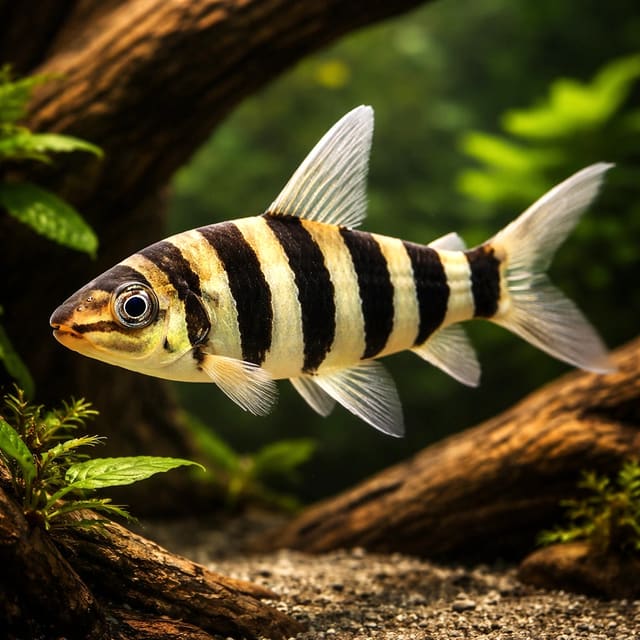
The Tucan Fish (Chalceus erythrurus) is a fast, pelagic member of Chalceidae from the Amazon and Solimões systems through to the Ucayali drainage in Peru, reaching 24.5 cm standard length. It suits keepers with at least 243 litres, a 120 × 45 cm base and a secure lid; keep one fish or more than six at 22–26°C, pH 6.5–7.0 and 5–12 dGH, the overlap between Seriously Fish species guidance and OATA group guidance. Sold individually in sizes from 3-4 cm to 6-7 cm.
Adult size is the maximum length this species reaches at full maturity (scientific sources). The livestock you receive will be younger and smaller — pick a size above for the actual shipping size. Product-photo provenance and any image-specific limitations are stated on the listing.
Chalceus erythrurus
Shoaling fish: kept in a group they feel safer, stay calmer and show their best colour.
The Tucan Fish (Chalceus erythrurus) is a fast, pelagic member of Chalceidae from the Amazon and Solimões systems through to the Ucayali drainage in Peru, reaching 24.5 cm standard length. It suits keepers with at least 243 litres, a 120 × 45 cm base and a secure lid; keep one fish or more than six at 22–26°C, pH 6.5–7.0 and 5–12 dGH, the overlap between Seriously Fish species guidance and OATA group guidance. Sold individually in sizes from 3-4 cm to 6-7 cm.
Adult size is the maximum length this species reaches at full maturity (scientific sources). The livestock you receive will be younger and smaller — pick a size above for the actual shipping size. Product-photo provenance and any image-specific limitations are stated on the listing.
Maintain these water conditions for optimal health and vibrant colors
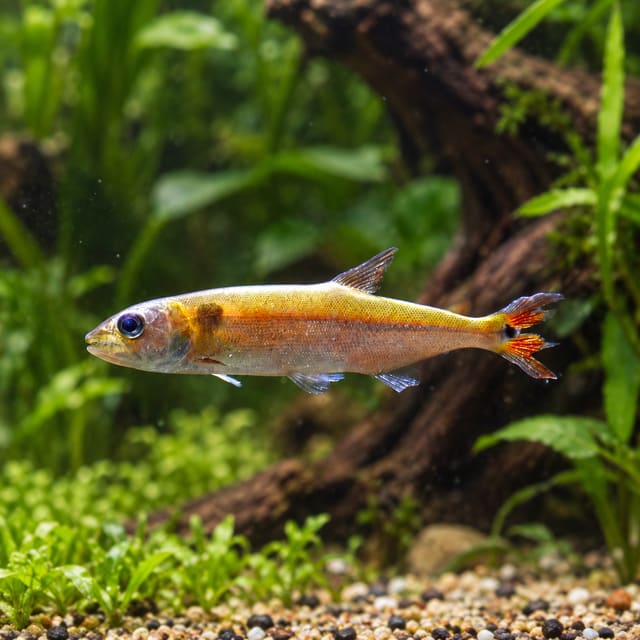
The Tucan Fish, Chalceus erythrurus, is a streamlined, pelagic member of Chalceidae from the Amazon and Solimões systems through to the Ucayali drainage in Peru. It can reach 24.5 cm standard length and suits a keeper prepared to provide a large, securely covered aquarium with open swimming room. Its long body, reflective flanks and colourful tail give it the familiar Pink-Tailed Chalceus trade appearance, while its speed makes swimming space more important than elaborate decoration.
FishBase identifies Chalceus erythrurus as a freshwater, pelagic member of Chalceidae and records a maximum of 24.5 cm standard length. Treat that maximum as the decisive planning figure even though the fish selected for dispatch is much smaller.
This is one of the larger tetra-like fishes placed within our tetras collection, but it should not be planned like a small community tetra. The combination of adult length, speed, jumping ability and social choices makes it most appropriate for a purpose-built display.
One purchase supplies one animal in the selected option. The live size selector carries the labels 3-4 cm, 5-6 cm and 6-7 cm; use it to see the choice attached to the purchase you are making. The size you select is the size supplied, not the adult size.
A dispatch measurement is useful for preparing an introduction, but it does not change the long-term requirement. A fish dispatched at 3-4 cm still needs a plan based on a possible 24.5 cm standard length, open swimming room and a secure cover. Do not use the smallest selectable grade as a reason to begin with a small temporary aquarium if that aquarium cannot safely accommodate its speed or future growth.
Sex is guaranteed only when the selected option explicitly states male or female. This Tucan Fish listing has no sex-guaranteed option.
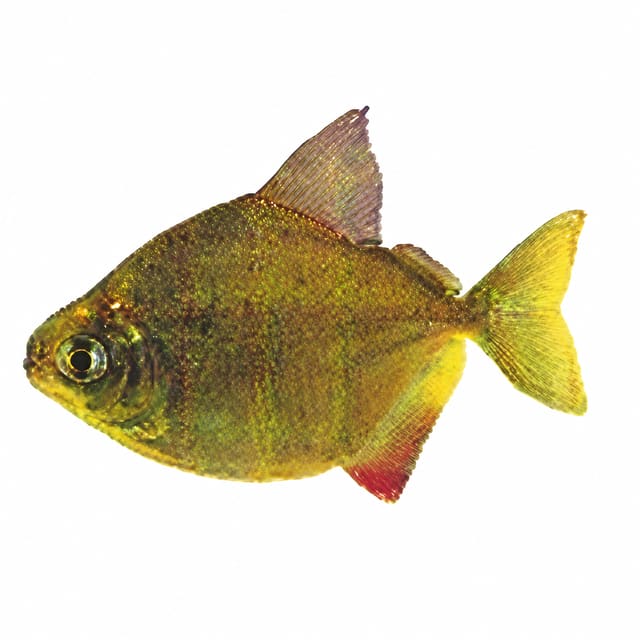
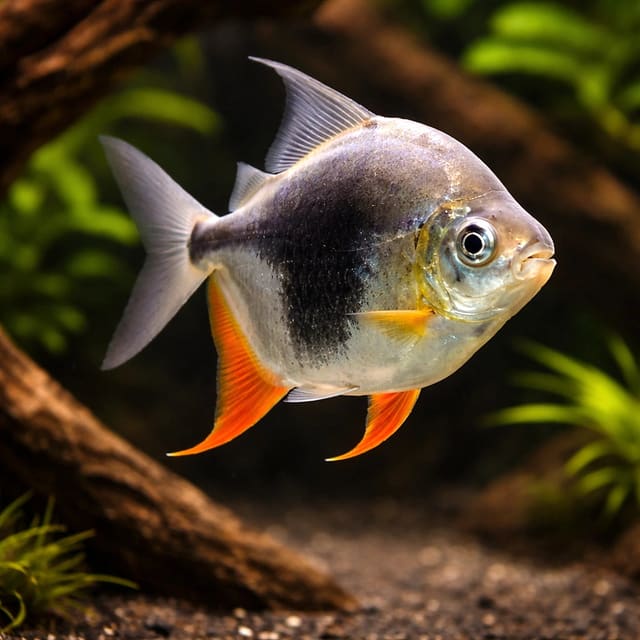
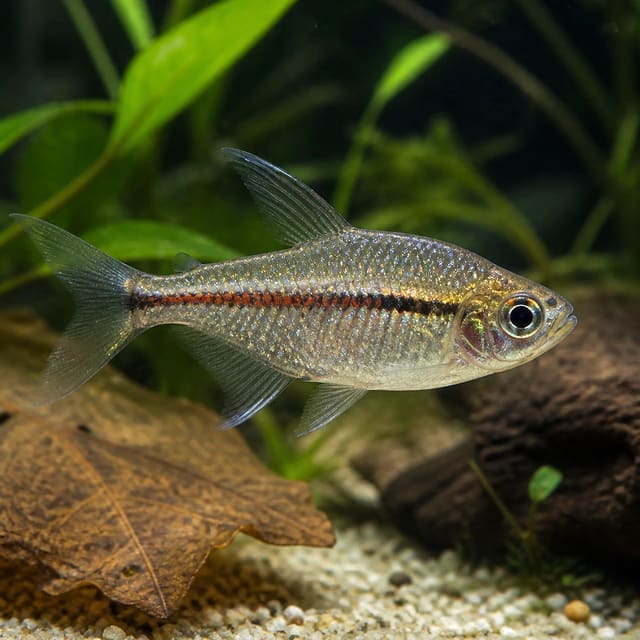
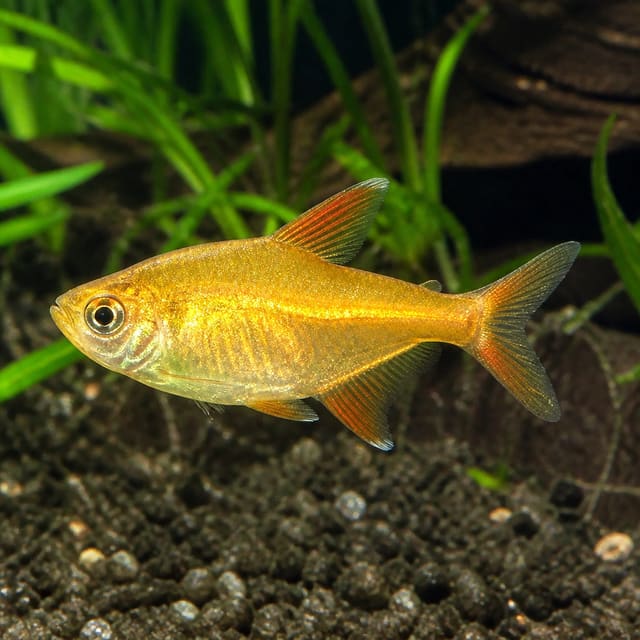
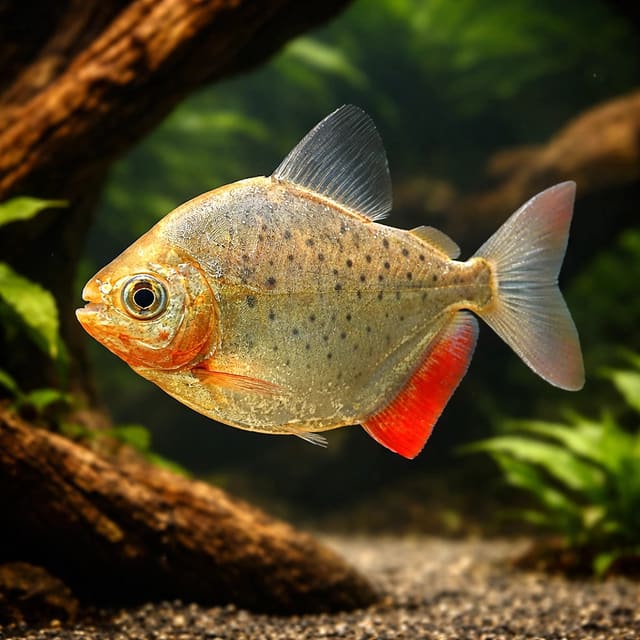
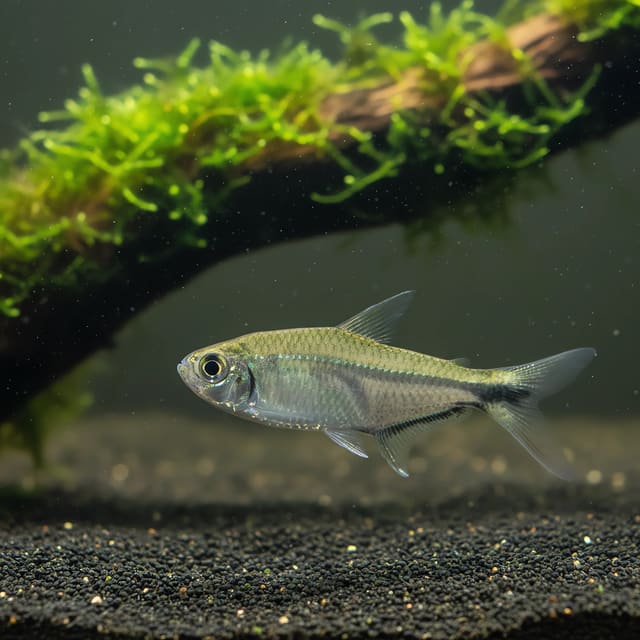
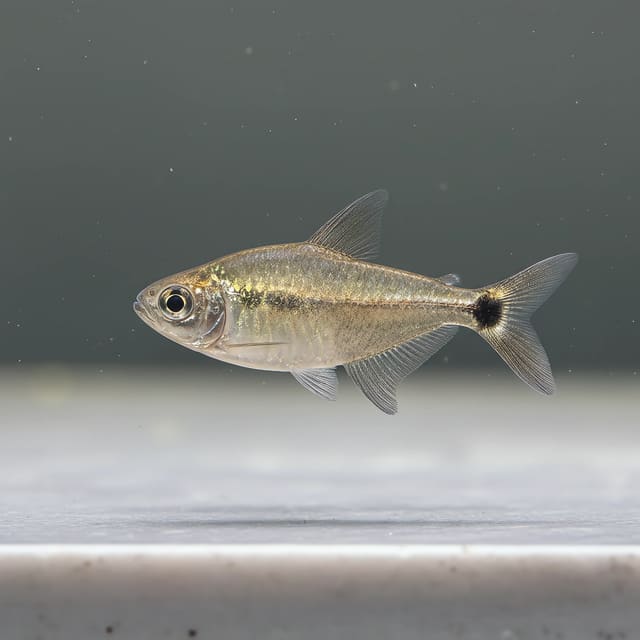
The gallery images are representative, based on reference photographs of this species, so colours can look slightly different from the live animal.
Seriously Fish recommends a 120 × 45 cm base and approximately 243 litres as the smallest aquarium that should be considered. The reason is practical: this fish can turn on real speed and may injure itself in cramped quarters. Aquarium length, unobstructed lanes and safe turning room therefore matter alongside volume.
| Decision | Planning figure |
|---|---|
| Recorded maximum | 24.5 cm standard length |
| Smallest aquarium | Approximately 243 litres |
| Base footprint | At least 120 × 45 cm |
| Routine temperature | 22–26°C |
| Social choice | One fish or more than six |
| Cover | Very well-fitting |
| Suits | Not suited to |
|---|---|
| A large aquarium with open swimming lanes | Small or cramped aquariums |
| A single-specimen plan or a group of more than six | Groups of two to six, which tend to scrap |
| A very well-fitting aquarium cover | Open or poorly covered aquariums |
| Communities screened for adult size, water needs and swimming level | Other surface dwellers unless the aquarium is huge |
The 243-litre figure is a starting benchmark for the species, not an automatic capacity for every stocking plan. A group of more than six adults and any companion fish add both bodies and movement, so the finished aquarium must be planned around their combined swimming space and biological load. A taller tank cannot compensate for an inadequate base when the fish needs horizontal room.
Choose the social arrangement before purchasing equipment. One specimen avoids disputes within a small group. A group means at least seven fish because groups of two to six tend to scrap. That choice affects the required footprint, filter capacity and number of suitable upper-water territories, even though the same water range applies.
The species aquarium range is 22–26°C, pH 6.0–7.0 and 5–15 dGH. OATA’s tetra and pencilfish sheet is group guidance and gives 22–27°C, pH 6.5–8.0 and 4–12 dGH. Use the overlap as a practical routine target: 22–26°C, pH 6.5–7.0 and 5–12 dGH. This keeps routine values within the species range while also following the narrower part of the group guidance.
| Measurement | Routine target |
|---|---|
| Temperature | 22–26°C |
| pH | 6.5–7.0 |
| General hardness | 5–12 dGH |
| Ammonia | Zero mg/l |
| Nitrite | Zero mg/l |
| Nitrate | Not more than 20 mg/l above normal tap-water level |
Measure the aquarium rather than assuming its values from the local water supply. Our water chemistry guide explains what each result means, while the water matcher helps compare measured values with these targets.
Take readings at consistent times so the results can be compared properly. A single temperature reading within range does not show whether the aquarium remains stable overnight or after maintenance. Check again after the heater has completed several normal cycles and after replacement water has mixed throughout the tank.
Use the same measured approach for pH and hardness. If successive readings remain within pH 6.5–7.0 and 5–12 dGH, keep the routine steady instead of chasing one exact point. When a result shifts, check recent water changes, equipment adjustments and test technique before altering the aquarium. This sequence reduces the risk of responding to one isolated reading with a sudden chemical change.
Keep the central and upper parts of the aquarium open enough for uninterrupted swimming. Sand, branches and floating plants can create an effective South American-style setting, but décor is secondary to usable space. Place cover around edges rather than building a dense obstacle course across the route used by a fast fish.
A very well-fitting cover is essential because the Tucan Fish is a renowned jumper. Check the entire rim, including gaps around cables, pipes and filter returns. A hood that looks closed from the front may still leave an escape route at the back. Recheck it after equipment servicing because moved cables can open new gaps.
| Layout choice | Reason |
|---|---|
| Open upper lane | Supports fast horizontal swimming |
| 120 × 45 cm base or larger | Provides the minimum recommended footprint |
| Edge planting | Adds cover without blocking the centre |
| Branches used sparingly | Creates structure while preserving turning room |
| Close-fitting cover | Prevents jumping escapes |
Before settling on a decorative plan, imagine the fish travelling from one end of the tank to the other at speed. Remove any arrangement that forces a sharp turn through a narrow gap. Equipment should remain accessible for weekly checks without dismantling the swimming area.
When planning a group, multiply the need for movement rather than merely checking whether seven bodies fit within the stated volume. More than six fish must be able to pass, turn and feed without being compressed into the same small surface area. The smallest recommended aquarium is therefore a species benchmark, while the final group aquarium should reflect the full adult stocking plan.
Repeat this check after adding or pruning plants. Floating growth can be useful around the edges, but it should not spread across the entire surface or obstruct the route used for swimming and feeding. Keeping the layout simple also makes it easier to spot uneaten food, damaged equipment or a newly opened lid gap.
A working biological filter is essential. RSPCA aquarium welfare guidance explains that fish release toxic ammonia, which filter bacteria convert first to toxic nitrite and then to safer nitrate. The aquarium must have a well-established filter before the Tucan Fish is introduced.
For an aquarium of approximately 243 litres, the species guidance recommends turnover of four to five times the aquarium volume each hour, corresponding to about 970–1,215 litres per hour. Apply the same calculation to the real water volume of a larger aquarium rather than choosing a filter solely from the tank’s marketing name.
| Aquarium volume | Four to five times hourly |
|---|---|
| 243 litres | 972–1,215 lph |
| 300 litres | 1,200–1,500 lph |
| 400 litres | 1,600–2,000 lph |
| 500 litres | 2,000–2,500 lph |
These calculations are flow-planning figures. Filter performance can be affected by media, pipework and blockages, so confirm that water continues to circulate throughout the aquarium and check the filter routinely. Position the return so it moves water without sacrificing the broad swimming lane.
Prepare the biological filter before livestock arrives and confirm zero ammonia and zero nitrite. Add fish gradually because the bacterial population must increase as stocking and feeding rise. Our first tropical tank guide covers aquarium preparation and filter maturation step by step.
Do not rely on clear-looking water as a substitute for testing. Ammonia and nitrite are dissolved wastes, so a visually clean aquarium can still present a serious welfare risk when the filter is immature or overloaded.
Test ammonia, nitrite and nitrate at least once each week. Record the results so a gradual change is visible before it becomes a crisis. Ammonia and nitrite should remain at zero mg/l, while nitrate should not exceed 20 mg/l above the normal tap-water level.
Make a 25% partial water change at least once every week and use a siphon to remove solid waste from the substrate. Treat replacement tap water with a conditioner that removes chlorine or chloramine before it enters the aquarium. Match the replacement water closely enough to avoid an abrupt change in temperature or chemistry.
Link maintenance decisions to the test results. Detectable ammonia or nitrite means the system is not processing waste safely; reduce the pressure on the filter and correct the cause before adding more livestock. A rapidly rising nitrate result points towards accumulated waste, excessive feeding, insufficient water changes or a stocking load that needs review.
Watch flow as well as chemistry. A blocked intake reduces circulation and biological processing, while a neglected substrate can hold uneaten food and solid waste. The purpose of the routine is not to make the aquarium look polished for one day; it is to keep its biological processes stable from week to week.
Compare each result with the previous week before completing maintenance. For example, zero ammonia, zero nitrite and a modest nitrate rise indicate a different decision from detectable ammonia after a new livestock addition. In the first case, continue the established routine. In the second, pause further additions, confirm flow and review the increase in feeding and waste.
Write down the amount of water changed and whether the filter intake needed clearing. If nitrate climbs faster over several weeks despite the same 25% change, inspect feeding portions, trapped debris and the complete stocking load together. Changing one factor at a time makes the cause easier to identify and prevents several unnecessary adjustments from obscuring the result.
In nature, Chalceus erythrurus feeds primarily on insects and aquatic crustaceans. Dried aquarium foods are usually accepted, but a good proportion of the diet should be meaty. Suitable examples named for the species include prawn, mussel, bloodworm and chopped earthworm, alongside a quality dried food.
Use the OATA group routine for portion control: feed once each day and offer only what the fish can consume within a few minutes. That gives the Tucan Fish time to take a complete meal without leaving food to decay. Uneaten food breaks down and adds toxic waste, so a fish that rushes to feed should not be rewarded with an oversized portion.
| Food role | Supported choices |
|---|---|
| Dried staple | Quality flake or granule |
| Meaty variety | Prawn, mussel or bloodworm |
| Further variety | Chopped earthworm |
| Group-care options | Daphnia or tubifex |
| Portion limit | Consumed within a few minutes |
Watch the whole feeding event rather than dropping food and walking away. Confirm that the fish reaches food, swallows normally and does not lose condition. In a group, check individuals rather than judging success from the speed of the first fish at the surface.
If food remains after a few minutes, reduce the next portion and remove leftovers where practical. If appetite falls, test the water and compare swimming, breathing, colour and body condition with the fish’s normal pattern. Feeding more heavily is not a safe response to unexplained weight loss or reduced interest.
Begin with a controlled daily serving and observe how much disappears within a few minutes. If food remains, make the next serving smaller rather than shortening the observation period. If every item is taken immediately, continue watching long enough to confirm that each fish in a group has eaten before deciding whether the portion needs a small adjustment.
Rotate the supported foods across meals instead of combining every choice into one oversized feed. A quality dried food can provide the staple, while prawn, mussel, bloodworm or chopped earthworm supplies the meaty variety described for the species. Keep the once-daily schedule consistent so changes in appetite are easier to recognise and uneaten food does not place avoidable pressure on filtration.
Complete the setup before the delivery day. The filter should be established, ammonia and nitrite should read zero, temperature should sit within 22–26°C, and the lid should already be secured around every cable and pipe. Check the pH and hardness as well so the fish is not being moved into an unsuitable system.
These steps come from our delivery and Live Arrival Guarantee policy, which also sets out the current delivery process and claim requirements.
Observe swimming, breathing, colour, fins, scales and interest in food. A change matters most when compared with that individual fish’s developing normal pattern. Keep the first test results beside the aquarium so later readings can be compared with a baseline.
Add further livestock slowly. Each addition increases waste and feeding, and the biological filter must expand to process the extra load. This matters especially when the final plan is a group of more than six Tucan Fish: the social recommendation does not remove the need to match additions to the established filter’s capacity.
Learn how the fish normally swims, breathes, feeds and uses the aquarium. Regular observation makes a meaningful change easier to identify than a single generic checklist. Healthy fish should have clear, bright eyes, intact scales and undamaged fins, without ulcerations or bumps.
| Change you see | First action |
|---|---|
| Hanging at the surface | Test water and check filtration |
| Sitting on the bottom | Compare breathing and water results |
| Erratic swimming | Check water, cover and obstructions |
| Darker or paler colour | Review recent environmental changes |
| Faster or slower gill movement | Test water promptly |
| White spots or fluffy growth | Separate observation from guesswork |
| Reduced feeding | Check water and body condition |
| Missing scales or damaged fins | Inspect décor and social interactions |
Begin with water tests because ammonia and nitrite are toxic and should remain at zero. Confirm that the filter is running, the intake is clear and the temperature is stable. Physical damage also warrants a check of lid gaps, hard obstacles and interactions between fish.
Do not combine medicines on the basis of appearance alone. Different problems can produce similar changes in behaviour, colour or appetite. Record what changed, when it began and the relevant water readings; contact us for guidance on health changes after those immediate checks are complete.
Note the time, water readings and the precise change rather than writing only that the fish looks unwell. Record whether the change affects one fish or the whole group, whether it began before or after feeding, and whether recent maintenance, décor movement or livestock additions occurred. These details help separate an aquarium-wide water problem from an injury or social interaction affecting one individual.
Repeat the immediate checks after restoring normal flow or correcting an identified water-quality problem. Compare swimming, breathing and feeding with the earlier note instead of relying on memory. If the fish develops white spots, fluffy growths, continuing loss of scales or a sustained loss of appetite, keep the observations and water results together so the next decision is based on the full pattern.
The Tucan Fish does best as a single specimen or in a group containing more than six fish. Smaller groups tend to scrap, so two to six is not a sensible compromise between solitary and group keeping. A group plan therefore begins at seven.
| Number kept | Decision |
|---|---|
| One | Supported solitary arrangement |
| Two to six | Avoid because smaller groups tend to scrap |
| Seven or more | Supported group arrangement |
Make that decision before choosing the final aquarium. The approximately 243-litre, 120 × 45 cm benchmark is the smallest aquarium considered for the species; it should not be treated as a promise that seven adults plus companions will fit. A group of fast fish needs enough open water for individuals to pass, turn and withdraw from a dispute.
Observe the group at feeding time and between meals. Scrapping, persistent displacement from the surface or repeated collisions indicate that the social or spatial plan needs attention. A secure cover remains essential for every group size because sudden movement may end at the water’s surface.
In a large community, consider similarly sized characins such as Leporinus, Metynnis, Mylossoma and Brycon, as well as large loricariids, pimelodiids and cichlids such as Geophagus or Satanoperca. These are conditional examples rather than automatic matches: compare adult size, water requirements, temperament, swimming level and the total space required by every species.
Avoid other surface-dwelling species unless the aquarium is huge. Avoid timid or long-finned fish because broad tetra guidance warns that larger, boisterous species may nip or overwhelm them. Fish small enough to be eaten also belong outside this community plan.
| Screen | What to establish |
|---|---|
| Adult size | Neither fish creates an unsafe size mismatch |
| Swimming level | The upper lane is not overcrowded |
| Temperament | Companions can feed without persistent pressure |
| Water values | All species share 22–26°C, pH 6.5–7.0 and 5–12 dGH |
| Footprint | Every adult can turn and withdraw |
| Filtration | The complete biological load is covered |
Compatibility remains dependent on aquarium dimensions, group sizes and individual behaviour, not common names alone. Ask us for a stocking and compatibility assessment with the tank dimensions, measured water values, filter capacity, existing livestock and intended group sizes.
Start with adult size because dispatch measurements can make two young fishes look better matched than they will be later. Next compare the full water ranges; a companion that cannot remain within 22–26°C, pH 6.5–7.0 and 5–12 dGH should leave the plan at that stage. Then compare swimming level and temperament before considering the combined filter load.
For example, a similarly sized fish with matching water needs can still be unsuitable if it depends on the same crowded surface route. A bottom-oriented companion may reduce that spatial conflict, but it still requires enough floor area, suitable temperament and adequate filtration. Treat every successful screen as one condition rather than a guarantee. After introduction, check whether each fish can reach food, use its normal area and withdraw without persistent pursuit.
The Tucan Fish can reach 24.5 cm standard length, so plan its aquarium around that recorded maximum rather than its dispatch size.
Seriously Fish recommends at least approximately 243 litres with a 120 × 45 cm base, open swimming lanes and a very well-fitting cover.
Keep one specimen or a group of more than six; avoid groups of two to six because smaller groups tend to scrap.
It suits a keeper prepared to manage a fish reaching 24.5 cm, an aquarium of at least approximately 243 litres, a secure cover and a deliberate solitary or seven-plus social plan.
Feed once daily with quality dried food plus meaty variety such as prawn, mussel, bloodworm or chopped earthworm, limited to what it eats within a few minutes.
Use 22–26°C, pH 6.5–7.0 and 5–12 dGH as the routine overlap between Seriously Fish species guidance and OATA group guidance; keep ammonia and nitrite at zero mg/l.
Groups of two to six tend to scrap, and OATA warns that larger, boisterous tetra-like fish may nip or overwhelm timid or long-finned fish, so avoid those combinations.
Consider similarly sized Leporinus, Metynnis, Mylossoma or Brycon, large loricariids, pimelodiids, Geophagus or Satanoperca only after matching adult size, water, temperament and space; avoid other surface dwellers unless the aquarium is huge.
Tropical Fish Co’s delivery policy requires someone to receive the parcel and continuous filming from the sealed parcel through opening, with the fish still in its sealed bag; then float the bag for 20–30 minutes and never pour the bag water into the aquarium.
No reviews for this item yet. Bought one? Honest reviews only, good or bad.
What customers say about ordering from us
I have a small group of long finned mountain minnows. So was delighted to be able to order ten of this variety to increase the genetics in my tank . The ones I recieved are healthy but it’s to early to give a verdict on wether they are of a long finned type since they are small currently.
Gordon Walker · 23 Sept 2026
100% success travel and "installation". Pleased with quality of purchase. The Siamese fighter a bit "shy" so have not yet seen him at his best yet but looking good. Happy customer. GG
George E Garratt · 21 Sept 2026
Reviews of our shop, collected by Judge.me, an independent third-party review collector. Newest first.