−11%
Advanced
Blackberry Silver Dollar (Myleus sp. "Lamax III")
24–28°C · pH 6–7.5 · 500L
£140.61£157.99

A striking, peaceful South American silver dollar that thrives in a spacious shoal and on a plant-rich diet. Moderate care, peaceful. 24-28C, pH 5.5-7.5.
Myleus torquatus
Save when buying multiple fish. Each quantity is one fish; sex and pair formation are not guaranteed unless the selected variant explicitly states them.
Confirm your email, then we’ll send an availability message for this exact item if it returns within 180 days.
This request is only for this product—no newsletter or other promotions. A mail-provider retry may very rarely duplicate the same availability message. Unconfirmed addresses are removed after 48 hours. See our privacy policy.
A striking, peaceful South American silver dollar that thrives in a spacious shoal and on a plant-rich diet. Moderate care, peaceful. 24-28C, pH 5.5-7.5.
Maintain these water conditions for optimal health and vibrant colors
The Myleus torquatus is a striking, peaceful South American silver dollar fish for sale UK that thrives in a spacious shoal and on a plant-rich diet. Native to the Amazon Basin, this impressive serrasalmid grows to a large adult size (likely much larger than 20 cm) and requires a very large aquarium—at least 1,000 litres—to accommodate its schooling behavior and swimming needs. At Tropical Fish Co, we supply healthy juveniles that adapt well to aquarium life and reward attentive care with years of engaging, active behavior.
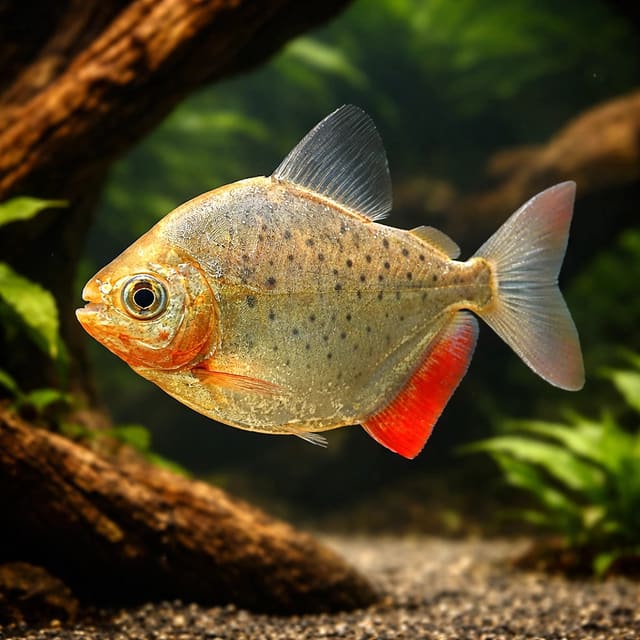
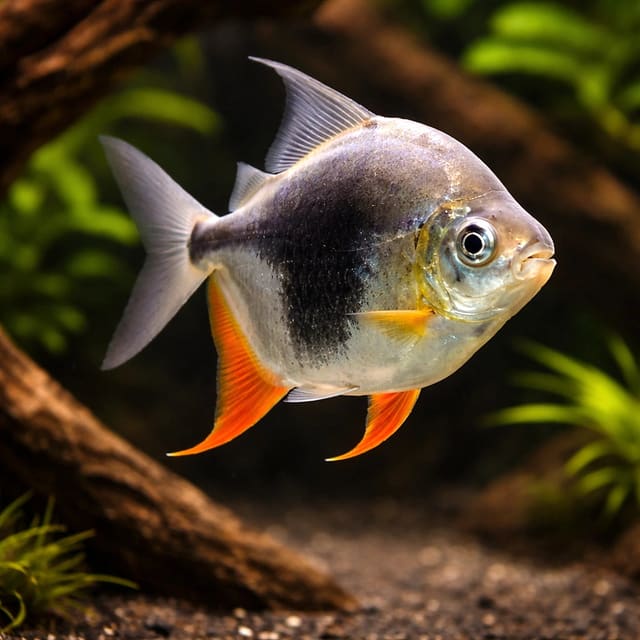
Myleus torquatus displays a distinctive silver-dollar body shape: tall, laterally compressed, and highly reflective. The base color is bright silver with a subtle golden or greenish sheen. The most distinctive feature is a prominent dark vertical bar or "torque" marking behind the gills, which gives the species its name. The dorsal and anal fins are large and ornate, often with red or orange highlights. The caudal fin is deeply forked. Under good lighting, the silver scales shimmer brilliantly. Juveniles at 4–7 cm show similar patterning to adults, with the coloration intensifying as they mature.
This species inhabits the Amazon Basin in South America, favoring slow-moving rivers, flooded forests, and oxbow lakes with abundant aquatic vegetation. Water conditions are typically warm (24–28 °C), soft, acidic, and well-oxygenated. The substrate is sand or mud, and the environment is dimly lit with abundant floating and submerged plants. Myleus torquatus is a diurnal schooling species, actively foraging during daylight hours in large groups. During the rainy season, these fish move into flooded forest areas to feed on fruits, seeds, and plant matter. Replicating these spacious, plant-rich conditions at home is essential for long-term health.
A minimum 1,000-litre aquarium is essential to accommodate a proper shoal and provide adequate swimming space. Use sand or smooth gravel substrate, and include driftwood and robust live plants such as Anubias, Java fern, and Vallisneria. Avoid delicate or soft-leaved plants, as this species can be destructive when feeding. Subdued lighting is preferred. Strong filtration is essential to manage the bioload of a large shoal. A secure lid is recommended, as silver dollars are strong swimmers and may jump when startled. Provide open swimming areas and avoid overcrowding the tank with décor.
Myleus torquatus is primarily herbivorous to omnivorous. Offer a plant-heavy diet with algae wafers, spirulina-based foods, blanched vegetables (courgette, spinach, peas), leafy greens (lettuce, kale), and quality sinking pellets. Occasional meaty foods only sparingly if at all, as a plant-based diet is essential for health. Feed once or twice daily in portions that are consumed within a few minutes. This species is a vigorous feeder and may damage soft plants while feeding, so use hardy species or artificial plants if plant preservation is important.
Myleus torquatus is peaceful and must be kept in a sizeable shoal of at least six individuals to display confident, natural behavior. In smaller numbers they become shy, stressed, and skittish. A well-adjusted shoal will actively swim throughout the aquarium during daylight hours, foraging constantly for plant matter. Although generally peaceful, this species can be skittish and may damage soft plants while feeding. Males may display mild territorial posturing during feeding, but serious aggression is rare. These fish are active swimmers and require ample open space.
Ideal companions include other very large, robust, peaceful fish only such as large peaceful catfish (large Synodontis, large Plecostomus), large non-aggressive South American fish (large peaceful cichlids such as severums, Geophagus), and other large peaceful characins. Avoid housing with small fish that may be eaten, fin-nipping species, aggressive territorial cichlids, very slow or delicate fish, or shrimp and small invertebrates. Fast-moving, mid-water species that will not be harassed are best.
Breeding is uncommon in home aquaria and typically requires a very large system, excellent water quality, and a mature group; little reliable captive-breeding information is available. Sexual dimorphism is subtle; males may be slightly more colorful and streamlined. If breeding is attempted, provide a very large aquarium, excellent water quality, and seasonal conditioning with live and plant-based foods. Spawning likely occurs in open water with eggs scattered and fertilized. Fry, if produced, require specialized care and high-protein micro-foods initially.
At Tropical Fish Co, every Myleus torquatus is quarantined, health-checked, and acclimated to UK water conditions before dispatch. We source our fish from reputable suppliers who prioritize ethical collection and sustainable practices. Our livestock arrives in insulated packaging with heat packs during colder months, ensuring safe transit. With decades of combined fishkeeping experience, our team is available to answer questions about care, compatibility, and tank setup. Whether you're building a large South American biotope or expanding an established collection, we're here to support your success. Order with confidence and enjoy premium freshwater fish delivered to your door.
No reviews for this item yet. Bought one? Honest reviews only, good or bad.
What customers say about ordering from us
I have a small group of long finned mountain minnows. So was delighted to be able to order ten of this variety to increase the genetics in my tank . The ones I recieved are healthy but it’s to early to give a verdict on wether they are of a long finned type since they are small currently.
Gordon Walker · 23 Sept 2026
100% success travel and "installation". Pleased with quality of purchase. The Siamese fighter a bit "shy" so have not yet seen him at his best yet but looking good. Happy customer. GG
George E Garratt · 21 Sept 2026
Reviews of our shop, collected by Judge.me, an independent third-party review collector. Newest first.