Moderate
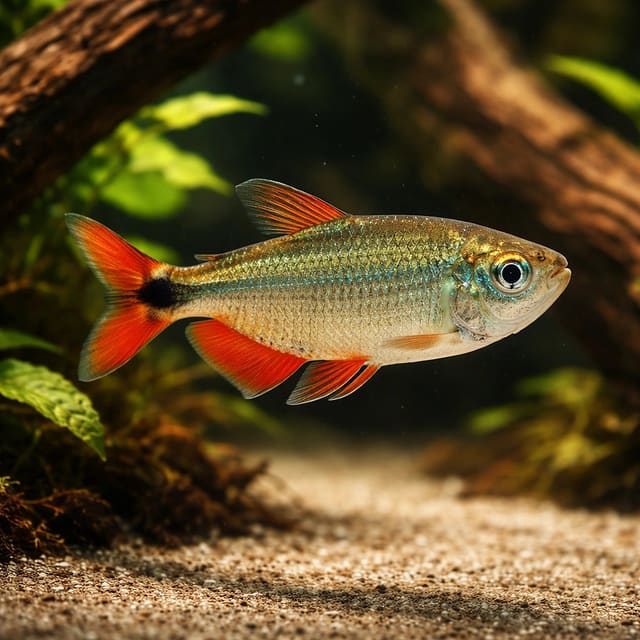
Ember Tetra (Hyphessobrycon amandae)
£3.99

Buy Vampire Tetra, a striking moderate-care predator for large aquariums. Perfect for experienced keepers. Order now for UK delivery.
Adult size is the maximum length this species reaches at full maturity (scientific sources). The livestock you receive will be younger and smaller. Product-photo provenance and any image-specific limitations are stated on the listing.
Hydrolycus scomberoides
Confirm your email, then we’ll send an availability message for this exact item if it returns within 180 days.
This request is only for this product—no newsletter or other promotions. A mail-provider retry may very rarely duplicate the same availability message. Unconfirmed addresses are removed after 48 hours. See our privacy policy.
Buy Vampire Tetra, a striking moderate-care predator for large aquariums. Perfect for experienced keepers. Order now for UK delivery.
Adult size is the maximum length this species reaches at full maturity (scientific sources). The livestock you receive will be younger and smaller. Product-photo provenance and any image-specific limitations are stated on the listing.
Maintain these water conditions for optimal health and vibrant colors
The Vampire Tetra, Hydrolycus scomberoides, is one of the most dramatic fish ever offered in the tropical fish UK hobby. Known to many aquarists as the Payara, this South American predator combines a sleek silver body, huge speed, and the famous lower-jaw fangs that give rise to the name “vampire.” It comes from fast-flowing waters in the Amazon and Orinoco basins, grows to an impressive vampire tetra size of around 50 cm in captivity when well kept, and has a lifespan of about 5 years. Although some shoppers search for vampire tetra for beginners, this is not a beginner species at all. The true vampire tetra minimum tank size is enormous, the correct vampire tetra temperature must be stable, and the fish needs pristine water, heavy oxygenation, and a specialist carnivorous diet.
If you have only kept small characins before, such as fish discussed in searches for neon tetra tank size, 6 neon tetra tank size, or even congo tetra tank size, the Payara is in a completely different league. It is not the best tetra for community tank use in the usual sense, but it is a spectacular display predator for very large specialist aquariums. See our detailed photos showing the elongated body, metallic sheen, and impressive canine teeth in the product image tropical-fish-uk.webp. For the advanced keeper who wants a true centrepiece predator and understands large-tank fishkeeping, the Vampire Tetra offers unforgettable presence and fascinating behaviour.
The Vampire Tetra belongs to the dogtooth characins, a small but striking family of South American predators. In the aquarium hobby it is often grouped with large oddball characins rather than standard tetras, because its adult size, feeding style, and housing needs are far beyond those of common schooling species. Related fish in the broader South American characin scene include predatory species and large open-water swimmers kept in oversized display tanks.
The vampire tetra habitat is very different from the calm planted tanks many aquarists picture when they hear the word tetra. In the wild, Hydrolycus scomberoides is found across parts of the Amazon and Orinoco systems in South America, especially in large rivers and channels with strong current, high oxygen, and open swimming space. These fish are built for speed and pursuit. Their long, streamlined bodies and oversized jaws are perfect for chasing and impaling prey fish in moving water.
Unlike a neon tetra habitat or neon tetra native habitat, which is usually associated with shaded blackwater creeks and smaller forest streams, the Payara lives in bigger, more forceful environments. This is also unlike the classic congo tetra habitat and congo tetra biotope that hobbyists recreate with soft water, plants, and calmer flow. If you have read about the congo river tetra, congo tetra origin, congo tetra native range, or congo tetra natural habitat, those comparisons help show how unusual the Vampire Tetra really is: it is a river hunter, not a peaceful midwater shoaler.
In nature, the species spends much of its time in open water, often in areas where current brings prey within striking distance. The fish’s natural hunting style explains why it can be nervous in cramped aquariums and why collisions happen in undersized tanks. It also explains why aquarists asking whether are neon tetras natural, neon tetra in the wild, or congo tetra in the wild should understand that “tetra” covers a huge range of fish with very different needs.
Wild Payara feed mainly on smaller fish. Their role is that of an active predator, and many vampire fish facts online focus on the dramatic fangs, but the more important fact for aquarists is that this species needs room, current, and excellent water quality to stay healthy. Conservation pressure varies by region, but the main aquarium concern is ethical, informed keeping. This is not a fish for novelty purchases; it is for experienced keepers who can provide the right scale of environment.
Mimicking the natural river habitat with strong filtration, directional flow, high oxygen, dimmer side lighting, and long open swimming lanes helps reduce panic, supports better appetite, and brings out more natural cruising behaviour.
The single biggest mistake buyers make is underestimating the true vampire tetra tank size requirement. This fish is often sold small, but it is a large, muscular predator that can reach a substantial adult length. The realistic vampire tetra minimum tank size is 800 litres, and larger is strongly recommended for long-term care. A tank with a long footprint matters more than height alone, because this species needs forward swimming space. If you are used to questions like what is a good size fish tank for a beginner, what size fish should i get, or neon tetra recommended tank size, the answer for a Payara is simple: go much larger than you think.
A juvenile may arrive manageable in size, but this is not a fish for a standard home community aquarium. The right vampire tetra aquarium setup should prioritise length, current, and secure covers. Because these fish are powerful and fast, they can injure themselves in cramped quarters. A 200 cm or larger tank length is ideal. Aquarists comparing this species with searches such as neon tetra minimum tank size, neon tetra tank requirements, neon tetra fish requirements, congo tetra minimum tank size, or what size tank for congo tetras should treat the Payara as a specialist monster characin rather than a standard tetra.
The ideal vampire tetra water parameters are stable rather than extreme. Keep the vampire tetra water temperature and vampire tetra temperature between 24 and 28°C. This overlaps with the congo tetra temperature, congo tetra temperature range, and even the ideal temperature for congo tetra, but the Payara needs far more current and oxygen. It also shares some overlap with neon tetra ideal temperature, neon tetra optimal temperature, and neon tetra minimum temperature, yet the housing style is completely different. Aim for low nitrate, strong surface movement, and weekly maintenance without fail.
A strong external canister filter or sump is essential. Turnover should be high enough to maintain excellent oxygenation and remove waste from a heavy carnivorous diet. Add powerheads to create directional flow, but avoid chaotic blasting current that leaves the fish unable to rest. This species benefits from clean, moving water much more than many fish kept in a softer neon tetra tank setup or decorative congo tetra tank setup.
For keepers building a large predatory system, pair this fish with dependable life-support equipment such as a robust external filtration setup for large tropical fish systems, a reliable aquarium heater for stable tropical temperatures, oxygen-friendly river-style circulation equipment, and easy-clean smooth aquarium substrate for large characins.
The best vampire tetra tank setup uses open swimming space with minimal clutter. Sand or smooth fine gravel is safer than sharp rock. Decor should be secure, rounded, and placed to the sides and rear. Driftwood can work, but avoid narrow gaps where a startled fish could wedge itself. Although some shoppers search for vampire tetra in planted tank ideas, dense planting is usually not practical in a full-grown Payara aquarium. Instead, use hardy marginal planting or protected root structures if you want a more natural look.
If you enjoy South American themes, you can still borrow visual inspiration from species such as Sailfin Tetra - Crenuchus Spilurus -, Splash Tetra - Copella Arnoldi -, or Glass Bloodfin Tetras - Prionobrama, but remember that the Payara needs a far more open and powerful river setup.
Moderate lighting is best. Very bright light in a bare tank can make the fish skittish. Use a day length of 8 to 10 hours and provide shaded zones at the edges. A dark background often helps the silver body stand out while reducing stress.
Always cycle the aquarium for 4-6 weeks before adding a Vampire Tetra. Because this species is sensitive to poor water quality and stress, an immature filter often leads to refusal to feed, injury from panic swimming, or rapid decline.
The vampire tetra diet is strictly carnivorous. In the wild, these fish hunt other fish, and that natural feeding response remains strong in captivity. If you are asking what do vampire tetra fish eat, the answer is whole meaty foods: fish flesh, silversides, lancefish, and other suitable frozen aquatic items. A realistic vampire tetra feeding guide must also mention that some specimens are reluctant to accept dead foods at first, especially after shipping.
The best vampire tetra fish diet in captivity is based on high-quality frozen and fresh aquatic proteins rather than mammal or bird meat. Avoid relying on feeder fish because they can introduce parasites and poor nutrition. This is very different from a congo tetra diet or neon tetra diet, where flakes, micro pellets, frozen foods, and small live foods are normal. Questions like what do congo tetras eat, what to feed congo tetras, what do neon tetras eat in the wild, what neon tetra eat, and what to feed neon tetras apply to omnivorous community fish, not to a specialist predator like the Payara.
Use thawed silversides, strips of white fish, lancefish, and other aquatic-origin frozen foods as the staple diet. Juveniles may need smaller portions more often. Adults usually do best on one substantial feeding daily or every other day depending on size and condition.
Occasional prawns, mussel meat, and vitamin-enriched predator foods can add variety. Some individuals can be trained onto large carnivore sticks, but success varies. If you are searching aquarium fish food for sale near me, remember that specialist predators need more than generic tropical flakes.
Avoid fatty meats from land animals. Do not use goldfish or rosy reds as feeders. Those choices often cause nutritional imbalance and disease risk. For community species, hobbyists often ask can neon tetras eat bloodworms, can neon tetras eat betta food, or can neon tetras eat betta pellets; for Payara, the issue is not pellet compatibility but whether the food item is large enough, aquatic in origin, and digestible.
Juveniles: feed once or twice daily in moderate portions. Subadults and adults: feed one larger meal daily or 4-5 times per week depending on body condition. Remove uneaten food quickly. Because this species produces heavy waste, overfeeding harms water quality fast.
| Time | Food | Amount |
|---|---|---|
| Morning | Thawed silversides or fish strips | Only what is taken within 2-3 minutes |
| Evening | Optional second smaller meaty feed for juveniles | Light portion if needed |
Overfeeding causes ammonia spikes, greasy surface films, and rapid deterioration in water quality. With a large carnivore like the Payara, one extra heavy meal can pollute the aquarium far more than overfeeding a shoal of small tetras.
A practical staple for conditioning newly settled Vampire Tetra onto non-live foods.
Useful as a supplementary option once the fish is feeding confidently.
The Payara has one of the most recognisable profiles in freshwater fishkeeping. The body is long, torpedo-shaped, and metallic silver to steel-grey, often with a reflective sheen that flashes under side lighting. The head is large, the mouth is oblique, and the lower jaw carries the famous elongated canines that slot into openings in the upper jaw when the mouth closes. This is the defining feature behind the name Vampire Tetra.
Typical vampire tetra size in aquaria can approach 50 cm with excellent care, though many specimens sold are juveniles. Compared with searches like congo tetra adult size, blue eyed congo tetra, or black neon tetra xl, the Payara is massively larger, more predatory, and built for speed rather than display finnage. It is not suitable for a black neon tetra 5 gallon tank style setup, and anyone moving up from small tetras should plan accordingly.
Color is usually understated compared with ornamental community tetras. Instead of bright reds and blues, the appeal lies in the polished metallic body, powerful jawline, and predatory silhouette. Some keepers ask when do congo tetras color up or why neon tetra is losing color; with Payara, colour intensity is less important than body condition, alert eyes, and smooth, confident swimming. A healthy fish should look sleek, not pinched, and should hold itself level in the water.
Regarding vampire tetra male vs female, sexual dimorphism is subtle. Mature females may appear slightly fuller-bodied, especially when conditioned, while males can look a little slimmer and more streamlined. In practice, sexing is difficult without a group of mature fish and close comparison. Our photos show the dramatic head profile and metallic body tone that make this species such a striking oddball predator.
When people search for vampire tetra tank mates, they often hope to build a dramatic mixed display. That is possible, but only with great care and a very large aquarium. The Payara is not a peaceful tetra in the usual hobby sense. Its vampire tetra behaviour is predatory, fast, and sometimes nervous. Any fish small enough to fit in its mouth is at risk. So while you may see questions like what can neon tetras live with or what can congo tetras live with, those community-fish rules do not apply directly here.
The best vampire tetra compatible fish are robust, similarly sized species that occupy different niches and are not easily swallowed. Large catfish and substantial characins are the safest options. Good examples in a huge display include selected larger South American oddballs and open-water companions. You can explore related predatory or large characin choices such as Gar Characins - Ctenolucius Hujeta, Piaractus Brachypomus - Red-Bellied Pacu -, Red-Bellied Pacu - Piaractus Brachypomus, and even specialist characins like Bucktooth Tetra - Exodon Paradoxus - for comparison in temperament and setup style.
Avoid all small community fish, including neons, rasboras, guppies, and most dwarf cichlids. Shrimp and small snails are not realistic companions. If people ask can congo tetras live with shrimp, that question belongs to peaceful or semi-peaceful species, not a fish-eating predator. Likewise, while hobbyists debate can congo tetras live with neon tetras, can congo tetras live with guppies, can congo tetras live with rainbowfish, or can congo tetras live with discus, the Payara should not be evaluated by those same standards.
Some searches ask whether this is the best tetra for community tank use. In truth, it is not a normal community species. It can live vampire tetra with other fish only in very large, carefully planned predator communities. If you are wondering how many vampire tetra in a tank, most keepers do best with a single specimen unless the aquarium is exceptionally large and the fish are introduced with experience. Small groups are possible only in truly oversized systems with excellent filtration and sight-line management.
For comparison, many aquarists ask are congo tetras schooling fish, are congo tetras peaceful, are congo tetras aggressive, are congo tetras aggressive to other fish, are congo tetras good community fish, or are neon tetras aggressive. The Payara is not schooling in the same decorative way, and its aggression is tied to predation more than territorial bickering.
| Species | Compatible? | Notes |
|---|---|---|
| Gar Characins - Ctenolucius Hujeta | ⚠️ Caution | Possible only in very large tanks with matched sizes and open swimming space. |
| Piaractus Brachypomus - Red-Bellied Pacu - | ⚠️ Caution | Works only in oversized systems; both species become large and need strong filtration. |
| Neon Tetras, guppies, shrimp | ❌ Avoid | Too small; likely to be hunted or stressed. |
Questions such as can congo tetras live with angelfish, can congo tetras live with bettas, can congo tetras live with cichlids, can congo tetras live with goldfish, or congo tetra eat guppies show how often aquarists compare tetra temperaments. For the Payara, the safest rule is simple: if it fits in the mouth, it is food; if it is aggressive enough to injure the Payara, it is also unsuitable.
Always quarantine new arrivals for 2-4 weeks and grow out potential tank mates to a safe size before introduction. Introducing undersized fish to a settled Payara aquarium often ends in predation within hours.
Vampire tetra breeding is extremely difficult in captivity and rarely achieved in home aquariums. This species is best treated as an advanced display predator rather than a practical breeding project. If you are used to reading about neon tetra breeding, neon tetra how to breed, neon tetra breeding behavior, congo tetra breeding, or congo tetra breeding behavior, the Payara is far more demanding. Its adult size, open-water habits, and need for river conditions make controlled spawning very challenging.
A realistic breeding attempt would require a very large dedicated system with excellent current, pristine water, and mature fish in peak condition. Sexing is difficult, so identifying a true pair is a challenge in itself. As noted above, vampire tetra male vs female differences are subtle.
Documented aquarium spawning behaviour is limited. In the wild, river flow, seasonal changes, and large migratory space likely play important roles. This is very different from hobby questions such as when do neon tetras breed, when do neon tetras lay eggs, or how do you know when a neon tetra is going to lay eggs, where small soft-water breeding tanks may be used.
Because captive spawning is so uncommon, there is little standardised home-aquarium guidance. If spawning ever occurred, eggs and fry would almost certainly need separation and specialised feeding from the earliest stages. The term baby vampire fish sounds exciting, but raising them would require expert live-food culture, very large grow-out space, and strict water management.
The biggest issues are obtaining a compatible mature group, providing enough space, and reproducing seasonal triggers. Compared with questions like are congo tetras easy to breed, congo tetra breeding tips, congo tetra baby, or are neon tetras easy to breed, the Payara is firmly in the “specialist only” category.
If your long-term goal is captive reproduction, focus first on maintaining a healthy group to adulthood in a public-aquarium-scale setup. Stable current, seasonal feeding changes, and photoperiod adjustments are more relevant than the small breeding-box methods used for egg-scattering tetras.
Many buyers looking at dramatic characins compare the Payara with other large or unusual South American fish. This matters because the Payara is often purchased for its looks before the keeper fully understands the scale of care involved. If you want a true oddball predator and have the space, it is unforgettable. If you want a more manageable display fish, another species may be a better fit.
| Feature | Vampire Tetra | Gar Characin |
|---|---|---|
| Max Size | 50 cm | 25-30 cm |
| Care Level | Expert | Moderate to advanced |
| Temperature | 24-28°C | 24-28°C |
| Price | £41.61 | Varies |
| Best For | Large specialist predator tanks | Long oddball community displays |
| Feature | Vampire Tetra | Bucktooth Tetra |
|---|---|---|
| Temperament | Predatory fish-eater | Fin-nipping predator |
| Tank Style | Open river setup | Large aggressive species tank |
| Group Options | Single or small group in huge tank | Group with caution |
| Visual Appeal | Fangs and speed | Pattern and aggression |
| Best For | Experienced oddball keepers | Aggressive characin enthusiasts |
Choose the Payara if you want one of the most iconic freshwater predators available in the tropical fish uk for sale market and you can provide a truly large aquarium. Choose Gar Characins - Ctenolucius Hujeta if you want a slimmer, easier oddball predator. Choose Bucktooth Tetra - Exodon Paradoxus - if you are interested in aggressive characin behaviour on a smaller scale. If you prefer a calmer tetra display, species such as Royal Tetras - Inpaichthys Kerri or Splash Tetra - Copella Arnoldi - are far easier to house.
Good vampire tetra health starts with space, oxygen, and water quality. This species is less likely to suffer from the exact issues behind searches like what is neon tetra disease or what causes neon tetra disease, but it is highly vulnerable to stress-related decline when kept in poor conditions. The most common problems in captivity are shipping stress, refusal to feed, collision injuries, and secondary bacterial infections after damage to the mouth or body.
A healthy Payara swims strongly in midwater, reacts quickly to movement, holds its fins well, and shows a full body without sunken flanks. Breathing should be steady, not laboured. The eyes should be clear and the jaw area free from swelling or abrasion.
General vampire tetra diseases in captivity often begin with stress. Watch for clamped fins, refusal to eat, rubbing, excess mucus, cloudy eyes, and red or white patches after impact injuries. Parasites can be introduced through feeder fish, which is one reason they should be avoided. While hobbyists often ask what is neon tetra disease symptoms or does neon tetra disease affect other fish, the Payara’s more likely problems are trauma and water-quality-linked infections rather than classic small-tetra syndromes.
Prevention is far better than treatment. Keep nitrate low, perform regular large water changes, and maintain stable vampire tetra water parameters. Quarantine all new fish and all food sources where possible. If treatment is needed, move the fish only if the hospital tank is large and secure enough; otherwise, in-tank treatment may be safer depending on the issue. Avoid harsh medication unless diagnosis is clear.
Some shoppers search unusual pairings such as vampire tetra flowerhorn cichlid, congo tetra with cichlids, or congo tetra with african cichlids. These combinations usually create stress, injury risk, or outright predation problems. Stress from poor tank mate choices is a major hidden cause of illness in large characins.
Never medicate a large predatory fish casually. Many symptoms that look like disease are actually stress from poor water quality, inadequate tank size, or impact injuries. Correct the environment first, then treat only what you can identify.
Vampire tetra behaviour is a mix of speed, alertness, and predatory focus. This fish is usually most active in the middle of the tank, where it cruises open water and watches its surroundings closely. It is not a decorative shoaler like small tetras and should not be expected to behave like one. Sudden movements outside the glass can startle it, especially in bare or cramped tanks.
In a suitable setup, the Payara becomes more confident and spends long periods patrolling the current. The species can be kept singly or in a small group in truly oversized systems, but social management is advanced. If you are wondering how many vampire tetra in a tank, the answer depends entirely on tank dimensions, filtration, and keeper experience. Most private aquariums are best with one specimen.
To encourage natural behaviour, provide strong flow, shaded edges, and a secure lid. A settled fish will feed decisively and hold position in current with ease. This is one of the most fascinating vampire fish facts for observers: despite the fearsome fangs, much of its beauty lies in the way it moves through open water like a freshwater barracuda.
Buying a Payara is very different from ordering ordinary tropical fish for sale. This species needs careful handling from dispatch to acclimation, because stress during transport can affect feeding response and long-term settling. For customers searching for the best place to buy tropical fish online uk, buy live fish online uk, buy aquarium fish online uk, or live fish for sale uk, the key question is not just price. It is whether the seller understands how to prepare and pack a specialist predatory characin.
Our approach is built around the needs of large, sensitive oddball fish. Each specimen is observed before sale for posture, respiration, and feeding response where possible. Fish are packed in insulated boxes, with seasonal heat packs in winter and secure bagging suitable for active species. Tracked vampire tetra delivery UK service helps reduce transit time, and acclimation guidance is provided so buyers know how to introduce the fish to a mature aquarium with minimal stress.
If you are comparing vampire tetra price UK, cheap vampire tetra UK, buy vampire tetra UK, vampire tetra for sale UK, vampire tetra online UK, order vampire tetra UK, or where to buy vampire tetra UK, remember that healthy arrival and proper pre-sale conditioning matter more than saving a few pounds on a difficult species. Customers looking for buy live fish online uk free delivery or buy tropical fish online uk free delivery should always weigh delivery offers against fish welfare, transit method, and species suitability.
We also answer common buyer questions that appear in search, including whether a tank sized for 4 neon tetra, 6 neon tetra, or 6 congo tetra could ever work for a Payara. It cannot. Likewise, searches for 6 neon tetra price or 6 neon tetra tank size belong to small community fish planning, not to this expert-level predator. Order your Vampire Tetra today only if your setup is truly ready, and you will own one of the most unforgettable freshwater predators in the hobby.
If you enjoy unusual South American fish, consider comparing the Vampire Tetra with Gar Characins - Ctenolucius Hujeta for a slimmer predatory profile, or Bucktooth Tetra - Exodon Paradoxus - for aggressive characin behaviour in a smaller package. For large companion fish in oversized systems, look at Piaractus Brachypomus - Red-Bellied Pacu -. If you prefer more manageable tetra species, Royal Tetras - Inpaichthys Kerri, Sailfin Tetra - Crenuchus Spilurus -, and Splash Tetra - Copella Arnoldi - offer very different community-friendly appeal. To complete a large predator setup, also plan for strong filtration equipment for big tropical fish and suitable frozen foods for carnivorous aquarium fish.
No reviews for this item yet. Bought one? Honest reviews only, good or bad.
What customers say about ordering from us
I have a small group of long finned mountain minnows. So was delighted to be able to order ten of this variety to increase the genetics in my tank . The ones I recieved are healthy but it’s to early to give a verdict on wether they are of a long finned type since they are small currently.
Gordon Walker · 23 Sept 2026
100% success travel and "installation". Pleased with quality of purchase. The Siamese fighter a bit "shy" so have not yet seen him at his best yet but looking good. Happy customer. GG
George E Garratt · 21 Sept 2026
Reviews of our shop, collected by Judge.me, an independent third-party review collector. Newest first.