Easy
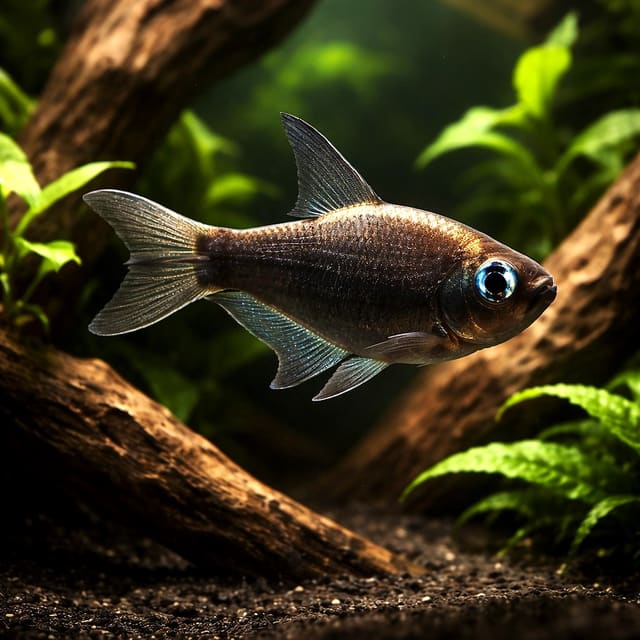
Emperor Tetra Black (Nematobrycon palmeri black)
23–27°C · pH 6.5–7.5 · 81L
£5.99

A hardy, active South American schooling tetra with a peaceful nature and attractive two-spot patterning. Moderate care, peaceful. 22-28C, pH 5.5-7.5.
Adult size is the maximum length this species reaches at full maturity (scientific sources). The livestock you receive will be younger and smaller. Product-photo provenance and any image-specific limitations are stated on the listing.
Astyanax bimaculatus
Save when buying multiple fish. Each quantity is one fish; sex and pair formation are not guaranteed unless the selected variant explicitly states them.
Confirm your email, then we’ll send an availability message for this exact item if it returns within 180 days.
This request is only for this product—no newsletter or other promotions. A mail-provider retry may very rarely duplicate the same availability message. Unconfirmed addresses are removed after 48 hours. See our privacy policy.
A hardy, active South American schooling tetra with a peaceful nature and attractive two-spot patterning. Moderate care, peaceful. 22-28C, pH 5.5-7.5.
Adult size is the maximum length this species reaches at full maturity (scientific sources). The livestock you receive will be younger and smaller. Product-photo provenance and any image-specific limitations are stated on the listing.
Maintain these water conditions for optimal health and vibrant colors
Marketed for its banded patterning, the Banded Astyanax (Astyanax sp.) is an active South American characin that brings the same restless energy as its larger relatives to a roomy community tank. It reaches around 12cm, putting it firmly in the bigger-tetra bracket where swimming room matters more than fancy decor.
Peaceful but lively, this is a schooling fish that should be kept in a group so its natural movement and social behaviour can play out. It sits in the middle region as an adaptable omnivore, accepting a varied diet without fuss. We list it at a moderate care level, so a stable, well-filtered tank and sensible stocking will keep it in good form.
Its pace and size make tank-mate choice important: companions need to hold their own around a fast, hungry schooler rather than be crowded out at feeding time.
Like its relatives, this is a fish that needs room to move. A 120-litre or larger tank with open swimming space in the middle region suits its active habits, and it copes with a broad range of water - 22 to 28°C, pH 5.5 to 7.5 and hardness from 2 to 15 dGH. Its moderate care rating simply reflects the need for stable conditions and sensible, group-based stocking.
Feeding is easy for an adaptable omnivore: a varied diet of flake, pellet and frozen foods keeps it healthy. Kept as a school it shows its best, coordinated behaviour, and with a potential five-year lifespan it settles in as a durable, energetic resident for a spacious community where its tank mates can keep pace.
Suitable companions are other robust peaceful schooling fish of similar size, Corydoras catfish, peaceful medium-sized loricariids and non-aggressive community fish that tolerate active schooling fish. Avoid large predatory fish, aggressive cichlids, fin-nipping species, very small fry or shrimp, and slow, long-finned fish that may be stressed or nipped. Orders are delivered through a licensed live-animal courier, with our live arrival guarantee in place.
No reviews for this item yet. Bought one? Honest reviews only, good or bad.
What customers say about ordering from us
I have a small group of long finned mountain minnows. So was delighted to be able to order ten of this variety to increase the genetics in my tank . The ones I recieved are healthy but it’s to early to give a verdict on wether they are of a long finned type since they are small currently.
Gordon Walker · 23 Sept 2026
100% success travel and "installation". Pleased with quality of purchase. The Siamese fighter a bit "shy" so have not yet seen him at his best yet but looking good. Happy customer. GG
George E Garratt · 21 Sept 2026
Reviews of our shop, collected by Judge.me, an independent third-party review collector. Newest first.