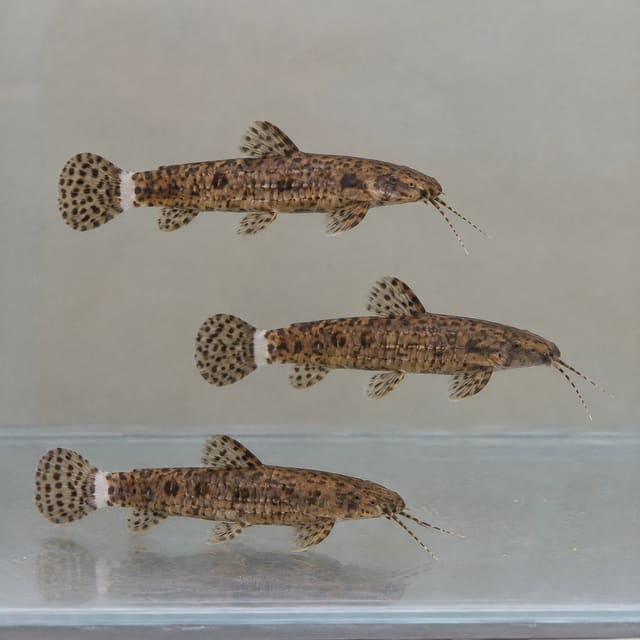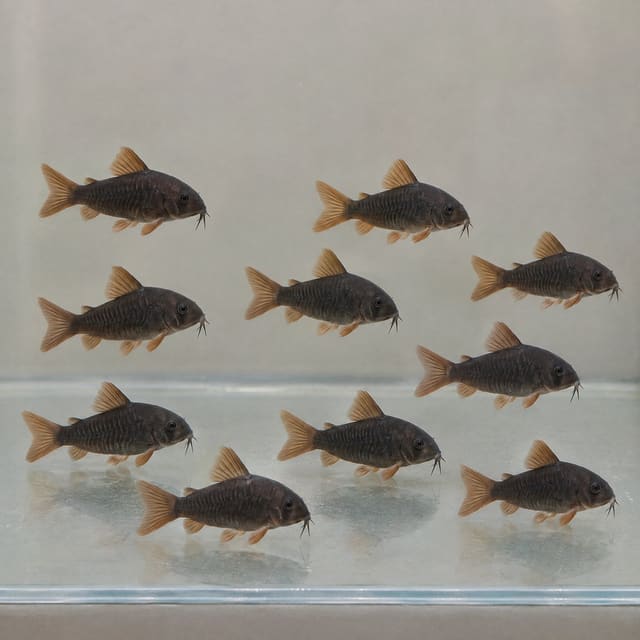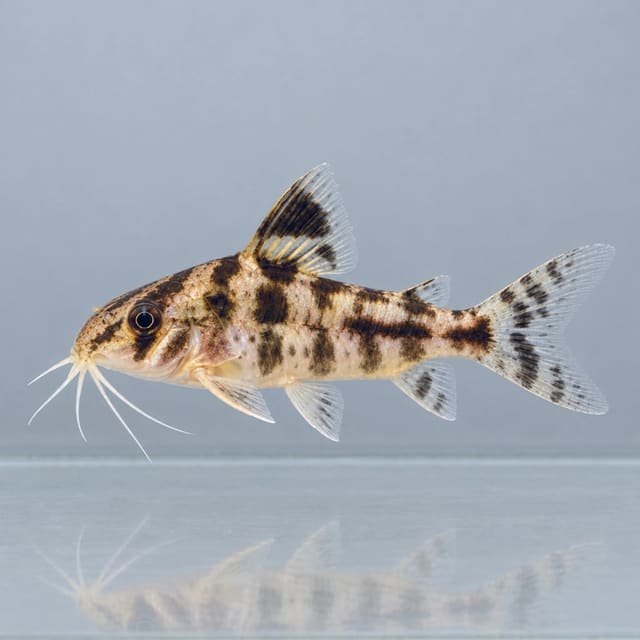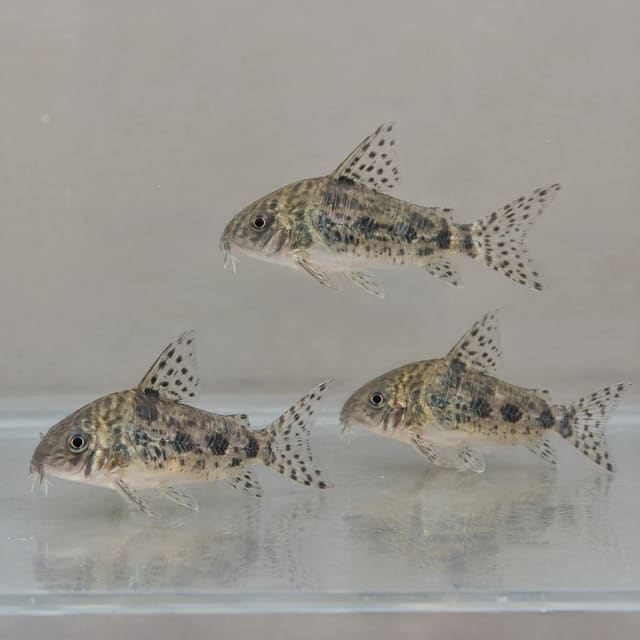
3 × Peppered Corydoras (Corydoras paleatus)
22–23°C · pH 6–7 · 70L
£9.89
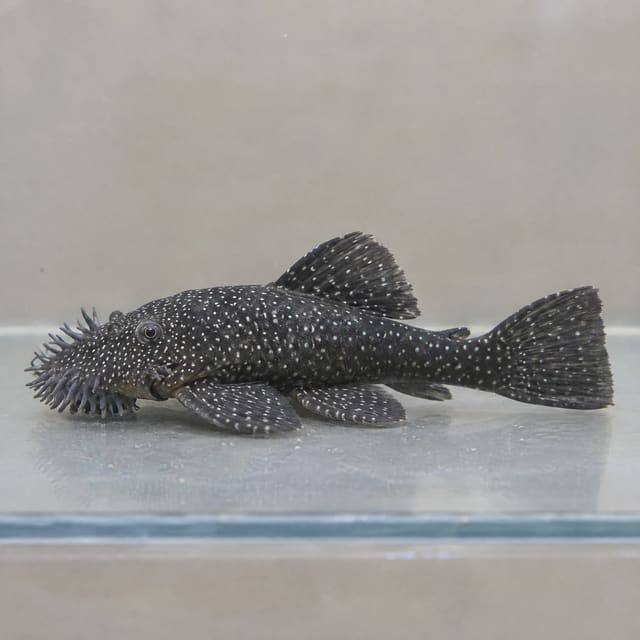
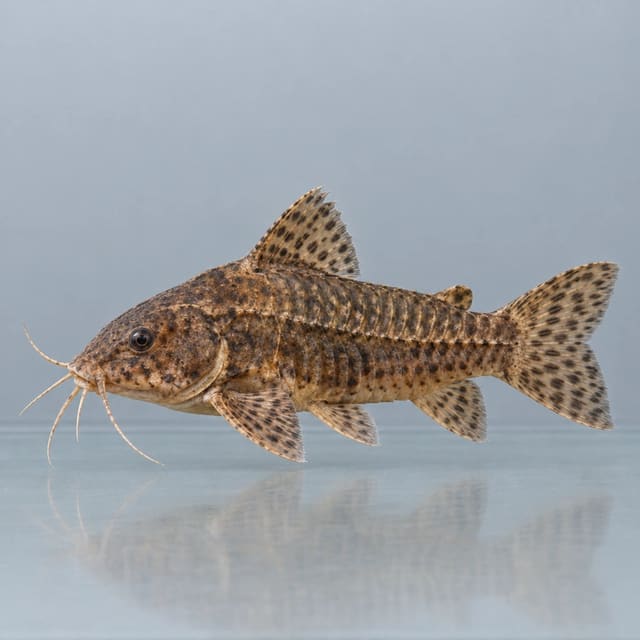
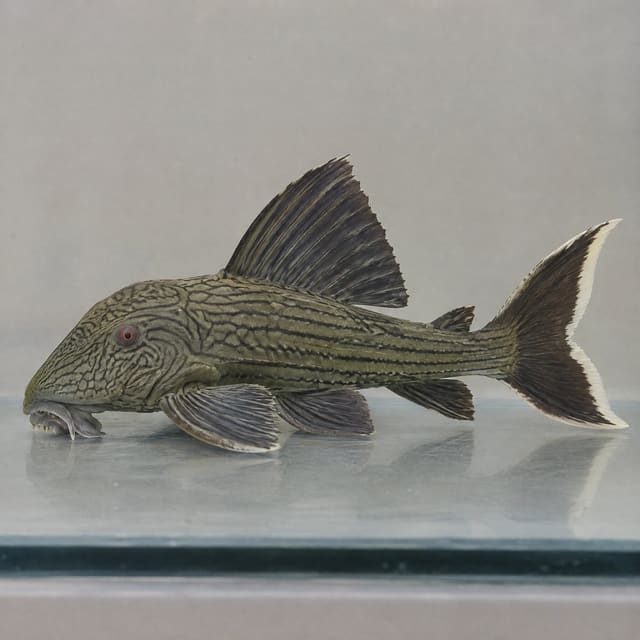
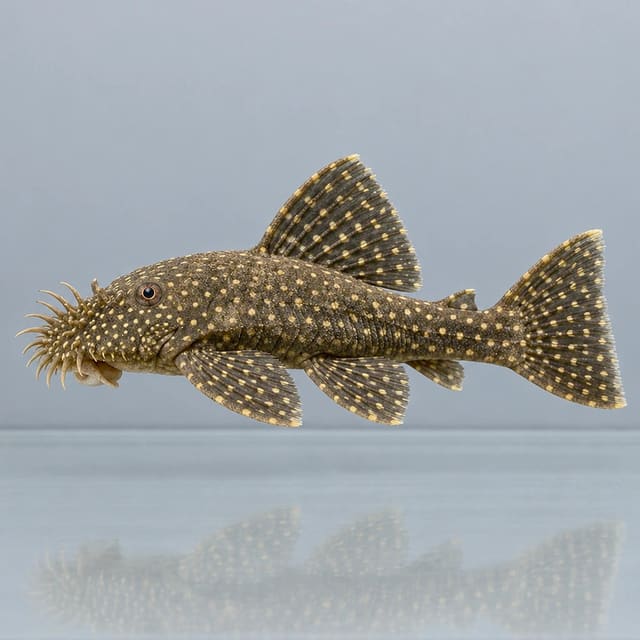
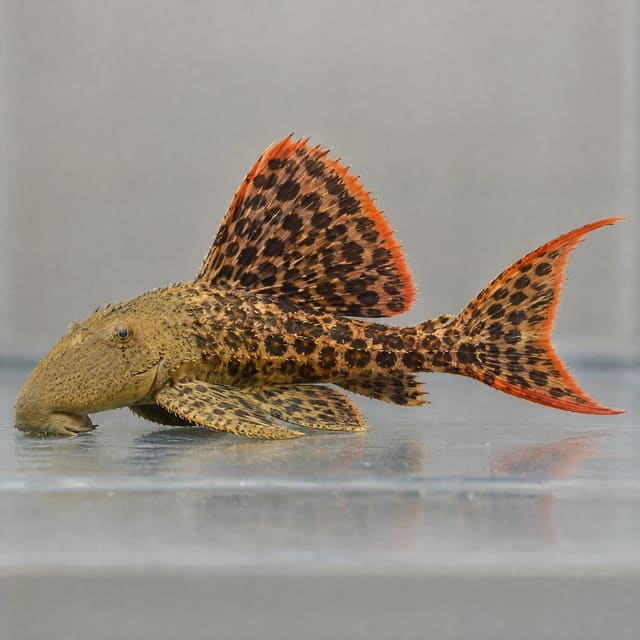
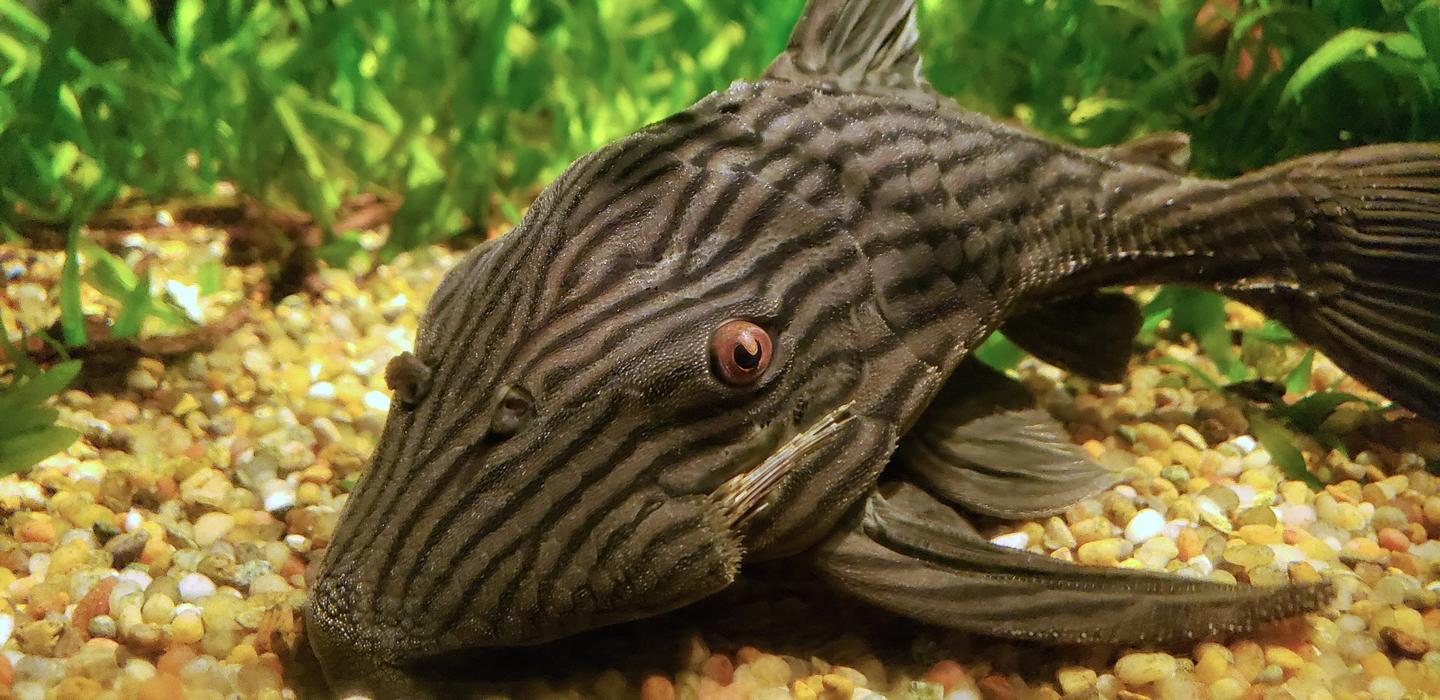
The L056 Chubby Pleco (Parancistrus aurantiacus) is a broad, flat suckermouth catfish from Peru and Brazil whose colour can change between slate grey-brown and gold. It grows to about 19–25 cm and needs a large, warm, well-oxygenated aquarium with caves and real wood. Sold individually as one live fish.
Parancistrus aurantiacus
The L056 Chubby Pleco (Parancistrus aurantiacus) is a broad, flat suckermouth catfish from Peru and Brazil whose colour can change between slate grey-brown and gold. It grows to about 19–25 cm and needs a large, warm, well-oxygenated aquarium with caves and real wood. Sold individually as one live fish.
‘Pleco’ is a loose aquarium-trade label, not one species or one care sheet. Before buying, confirm the scientific name or defensible L-number, adult size and measurement method, required footprint, temperature and water, diet, social plan and source. No universal pleco tank size, menu or algae result is honest.
Read the full care guidance when planning conditions for your aquarium.
The L056 Chubby Pleco (Parancistrus aurantiacus) is a broad, flat suckermouth catfish with large body plates, a wide head and a body that can shift from slate grey-brown to gold. It comes from the Ucayali river in Peru and the Tocantins and Xingu rivers in Brazil. It is one of the bigger L-number plecos: Planet Catfish gives 193 mm standard length and ScotCat 25 cm. Kept well, it is a calm, long-term resident for a warm, well-oxygenated aquarium with plenty of floor space.
Its scientific name means "orange-coloured", a reminder that the first fish described were gold. Planet Catfish explains that the colour change appears to be under the fish's own control, so the same individual can be grey one week and patchy gold the next. ScotCat records that gold imports were once thought to be males and sold for higher prices, but tended to lose the colour after a short time in captivity.
| Name | What it means |
|---|---|
| L056, L56, chubby pleco, rubber pleco | Trade names for Parancistrus aurantiacus |
| Parancistrus aurantiacus (Castelnau, 1855) | The current scientific name |
| Hypostomus aurantiacus, Parancistrus nigricans, P. vicinus | Older names now treated as synonyms |
| Pseudancistrus sp. (L056), black gudgeon pleco | The fish the number L056 was first given to; rarely exported |
| Pineapple pleco, pinecone pleco | Different, much larger Pseudorinelepis species |
The mix-up has a known origin. Planet Catfish explains that the real L056 is a Pseudancistrus from the Rio Araguari in Amapá, Brazil, which is rarely exported, and that fish sold as L056 are Parancistrus aurantiacus because of a misidentification in the Aqualog L-number book in the mid-1990s. We list the fish under the number buyers know, together with its correct scientific name. The "pineapple" name is sometimes attached to L56 as well, but it belongs elsewhere: ScotCat gives Pineapple Pleco to L152, a Pseudorinelepis of about 50 cm, and Planet Catfish gives 356 mm SL for the Pinecone Pleco, Pseudorinelepis genibarbis.
Parancistrus is easy to recognise once you know what to look for. Planet Catfish lists a membrane joining the dorsal fin to the small adipose fin behind it, very large gill openings and body plates without keels. Only a few other genera share that fin membrane, among them Baryancistrus and Spectracanthicus, which include our L018 Golden Nugget Pleco and L030 Peppermint Pleco. The L047 Magnum Pleco belongs to the same membrane-finned group.
One purchase supplies one live L056 Chubby Pleco. The size option is "Standard": the fish is sent at the size currently available, which is smaller than the adult size. Sex is not chosen or guaranteed.
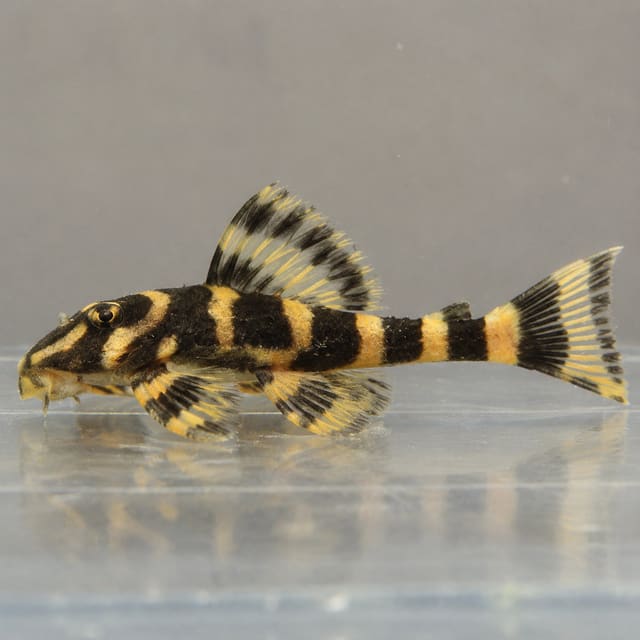
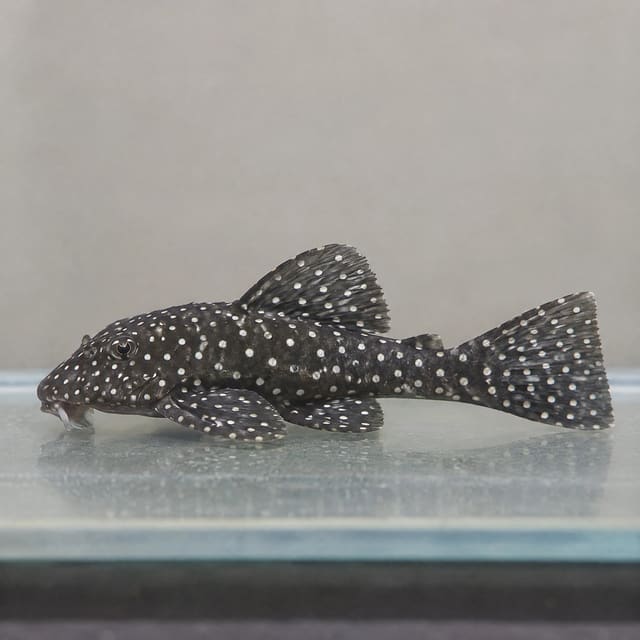
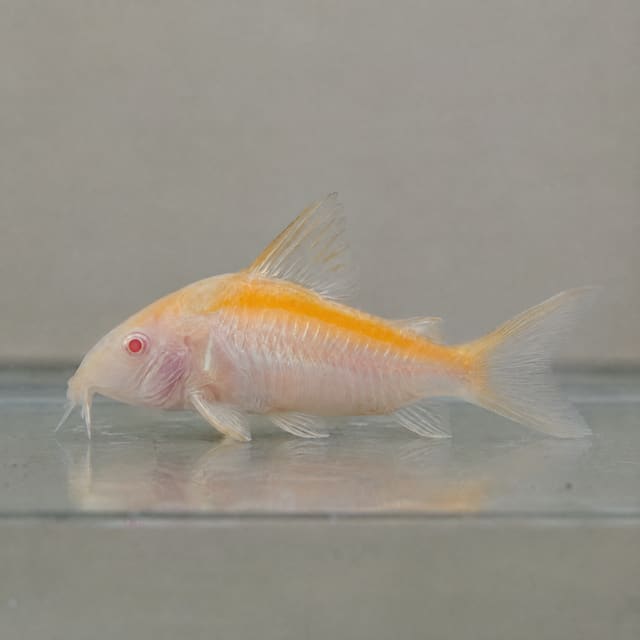
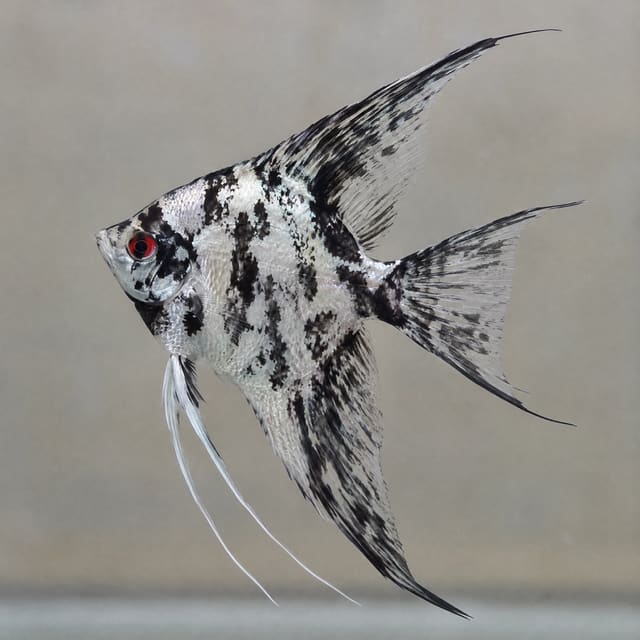
The photographs show the type of fish, not the individual you will receive. Expect anything from all-over grey-brown to patchy gold, and expect the colour to change after the move to a new aquarium. A dull fish on arrival is normal for this species and is not, on its own, a sign of poor health.
ScotCat describes mature males as having a broader head and more strongly bristled pectoral spines, with the bristles on the rear body plates growing longer at maturity. Planet Catfish adds that breeding males have elongated odontodes (tiny tooth-like bristles) on the pectoral spines and that males in breeding condition grow fleshy folds along the base of the dorsal fin. Young fish cannot be sexed reliably. Before you order, read our delivery and Live Arrival Guarantee information and have the aquarium matured and at temperature.
Planet Catfish gives 193 mm standard length and ScotCat 25 cm. Standard length runs from the snout to the base of the tail, so the tail fin adds more again. Because the body is broad and flat, an adult also covers more floor than a slim pleco of the same length. Plan every decision around the adult, not the size that arrives.
No source publishes a minimum aquarium for this species. Seriously Fish recommends a base of at least 120 × 45 cm, about 243 litres, for the L076 pleco, which reaches 140 mm SL. A chubby pleco grows larger than that, so treat 120 × 45 cm as the minimum floor and add length and front-to-back depth if you can. Floor area matters more than height for a fish that lives on the bottom.
Place the aquarium away from radiators, windows and draughts, as OATA's catfish care sheet recommends, and fit a secure lid. A heater is needed all year round in a UK home, and a thermometer you read every day is the simplest early warning you have.
ScotCat describes young fish resting under pieces of wood and on rockwork, while adults rest on the substrate in hiding places. Design the aquarium for both stages: a few wood pieces and stone overhangs for a young fish, and at least one large cave or wood hollow on the floor for the adult it becomes. Planet Catfish notes that it will lightly chew soft wood, so real bogwood earns its place as food as well as cover.
Planet Catfish also summarises Rapp Py-Daniel's 1989 review of the genus: the species had only been collected when the river had dried into isolated pools, and its very large gill openings might be an adaptation to low oxygen. Armbruster has pointed out that they may serve another purpose, such as feeding. In the aquarium the safe reading is simple: keep the water clean, warm and well oxygenated, and never rely on the fish coping with poor conditions.
| Area | Purpose |
|---|---|
| Large cave or wood hollow | The adult's main daytime retreat |
| Wood pieces and branches | Cover for a young fish and a soft surface to rasp |
| Rounded stone piles | Overhangs and broken sight lines between territories |
| Open sand or fine gravel | Feeding area where sinking food lands |
OATA recommends aquarium sand or fine gravel for catfish, to protect their sensitive barbels. Plants are optional; if you use them, choose tough species tied to wood and rock, so a large pleco moving through the aquarium does not uproot them. Leave enough open floor at the front to siphon, because waste gathers in the same sheltered corners the fish likes.
The sources disagree on temperature. Planet Catfish gives 22–27°C and ScotCat 26–30°C. We suggest 26–27°C, where the two ranges overlap, which also sits inside OATA's general 22–27°C for tropical catfish. ScotCat gives pH 6.0–7.2. No source publishes a hardness range for this species, so keep the hardness steady at whatever level holds the pH inside that range.
| Reading | Target |
|---|---|
| Temperature | 26–27°C (published figures run from 22°C to 30°C) |
| pH | 6.0–7.2 |
| Hardness | No published figure; keep it stable |
| Ammonia | 0 mg/l |
| Nitrite | 0 mg/l |
| Nitrate | No more than 20 mg/l above your tap water |
The ammonia, nitrite and nitrate targets come from OATA's catfish guidance. Hard tap water, common across much of England, often reads above pH 7.2. Check your water company's water-quality report and enter your readings in our water matcher before you buy. If your tap water sits well above the range, blending it with reverse-osmosis water is a steadier way to bring it down than adding pH chemicals. Treat every water change with a conditioner to remove chlorine or chloramine, and see our water chemistry guide for what each reading means.
A large pleco produces plenty of waste, and warm water holds less oxygen than cool water. Seriously Fish's species profiles size filters at a turnover of four to five times the tank volume each hour; for a 243-litre aquarium that means a filter rated at roughly 970–1,215 litres per hour. Point the outlet along the tank so the surface keeps rippling, and add an air stone if the surface is still.
Add fish slowly. Every new fish adds waste that the filter bacteria must grow to handle, and a large pleco added to a young aquarium can push ammonia up quickly. Our article on understanding aquarium filtration explains how to size and maintain a filter.
Planet Catfish describes P. aurantiacus as an omnivore that eats most vegetarian foods, tablets and pellets, and frozen meaty foods such as bloodworm and brine shrimp, and says it will lightly chew soft wood. ScotCat likewise recommends a varied diet of vegetable, tablet, live and frozen foods. It is not a dedicated algae eater, so plan to feed it every day rather than expecting it to live on what grows in the aquarium.
Feed close to its cave shortly after the lights go out, when a nocturnal pleco is most active and faster fish are settling. A well-fed fish has a gently rounded belly. If the belly looks hollow after a few weeks, tank mates are taking the food, so change where and when you feed before you increase the amount.
Add the fish only to a filtered aquarium that has run long enough to process waste, with ammonia and nitrite at zero and the temperature set. Our first tropical tank guide explains how to mature a new aquarium.
OATA recommends acclimatising with the aquarium lights off: float the sealed bag for about 10 minutes to match the temperature, add small amounts of aquarium water to the bag over up to 20 minutes, then release the fish with as little bag water as possible. OATA also advises double-bagging catfish, because their spines can puncture a bag, and handling them with care. If the spines catch in a net, hold the net in the water and let the fish work itself free rather than pulling. Our guide on how to acclimatise new fish goes through each step.
| Checkpoint | What to do |
|---|---|
| Before arrival | Test the water, set 26–27°C and place the caves and wood |
| Arrival | Acclimatise with the lights off, release, and leave the lights off for the rest of the day |
| First evening | Offer a small sinking portion near its chosen cave after dark |
| Days 2–7 | Check where it rests, that the belly stays rounded and that leftovers are removed |
| End of week | Retest ammonia, nitrite and nitrate and do the usual water change |
Expect it to hide, and expect it to look grey for a while. Colour change is part of this species' normal behaviour, and Planet Catfish notes that a fish that has turned grey only occasionally returns to gold. Hiding during the day is normal; breathing hard at the surface or lying on its side is not.
Planet Catfish calls this species relatively peaceful as medium-sized plecos go, and ScotCat describes it as only fairly territorial. It ignores fish in midwater and defends little more than its resting place. The real risks run the other way: pushy bottom feeders that take its food, and other plecos competing for the same caves.
| Suits | Avoid |
|---|---|
| Robust tetras and other midwater characins | Goldfish and other cool-water fish |
| Peaceful South American cichlids such as angelfish | Large, aggressive cichlids that harass it at night |
| Plecos of a different shape, with spare caves | A second large pleco competing for the same cave |
| Fish comfortable at 26–27°C | Fast bottom feeders that clear the food before it arrives |
The L018 Golden Nugget Pleco and L030 Peppermint Pleco belong to the same membrane-finned group and need similar warm, clean water, but give each pleco its own retreat. Browse all catfish and plecos, our L-number plecos and the wider range of South American catfish, and check any planned mix with our tank mates tool. Our pleco care guide covers the principles that apply to every pleco.
OATA describes a healthy fish as having clear, bright eyes, undamaged fins and no ulcers or bumps, and lists hanging at the surface, sitting on the bottom and erratic swimming as warning signs. A pleco naturally sits on the bottom, so learn what is normal for yours in the first month: where it rests, when it feeds and how its belly looks.
| If you see | Do this |
|---|---|
| A hollow belly | Feed after dark near its cave and check for competition at feeding time |
| Rapid breathing or hanging near the surface | Test ammonia, nitrite and temperature at once and increase surface movement |
| Grey colour after arrival | Normal for this species; judge health by feeding and breathing instead |
| White spots or fluffy patches | Test the water and get fish-health advice before treating |
| Scratches or red marks on the underside | Check décor and substrate for sharp edges |
| Not seen for several days | Look with a dim torch after lights-out and count your fish |
Test first, then act. Most changes in a pleco's behaviour follow a water-quality or temperature problem, so note the readings and any recent changes before you treat anything. Our article on tropical fish tank temperature explains how to keep the heater and thermometer reliable.
ScotCat reports that the IUCN assessed Parancistrus aurantiacus as Near Threatened in 2024. Its range covers the lower Xingu and the Tocantins–Araguaia basin, where dams already built and planned are suspected to cause a population fall approaching 30% over the next three generations. That is a good reason to buy one fish you can keep for its whole life, in an aquarium that already fits the adult.
Planet Catfish records a spawning in the UK in 2013, from adult fish that bred within a few months of import, and lists three breeding reports in total. That is very few for a fish that has been in the hobby for decades, so there is no settled breeding method to follow.
It is Parancistrus aurantiacus, a broad, flat-bodied suckermouth catfish (family Loricariidae) from the Ucayali river in Peru and the Tocantins and Xingu rivers in Brazil. It has been sold as L056 since the mid-1990s, although Planet Catfish explains that the number was first given to a different, rarely exported Pseudancistrus.
No. ScotCat gives the name Pineapple Pleco to L152, a Pseudorinelepis of about 50 cm, and Planet Catfish calls Pseudorinelepis genibarbis the Pinecone Pleco. The fish traded as L056 is Parancistrus aurantiacus, which stays far smaller. If a label pairs "pineapple" with L56, ask which fish it is before you buy.
Planet Catfish gives 193 mm standard length and ScotCat 25 cm, so plan for a fish of roughly 19 to 25 cm. Standard length is measured without the tail fin.
Not necessarily. Planet Catfish describes it changing between dull grey-brown and gold, with patchy stages in between, and ScotCat says gold imports tended to lose the colour after a short time in captivity. Choose it for its shape and character, not for a guaranteed colour.
No minimum is published for this species. Seriously Fish recommends a 120 × 45 cm base for the smaller L076 pleco (140 mm SL), so treat that as the minimum for a fish that grows larger, and give more floor space if you can.
Planet Catfish gives 22–27°C and ScotCat 26–30°C, so the sources disagree; 26–27°C satisfies both. ScotCat gives pH 6.0–7.2. Keep ammonia and nitrite at zero and the water well oxygenated.
It is an omnivore. Planet Catfish lists vegetable foods, tablets and pellets and frozen meaty foods such as bloodworm and brine shrimp, and says it will lightly chew soft wood. Feed after lights-out if faster fish take the food first.
Planet Catfish calls it relatively peaceful for a medium-sized pleco, and ScotCat describes it as only fairly territorial. Give every pleco its own cave or wood retreat and avoid crowding it with other large bottom dwellers.
One live fish of the standard size currently available. It is not sexed, and its colour may differ from the photographs.
No reviews for this item yet. Bought one? Honest reviews only, good or bad.
What customers say about ordering from us
Easy website plenty of info on fish your buying great to pick a time slot
TRACEY DURRANT · 7 Oct 2026
Got some lovely fish thank you
Kevin Mackie · 7 Oct 2026
Reviews of our shop, collected by Judge.me, an independent third-party review collector. Newest first.
Moved by UK carriers licensed to handle live animals
Hand-packed with oxygen bags, poly box, heat pack
Email photos the same day; an optional unboxing video helps us review problems faster — claim terms apply
Klarna & PayPal Pay in 3 at checkout