Moderate
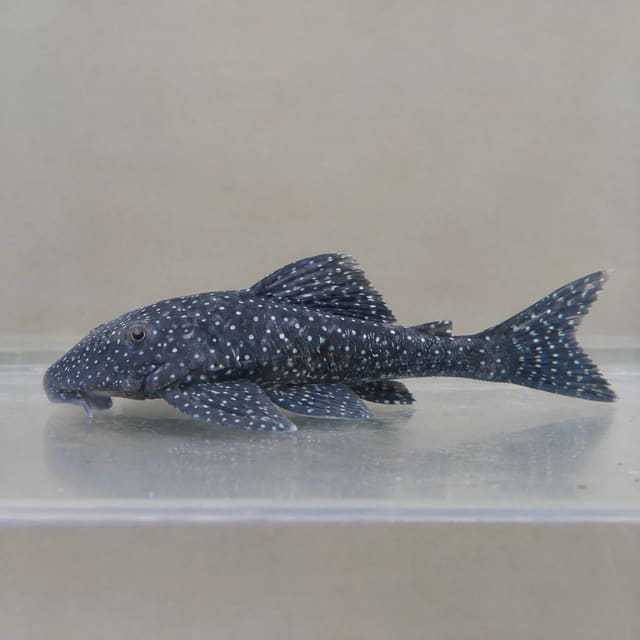
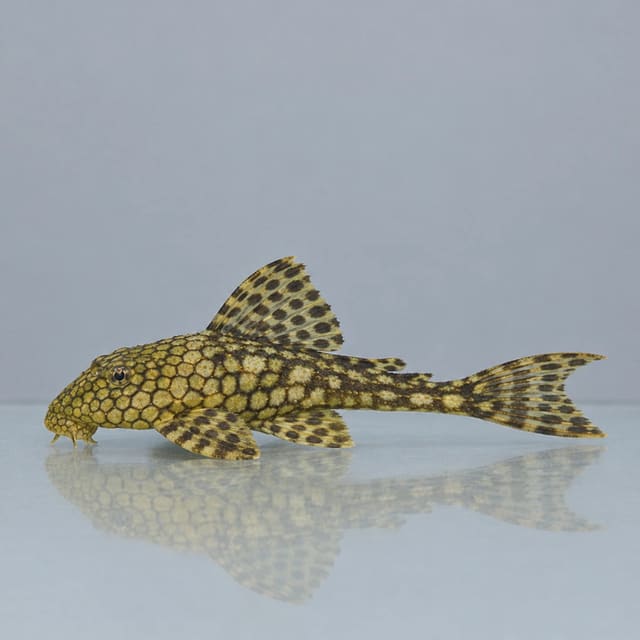
L037 Honeycomb Pleco (Hypostomus faveolus)
23–27°C
£40.89
The L137 Blue Eye Red Fin Pleco (Hypostomus soniae) is a high-backed, wood-eating suckermouth catfish from the Rio Tapajós in Brazil, recognised by its pale blue eyes and red-toned fins. It needs a 120 cm aquarium with plenty of driftwood, strong filtration and steady warm water. Sold individually as one live fish.
Hypostomus soniae
The L137 Blue Eye Red Fin Pleco (Hypostomus soniae) is a high-backed, wood-eating suckermouth catfish from the Rio Tapajós in Brazil, recognised by its pale blue eyes and red-toned fins. It needs a 120 cm aquarium with plenty of driftwood, strong filtration and steady warm water. Sold individually as one live fish.
‘Pleco’ is a loose aquarium-trade label, not one species or one care sheet. Before buying, confirm the scientific name or defensible L-number, adult size and measurement method, required footprint, temperature and water, diet, social plan and source. No universal pleco tank size, menu or algae result is honest.
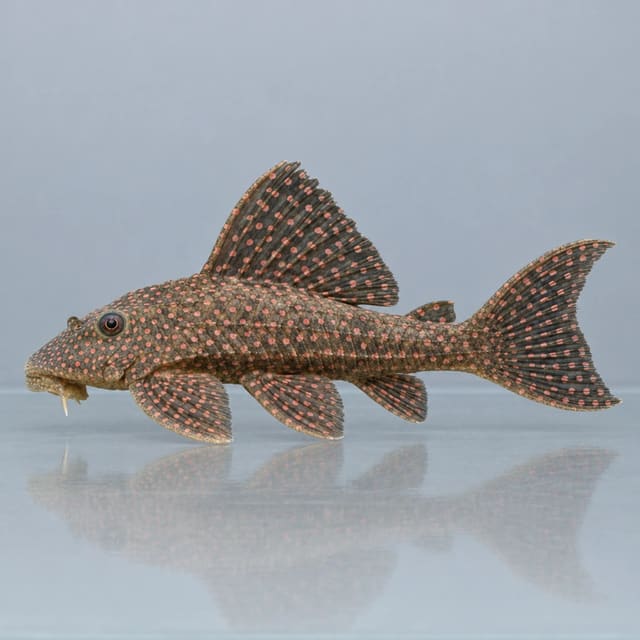
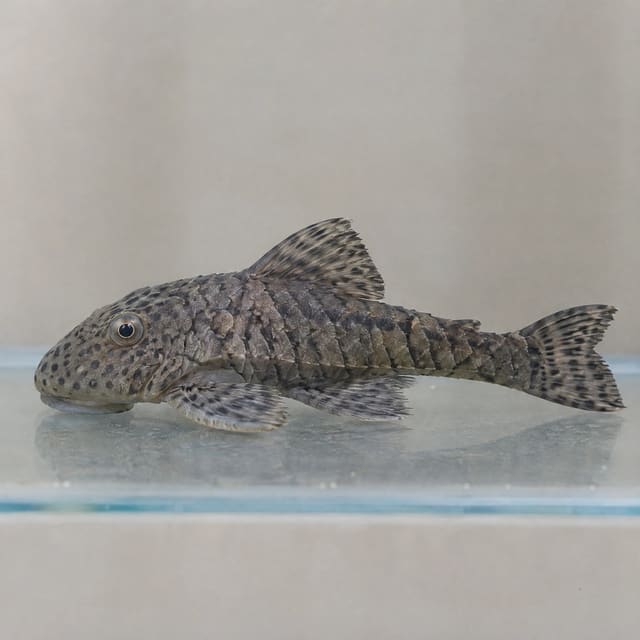
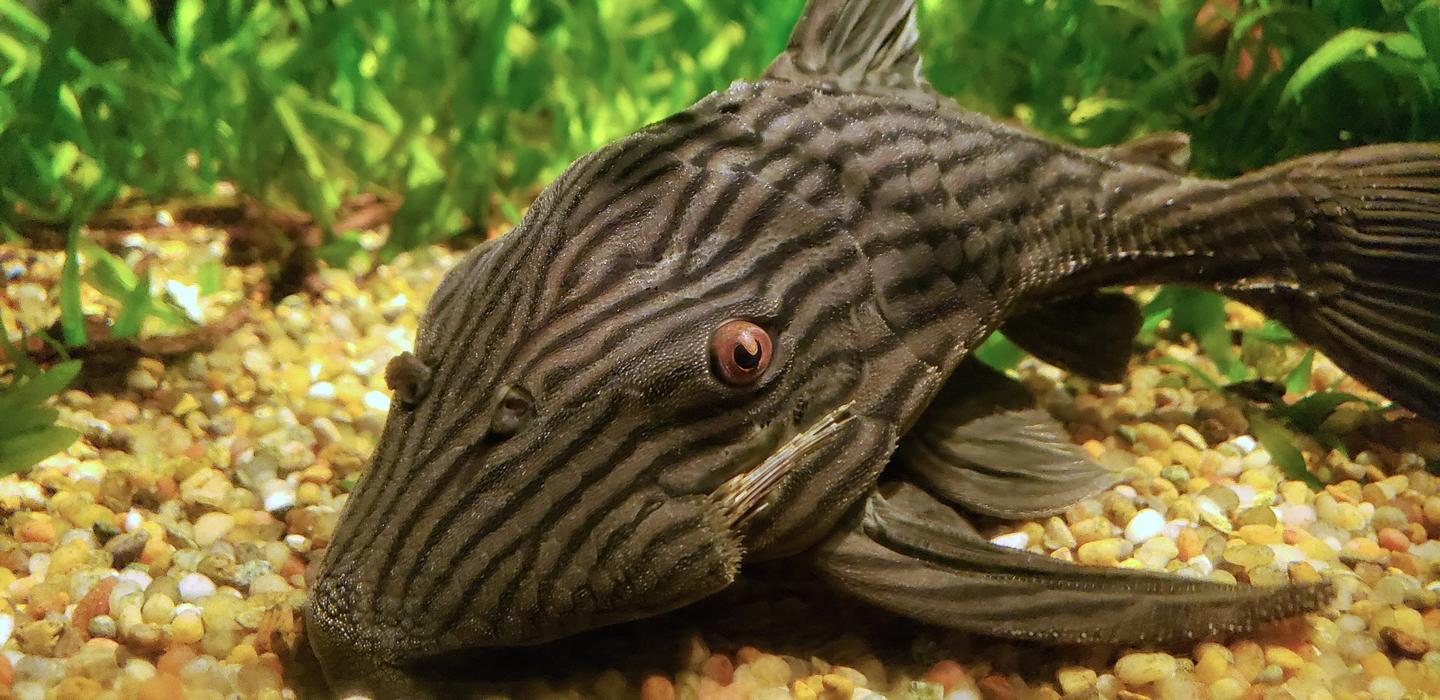
The L137 Blue Eye Red Fin Pleco is Hypostomus soniae, a suckermouth catfish from the Rio Tapajós in Pará state, Brazil. Its armoured body is grey-brown, its fins carry the red tones that give the fish its trade name, and its eye has a pale blue iris, which Planet Catfish gives as the feature that identifies it. It was described scientifically in 2005 by Hollanda Carvalho and Weber, who named it after Sonia Fisch-Muller of the Geneva natural history museum, one of the collectors of the first specimens. Those specimens came from temporary pools on the banks of the Tapajós between Vila Nova and Urua.
This is not a typical algae-scraping pleco. L137 belongs to the Hypostomus cochliodon group, plecos that were once placed in a genus of their own, Cochliodon. ScotCat describes the group as shorter and higher-backed than other Hypostomus, with a small number of spoon-shaped teeth set in V-shaped jaws, and as wood eaters. Like the royal plecos, it rasps driftwood, so wood is part of its diet, not just décor. It suits a keeper who can give it a long aquarium full of wood and keep the water clean despite a heavy eater.
| Name | What it means |
|---|---|
| L137 | The L-number for this fish; Planet Catfish files it under Hypostomus soniae |
| Blue Eye Red Fin Pleco | The common name used by Planet Catfish and ScotCat, from the pale blue eye and red-toned fins |
| Hypostomus soniae | The scientific name: Hollanda Carvalho & Weber, 2005 (the journal volume is dated 2004, so some sources give 2004) |
| Cochliodon soniae | An older placement; ScotCat explains that L137 was first put in Cochliodon, now merged into Hypostomus |
| Rusty pleco / L077 | Listed as trade names by ScotCat, but Seriously Fish uses L077 for a different fish (see below) |
The "rusty pleco" label needs care. Seriously Fish's Hypostomus overview describes L077, the rusty, bruno or violet plec, as a separate, undescribed wood-eating species from the rio Parnaíba basin in north-eastern Brazil that grows to about 300 mm. A pale blue eye is the quickest way to tell L137 apart. You can browse related fish in our Hypostomus plecos, every coded catfish in our L-number plecos range, the wider South American catfish category and our full catfish and plecos collection.
One purchase supplies one live L137 Blue Eye Red Fin Pleco at the standard size offered on this listing. Plecos are normally sold as youngsters, so expect a fish much smaller than the adult, but plan every part of the aquarium for the grown fish.
Sex is not specified. None of our sources gives a reliable way to sex this species, and Seriously Fish lists sexual differences as unknown even for a close Cochliodon-group relative, so do not plan around receiving a male or a female.
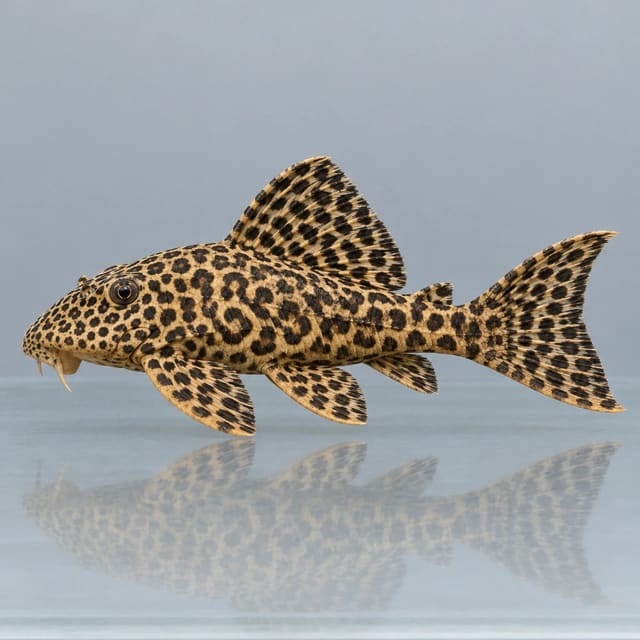
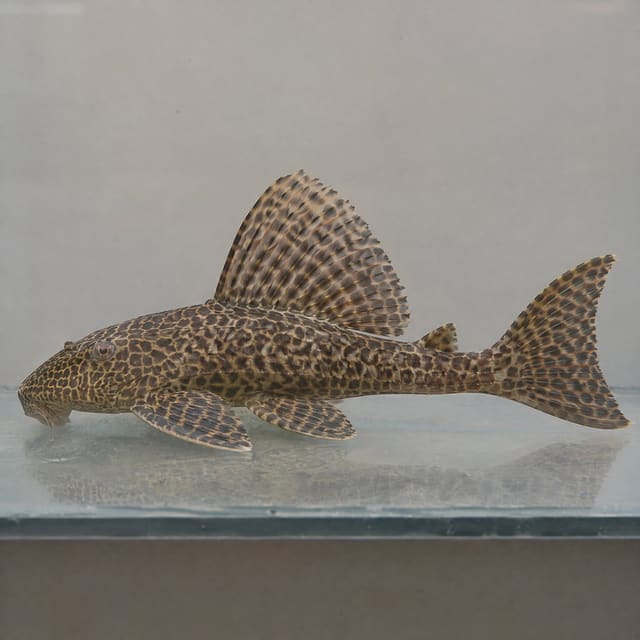
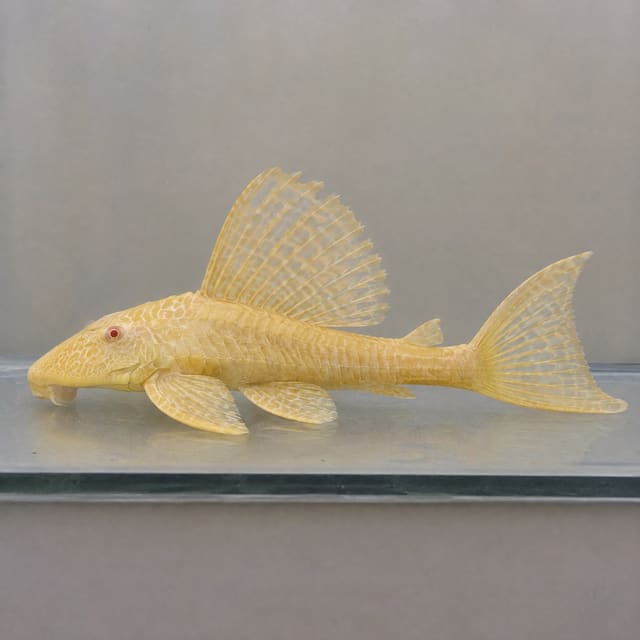
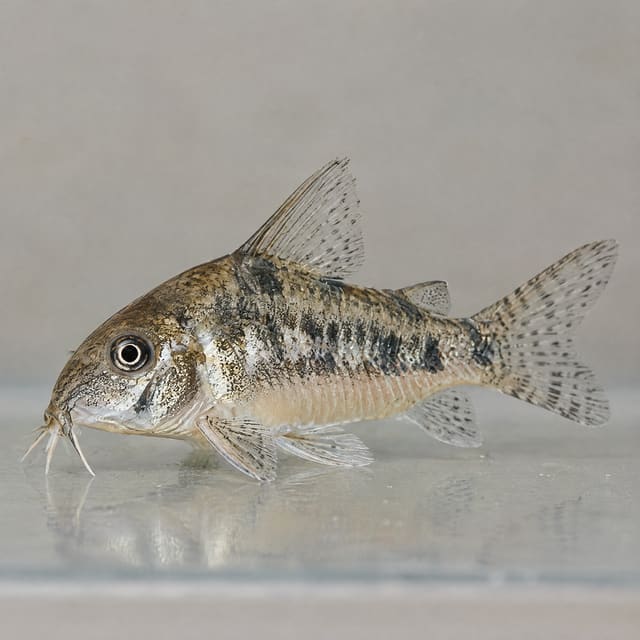
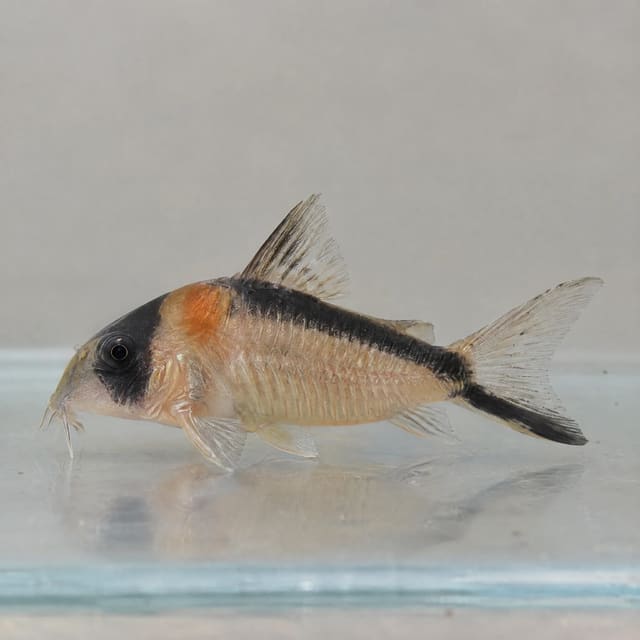
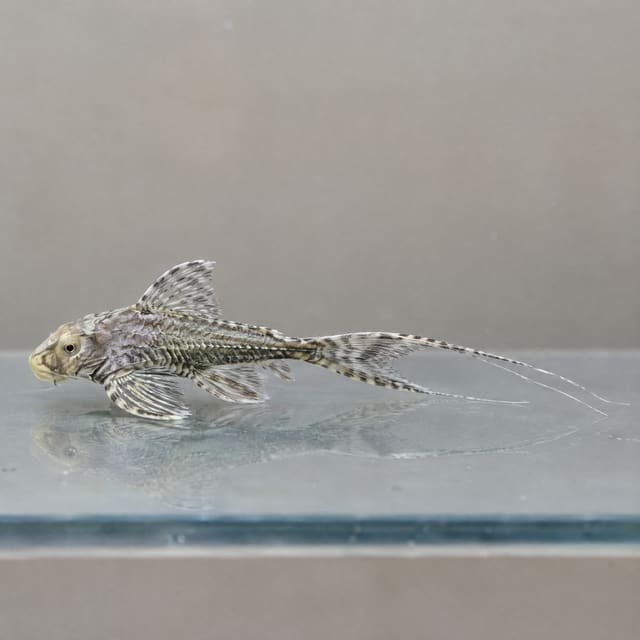
The photographs show the species, not the individual you will receive. The depth of red in the fins and the exact shade of the body vary from fish to fish and change with mood and age, so expect some difference from the pictures.
Before ordering, read our delivery and Live Arrival Guarantee information and have the aquarium running, mature and at temperature, so the fish goes straight into stable water.
ScotCat calls L137 a high-backed species that can grow quite large and gives an aquarium of 4 ft (120 cm) or over. Seriously Fish gives a base of 120 × 45 cm, about 243 litres, for a related Cochliodon-group pleco of 230 mm, and we suggest the same footprint here. A pleco uses the floor, the wood and the glass, so length and front-to-back depth matter more than height.
Size the equipment for the adult. A wood-eating pleco produces a great deal of waste, including fine wood fibre, so a tank that is only just big enough soon becomes hard to keep clean. OATA's guidance on large fish recommends a secure cover, protected heaters and décor that cannot be pushed over, all of which apply to a strong, heavy-bodied pleco.
Our tank volume calculator turns your tank's dimensions into litres for the filter, heater and water-change sums on this page, and our pleco care guide and common pleco guide cover the basics shared by all large suckermouth catfish.
Wood is the centre of this aquarium. ScotCat says L137 needs a supply of fresh and seasoned wood, and Seriously Fish recommends big chunks of driftwood for Cochliodon-group plecos, as both shelter and food, over a sandy substrate. Use several pieces of different sizes so one can be replaced as it is eaten down, and add a few rounded rocks or a cave so the fish has a firm retreat.
Seriously Fish also suggests fairly dim lighting for these plecos, notes that live plants are not part of their natural waters and may be eaten, and recommends well-oxygenated water with a good amount of movement. Floating plants are a simple way to soften the light.
| Area | Purpose |
|---|---|
| Fine sand floor | The soft base Seriously Fish recommends; easy to siphon wood fibre from |
| Large driftwood roots and branches | Food to rasp, shelter and broken lines of sight |
| A cave or root tangle | A home base it can claim; add one more retreat than you have bottom dwellers |
| Dim corners and floating plants | Shade, which suits a pleco that is most active at dusk |
| Open water above the floor | Swimming space for the mid-water fish that suit it as tank mates |
Set heavy wood and any rocks directly on the glass before adding sand, so nothing can be undermined when the fish digs or pushes, and leave gaps a siphon can reach.
The sources overlap but do not match. Planet Catfish gives 24–28°C. ScotCat gives 26–30°C and a pH of 5.5–7.0. We suggest working at 26–28°C, where the two ranges overlap, and holding it steady. Neither source publishes a hardness range for this species, so use OATA's general catfish guide of soft to hard water (4–18 dGH) and aim for the softer end.
| Reading | Target |
|---|---|
| Temperature | 26–28°C, held steady |
| pH | 5.5–7.0 (ScotCat) |
| General hardness | Not published for L137; soft to moderately hard suits it |
| Ammonia | Zero mg/l |
| Nitrite | Zero mg/l |
| Nitrate | No more than 20 mg/l above your tap water |
The waste limits come from OATA's catfish care sheet. They are a separate test from pH and hardness: water can be inside the right pH range and still unsafe because ammonia or nitrite has built up.
UK tap water varies a great deal by region. Much of southern and eastern England has hard, alkaline water above pH 7.0, while many northern and western supplies are soft. Your water company publishes the hardness for your postcode, and blending hard tap water with reverse-osmosis water brings it down. Always treat new water with a conditioner that removes chlorine and chloramine. Our water matcher compares your readings with this fish's range, and our water chemistry guide explains each reading.
ScotCat describes L137 as quite easy to keep but stresses frequent water changes because of its high metabolic rate. A fish that eats wood all day passes a steady stream of fine fibre and waste, so mechanical filtration matters as much as biological. Seriously Fish recommends well-oxygenated, moving water for Cochliodon-group plecos; for a 243-litre tank it suggests a filter rated at roughly 970–1,215 litres per hour, four to five turnovers an hour.
FishBase notes facultative air-breathing in the genus, meaning a Hypostomus can gulp air when oxygen runs low. An L137 dashing to the surface is a sign to check oxygen and water quality, not normal behaviour.
If ammonia or nitrite reads above zero, test again, check the flow and look at how much you are feeding before changing anything else. Clear water is not proof of clean water.
Driftwood comes first. Seriously Fish explains that studies of Cochliodon-group plecos and royal plecos found their guts full of wood particles, but that the wood passes through in under four hours and little of it is digested; the fish live mainly on the decaying wood and the microbes that break it down. That is why fresh and well-soaked, seasoned wood should always be available, as ScotCat advises.
On top of the wood, feed every day. ScotCat suggests food tablets and green foods, and Seriously Fish names cucumber, courgette and blanched spinach, plus sinking dried foods, for a related Cochliodon-group pleco. Use vegetable-rich sinking wafers or pellets as the base and add a small meaty food now and then.
Check the belly when it rests on the glass: rounded is good, hollow means it needs more food or less competition. Remove uneaten vegetables before they foul the water.
Add an L137 only to a fully cycled aquarium that is already at temperature, with ammonia and nitrite at zero and the driftwood in place. Seriously Fish advises checking any newly imported pleco for a rounded belly and eyes that are not sunken, the classic signs of a fish in good condition.
OATA recommends the floating-bag method: switch the aquarium lights off, float the sealed bag for about 10 minutes so the temperatures match, then add small amounts of tank water to the bag over up to 20 minutes before releasing the fish with as little bag water as possible. OATA also advises double-bagging catfish because their spines can puncture a bag, and Seriously Fish warns that the pectoral odontodes of males catch easily in netting, so guide the fish into a container rather than lifting it in a net. Our guide on how to acclimatise new fish walks through each step.
| Checkpoint | What to do |
|---|---|
| Before release | Test ammonia, nitrite, temperature and pH; make sure the wood and its cave are in place |
| First evening | Keep the lights off and offer a small vegetable-rich meal near the wood |
| Days 2–3 | Look for it at dusk and for fresh rasp marks on the wood |
| Day 4 | Retest ammonia and nitrite, as a new large fish adds to the filter's load |
| End of week | Do a water change and compare its belly shape with day one |
Expect it to hide at first. Continued refusal to eat, heavy breathing or a hollow belly after the first week are reasons to test the water and contact us.
ScotCat describes L137 as intolerant of other loricariids, so it is best as the only large pleco in the tank. The answer is to stock the space above the floor. Seriously Fish suggests larger characins, cyprinids and peaceful cichlids as companions for Cochliodon-group plecos. From our range, the Spotted Silver Dollar and the Striped Headstander are characins of a suitable size, and the Severum is a peaceful South American cichlid. Check each one's own size and temperature range first with our tank mates tool.
| Suits | Avoid |
|---|---|
| Medium-sized characins that swim in mid-water | A second L137 or another large pleco in an average tank |
| Peaceful South American cichlids that share 26–28°C | Other bottom dwellers that need the same caves and wood |
| Robust, peaceful fish too large to be pushed around | Fish that need cool water |
| Fish that leave the wood and floor to the pleco | Tiny, timid fish easily overwhelmed by a large bottom dweller |
If you like wood-eating plecos, compare it with the L090 Papa Panaque and the L027 Royal Pleco, which share the wood diet but come from a different branch of the family; Seriously Fish notes that the two groups evolved wood-eating independently. Within Hypostomus, the Common Pleco and the Gold Suckermouth Catfish are classic large plecos. Treat them as alternatives rather than tank mates.
Most problems in large plecos start with water quality or hunger. A rounded belly and clear eyes show it is feeding; OATA's warning signs for catfish include clamped fins, flicking against gravel or décor, shimmying, changes in breathing, colour or appetite, and hiding more than normal.
| If you see | Do this |
|---|---|
| Hollow belly or sunken eyes | Add fresh wood and feed vegetable-rich food near its cave; check it is not being outcompeted |
| Fast breathing or gulping air at the surface | Test ammonia and nitrite at once and increase oxygen and flow |
| Clamped fins, flicking or shimmying | Test the water, do a water change and look closely for parasites |
| Raised white dots on body or fins | Test the water and follow our white spot guidance |
| Torn fins or scuffed armour | Look for a dispute with another bottom dweller and add caves or visual barriers |
| Cloudy water and a clogged filter | Siphon wood fibre, clean the sponges in tank water and review how much you feed |
Do not diagnose from one sign alone. Poor water, low oxygen, bullying and hunger can all look alike, so test first and change one thing at a time. If you suspect white spot disease, our white spot treatment guide explains the next steps; read any medicine's label for warnings about catfish before using it.
Planet Catfish records breeding of L137 as unreported in the aquarium, with no breeding report, so there is no published method to follow. Buy it as a long-term display fish. In the wild the IUCN rates Hypostomus soniae as Least Concern; ScotCat summarises the assessment as naturally infrequent and not very abundant in the Tapajós, but with no significant threats identified.
Yes. Planet Catfish files L137 and the name Blue Eyed Red Fin Pleco under Hypostomus soniae, described by Hollanda Carvalho and Weber from the Rio Tapajós in Brazil. Older books may list it as Cochliodon soniae, because the Cochliodon group was once a separate genus.
The sources disagree. Planet Catfish gives 146 mm standard length (body length without the tail) and FishBase 16.4 cm, while ScotCat gives 30 cm. Plan the aquarium for the larger figure; a big, robust pleco is the safe assumption.
ScotCat says an aquarium of 120 cm (4 ft) or more. We suggest a base of at least 120 × 45 cm, about 243 litres, which is what Seriously Fish gives for a related Cochliodon-group pleco of a similar size.
Yes. It belongs to the Hypostomus cochliodon group, which ScotCat describes as wood eaters, and it needs a constant supply of driftwood. Seriously Fish notes that gut studies of these fishes found mostly wood particles, but that little of the wood is digested; the fish live mainly on the decaying wood and the microbes that break it down.
It grazes surfaces, but it is not a clean-up fish. It needs its own feeding of vegetable-rich sinking food and fresh greens every day, as well as wood to rasp.
Take care. ScotCat describes it as intolerant of other loricariids, so in most home aquariums keep one L137 as the only large pleco and give every bottom dweller its own cave.
Not necessarily. ScotCat lists "Rusty Pleco" and L077 among its trade names, but Seriously Fish describes L077, the rusty, bruno or violet plec, as a different wood-eating fish from the rio Parnaíba basin. The pale blue eye is the feature Planet Catfish gives for L137.
Planet Catfish lists breeding as unreported in the aquarium, and there is no breeding report. Buy it as a long-term display pleco rather than a breeding project.
No reviews for this item yet. Bought one? Honest reviews only, good or bad.
What customers say about ordering from us
Easy website plenty of info on fish your buying great to pick a time slot
TRACEY DURRANT · 7 Oct 2026
Got some lovely fish thank you
Kevin Mackie · 7 Oct 2026
Reviews of our shop, collected by Judge.me, an independent third-party review collector. Newest first.
Moved by UK carriers licensed to handle live animals
Hand-packed with oxygen bags, poly box, heat pack
Email photos the same day; an optional unboxing video helps us review problems faster — claim terms apply
Klarna & PayPal Pay in 3 at checkout