Moderate
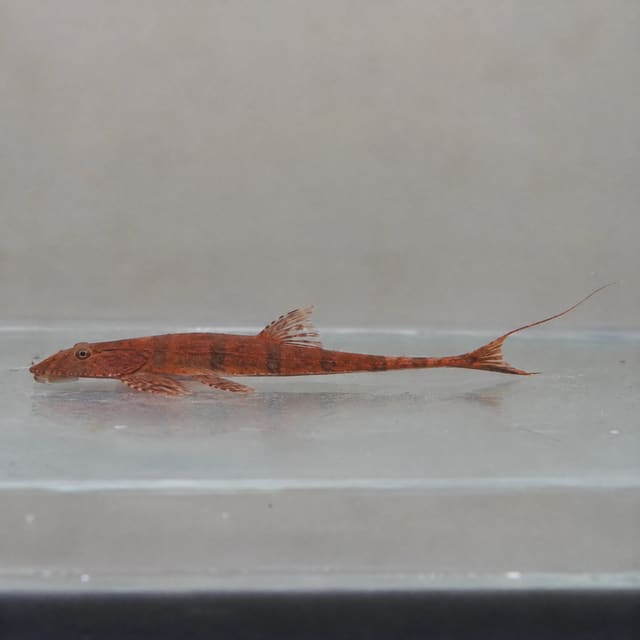
Red Whiptail Catfish (Loricaria sp.)
22–27°C · pH 6–8
£25.99
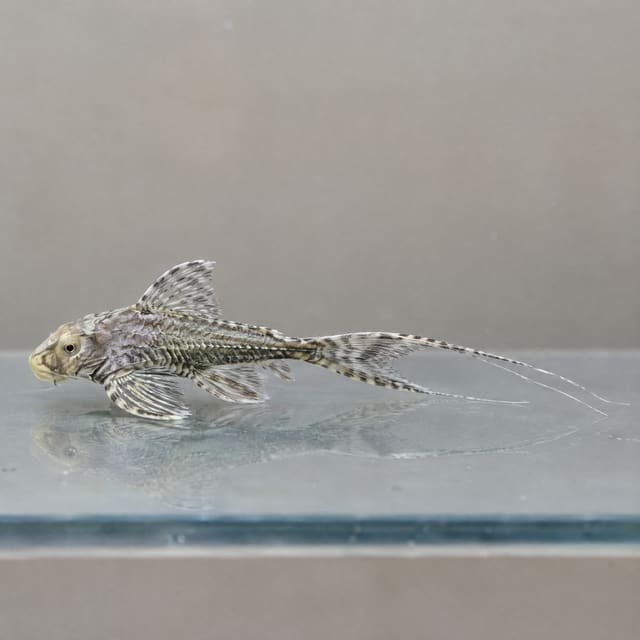
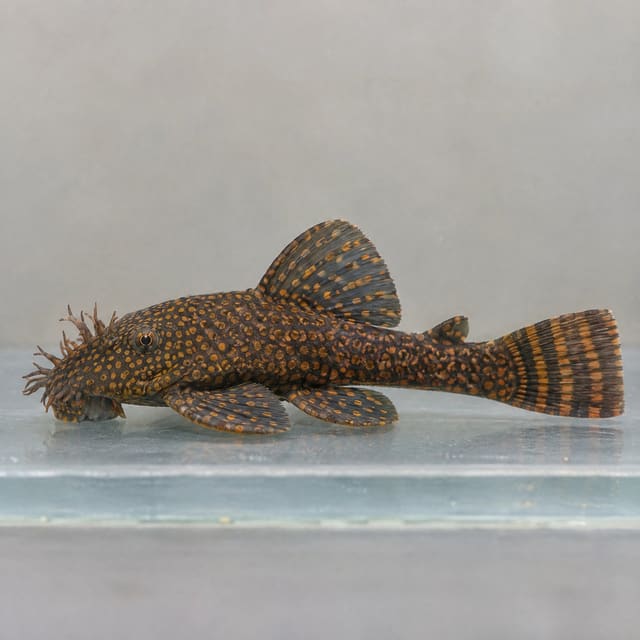
Loricaria spinulifera is a slender, sand-coloured whiptail catfish from the blackwater Rio Negro in Brazil, named for the little thorns on its head. Peaceful and quiet, it needs fine sand, soft to medium water and meaty sinking foods. Sold singly as one live fish.
Loricaria spinulifera Thomas & Rapp Py-Daniel, 2008
Loricaria spinulifera is a slender, sand-coloured whiptail catfish from the blackwater Rio Negro in Brazil, named for the little thorns on its head. Peaceful and quiet, it needs fine sand, soft to medium water and meaty sinking foods. Sold singly as one live fish.
Read the full care guidance when planning conditions for your aquarium.
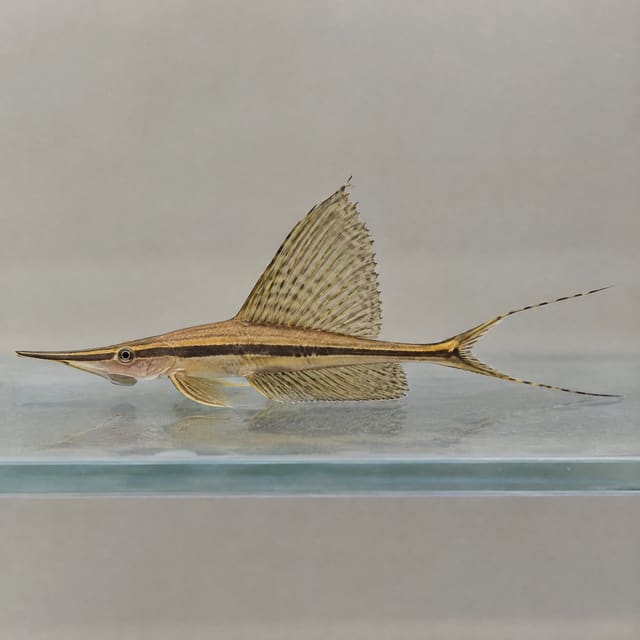
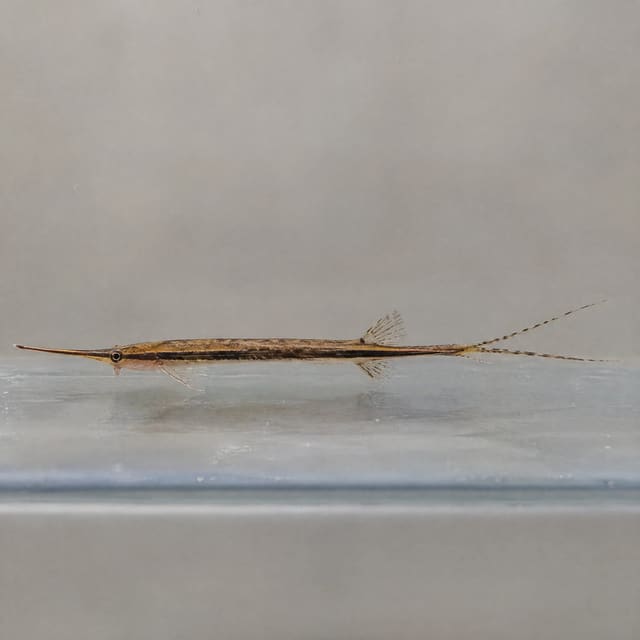
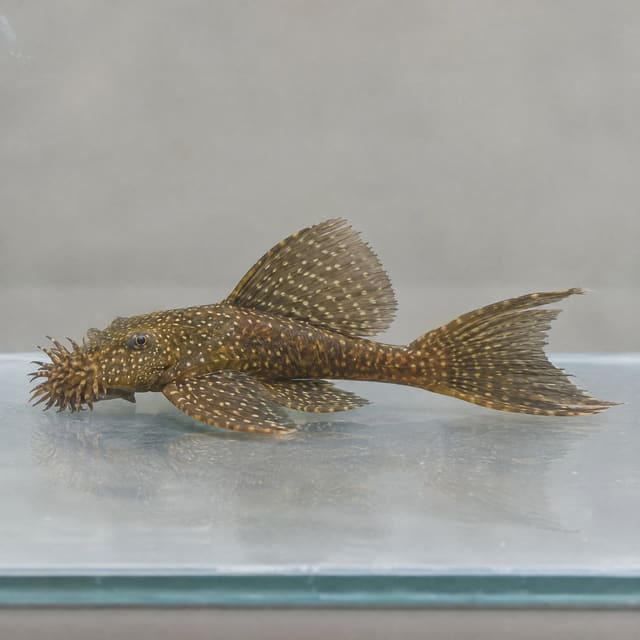
Loricaria spinulifera is a slender whiptail catfish from the blackwater rivers of the Brazilian Amazon, and one of the less often seen members of its genus in UK shops. It is a flat, sand-coloured fish covered in small dark spots, with a tall dorsal fin, a wide head that tapers to a rounded snout, and a long, thin tail stalk that ends in a forked tail with a fine filament on the upper lobe. On fine sand under dim light it almost disappears, and that camouflage is a large part of its appeal.
The species was described in 2008 by Matthew Thomas and Lúcia Rapp Py-Daniel in the journal Neotropical Ichthyology, as one of three new Loricaria from the deep channels of Amazonian rivers. Its name comes from the Latin spinula, a small thorn, and means "bearing little thorns": a reference to the conspicuous thorn-like odontodes (tooth-like scales) on the top and sides of its head.
| Name | What it tells you |
|---|---|
| Loricaria spinulifera | The scientific name, Thomas & Rapp Py-Daniel, 2008 |
| Spiny whiptail catfish | A hobby name taken from the thorny head; there is no official English name |
| Whiptail catfish | The general name for the subfamily Loricariinae, after the long, thin tail |
| Loricariidae | The armoured suckermouth catfish family, shared with plecos and bristlenoses |
According to the original description, Loricaria is told apart from other whiptail genera by elongate, slender filaments on the lips and a small number of long, two-pointed teeth in the upper jaw. Within the genus, L. spinulifera stands out through strongly developed crests on the head and the plates in front of the dorsal fin, set with large thorn-like odontodes, a dense cluster of about 20 long papillae behind the upper teeth, and a solid dark brown upper head from the eyes to the tip of the snout, with large irregular spots behind it. The authors also note that the genus is poorly understood, with several undescribed species in museum collections, so identification of whiptails in the trade always carries some uncertainty.
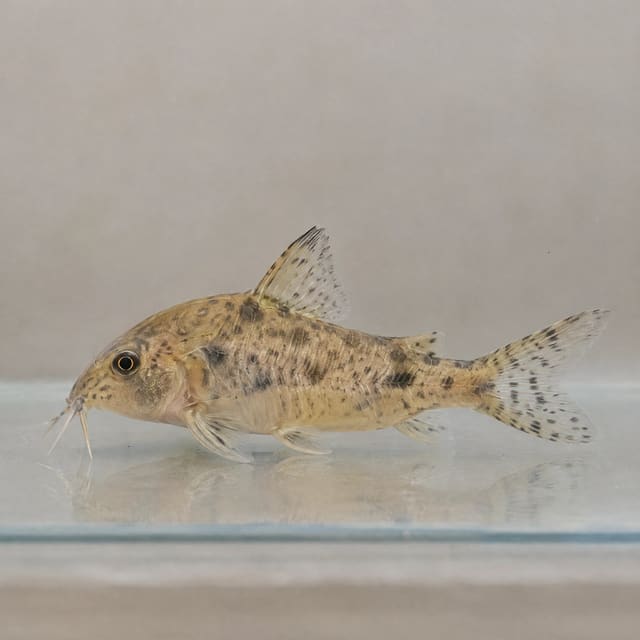
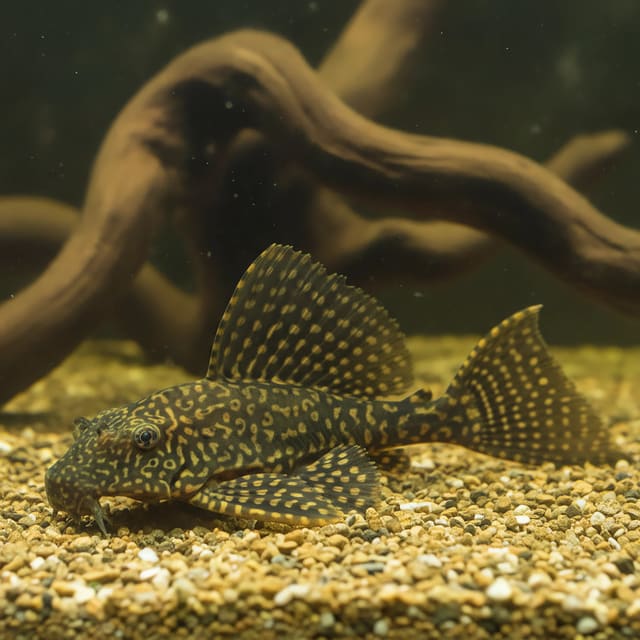
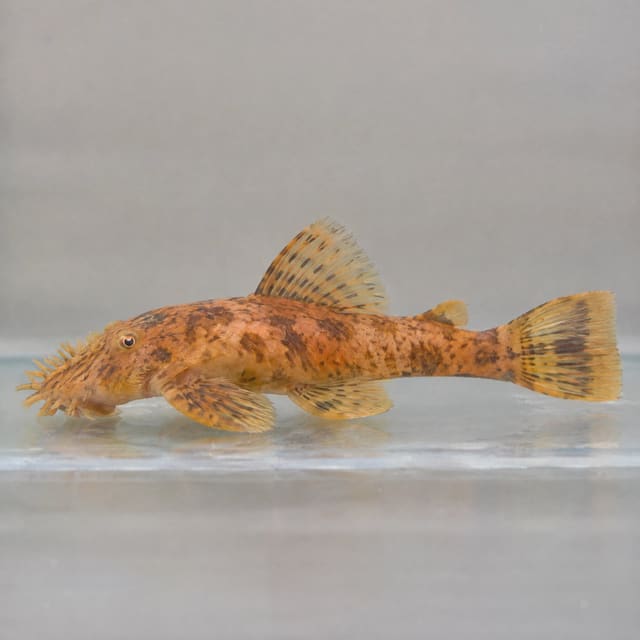
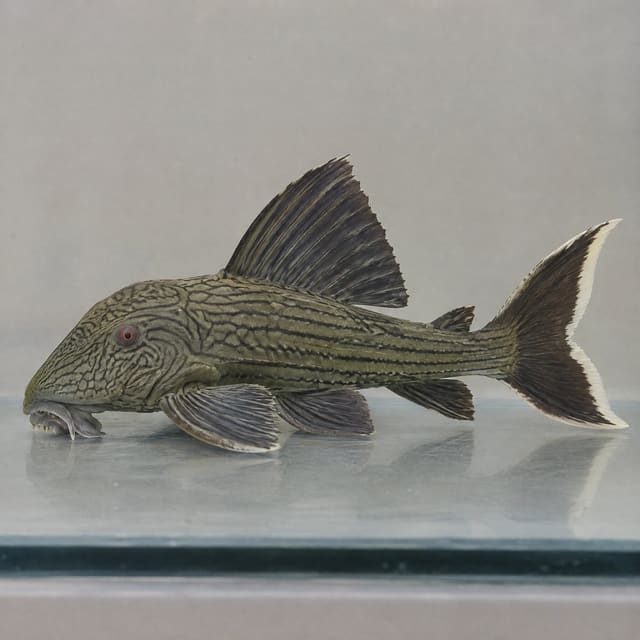
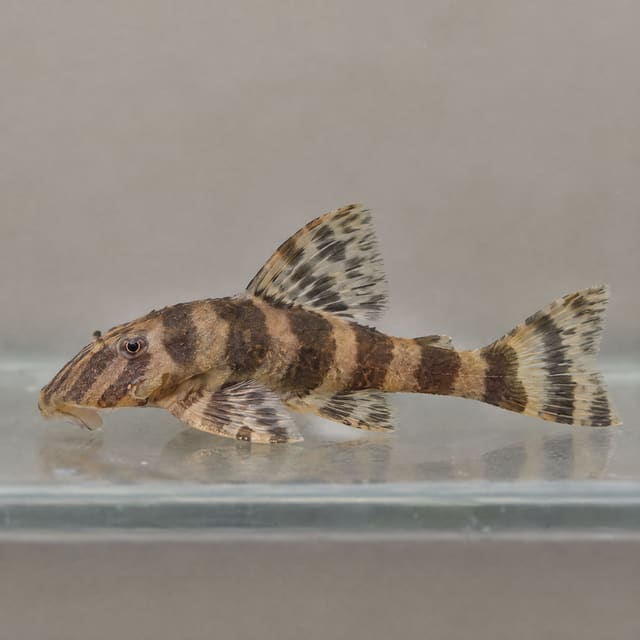
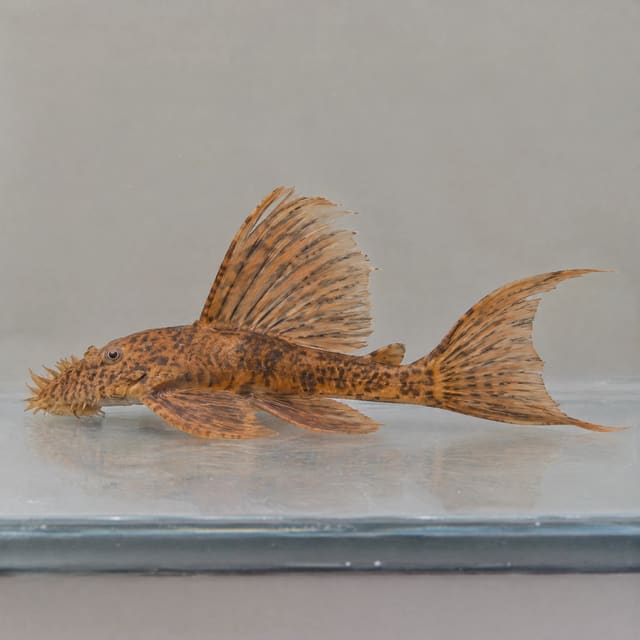
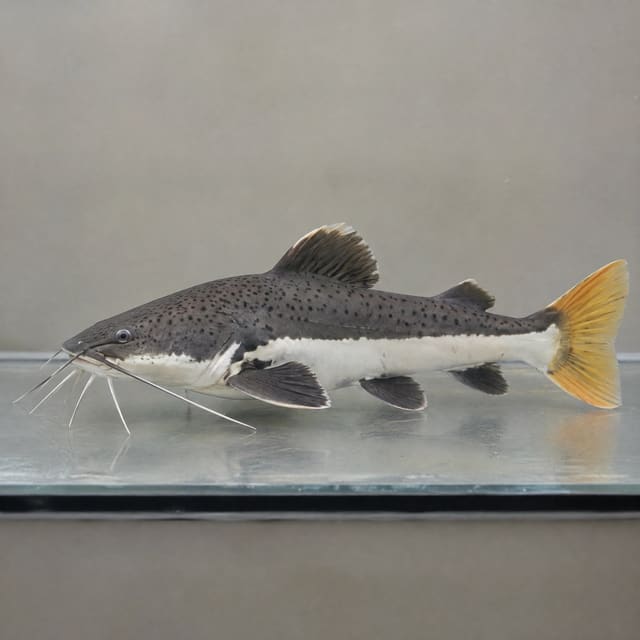
One purchase supplies one live Loricaria spinulifera. Whiptails generally live peacefully with their own kind, so you can order two or three for a larger tank and let them share the sand. Our photographs show the shape and pattern of the species; every fish varies a little in the density of spots and in colour, and a newly moved catfish is often paler for its first days in a new tank.
Most aquarium catfish come from shallow streams. This one does not. The original description reports that every specimen was collected by bottom trawl in the channels of large rivers, at depths from 1.5 to 28 m and between 10 and 750 m from the shore. Some specimens came from sand, mud and organic debris. The species is known from the Rio Negro, from the lower Rio Branco down to the mouth of the Negro, and from the lower Rio Jauaperi, in the Brazilian states of Amazonas and Roraima according to Wikipedia.
The Rio Negro is the largest blackwater river in the world. Wikipedia's blackwater river article gives its average pH as 5.1 ± 0.6 and its conductivity as 9 ± 2 µS/cm, close to rainwater, with only traces of calcium and magnesium. The authors noticed that fish from the deepest channels have smaller, more recessed eyes and fainter patterning than fish from shallower water, which is typical of fish living in dark, deep river beds. Our fish therefore come from a world of soft water, low light and soft bottoms, and the aquarium should echo that.
| Trait | What it means in the tank |
|---|---|
| Facultative air-breathing, reported for the genus (FishBase) | The fish may dash to the surface for a gulp of air; leave a gap under the lid and keep the surface reachable |
| Camouflage over sand and debris | It rests motionless for long periods; count your fish at feeding time rather than expecting it to swim openly |
A whiptail uses floor area, not height. What matters is a long, deep footprint of open sand where it can rest and sift, with shade above it. For a related, larger whiptail, Seriously Fish suggests a pair can be kept in about 75 × 30 × 30 cm (67.5 litres) and that a group needs more space. Because L. spinulifera is a deep-river fish that likes to spread out, we suggest a little more.
Sand is not optional for this fish. Wild specimens were trawled from sand, mud and debris, and whiptails take mouthfuls of the bottom to sift out food; the one stomach studied actually contained sand. OATA recommends aquarium sand or fine gravel for all catfish to protect their barbels, and Seriously Fish describes a soft, sandy substrate as preferred for Loricaria.
| Zone | What to use | Why it helps |
|---|---|---|
| Floor | 5–7 cm of fine, smooth aquarium sand, with open patches | Lets the fish rest flat and sift food naturally |
| Middle | Bogwood roots, smooth stones, a length of pipe | Shade and resting places in daylight |
| Surface | Floating plants and a lid with a small air gap | Dims the light and leaves room for air gulps |
| Back | Robust plants on wood, such as Java fern and Anubias | Cover without roots to dig through |
Leaf litter and wood also release tannins that tint the water tea-coloured and lower the pH a little, which suits a blackwater fish. Keep the light moderate; a deep-channel fish is most relaxed in shade.
No one has published aquarium water values for L. spinulifera itself, so we start from the wild habitat and from care data for its relatives. The wild water is extremely soft and acidic. Seriously Fish gives 24–27°C, pH 5.6–7.8 and 1–20°dGH for Loricaria simillima, a whiptail from both black and white water, and Aquarium Glaser notes that blackwater forms of Loricaria are more demanding to keep and breed than whitewater forms. OATA's general catfish range is 22–27°C, pH 6.0–8.0 and 4–18°dH.
| Source | Temperature | pH | Hardness |
|---|---|---|---|
| Rio Negro (Wikipedia) | not given | 5.1 ± 0.6 | extremely low (9 µS/cm) |
| Seriously Fish, L. simillima | 24–27°C | 5.6–7.8 | 1–20°dGH |
| OATA, catfish in general | 22–27°C | 6.0–8.0 | 4–18°dH |
| Our suggested planning range | 24–27°C | 6.0–7.0 | 2–10°dGH |
UK tap water ranges from very soft in Scotland, Wales and the north-west to very hard across much of the south and east. In a hard-water area, blend tap water with reverse osmosis water to bring hardness down gradually, and test before each change. Stability matters more than a perfect reading: a steady pH of 7.0 is far better than a swinging pH of 6.0. Our water matcher compares your water with what the fish needs, and our water chemistry guide and guide to pH for tropical fish explain the numbers.
A sand-sifting fish lives in the layer where waste settles, so a clean floor is a healthy fish. Use a mature filter with moderate flow across the bottom and a gentle current near the surface for oxygen. Ammonia and nitrite must stay at zero, and OATA advises keeping nitrate no more than 20 mg/l above your tap water.
The diet of wild L. spinulifera is known from a single fish: the stomach contained the hard body parts of caddisfly and fly larvae, organic detritus and sand. That fits what Seriously Fish says of Loricaria in general: omnivores that mainly eat aquatic invertebrates in the wild. Whiptails are slow, deliberate feeders, and Seriously Fish warns that they can lose food to more active tank mates.
Never rely on a catfish to live on leftovers. OATA is clear that catfish need their own sinking food.
OATA's floating method works well: lights off, float the sealed bag for 10 minutes, then add small amounts of tank water over up to 20 minutes before releasing the fish. OATA also asks retailers to double-bag catfish because their fin spines can pierce a bag. Practical Fishkeeping warns that after a long journey ammonia builds up in the bag and pH falls, so once the bag is open move the fish across promptly rather than dragging the process out. Handle it with a soft net or a container: the head odontodes and fin spines snag easily.
| When | What to do | What to look for |
|---|---|---|
| Day 1 | Lights off for the rest of the day; no food | The fish settling flat on sand or under wood |
| Day 2 | A small evening meal of frozen bloodworm near its spot | Signs of sifting or a rounded belly next morning |
| Days 3–4 | Test ammonia and nitrite | Both at zero with the new fish added |
| Days 5–7 | First weekly water change | The fish moving about at dusk and feeding |
A healthy whiptail lies flat with fins neatly spread, breathes steadily and has a slightly rounded belly. OATA's warning signs for catfish include hanging at the surface, erratic swimming, faster or slower breathing, darker or paler colour, white spots, fluffy growths, weight loss and reduced appetite.
| What you see | Likely cause | First action |
|---|---|---|
| Sunken belly | Outcompeted at meals | Feed after lights-out, close to the fish; reduce greedy bottom feeders |
| Repeated dashes to the surface, fast breathing | Low oxygen or poor water | Test at once, change water, increase surface movement |
| Red, sore belly or barbels | Sharp or dirty substrate | Switch to fine sand; siphon detritus more often |
| White spots, flicking | White spot | Treat promptly; check medication is safe for catfish |
Seriously Fish describes Loricaria as very quiet fish that suit small characins, peaceful cichlids, Corydoras and loricariids that are not highly territorial, and notes they are generally amicable with their own kind. The aim is a tank where nothing takes its food or keeps it off the sand.
| Suits | Avoid |
|---|---|
| Midwater characins such as the Cardinal Tetra and Rummy Nose Tetra, which share its soft-water needs | Boisterous or territorial cichlids that patrol the floor |
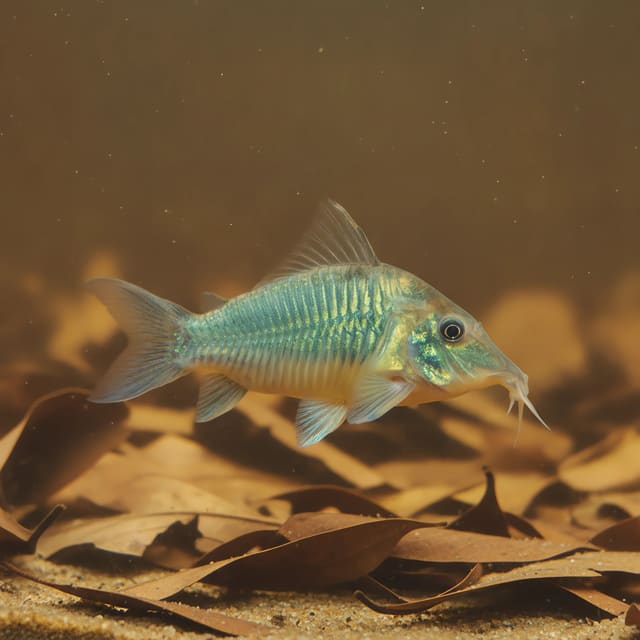
| A small group of Corydoras such as the Sterbai Cory, if you feed both | Large predatory fish that could swallow a slim catfish |
| Peaceful dwarf cichlids such as the Cockatoo Dwarf Cichlid | Large plecos that claim every cave and eat all the wafers |
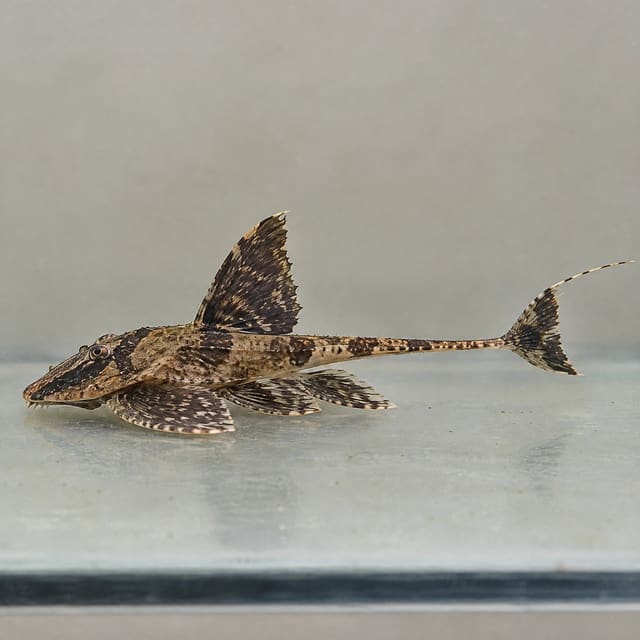
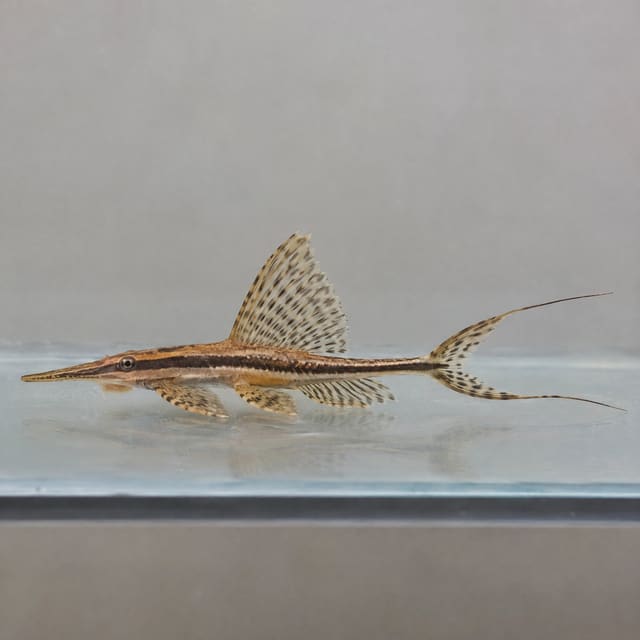
| Other whiptails, such as the Red Whiptail Catfish, Schocko Whiptail Catfish or Rio Atabapo Whiptail Catfish, in a large tank | Fin-nippers that pick at the tail filament |
For more choices, browse our Loricaria whiptail category, the smaller Rineloricaria whiptails such as the Chocolate Whiptail Catfish, the full South American catfish category and our wider range of catfish and plecos. Our pleco care guide covers the shared basics of armoured catfish.
Breeding of L. spinulifera has not been documented, but the genus has a distinctive method. In Loricaria the male guards the eggs at his mouth: Seriously Fish describes a male L. simillima carrying the clutch at his mouthparts for about 10–15 days and fanning it with lip movements, after a night-time spawning. Fry take 2–3 days to absorb the yolk, then accept brine shrimp nauplii, microworm and crushed dried foods, but are prone to starvation and sensitive to water changes.
The original description reports two mature male L. spinulifera with the features of breeding males in the genus: a broader lower lip with shorter filaments and more papillae, rounder "mitten-shaped" teeth, slightly thickened pectoral spines and blunt odontodes on the pelvic and anal fin spines. In practice, a mature male shows a visibly larger, fleshier lower lip than a female. Seriously Fish suggests weekly water changes of 40–50% to condition Loricaria for spawning.
It is a South American whiptail catfish of the family Loricariidae, described by Thomas and Rapp Py-Daniel in 2008 from the Rio Negro basin in Brazil. The name means "bearing little thorns" and refers to the thorn-like odontodes (tooth-like scales) on its head.
The largest specimen on record measured 13.8 cm standard length, which leaves out the tail fin and its long upper filament. Including the tail and filament, an adult is noticeably longer, so plan the tank for a long, slender fish.
It belongs to the same armoured suckermouth catfish family as plecos, but to the whiptail subfamily Loricariinae. Whiptails are flatter and slimmer, live on sand, and feed mainly on small invertebrates rather than grazing wood or algae.
The only stomach studied held caddisfly and fly larvae, detritus and sand. Offer sinking pellets and wafers with frozen or live bloodworm, daphnia and similar small invertebrates, fed in the evening near its resting place.
Yes. Wild fish were trawled over sand, mud and organic debris, and whiptails sift the substrate for food. Fine, smooth aquarium sand protects the mouth and belly; sharp gravel is a poor choice.
It comes from blackwater, which is very soft and acidic in the wild. In the aquarium we suggest 24–27°C, pH 6.0–7.0 and soft to medium water, kept clean and stable rather than chasing an exact number.
Yes, with peaceful ones such as dwarf cichlids. Avoid boisterous or territorial fish that would take its food or bully it on the sand, and large predators that could swallow it.
Yes. One purchase is one live fish. Whiptails get on with their own kind, so you can order several for a large tank.
No reviews for this item yet. Bought one? Honest reviews only, good or bad.
What customers say about ordering from us
Easy website plenty of info on fish your buying great to pick a time slot
TRACEY DURRANT · 7 Oct 2026
Got some lovely fish thank you
Kevin Mackie · 7 Oct 2026
Reviews of our shop, collected by Judge.me, an independent third-party review collector. Newest first.
Moved by UK carriers licensed to handle live animals
Hand-packed with oxygen bags, poly box, heat pack
Email photos the same day; an optional unboxing video helps us review problems faster — claim terms apply
Klarna & PayPal Pay in 3 at checkout