Moderate
Cockatoo Dwarf Cichlid Double Red (Apistogramma cacatuoides)
22–29°C · pH 5–6 · 54L
£11.99

Cockatoo Dwarf Cichlid (Apistogramma cacatuoides) is a South American dwarf cichlid for mature, cave-rich tanks. One purchase supplies one fish in the chosen 3–4 cm or XL size; plan around a 60 × 30 cm base for a single pair, calm companions and 22–29°C water.
Apistogramma cacatuoides
Save when buying multiple fish. Each quantity is one fish; sex and pair formation are not guaranteed unless the selected variant explicitly states them.
Cockatoo Dwarf Cichlid (Apistogramma cacatuoides) is a South American dwarf cichlid for mature, cave-rich tanks. One purchase supplies one fish in the chosen 3–4 cm or XL size; plan around a 60 × 30 cm base for a single pair, calm companions and 22–29°C water.
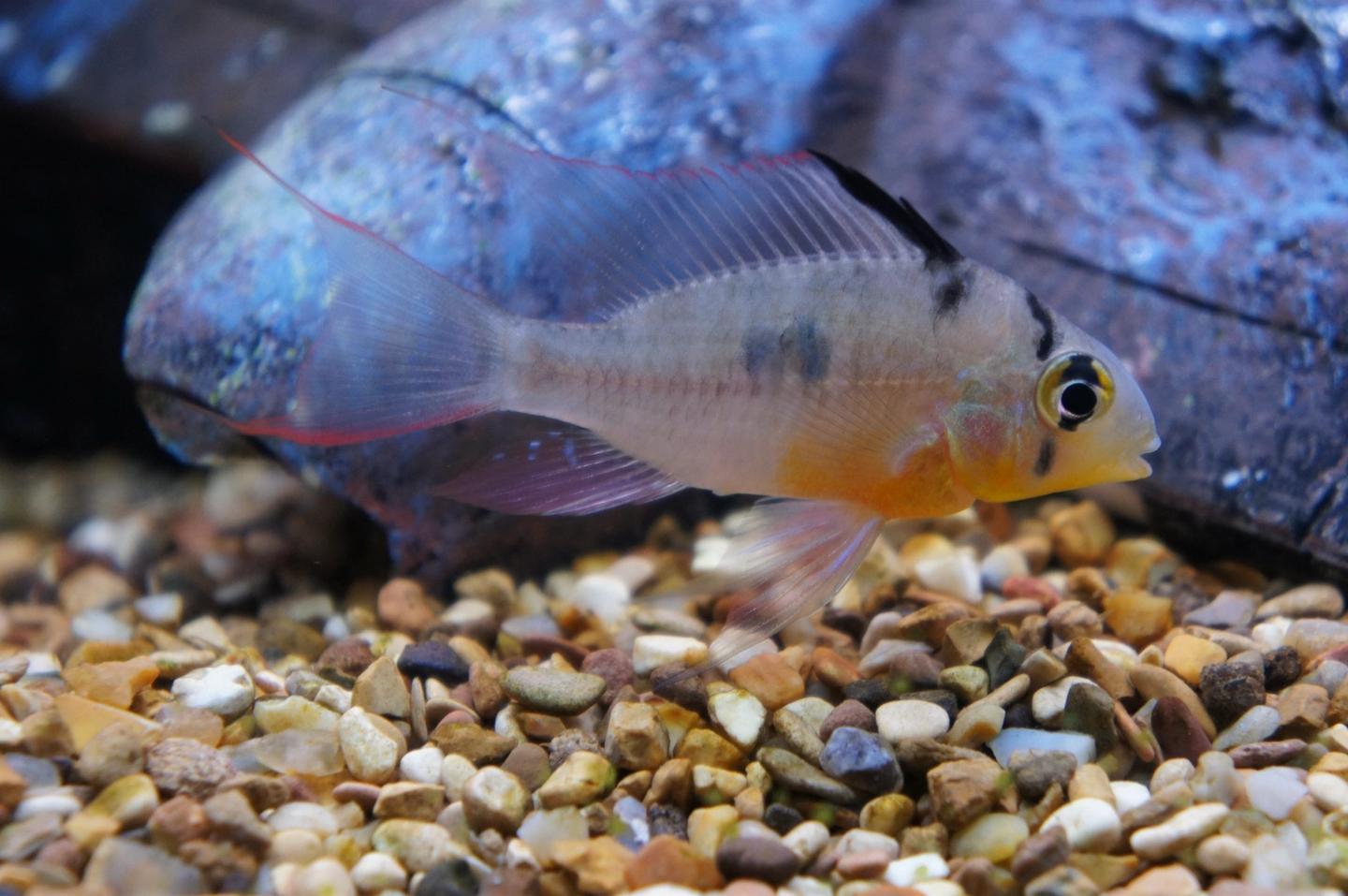
Cichlids are a family of roughly 1,800 accepted species, not one care type. Before buying, identify the exact species and source, then compare adult measurement, usable tank dimensions, social system, territory, tested water, diet and an exit plan. No family-wide minimum tank, water range or tank-mate list is safe.
Maintain these water conditions for optimal health and vibrant colors
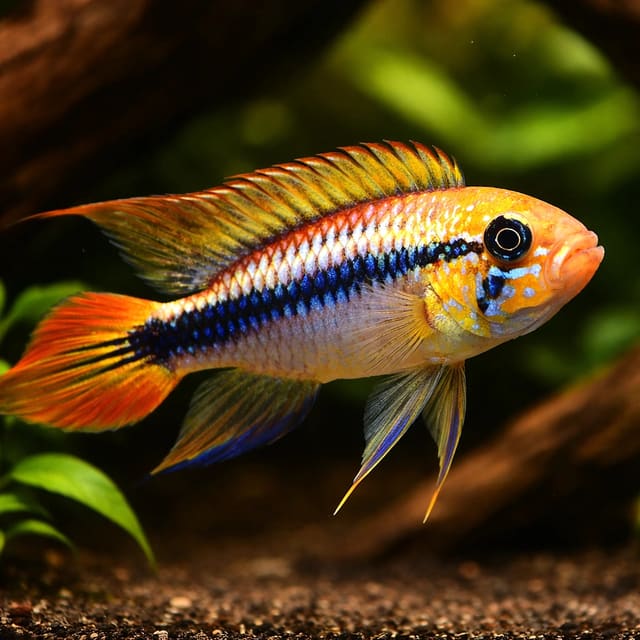
The Cockatoo Dwarf Cichlid is Apistogramma cacatuoides, a South American member of the cichlid family. It combines the compact scale that makes dwarf cichlids attractive with the posture and territorial behaviour that make them unmistakably cichlids. Colour and fin markings vary between individuals, and the listing does not guarantee that every animal will develop the same intensity of colour.
This is a fish for a keeper who enjoys building a habitat around behaviour. A good home offers fine substrate, shaded cover, several cave-like retreats and broken sight lines across the floor. In return, the fish uses the lower part of the aquarium with real purpose: inspecting wood, hovering near shelter and defending a chosen area. It can be a rewarding centrepiece for a carefully planned smaller community, but it is not a decorative extra to squeeze into an already crowded bottom zone.
One purchase quantity supplies one live fish. Two genuine size choices are carried: 3–4 cm and XL. The numeric choice describes the dispatch size; XL is the larger grade and has no numeric length attached here. The size you select is the size supplied, not the adult size. Use the live controls on the page for the current price and availability of each size.
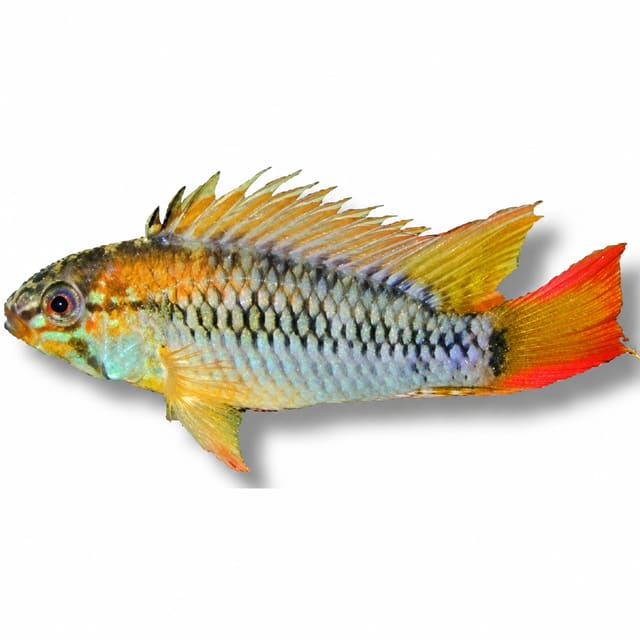
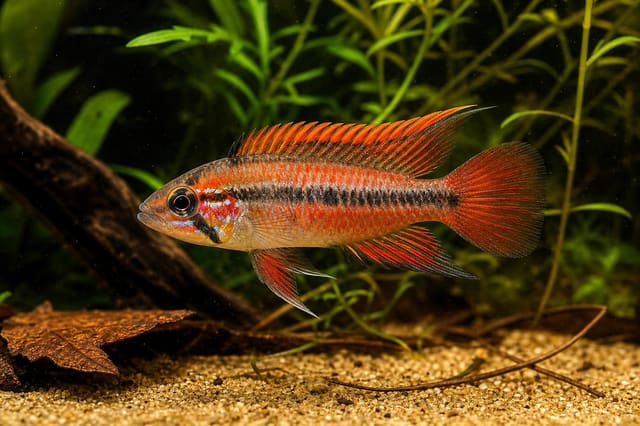
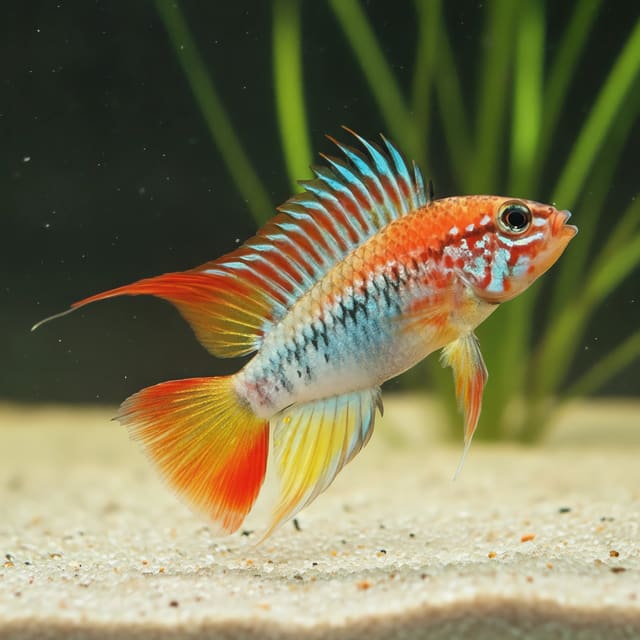
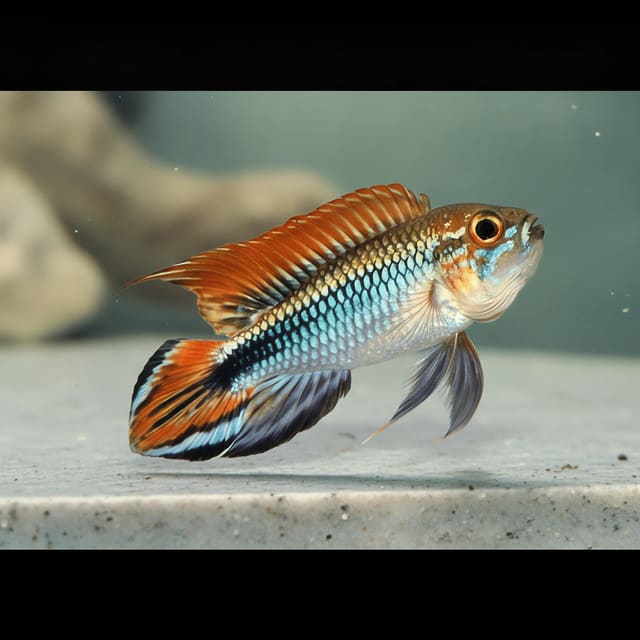
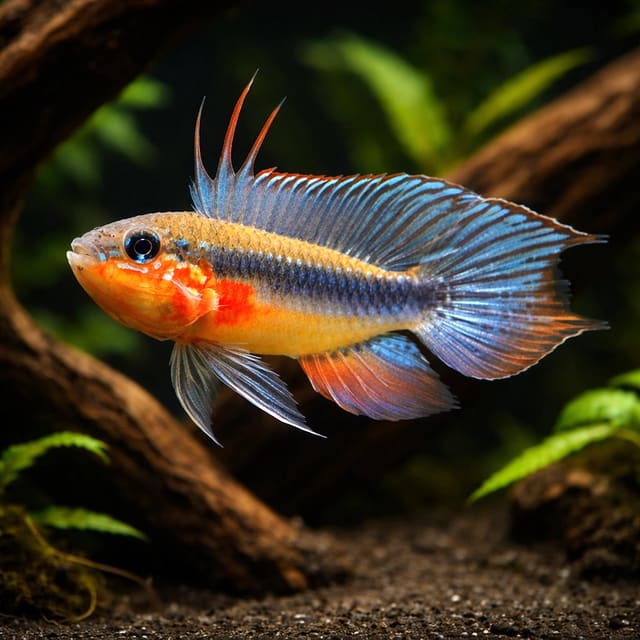
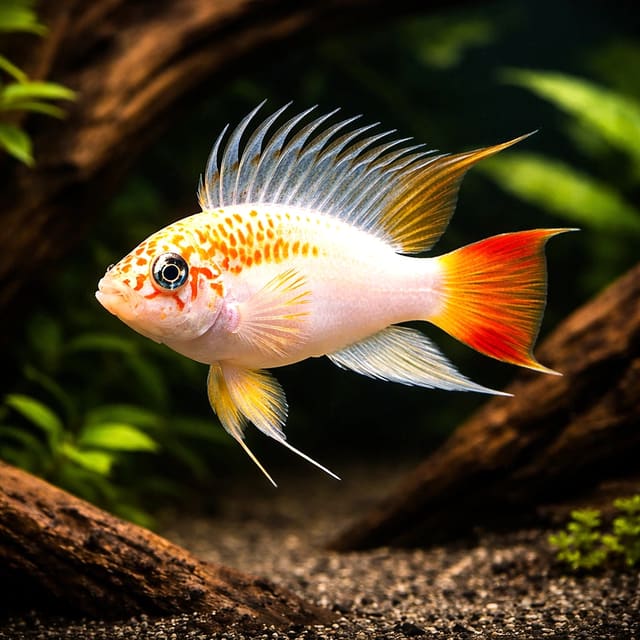
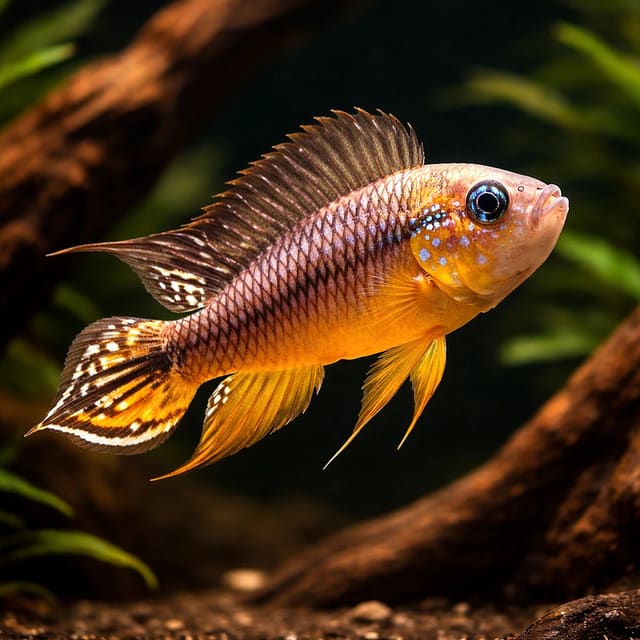
Sex is guaranteed only when the selected option explicitly states male or female. This Cockatoo Dwarf Cichlid listing has no sex-guaranteed option. Mature males and females can differ in size, colour and fin extension, but young fish can be difficult to judge reliably. The photographs therefore help with colour and shape expectations, not with choosing a guaranteed sex or compatible pair.
| Question | Practical answer |
|---|---|
| Adult planning size | Allow for a male record of 7.5 cm standard length; females are recorded around 5 cm standard length in the same species profile. |
| Starting footprint | A 60 × 30 cm base, about 54 litres, is cited for a single pair; groups and communities need more room. |
| Water | Species-profile aquarium guidance is 22–29°C, pH 5.0–6.0 and 0–15 dGH, with origin and breeding goals affecting the most suitable point in that range. |
| Social character | Territorial around caves, especially during spawning and fry care; calm community planning is possible with space and cover. |
| Food | Invertebrate-led fare such as Artemia, Daphnia and suitable bloodworm, with many aquarium fish also accepting quality pellets. |
| Keeper fit | Best for an attentive keeper who can provide a mature filter, stable water and a plan for territorial behaviour. |
The South American cichlid collection is useful when comparing the space, temperament and care style of other cichlids. Treat those pages as comparisons, not as a list of automatic tank mates.
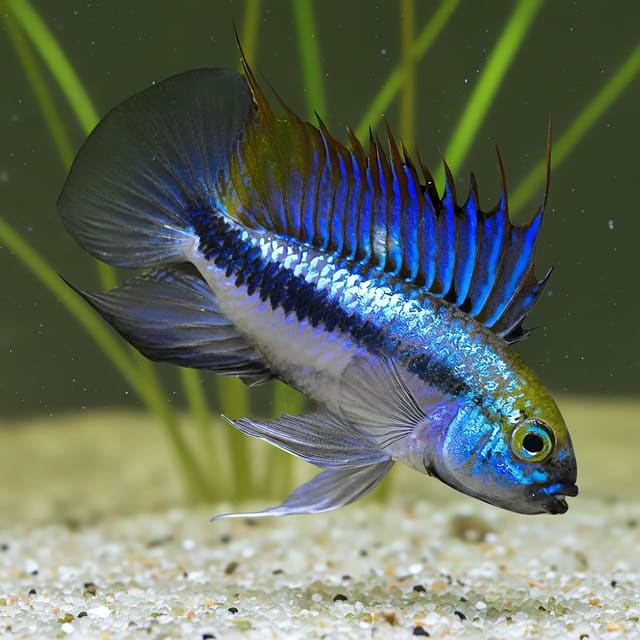
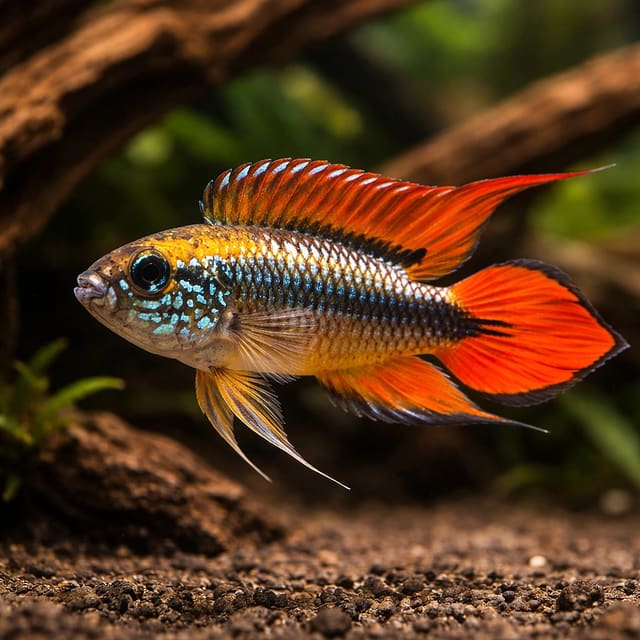
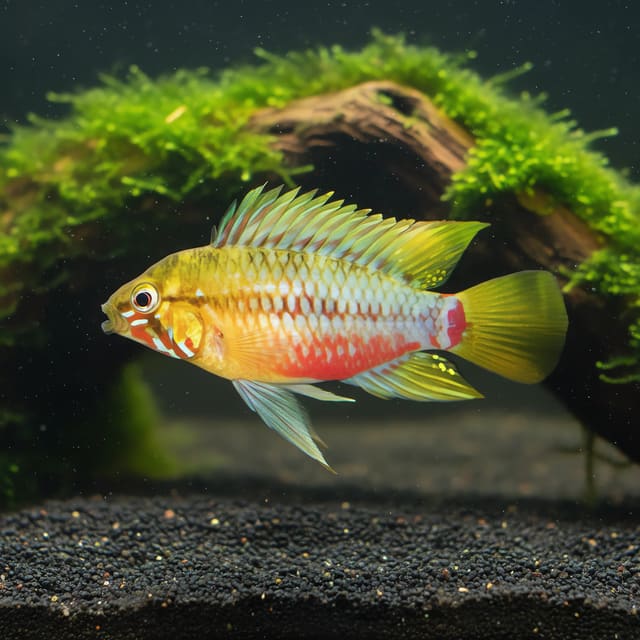
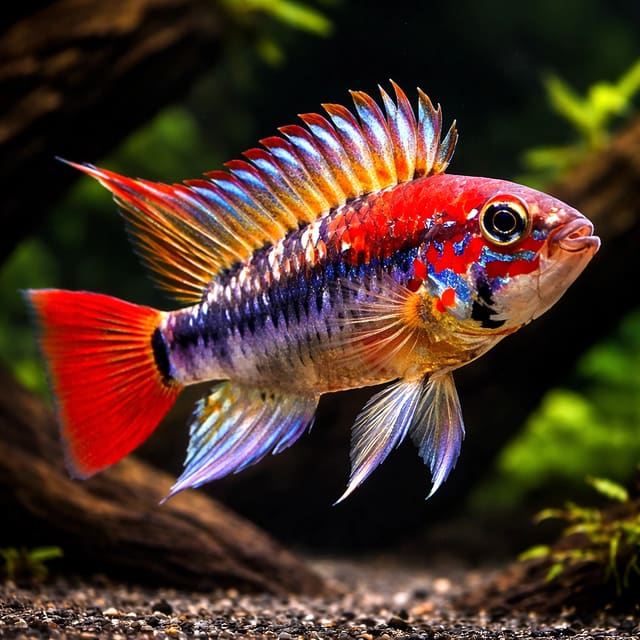
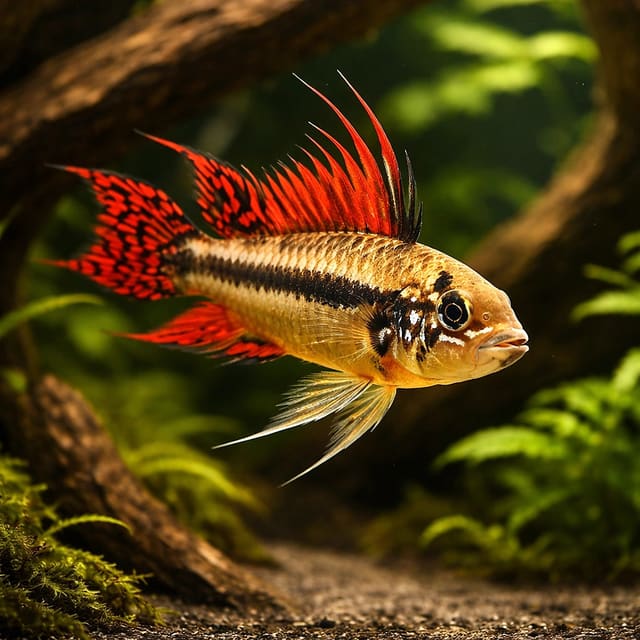
The gallery shows fish with a yellow body and orange-and-black fins with elongated, patterned fins in aquarium and clean side-view scenes. Colour can deepen or soften with age, mood, lighting and individual genetics. A juvenile may look less dramatic than a mature adult, while a stressed new arrival may temporarily hold its fins close or appear paler. Judge long-term welfare through appetite, breathing, body condition and behaviour as well as colour.
Gallery images have been digitally enhanced to improve image quality. Natural colour, pattern, size and maturity can vary between live animals.
Choose this fish when the attraction is not simply colour but a small cichlid's behaviour. If the aquarium is newly set up, lacks floor cover or already contains several territorial bottom fish, finish the habitat and stocking plan first. A little preparation makes the difference between a fish that merely fits on paper and one that can use the aquarium properly.
The two useful adult records do not give exactly the same number. FishBase records a maximum of 5.0 cm standard length for male or unsexed fish. The specialist Seriously Fish species profile gives 75 mm standard length for males and 50 mm for females. The full tip-to-tip impression of a mature male can be longer than the recorded standard-length figure.
For aquarium planning, use the larger credible record: allow for a male around 7.5 cm standard length and a female around 5 cm standard length. That does not mean every fish will reach the maximum, nor does the 3–4 cm dispatch choice describe a permanent adult size. It gives enough margin for territory, feeding and filtration without pretending the records are identical.
Seriously Fish gives a base of 60 × 30 cm, about 54 litres, or larger for a single pair and says a group needs larger quarters. The footprint matters because these fish organise their lives around the lower levels, caves and boundaries. Extra height cannot compensate for a floor plan with one exposed shelter and nowhere for a chased fish to leave the line of sight.
Begin with more retreats than fish. Turn cave entrances in different directions, use wood or dense planting to interrupt direct views, and leave a quiet route around each territory. Ceramic caves and other smooth, aquarium-safe shelters work; a natural-looking arrangement can use soft sand, wood roots, branches and leaf litter. Check that every piece is stable and that the fish cannot become wedged behind hardscape.
A pair is not created simply by placing a male and female together. Watch whether both fish can feed, rest and move through the aquarium without repeated pursuit. If one fish remains pinned in a corner, hides continuously or misses meals, the keeper needs another established aquarium or a prompt rehoming plan. Larger groups demand more footprint and distinct territories; the single-pair starting figure should never be multiplied mechanically without considering aggression and community load.
Fine sand suits the fish's bottom-oriented foraging and makes it easier to keep the surface clean around caves. Arrange wood so it forms shaded passages without sealing off circulation. Dried beech, oak or Ketapang almond leaves can create cover and support small microbial life as they break down. Replace or leave them according to the aquarium's maintenance style, removing anything that causes excessive fouling.
Dimmer areas and floating cover can help the fish feel secure. Hardy plants that tolerate shade work around the wood, while open patches keep feeding visible and allow waste to be siphoned. The goal is not to reproduce one imagined river scene perfectly. It is to combine cover, clean water and usable territory in a form the keeper can maintain.
The species profile gives 22–29°C, pH 5.0–6.0 and 0–15 dGH. It also explains that commercially produced fish are relatively undemanding compared with some wild populations, and that origin influences pH and hardness requirements. These figures are therefore a broad species-level aquarium envelope, not an instruction to swing the water from one end to the other.
Start with the water the fish has been held in, compare it with the aquarium and make changes slowly. A stable value within an appropriate part of the range is safer than repeatedly adding acids, buffers or minerals to chase a number. If your tap water sits outside the intended plan, the aquarium water guide explains what the tests measure, and the water matcher helps compare measured values with published guidance. Test the actual aquarium rather than assuming the tap and tank remain identical.
Temperature changes the fish's metabolism and the water's oxygen capacity. Choose a reliable heater where the room cannot hold a suitable stable temperature, place it where flow carries warmth through the tank, and verify it with a separate thermometer. At the warmer end, good gas exchange and sensible stocking become especially important.
A biological filter processes ammonia released by fish and decaying food into nitrite and then nitrate. Ammonia and nitrite are toxic and should remain at zero in a stocked aquarium. The general RSPCA fish-environment guidance explains why a properly established filter is essential. If this is the first aquarium, follow the first tropical tank guide and finish cycling before livestock is added.
Use gentle filtration rather than a harsh jet through every cave. Aim for circulation that prevents stagnant pockets, carries waste towards the filter and keeps the surface moving without forcing the fish to fight the current all day. A spray bar, adjustable outlet or hardscape used as a flow break can make the same filter much more comfortable.
Test ammonia, nitrite and nitrate regularly, especially after adding fish, changing the feeding routine or cleaning the filter. The broad UK OATA dwarf-cichlid care sheet recommends weekly testing and a 25% partial water change, while the species profile notes that 10–15% weekly can be adequate in a lightly stocked aquarium. Use those as scoped starting points: the right amount is the one that keeps measured waste low without abrupt changes in temperature or chemistry.
Treat replacement tap water for chlorine or chloramine and match its temperature closely. When filter media needs cleaning, swish it lightly in aquarium water removed during maintenance rather than running it under the tap. Clean only what is needed so the aquarium retains enough active bacteria.
In nature, the species is described as primarily carnivorous and feeding mostly on benthic invertebrates. In the aquarium, offer foods that fit that feeding style: Artemia, Daphnia and appropriately sized chironomid larvae are named in the species profile, and many individuals learn to accept dried food, usually pellets more readily than flake.
Build variety around a quality small pellet and suitable frozen or trusted live foods. The pellet provides consistency; the invertebrate foods encourage natural searching and add variety. Match particle size to the fish in front of you. A 3–4 cm arrival needs food it can take cleanly, while a larger fish can handle a broader range of pieces.
Feed modestly and watch the whole group rather than the first confident fish. Drop or direct some food near separate areas so a shy fish is not forced through a defended cave entrance to eat. Remove uneaten food from dead spots before it decays. Body condition should remain gently rounded, not hollow behind the head and not swollen after every meal.
Prepare the aquarium before the parcel arrives: stable temperature, zero ammonia and nitrite, suitable cover and no last-minute rearrangement. On arrival, follow the current delivery and acclimatisation policy and observe breathing, balance and body condition. Keep the first meals light and verify water quality rather than trying to correct every shy or pale moment with food.
During the first week, make short observations at different times of day. Check whether the fish leaves cover to feed, whether fins are held normally, whether breathing settles, and whether any tank mate repeatedly enters its refuge. A new dwarf cichlid may spend time under wood while learning the aquarium; the useful question is whether that behaviour gradually relaxes and whether the fish is eating.
Mature males are generally larger, more colourful and more extended-finned than females. Females tend the eggs and fry after spawning in a cavity and can become strongly territorial. These are species traits, not a promise that a juvenile can be sexed from one photograph or that two chosen fish will bond.
If spawning occurs, watch the whole community. A female guarding a cave may drive the male or bottom-dwelling neighbours away repeatedly. More cover and more floor space help, but they do not remove the need to intervene when another fish cannot escape. Breeding should be treated as an event that changes the territory map, not as a guaranteed bonus of ordinary community keeping.
Consistency is the useful skill here. The fish does not need a constantly changing aquarium; it needs a keeper who notices small changes before they become large problems.
Compatibility is conditional. Captive-raised Apistogramma cacatuoides is described as the better choice for a general community aquarium, while wild examples are better kept alone or with small dither fish such as pencilfish and ideally not mixed with other Apistogramma. The broad dwarf-cichlid guidance also warns that territoriality can rise sharply during breeding.
That makes a calm upper- or midwater community the most sensible direction when water requirements overlap. Those fish use a different part of the aquarium and are less likely to contest a cave. Even then, the footprint, group size and escape routes matter more than a simple label such as peaceful. A calm species can still become a poor match in a short tank where every route crosses the cichlid's shelter.
| Situation | How to judge it |
|---|---|
| Calm small dither fish | Potentially suitable when they share the water range, are not small enough to be treated as prey and have open swimming space away from caves. |
| Other bottom-oriented fish | Use caution. Repeated entry into a defended cave zone can trigger chasing, especially after spawning. |
| Another dwarf cichlid | Avoid in a limited footprint. Similar fish compete for the same shelters and boundaries. |
| Large or boisterous fish | Avoid when they intimidate, outcompete or injure a small cichlid, even if the water values appear compatible. |
| Shrimp and very small fry | Treat as potential food. A planted layout may provide cover but does not create a guarantee of safety. |
| A male and female of this species | Do not assume automatic pairing. Observe feeding, chasing and access to shelter, and keep a separation plan ready. |
Short displays, a brief chase away from a cave and temporary colour changes can be part of cichlid communication. The pattern becomes harmful when one fish loses access to food or cover, remains at the surface or in a corner, shows damaged fins, breathes hard, or is pursued whenever it moves. Do not wait for serious injury before changing the layout or separating fish.
Watch at feeding time because competition is easiest to see then. A dominant fish may look healthy while a subordinate fish slowly loses condition. Deliver small amounts to more than one area and check that each fish eats. If food distribution only hides a serious territory problem, change the stocking rather than feeding more.
Place wood, plants and caves so a fish leaving one refuge is not immediately visible from every other refuge. A good boundary has depth: a solid object, a plant mass and a turn in the route are more effective than two caves side by side facing the same open space. Keep enough open area to see the fish and remove waste; a completely packed floor can conceal a bullied or unwell animal.
Community planning is also about spare capacity. The biological filter must handle the whole stock, and the floor must have room for each species' routine behaviour. A tank can meet a litres figure while still having too little usable territory because one ornament divides it badly or because several species depend on the same cave line.
A community that appears settled can change after eggs are laid. The female guards the cavity and fry, and her defended radius may expand. Fish that previously passed nearby without trouble can suddenly be chased. If breeding is not the goal, that still needs management; eggs do not make the aggression imaginary.
Provide several shelters and be prepared to move the male or another vulnerable fish if it cannot avoid the brood territory. When breeding is intentional, choose companions that will not disturb the site or prey on fry, or use a species-focused aquarium. The sensible plan protects adult welfare first rather than trying to maximise fry in an unsuitable community.
The best companions are therefore not a fixed shopping list. They are calm animals of suitable size and water requirements that leave this fish enough sheltered floor territory. If the aquarium cannot provide that separation, a species-led setup is kinder and usually more interesting to watch.
The larger species-level record gives mature males at about 7.5 cm standard length and females at about 5 cm standard length. FishBase also records a 5.0 cm standard-length maximum for male or unsexed fish, so the sources are not identical. Planning for the larger 7.5 cm record gives the aquarium and territory enough margin. Standard length excludes the tail, and the 3–4 cm choice on this page is a dispatch size rather than an adult limit.
The specialist species profile gives a 60 × 30 cm base, about 54 litres, or larger for a single pair and says a group needs larger quarters. Treat the footprint as important: provide several caves, sand, wood, shade and broken sight lines. A community needs more room than a pair-only starting point because other fish add waste, movement and competition. If either cichlid cannot leave a chase, feed or rest safely, the practical aquarium is too small or badly divided for that combination.
A carefully managed single pair can use the cited 60 × 30 cm starting footprint, while a group needs more space and distinct territories. This offer does not guarantee sex or pair bonding, so do not buy two fish on the assumption that they will form a compatible pair. Keep only the number for which you can provide caves, visual separation and a backup home. The right number depends on floor area and individual behaviour, not a universal male-to-female formula.
It is best described here as intermediate. The fish can be adaptable, especially when commercially produced, but the keeper still has to maintain a mature biological filter, stable water and clean substrate around caves. Territorial behaviour can change during breeding, and an apparently compatible pair may need separating. A newer keeper can succeed by preparing the aquarium fully, testing water, choosing calm companions and keeping a spare separation plan rather than relying on the fish's small size.
The species is described as primarily carnivorous, feeding mostly on benthic invertebrates. Offer appropriately sized Artemia, Daphnia and chironomid larvae such as bloodworm, supported by a quality small pellet that the fish accepts. Use modest portions and feed in more than one place when one fish dominates. Remove leftovers from sheltered dead spots. A varied routine is more useful than repeatedly feeding one rich food, and the smallest dispatch size needs particles it can swallow cleanly.
The specialist aquarium profile gives 22–29°C, pH 5.0–6.0 and 0–15 dGH. It also notes that commercially produced fish can be less demanding and that origin affects pH and hardness. Keep the fish in stable, suitable water rather than moving rapidly across the published range. Compare the holding water with your aquarium, test the tank regularly and change chemistry gradually. Ammonia and nitrite should remain at zero in a mature, filtered aquarium.
It is territorial rather than a universal fin-nipper. A fish may display or chase around a cave, and a female guarding eggs or fry can become much more forceful. Trouble is more likely when several bottom-oriented fish share a small floor area or when there is only one obvious shelter. Calm companions, multiple retreats and broken sight lines reduce pressure. Persistent pursuit, missed meals, damaged fins or a fish trapped in a corner means the stocking or layout needs prompt change.
Captive-raised fish can suit a carefully planned community with calm, small upper- or midwater dither fish where temperature and chemistry overlap. Pencilfish are named as an example for wild fish, while other Apistogramma are best avoided because they compete for similar territories. Use caution with bottom dwellers that repeatedly enter caves, and assume very small shrimp or fry may be eaten. No species is automatically safe: adult size, feeding speed, water needs and available territory all have to match.
Live fish are hand-bagged in oxygen, placed in an insulated box and given a heat pack when the weather calls for it, then carried by a licensed live-animal courier. Someone must be present to receive the parcel. For a Live Arrival Guarantee claim, contact Tropical Fish Co on the day of arrival with the order number and a continuous unboxing video showing the sealed parcel being opened and the fish still in the bag. Read the full delivery and Live Arrival Guarantee policy before dispatch.
The adult records are labelled by measurement type because standard length excludes the tail. Dispatch size and adult size remain separate, and no reference establishes a lifespan, disease treatment, guaranteed sex or automatic pair bond for this offer.
No reviews for this item yet. Bought one? Honest reviews only, good or bad.
What customers say about ordering from us
I have a small group of long finned mountain minnows. So was delighted to be able to order ten of this variety to increase the genetics in my tank . The ones I recieved are healthy but it’s to early to give a verdict on wether they are of a long finned type since they are small currently.
Gordon Walker · 23 Sept 2026
100% success travel and "installation". Pleased with quality of purchase. The Siamese fighter a bit "shy" so have not yet seen him at his best yet but looking good. Happy customer. GG
George E Garratt · 21 Sept 2026
Reviews of our shop, collected by Judge.me, an independent third-party review collector. Newest first.