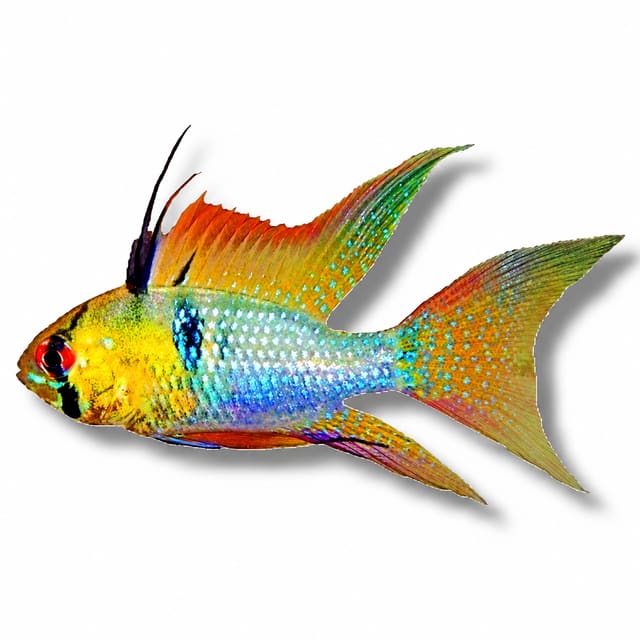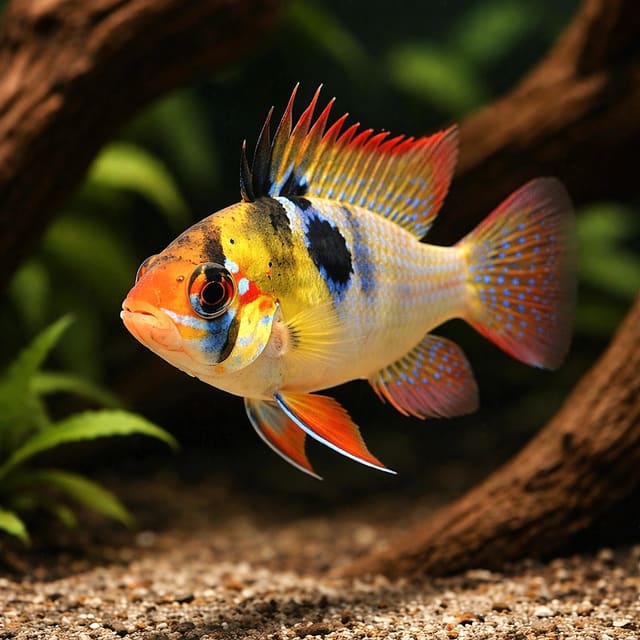
Asia Form Ram Cichlid (Mikrogeophagus ramirezi)
27–30°C · pH 4–7 · 54L
£5.99
The Red stroke Dwarf Cichlid (Apistogramma sp. red stroke) is a freshwater cichlid from South America. It suits a mature, filtered aquarium; OATA's dwarf-cichlid guidance gives 22–27°C, pH 6.0–8.0 and 4–12°dH, with at least 60 litres for a pair or 80 litres when mixing with other fish. Sold individually at a dispatch size of 3–4 cm.
Apistogramma sp. red stroke
Save when buying multiple fish. Each quantity is one fish; sex and pair formation are not guaranteed unless the selected variant explicitly states them.
The Red stroke Dwarf Cichlid (Apistogramma sp. red stroke) is a freshwater cichlid from South America. It suits a mature, filtered aquarium; OATA's dwarf-cichlid guidance gives 22–27°C, pH 6.0–8.0 and 4–12°dH, with at least 60 litres for a pair or 80 litres when mixing with other fish. Sold individually at a dispatch size of 3–4 cm.
Cichlids are a family of roughly 1,800 accepted species, not one care type. Before buying, identify the exact species and source, then compare adult measurement, usable tank dimensions, social system, territory, tested water, diet and an exit plan. No family-wide minimum tank, water range or tank-mate list is safe.
Maintain these water conditions for optimal health and vibrant colors
The Red stroke Dwarf Cichlid (Apistogramma sp. red stroke) is a freshwater dwarf cichlid from South America. WoRMS places Apistogramma in the family Cichlidae, while Wikipedia describes the genus as South American dwarf cichlids that mostly feed on tiny animals. Choose this fish for a mature, filtered aquarium where you can provide cover, measured water conditions and enough territory for changing behaviour.
Keep it at 22–27°C, pH 6.0–8.0 and 4–12°dH. OATA's dwarf-cichlid sheet gives these values as group guidance, not a species-specific optimum. It also sets ammonia and nitrite at zero, carbonate hardness at 3–10°dKH and nitrate at no more than 20 mg per litre above the normal tap-water level.
Use at least 60 litres if just a pair is being kept and at least 80 litres when dwarf cichlids are mixed with other fish. These are OATA's planning figures for dwarf cichlids. Space matters because members of the group may become territorial, especially when breeding, and even well-settled pairs will often chase each other.
A sheltered layout is more useful than a bare display. Gravel or sand, live plants and cover made from suitable caves, wood, leaf litter or ornaments allow fish to move out of sight when needed. Browse our South American cichlid collection when comparing other identities, but assess every fish on its own water and social requirements.
One purchase supplies one live Red stroke Dwarf Cichlid, with a dispatch size of 3–4 cm. That measurement describes the fish at dispatch rather than its adult length. Use the aquarium-space and compatibility plan below instead of choosing a smaller setup around the arrival measurement.
The exact species has not been identified, so the care advice here follows the genus Apistogramma and its care group. This matters when planning behaviour because breeding behaviour varies among Apistogramma species. Observe the individual fish and leave enough room and shelter for it to withdraw from encounters.
Sex is guaranteed only when the selected option explicitly states male or female. This Red stroke Dwarf Cichlid listing has no sex-guaranteed option. Do not plan a breeding pair or assume a particular territorial role from colour, size or the gallery.
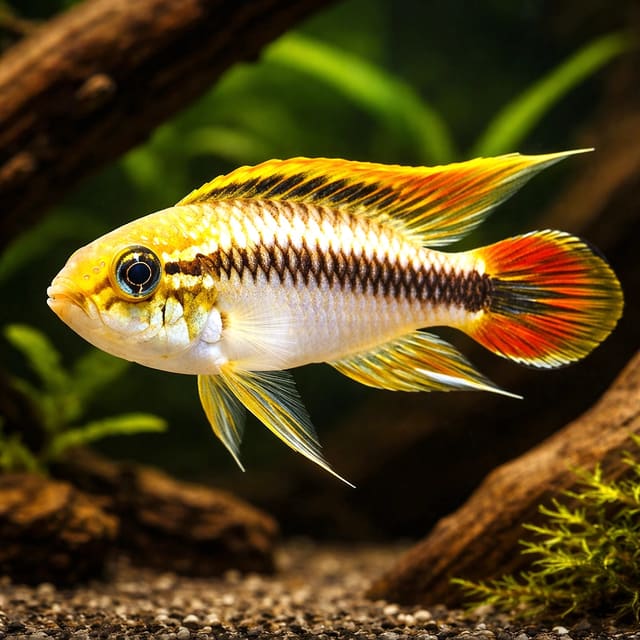
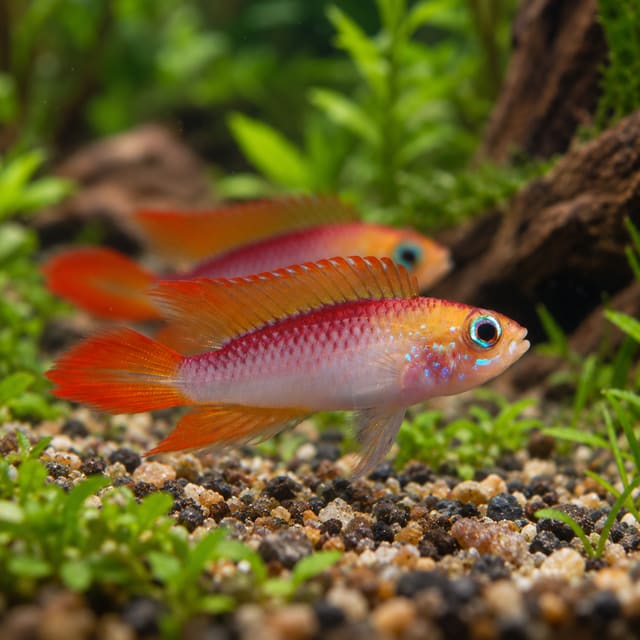
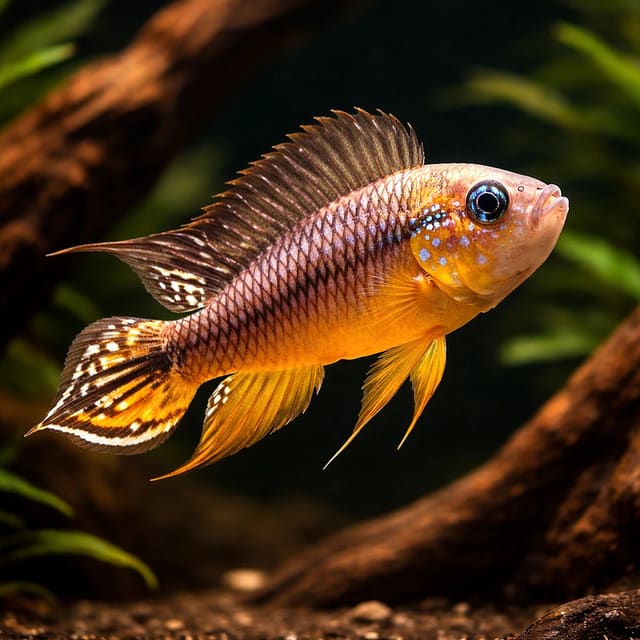
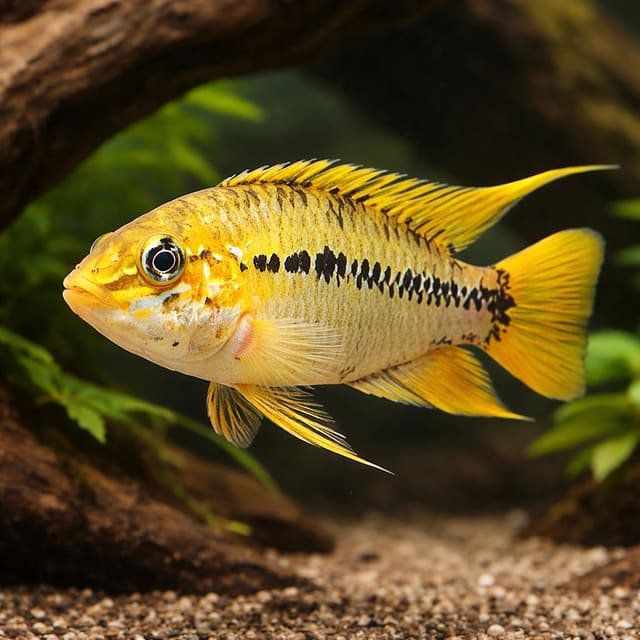
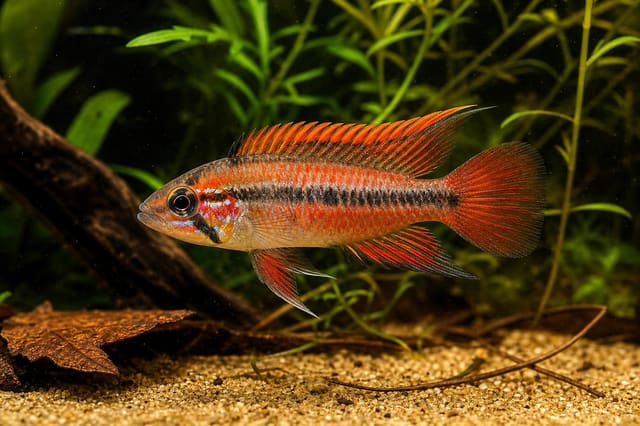
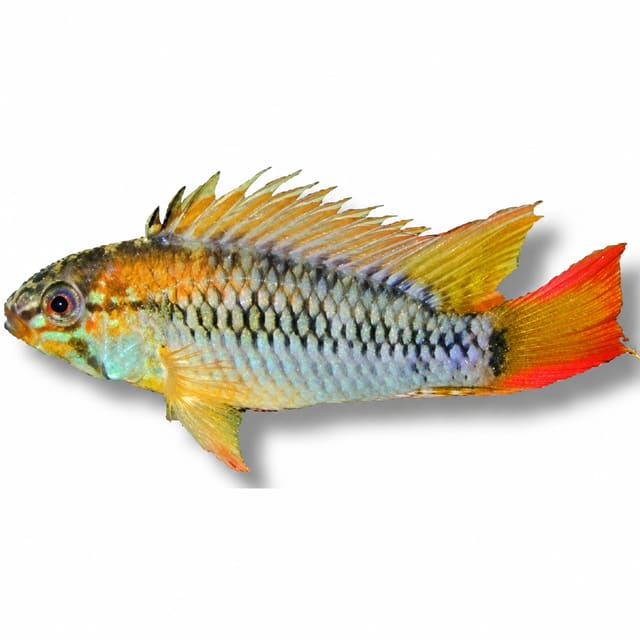
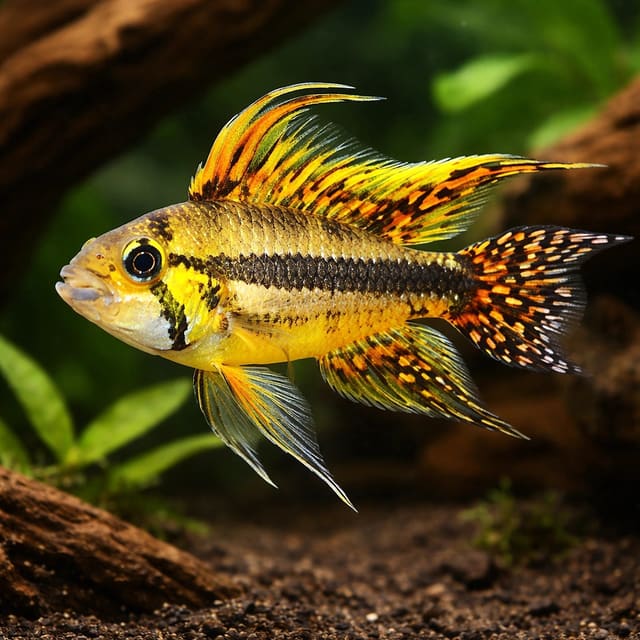
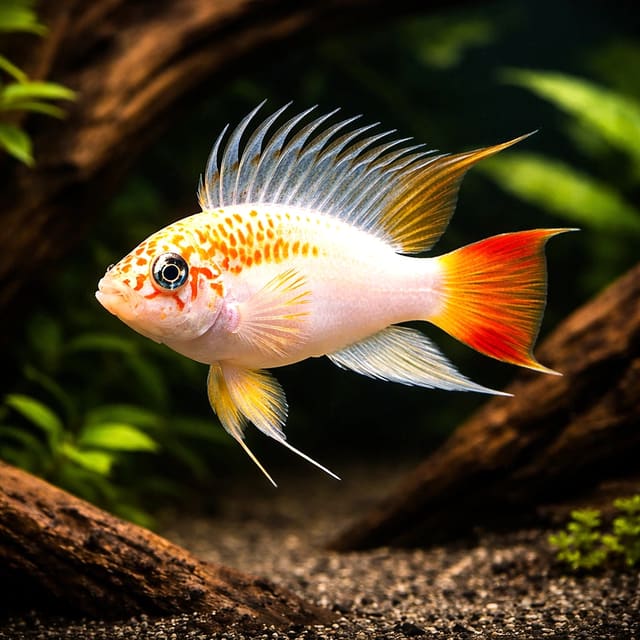
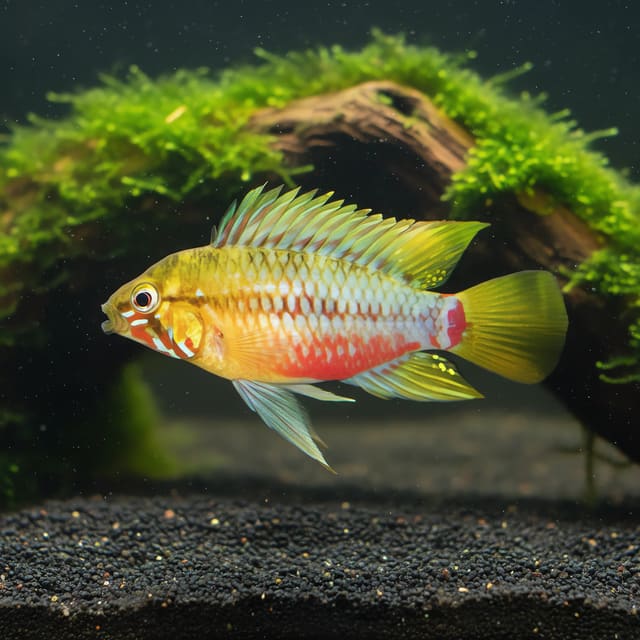
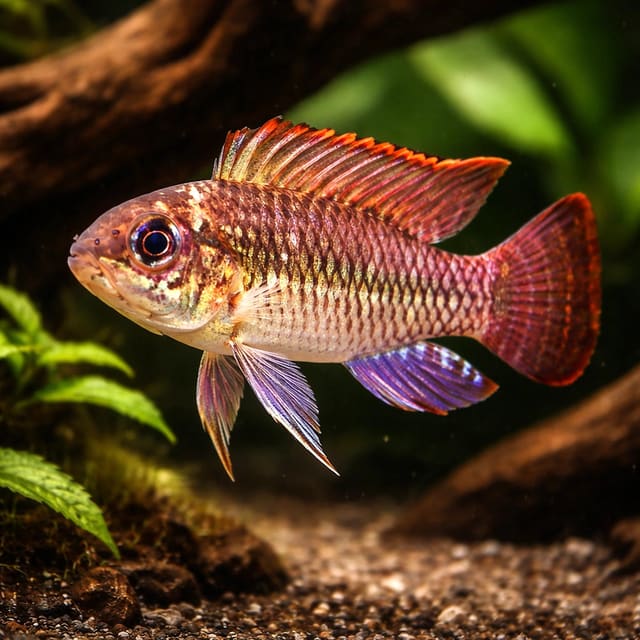
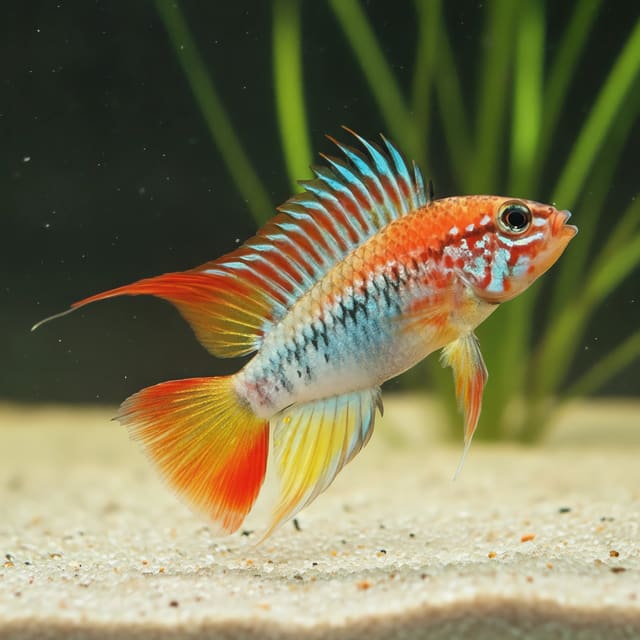
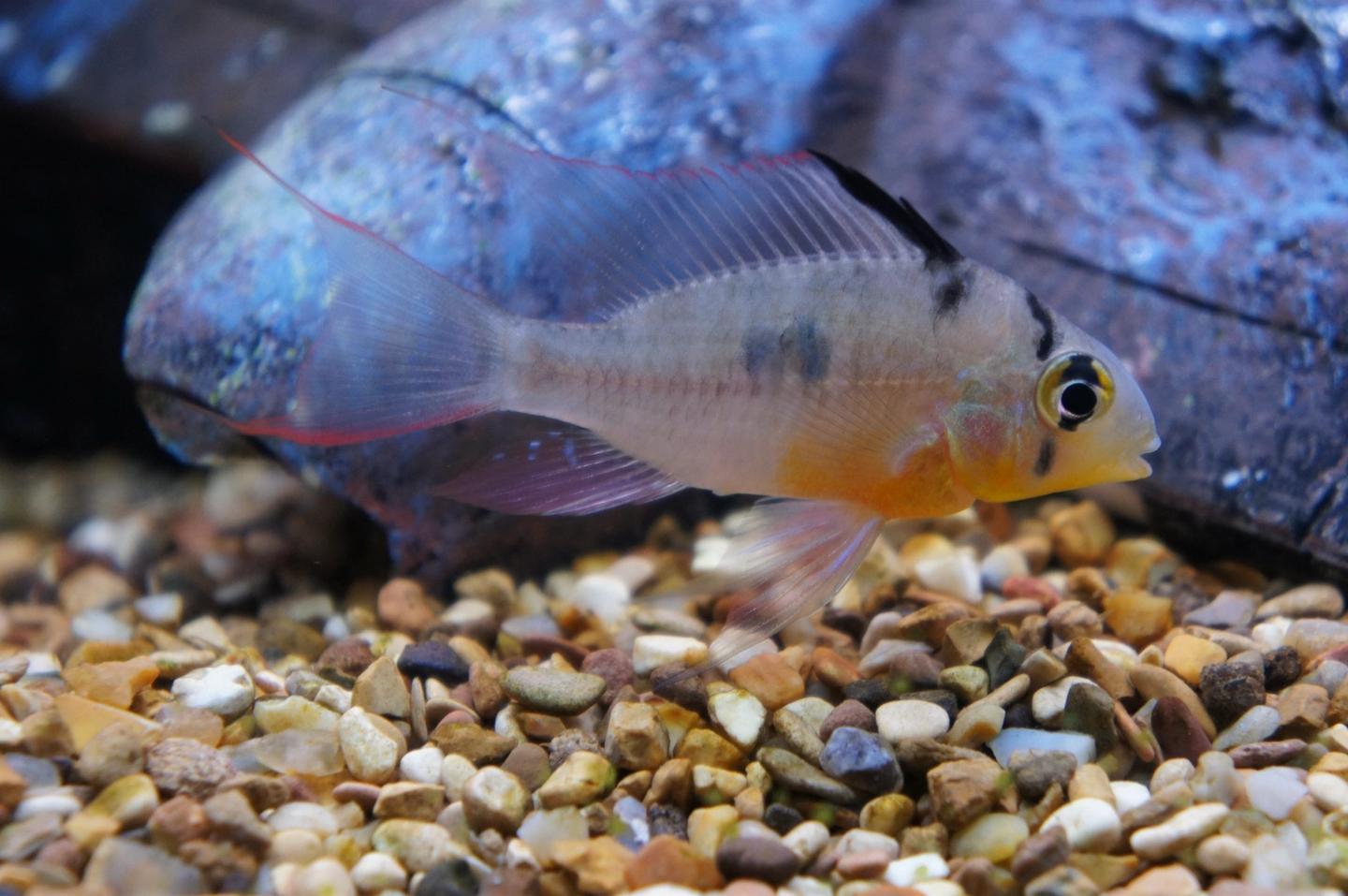
Some gallery images have been digitally enhanced to improve image quality. They show the listed type of animal rather than guaranteeing the exact markings of the individual supplied, so natural colour and pattern can vary. Use the images to understand the general dwarf-cichlid form and red-patterned trade appearance, while judging the delivered fish by its own condition and behaviour.
This fish suits a keeper who will maintain a mature biological filter, test the water every week and respond to territorial behaviour by providing space and cover. It is a poor match for an unfiltered aquarium, a newly filled setup or a community dominated by very active or boisterous fish.
| Suits | Not suited to |
|---|---|
| A mature aquarium with a maintained biological filter | An unfiltered or newly filled aquarium |
| Water kept at 22–27°C, pH 6.0–8.0 and 4–12°dH | A setup that cannot hold the stated range consistently |
| At least 60 litres for a pair | A cramped pair plan without separate cover |
| At least 80 litres when mixed with other fish | A crowded community without retreat space |
| Gravel or sand with plants, caves, wood or leaf litter | A bare layout that offers little shelter |
| Carefully screened dither fish with matching water needs | Very active or boisterous tankmates |
Before committing, measure the aquarium, confirm its actual water volume and test its temperature, pH, hardness, ammonia, nitrite and nitrate. Consider the whole stocking plan rather than judging capacity by the small size of one arriving fish. More fish increase feeding and waste, so additions must be slow enough for the biological filter to adjust.
Decide where several separate shelters will sit before the fish arrives. Cover should break direct lines of sight and remain usable when plants grow or ornaments are moved. This gives a shy fish somewhere to withdraw and gives fish in a pair or community more than one defensible place.
Place this fish only in a mature aquarium with a working biological filter. The RSPCA explains that fish release toxic ammonia and that beneficial bacteria in a biological filter convert it first to toxic nitrite and then to safer nitrate. A filter therefore manages waste through living bacteria; it is not simply a device that moves water.
Prepare and mature the aquarium before livestock arrives. Our first tropical aquarium guide provides a practical setup route. Test the aquarium rather than judging readiness from clear-looking water, because ammonia and nitrite are invisible. Both must read zero before adding the fish.
Increase the aquarium population slowly. Every additional fish increases feeding and waste, and the established bacterial population needs time to grow with that increased load. Adding too many fish too quickly can leave the filter unable to process the waste, creating unhealthy ammonia or nitrite levels that may make fish ill or cause death.
Never switch the filter off as a routine response to cloudy water or fish behaviour. Check it for blockages and maintain its bacterial media as described in the weekly-care section. The goal is continuous biological processing, stable conditions and enough capacity for the complete stocking plan.
Maintain 22–27°C, pH 6.0–8.0 and general hardness of 4–12°dH. Keep carbonate hardness at 3–10°dKH, ammonia at zero and nitrite at zero. Nitrate should not exceed 20 mg per litre above the normal level in your tap water.
Measure the aquarium rather than relying on the settings printed on equipment. A thermometer confirms the actual water temperature, while liquid or other suitable aquarium tests show pH, hardness and nitrogen-waste readings. Our aquarium water chemistry guide explains what the principal readings mean, and the water-matching tool helps compare measured values with this range.
| Reading | Required response |
|---|---|
| Temperature outside 22–27°C | Correct the cause and restore the range steadily. |
| pH outside 6.0–8.0 | Check the test and investigate the aquarium and replacement water. |
| Ammonia above zero | Treat it as a waste-processing problem and check filtration and stocking. |
| Nitrite above zero | Act promptly and pause further livestock additions. |
| Rising nitrate | Review water changes, feeding, waste removal and stocking load. |
Record results so that a gradual change is visible before it becomes a larger problem. Test replacement water as well as aquarium water when investigating an unexpected result. That comparison helps distinguish a change entering with the water from one developing inside the aquarium.
Stable readings come from a suitable water volume, consistent maintenance, controlled feeding and an effective filter. Avoid chasing a single reading while ignoring ammonia, nitrite or fish behaviour; evaluate the full set of measurements together.
Use at least 60 litres if just a pair is being kept, or at least 80 litres when mixing dwarf cichlids with other fish. The larger community figure provides more room for tankmates if breeding behaviour makes the cichlids territorial. Do not use the 3–4 cm dispatch measurement as the basis for reducing these figures.
Fit a filter in every aquarium and choose gravel or sand for the substrate. Add live plants where practical because they create cover and help divide the aquarium visually. If live plants are not used, provide plastic plants and suitable ornaments such as caves, plant pots, wood or leaf litter.
Even well-settled pairs will often chase each other, so a single attractive cave is not enough for a pair plan. Multiple retreat areas let one fish move away without immediately entering another fish's space. Watch which shelters are actually used and adjust the layout if one fish repeatedly controls every covered area.
For a community, calculate space using all residents, not just the cichlid. The aquarium must accommodate normal movement as well as temporary territorial pressure. Very active fish may also prevent a shy Apistogramma from settling, even where the nominal water volume appears adequate.
Reassess the structure after maintenance. Moving wood, trimming plants or removing leaf litter can eliminate a familiar boundary. If chasing increases after a rearrangement, restore separate cover and observe whether each fish can feed and rest without persistent pursuit.
Feed once a day and offer only the amount the fish can eat within a few minutes. Remove or reduce any portion that remains uneaten, because decomposing food releases waste into the water and increases pressure on the biological filter.
Apistogramma mostly feed on tiny animals in nature. Build the aquarium diet around appropriately small foods that fit that feeding biology. OATA recommends a good-quality flake or granule for dwarf cichlids, supported by small live or frozen foods such as daphnia, brine shrimp or tubifex.
Variety should come from rotating suitable small foods, not from increasing the total daily amount. A richer menu still has to fit within the few-minutes feeding limit. Frozen or live foods are additions to a controlled routine rather than a reason to feed repeatedly.
Observe the whole feeding event. A fish that approaches but repeatedly fails to eat may be facing a food-size, health or social problem. A fish that stays hidden while faster tankmates consume everything needs a calmer community plan or separated feeding area, not simply more food spread throughout the aquarium.
Keep uneaten food from collecting around caves, wood and leaf litter. These sheltered areas are useful for the fish but can conceal waste, so inspect them during the weekly siphon and adjust portions if debris repeatedly accumulates.
At least once every week, change 25% of the aquarium water. Use a siphon to remove solid waste from the substrate, especially around shelters and feeding areas. Treat replacement tap water with a suitable conditioner to remove harmful chlorine or chloramine before adding it to the aquarium.
Test the water at least once per week. Ammonia and nitrite must remain at zero, and nitrate must stay no more than 20 mg per litre above the normal tap-water level. Increase testing when livestock has recently been added, feeding has changed or fish behaviour suggests a problem.
Check the filter for blockages. If its media needs cleaning, do not run it under the tap because chlorine or chloramine may kill the beneficial bacterial population. Rinse it lightly in aquarium water removed during the partial water change. This removes loose debris while reducing bacterial loss.
Do not turn maintenance into a complete reset. The established filter bacteria are essential, and familiar shelter boundaries help fish manage encounters. Clean what needs attention while preserving biological filtration and usable cover.
A larger aquarium can provide more stable temperature and water quality, but volume does not replace maintenance. Weekly testing, controlled feeding and partial water changes remain necessary in both a pair setup and a community aquarium.
The fish is hand-bagged with pure oxygen and placed in an insulated box, with a heat pack used when weather conditions call for it. Arrange for someone to receive the parcel because live fish cannot be left unattended. Follow the current delivery and Live Arrival Guarantee policy for the complete terms.
Prepare the aquarium before the parcel is opened. OATA advises checking that ammonia and nitrite are zero before adding fish. Confirm that the aquarium is within 22–27°C and that the planned shelter is ready, so acclimatisation is followed by release into suitable conditions.
After release, keep the stocking plan unchanged while the biological filter adjusts to the added waste. Do not add several further fish at the same time. Observe whether the newcomer can reach cover, swim normally and feed without being persistently displaced.
Check the fish every day for changes in swimming, colour, temperament, breathing, appearance, body condition and feeding. Familiarity with its ordinary routine makes a change easier to recognise, but respond to the change itself rather than assuming every individual will behave identically.
| What you see | What to do first |
|---|---|
| Hanging at the surface, sitting on the bottom or erratic swimming | Test water quality and inspect filter operation. |
| Faster or slower gill-cover movement | Check temperature, ammonia, nitrite and recent aquarium changes. |
| Darker or paler colour | Review water readings, social pressure and access to cover. |
| More aggression or hiding than usual | Check retreat space and observe which fish controls it. |
| White spots, fluffy growths, lost fins or missing scales | Test the water and separate the observation from ordinary colour variation. |
| Reduced feeding or changing body condition | Watch a complete feeding event and check water and competition. |
Water testing is the first practical response because even small amounts of ammonia and nitrite can stress dwarf cichlids. Compare the result with the required zero reading, inspect the filter for blockage and review any recent increase in livestock or food.
Do not guess at a treatment from appearance alone. Record the signs, water readings and recent changes, then contact us for guidance if you are concerned about the fish's health. Clear observations help distinguish a water-quality problem, social pressure and a physical change.
Continue daily observation after the immediate issue appears to settle. A fish that resumes swimming but still refuses food, breathes differently or remains excluded from cover needs further attention. Restore stable care conditions before considering any additional livestock.
Dwarf cichlids can be kept in community aquariums, but use at least 80 litres and make sure every resident has enough space if breeding triggers territorial behaviour. Match temperature, pH and hardness before considering temperament: the shared plan must remain within 22–27°C, pH 6.0–8.0 and 4–12°dH.
OATA recommends shoals of dither fish for dwarf cichlids. These fish can give cichlids a sense of security and are quick enough to move away if territorial behaviour begins. Treat that as a type of companion rather than a universal species list; screen the proposed fish for matching water needs, activity level, adult space and the complete stocking load.
Avoid very active or boisterous tankmates. Some Apistogramma are quite shy and may not do well when constantly displaced by more active fish. Watch feeding as well as swimming: a community can appear peaceful while a shy fish repeatedly misses food or remains confined to one shelter.
Do not treat small body size as automatic compatibility. Aquarium volume, retreat routes, activity and biological load all matter. A shoal also adds several fish at once, so confirm that the mature filter can support the increase and continue testing after introduction.
Reassess combinations when behaviour changes. Breeding activity can alter territory use, while plant growth or maintenance can remove visual barriers. Restore separate cover, verify water readings and reconsider the stocking arrangement if any fish loses reliable access to food or shelter.
Expect the possibility of territorial behaviour, especially during breeding. This does not make every individual constantly aggressive, but it does require enough room, separate shelter and a plan for watching interactions. Fin-nipping behaviour is uncertain for this genus-only identity, so judge the individual through direct observation.
If just a pair is being kept, use at least 60 litres and provide several covered areas. Even well-settled pairs will often chase each other. Because sex is not guaranteed for this fish, buying two does not create a guaranteed male-and-female pair, and colour or dispatch size should not be used to assign sex.
If breeding is intended, avoid tankmates that might disturb spawning sites or predate on fry. Do not transfer that condition into a general claim that every small fish is compatible at other times; each community still needs the water, activity and space screening described above.
Breeding behaviour varies among Apistogramma species, so use observed behaviour rather than a fixed breeding recipe for this trade form. Maintain the established water range, keep the filter working, preserve cover and monitor whether every fish can withdraw safely.
For a community, the 80-litre figure is a starting minimum rather than permission to crowd the aquarium. Count the whole population, consider the room occupied by territories and add livestock slowly enough for the biological filter to adjust.
Treat Apistogramma sp. red stroke as a genus-level identity and plan the aquarium from OATA's dwarf-cichlid space guidance rather than a guessed adult length: at least 60 litres for a pair or 80 litres when mixed with other fish.
OATA's dwarf-cichlid guidance recommends at least 60 litres if just a pair is kept and at least 80 litres when mixing them with other fish. Add several shelters because even well-settled pairs will often chase each other.
Assess each combination rather than applying a fixed shoaling number. OATA discusses keeping a pair in at least 60 litres, but sex is not guaranteed here and even well-settled pairs will often chase each other, so provide separate cover and observe both fish.
Choose it only if you can provide a mature biological filter, weekly water tests, a weekly 25% water change and enough cover for territorial behaviour. Keep ammonia and nitrite at zero and add livestock gradually.
Apistogramma mostly feed on tiny animals in nature. Offer appropriately small quality flake or granule plus live or frozen daphnia, brine shrimp or tubifex, once daily in an amount eaten within a few minutes.
OATA's dwarf-cichlid guidance gives 22–27°C, pH 6.0–8.0 and general hardness of 4–12°dH. Keep ammonia and nitrite at zero and test the aquarium at least weekly.
It may become territorial, especially when breeding, and well-settled pairs will often chase each other. Fin-nipping behaviour is uncertain for this genus-level identity, so provide separate retreats and act if another fish is persistently pursued or excluded.
OATA recommends shoals of dither fish with matching water needs and enough room to escape territorial encounters. Avoid very active or boisterous tankmates; if breeding is intended, also avoid animals that may disturb spawning sites or predate on fry.
Start filming while the parcel is still sealed and before floating the bag, then open it in one continuous take and show the fish inside the sealed bag. Receive it in person, inspect it that day and float the bag for 20–30 minutes before release.
No reviews for this item yet. Bought one? Honest reviews only, good or bad.
What customers say about ordering from us
Easy website plenty of info on fish your buying great to pick a time slot
TRACEY DURRANT · 7 Oct 2026
Got some lovely fish thank you
Kevin Mackie · 7 Oct 2026
Reviews of our shop, collected by Judge.me, an independent third-party review collector. Newest first.