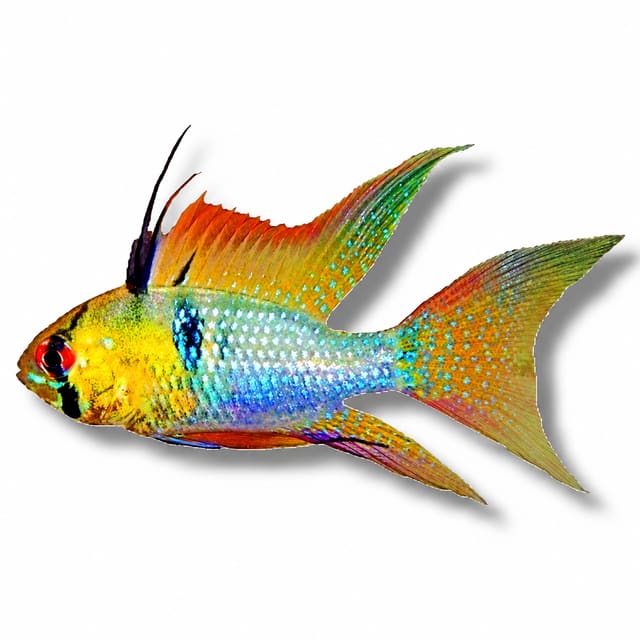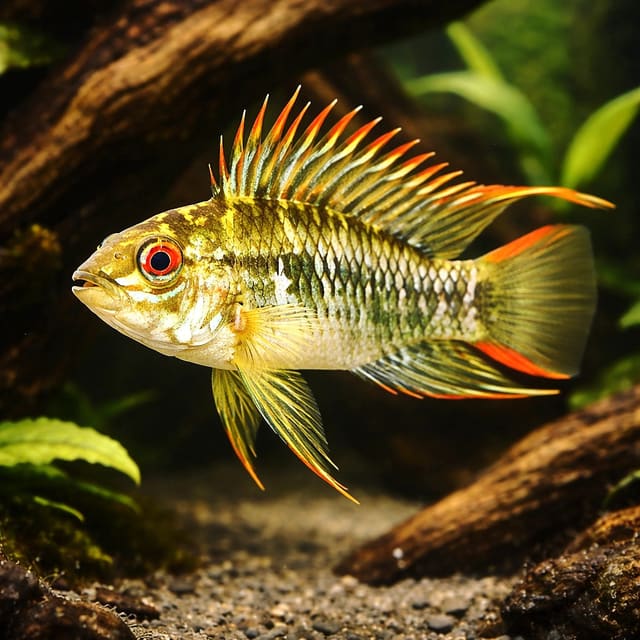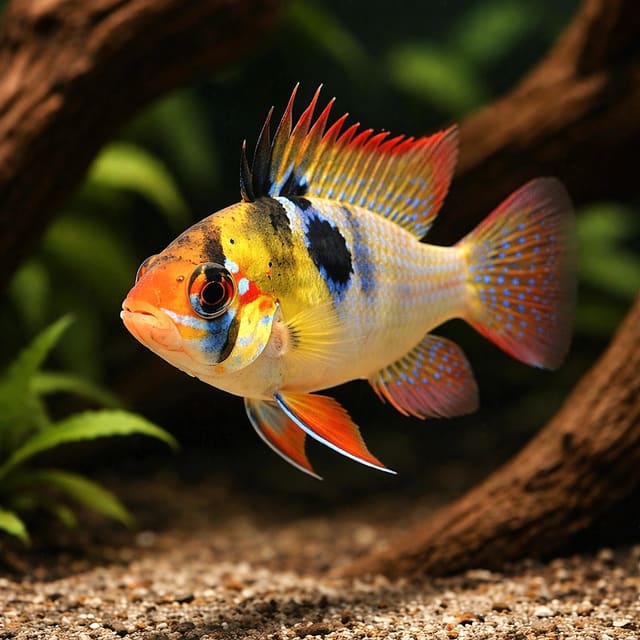
Asia Form Ram Cichlid (Mikrogeophagus ramirezi)
27–30°C · pH 4–7 · 54L
£5.99
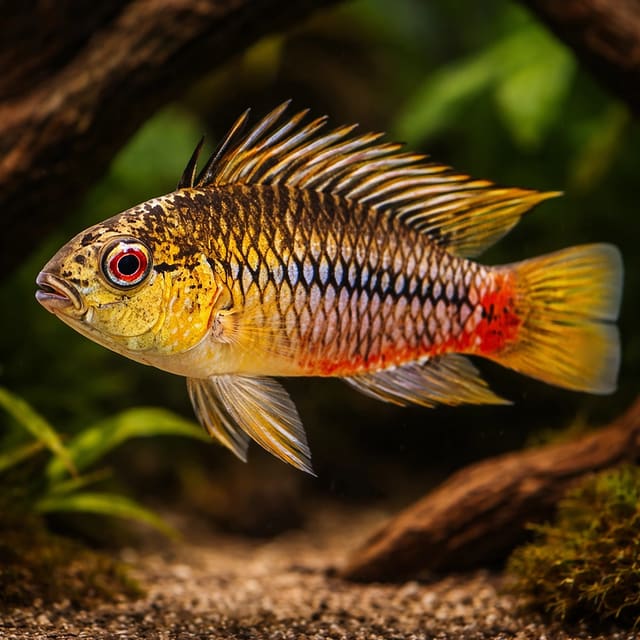
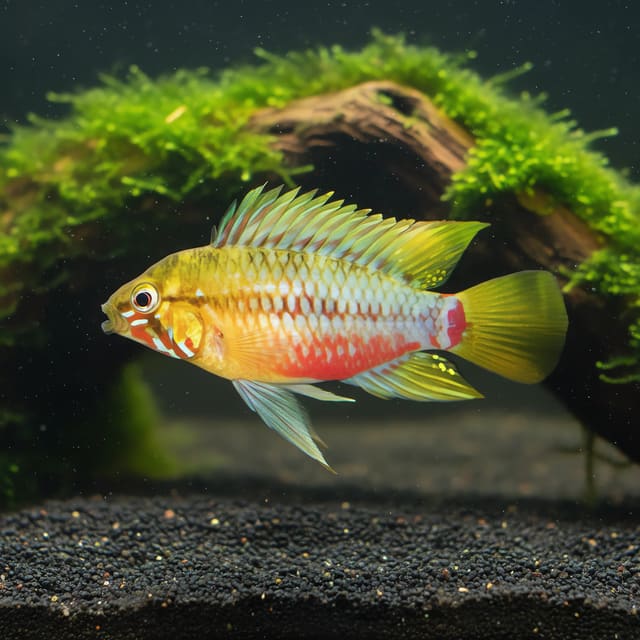
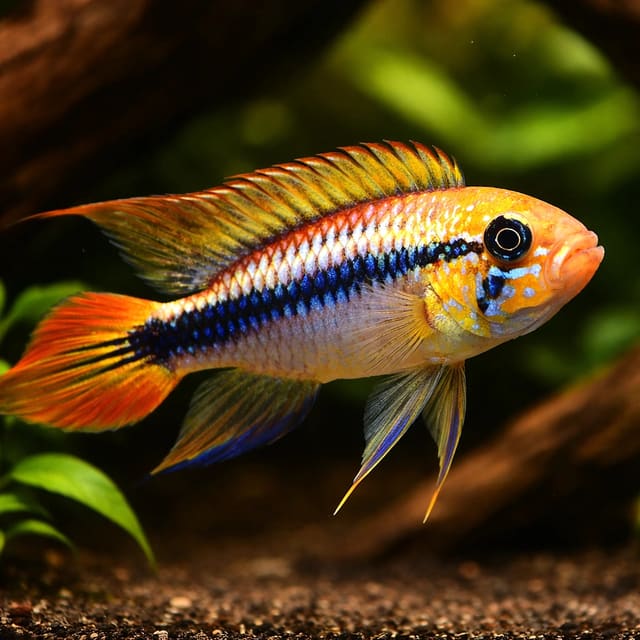
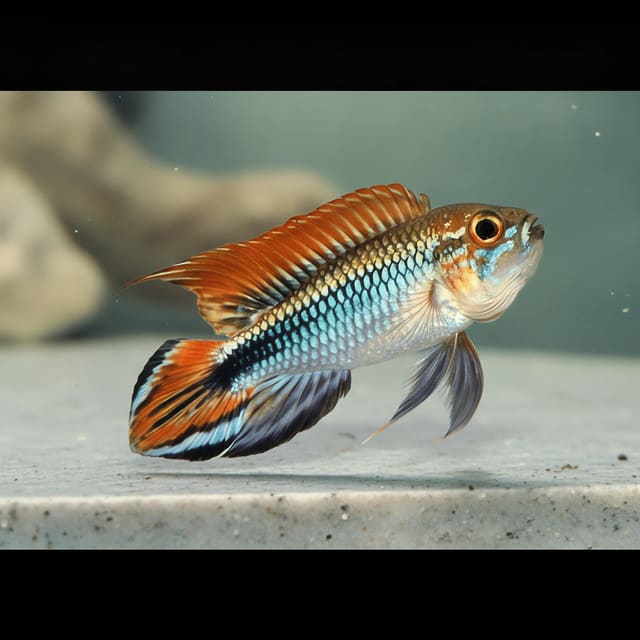
The Meinkenni Dwarf Cichlid (Apistogramma meinkeni) is a freshwater cichlid whose genus is native to South America, reaching 3 cm. It suits keepers with a mature, filtered aquarium; keep it at 22–29°C, pH 5.0–6.0 and 0–12°dH. Sold individually as one fish per purchase.
Adult size is the maximum length this species reaches at full maturity (scientific sources). The livestock you receive will be younger and smaller. Product-photo provenance and any image-specific limitations are stated on the listing.
Apistogramma meinkeni
Save when buying multiple fish. Each quantity is one fish; sex and pair formation are not guaranteed unless the selected variant explicitly states them.
The Meinkenni Dwarf Cichlid (Apistogramma meinkeni) is a freshwater cichlid whose genus is native to South America, reaching 3 cm. It suits keepers with a mature, filtered aquarium; keep it at 22–29°C, pH 5.0–6.0 and 0–12°dH. Sold individually as one fish per purchase.
Adult size is the maximum length this species reaches at full maturity (scientific sources). The livestock you receive will be younger and smaller. Product-photo provenance and any image-specific limitations are stated on the listing.
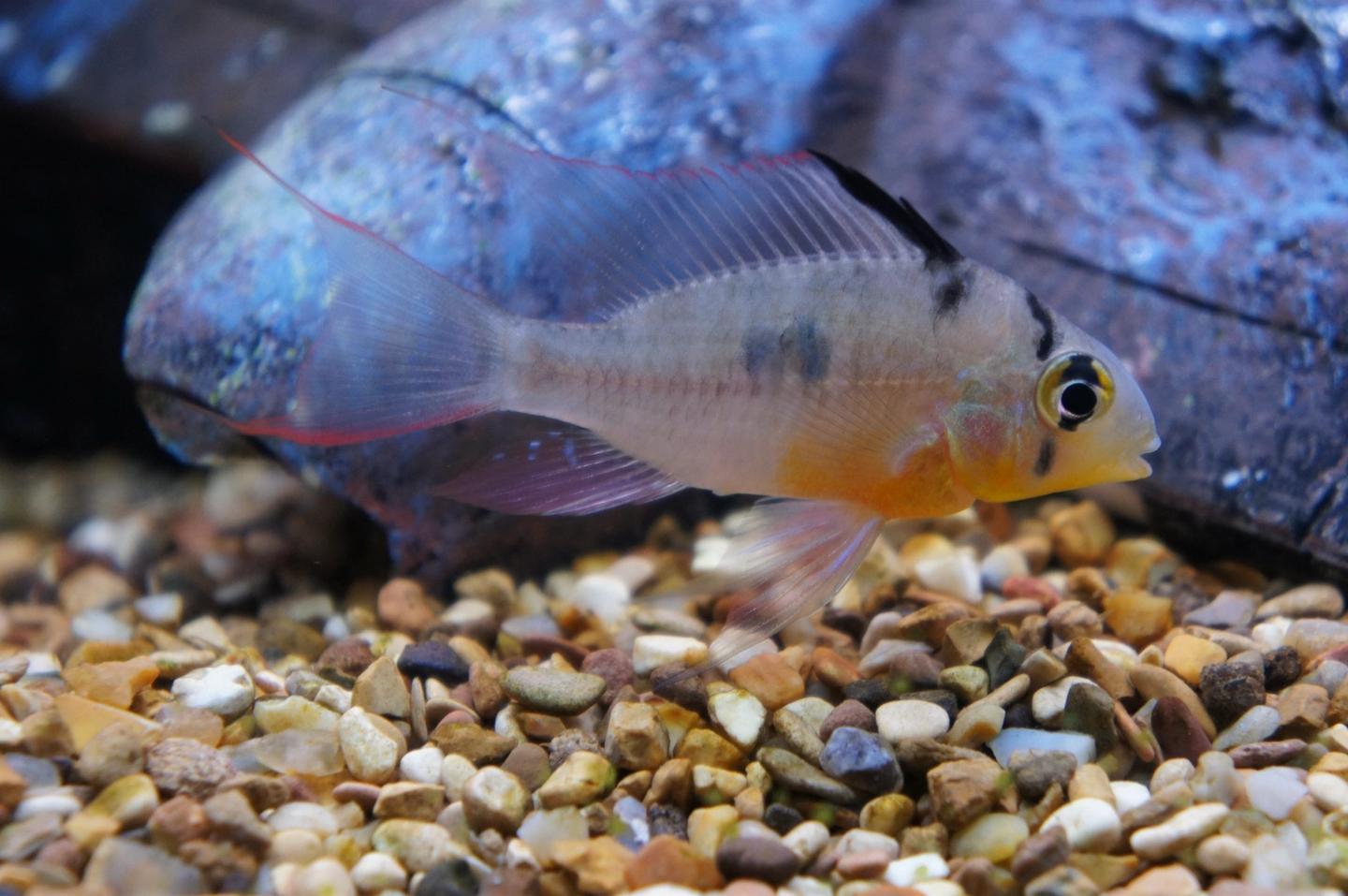
Cichlids are a family of roughly 1,800 accepted species, not one care type. Before buying, identify the exact species and source, then compare adult measurement, usable tank dimensions, social system, territory, tested water, diet and an exit plan. No family-wide minimum tank, water range or tank-mate list is safe.
Maintain these water conditions for optimal health and vibrant colors
The Meinkenni Dwarf Cichlid (Apistogramma meinkenni) is a freshwater dwarf cichlid in the family Cichlidae. The Apistogramma genus is native to South America, and its members mostly feed on tiny animals. Use 3 cm as the adult planning figure for this fish. It suits a keeper who can prepare a mature, filtered aquarium, test the water every week and provide enough cover for territorial behaviour.
This is a compact fish, but compact does not mean that it should be placed in a small or newly filled aquarium. OATA recommends at least 60 litres when keeping just a pair of dwarf cichlids and at least 80 litres when mixing them with other fish. The extra water volume improves environmental stability, while the extra floor area and cover give fish room to move away from one another.
Keep the aquarium at 22–29°C, pH 5.0–6.0 and 0–12°dH. Ammonia and nitrite should remain at zero, while nitrate should not rise more than 20 mg per litre above the normal level in the tap water. OATA’s broad dwarf-cichlid guidance gives 22–27°C, pH 6.0–8.0 and 4–12°dH for the group.
| Suits | Not suited to |
|---|---|
| A mature aquarium with an established biological filter | A new or unfiltered aquarium |
| A keeper who can test water and change 25% weekly | A routine without regular water checks |
| A covered layout with sand or gravel, plants and shelters | A bare layout with nowhere to retreat |
| A carefully screened community with enough territory | Very active or boisterous tank mates |
| At least 60 litres for a pair or 80 litres for a mixed community | A community that cannot provide the recommended space |
If these requirements match your aquarium, you can compare this fish with other South American cichlids while keeping each animal’s water, space and temperament needs separate.
One purchase supplies one Meinkenni Dwarf Cichlid. Plan the aquarium for that individual and for the complete social arrangement you intend to keep; buying one fish does not by itself establish a pair or a community.
Sex is guaranteed only when the selected option explicitly states male or female. This Meinkenni Dwarf Cichlid listing has no sex-guaranteed option. Base your stocking plan on the fish as an unsexed individual rather than building a breeding arrangement around an assumed sex.
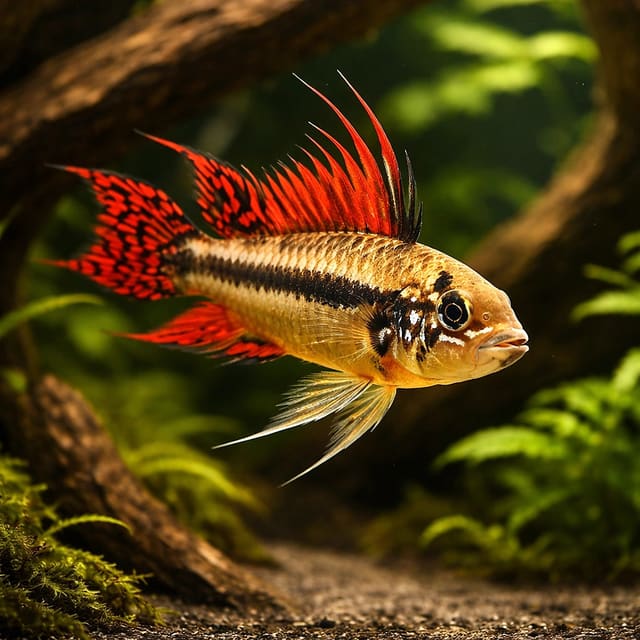
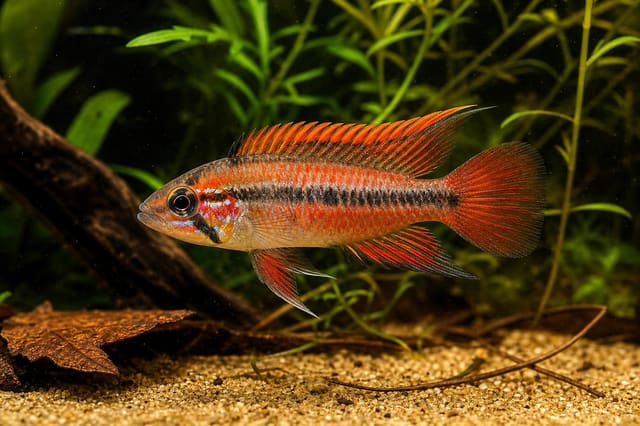
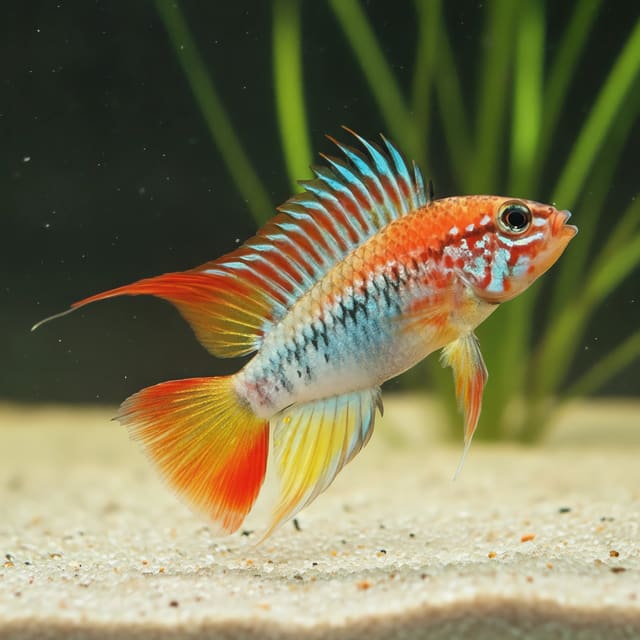
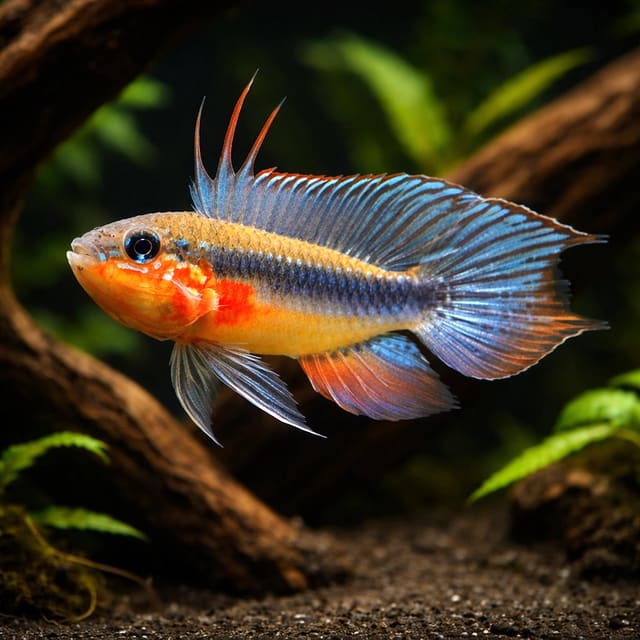
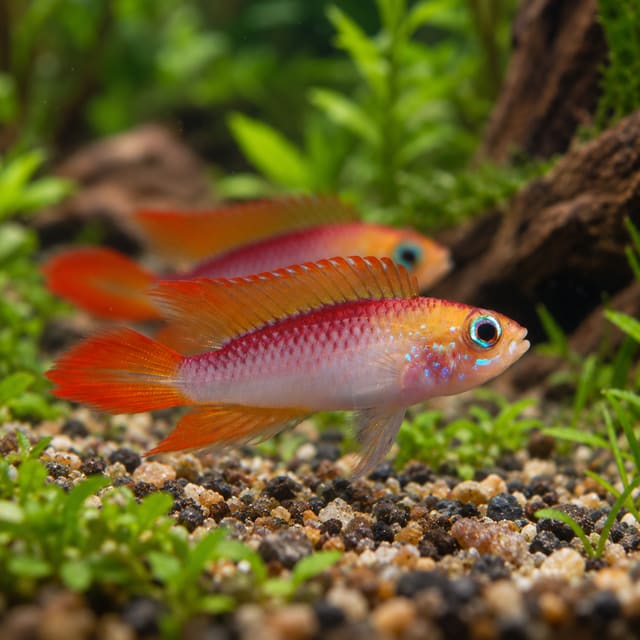
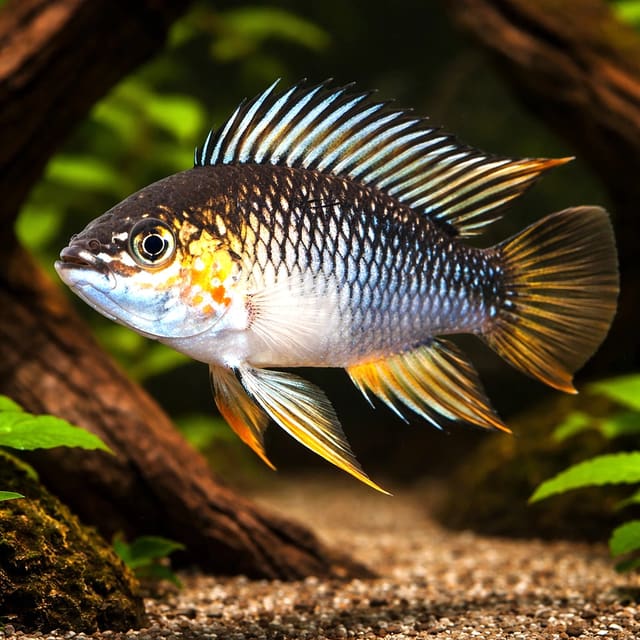
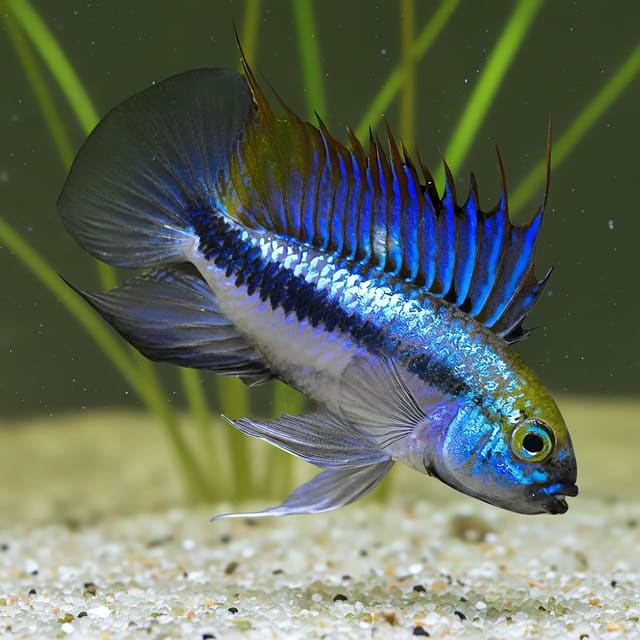
The gallery is a visual guide to the listed animal rather than a promise that every individual will show identical colour or markings. Some gallery images have been digitally enhanced to improve image quality. They show the listed type of animal rather than guaranteeing the exact markings of the individual supplied, so natural colour and pattern can vary.
The 60-litre and 80-litre figures are starting points, not permission to ignore the aquarium’s shape or layout. Territory is created with usable floor space, visual barriers and multiple shelters. A larger but completely bare aquarium can offer fewer effective retreats than a thoughtfully arranged aquarium with plants, wood, caves or suitable ornaments.
Before committing, write down the aquarium volume, temperature, pH, hardness, ammonia, nitrite and nitrate. Then list every intended tank mate and where it normally spends its time. This simple check exposes the most important conflicts before fish share the aquarium: unsuitable water, inadequate volume, excessive activity or competition around shelters.
Use an aquarium of at least 60 litres when keeping just a pair, or at least 80 litres when mixing dwarf cichlids with other fish. OATA gives these figures for the dwarf-cichlid group and explains that larger aquariums generally provide more stable temperature and water quality.
Cover matters because some dwarf cichlids can be territorial, particularly during breeding. Even well settled pairs will often chase each other so providing plenty of cover is essential. Give each fish more than one route into and out of sheltered areas. Avoid creating a single cave at the end of an open corridor where another fish could control the only approach.
A useful test is to view the aquarium from each end at fish level. If you can see straight through every shelter and across the full base, add or reposition cover. If one structure contains every retreat, divide the shelters between different areas. These changes let a fish withdraw without entering another fish’s preferred space.
Install a working filter in every setup. The filter needs enough flow to process aquarium waste, but the practical goal is stable water quality rather than a decorative current. Check that plants, leaf litter or ornaments cannot block the intake and that every shelter can be inspected without dismantling the entire aquarium.
Prepare the full layout before the fish is introduced. Repeatedly moving caves and plants after introduction can remove established retreat routes. Later changes should solve a clear problem, such as persistent chasing at one shelter, blocked filtration or waste collecting where it cannot be removed.
Keep the aquarium at 22–29°C, pH 5.0–6.0 and general hardness of 0–12°dH. OATA’s dwarf-cichlid sheet gives broader group guidance of 22–27°C, pH 6.0–8.0, general hardness of 4–12°dH and carbonate hardness of 3–10°dKH.
Ammonia and nitrite should both read zero mg per litre. Keep nitrate from rising more than 20 mg per litre above the normal level in your tap water. Record the tap-water nitrate result separately so that the aquarium reading is compared with a real baseline rather than with zero.
| Result | Action |
|---|---|
| Temperature below 22°C or above 29°C | Check the heater, thermometer and recent adjustments before making a gradual correction. |
| pH outside 5.0–6.0 | Retest the aquarium and tap water, then identify the cause before altering chemistry. |
| General hardness outside 0–12°dH | Compare the measured water with the working range before choosing this fish. |
| Any ammonia or nitrite | Act immediately: test again, reduce waste input and carry out appropriate maintenance. |
| Nitrate rising beyond the tap-water baseline | Review water-change frequency, feeding and waste removal. |
Use our water chemistry guide to understand what each measurement means, then enter real results into the water matcher. Matching measured water before purchase is safer than repeatedly altering a stable aquarium after the fish is introduced.
Keep a short weekly log with the date, temperature, pH, hardness, ammonia, nitrite, nitrate and water-change amount. Trends are more informative than a single isolated result. A slow nitrate rise can reveal that maintenance needs strengthening, while a sudden change may point to a blockage, excess food or a loss of biological filtration.
Use a well-established biological filter before adding this fish. The RSPCA explains that aquarium filters are vital because fish release toxic ammonia. Beneficial bacteria in a working filter convert ammonia to nitrite and then to the safer nitrate.
A newly running pump is not the same as a mature biological filter. The filter must contain enough beneficial bacteria to process the waste produced by the aquarium’s animals and feeding routine. Prepare and mature the aquarium in advance with the help of our first tropical aquarium guide.
Add fish to a mature aquarium gradually. OATA warns that stocking too quickly can create new tank syndrome because the bacterial population cannot increase quickly enough to process the extra waste. The resulting ammonia or nitrite can make fish ill or cause death.
Do not respond to a new reading by adding more livestock or more food. Pause the stocking plan, retest and deal with the water-quality problem first. If the aquarium already contains fish, monitor their breathing, swimming, colour and feeding while you correct the cause.
Filter capacity is also part of compatibility. An aquarium may have enough physical volume while lacking the biological capacity for another fish. Consider both conditions before combining animals.
Feed once a day and offer only what the fish can eat within a few minutes. OATA recommends this portion rule for dwarf cichlids because uneaten food breaks down and releases toxic waste into the water.
Apistogramma are dwarf cichlids that mostly feed on tiny animals in nature. For aquarium feeding, OATA describes dwarf cichlids as omnivorous and recommends a good-quality flake or granule, supported by small live or frozen foods such as daphnia, brine shrimp or tubifex.
The correct amount is set by consumption, not by a fixed pinch or scoop. A portion suitable for several established fish can be excessive for one small individual. Observe the food from the moment it enters the water so that you can distinguish active feeding from food simply disappearing behind plants.
If food remains after the feeding window, check the substrate and shelters rather than adding another meal. Leftovers may settle where they decay out of sight. Reduce the next serving and include the affected area during waste removal.
A reduced appetite can be an early warning of stress or poor water quality. Test ammonia, nitrite, nitrate and temperature before changing foods repeatedly. Also check whether a more active tank mate is taking the food first or preventing this fish from approaching the feeding area.
Carry out a partial water change of 25% at least once every week.
Test the water at least once per week. Record ammonia, nitrite and nitrate, then compare the result with the previous entries. Ammonia and nitrite should remain at zero, and nitrate should not rise more than 20 mg per litre above the normal tap-water level.
Rinsing filter media in removed aquarium water reduces the loss of beneficial bacteria. Chlorine or chloramine in tap water may kill the bacterial population that supports biological filtration. Clean only what is needed to restore flow rather than stripping every surface at the same time.
Maintenance should remove waste without erasing the aquarium’s useful structure. Keep shelters accessible, but return moved items to positions that preserve visual barriers. Check beneath wood, around caves and beside dense plants for food or debris that the normal flow does not carry towards the filter.
If weekly tests show rising nitrate or recurring waste, review portion size, stocking and siphoning technique. If ammonia or nitrite appears, treat that as an immediate water-quality warning rather than waiting for the next scheduled change.
Prepare the mature, filtered aquarium and confirm its water readings before the parcel arrives. Keep 22–29°C, pH 5.0–6.0 and 0–12°dH ready so the fish is not entering an aquarium that still needs major adjustment.
Follow the Tropical Fish Co delivery and Live Arrival Guarantee policy in this order:
Fish are hand-bagged in pure oxygen and placed in an insulated poly box, with a heat pack when the weather calls for it. The unboxing video begins with the sealed parcel because it must show the condition before anything is disturbed.
Verify that the filter is operating and that no intake, outlet or shelter has been displaced. Observe swimming, breathing and the ability to reach cover. Allow the beneficial bacteria time to adjust whenever livestock and feeding increase.
During the first feeding opportunity, offer a small amount and observe. A fish that does not feed should prompt checks of water quality, breathing, swimming and competition rather than an immediate large second meal.
Watch for changes in swimming, colour, temperament, breathing, appearance, body condition and feeding. OATA identifies these as useful warning areas because a change can reveal a problem before it becomes more serious.
| What you see | What to do first |
|---|---|
| Hanging at the surface, sitting on the bottom or erratic swimming | Test ammonia, nitrite, nitrate and temperature, then check filter operation. |
| Faster or slower gill movement | Check water quality promptly and observe whether other fish show the same change. |
| Darker or paler colour than normal | Review water readings, recent maintenance and interactions with tank mates. |
| More aggression or hiding | Check territory, cover, aquarium space and whether breeding behaviour may be involved. |
| White spots, fluffy growths, damaged fins or lost scales | Record the change, test the water and seek further guidance before choosing a treatment. |
| Reduced feeding or a change in body condition | Check water quality, food access, portion size and competition. |
Use the fish’s normal behaviour as the baseline. A single retreat into cover is less informative than a sustained change combined with rapid breathing, loss of appetite or abnormal swimming. Keep short notes so that you can say when the change began and whether it followed maintenance, a new tank mate or a water-reading shift.
When you are concerned about health, test the aquarium first and contact us for further guidance. Share the measured values and the changes you have observed. Do not choose a treatment solely from a colour change or reduced appetite, because correcting a water-quality or compatibility problem may be the immediate priority.
Dwarf cichlids can live in community aquariums when the aquarium provides enough space for territorial behaviour, especially if breeding begins. Use at least 80 litres for a mixed community and assess the layout as carefully as the volume.
OATA recommends shoals of dither fish for dwarf cichlids because they can provide a sense of security and move away quickly if territorial behaviour occurs. This is a type of community role, not a universal approval for every schooling species. Each candidate still needs matching water requirements and enough room.
Observe where each fish spends time. A tank mate using open midwater does not automatically create the same pressure as an animal repeatedly entering every shelter, but location alone does not establish compatibility. Activity, water needs, feeding competition and response to territorial behaviour all matter.
Introduce livestock gradually so the biological filter can adjust to extra waste and feeding. Test ammonia and nitrite after changes to the community. If chasing becomes persistent, one fish cannot reach cover or feeding stops, reassess the combination rather than assuming the fish will settle without intervention.
For a stocking and compatibility assessment, ask us with the aquarium volume, dimensions, measured water values, layout and complete livestock list. Those details allow the proposed combination to be screened as one aquarium rather than as isolated names.
Avoid very active or boisterous tank mates. OATA specifically warns that shy Apistogramma may not do well with them. Constant movement can also make it harder to judge whether this fish is feeding normally or withdrawing because another animal controls the open areas.
When breeding is intended, avoid tank mates that may disturb spawning sites or predate fry. Place this rule at the start of breeding-community planning rather than trying to solve the conflict after territorial behaviour has begun.
Do not treat a common label such as peaceful, small or community fish as a complete compatibility decision. A candidate can be small yet too active, or calm yet unable to live within the required water range. The aquarium also has to provide enough usable space after plants, wood, caves and equipment are installed.
Set a clear intervention point before mixing fish. Persistent chasing, blocked access to food, inability to leave a shelter, abnormal breathing or a marked increase in hiding should trigger water tests and a review of the combination. First check ammonia, nitrite and temperature; then assess whether the layout offers more than one retreat route.
A larger aquarium can improve stability and create more separation, but volume cannot correct incompatible water needs or an animal that repeatedly disturbs spawning sites. Screen those conflicts before introduction.
Use the first month to confirm that the aquarium works in practice, not merely on paper. Keep the routine consistent enough that changes in feeding, swimming or water quality can be linked to a real cause.
If the aquarium remains stable, continue the same testing, feeding and maintenance framework. If problems recur, change one relevant factor at a time where welfare allows. For example, reduce an excessive food portion and observe the next meal, or add a visual barrier where one fish continually watches another shelter. When ammonia or nitrite is present, water quality takes priority over slow experimentation.
Use 3 cm as the adult planning figure for the Meinkenni Dwarf Cichlid. Plan its aquarium around that adult figure rather than judging long-term space from the fish’s size on arrival.
OATA’s dwarf-cichlid guidance recommends an aquarium of at least 60 litres when keeping just a pair and at least 80 litres when mixing them with other fish. Cover and usable territory remain important at either volume.
A pair is the social arrangement covered by OATA’s space example: use at least 60 litres and provide several shelters because even well-settled pairs will often chase each other. Screen any larger arrangement around aquarium space, cover and territorial behaviour.
It suits a prepared keeper who can mature the filter, maintain 22–29°C and pH 5.0–6.0, test water weekly and carry out a 25% partial water change at least once a week.
Feed once daily with only what it can eat within a few minutes. OATA’s dwarf-cichlid guidance recommends good-quality flake or granule with variety from small live or frozen foods such as daphnia, brine shrimp or tubifex.
Keep it at 22–29°C and pH 5.0–6.0, with general hardness of 0–12°dH. Ammonia and nitrite should remain at zero.
Plan around territorial behaviour, especially if breeding begins. Provide cover and enough space, avoid very active or boisterous tank mates, and intervene if chasing prevents another fish from feeding or reaching shelter.
OATA recommends shoals of dither fish for dwarf cichlids, subject to matching water needs and adequate space. Avoid very active or boisterous animals, and avoid tank mates likely to disturb spawning sites or predate fry when breeding is intended.
Tropical Fish Co hand-bags live fish in pure oxygen and uses an insulated poly box, with a heat pack when the weather calls for it. Receive the parcel in person, film continuously from the sealed parcel, inspect it that day and float the bag for 20–30 minutes before releasing the fish.
No reviews for this item yet. Bought one? Honest reviews only, good or bad.
What customers say about ordering from us
Easy website plenty of info on fish your buying great to pick a time slot
TRACEY DURRANT · 7 Oct 2026
Got some lovely fish thank you
Kevin Mackie · 7 Oct 2026
Reviews of our shop, collected by Judge.me, an independent third-party review collector. Newest first.