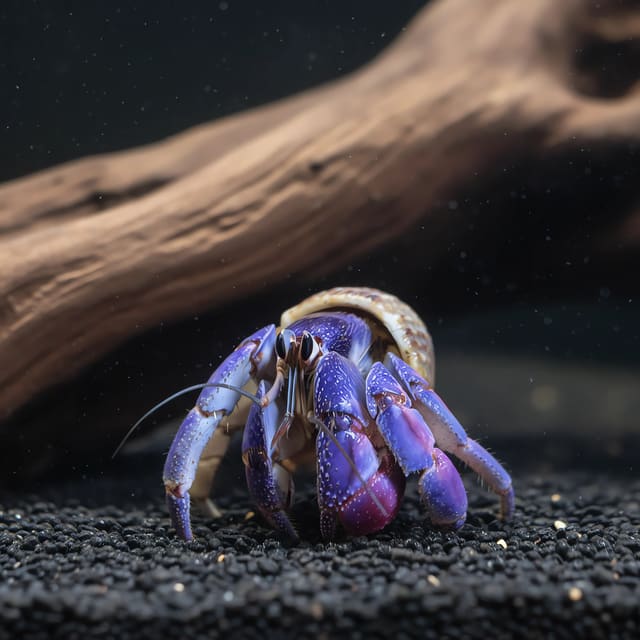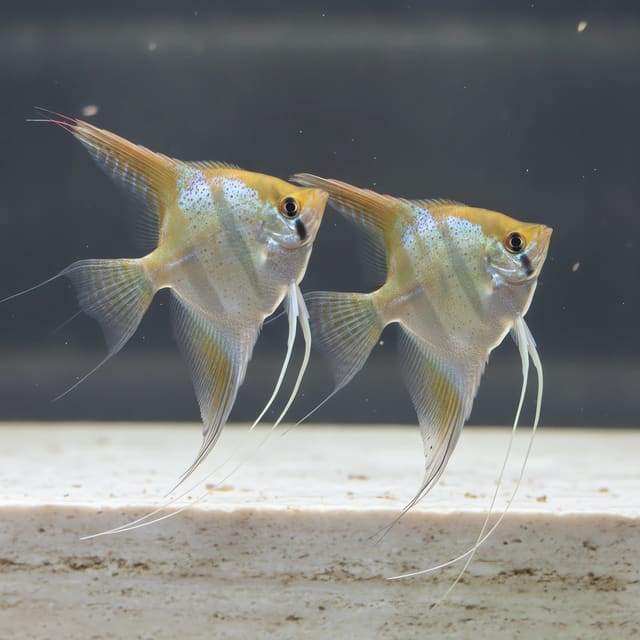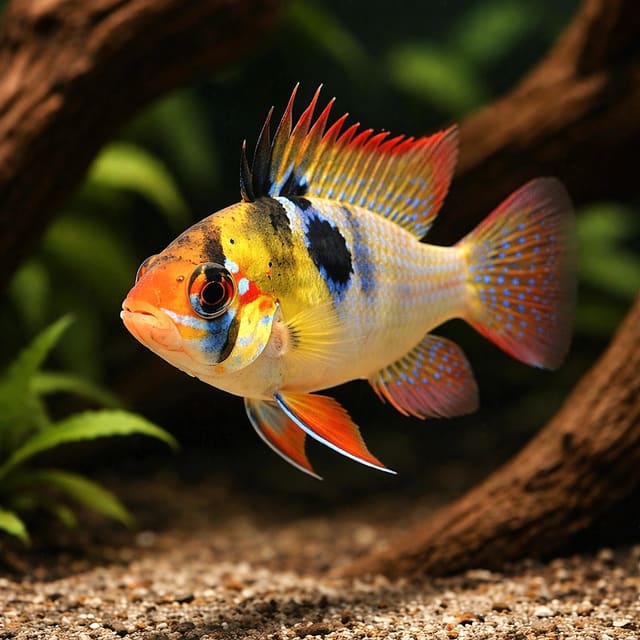
Asia Form Ram Cichlid (Mikrogeophagus ramirezi)
27–30°C · pH 4–7 · 54L
£5.99

Elizabethae Dwarf Cichlid is a specialist South American fish for mature, very soft and acidic aquariums, sold as one live fish in a choice of sizes. Its small stature does not make it casual community stock: plan caves, gentle filtration, stable 23–29°C water and restrained companions first.
Apistogramma elizabethae
Save when buying multiple fish. Each quantity is one fish; sex and pair formation are not guaranteed unless the selected variant explicitly states them.
Elizabethae Dwarf Cichlid is a specialist South American fish for mature, very soft and acidic aquariums, sold as one live fish in a choice of sizes. Its small stature does not make it casual community stock: plan caves, gentle filtration, stable 23–29°C water and restrained companions first.

Cichlids are a family of roughly 1,800 accepted species, not one care type. Before buying, identify the exact species and source, then compare adult measurement, usable tank dimensions, social system, territory, tested water, diet and an exit plan. No family-wide minimum tank, water range or tank-mate list is safe.
Maintain these water conditions for optimal health and vibrant colors
The Elizabethae Dwarf Cichlid, Apistogramma elizabethae, is a small South American cichlid from the Uaupés River basin within the Amazon system in Brazil. It is sought by keepers who enjoy quiet observation, cave territories and blackwater-style structure rather than a busy display of constantly roaming fish. Small body size makes the aquarium easier to furnish at modest scale, but it does not make the water chemistry or social decisions casual.
One purchase supplies one live fish of the selected size. The listing has two genuine size choices: 3–4 cm and XL. The size you select is the size supplied, not the adult size. The live selector is the authority on current availability, so this permanent description does not say that either choice is always in stock. Sex is guaranteed only when the selected option explicitly states male or female. This Elizabethae Dwarf Cichlid listing has no sex-guaranteed option. Buying two fish therefore does not guarantee a pair, and the photographs must not be used to promise the sex or colour of the individual sent.
The most important suitability question is whether the keeper can provide stable, very soft, acidic water. The specialist species profile recommends 23–29°C, pH 4.0–6.0 and 1–3 dGH. Those numbers sit outside the comfortable tap-water range in many parts of the UK, so test the source water before deciding. If safe water preparation would depend on unfamiliar equipment or rapid chemical adjustment, establish and practise the method before livestock is ordered.
Published size records differ slightly and both use standard length. FishBase records 4 cm SL for a male or unsexed fish, while the specialist aquarium profile reports 5 cm SL. SL excludes the tail. Neither figure should be silently converted into a total-length promise, and neither is the dispatch size. The care card therefore omits a bare adult-size number while the prose preserves both records and their scope.
| Decision | Evidence-led answer |
|---|---|
| What does one purchase supply? | One live fish of the selected size. |
| Is sex guaranteed? | No. The size choices do not specify male or female. |
| Who is it for? | An experienced keeper with a mature aquarium and a repeatable very-soft-water routine. |
| What footprint is supported? | 45 × 30 cm or more, about 41 litres, for a single pair; a group needs larger quarters. |
| What is the social default? | Keep alone or with small pencilfish; avoid mixing with other Apistogramma. |
Tropical Fish Co assesses the listing as advanced. This is a store suitability label, not a scientific classification. It reflects the need to prepare stable, very soft and acidic water, maintain a mature biological filter, feed small suitable foods and manage cave-centred territorial behaviour. A keeper already comfortable with those tasks may find the routine calm and predictable; a first-time fishkeeper is likely to find the margin for error unnecessarily narrow.
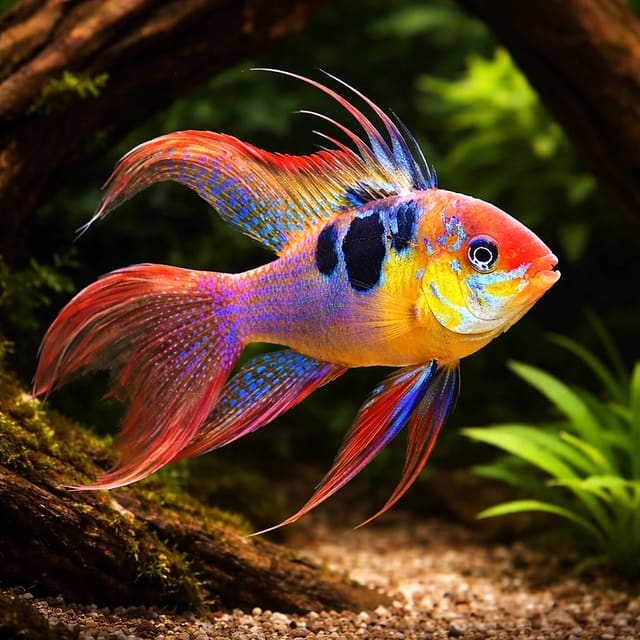
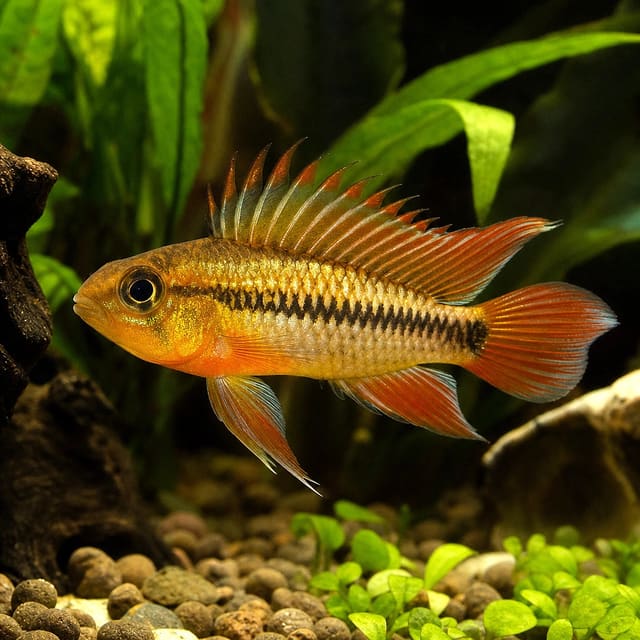
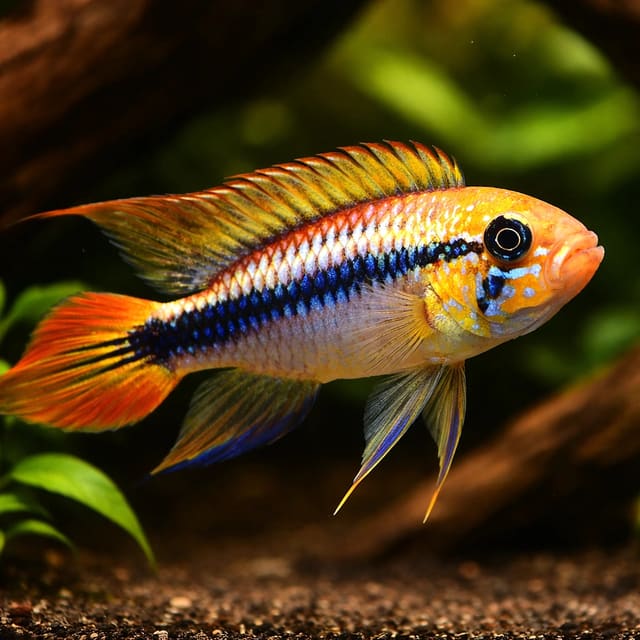
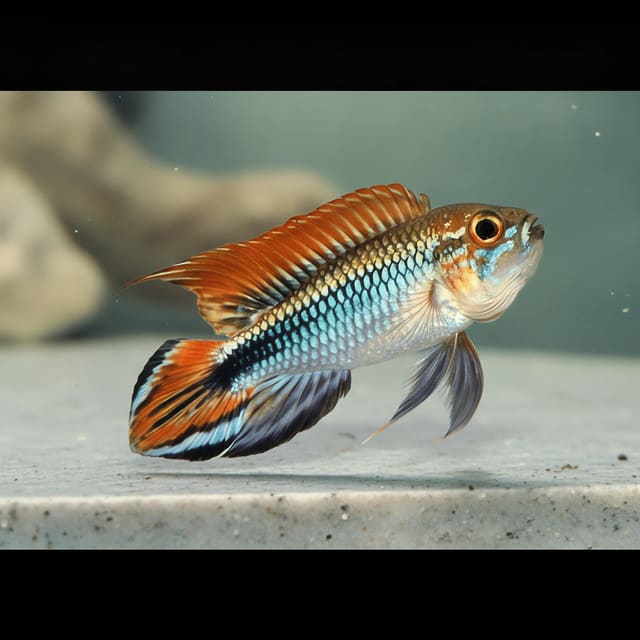
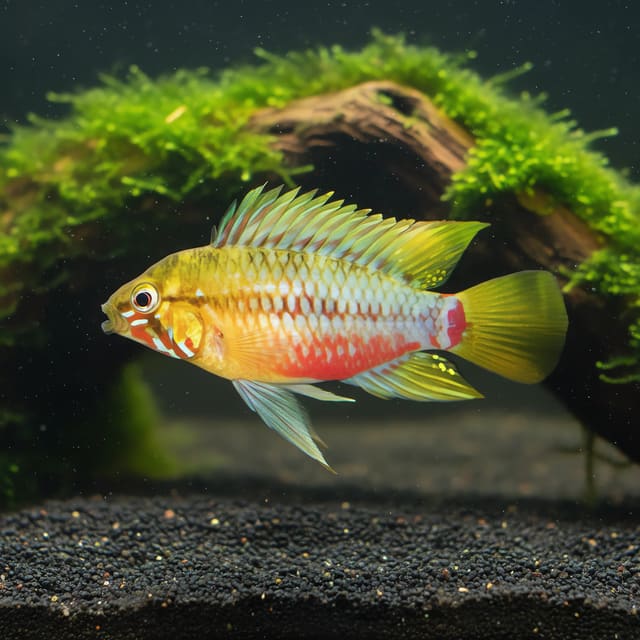
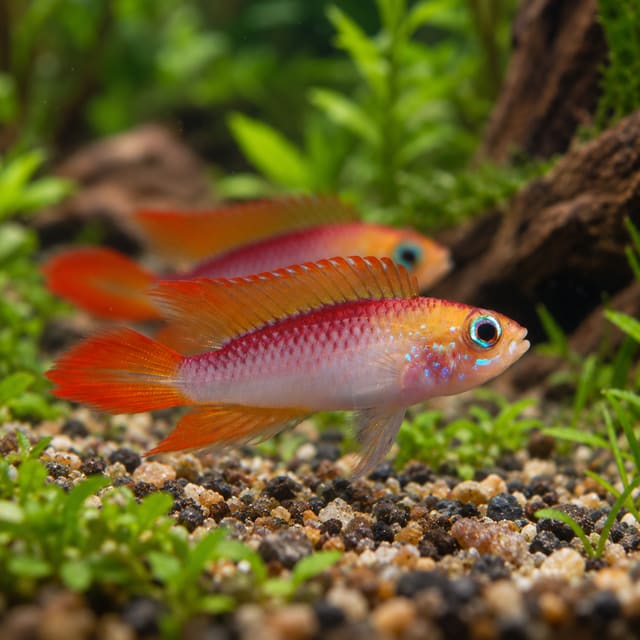
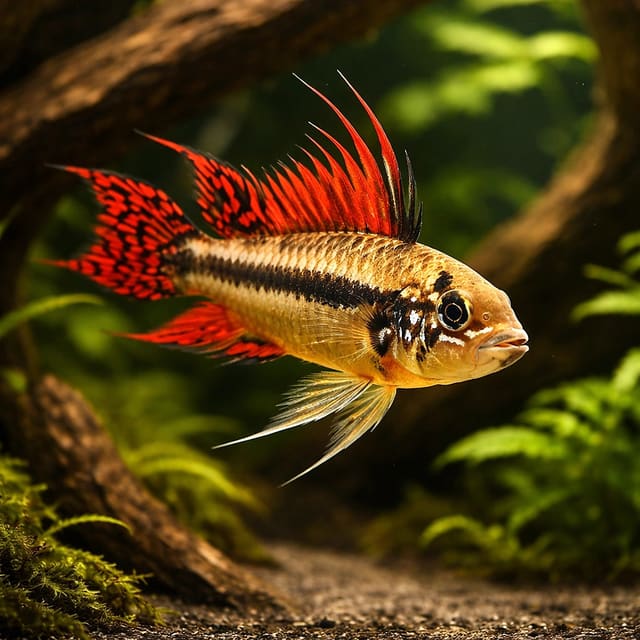
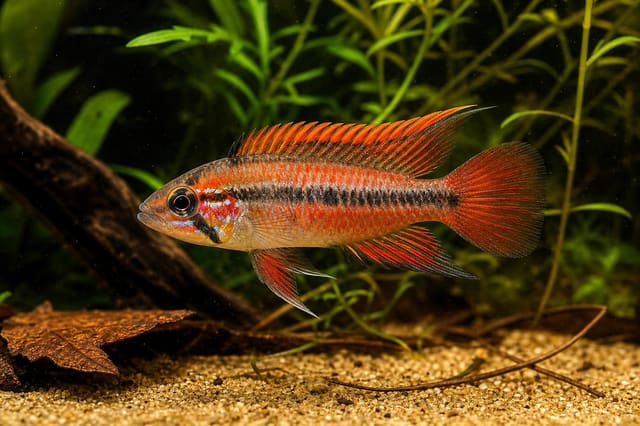
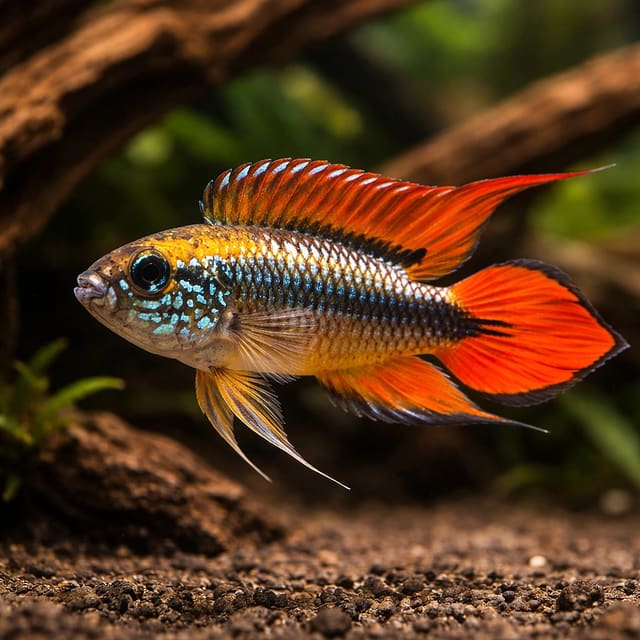
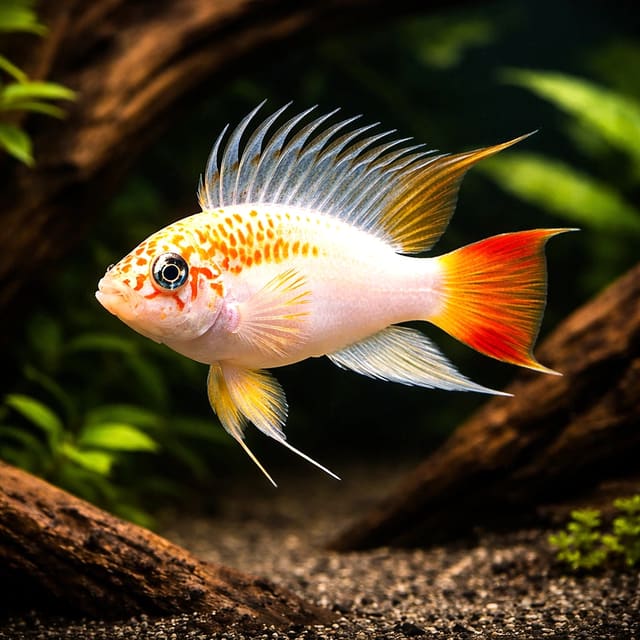
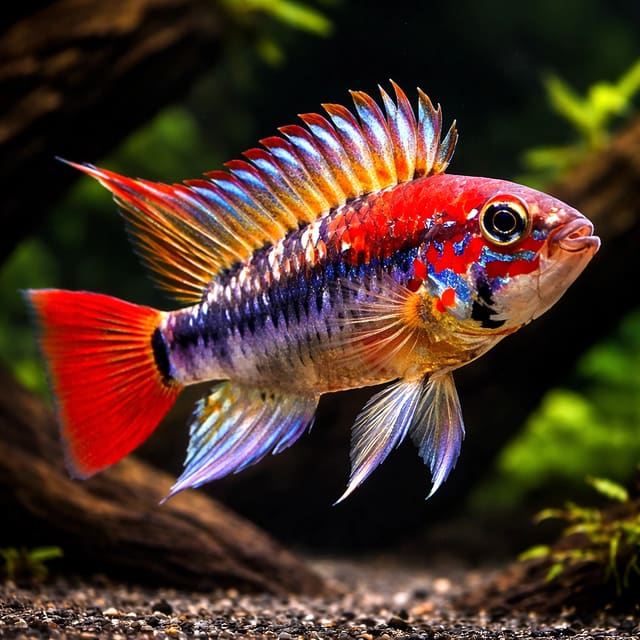
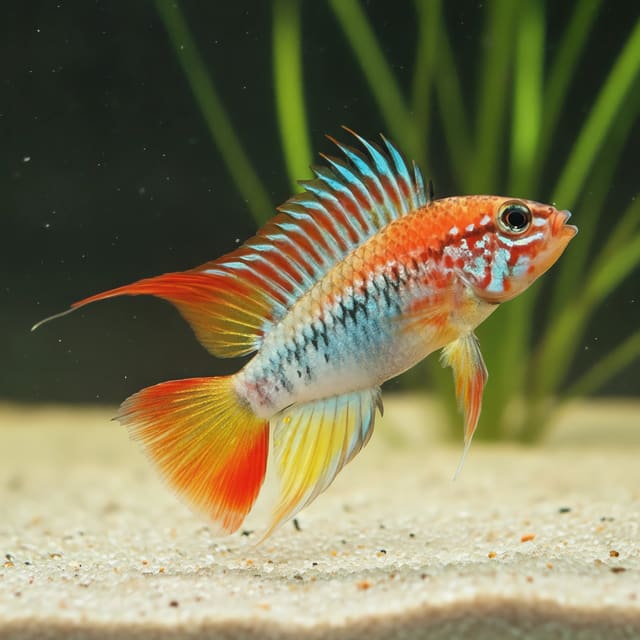
Gallery images have been digitally enhanced to improve image quality. Natural colour, pattern, size and maturity can vary between live animals. Direct review shows one or two brightly coloured fish in staged aquarium scenes, but provenance remains unknown. The images do not prove a locality form, sex, pair bond, exact adult colour or the appearance of the supplied individual.
To compare this species with other small South American cichlids without implying tank-mate compatibility, browse the South American cichlid collection. Compare water range, adult footprint and territorial style first. A fish that shares a family or shop category may still be a poor fit for the same aquarium.
The specialist profile gives base dimensions of 45 × 30 cm or more, approximately 41 litres, for a single pair and states that a group requires larger quarters. That is a species-specific lower reference, not a target to squeeze into. More water and floor space make temperature and chemistry easier to stabilise, allow several caves and give a fish somewhere to withdraw when another claims a territory.
Floor plan matters more than height. Arrange wood, roots, leaf litter and caves so that the base is divided into sheltered patches rather than one open rectangle. Provide more caves than fish and turn entrances in different directions. A fish leaving one shelter should not immediately enter the direct sight line of every other cave. The arrangement should still leave open sand for foraging and permit gentle cleaning without dismantling the entire territory.
Start with a mature aquarium and a proven routine. The first tropical aquarium setup guide explains cycling and preparation. A biological filter must be established before the fish arrives, because ammonia and nitrite are toxic. Very acidic systems can also require closer attention to biological activity and buffering, so do not assume a filter that worked in different water will behave identically after a rapid chemistry change.
Seriously Fish gives 23–29°C, pH 4.0–6.0 and 1–3 dGH for aquarium care. FishBase records 22–29°C, pH 5.0–6.0 and hardness up to 3 dH in the species’ environment. The overlap supports a warm, very soft, acidic plan, while the aquarium source provides the working husbandry range. Choose a stable point suitable for the fish and any companions; do not bounce between the upper and lower figures.
| Water factor | Planning guidance |
|---|---|
| Temperature | 23–29°C in the species aquarium profile; hold a stable value rather than chasing daily variation. |
| pH | 4.0–6.0 in species aquarium guidance. |
| General hardness | 1–3 dGH; confirm the source water can be prepared safely and repeatedly. |
| Ammonia and nitrite | Zero, supported by a mature biological filter and measured with suitable tests. |
| Change water | Match temperature and chemistry closely; avoid large, abrupt shifts. |
Test both the source water and aquarium. The aquarium water chemistry guide explains pH, hardness and nitrogen-cycle readings, and the water parameter matcher can compare measured values with the stated range. If tap water is harder or more alkaline, learn a safe preparation method before buying the fish. Do not use an emergency dose of acidifying product as a substitute for controlled water preparation.
Stability includes mineral content, not just temperature. Replacement water that matches pH but has very different hardness can still create a rapid osmotic change. Prepare it in a clean container, bring it close to the aquarium temperature and verify the values before a change. Keep a simple record so gradual drift is visible before the fish shows distress.
In naturally soft tap-water areas, the required hardness may be close to the source water; elsewhere, a keeper may need to blend or remineralise purified water. The product page does not prescribe one formula because source water and equipment differ. Whatever method is chosen should produce repeatable temperature, pH and hardness readings without a last-minute chase for an exact number.
Practise the process through several normal maintenance cycles before ordering the fish. Measure prepared water, add it to the empty or fishless mature system in the intended proportion and confirm that the aquarium returns to the expected values. This rehearsal reveals unstable containers, inaccurate measuring tools or a source-water change while there is still time to correct them safely.
Low hardness also means there may be less buffering against pH movement. That does not make every acidic aquarium unstable, but it makes monitoring and gradual decisions important. Avoid replacing all botanicals, changing a large proportion of water and cleaning the filter in the same session. Separating major interventions makes their effects easier to understand and reduces simultaneous stress.
Use tests that cover the intended range and store them according to their instructions. A result at the edge of a kit’s scale deserves confirmation before action. If readings disagree with the fish’s behaviour or with each other, check expiry dates, technique and a known reference rather than dosing immediately.
The species occupies the lower part of the aquarium and benefits from calm shelter. Seriously Fish describes a natural-looking layout of soft sand, wood roots and branches, numerous shady spots, caves and dried leaf litter, with fairly dim lighting. Use a mature sponge filter or a protected intake and diffused return appropriate to the aquarium. There should be enough circulation for oxygen and waste transport without blasting every cave entrance.
Floating plants or shade-tolerant attached plants can soften bright light. The cited profile names plants able to cope with subdued conditions, but the exact planting list is secondary to structure and stable water. Leaf litter can add cover and support small organisms as it decomposes; add botanicals gradually, use aquarium-safe material and monitor how the water responds rather than assuming every leaf produces the same effect.
Fine sand supports natural bottom-oriented foraging and is easier on a small fish’s mouth than sharp gravel. Keep the layer manageable so waste does not disappear beyond reach. Use a narrow siphon around open areas and disturb litter beds carefully. The aim is a living-looking floor with controlled waste, not a sterile base or an unmanaged pile of decomposing material.
A useful cave is dark enough to feel secure, stable enough not to shift and positioned so the fish can approach without crossing the whole aquarium. Offer entrances of different orientations and inspect them for sharp edges. Wood should create shaded lanes as well as decoration. Leaves should provide cover without sealing the entire substrate under compacted debris.
Plants can help divide sight lines, but they must tolerate the light and chemistry used for the fish. Attached plants and floating cover often leave more open sand than a dense carpet. If a plant repeatedly melts in very soft acidic water, remove decaying material promptly rather than allowing a design goal to reduce water quality.
The species profile gives genus-level diet guidance: Apistogramma are chiefly carnivorous and feed mostly on benthic invertebrates in nature. In aquaria, small live and frozen foods such as Artemia, Daphnia, Moina and chironomid larvae are recommended regularly. Many individuals learn to take dried alternatives, with pellets generally preferred to flakes. This is more useful than the old generic “omnivore” label because it explains feeding position and food size.
Offer small portions that reach the fish without burying the substrate in leftovers. A confident midwater species may intercept everything before the cichlid leaves cover, so observe actual intake. Target-feeding near a sheltered edge can help, but do not release a large cloud into a cave where uneaten food becomes hidden waste. Rotate suitable foods and keep frozen items handled hygienically.
Appetite is a valuable observation. A newly settled fish may feed cautiously, yet a persistent refusal, hollowing body or inability to compete requires investigation. Check water and social pressure before simply adding richer foods. The evidence packet does not support a disease-treatment recipe, so signs of illness should lead to measured water checks and qualified advice rather than guessed medication.
Perform regular partial water changes with closely matched water. The OATA dwarf-cichlid sheet recommends 25% weekly as broad group guidance, but the right schedule depends on measured waste, feeding and stocking. Species breeding guidance warns that fry can be sensitive to chemistry changes and favours regular but not large changes. Even when no breeding is intended, that principle supports consistency over occasional drastic correction.
Rinse filter media gently in removed aquarium water when flow falls, leaving enough biological material intact. Inspect the heater and thermometer because warm, small-volume systems can change quickly after equipment failure. Remove trapped food and check that no cave has become a stagnant waste pocket. If botanicals are used, replace them progressively rather than stripping and rebuilding the environment in one session.
Apistogramma elizabethae is a cave-oriented substrate spawner. FishBase says eggs are placed on cave ceilings and tended by the female; the aquarium profile says the female performs most post-spawning care and may become highly aggressive, to the point that the male can require removal in a smaller aquarium. That is a strong reason to provide multiple shelters and keep a separation plan even if breeding is not the goal.
Males are described as larger, more colourful and more extended in the fins than females. Those are adult tendencies, not an offer guarantee. Juveniles, stressed fish and locality forms may not present textbook traits. This listing has no explicitly sexed option, and none of the gallery scenes proves the sex or relationship of the fish shown.
Do not turn breeding observations into a formula. Species references support cave spawning, female brood care and sensitivity of fry to chemistry changes, but the product page does not need trigger recipes or promises of success. For ordinary keeping, the lesson is simply that behaviour can change quickly when a cave is claimed.
Review the current delivery and Live Arrival Guarantee policy before dispatch. Someone must receive the parcel. Have the mature aquarium stable and the lights subdued; do not redesign the tank or make a large corrective water change immediately before arrival. The policy advises floating the sealed bag for 20–30 minutes before release and not adding transport water to the aquarium.
A sealed-parcel video is required as evidence if a Live Arrival Guarantee claim is needed. Record one continuous take from the unopened parcel through opening to the fish still sealed in its bag, then contact Tropical Fish Co the same day with the order number. The video is a claims safeguard, not a biological acclimation requirement. Once recorded, keep the fish’s transition quiet and follow the current policy instructions.
The species profile recommends keeping Apistogramma elizabethae alone or with small dither fish such as Nannostomus pencilfish, and ideally not with other Apistogramma. That is deliberately narrower than a generic list of “peaceful community fish”. It reflects both the specialist water and the fact that another dwarf cichlid may compete for the same caves and lower territory.
“Kept alone” can mean one individual in a well-structured aquarium; the 45 × 30 cm, roughly 41-litre reference is specifically stated for a single pair. If two fish are kept together, they still need several shelters and an exit from each other’s sight. The listing does not guarantee sex or pair compatibility. Have a mature alternative space or safe divider available before conflict appears.
Small pencilfish may encourage a shy dwarf cichlid to spend more time in view because their calm activity suggests that the open water is safe. They also occupy a different part of the aquarium. That does not make every pencilfish or every stocking density automatically suitable. Confirm the exact species can live at the chosen pH, hardness and temperature, provide an appropriate social group for the pencilfish, and leave enough capacity for both groups.
A dither fish is not expendable equipment. It must have suitable water, food, swimming room and social conditions in its own right. If the aquarium is only large enough for the cichlid’s lower reference footprint, adding a shoal may overload the system or crowd the visible space. The wider OATA guidance uses a higher group-level volume when dwarf cichlids are mixed with other fish, which reinforces the value of choosing more room.
Do not mix this species with other Apistogramma as a default. Similar body size and shared water do not eliminate territorial overlap; they make it more likely that both species want the same cave, leaf bed and feeding zone. Multiple males can create further pressure, while a guarding female may attack fish that repeatedly cross the brood area.
The species profile specifically names small pencilfish and does not establish tetras in general, Corydoras or Otocinclus as universal companions. Bottom-oriented fish are particularly likely to enter cave territory. Any other proposal needs its own species-level water and behaviour check rather than an assumption based on a broad community label.
A single Elizabethae dwarf cichlid does not need another cichlid added simply to make the aquarium look occupied. A carefully structured tank lets one fish forage, inspect caves and use cover without social pressure. Small pencilfish can be considered only when the aquarium has room for their own group and the same water truly suits them.
For a single-fish display, distribute food across the lower area and vary the route around wood and litter so natural searching remains possible. Keep several shelters even though there is no mate; choice helps the fish respond to light, maintenance and activity outside the glass. The result can be quieter than a typical community aquarium without being empty or uninteresting.
| Arrangement | Evidence-led view |
|---|---|
| One Elizabethae dwarf cichlid | Supported by the recommendation to keep the species alone, provided the aquarium is mature and structured. |
| One compatible pair | Supported from 45 × 30 cm or about 41 litres upward, with more room preferable and separation capacity required. |
| Small Nannostomus pencilfish | The named dither-fish option, conditional on shared water needs, adequate group size and a larger overall stocking plan. |
| Other Apistogramma | Avoid as the normal plan; the species profile specifically advises against the mix. |
| Boisterous or lower-territory fish | Avoid where they crowd caves, outcompete feeding or cannot tolerate the same soft acidic water. |
Compatibility is an ongoing result, not a box ticked at purchase. Review it after maturity, a layout change or any breeding behaviour. A safe plan gives every animal food, shelter and a route out of conflict without depending on constant chasing to establish boundaries.
FishBase records 4 cm standard length for a male or unsexed fish, while the specialist aquarium profile reports 5 cm standard length. Standard length excludes the tail. Because both are credible, this guide keeps the measurement and source scope visible instead of presenting one bare whole-fish maximum.
The species profile gives a 45 × 30 cm base, about 41 litres, for a single pair and says a group needs larger quarters. Treat that as a lower species-specific reference. More space, several caves and broken sight lines improve stability and give fish room to withdraw.
The clearest supported choices are one fish or one compatible pair, with larger quarters required for a group. This listing does not guarantee sex, so buying two fish does not promise a male and female or an established pair. Keep a separation plan whenever more than one cichlid shares the tank.
It is best for an experienced soft-water keeper. Tropical Fish Co assesses the listing as advanced because the species-level guidance calls for very soft, acidic water and careful stability, not because the fish needs complicated equipment. A mature aquarium and confident water testing are essential.
The species profile gives genus-level guidance: Apistogramma feed chiefly on benthic invertebrates and should receive small live or frozen foods such as Artemia, Daphnia, Moina and bloodworm, with many learning to take dried pellets. Offer variety in modest portions and confirm the fish actually feeds.
Use the species aquarium range of 23–29°C, pH 4.0–6.0 and 1–3 dGH, with stability and very low hardness taken seriously. FishBase records 22–29°C and pH 5.0–6.0 in the environment, but a wild record should not be turned into permission for abrupt swings.
It is not described as a general fin nipper, but it is still a territorial cichlid. Females can become highly defensive during brood care and a male may need removing in a smaller aquarium. Use caves and sight breaks, avoid crowding and respond early if one fish is persistently chased.
The species profile recommends keeping it alone or with small dither fish such as pencilfish in the genus Nannostomus, and ideally not with other Apistogramma. That is a narrow, conditional list. Any companion must also suit the same very soft, acidic water and must not crowd the cave territory.
Tropical Fish Co hand-packs live fish in oxygenated bags inside an insulated box, adding a heat pack when conditions call for it, and uses a licensed live-animal courier. Someone must receive the parcel. For a Live Arrival Guarantee claim, record one continuous video from the still-sealed parcel through opening to the fish still sealed in its bag, and contact the team the same day.
FishBase: Apistogramma elizabethae supports the accepted identity, Cichlidae family, Uaupés basin distribution, 4 cm SL record, environmental values and cave-ceiling egg care. Its water values describe recorded habitat conditions, not a complete aquarium routine.
Seriously Fish: Apistogramma elizabethae supplies the species aquarium range, 5 cm SL record, 45 × 30 cm and roughly 41-litre pair reference, quiet structured décor, genus-level feeding detail, pencilfish option, warning against mixing other Apistogramma and female-led brood care.
OATA’s dwarf cichlid care sheet supplies broader UK group guidance for maturation, filtration, maintenance, cover and mixed-aquarium planning. It is kept clearly separate from the narrower species-level soft-water range.
RSPCA aquarium environment guidance supports the need for effective biological filtration and control of toxic ammonia and nitrite.
No reviews for this item yet. Bought one? Honest reviews only, good or bad.
What customers say about ordering from us
I have a small group of long finned mountain minnows. So was delighted to be able to order ten of this variety to increase the genetics in my tank . The ones I recieved are healthy but it’s to early to give a verdict on wether they are of a long finned type since they are small currently.
Gordon Walker · 23 Sept 2026
100% success travel and "installation". Pleased with quality of purchase. The Siamese fighter a bit "shy" so have not yet seen him at his best yet but looking good. Happy customer. GG
George E Garratt · 21 Sept 2026
Reviews of our shop, collected by Judge.me, an independent third-party review collector. Newest first.