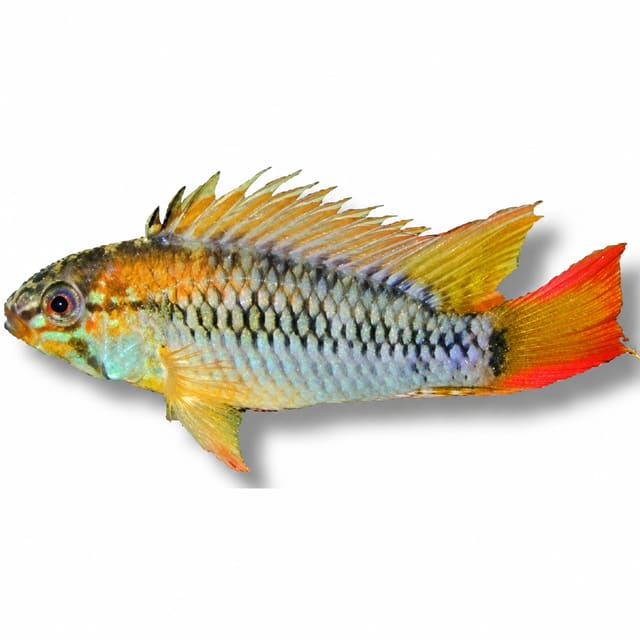
Red-Tailed Dwarf Cichlid (Apistogramma macmasteri)
24–28°C · pH 6–6.5
£13.99
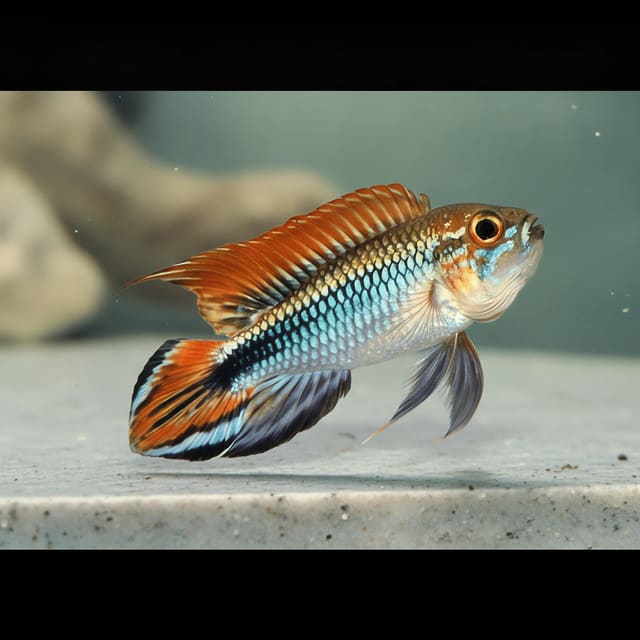
Mamoré Red Dwarf Cichlid (Apistogramma erythrura), supplied unsexed at about 3–4 cm. A territorial species for an 80 cm, approximately 100-litre mature aquarium.
Adult size is the maximum length this species reaches at full maturity (scientific sources). The livestock you receive will be younger and smaller. Product-photo provenance and any image-specific limitations are stated on the listing.
Apistogramma erythrura
Save when buying multiple fish. Each quantity is one fish; sex and pair formation are not guaranteed unless the selected variant explicitly states them.
Mamoré Red Dwarf Cichlid (Apistogramma erythrura), supplied unsexed at about 3–4 cm. A territorial species for an 80 cm, approximately 100-litre mature aquarium.
Adult size is the maximum length this species reaches at full maturity (scientific sources). The livestock you receive will be younger and smaller. Product-photo provenance and any image-specific limitations are stated on the listing.
Cichlids are a family of roughly 1,800 accepted species, not one care type. Before buying, identify the exact species and source, then compare adult measurement, usable tank dimensions, social system, territory, tested water, diet and an exit plan. No family-wide minimum tank, water range or tank-mate list is safe.
Maintain these water conditions for optimal health and vibrant colors
Mamoré Red Dwarf Cichlid is the aquarium trade form historically known as Apistogramma sp. “Mamoré” and formally described as Apistogramma erythrura. “mamore red”, while giving the current taxonomic context.
Each quantity buys one unsexed fish, currently supplied at approximately 3–4 cm. Sex, pair formation and adult red-tail colour are not guaranteed. A mature, well-covered aquarium with stable, soft water is important; this is a territorial dwarf cichlid, not a shoaling fish, so a multi-buy saving should not be treated as stocking advice.
| Accepted species context | Apistogramma erythrura |
|---|---|
| Supplier name | Apistogramma sp. “mamore red” |
| Current dispatch size | Approximately 3–4 cm |
| Adult planning size | Up to about 6 cm total length; FishBase records 4.3 cm standard length |
| Care level | Intermediate store label; territory management requires planning |
| Temperament | Territorial; males may be aggressive towards females that are not ready to spawn |
| Aquarium | 80 cm front length and approximately 100 litres or larger |
| Temperature | 24–27°C |
| pH | 5.5–7.0 |
| Hardness | 0–10 dGH |
| Diet | Small live or frozen invertebrate foods, with accepted quality micro-granules |
| Tank region | Bottom and lower levels, close to cover |
The scientific description of Apistogramma erythrura explains that fish sold in the aquarium trade as Apistogramma sp. “Mamoré” were the same form later given a formal species name. The accepted species is recorded from the lower Río Mamoré drainage in Beni, Bolivia.
Field sites were clear-water habitats with very soft, acidic water. Fish were found among dense marginal and floating vegetation, in very shallow plant cover and over dead leaves. Recreate the function of that habitat with shade, plants, wood, leaf litter and several sheltered areas rather than trying to copy a decorative “blackwater” label.
Use a fully cycled aquarium with a broad footprint. Our conservative recommendation is an aquarium at least 80 cm long and approximately 100 litres. The Nordic Cichlid Society’s species account warns that a male can be very aggressive towards a lone female that is not ready to spawn, so provide more caves and sheltered boundaries than there are fish and break lines of sight with wood, plants and botanicals. Use a smooth substrate without sharp edges; fine sand is optional rather than a species requirement.
Filtration should keep the water clean and oxygenated without creating relentless flow across the lower level. Floating plants or shaded areas can help newly arrived fish settle. A secure lid is sensible because the species was observed jumping onto emergent leaves when alarmed in the wild. Read our broader cichlid care guide before adding other territorial cichlids.
Our stock records give 24–27°C, pH 5.5–7.0 and 0–10 dGH. The taxonomic field study recorded even softer, more acidic wild water, but an aquarium should not be repeatedly adjusted to chase an extreme number. Stable conditions, undetectable ammonia and nitrite, and controlled nitrate are more useful than sudden chemical correction.
Test the source water before purchase and make changes gradually. Soft-water fish can be stressed by abrupt changes in temperature, conductivity or pH, especially after transport. Our water chemistry guide explains the measurements and how to keep them consistent.
Wild stomach contents reported in the species description were dominated by small crustaceans, with copepods, mites and insect larvae also present. In the aquarium, offer appropriately sized frozen or live foods such as Artemia, daphnia, cyclops and suitable insect larvae. A good micro-granule can supplement the diet when the fish accepts it.
Feed small portions that are eaten promptly and make sure faster midwater fish do not take everything first. Remove uneaten food before it affects water quality. A varied diet is more useful than relying on one rich food every day, and colour should never be forced through overfeeding.
This is a territorial dwarf cichlid. The specialist species account describes males as capable of serious aggression towards a female that is not ready to spawn, and notes that a female may defend a territory around 30 cm across. Do not assume an unsexed second fish will become a compatible partner.
There is no universal safe tank-mate list. Only consider calm fish that occupy the middle or upper water after checking adult size and water requirements, and keep a plan for separating fish if aggression develops. The primary field study recorded small tetras and pencilfish in the same wild habitat, but wild co-occurrence does not prove aquarium compatibility. Avoid large predatory fish, persistent fin-nippers and other territorial bottom-dwelling cichlids. Small shrimp and fry can be treated as food, so this is not a shrimp-safe choice.
Do not assume that two unsexed fish will form a pair. Multiple males need substantially more floor space and visual separation, and any fish being excluded from food or shelter must be moved.
The species account describes a secretive, polygynous spawner. Females attach eggs beneath a horizontal surface and provide the direct brood care, while males defend a wider territory. This is useful context for aquarium layout, but the fish sold here is unsexed and no breeding outcome is promised.
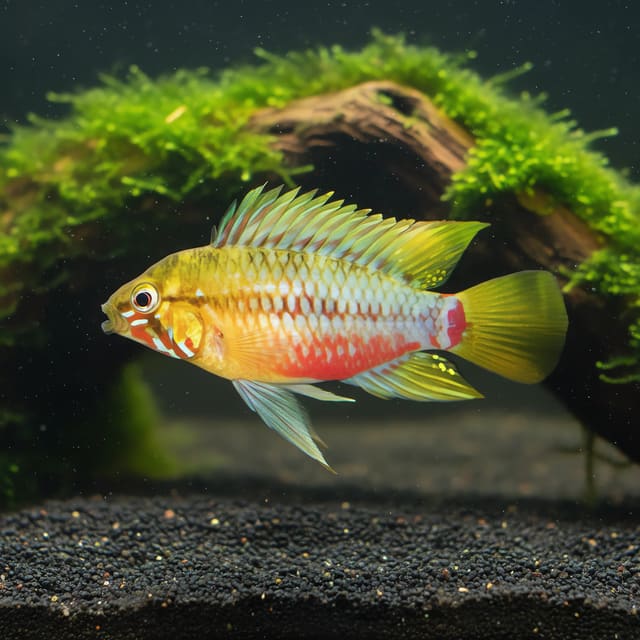
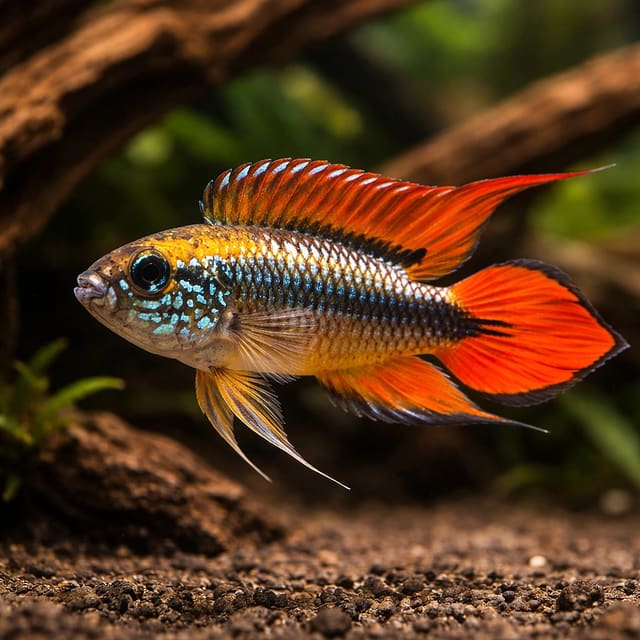
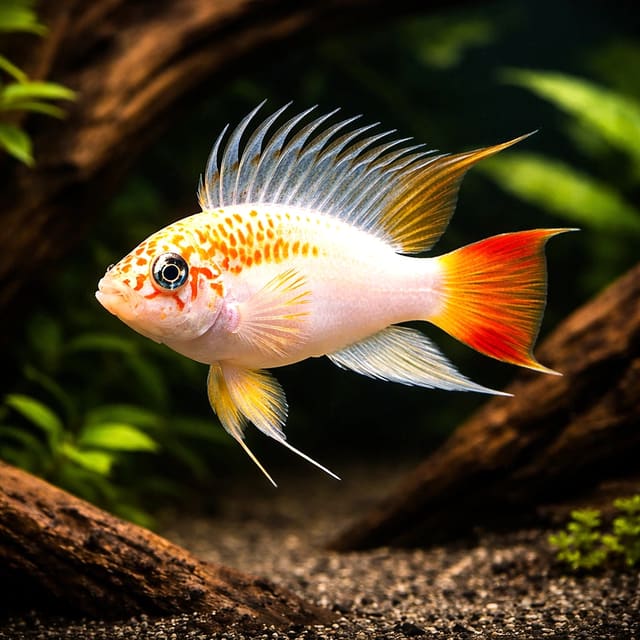
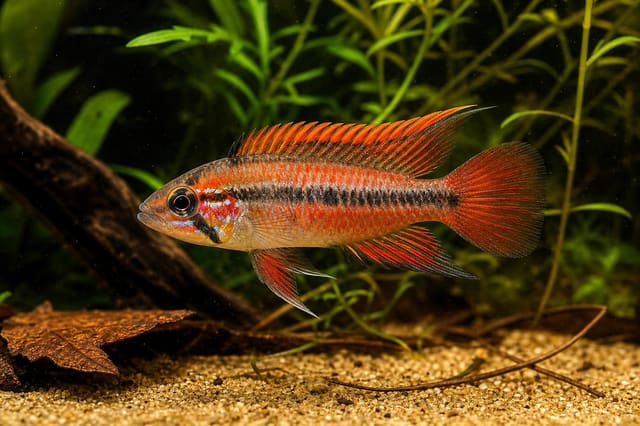
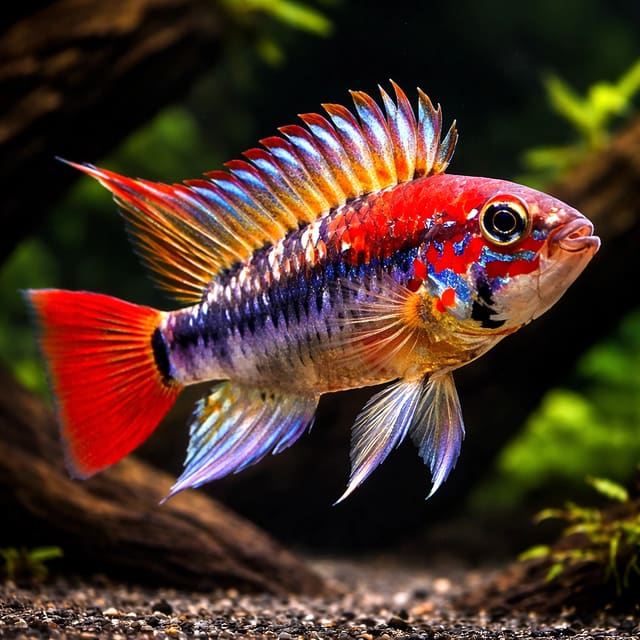
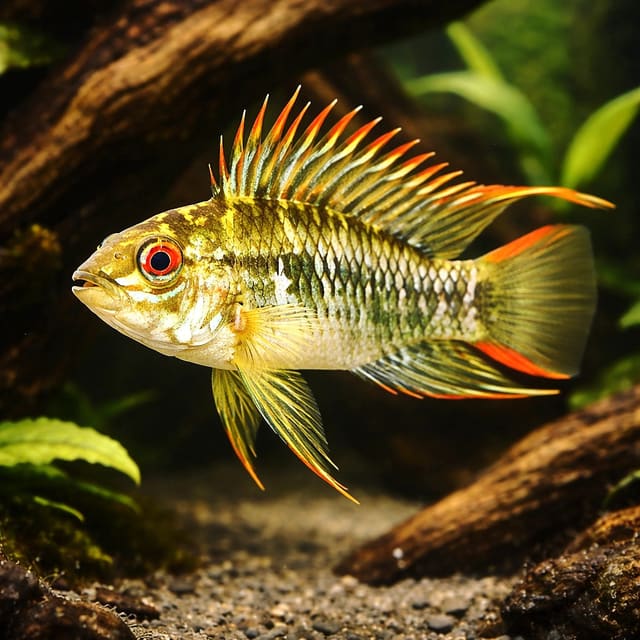
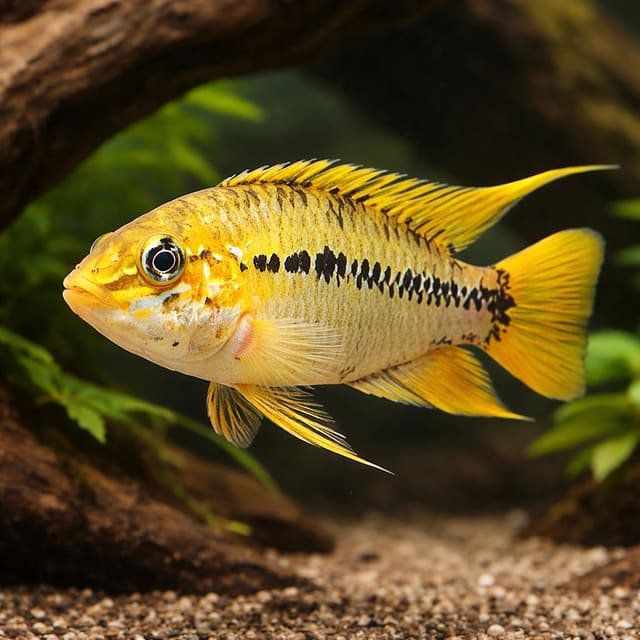
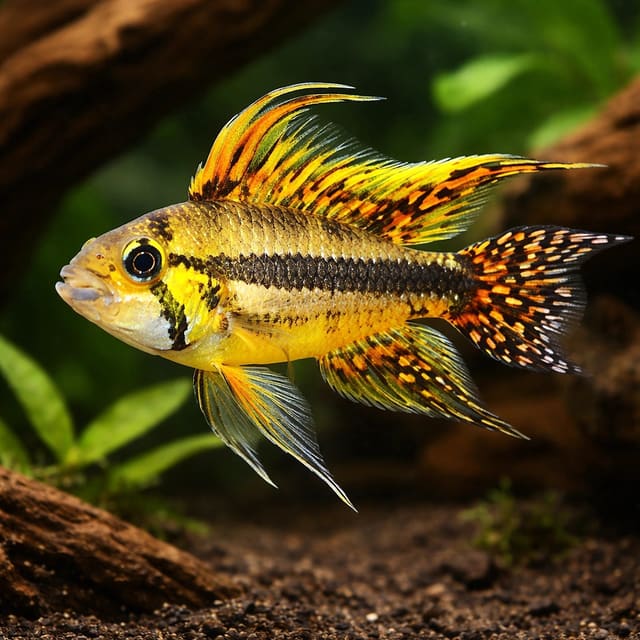
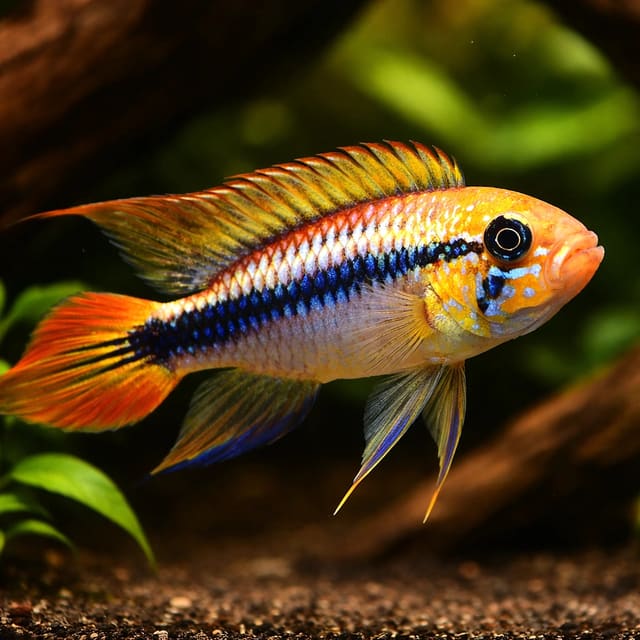
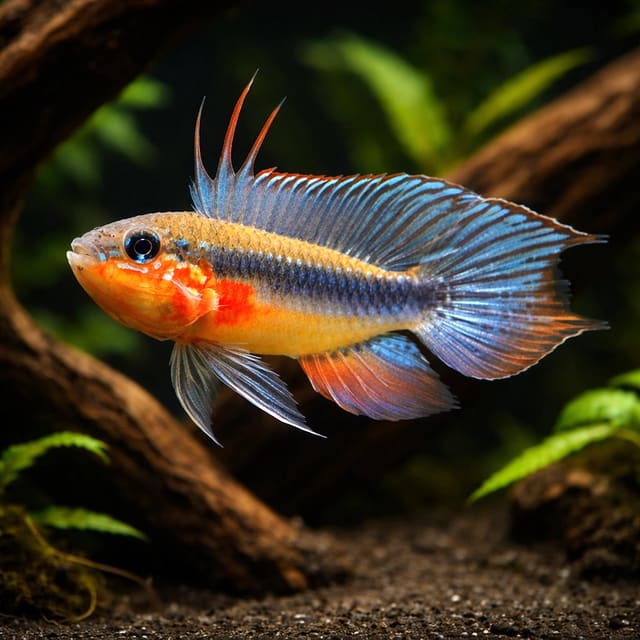
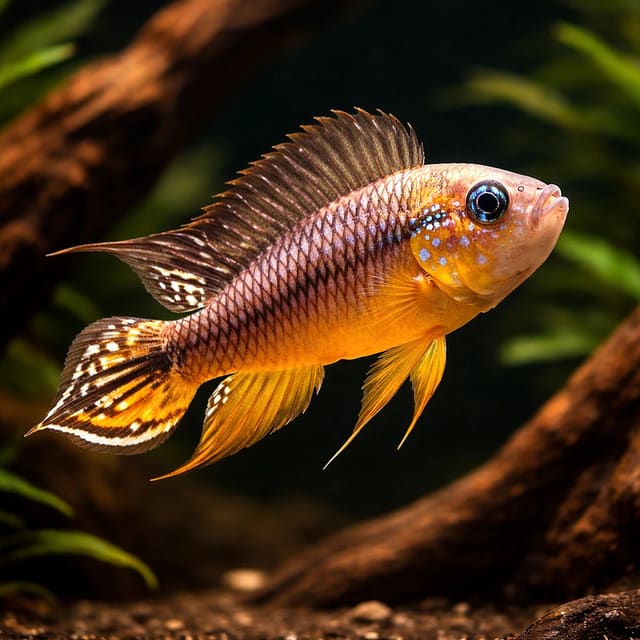
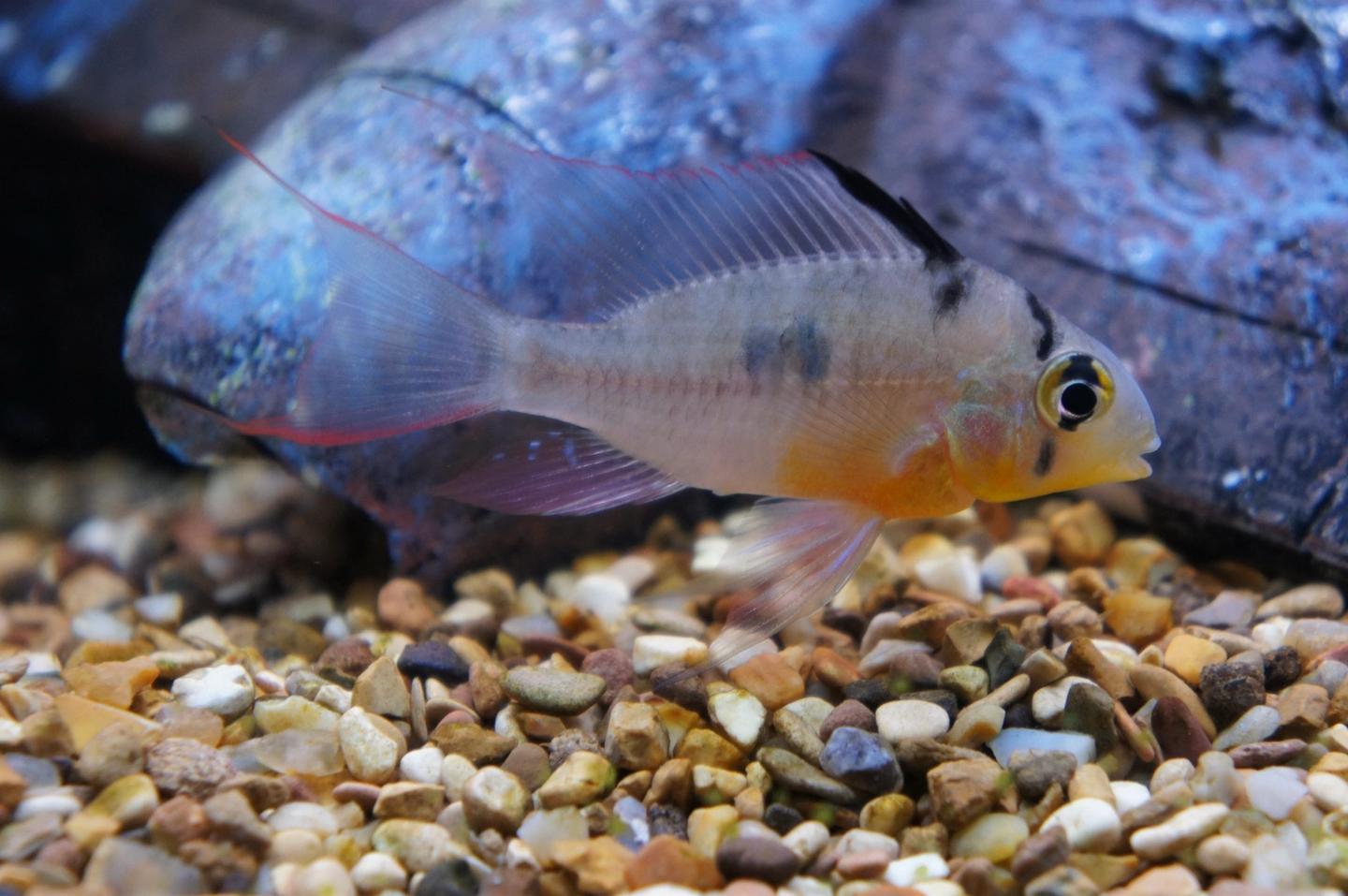
The current gallery image is a representative dwarf-cichlid illustration, not a photograph of the exact fish dispatched and not evidence for specimen-level identification. Individual fish may differ from the illustration in colour, body pattern, fin shape and maturity.
Identity, distribution, habitat, diet and breeding notes were checked against the original Apistogramma erythrura species description, the current Eschmeyer’s Catalog of Fishes record and the FishBase species summary. Aquarium size, territorial behaviour and suitable food sizes were checked against the Nordic Cichlid Society species account. The practical water range and dispatch size come from the current Aqua source record for this product.
Prepare the aquarium before ordering, keep the lights low on arrival and follow the supplied acclimation instructions. Browse the wider South American dwarf cichlid collection to compare current availability and adult care requirements.
No reviews for this item yet. Bought one? Honest reviews only, good or bad.
What customers say about ordering from us
Easy website plenty of info on fish your buying great to pick a time slot
TRACEY DURRANT · 7 Oct 2026
Got some lovely fish thank you
Kevin Mackie · 7 Oct 2026
Reviews of our shop, collected by Judge.me, an independent third-party review collector. Newest first.