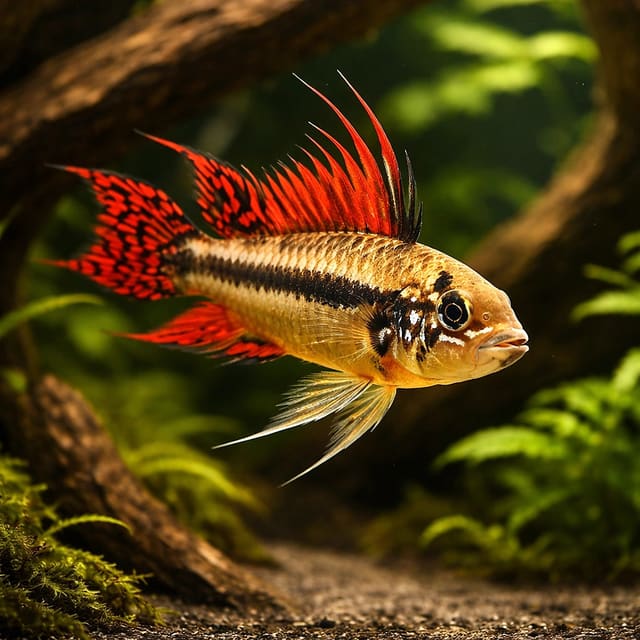
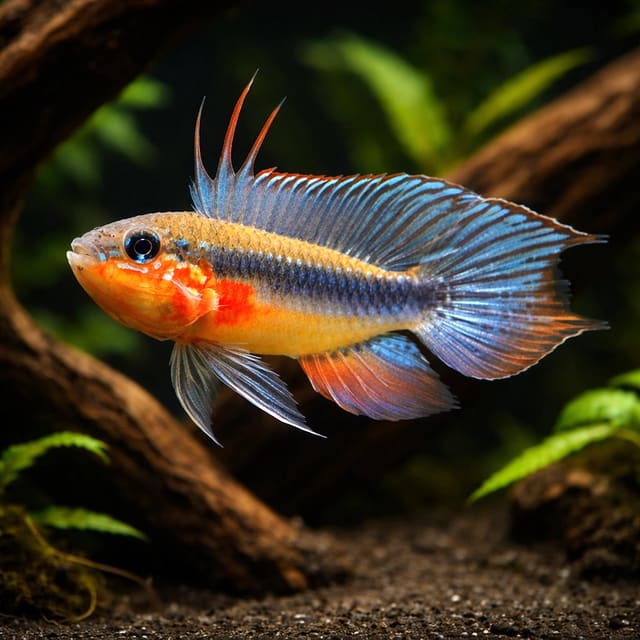
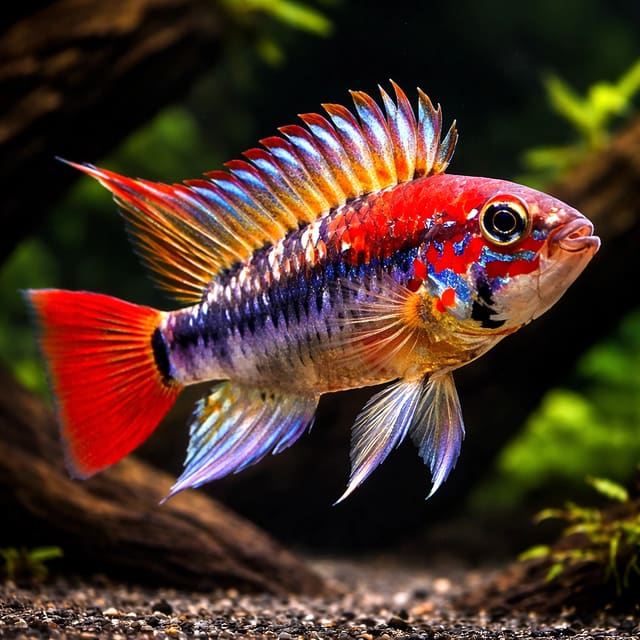
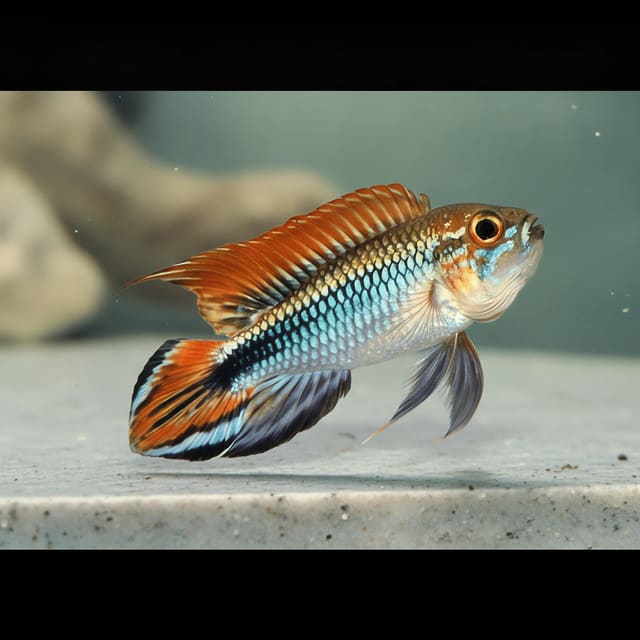
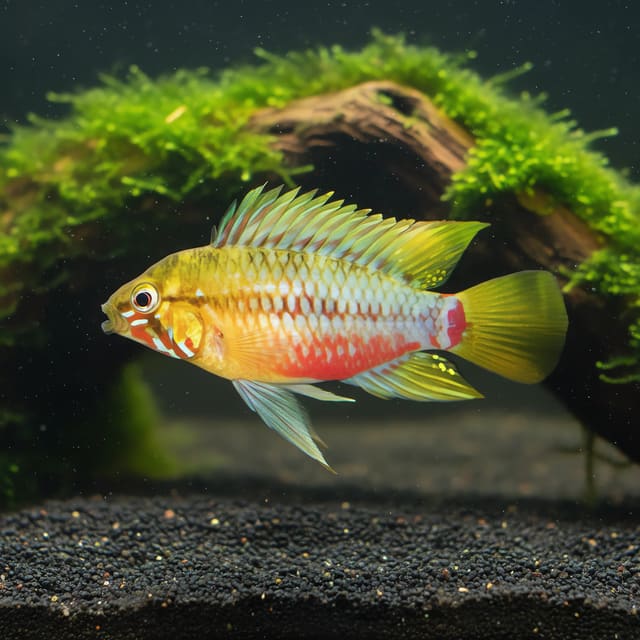
Cruzi Dwarf Cichlid (Apistogramma cruzi)
22–27°C · pH 6–8
£39.99

Panda dwarf cichlid (Apistogramma nijsseni) for a mature, planted soft-water aquarium with sand, cover and caves.
Adult size is the maximum length this species reaches at full maturity (scientific sources). The livestock you receive will be younger and smaller — pick a size above for the actual shipping size. Product-photo provenance and any image-specific limitations are stated on the listing.
Apistogramma nijsseni
Save when buying multiple fish. Each quantity is one fish; sex and pair formation are not guaranteed unless the selected variant explicitly states them.
Panda dwarf cichlid (Apistogramma nijsseni) for a mature, planted soft-water aquarium with sand, cover and caves.
Adult size is the maximum length this species reaches at full maturity (scientific sources). The livestock you receive will be younger and smaller — pick a size above for the actual shipping size. Product-photo provenance and any image-specific limitations are stated on the listing.
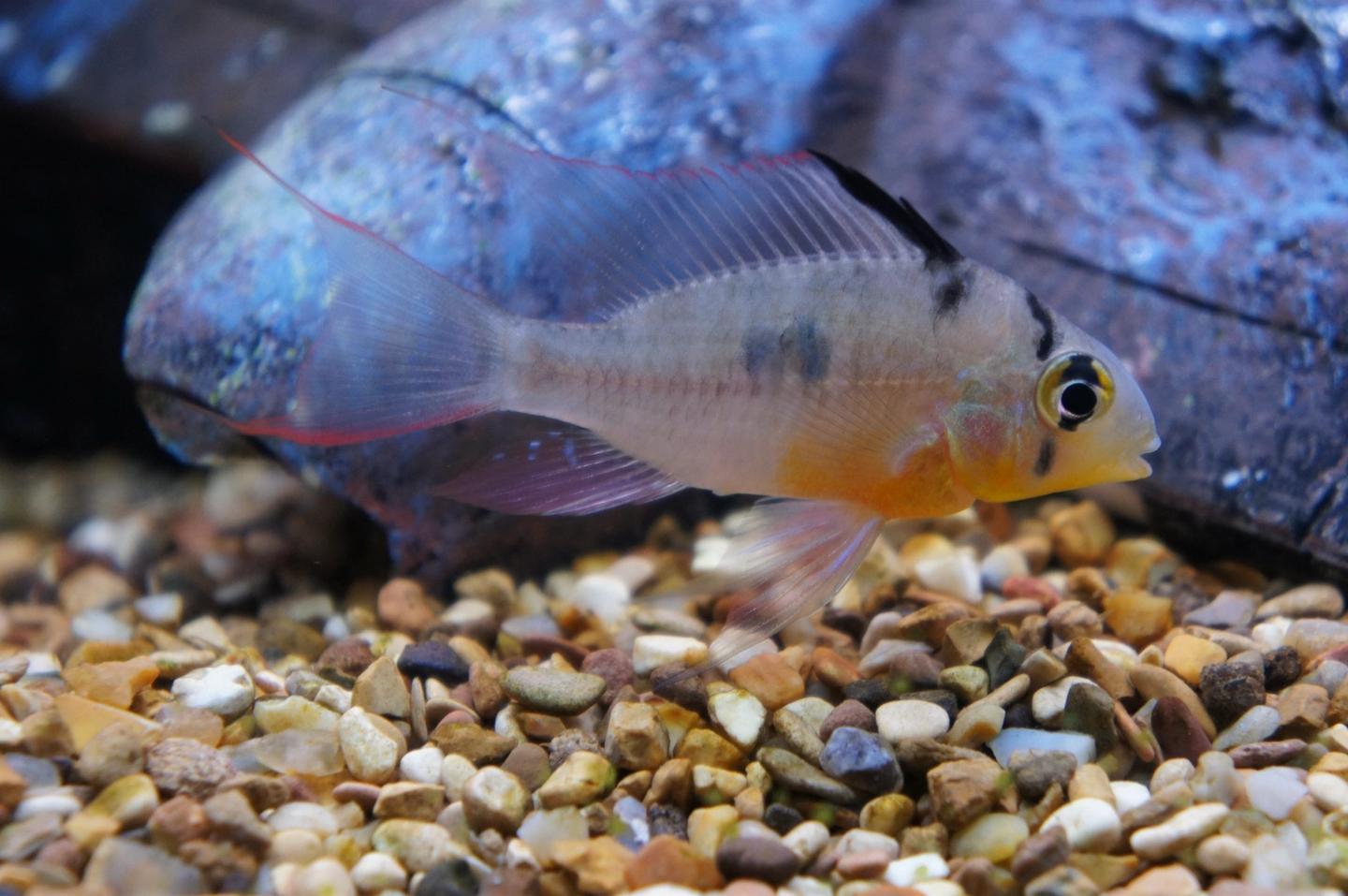
Cichlids are a family of roughly 1,800 accepted species, not one care type. Before buying, identify the exact species and source, then compare adult measurement, usable tank dimensions, social system, territory, tested water, diet and an exit plan. No family-wide minimum tank, water range or tank-mate list is safe.
Maintain these water conditions for optimal health and vibrant colors
Apistogramma nijsseni, often called the Panda Dwarf Cichlid, is a small Peruvian cichlid for a mature, softly lit aquarium. Its bold markings and cave-centred behaviour make it rewarding to watch. Plan soft, acidic water, fine sand, leaf litter and several sheltered territories before choosing this fish.
Females can become bright yellow with dark markings in breeding condition, while males often show more extended finnage and a subtle blue sheen. Colour and maturity vary between individual animals. A structured aquarium with calm companions lets their natural behaviour be seen without implying a sex or appearance guarantee for the fish supplied.
Apistogramma nijsseni belongs to the dwarf cichlid group from South America and is closely associated with soft, acidic blackwater habitats. In the aquarium hobby it is valued as a more specialised species than some of the easiest Apistogramma species, but it rewards careful fishkeepers with rich colour contrast, fascinating cave-spawning behaviour, and a classic South American dwarf cichlid profile.
Apistogramma nijsseni comes from Peru, with records linked to the Ucayali River system. In the wild, its habitat is very different from the bright, open aquariums many beginners picture in a bright, open aquarium. These fish are associated with calm, shallow margins, leaf-litter zones, woody debris, and soft-bottom areas where tannins stain the water tea-brown. That natural Apistogramma Nijsseni habitat helps explain nearly every part of its care, from substrate choice to lighting levels.
Wild water is often soft, acidic, and low in dissolved minerals. That is why Apistogramma Nijsseni pH level and dwarf cichlid water hardness matter so much in captivity. Fish kept in hard, alkaline water may survive for a time, but they rarely show their best colour, confidence, or breeding response. In nature, these fish hunt tiny invertebrates, insect larvae, crustaceans, and organic morsels among leaves and roots. Their feeding style is deliberate and bottom-oriented rather than frantic midwater chasing.
Because they evolved in cluttered habitats, they are not open-water fish. They feel secure when they can move from cave to cave, pause under broad leaves, and retreat behind wood. This is why many successful keepers design a low-flow blackwater or planted layout rather than a bare display tank. For keepers comparing dwarf cichlids, this species is best seen as a habitat fish: it thrives when the aquarium copies its environment rather than simply meeting minimum numbers on paper.
In practical terms, the best aquarium approach is to recreate a calm South American stream edge. Use dimmer lighting, soft sand, botanicals, driftwood arches, and broken sight lines. This not only improves confidence and feeding, but also reduces aggression between females and helps males patrol territories without constant visual contact.
Mimicking the natural habitat of Apistogramma nijsseni improves colour, feeding confidence, and breeding success. In our experience, fish settle faster when the tank includes leaf litter, at least two cave choices per female, and gentle filtration rather than strong current.
A proper Apistogramma Nijsseni care guide starts with understanding that this species is small, but not disposable. The correct Apistogramma Nijsseni tank size is not just about swimming room; it is about territory, line-of-sight breaks, and stable water chemistry. The Apistogramma Nijsseni minimum tank size is 60 litres for a single pair or carefully managed trio, but a larger footprint is often better than extra height. For one male with 2-3 females, 75-90 litres gives a much safer layout.
Many people ask whether Apistogramma Nijsseni for small aquarium setups is realistic. The answer is yes, but only if “small” still means a well-structured aquarium of at least 60 litres with floor space, caves, and stable soft water. A cramped tank can turn a peaceful species into a stressed and defensive one. A dwarf cichlid nano tank setup is usually too limiting unless it is species-only and expertly managed, so this fish is better treated as a small-tank specialist rather than a true nano fish.
The ideal Apistogramma Nijsseni water parameters are 23-27°C, pH 5.0-6.5, and hardness 1-8 dGH. For long-term health, aim for the softer end if possible. The best Apistogramma Nijsseni ideal water conditions for breeding are often around 24-26°C, pH 5.5-6.2, and very low mineral content. These values also fit common dwarf cichlid temperature requirements for blackwater species. If you are checking Apistogramma Nijsseni water temperature daily, consistency matters more than chasing tiny changes. Sudden swings are more harmful than being 1 degree off target.
Choose filtration that keeps water clean without blasting the fish with current. A mature sponge filter or a gentle external filter with spray-bar flow works well. In a soft-water setup, biological stability is more important than raw turnover. Fine mechanical filtration helps remove excess waste from frozen foods, but avoid creating a river-tank effect. Panda dwarf cichlids prefer calm lower zones where they can inspect the substrate and cave entrances without fighting the flow.
The right dwarf cichlid substrate preference is soft, fine sand. This protects delicate mouths and allows natural foraging behaviour. A pale or natural brown sand also helps the fish feel secure and shows off yellow female breeding colour beautifully. Sharp gravel is a poor choice. A sand depth of 2-4 cm is usually enough, with leaves and wood placed on top to create micro-territories.
Apistogramma Nijsseni for planted tank layouts can work very well if the planting style leaves open sand patches and cave access. Good choices include crypts, Java fern, floating plants, and hardy stems around the back and sides. Driftwood, seed pods, coconut caves, and leaf litter are more important than dense carpeting. If you are looking for Apistogramma Nijsseni aquarium ideas, think “shaded forest creek” rather than “Dutch garden”.
Moderate to subdued lighting is best. Bright light can make these fish shy unless floating plants or tannins soften the effect. Aim for 6-8 hours daily in a new setup, increasing slowly if plant growth requires it. If your goal is display colour rather than heavy plant growth, slightly dimmer light often produces more natural behaviour.
Always cycle the aquarium for 4-6 weeks before adding any dwarf cichlid. Soft-water fish such as Apistogramma nijsseni react badly to immature filters, and even low ammonia or nitrite can trigger stress, poor feeding, and disease.
The Apistogramma Nijsseni diet is omnivorous, but in practice these fish lean strongly toward protein-rich foods. In the wild they pick through debris for insect larvae, tiny crustaceans, and other meaty items. In the aquarium, the best Apistogramma Nijsseni feeding guide combines a quality micro pellet with frozen and occasional live foods. Varied meals help support feeding response and body condition.
A fine sinking or slow-sinking micro pellet should form the base diet. Choose a food made for small carnivorous or omnivorous cichlids, not large floating sticks. Feed only what they can finish in 1-2 minutes. In mixed tanks, make sure faster top feeders do not take everything before the cichlids can feed.
Frozen cyclops, daphnia, baby brine shrimp, and finely chopped bloodworm are excellent additions. These foods support body condition, finnage, and natural hunting behaviour. If you are conditioning a pair for Apistogramma Nijsseni breeding, increase variety rather than simply increasing quantity.
Live foods can be especially useful for shy new arrivals or recently imported fish. They also help bring out stronger courtship and Apistogramma Nijsseni spawning behaviour. Because this species can be selective, a varied menu is often the difference between fish that merely survive and fish that truly thrive.
| Time | Food | Amount |
|---|---|---|
| Morning | Micro pellet or granule | Small pinch, eaten in 1 minute |
| Evening | Frozen brine shrimp, cyclops, or daphnia | Very small portion, no leftovers |
Newly settled fish may feed cautiously, but a secure fish will usually accept appropriately sized foods. A sudden refusal of food should prompt a water-quality check. Offer small, regular meals rather than heavy feeds that leave waste around caves.
Overfeeding causes ammonia spikes, fouled substrate, and bacterial issues. Because Apistogramma nijsseni lives near the bottom, uneaten food can collect around caves and wood where it is easy to miss during maintenance.
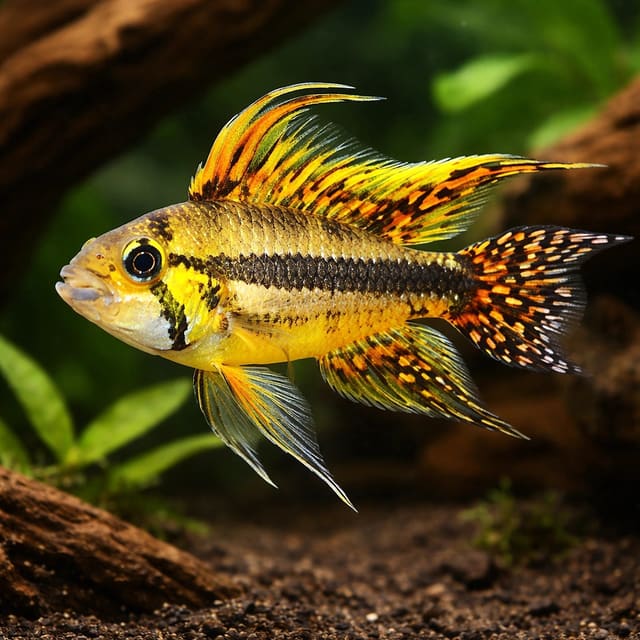
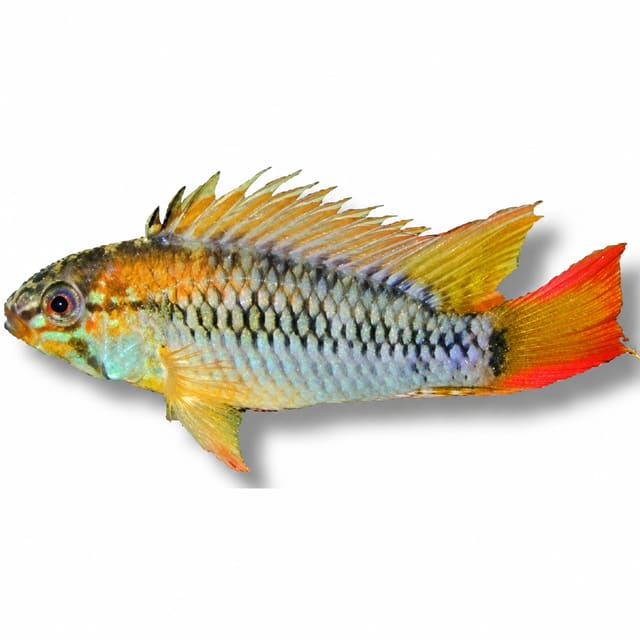
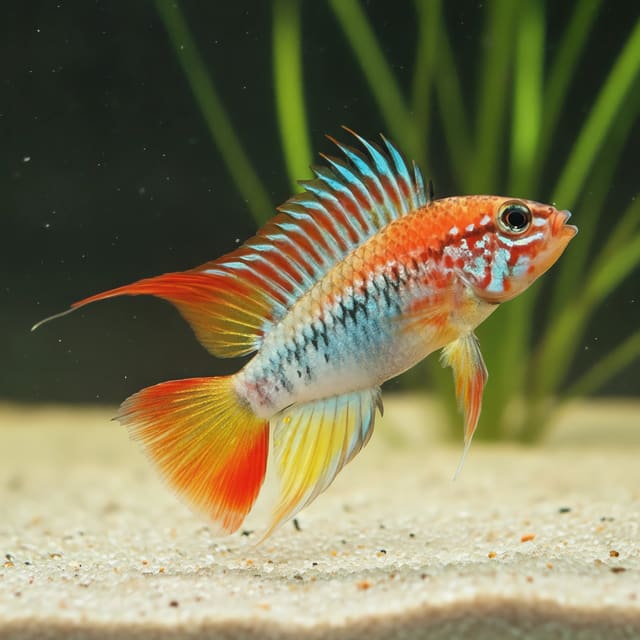
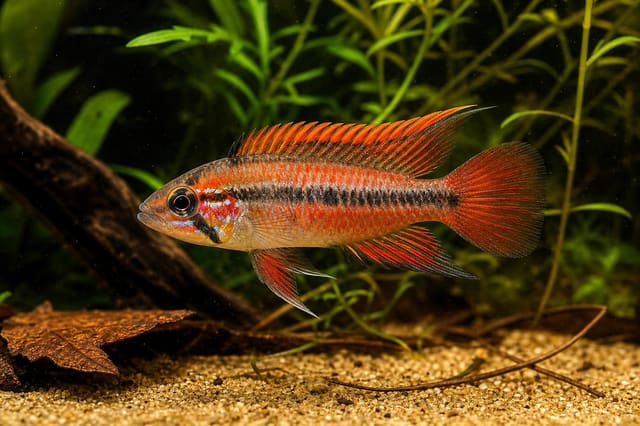
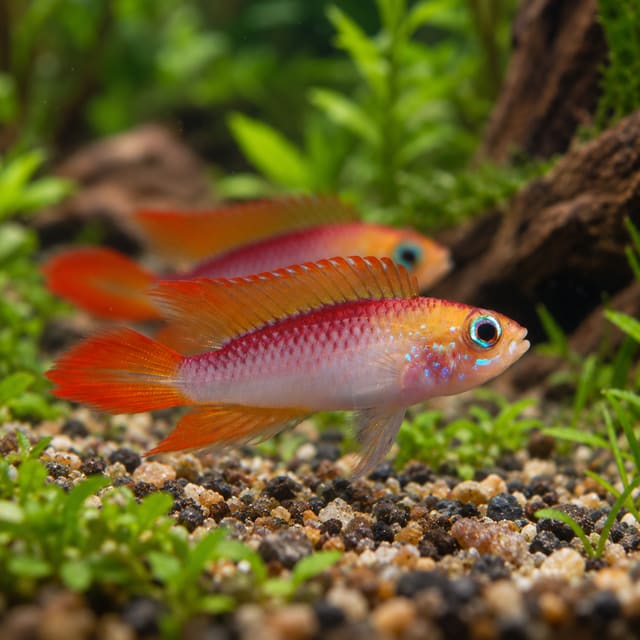
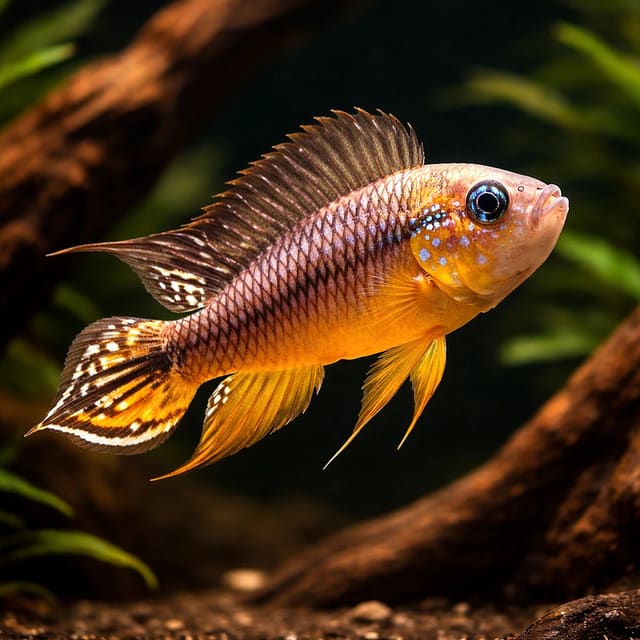
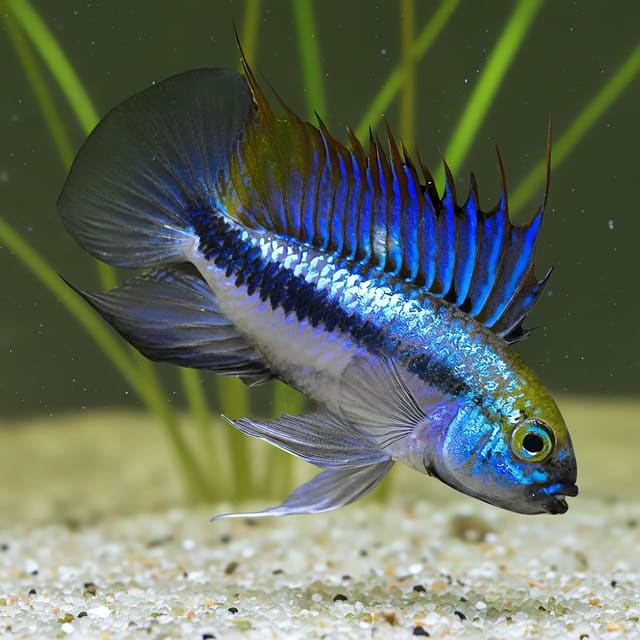
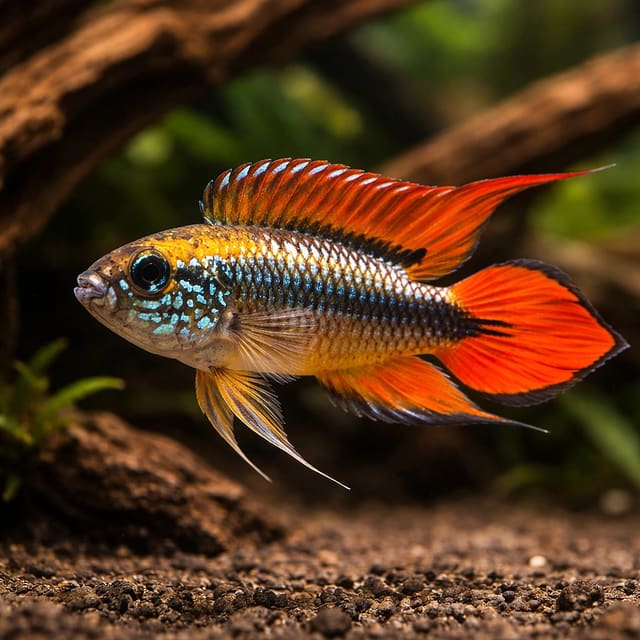
This species is often called the Panda Dwarf Cichlid because of its bold dark markings. Adult size is usually around 6 cm in aquarium conditions, though body depth and finnage make them look more substantial than some other Apistogramma. The body is laterally compressed, with a fairly robust head, expressive lips, and a rounded to softly shaped tail. Males are generally larger and more elongated, with more extended dorsal and anal fin rays.
Females are the real stars during breeding condition. They turn bright yellow with dramatic black patches on the flank and head region, creating the classic panda-like contrast. Males tend to show softer cream, blue, and dark edging depending on mood, hierarchy, and water quality. Among most colourful dwarf cichlids, this species stands out less for rainbow tones and more for contrast, posture, and display.
Apistogramma Nijsseni colour variants are not as broad in the hobby as in some line-bred fish, so most differences you see are due to sex, mood, age, and condition rather than formal morph names. Good diet, subdued lighting, dark botanicals, and low stress all improve colour depth. Our photos show the intense contrast achieved through soft acidic water, calm surroundings, and mature fish that are fully settled.
Apistogramma Nijsseni behaviour is best described as peaceful but territorial. Outside breeding, they are often calm and observant. During spawning, especially in smaller tanks, females can become assertive around caves and fry. This means Apistogramma Nijsseni tank mates should be chosen for temperament, swimming zone, and tolerance of warm, soft, acidic water.
Small tetras are classic companions, which is why searches for Apistogramma Nijsseni with tetras are so common. Pencilfish, ember-type tetras, and other gentle upper-level shoalers work better than boisterous species. Corydoras can also work in larger tanks, though bottom competition should be watched during breeding. If you are browsing peaceful dwarf cichlids for community tank options, this species can fit, but only in a thoughtfully structured setup.
Avoid large cichlids, aggressive barbs, fin-nipping fish, and hyperactive bottom dwellers. These fish can outcompete or intimidate Panda dwarf cichlids. Also avoid hard-water species that require very different chemistry. If you are comparing african dwarf cichlids with South American species, remember that their water needs are often very different, so they are not a sensible mix.
In a 60-litre species-focused tank, a pair or trio is usually enough. In a 90-litre setup, one male with two females plus a small shoal of upper-level tetras can work well. In larger planted systems, a carefully chosen community may include pencilfish and a modest Corydoras group, provided there are several caves and visual barriers.
| Species | Compatible? | Notes |
|---|---|---|
| Apistogramma Agassizii - Agassiz'S Dwarf Cichlid | ⚠️ Caution | Similar niche; only in large, expert-level tanks with many territories |
| Mikrogeophagus Ramirezi «Blue Brilliant» - Papiliochromis | ⚠️ Caution | Similar water needs, but both occupy lower zones and may compete |
| Large cichlids | ❌ Avoid | Too aggressive and stressful for a small territorial dwarf cichlid |
This species suits a keeper willing to manage soft, acidic water and provide several lower-level territories. It is less forgiving than many adaptable community fish, especially if the aquarium is small or sparsely furnished.
Always quarantine new arrivals for 2-4 weeks before adding them to an established dwarf cichlid aquarium. This reduces the risk of introducing parasites into a soft-water setup where treatment options can be more limited.
Apistogramma Nijsseni breeding is usually rated as moderate. They are cave spawners, and success depends heavily on water softness, privacy, and conditioning. A trio arrangement of one male with two females can work in a larger tank, but many breeders prefer a dedicated pair or a carefully managed harem setup with multiple caves.
Use at least 60 litres, though more space is safer if more than one female is present. Water should be very soft, slightly acidic, and stable. Fine sand, leaf litter, and small caves such as coconut shells or ceramic apisto caves are ideal. Feed varied frozen and live foods for 1-2 weeks before attempting to trigger spawning.
Apistogramma Nijsseni spawning behaviour usually includes stronger female colour, cave inspection, and short display interactions with the male. The female often takes the lead in selecting the site and guarding eggs. Once eggs are laid, she may become much more defensive, while the male patrols the outer territory. This is normal and one reason community breeding tanks need careful planning.
Eggs are usually laid on the roof or wall of a cave. The female fans and cleans them constantly. Depending on temperature, hatching often occurs in roughly 2-4 days, with free-swimming fry appearing several days later. Disturbance should be kept low during this period.
Once free swimming, fry need very small foods such as infusoria, vinegar eels, or freshly hatched baby brine shrimp. Frequent tiny feeds and immaculate water are essential. Sponge filtration is preferred to avoid sucking in fry. Growth is steady rather than rapid, but healthy fry show strong group cohesion around the female.
The most common problems are infertile spawns in hard water, first-time parents eating eggs, and aggression in tanks with poor sight breaks. If a female is overly harassed, remove the male after spawning. If eggs repeatedly fail, review mineral content and pH rather than simply raising temperature.
For more reliable sex ratios and better hatch rates, many breeders use reverse-osmosis based water remineralised only lightly, then add leaf litter and botanicals to stabilise the blackwater feel. The key is not extreme acidity alone, but very low hardness with excellent biological maturity.
Choosing between dwarf cichlids can be difficult because many species overlap in size while differing in temperament and water needs. This is where a best dwarf cichlids comparison becomes useful. Panda dwarf cichlids are best for aquarists who want strong contrast, cave-spawning behaviour, and authentic blackwater character.
| Feature | Apistogramma nijsseni | German Blue Ram |
|---|---|---|
| Max Size | About 6 cm | About 5-7 cm |
| Care Level | Moderate | Moderate |
| Temperature | 23-27°C | 27-30°C often preferred |
| Best For | Soft-water cave setup | Warmer planted display tanks |
In the debate over Apistogramma Nijsseni vs German blue ram, the main difference is style of care. Rams often need higher temperatures and can be more sensitive to poor stock quality, while A. nijsseni asks more from your water chemistry but rewards you with stronger cave-spawning behaviour and less open-bottom roaming.
| Feature | Apistogramma nijsseni | Apistogramma cacatuoides |
|---|---|---|
| Water Preference | Softer, more acidic | Usually more adaptable |
| Temperament | Peaceful, territorial in breeding | Often bolder and hardier |
| Visual Appeal | Bold panda contrast | Extended fins and bright reds/oranges |
| Beginner Suitability | Intermediate beginner | Often easier |
| Best For | Authentic blackwater tanks | Mixed planted community tanks |
When comparing Apistogramma Nijsseni vs Apistogramma cacatuoides, the latter is often considered one of the easiest Apistogramma species, while Panda dwarf cichlids are a better choice for keepers who specifically want soft-water breeding potential and a more unusual look. Compared with Apistogramma Nijsseni vs kribensis, Panda dwarf cichlids are smaller, softer-water, and more suited to South American biotopes than mixed hard-water community tanks.
Good Apistogramma Nijsseni health depends on stable, clean, soft water. These fish are not especially fragile when kept correctly, but they do react quickly to stress. A healthy fish should show clear eyes, intact fins, alert but not frantic movement, and a strong feeding response. Females may hide more than males, especially when settling in, but they should still emerge to inspect food and territory.
The most frequent issues are stress-related bacterial infections, intestinal problems from poor diet, and parasitic outbreaks after transport or mixing with unquarantined fish. Because this species prefers warmer soft water, poor maintenance can also encourage fungal or protozoan problems. Fish kept in water outside proper Apistogramma Nijsseni aquarium requirements often lose colour and become withdrawn before obvious disease appears.
Prevention is always easier than cure. Keep nitrate low with regular partial water changes, vacuum trapped waste from around caves, and avoid sudden chemistry swings. If treatment is needed, move the fish to a separate hospital tank where you can monitor dosage carefully. Soft-water fish can react strongly to medications, so always start with accurate diagnosis and conservative dosing.
Never use copper-based medications in tanks containing shrimp or other sensitive invertebrates. Copper can be lethal to them, and unnecessary medication also adds stress to dwarf cichlids already weakened by poor water quality.
Apistogramma Nijsseni behaviour is one of the main reasons people choose this species over more generic community fish. They are observant, intelligent, and strongly aware of territory. Much of the day is spent investigating the substrate, inspecting caves, and watching activity above them. They are not constant swimmers, but they are never dull.
In a settled tank, males patrol wider areas while females hold smaller territories, especially near shelter. During courtship, body posture changes dramatically, and colour intensifies. This is one of the pleasures of keeping colourful dwarf cichlids with real personality rather than just decorative presence.
To encourage natural behaviour, keep them in a calm tank with broken sight lines, low to moderate light, and secure lower-level cover. A sparse tank makes them nervous; a structured one makes them fascinating.
Before ordering, prepare a mature soft-water aquarium with shelter and suitable food. This species may take time to settle after transport, so plan a quiet introduction and check feeding behaviour carefully.
Check the current delivery guidance before ordering and be available to receive live fish. Match the new fish to the aquarium conditions gradually and follow the store's arrival instructions.
Order your Panda Dwarf Cichlid with confidence if you are ready to provide the right setup. For aquarists building a specialist collection of South American cichlids UK fish, this species offers standout behaviour, distinctive colour contrast, and genuine breeding interest.
No reviews for this item yet. Bought one? Honest reviews only, good or bad.
What customers say about ordering from us
I have a small group of long finned mountain minnows. So was delighted to be able to order ten of this variety to increase the genetics in my tank . The ones I recieved are healthy but it’s to early to give a verdict on wether they are of a long finned type since they are small currently.
Gordon Walker · 23 Sept 2026
100% success travel and "installation". Pleased with quality of purchase. The Siamese fighter a bit "shy" so have not yet seen him at his best yet but looking good. Happy customer. GG
George E Garratt · 21 Sept 2026
Reviews of our shop, collected by Judge.me, an independent third-party review collector. Newest first.