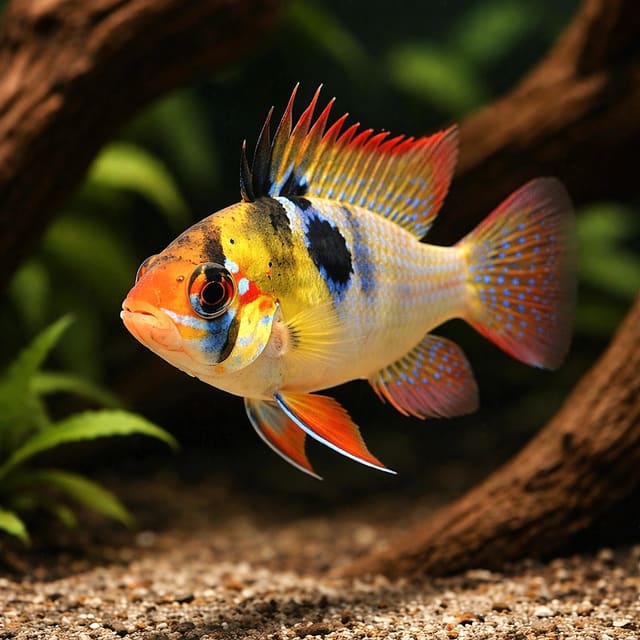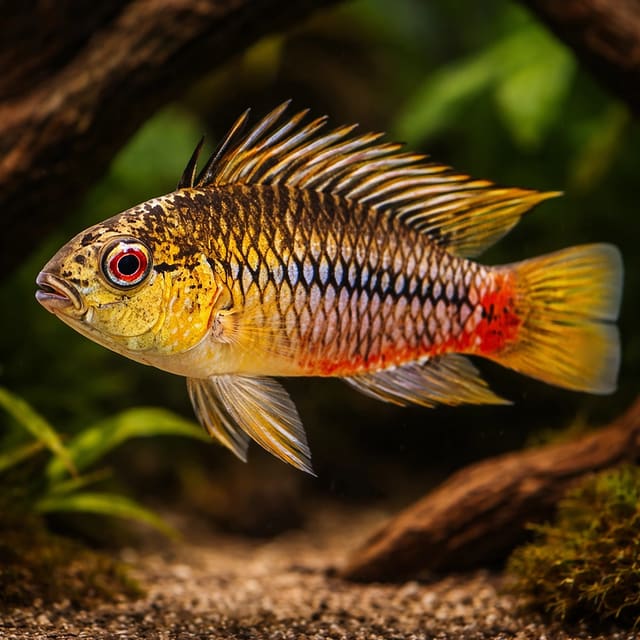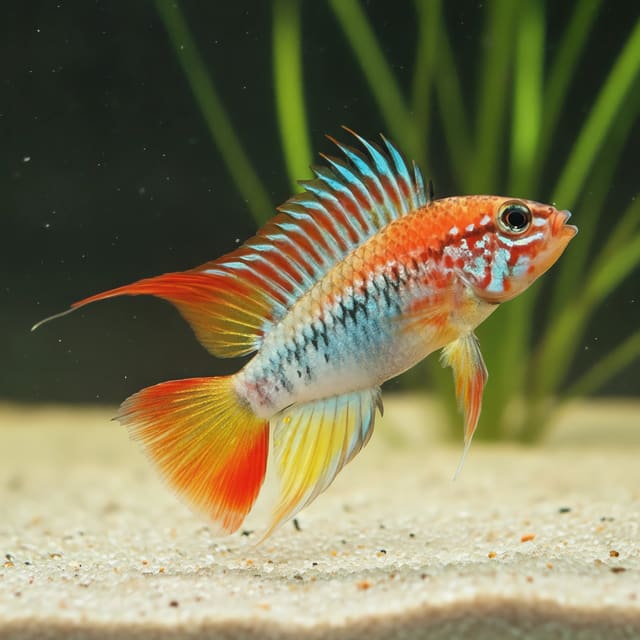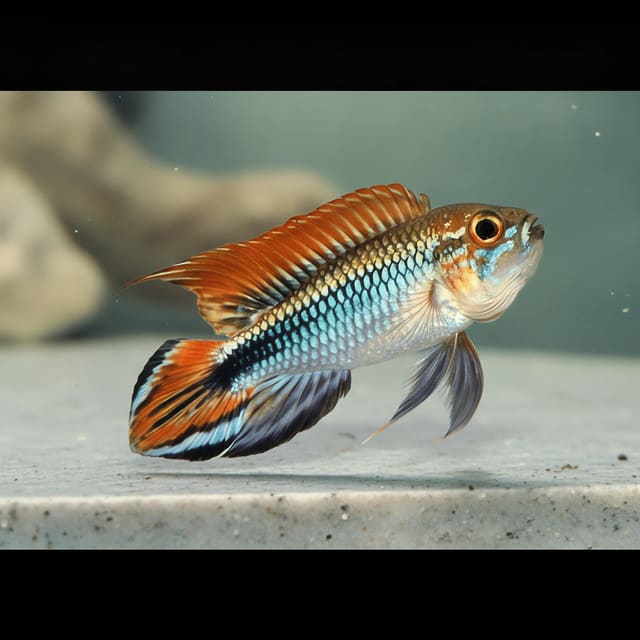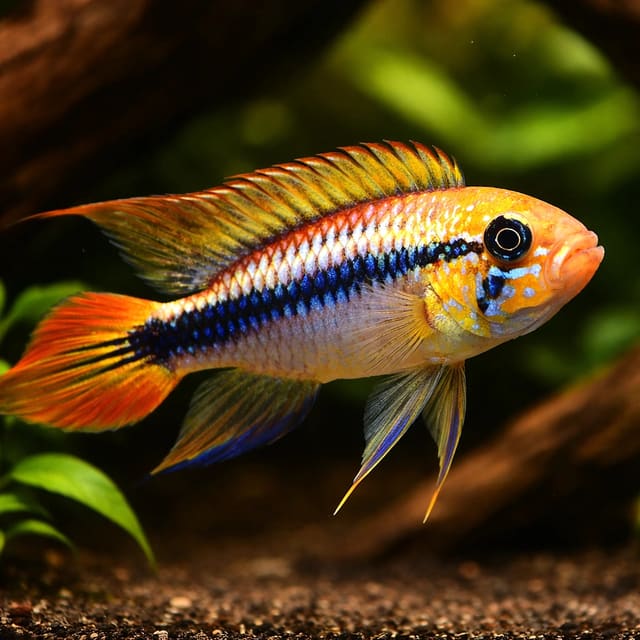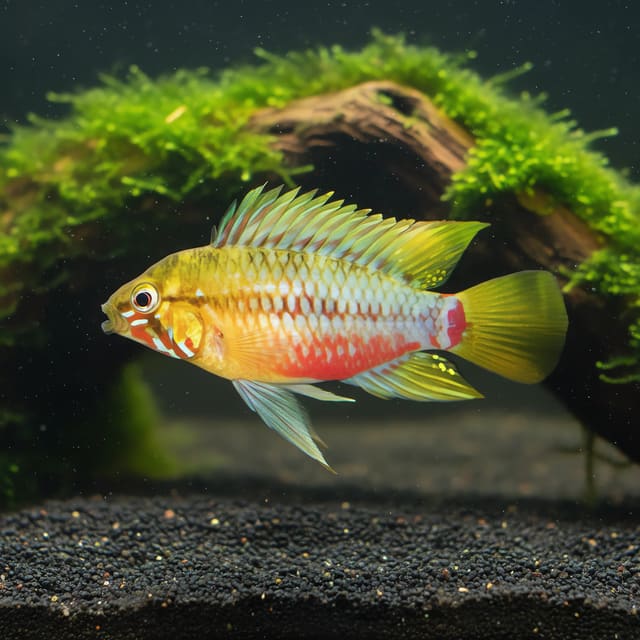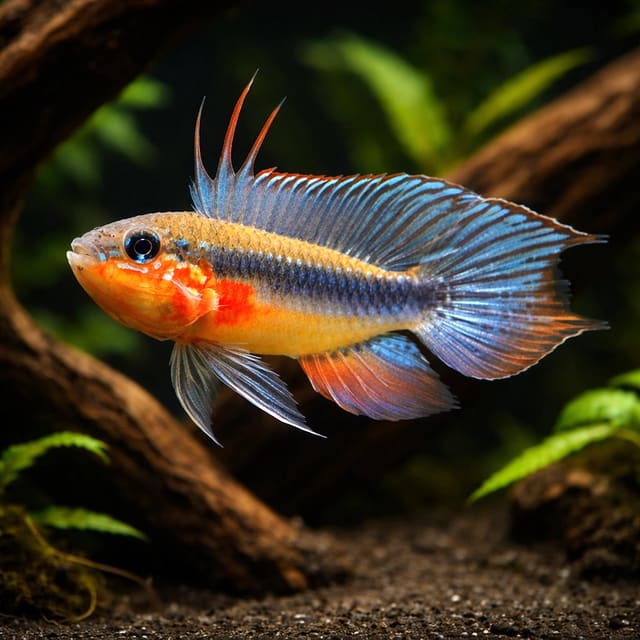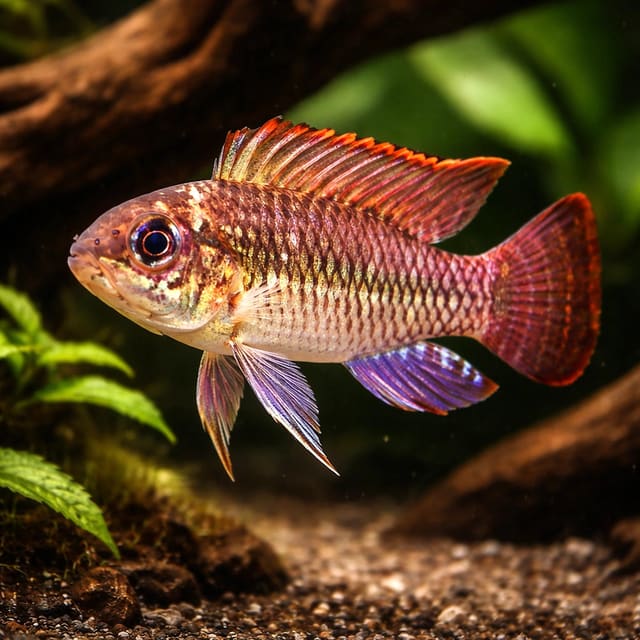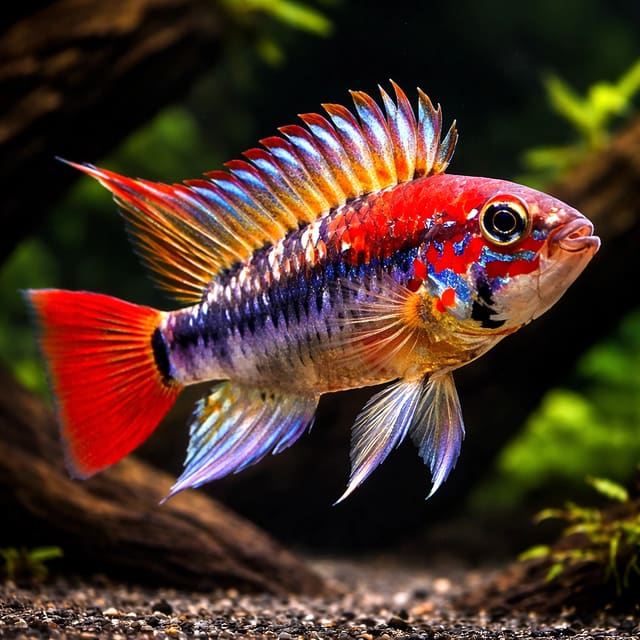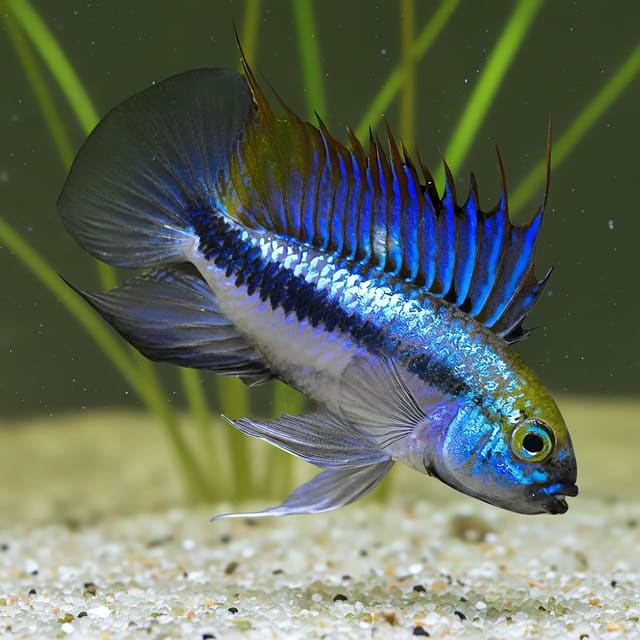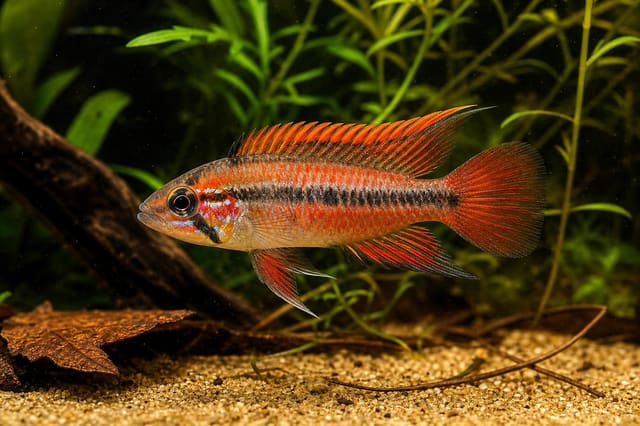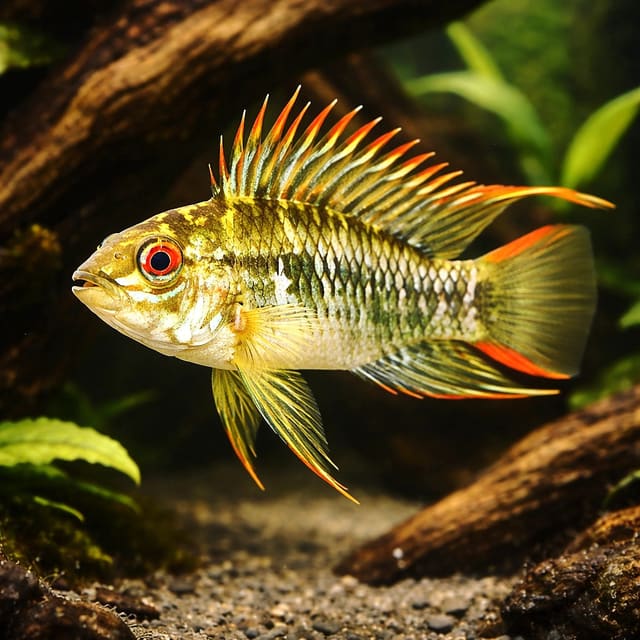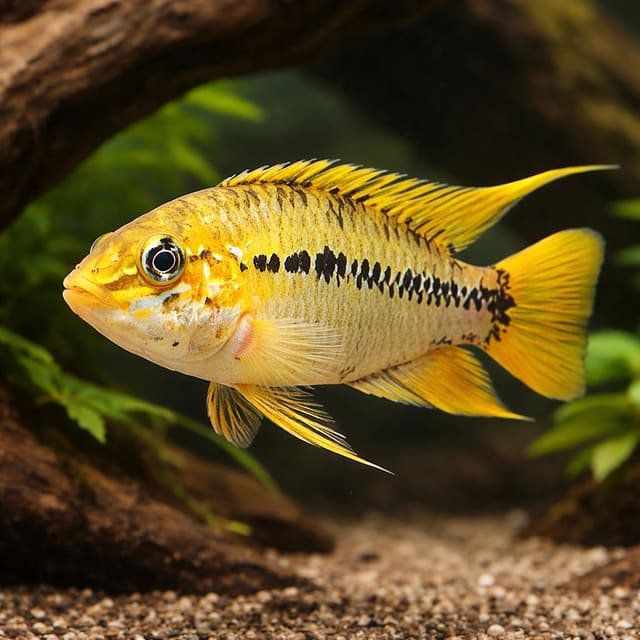
Red Point Dwarf Cichlid (Apistogramma sp.)
22–27°C · pH 6–8
£17.99

The Opal Dwarf Cichlid (Apistogramma sp. opal) is a freshwater cichlid from South America. It suits a mature, filtered aquarium; OATA’s dwarf-cichlid guidance gives 22–27°C, pH 6.0–8.0 and 4–12°dH, with at least 60 litres for a pair. Sold individually in 2,5 - 3 cm and XL dispatch sizes.
Apistogramma sp. opal
Save when buying multiple fish. Each quantity is one fish; sex and pair formation are not guaranteed unless the selected variant explicitly states them.
The Opal Dwarf Cichlid (Apistogramma sp. opal) is a freshwater cichlid from South America. It suits a mature, filtered aquarium; OATA’s dwarf-cichlid guidance gives 22–27°C, pH 6.0–8.0 and 4–12°dH, with at least 60 litres for a pair. Sold individually in 2,5 - 3 cm and XL dispatch sizes.
Cichlids are a family of roughly 1,800 accepted species, not one care type. Before buying, identify the exact species and source, then compare adult measurement, usable tank dimensions, social system, territory, tested water, diet and an exit plan. No family-wide minimum tank, water range or tank-mate list is safe.
Maintain these water conditions for optimal health and vibrant colors
The Opal Dwarf Cichlid (Apistogramma sp. opal) is a freshwater cichlid from South America. It belongs to Apistogramma, an accepted genus within the family Cichlidae, as shown by WoRMS. This fish suits a keeper prepared to maintain a mature, filtered aquarium, monitor water quality and plan around the territorial behaviour dwarf cichlids may show, particularly when breeding.
Wikipedia’s overview of the genus describes Apistogramma as South American dwarf cichlids that mostly feed on tiny animals. Breeding behaviour varies with the exact species, so the genus name is important when deciding how much cover to provide and how cautiously to choose companions.
The exact species has not been identified, so the care advice here follows the genus Apistogramma and its care group. That makes stable conditions, retreat spaces and careful compatibility screening more useful than assumptions based on a single named species.
Keep this identity in mind when comparing it with other South American cichlids. Shared geography or family membership does not make two fish automatically compatible; compare temperament, activity, space and water needs before combining them.
One purchase supplies one Opal Dwarf Cichlid in the size selected. The live size selector uses the labels 2,5 - 3 cm and XL. Use that selector to choose the dispatch grade that fits your stocking plan rather than treating either label as a mature measurement.
The size you select is the size supplied, not the adult size. The Apistogramma sp. opal name identifies a genus-level form, so plan the aquarium to remain suitable as the individual matures. Do not use the 2,5 - 3 cm label to justify a temporary small aquarium.
Sex is guaranteed only when the selected option explicitly states male or female. This Opal Dwarf Cichlid listing has no sex-guaranteed option.
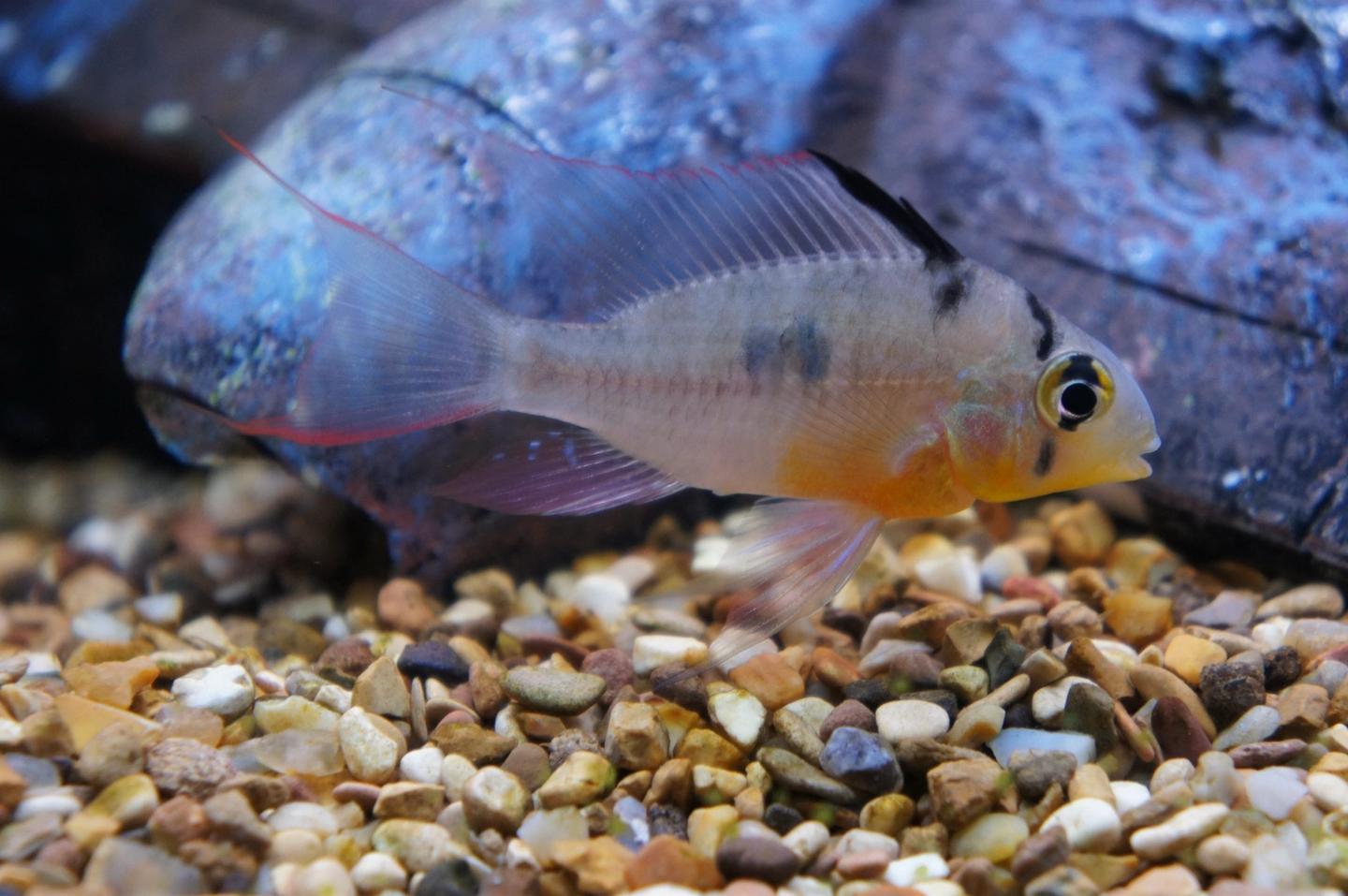
Some gallery images have been digitally enhanced to improve image quality. They show the listed type of animal rather than guaranteeing the exact markings of the individual supplied, so natural colour and pattern can vary.
Gallery scenes may show one or two fish, but they illustrate the kind of animal rather than the quantity supplied. Base the number you purchase on the aquarium’s space, cover and compatibility plan, while remembering that each purchase quantity supplies one animal.
Keep the aquarium at 22–27°C, pH 6.0–8.0 and 4–12°dH. Maintain carbonate hardness at 3–10°dKH, ammonia at zero mg/l and nitrite at zero mg/l; nitrate should not exceed 20 mg/l above the normal tap-water level. OATA’s dwarf-cichlid sheet supplies these broad group values, not a species-specific optimum.
Allow at least 60 litres if keeping just a pair. Use at least 80 litres when mixing dwarf cichlids with other fish. Larger aquariums provide more stable temperature and water quality, while extra structure gives fish room to withdraw from territorial encounters.
A working biological filter is essential. The RSPCA explains how biological filtration supports bacteria that convert toxic ammonia first to nitrite and then to the safer nitrate. Mature the filter before adding livestock and keep it operating and maintained.
| Suits | Not suited to |
|---|---|
| A mature, filtered tropical freshwater aquarium | An unfiltered or newly filled aquarium |
| At least 60 litres for a pair | A small temporary tank based on dispatch size |
| At least 80 litres for a community plan | Crowded community stocking without territorial space |
| Gravel or sand, plants and plentiful cover | An exposed layout with few retreat spaces |
| Calm companions screened for activity and breeding risk | Very active or boisterous companions for a shy individual |
Treat these requirements as one connected decision. Suitable temperature cannot compensate for immature filtration, and adequate volume cannot compensate for ammonia or nitrite. Prepare the complete environment before the fish arrives.
Start with at least 60 litres if the plan is to keep just a pair. Move to at least 80 litres when other fish are included, and choose a larger aquarium where practical. More water makes environmental conditions such as temperature and water quality more stable, while a broader footprint creates more opportunities for separated retreats.
Fit an essential filter and use aquarium gravel or sand. Add live plants where possible because they provide cover, especially for shy fish. If live planting is unsuitable, use aquarium-safe artificial plants and ornaments to create equivalent shelter.
Even well-settled pairs will often chase one another, making plentiful cover essential rather than decorative. Spread shelters through the aquarium instead of clustering every retreat in one corner. This gives a pursued fish more than one direction in which to move.
Before choosing a community, calculate space from the whole stocking plan. The 80-litre recommendation is a starting minimum for mixing dwarf cichlids with other fish, not permission to fill every level heavily. Each added fish increases waste and requires the filter’s beneficial bacterial population to support a greater biological load.
Use the adult aquarium from the outset. A 2,5 - 3 cm dispatch fish still needs stable water, mature filtration and a layout suitable for territorial behaviour. Moving it repeatedly between undersized temporary setups adds disruption without solving the long-term space decision.
Review the layout whenever chasing or prolonged hiding develops. Add or rearrange existing cover to provide more separate retreats, then check whether stocking density and companion activity are contributing. Do not rely on one cave to serve every fish.
Maintain 22–27°C, pH 6.0–8.0 and general hardness of 4–12°dH. Keep carbonate hardness at 3–10°dKH. Choose a stable point within each range that also suits every other animal in the aquarium rather than repeatedly moving the values across the full span.
Ammonia and nitrite must both remain at zero mg/l. Keep nitrate no more than 20 mg/l above its normal level in your tap water. These waste readings matter because even small amounts of ammonia and nitrite can stress dwarf cichlids.
| Test result | Action |
|---|---|
| Ammonia above zero | Treat it as a water-quality problem and review feeding, stocking and biological filtration. |
| Nitrite above zero | Check the mature filter and reduce pressure from rapid stocking or excess waste. |
| Nitrate rising beyond the limit | Carry out the scheduled partial water change and review waste accumulation. |
| pH or hardness outside the range | Compare replacement water and aquarium readings before making gradual corrections. |
Use our water chemistry guide to understand what each measurement means. The water matcher can then compare measured aquarium values with the guidance for this fish.
Test on a consistent schedule, at least once each week, and keep results together so changes can be recognised. A single reading shows the present condition; a sequence helps reveal whether waste is increasing or pH and hardness are shifting.
Check temperature and water quality whenever behaviour changes. Hanging at the surface, sitting on the bottom, erratic swimming, faster or slower gill movement, unusual hiding or changed aggression can all justify an immediate water test. Correct the environment before assuming a behavioural problem has a separate cause.
Prepare and mature the aquarium before introducing the Opal Dwarf Cichlid. A biological filter depends on beneficial bacteria that process fish waste, so a newly installed filter is not equivalent to an established one. Our first tropical aquarium guide explains how to prepare the system before livestock arrives.
Test before adding the fish and proceed only when ammonia and nitrite are both zero mg/l. Confirm that temperature, pH and hardness are within the stated ranges, the filter is running correctly and the planned shelters are already in place.
Beneficial bacteria need to increase as more fish and food are added. Stocking too rapidly can leave too few nitrifying bacteria to process the extra waste, causing unhealthy ammonia and nitrite levels associated with new tank syndrome.
During the first week, offer one controlled meal each day, watch whether the fish eats, and check its swimming, breathing and use of cover. Keep the normal weekly water-test and water-change schedule unless a concerning change prompts an earlier test.
Through the first month, avoid adding livestock simply because the aquarium looks empty. Use water results and the behaviour of the existing fish to judge whether the biological filter and territory layout are coping. A stable reading and normal behaviour are more useful than visual estimates of spare space.
Plan every addition against the community minimum of at least 80 litres, but remember that volume is only one part of the decision. Activity, territoriality, cover and the filter’s established capacity all affect whether another fish belongs in the aquarium.
Feed once each day and offer only what the fish can consume within a few minutes. Apistogramma mostly feed on tiny animals in nature, so choose appropriately small foods and include small live or frozen items in the aquarium diet.
OATA advises a good-quality flake or granule for dwarf cichlids, supplemented with small live or frozen foods such as daphnia, brine shrimp or tubifex. Use variety across meals while keeping the total daily portion controlled.
Do not increase the portion simply because the fish eats eagerly at the start. Uneaten food breaks down and releases toxic waste, placing extra pressure on biological filtration and increasing the risk of ammonia or nitrite appearing.
Use appetite as one part of the daily health check. Reduced intake or a loss of interest in food can accompany water-quality or health problems. If feeding changes, test the water and compare swimming, breathing, colour, condition and hiding behaviour with the fish’s normal pattern.
In a community aquarium, watch the meal rather than assuming each fish receives an equal share. The Opal Dwarf Cichlid may be shy around very active or boisterous companions, so the compatibility decision affects access to food as well as territory. Reconsider the companion mix if one fish repeatedly withdraws while others take the meal.
Keep feeding and maintenance connected. A controlled daily portion limits waste; weekly testing shows whether the system is processing that waste; and the partial water change removes accumulated material. Increasing food without checking these other parts weakens the stability of the whole aquarium.
Carry out a 25% partial water change at least once every week. A siphon can remove solid waste from the gravel while water is withdrawn. Treat replacement tap water with a suitable conditioner to remove chlorine or chloramine before it enters the aquarium.
Test ammonia and nitrite at least weekly and keep both at zero mg/l. Check nitrate against the normal tap-water reading, ensuring that the aquarium level does not exceed it by more than 20 mg/l. Include pH, hardness and temperature in the routine so gradual movement is recognised.
Avoid cleaning every part of the aquarium simply to make it look spotless. The essential objective is to remove accumulated waste while preserving the bacterial population that processes ammonia and nitrite.
Observe the fish while performing routine care. Look for hanging at the surface, sitting on the bottom, erratic swimming, darker or paler colour, increased aggression, extra hiding, changed gill movement, white spots, fluffy growths, missing fins or scales, altered body condition and reduced feeding.
If any of these changes appear, test the water quality first and correct environmental problems promptly. Contact us if you remain concerned about the health of the fish after checking its conditions. Do not add an unreferenced treatment simply because two symptoms look similar.
Keep the routine predictable: one controlled feed each day, at least weekly testing, a 25% partial water change at least once weekly and filter checks for blockage. This consistency supports the mature environment dwarf cichlids need and makes departures from normal behaviour easier to recognise.
Be present to receive the parcel because live fish cannot be left unattended. Follow the current delivery and Live Arrival Guarantee policy, beginning the arrival record before the parcel is opened.
Keep the recording continuous from the sealed parcel through opening and the view of the fish in its sealed bag. Retain the order number with the recording if a Live Arrival Guarantee claim is needed.
Before the parcel arrives, confirm that the aquarium is mature, filtered and within 22–27°C, pH 6.0–8.0 and 4–12°dH.
Once the fish has been released, watch its swimming, breathing, colour, hiding and interest in food. Continue with one small meal each day.
Keep stocking changes slow after arrival. Adding several more fish and increasing feeding immediately can raise the biological load faster than the filter bacteria can adjust, leading to ammonia or nitrite. Let test results and behaviour guide the next stocking decision.
Dwarf cichlids can live in community aquariums, but compatibility is conditional. Use at least 80 litres for a mixed-fish plan and make sure every fish has enough space if breeding behaviour begins.
OATA identifies shoals of dither fish as useful companions for dwarf cichlids. Their presence can give cichlids a sense of security, and their speed helps them move away if territorial behaviour develops. This describes a role rather than a universal list of species.
| Check | Decision |
|---|---|
| Activity | Use caution with very active or boisterous fish because some Apistogramma can be shy. |
| Space | Allow enough room for every tank mate if the cichlid becomes territorial while breeding. |
| Retreats | Provide plants, caves, pots, wood or leaf litter so fish can withdraw. |
| Feeding | Watch the meal and make sure a shy fish is not repeatedly displaced. |
Choose dither fish only after checking adult size, swimming level, water requirements and compatibility. Check the proposed animal’s activity and aquarium requirements, then assess the whole aquarium rather than matching names alone.
Very active or boisterous tank mates deserve particular caution. Some fish in the genus may be quite shy and may not do well with that level of activity. Persistent hiding, failure to approach food or changed behaviour indicates that the combination or layout needs attention.
Compatibility can change when breeding starts. A community that appears calm beforehand may need more territorial space once a spawning site is defended. Build cover and spare routes into the original layout rather than waiting for chasing to begin.
Expect territorial behaviour to be possible, especially if breeding begins. Even well-settled pairs will often chase one another, making plentiful cover essential. Arrange the aquarium so one fish can move away without being trapped in an exposed corner.
Breeding behaviour varies with the exact Apistogramma species. Use that variation as a reason to observe the individual fish rather than assuming a fixed pair dynamic, courtship pattern or division of parental roles.
When breeding is intended, the avoid rule is direct: do not include companions likely to disturb spawning sites or eat fry. More space does not remove that risk; it only helps with the general territorial demands of a mixed aquarium.
Do not infer sex from colour, size, finnage or a gallery scene. The offer has no sex-guaranteed option, and a pair plan therefore requires a separate assessment of the individual fish rather than an assumption based on the size label.
If more than one dwarf cichlid is planned, allocate cover before purchase and leave room to adjust the structure. The minimum 60-litre pair recommendation assumes a properly filtered aquarium with shelter; it does not make every two fish socially compatible.
Use behaviour, feeding access and physical condition as the ongoing test. A combination is not working well when one animal repeatedly hides, cannot feed or suffers damage, even if the water readings and aquarium volume remain within guidance.
Make the stocking decision from aquarium volume, cover, activity and breeding risk together. The following examples show how to apply the dwarf-cichlid guidance without turning any companion into a universal recommendation.
For just a pair, begin at 60 litres or more. Install a mature filter, use gravel or sand and distribute several retreats made from plants, caves, pots, wood or leaf litter. Even well-settled pairs will often chase one another, so two fish should not be expected to share one exposed shelter peacefully.
Use at least 80 litres before mixing dwarf cichlids with other fish. A shoal serving the dither-fish role may help the cichlid feel secure, but screen it for activity and ensure all animals have enough room if territorial behaviour begins. Very active or boisterous companions remain a caution.
Avoid tank mates that may disturb spawning sites or predate fry. Retain plenty of cover and watch for changes in aggression, hiding and feeding. Do not assume that a larger aquarium turns a predator of fry into a suitable companion.
Test ammonia and nitrite and confirm both remain zero mg/l. Compare breathing, swimming, colour and hiding with the fish’s usual behaviour. Then watch whether faster companions take the meal first or keep the cichlid away from open feeding areas.
These examples share one rule: treat compatibility as an observed relationship, not a permanent label. Reassess it after a stocking change or the appearance of territorial behaviour. Space and cover can reduce conflict opportunities, but they cannot guarantee that two individual fish will accept one another.
Ask us for a stocking assessment when you can provide the aquarium volume, present livestock, water values and layout. Those details allow the activity, territorial space and breeding risks to be considered together.
Treat 2,5 - 3 cm and XL as dispatch sizes only and keep the aquarium plan flexible as the fish matures; Apistogramma sp. opal identifies a genus-level form rather than one named species.
OATA’s dwarf-cichlid guidance recommends at least 60 litres if just a pair is kept and at least 80 litres when dwarf cichlids are mixed with other fish.
OATA recommends at least 60 litres if just a pair is kept; decide on a pair only after providing plentiful cover and allowing for territorial behaviour, especially during breeding.
It suits a keeper comfortable maintaining a mature biological filter, testing water at least weekly, changing 25% at least once a week and responding to territorial behaviour.
Feed once daily with only what it consumes within a few minutes. Use good-quality flake or small granules and add small live or frozen daphnia, brine shrimp or tubifex.
OATA’s dwarf-cichlid guidance gives 22–27°C, pH 6.0–8.0 and general hardness of 4–12°dH; keep ammonia and nitrite at zero mg/l.
Treat fin safety as a compatibility check rather than an assumed trait: dwarf cichlids may become territorial, especially while breeding, so provide cover and respond to chasing or damage.
OATA recommends shoals of dither fish, provided there is enough space if breeding starts. Use caution with very active or boisterous fish, and avoid fry predators when breeding.
Start filming while the parcel is sealed, open it in one continuous take and show the fish in its sealed bag before floating the bag for 20–30 minutes and releasing it.
No reviews for this item yet. Bought one? Honest reviews only, good or bad.
What customers say about ordering from us
I have a small group of long finned mountain minnows. So was delighted to be able to order ten of this variety to increase the genetics in my tank . The ones I recieved are healthy but it’s to early to give a verdict on wether they are of a long finned type since they are small currently.
Gordon Walker · 23 Sept 2026
100% success travel and "installation". Pleased with quality of purchase. The Siamese fighter a bit "shy" so have not yet seen him at his best yet but looking good. Happy customer. GG
George E Garratt · 21 Sept 2026
Reviews of our shop, collected by Judge.me, an independent third-party review collector. Newest first.