−10%
Moderate
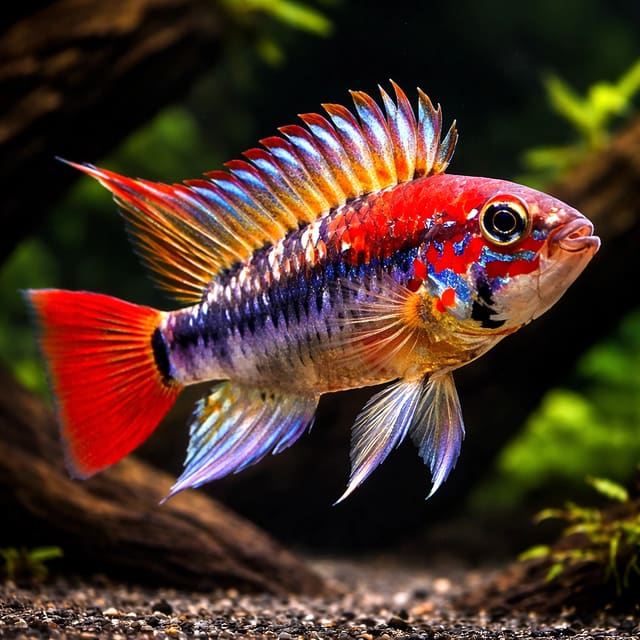
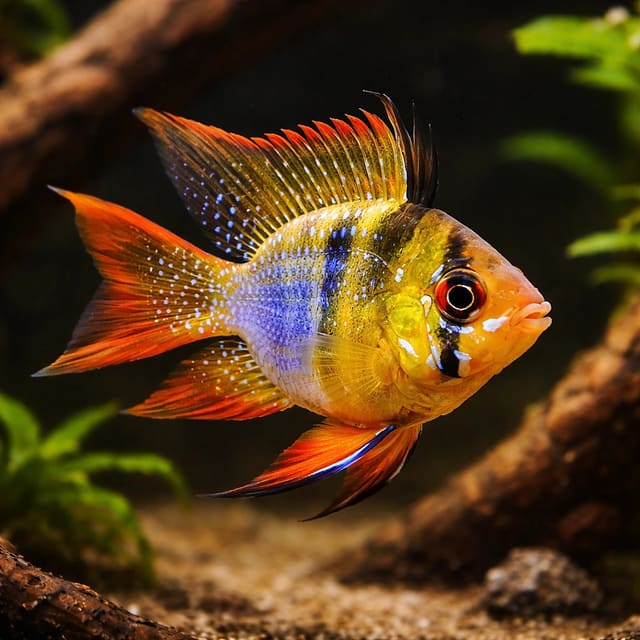
Balloon Ram (Mikrogeophagus ramirezi) – 2.5–3cm & XL Size Grades
24–27°C · pH 6–7.5 · 60L
£12.59£13.99

Buy Apistogramma Mendezi «Santa Isabel» for a standout South American dwarf cichlid with bold colour and personality. UK delivery available.
Adult size is the maximum length this species reaches at full maturity (scientific sources). The livestock you receive will be younger and smaller. Product-photo provenance and any image-specific limitations are stated on the listing.
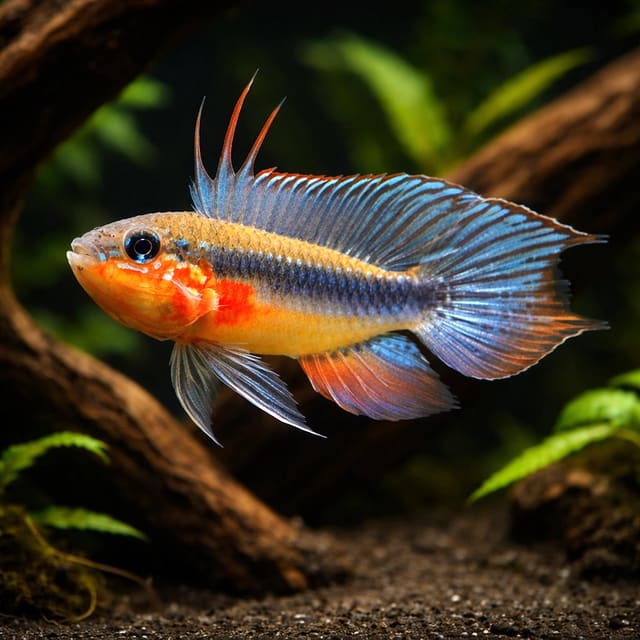
Apistogramma mendezi
Save when buying multiple fish. Each quantity is one fish; sex and pair formation are not guaranteed unless the selected variant explicitly states them.
Confirm your email, then we’ll send an availability message for this exact item if it returns within 180 days.
This request is only for this product—no newsletter or other promotions. A mail-provider retry may very rarely duplicate the same availability message. Unconfirmed addresses are removed after 48 hours. See our privacy policy.
Buy Apistogramma Mendezi «Santa Isabel» for a standout South American dwarf cichlid with bold colour and personality. UK delivery available.
Adult size is the maximum length this species reaches at full maturity (scientific sources). The livestock you receive will be younger and smaller. Product-photo provenance and any image-specific limitations are stated on the listing.
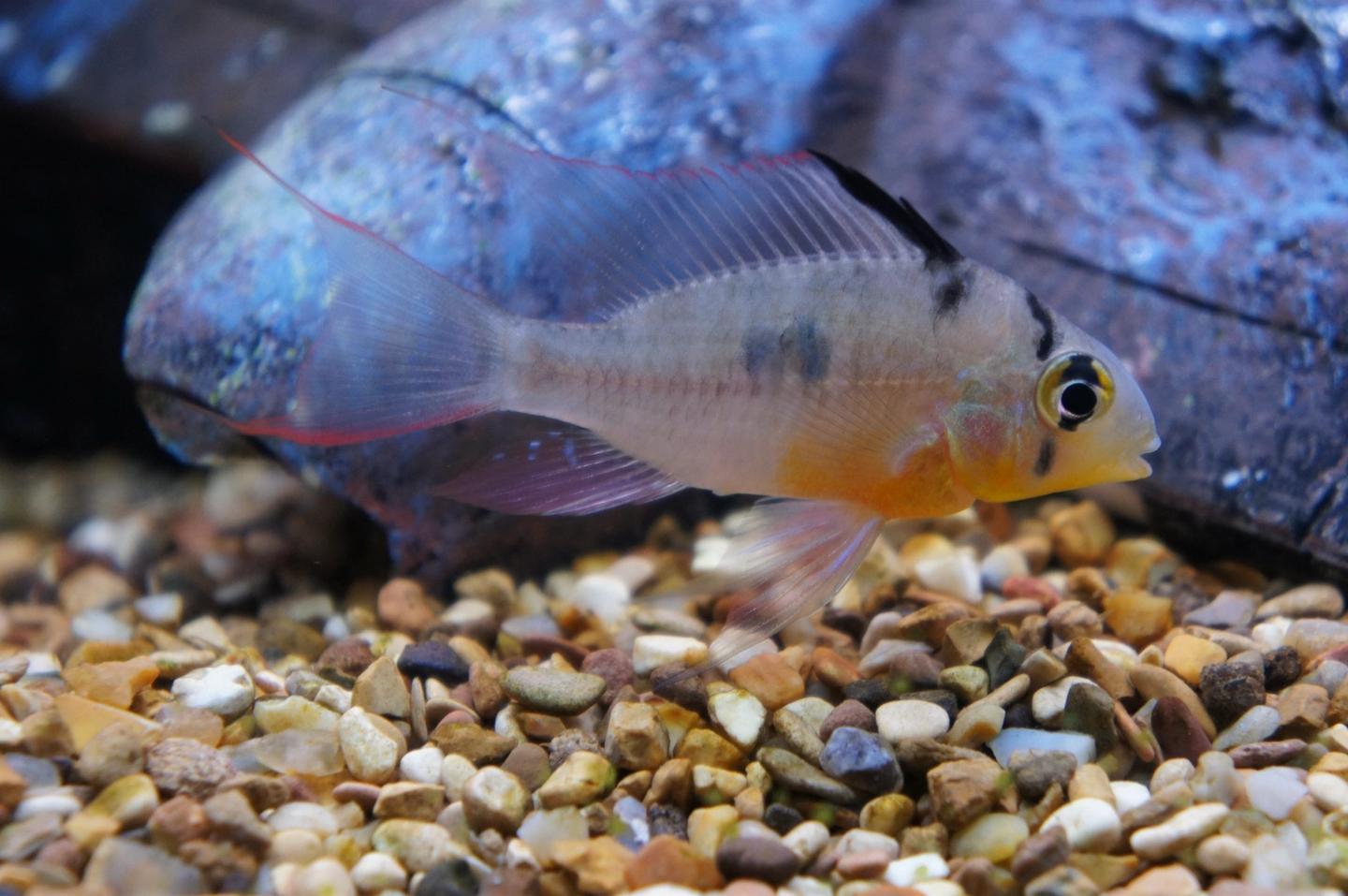
Cichlids are a family of roughly 1,800 accepted species, not one care type. Before buying, identify the exact species and source, then compare adult measurement, usable tank dimensions, social system, territory, tested water, diet and an exit plan. No family-wide minimum tank, water range or tank-mate list is safe.
Maintain these water conditions for optimal health and vibrant colors
Apistogramma Mendezi «Santa Isabel» is one of the most rewarding dwarf cichlids for sale UK hobbyists can choose when they want a fish with real personality, refined colour, and true South American character. Known in the trade as a Rio Negro dwarf cichlid, this species comes from soft, acidic blackwater in Brazil and grows to just about 7 cm, making it ideal for aquarists who want a striking centrepiece without needing a huge aquarium. It is not a beginner fish in the strictest sense, but experienced keepers often describe it as one of the most satisfying tropical dwarf fish UK options because it rewards good water quality with confident behaviour, rich colour, and fascinating breeding displays. With a lifespan of around 5 years, a semi-aggressive temperament, and a preference for low-stress surroundings, Apistogramma mendezi is a superb choice for a carefully planned dwarf cichlid planted tank setup, a soft-water dwarf cichlid nano tank setup, or a peaceful South American biotope. See our detailed photos showing the male’s dark body tones, subtle blue sheen, and the female’s intense brood-care colour change. If you are comparing apistogramma for sale UK options, this species stands out for its rarity, elegance, and the way it brings authentic blackwater behaviour into the home aquarium.
Apistogramma mendezi belongs to the South American dwarf cichlid group that has become a favourite among aquarists looking for colourful dwarf cichlids with complex behaviour. It sits alongside popular species such as Apistogramma Elizabethae, Apistogramma Agassizii, and Apistogramma Hongsloi, but its Santa Isabel origin gives it a distinct blackwater identity. In the hobby, it is admired by keepers who want a fish that looks delicate yet behaves like a true cichlid, especially in planted aquariums with leaf litter, driftwood, and subdued lighting.
Apistogramma mendezi originates from Brazil, specifically the Rio Negro region around Santa Isabel, one of the most iconic blackwater systems in the aquarium world. This is a habitat of tea-coloured water, submerged roots, fallen leaves, and very low mineral content, which is why dwarf cichlid water hardness and apistogramma mendezi «santa isabel» ph level matter so much in captivity. In the wild, these fish live close to the bottom among tangled wood, leaf litter, and shaded margins, where they hunt tiny invertebrates and microfauna. That natural setting explains why many keepers search for Apistogramma Mendezi «Santa Isabel» habitat and Apistogramma Mendezi «Santa Isabel» aquarium ideas before buying.
The Rio Negro is warm, soft, acidic, and often stained dark by tannins. For that reason, dwarf cichlid temperature requirements are usually best met at 24-28°C, with stable conditions and gentle filtration. This species is not suited to hard, alkaline tap water unless it is carefully adjusted using RO water and remineralisation. In a home aquarium, recreating the species’ natural environment with botanicals, dim lighting, and a dark substrate helps reduce stress and encourages the shy-to-confident transition that many owners notice after a week or two.
Wild South American cichlids UK fans often look for fish that behave naturally, and this one does exactly that when given cover and space. It spends much of its time near the bottom, darting between caves and root tangles, which is why it is often recommended for a dwarf cichlid planted tank setup rather than a bare display tank. Conservation data for this exact locality form is limited, but the species’ habitat is tied to fragile blackwater forests, so responsible sourcing matters. If you want rare dwarf cichlids UK with authentic behaviour, this is a standout choice.
Mimicking the natural Rio Negro habitat improves colour, reduces aggression, and encourages breeding. Use leaf litter, fine sand, driftwood, and subdued light to create the same calm, shaded environment these fish use in the wild.
The Apistogramma Mendezi «Santa Isabel» minimum tank size is 80 litres, but a larger footprint is always better because territorial cichlids need room to establish boundaries. For a pair, many aquarists prefer a 60 cm or 75 cm tank with lots of line-of-sight breaks. If you are searching for Apistogramma Mendezi «Santa Isabel» tank size or Apistogramma Mendezi «Santa Isabel» for small aquarium, remember that volume matters less than floor space. These fish are bottom-oriented, so a long tank beats a tall one.
A single male with two or three females is the classic harem style, matching the species’ group size of 1M:2-3F. This is why many keepers ask about dwarf cichlids tank requirements and what dwarf cichlids can be kept together. If the aquarium is too small, the male may harass females, especially during spawning. A well-planned setup also helps answer the common question of are dwarf cichlids aggressive: they can be territorial, but in the right tank they are manageable and rewarding.
For long-term health, keep Apistogramma Mendezi «Santa Isabel» water parameters within 24-28°C, pH 4.0-6.5, and 1-8 dGH. The most stable results usually come from soft water with low carbonate hardness. If you are researching Apistogramma Mendezi «Santa Isabel» water temperature or Apistogramma Mendezi «Santa Isabel» ideal water conditions, think stability first: sudden swings are more stressful than being slightly outside the perfect number. A pH around 5.0-6.0 is often ideal for colour and breeding behaviour.
Many UK aquarists use RO water blended with tap water to achieve the right balance, especially when keeping other freshwater cichlids UK species in the same fish room. A gentle blackwater tint from botanicals can also help buffer stress. This species is often discussed alongside dwarf cichlid water hardness, because hard water can shorten lifespan and weaken spawning success.
Choose a filter that provides excellent biological filtration without blasting the fish with current. A sponge filter, small external canister, or adjustable internal filter works well if the flow is softened. In the wild, these fish live in quiet margins, not fast rivers, so strong flow can make them hide constantly. That is why many keepers planning a dwarf cichlid nano tank setup or Apistogramma Mendezi «Santa Isabel» aquarium requirements focus on gentle circulation and high oxygenation rather than raw turnover.
For planted tanks, an adjustable filter is especially useful because floating debris, tannins, and fine substrate can affect flow. If you are building a Apistogramma Mendezi «Santa Isabel» for planted tank display, pair the filter with a heater and a reliable thermometer. See related equipment such as a sponge filter for dwarf cichlids, a adjustable aquarium heater, and a black sand aquarium substrate for a natural look.
The best dwarf cichlid substrate preference for this fish is fine sand or smooth, soft substrate that allows natural foraging. A dark base helps the colours pop, which is why many aquarists choose black sand or dark river sand when creating Apistogramma Mendezi «Santa Isabel» aquarium ideas. Add driftwood, caves, coconut shells, and leaf litter to create hiding places and spawning sites. The species does not usually uproot plants, so the answer to do dwarf cichlids eat plants is generally no, although they may dig around roots during breeding.
Plants such as Amazon swords, Cryptocoryne species, and Java fern work well because they tolerate low to moderate light and a soft-water environment. For a more authentic blackwater feel, add floating plants to soften the light and create shaded zones. This is one of the best setups for Apistogramma Mendezi «Santa Isabel» for small aquarium displays, because cover helps reduce stress and encourages natural behaviour.
Lighting should be moderate to low, with 6-8 hours daily to prevent algae and keep the fish comfortable. In bright tanks, use floating plants or tannin-rich water to create shade. This is especially important if you want the fish to show its best colour and feel secure enough to explore. A planted setup also helps the species look more natural, which is why many keepers search for Apistogramma Mendezi «Santa Isabel» care guide advice before they buy.
Always cycle the tank for 4-6 weeks before adding Apistogramma mendezi. Stable bacteria, mature hardscape, and settled water chemistry make a huge difference to stress levels and long-term health.
Apistogramma mendezi is an omnivore with a strong preference for small, protein-rich foods. In nature, it picks at tiny crustaceans, insect larvae, worms, and other micro-prey. In the aquarium, the best Apistogramma Mendezi «Santa Isabel» diet combines frozen foods, quality micro pellets, and occasional live foods. This species is not a fussy eater once settled, but it does best with variety. If you are reading an Apistogramma Mendezi «Santa Isabel» feeding guide, remember that small meals are better than large feedings.
Staple foods should include frozen bloodworm, brine shrimp, daphnia, and a high-quality micro pellet. These foods support growth, breeding condition, and colour. Supplemental foods can include grindal worms, blackworm, and finely chopped krill. For conditioning pairs, live or frozen foods are especially useful because they trigger courtship and improve spawning success. Many aquarists also ask whether are apistogramma community fish or is apistogramma a community fish; the answer is yes, but only with compatible tank mates and a diet that keeps them confident rather than competing at the surface.
Feed once or twice daily in very small portions. A good rule is what the fish can finish in 30-60 seconds. Overfeeding quickly harms water quality, especially in soft-water tanks where filtration may be gentler. If you are comparing buy Apistogramma Mendezi «Santa Isabel» UK options, choose healthy fish with full bellies and clear eyes so they adapt quickly to prepared foods.
| Time | Food | Amount |
|---|---|---|
| Morning | Micro pellets or crushed cichlid granules | Small pinch |
| Evening | Frozen bloodworm, brine shrimp, or daphnia | 1-2 tiny portions |
Foods to avoid include large floating flakes, oily feeder fish, and anything that clouds the water heavily. If you keep shrimp or snails, avoid medicated foods unless necessary. For colour and breeding, many keepers use a rotation of frozen and live foods from our dwarf cichlid food range, including micro pellets for cichlids and frozen bloodworm cubes.
Overfeeding causes ammonia spikes, dirty substrate, and stress-related disease. In a small blackwater aquarium, excess food breaks down fast and can undo the benefits of careful water preparation.
This species reaches about 7 cm, with males becoming more impressive than females as they mature. The body is laterally compressed, the fins are extended, and the overall shape is classic dwarf cichlid elegance. In strong condition, males may show dark body tones with blue iridescence, subtle red edging, and a striking contrast against a dark substrate. That is why searches for apistogramma for sale uk black, apistogramma for sale uk green, and apistogramma for sale uk red often lead hobbyists toward this species or its close relatives.
Females are smaller, rounder, and usually more yellow-gold when breeding. Sexual dimorphism is clear once the fish mature, which helps when selecting an apistogramma for sale uk male or an apistogramma pair for sale uk. The male’s dorsal and caudal fins are more elaborate, while the female becomes brighter and more assertive when guarding eggs or fry. This is one reason the species is considered among the most colourful dwarf cichlids when it is kept correctly.
Our photos show the intense chocolate-brown and blue sheen that develops under soft lighting and tannin-stained water. The species is often described as one of the best dwarf cichlids comparison choices for aquarists who want a fish that looks understated at first but becomes spectacular in the right environment. A dark background, black sand, and live plants all help the colours stand out, especially in a planted display.
Although Apistogramma mendezi is not a true schooling fish, it can work well in a thoughtful community setup. The key is to choose peaceful dwarf cichlids for community tank conditions and avoid fast, boisterous fish that outcompete it for food. Many aquarists ask, are dwarf cichlids aggressive? Some are territorial, especially males, but this species is usually manageable when the tank is spacious and well structured. If you are wondering can you mix dwarf cichlids, the answer is yes, but only with care, territory planning, and enough cover.
Ideal tank mates include small tetras, Corydoras, and Otocinclus. These species occupy different areas of the aquarium and do not constantly challenge the Apistogramma’s bottom territory. The fish also fits well into a dwarf cichlids for community tank or dwarf cichlids tank mates setup if the aquarium is at least 80 litres and heavily planted. Many keepers specifically search for Apistogramma Mendezi «Santa Isabel» with tetras because small characins add movement without causing stress.
| Species | Compatible? | Notes |
|---|---|---|
| Small tetras | ✅ Yes | Best in groups; peaceful and occupy midwater |
| Corydoras | ✅ Yes | Bottom-safe if the tank is spacious and sandy |
| Otocinclus | ✅ Yes | Excellent algae grazers; calm and unobtrusive |
| German blue ram | ⚠️ Caution | Similar water needs but can compete for territory |
| Kribensis | ⚠️ Caution | Can become more assertive, especially when breeding |
| Large cichlids | ❌ Avoid | Too aggressive and likely to dominate the tank |
For stocking examples, a 90-litre aquarium might hold one male, two females, a school of 10 ember tetras, and 6 Corydoras pygmaeus. In a 120-litre tank, you can add more plants and slightly increase the shoal size. This species is a strong option for aquarists searching apistogramma mendezi «santa isabel» tank mates, dwarf cichlids UK, and South American cichlids UK that suit a calm, planted display.
Quarantine new fish for 2-4 weeks before adding them to the main tank. This reduces parasite risk and gives you time to confirm feeding, breathing, and colour stability.
Invertebrates are a mixed choice. Adult shrimp may be ignored in a heavily planted tank, but fry-sized shrimp can become snacks. Snails are usually fine. If you are asking what dwarf cichlids can be kept together, use size, temperament, and territory planning as your guide rather than species names alone.
Breeding difficulty is moderate, which makes this species attractive to keepers who already understand soft-water cichlid care. Many buyers search for dwarf cichlid pairs for sale, apistogramma pair for sale uk, or apistogramma for sale uk breeder because a proven pair can save time and improve success. A breeding tank of 40-60 litres is usually enough for a pair, provided the water is soft, acidic, and very clean.
Condition the pair with live and frozen foods for 1-2 weeks. A slight temperature rise to 27-28°C, combined with frequent small water changes using soft water, often triggers spawning. The female chooses a cave or sheltered area, while the male patrols the perimeter. This is classic Apistogramma Mendezi «Santa Isabel» spawning behaviour: the female becomes intensely yellow and guards the eggs, while the male defends the wider territory.
Eggs usually hatch in a few days, and fry become free-swimming shortly after. Feed infusoria, newly hatched brine shrimp, or powdered fry foods at first. As they grow, move to microworms and fine baby brine shrimp. Keep the tank calm and avoid sudden maintenance. Many keepers who search apistogramma mendezi «santa isabel» breeding or apistogramma mendezi «santa isabel» behaviour are surprised by how attentive the female becomes once spawning starts.
Use multiple caves, leaf litter, and visual barriers so the female can choose a secure spawning site. In a soft-water breeding tank, this often improves egg survival and reduces male harassment after spawning.
Common breeding issues include infertile eggs, poor fry survival, and aggression from tank mates. These are usually caused by unsuitable pH, hard water, or insufficient cover. If you are looking at apistogramma for sale uk 10 gallon or apistogramma for sale uk 15 gallon searches, remember that breeding is easier in a dedicated tank with stable conditions rather than a crowded community setup.
Comparing species helps you choose the right fish for your water, tank size, and experience level. If you want a rare blackwater Apistogramma with strong character, Apistogramma mendezi is a better match than many easier species, but it does ask for more precision. For aquarists comparing Apistogramma Mendezi «Santa Isabel» vs German blue ram or Apistogramma Mendezi «Santa Isabel» vs Apistogramma cacatuoides, the main difference is water preference and temperament. This species wants softer, more acidic conditions than rams or cockatoos typically need.
| Feature | Apistogramma mendezi | Apistogramma cacatuoides |
|---|---|---|
| Max Size | 7 cm | 8-9 cm |
| Care Level | Difficult | Moderate |
| Temperature | 24-28°C | 23-28°C |
| Price | £59.99 | Varies |
| Best For | Soft-water blackwater tanks | More forgiving community setups |
Against Apistogramma Mendezi «Santa Isabel» vs kribensis, the Mendezi is more specialised and smaller, while kribensis is generally easier in harder water. If you want one of the easiest Apistogramma species, consider Apistogramma borellii or Apistogramma cacatuoides. If you want a more delicate, authentic Rio Negro fish, this is the better choice. It is one of the most interesting best dwarf cichlids comparison options for hobbyists who already enjoy soft-water fishkeeping.
Healthy fish are active, alert, and show clear eyes, intact fins, and full colour. A good specimen will explore the tank, feed eagerly, and retreat to cover only when needed. When people ask are dwarf cichlids hardy or are dwarf cichlids for sale uk legit, the real answer is that healthy stock from a reliable source can be hardy if the water is correct. But this species is sensitive to poor conditions, so prevention matters more than treatment.
Common issues include stress, fin erosion, internal parasites, and bacterial infections caused by unstable water quality. Symptoms may include clamped fins, faded colour, erratic swimming, or refusal to eat. If you notice these signs, test water immediately and perform a partial water change with matched temperature and chemistry. For quarantine, use a separate tank with gentle filtration, daily observation, and simple décor. This is particularly important for anyone searching apistogramma for sale uk healthcare or can dwarf cichlids for sale uk online because shipment stress can reveal hidden problems.
NEVER use copper-based medications with invertebrates nearby - lethal to shrimp and risky for sensitive soft-water fish. Always read labels carefully and quarantine before treatment whenever possible.
Prevent problems by keeping water soft, clean, and stable. Avoid overcrowding, and do not mix this fish with aggressive species. A calm tank, regular maintenance, and a varied diet are the best health insurance for Apistogramma Mendezi «Santa Isabel» health.
This species is active, curious, and territorial in a subtle way. It is not a constant swimmer like tetras, but it does patrol the lower half of the tank and investigate caves, leaf litter, and plant roots. During the day, it may hover in place, flash colour, or chase intruders from its chosen area. That makes it perfect for aquarists who enjoy watching apistogramma mendezi «santa isabel» behaviour rather than just admiring a fish from afar.
In a well-structured tank, the fish becomes bolder over time. Males display to females and rivals, while females become highly focused when guarding territory or fry. If you want the best display, keep them in a small harem and provide multiple hiding spots. This is one of the reasons the species is often recommended for aquarists asking about are apistogramma community fish and peaceful dwarf cichlids for community tank setups.
To encourage natural behaviour, use dim lighting, soft water, and a mature aquascape. The fish will show better colour and less stress when it feels secure. Many owners say that once their tank is established, the fish becomes one of the most engaging colourful dwarf cichlids in the room.
Our live Apistogramma Mendezi «Santa Isabel» for sale UK stock is selected for health, colour, and stable feeding response. We prioritise fish that are already adapted to prepared foods and soft-water conditions, which helps reduce stress after arrival. If you are looking to order Apistogramma Mendezi «Santa Isabel» online UK, we prepare each fish for travel using careful packing, oxygenation, and temperature control. That matters especially for delicate South American cichlids for sale UK that need a calm transition into a new aquarium.
Every fish is quarantined before dispatch, and we recommend a slow drip acclimation into your aquarium. Orders are sent with tracked delivery and insulated packaging, with heat packs used in colder months. If you have questions about Apistogramma Mendezi «Santa Isabel» delivery UK, Apistogramma Mendezi «Santa Isabel» price UK, or whether are dwarf cichlids for sale uk online safe to buy, our team can help you plan the right setup before purchase. We also include care guidance for keepers comparing apistogramma for sale uk retail, apistogramma buy uk, and apistogramma for sale near me searches.
Order your Apistogramma mendezi today with confidence if you are building a soft-water blackwater display, a breeding pair tank, or a carefully stocked community aquarium. This fish is a strong fit for aquarists searching dwarf cichlids for sale UK, buy dwarf cichlid UK, buy dwarf cichlids online UK, and live dwarf cichlid delivery UK.
No reviews for this item yet. Bought one? Honest reviews only, good or bad.
What customers say about ordering from us
I have a small group of long finned mountain minnows. So was delighted to be able to order ten of this variety to increase the genetics in my tank . The ones I recieved are healthy but it’s to early to give a verdict on wether they are of a long finned type since they are small currently.
Gordon Walker · 23 Sept 2026
100% success travel and "installation". Pleased with quality of purchase. The Siamese fighter a bit "shy" so have not yet seen him at his best yet but looking good. Happy customer. GG
George E Garratt · 21 Sept 2026
Reviews of our shop, collected by Judge.me, an independent third-party review collector. Newest first.