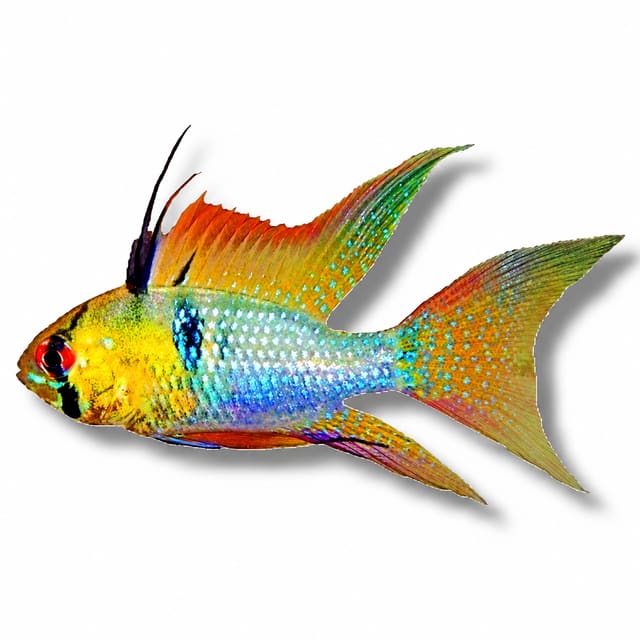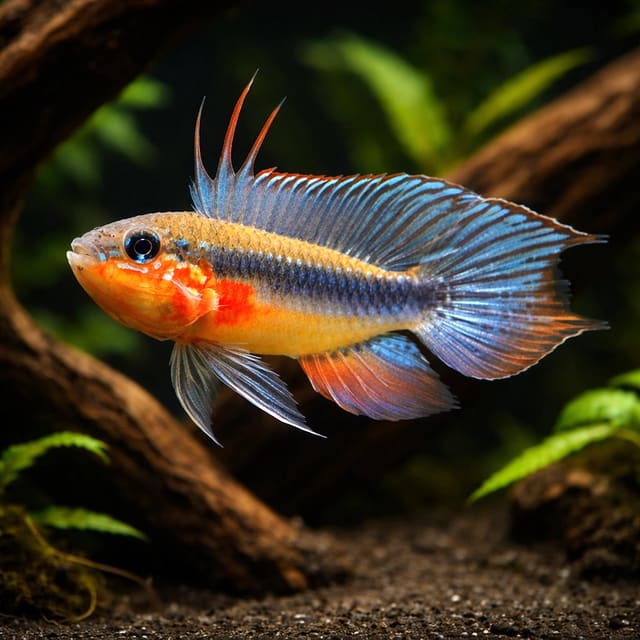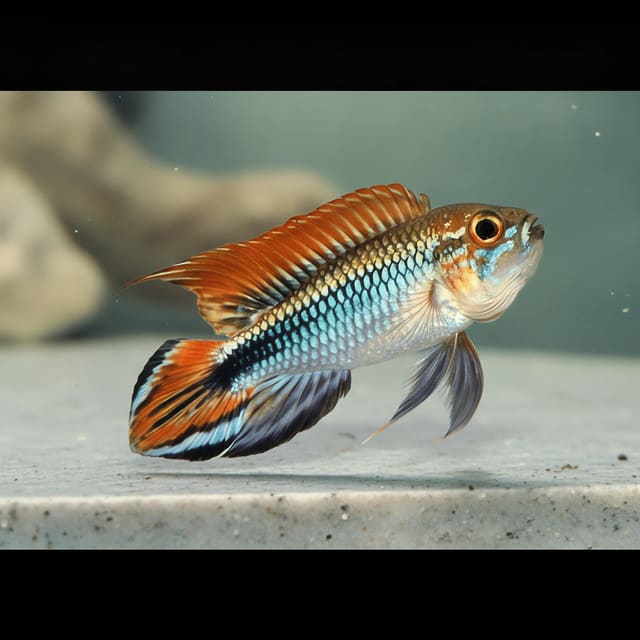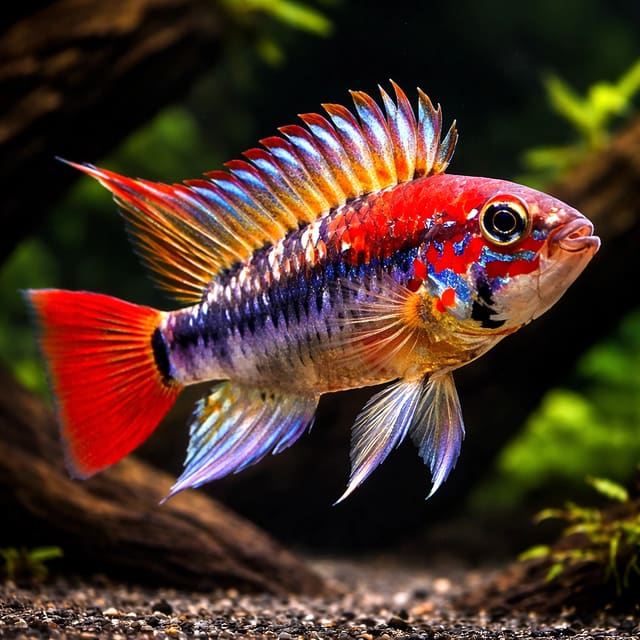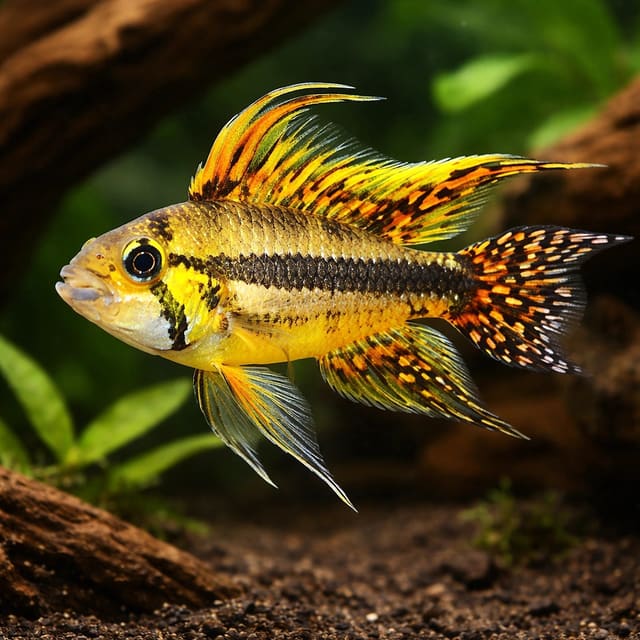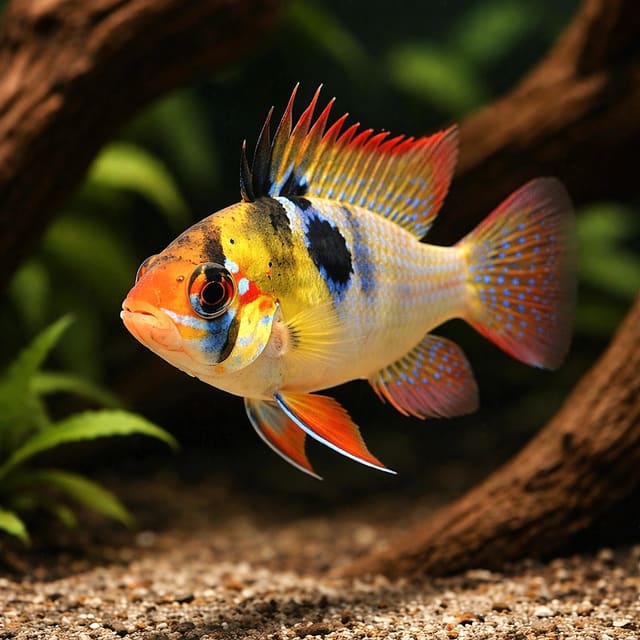
Asia Form Ram Cichlid (Mikrogeophagus ramirezi)
27–30°C · pH 4–7 · 54L
£5.99
Trifasciata Dwarf Cichlid is a small South American cichlid for mature, well-structured aquariums, offered in two size choices with clear guidance on water, cover, feeding and territorial behaviour.
Apistogramma trifasciatum
Save when buying multiple fish. Each quantity is one fish; sex and pair formation are not guaranteed unless the selected variant explicitly states them.
Trifasciata Dwarf Cichlid is a small South American cichlid for mature, well-structured aquariums, offered in two size choices with clear guidance on water, cover, feeding and territorial behaviour.

Cichlids are a family of roughly 1,800 accepted species, not one care type. Before buying, identify the exact species and source, then compare adult measurement, usable tank dimensions, social system, territory, tested water, diet and an exit plan. No family-wide minimum tank, water range or tank-mate list is safe.
Maintain these water conditions for optimal health and vibrant colors
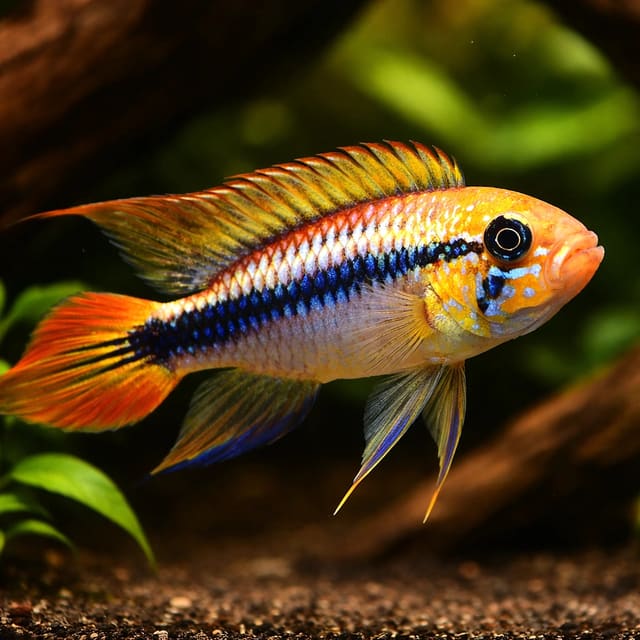
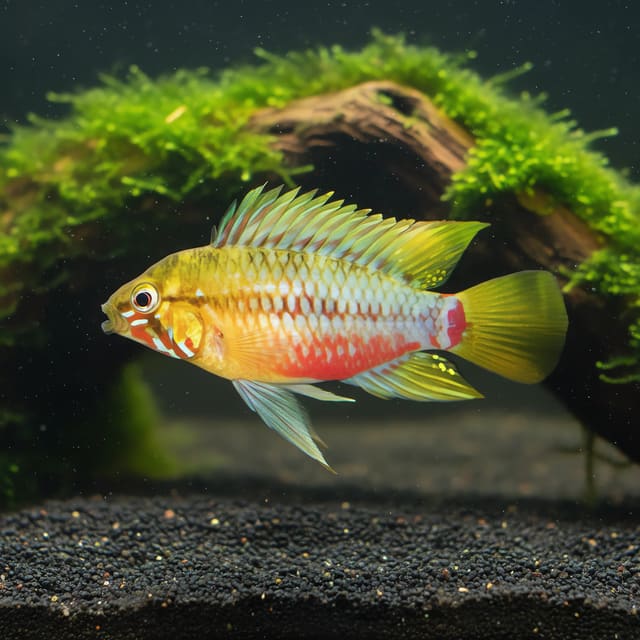
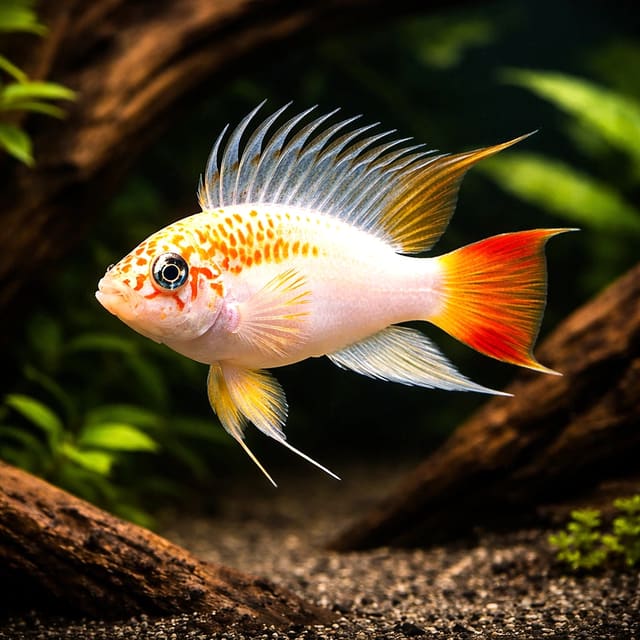
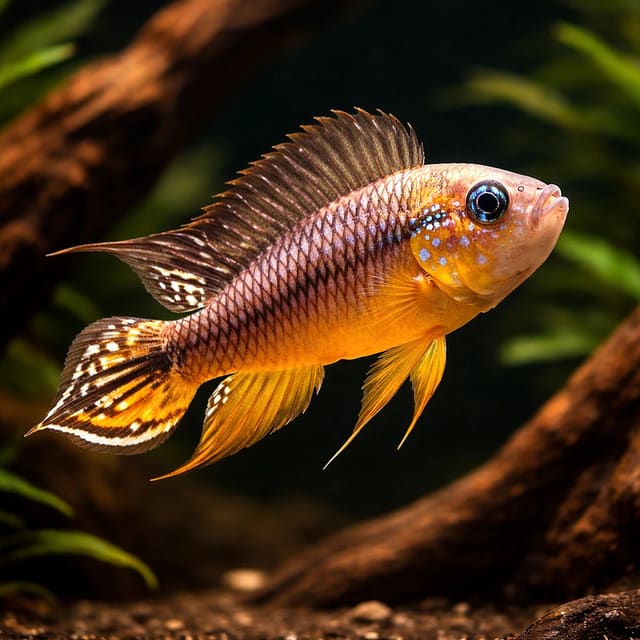
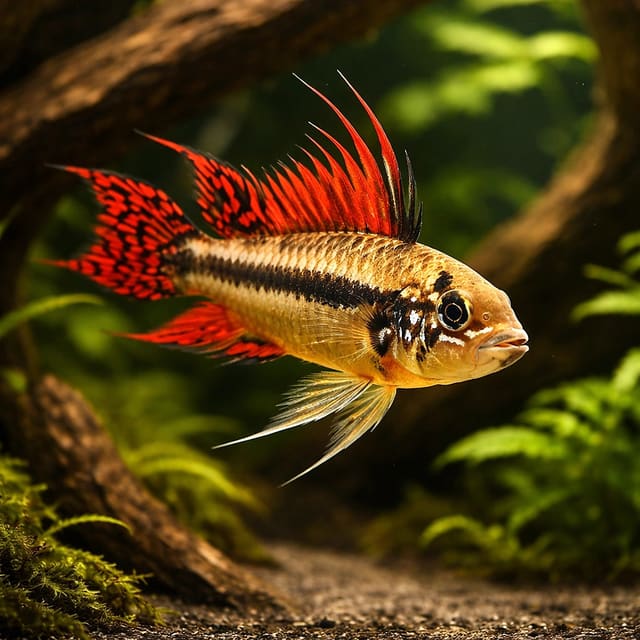
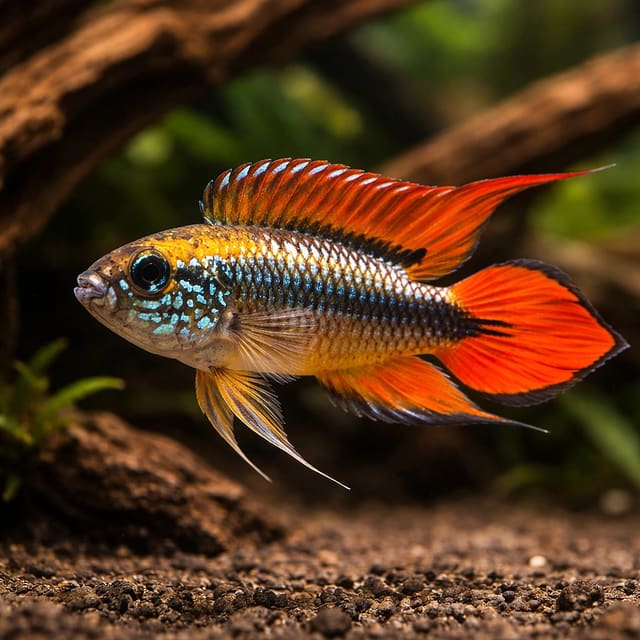
The Trifasciata Dwarf Cichlid (Apistogramma trifasciatum) is a small South American cichlid with a great deal of character packed into a modest body. It spends much of its time around the lower levels, inspecting shelter, wood, leaves and the boundaries of its chosen space. Its appeal is not simply colour: the fish rewards a keeper who enjoys watching subtle social behaviour, deliberate feeding and the way a thoughtfully arranged aquarium changes how a dwarf cichlid uses its surroundings.
One purchase supplies one live fish in the size chosen. This listing has two genuine size choices: 2.5–3 cm and XL. The XL label is a supplier grade rather than a stated centimetre measurement, so it should not be converted into a guessed number. The size you select is the size supplied, not the adult size. Neither choice guarantees male or female. Sex is guaranteed only when the selected option explicitly states male or female. This Trifasciata Dwarf Cichlid listing has no sex-guaranteed option.
That distinction matters if your plan depends on a pair. The species profile records adult males at about 5.5 cm standard length and adult females at about 4 cm standard length. Standard length, or SL, measures the fish without the tail fin. Those figures describe sex-specific adult records, not the dispatch size and not a promise that an unsexed juvenile will become a particular sex. Buy for the adult fish and the aquarium it will need, then treat any later pair or group structure as something to assess from the animals you actually have.
The ordering identity is Apistogramma trifasciatum, so that name is retained in the product title. Taxonomic references also matter: the World Register of Marine Species treats Apistogramma trifasciata as the accepted name and lists A. trifasciatum as an incorrect subsequent spelling. You may encounter both names when reading about the fish. They are bridged here so the animal remains recognisable from the ordering name while the accepted name is clear for further research.
This is a better choice for a keeper prepared to provide a mature, stable aquarium than for someone looking for a fish to add immediately to a new setup. A soft sandy floor, several caves or crevices, wood, leaf litter and shaded retreats let the fish move out of sight and reduce constant face-to-face pressure. The species-level aquarium profile gives 20–25 °C, pH 5.0–7.0 and 1–10 dGH. Stability and water quality are as important as landing on a particular number within those ranges.
A pair can be planned around a base of 45 × 30 cm, approximately 41 litres, according to the species profile; a group needs more room. For a community, more footprint, more cover and greater separation between territories are sensible because breeding behaviour can change the mood around caves. Captive-raised fish are the more suitable community choice. Wild-origin fish are better kept alone or with small, calm dither fish such as pencilfish, and the profile advises against mixing them with other Apistogramma.
The diet is chiefly carnivorous. Offer suitably small live and frozen invertebrate foods regularly and use an appropriate pellet as the dried-food staple once the fish accepts it. This feeding style, combined with a stable mature tank and gentle surroundings, makes the species particularly engaging for a keeper who likes close observation rather than a busy, high-energy display.
For more fish with a similar regional focus, you can browse the South American cichlid collection. Compare adult needs, water and social behaviour rather than assuming every dwarf cichlid can share one aquarium.
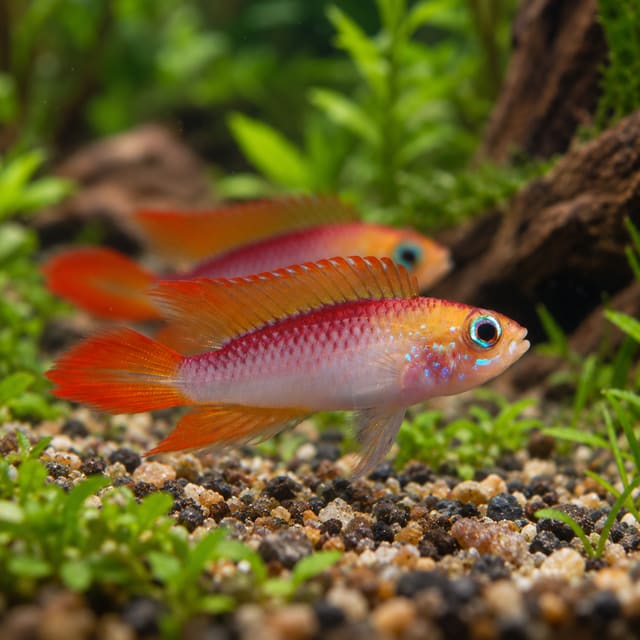
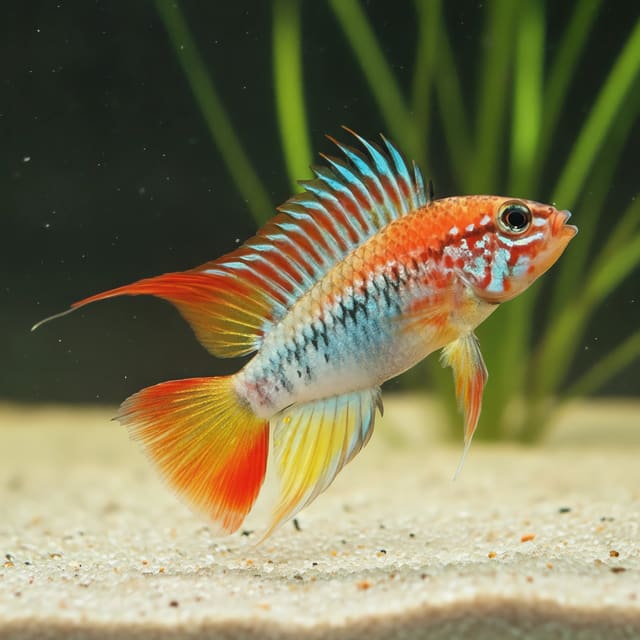
Gallery images have been digitally enhanced to improve image quality. Natural colour, pattern, size and maturity can vary between live animals.
The dispatch grade tells you what arrives; it does not tell you how much lifelong space to provide. Adult records in the species profile are sex-specific: males reach about 55 mm SL and females about 40 mm SL. SL means standard length and excludes the tail fin. Keeping that measurement convention visible avoids the common mistake of treating a dispatch length, a standard-length record and an overall length as interchangeable.
The same profile considers a 45 × 30 cm base, about 41 litres, acceptable for a single pair and states that a group requires larger quarters. Footprint is important because a dwarf cichlid claims and patrols space near the bottom. A taller aquarium with the same small base does not create extra cave territories. If you intend a community, or if more than one male may be present, increase the footprint and use hardscape to divide the lower level into separate visual zones.
Do not build the stocking plan around receiving a sexed pair. The listing does not guarantee sex, and juveniles may not show dependable adult differences. Mature males are described as larger, more colourful and more extended in the fins than females, but that biological description is not a promise about the fish supplied. Give each animal somewhere to retreat while you observe how the actual group develops.
| Care point | Species-level aquarium guidance |
|---|---|
| Temperature | 20–25 °C |
| pH | 5.0–7.0 |
| General hardness | 1–10 dGH |
| Adult records | Male 5.5 cm SL; female 4 cm SL |
| Pair planning | 45 × 30 cm base, about 41 litres; groups need more room |
| Feeding character | Chiefly carnivorous, centred on small invertebrate foods |
These numbers come from a species-level aquarium profile. Choose a stable point within the range rather than chasing small daily adjustments. Check your tap water and established aquarium before purchase, then decide whether normal water changes will keep the tank in range or whether a carefully controlled preparation method is needed. Our aquarium water-parameter guide explains pH, hardness, ammonia, nitrite and nitrate, while the water matcher helps compare your measured values with the care range.
Avoid abrupt changes. A fish arriving from different water needs time to adjust, and a mature biological filter needs a consistent workload. Temperature, pH and hardness should be treated as a connected picture: a reading can sit inside a stated range while the aquarium is still unsuitable because ammonia or nitrite is present, the temperature swings, or maintenance is inconsistent.
A working biological filter converts toxic ammonia first to nitrite and then to less harmful nitrate. That process must be established before livestock is added. A tank can look clear while still being biologically immature, so use test results rather than appearance as the proof. If this is your first setup, follow the step-by-step tropical aquarium guide before ordering the fish.
Test ammonia and nitrite and require both to read zero before introduction. Add livestock gradually so the bacterial population can adjust to additional waste. Overstocking or adding too many fish at once can overwhelm the filter and create new tank syndrome. A dwarf cichlid should not be used to test whether a new aquarium is ready.
OATA's dwarf-cichlid care sheet gives broad group guidance of 22–27 °C, pH 6.0–8.0, 4–12 dGH and 3–10 dKH. Those figures describe dwarf cichlids as a broad aquarium group; for this species, use the narrower species profile above as the operating recommendation. The group sheet is still useful for general husbandry: zero ammonia, zero nitrite and nitrate no more than 20 mg/l above the normal tap-water level.
Start with a soft sandy substrate. Add wood roots and branches so they create shade and line-of-sight breaks, not a single open stage on which every fish can see every other fish. Ceramic flowerpots, smooth caves and short lengths of suitable pipe can all provide practical shelter. The important feature is not the material but the number, placement and separation of entrances.
Include several retreats rather than one prized cave. A single shelter can become the centre of all disputes; multiple choices allow a chased fish to leave without crossing the same territory again. Angle wood and plants so there are routes around, behind and beneath the structure. Keep enough open area for feeding and observation, but do not strip the aquarium of the cover that gives a shy fish confidence.
Dried leaf litter provides extra cover and spawning sites. As it decomposes it supports microbial growth that may become a secondary food source for fry. Leaves and alder cones also release tannins and other compounds associated with a more natural-looking softwater arrangement. Replace or top up natural materials gradually rather than transforming the aquarium in one day.
Dimmer lighting suits the design described for this species. Plants able to grow in subdued conditions can be attached to wood or used around the edges, while floating plants can break up bright overhead light. Choose plants for the real light and water conditions rather than using them only as decoration. The fish needs clear routes between cover as much as it needs greenery.
Use reliable filtration but avoid turning the lower aquarium into a constant high-speed current. The species profile's worked example for an aquarium of about 41 litres uses roughly four to five turnovers per hour, around 165–205 litres per hour. Treat that as an example for that tank size, not a universal filter label: actual flow at the fish depends on media, pipework and how the outlet is directed.
Spread the return across the surface or against hardscape so oxygen exchange remains good without blasting a cave entrance. Check that debris is collected rather than settling in dead spots behind wood. Filter capacity does not replace water changes, and a powerful pump cannot compensate for overstocking.
Never rinse biological media under the tap. Chlorine or chloramine can damage the bacteria the filter depends upon. When media needs cleaning, rinse it lightly in water removed from the aquarium during maintenance. Do not replace all biological media at the same time.
OATA strongly recommends a weekly partial water change of about 25% for dwarf cichlids as a group. Use a siphon to remove settled waste while leaving the aquarium's structure intact. Treat replacement tap water with a suitable conditioner and bring it reasonably close to the tank temperature before adding it slowly.
Test water at least weekly and record unusual results. A log makes gradual drift easier to notice than memory alone. If nitrate climbs more quickly than usual, look for overfeeding, decaying food, reduced plant growth, a blocked filter or an increase in stock rather than simply changing more water and ignoring the cause.
Inspect the filter for reduced flow and clean only what needs cleaning. Leave part of the established biological media undisturbed. Wipe viewing panes and remove decomposing material as necessary, but do not make the entire aquarium clinically bare; stable natural cover is useful to this fish.
Apistogramma species are chiefly carnivorous and feed largely on bottom-associated invertebrates in nature. In the aquarium, regularly offer suitably sized Artemia, Daphnia, Moina and chironomid larvae such as bloodworm. Most individuals can learn to accept dried alternatives, with small pellets generally preferred to flake in the species profile.
Match every mouthful to the fish's current size. A 2.5–3 cm fish needs small, manageable pieces; an XL-graded fish may take larger items, but XL is still a dispatch grade rather than a licence to overfeed. Present food where the fish can find it without having to compete with frantic surface feeders. Watch each animal eat instead of assuming that food reaching the bottom is being consumed.
Use a varied rotation rather than relying on one rich food. Live and frozen items encourage natural picking and hunting, while a good pellet provides a consistent staple once accepted. Feed only an amount the fish can finish in a short period. Uneaten food breaks down, adds waste and works directly against the stable water quality dwarf cichlids need.
Do not use richer feeding as a substitute for suitable conditions. Food can support body condition and courtship, but breeding behaviour also increases territorial pressure. If aggression rises, review space, cover and social structure before simply adding more food.
This is a cavity-spawning cichlid. Sexually mature males establish territories and react aggressively to other males, while several females may be tolerated when the aquarium is large and structured enough. The female normally tends eggs and fry near the spawning cavity as the male protects a wider territory. Depending on temperature, eggs are reported to hatch after 36–72 hours, with fry becoming free-swimming after a further few days. These observations explain why extra caves, sight breaks and a separation plan matter; they are not a promise that unsexed fish from this listing will form a pair or breed.
Have the aquarium ready before the parcel arrives: lights dimmed, temperature steady and water tested. Someone must be present to receive live fish. Open and inspect the parcel on the same day, following the current delivery instructions, and acclimatise the fish slowly before release.
Float the sealed bag for 20–30 minutes to equalise temperature. Keep the room calm and avoid placing the bag under intense light. Do not pour transport water into the aquarium. After release, allow the fish to find cover and keep disturbance low. Offer food only when the fish is settled enough to respond.
Look for clear eyes, intact scales and fins, steady breathing and controlled swimming. A newly introduced fish may hide, but continued loss of balance, persistent surface hanging, unusually rapid gill movement, white spots, fluffy growths, ulcers or declining body condition needs attention.
Behaviour and colour are useful early signals. Becoming much darker or paler than usual, hiding more, breathing differently or losing interest in food can indicate stress. Test the water first because ammonia, nitrite, temperature or a sudden chemistry change can affect several fish at once. If you remain concerned, contact Tropical Fish Co or an aquatic veterinary professional with the water results and clear observations before using any treatment.
Trifasciata Dwarf Cichlids are not best described as simply peaceful or aggressive. Away from a spawning site they can coexist with carefully chosen fish; around a cave, a breeding female or a male's territory, the same aquarium can become much more tense. Compatibility therefore depends on origin, floor space, structure, feeding competition and the stage of the fish's social behaviour.
Captive-raised animals are the preferred choice for a community aquarium in the species profile. For wild-origin fish, the same source recommends keeping them alone or with small dither fish such as Nannostomus pencilfish and ideally not mixing them with other Apistogramma. Unless origin is explicitly confirmed for the fish in front of you, plan conservatively and watch how it responds.
Look for calm fish that use the middle or upper water and do not rush every meal before the dwarf cichlid can feed. Small dither fish can help a shy cichlid feel that the open water is safe, but their adult size, water requirements and group needs must also fit the aquarium. A companion is suitable only when all species have enough space and overlapping care, not because it appears on a generic list.
Give bottom-oriented fish special scrutiny. Several peaceful species can still conflict when they all depend on the same caves, shaded corners or feeding zones. If another fish repeatedly enters a spawning cave or consumes every sinking food item, the pairing is poor even without obvious fighting.
The species profile describes a pair in a 45 × 30 cm base and says a group needs larger quarters. It also notes that sexually mature males establish territories and react aggressively to other males, while several females may be tolerated. That is a description of species behaviour, not a reason to assume that two unsexed juveniles will become a compatible pair or that a selected mix will be supplied.
If more than one fish is kept, provide additional footprint and at least one more secure retreat than the apparent number of territories. Watch whether one fish is excluded from food or confined to a corner. A fish that is constantly chased cannot use the nominal volume of the aquarium; it effectively has no safe space.
During breeding, a female usually guards eggs and fry in or near a cavity while the male protects a larger area. Even well-settled pairs will often chase each other, and tank mates approaching the cave are likely to be driven away; fish likely to eat fry can keep the adults in a constant defensive state. A quiet species-focused setup is the clearer choice if breeding is the goal.
Add fish only after confirming that the aquarium can support the final adult community. Check ammonia and nitrite are zero, make sure the filter is mature and compare every species' water needs. Rearrange a small amount of décor before an introduction only when doing so creates fairer sight breaks; do not dismantle all established shelter and remove every familiar refuge.
Observe from a distance after release. Short displays and boundary checks can occur, but repeated biting, relentless pursuit, a fish pinned at the surface or refusal to feed are signs that the plan is not working. Be ready with a cycled alternative aquarium or secure divider rather than waiting for damage.
Choose quiet companions that are too large to be treated as food, too gentle to dominate meals and unlikely to occupy the same caves. Give every species suitable group numbers and adult space. When in doubt, a well-structured species-focused aquarium is safer than a crowded community assembled from a list.
The species profile records males to about 5.5 cm standard length and females to about 4 cm standard length. Standard length excludes the tail fin. These are adult sex-specific records, while the size chosen on this listing is the dispatch size.
A 45 × 30 cm base, about 41 litres, is described as acceptable for a single pair; a group needs larger quarters. Increase the footprint for a community, several territories or more than one male, and provide multiple caves and sight breaks.
The species profile supports a pair in the stated base size and says groups need more space. This listing does not guarantee sex, so do not assume two selected fish will form a compatible pair; assess the fish and have a separation plan.
It is best for an intermediate keeper who can provide a mature, stable aquarium, soft water, small foods and carefully managed territories. A prepared beginner can succeed, but this should not be the first animal used to test a newly cycled tank.
It is chiefly carnivorous. Offer small live and frozen foods such as Artemia, Daphnia, Moina and bloodworm regularly; most fish can also learn to take appropriately sized pellets, which are generally preferable to flake.
Use the species-level aquarium range of 20–25 °C, pH 5.0–7.0 and 1–10 dGH. Keep conditions stable, with zero ammonia and nitrite, rather than making frequent adjustments to chase a particular point.
It is usually manageable with calm companions but becomes territorial around breeding sites. Avoid aggressive, very competitive or fin-nipping fish, provide several retreats and watch for persistent chasing rather than relying on a general temperament label.
Captive-raised fish may suit a carefully planned community with calm mid- or upper-water companions. Wild-origin fish are better alone or with small dither fish such as Nannostomus pencilfish, and the species profile advises against mixing them with other Apistogramma.
Tropical Fish Co hand-bags live fish in pure oxygen, uses an insulated box and sends them with a licensed live-animal courier. Someone must receive the parcel. For a Live Arrival Guarantee claim, contact the team the same day with the order number and a continuous unboxing video starting with the sealed parcel and showing the fish still in the bag.
The accepted-name bridge is based on the World Register of Marine Species record. Species-level aquarium planning, sex-specific standard lengths, water, footprint, feeding and social behaviour are drawn from the Seriously Fish profile for Apistogramma trifasciata.
General maintenance and welfare are supported by OATA's dwarf-cichlid care sheet and the RSPCA's aquarium environment guidance. OATA's figures cover dwarf cichlids as a group, while the species profile supplies the operating range used on this page.
Read the current Tropical Fish Co delivery and Live Arrival Guarantee policy before dispatch. It explains attendance, packing, acclimation and the evidence needed if a claim is necessary.
No reviews for this item yet. Bought one? Honest reviews only, good or bad.
What customers say about ordering from us
Easy website plenty of info on fish your buying great to pick a time slot
TRACEY DURRANT · 7 Oct 2026
Got some lovely fish thank you
Kevin Mackie · 7 Oct 2026
Reviews of our shop, collected by Judge.me, an independent third-party review collector. Newest first.