TropicalFish Co

South American Cichlids · Buying Guide

Apistogramma UK: How to Choose Your Dwarf Cichlid

Compare apistogramma dwarf cichlids - cacatuoides, agassizii, borellii and more - by colour, difficulty and water needs. See every form we stock in the UK.

Priya RameshBy Priya RameshUpdated 30 May 202612 min read
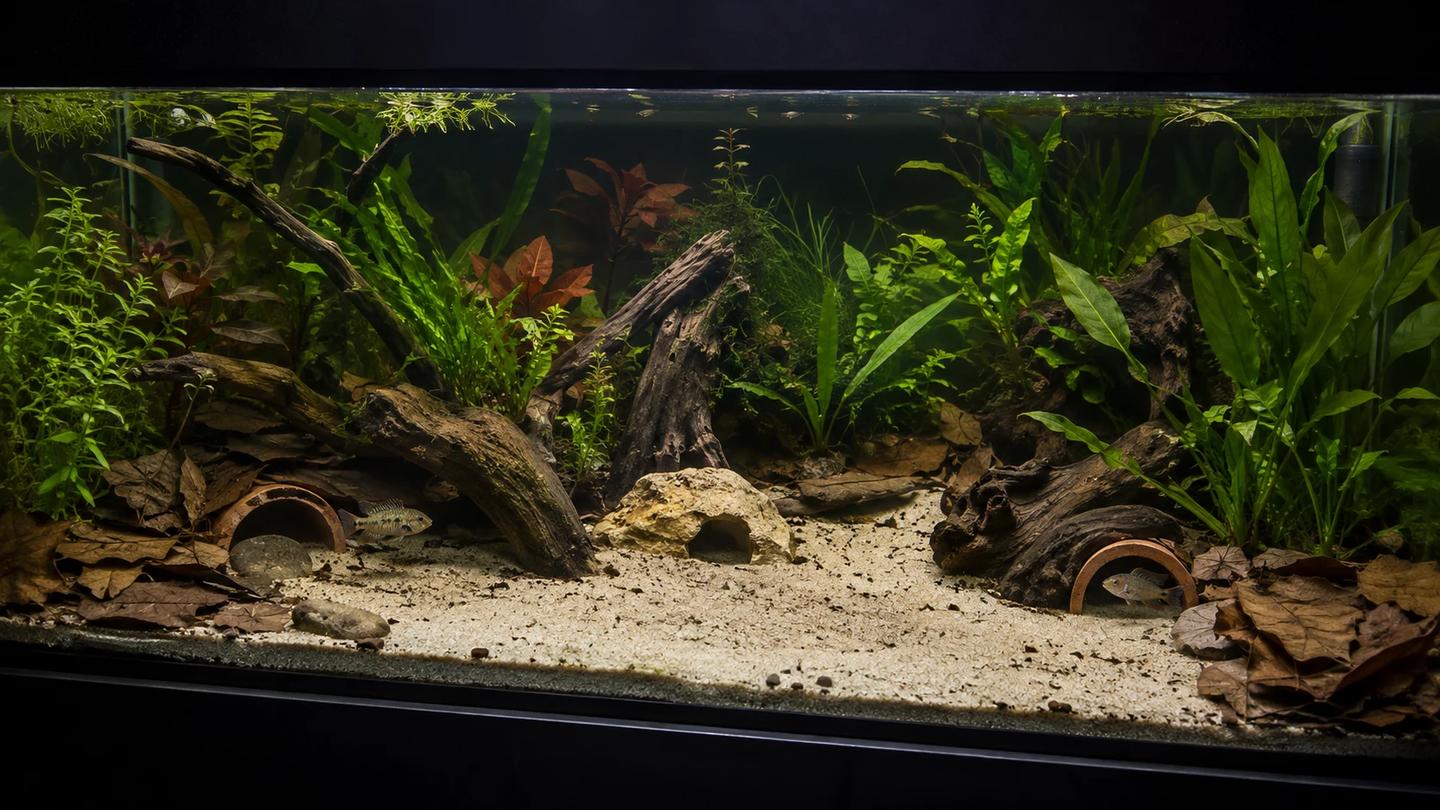
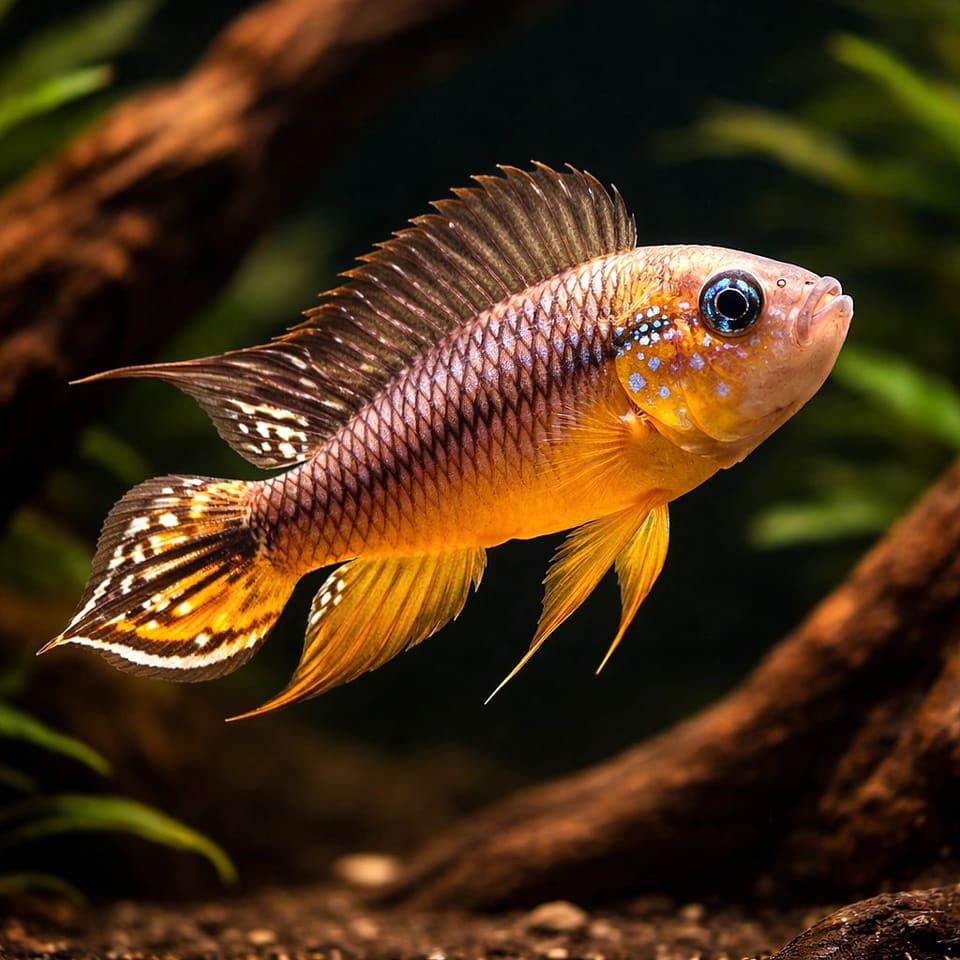
A male cockatoo apistogramma dwarf cichlid with an orange-edged spiky dorsal fin in a planted, leaf-litter blackwater aquarium
Editorial illustration · Tropical Fish Co· Own
Live arrival guarantee
Every fish
UK tracked delivery
Licensed live courier
Expert-packed
By UK aquarists
5.0 Google rating
Google Business Profile
Established 2019
UK family-run

Which apistogramma should I actually buy?

You've fallen for apistogramma - and who wouldn't, they're some of the most beautifully coloured small fish in the hobby - but now you're staring at a dozen names with very different prices and no clear idea which one suits you. Cacatuoides, agassizii, borellii, macmasteri, "sp. viejeta", "super red", "double red"... Most guides either treat all ninety-plus species as one fish, or dive so deep into wild-collection codes that a first-time buyer gives up. Both leave you guessing at the only question that matters: which apistogramma is right for my tank, and how do I keep it alive?

I'm Priya Ramesh, and soft-water South American fish - discus, angelfish and the dwarf cichlids - are my corner of Tropical Fish Co. I've kept apistos for years, bred several species, and they're the fish I field the most "which one?" questions about. Here's the honest answer the trade rarely spells out: apistogramma split into the hardy and the fussy, and the dividing line is water. A tank-bred Apistogramma cacatuoides will forgive harder UK tap water and a beginner's wobbles; a wild agassizii or one of the "sp." forms wants soft, acidic blackwater and will sulk without it [4][2].

This page is the conversation I'd have across the counter when someone asks "which apistogramma should I buy?" - what each species and colour form looks like, how hard each is to keep, the water they need, and exactly which ones we have in stock right now. It pairs with our cichlid care guide for the husbandry detail; this page helps you choose. If you've come from the larger Rift Lake cichlids, our Lake Malawi cichlids guide is the opposite end of the cichlid world - hard water, big personalities - and a useful contrast to these soft-water dwarves.

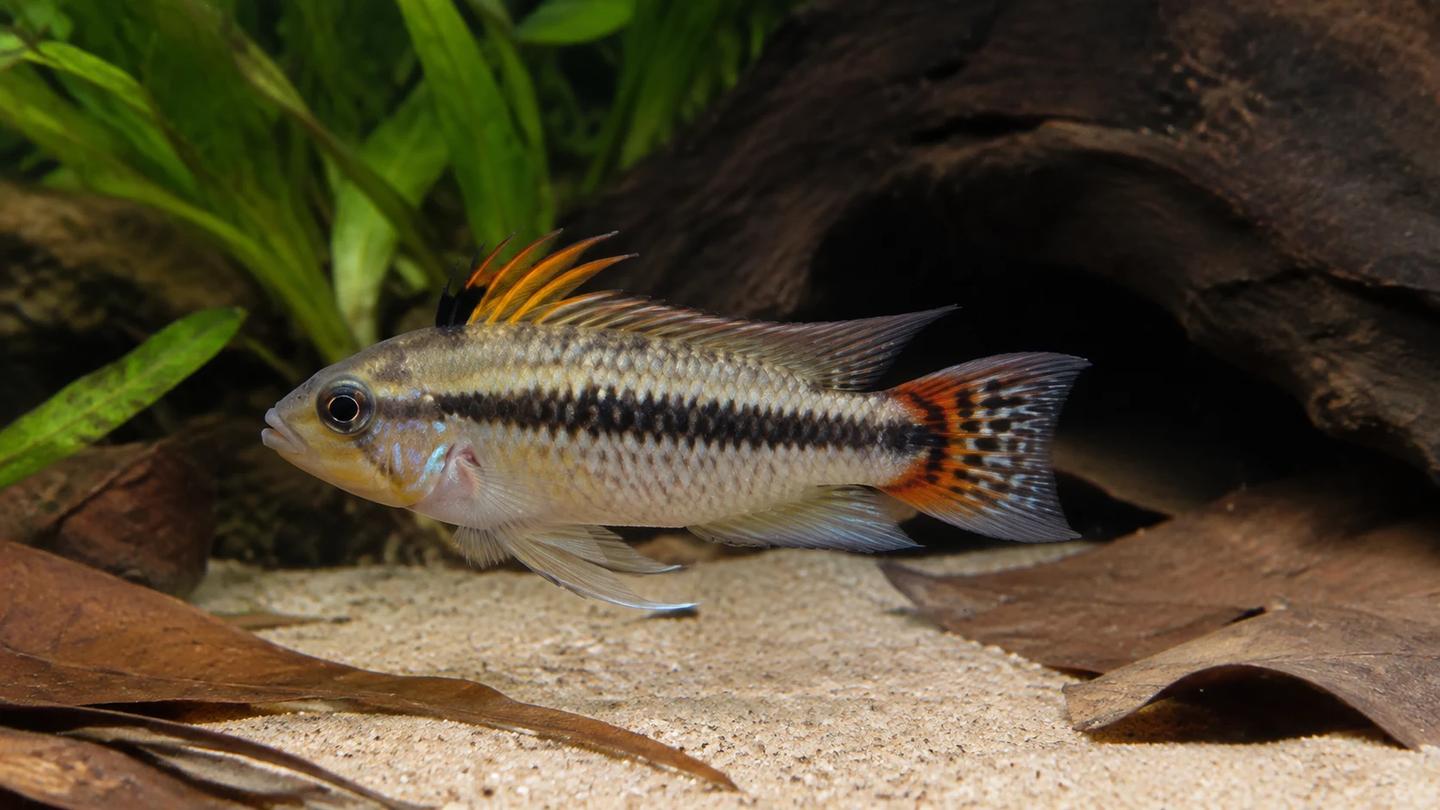
A male cockatoo dwarf cichlid (Apistogramma cacatuoides) showing its spiky orange and red dorsal and lyre-shaped tail against a dark planted aquarium

A male Apistogramma cacatuoides - the cockatoo dwarf cichlid - showing the spiky, orange-red dorsal fin and lyre tail that give the species its name. This is the apisto I steer most beginners toward: tank-bred lines are hardy, pH-tolerant and full of character. Credit: Tropical Fish Co.

Fun facts - the stuff most UK apistogramma guides skip

Apistogramma are written about plenty, but the genetics and behaviour that actually shape your buying decision get glossed over. Here are the facts worth knowing before you choose:

  • The water can decide whether you get males or females. A peer-reviewed study across the genus found that the temperature eggs and fry develop at - and in some species, including cacatuoides, the pH - shifts the sex ratio of the brood [3]. Warmer, more acidic water tends to produce more males. It's why two breeders running the "same" species can end up with wildly different male-to-female ratios, and why serious apisto keepers obsess over their parameters.
  • The female, not the male, is the fierce one. For all the male's spiky fins and colour, it's the female who runs the cave. When she's guarding eggs or fry she becomes intensely territorial - Seriously Fish describes cacatuoides females turning "hyper-aggressive" toward the male, sometimes forcing keepers to remove him [4]. Brood defence in a 5 cm fish is a thing to behold.
  • Most apistos are polygamous - one male, a harem of females. In the wild and the tank, a dominant male holds a territory overlapping several females' smaller cave territories [5][6]. That's not a quirk - it's the social structure you should buy into, which is why the stocking advice below is "one male to two or three females," not "a pair."
  • There are over ninety described species - and counting. Apistogramma is one of the most species-rich cichlid genera, with more than 90 described and new ones named regularly [5]. Only a handful reach UK shops in numbers, which is exactly why a "which one?" page is useful: the trade names you'll meet are a tiny, manageable slice of a huge genus.
  • A spawning female changes colour to a warning yellow. When she's leading fry, many apisto females flip from their resting pattern to a vivid lemon-yellow with bold black markings - a signal to the male and to you that there are babies on the sand. It's one of freshwater fishkeeping's great "did you see that?" moments, and cacatuoides is the easiest species to witness it with [8].

The apistogramma we stock - compared

Here's the part that should make the decision easy. Every fish below is a genuine Apistogramma - a South American dwarf cichlid - so the basic setup is the same: 60 L+, sand, caves, warm water, gentle tank mates. What changes across species and colour forms is the exact water they want, how hard they are to keep, and the price. The table sorts roughly from easiest to fussiest:

Species / form (as we stock it)ColourDifficultyWaterNotes
Cacatuoides (cockatoo)Silver-buff body, spiky dorsal, dark lateral bandBeginnerSoft-neutral; tolerates harder UK tapThe hardiest, most pH-tolerant apisto - best first choice [4]
Cacatuoides "orange"As above with orange-flushed finsBeginnerSoft-neutral; flexibleA colour line of the cockatoo; same easy care
Cacatuoides "double red"Red-edged dorsal & tail, twin red bandsBeginnerSoft-neutral; flexibleStriking tank-bred cockatoo line; very popular
Agassizii "double red"Spear tail, red-edged finsIntermediateSoft, acidicWants softer water than cacatuoides [2]
Agassizii "gold red"Gold body, red-orange tailIntermediateSoft, acidicA vivid agassizii line; soft water for best colour
Agassizii "super red"Intense red flank & finsIntermediateSoft, acidicThe classic "red apisto"; RO water in hard-water areas
Agassizii "blue"Blue-green sheen, dark lateral stripeIntermediateSoft, acidicCooler-toned agassizii; same soft-water need
TrifasciataThree dark stripes, blue & yellow flushIntermediateSoft, acidicA neat smaller species; harem-keeper
Sp. "viejeta"Patterned body, coloured finnageIntermediateSoft, acidicA trade "sp." form; soft acidic water
Sp. "viejeta gold"Gold-flushed viejeta formIntermediateSoft, acidicColour line of the above
Erythrura "red tail"Silver body, vivid red tailIntermediate-advancedSoft, acidicA rarer Bolivian dwarf - a collector's apisto

If this is your first apistogramma, choose from the top of the table - a cacatuoides or one of its colour lines. The agassizii forms and the "sp." types are lovelier still, but they reward soft, acidic water rather than tolerating whatever comes out of the tap. The erythrura is one for keepers who've done it before. Difficulty here is almost entirely about water: the husbandry routine is the same for every row.

Match the apisto to your tap water first

The single best way to choose an apistogramma is to test your tap water before you fall for a photo. If it's hard and alkaline - which the water companies confirm is true across much of the south-east [7] - start with a tank-bred cacatuoides, which copes [4]. If it's soft, or you're happy mixing RO water, the agassizii forms and the "sp." types open up. Buying a soft-water specialist for a hard-water tank is the commonest apisto mistake I see, and it's entirely avoidable. Our water chemistry guide shows how to test and soften.

Here are the apistogramma we have in stock right now - the hardy starters and the most popular colour forms, every one a genuine dwarf cichlid:

Soft, acidic, warm - and full of caves

This is the section that decides whether your apistos thrive or merely survive. Get the environment right and the rest is easy. Across the genus the target is the same; only the precise numbers tighten for the soft-water specialists:

  • Temperature 24-28 °C. Warm water suits all of them [6]. Borellii (the umbrella/yellow dwarf, when we have it) is the one that tolerates the cooler end; most agassizii forms like it toward the upper end, especially for breeding [2].
  • pH soft and acidic - 5.0-7.0 for most. FishBase puts wild agassizii at pH 5.0-7.0 [2] and cacatuoides at pH 6.0-8.0 [1]. Tank-bred cacatuoides are the flexible exception, comfortable up to around 7.5 [4]; the soft-water specialists want it genuinely acidic.
  • Hardness 1-10 dGH. Soft water across the board, softer still for wild fish and any serious breeding attempt. In hard-water parts of the UK - which is most of the south-east [7] - that means RO water cut with tap to hit the target.
  • A sand bottom, not gravel. Apistos are floor fish that sift and forage at the substrate [5]. Fine sand lets them behave naturally and keeps their barbels and bellies undamaged.
  • Caves - several of them. A coconut hut, a clay pot on its side, a short length of pipe. Every female needs her own potential spawning cave, and broken-up ground reduces aggression by giving losers somewhere to retreat [6].
  • Leaf litter and botanicals. Catappa (Indian almond) leaves and alder cones gently tint and acidify the water, mimic the wild habitat, and grow the microfauna fry graze on. They also make the fish bolder and better-coloured.
Why the water drives the sex ratio

It isn't folklore: a study across the Apistogramma genus found that the temperature broods develop at - and the pH, in some species including cacatuoides - measurably shifts how many males versus females you get, with warmer and more acidic conditions skewing toward males [3]. For a buyer that's useful context: if you ever breed your apistos, your parameters aren't just about health, they quietly shape the next generation's makeup. It's one more reason to keep your water stable and know your numbers.

Pair or harem? Buy a harem.

The most important stocking decision with apistogramma is also the one beginners most often get wrong. Buy a harem - one male to two or three females - not a single pair [5][6]. The reason is welfare, not vanity:

  • A spawning female turns fierce. When she claims a cave and lays eggs, she defends it with startling aggression - even toward her own mate, sometimes hyper-aggressively [4].
  • A single female means a battered male. With nowhere to retreat in a small tank, the male takes the full force of that aggression. Spread it across two or three females and the colony settles.
  • Footprint over height. Apistos defend floor territory, so a long, low tank with lots of visual breaks beats a tall narrow one. 60 L is the floor for a small harem of the smaller species [4]; 75 L+ is better for several females or the larger species.

Only the bigger, more peaceable species suit a strict single pair - and even then they want space. For most buyers, most of the time, the right purchase is one male and two or three females of a single species.

Feeding - small mouths, big appetites

Apistogramma are micro-carnivores at heart, foraging the substrate for tiny invertebrates in the wild [5]. In the tank they're easy to feed but they do best on a varied, mostly meaty diet rather than flake alone:

  • Frozen foods are the staple - bloodworm, brine shrimp, daphnia and cyclops, thawed and fed in small amounts once or twice a day. The variety keeps colour bright and conditions females for spawning.
  • Live foods are the treat - live brine shrimp, microworm or grindal worm bring out natural hunting behaviour and are invaluable when conditioning a breeding harem.
  • Quality micro-pellets and granules sized for a small mouth round out the diet and are convenient for everyday feeding.
  • Feed little and often. These are small fish with fast metabolisms; two modest feeds beat one large one, and uneaten food fouling a soft-water tank is a common cause of trouble.

A well-fed apisto is a colourful, confident apisto - and a female in good condition is far more likely to spawn and raise fry successfully.

A closer look at the species worth knowing

The comparison table is the quick version. If you want to choose with a bit more confidence, here's the extra detail on the apistogramma people ask about most - all genuine dwarf cichlids, all the same broad care, differing mainly in water tolerance and colour:

  • Cacatuoides (cockatoo dwarf cichlid) - the one to start with. The wild type is a buff-silver fish with a dark lateral band and a spiky dorsal that the best males raise like a cockatoo's crest; tank-bred lines add red and orange to the dorsal and lyre tail. Crucially, those captive lines are unfussy about pH and cope with harder UK water where the others won't [4][1]. Easiest to keep, easiest to breed, easiest to find. If it's your first apisto, this is the one.
  • Cacatuoides colour lines (orange, double red, triple red) - selectively bred cockatoo forms with progressively more red in the fins. The care is identical to the wild type; you're choosing how much fire you want in the dorsal and tail. The "double red" in particular is one of the most popular dwarf cichlids in the UK trade, and deservedly so.
  • Agassizii (Agassiz's dwarf cichlid) - the classic "next apisto". Slightly smaller than cacatuoides, with a distinctive spear-shaped tail and an enormous range of colour forms - super red, double red, gold red, fire red, blue. The trade-off is water: agassizii wants it genuinely soft and acidic to thrive and show full colour [2], so it's a better fit once you've either got soft tap water or you're comfortable with RO.
  • Trifasciata (three-stripe dwarf cichlid) - a neat, smaller species marked with three dark stripes and flushes of blue and yellow on a good male. Peaceful, harem-forming and soft-water-loving; a lovely choice for a dedicated apisto tank once you've moved past your first cacatuoides.
  • Sp. "viejeta" and "viejeta gold" - trade forms sold under an "sp." (species-undetermined) label, which is common in the apisto world given how many undescribed populations reach the hobby [5]. They're kept exactly like agassizii - soft, acidic water - and prized for their finnage and colour. Buy on looks, keep on soft water.
  • Erythrura "red tail" - the genuine collector's fish on our list. A rarer dwarf cichlid from the Rio Mamoré in Bolivia, silver-bodied with a vivid red tail, wanting soft, acidic water and a settled, experienced keeper. Beautiful, but not a first apisto - come to it once you've kept the easier species well.

Tank mates - think upstairs

Apistogramma are peaceful for cichlids - shy rather than bullying in a general community [5] - so the trick with tank mates is to pick fish that occupy a different part of the tank and won't compete for the floor. The classic, reliable choices live in the upper water and double as "dither" fish that coax the apistos out of their caves:

  • Cichlid care guide - the foundation for managing territory, caves and aggression with any cichlid, dwarf or large.
  • Water chemistry guide - because the right tank mates also have to share the apisto's soft, acidic, warm water.
  • Angelfish care guide - their larger South American cichlid cousins; useful if you're planning a bigger soft-water community and want a centrepiece above the apistos (in a tank big enough for both).

Good companions follow a simple rule - calm, not tiny, and ideally swimming above the apistos:

CompanionWhy it works with apistogramma
Small tetras (e.g. ember, neon, rummy-nose)Upper-water shoalers that act as dither fish and make apistos bolder [6]
Pencilfish & hatchetfishSurface and mid-water specialists that completely ignore the floor territory [6]
Corydoras (in 75 L+)Peaceful bottom-dwellers - fine with space, but they do share the floor, so don't crowd
OtocinclusTiny, harmless algae-grazers that keep to the glass and plants
The shrimp-and-fry mistake

Apistogramma look gentle, but they are still predatory little cichlids. The commonest tank-mate error is housing them with dwarf shrimp or with fry you want to raise - an apisto will happily eat both [6]. Don't mix them either, in anything but a large tank: two apisto species, or two males of one species, will fight over floor territory. If you want a shrimp colony, keep it in a separate tank.

Here are more apistogramma worth considering - the rarer colour forms and species for keepers ready to give them soft, acidic water:

What goes wrong - and how to fix it

Apistogramma have a reputation as "tricky", but almost every problem traces back to one of a handful of avoidable mistakes - and most are about water and tank layout, not the fish. Here's the troubleshooting table I'd run through with a customer whose apistos aren't thriving:

What you seeLikely causeWhat to do
Male battered, fins tornSingle female spawned and turned on him; no escapeMove to a harem (1 male : 2-3 females), add caves and sightline breaks
Fish hiding constantly, drab colourHard/alkaline water on a soft-water species; no dither fishTest water; soften with RO for agassizii/sp. forms; add upper-water tetras [7]
Eggs laid but always vanishWater too hard/alkaline for eggs to develop; or first-time parentsSoften and acidify; give a young harem a few tries to learn
New fish off its food, listlessStress from a rushed transfer or a pH/hardness swingSlow, 45-minute drip on arrival; keep parameters stable [8]
Two apistos fighting to the deathTwo males, or two species, in too little floor spaceKeep one male per species; one species per tank unless very large
Shrimp or fry disappearingThey're being eaten - apistos are predatoryKeep apistos away from shrimp colonies and fry you want to raise [6]

The pattern is clear: get the water right for your chosen species, buy a proper harem, give them a floor full of caves and broken-up ground, and most "apisto problems" never appear.

A note on UK tap water and apistos

This is the single most UK-specific thing to get right. The water companies classify most of the south-east as hard [7], and that hard, alkaline supply is fine for a tank-bred cacatuoides but wrong for the soft-water agassizii forms, the "sp." types and any wild-caught apisto [2]. If you're in a hard-water area and want anything beyond cacatuoides, budget for an RO unit or RO water by the litre, and a remineraliser to hit a soft, slightly acidic target. Don't guess your hardness - test it, or check your supplier's published figure, before you buy the fish.

Buying apistogramma - read the fish, not just the label

Apistogramma turn up in aquatic shops under a confusing mix of scientific names, trade names and "sp." codes, often as young, not-yet-coloured fish. The label is the least reliable thing to judge - a stressed, freshly-imported "super red" is a far worse buy than a healthy young cacatuoides, however exotic it sounds. Judge the fish and the tank instead. A welfare-marker checklist that works for any retailer, anywhere:

  • The fish is alert and using the floor - apistos should be patrolling the substrate and investigating caves, not hanging motionless in a corner or gasping at the surface.
  • The body is full behind the head, eyes clear - a pinched belly or sunken look behind the gills means a fish that's been off its food, often a recent import that hasn't settled.
  • Fins are intact and carried well - a male's dorsal should be whole, not shredded; clamped fins or a cloudy film signal stress or the start of disease.
  • You can see a sensible sex ratio in the tank - a shop holding a group with a clear ratio (and ideally able to net you females, not just the showy males) understands the fish. Beware tanks of "males only," which leave you unable to build a harem.
  • Staff can name the species and the water it needs. Ask "is this a soft-water fish, and what's it been kept in?" A shop that can answer is one whose fish are more likely to be healthy and correctly acclimated.

The colour form you want should be the last filter, not the first. Find a healthy, well-kept fish from a clean tank, confirm it's a species that suits your water, and only then worry about whether it's the exact red line you came for.

A second look - an agassizii colour form

A male Agassiz's dwarf cichlid (Apistogramma agassizii) showing a spear-shaped tail, lateral stripe and red and blue iridescence

A male Apistogramma agassizii - note the spear-shaped tail, the bold lateral stripe and the red-and-blue iridescence that the colour-form lines (super red, double red, gold red) intensify. Agassizii is the next step up from cacatuoides: just as keepable, but it wants genuinely soft, acidic water to look and breed its best. Credit: Tropical Fish Co.

Agassizii is where most keepers go after a first cacatuoides, and the photo shows why - the spear tail and the saturated colour are hard to resist. The trade-off is water: where a tank-bred cockatoo shrugs off harder tap, agassizii really does want it soft and acidic to thrive and to show that full red or blue [2]. If your supply is hard, that means RO water cut with tap to a soft, slightly acidic target - which is exactly the kind of small extra commitment that separates the "intermediate" rows of the table from the beginner ones. Get the water right, though, and an agassizii harem in a leaf-littered tank is one of the loveliest sights in freshwater fishkeeping.

Community - where UK apistogramma keepers talk shop

Apistogramma have a devoted following, and the genus rewards learning from people who breed and show them rather than just sell them. The UK has good places to do exactly that:

  • The British Cichlid Association runs meets and auctions where experienced keepers sell home-bred fish and talk species, lines and water chemistry. Club auctions are often the best place to find well-documented, tank-bred apistos - and healthy females, which are harder to source than showy males. The advice comes free.
  • The Federation of British Aquatic Societies links local aquarist clubs across the country, many of which hold open shows where dwarf cichlids are judged. Seeing a top-quality cacatuoides or agassizii in the flesh teaches you more about what to aim for than any photo.
  • The fishkeeping.co.uk forum has an active cichlid section - a genuinely useful UK community for sanity-checking a stocking plan, identifying an "sp." form, or asking which apisto suits your water before you buy.
  • Reddit's r/Aquariums and dedicated dwarf-cichlid and apistogramma groups are good for quick second opinions and seeing real long-term tanks - including the blackwater, leaf-litter setups these fish thrive in.

A common thread across all of them: the keepers who do best with apistos treat water chemistry as the foundation and buy harems, not pairs. Get those two things right and you'll fit straight in.

When your apistogramma arrive - acclimation for soft-water dwarves

Apistogramma travel well when packed properly, but they're small, soft-water fish that don't like sudden swings in pH or temperature - so the handover matters. Our licensed live-animal courier delivers in an insulated, oxygenated bag; your job is a slow, calm transition into a tank that's already cycled and stable. The apisto-specific protocol:

  1. Receive in a quiet, dimly lit room. Don't open the box under bright lights or on a cold worktop - check the bag temperature first, and let the fish settle for a few minutes.
  2. Float the sealed bag for 20 minutes to equalise temperature gently.
  3. Drip-acclimate for 45 minutes at 2-3 drops per second. Apistos are sensitive to pH and hardness shifts, especially the soft-water forms, so a slow drip matters more here than with a hardy community fish [8].
  4. Net the fish into the tank - never pour the bag water in. Their world is the floor, so lower them gently near the substrate, not into open water.
  5. Lights off for a few hours and no food for 24 hours. A new apisto will often vanish into a cave or hug the substrate for a day - that's normal settling, not illness.

Have the caves, sand and soft water ready before they arrive, and introduce the whole harem together so no single fish claims all the territory first. A settled colony will start exploring within a day or two, and the male will usually colour up as he stakes his claim.

Ready for more?

Now you know apistogramma split into the hardy and the fussy, the choice is the fun part - match the species to your water, buy a harem of one, and build the tank around the floor.

Every claim above is sourced - see the References block below. If you're torn between species, or you're not sure your tap water suits the soft-water forms, ask us first. We'd rather match you to the right apistogramma than the prettiest photo.

Related categories

Visual route into the rest of our UK live-fish range.

Frequently asked questions

Apistogramma cacatuoides - the cockatoo dwarf cichlid. It's the most widely tank-bred apisto, and those captive lines are far more forgiving than wild fish: they tolerate a wide pH (commercially-bred fish are unfussy, roughly 6.0-7.5) where most apistos demand soft, acidic water [4][1]. It's also the easiest to find, the easiest to feed, and one of the easiest to breed at home [6]. Get a single male with two or three females, give them caves and a 60 litre+ tank, and you have the ideal first dwarf cichlid. Agassizii, borellii and the sp. forms are a step up - lovelier, but fussier about water.

Sources & further reading

Every claim in this article is backed by a source below. We group them by type so you can judge the weight of each one at a glance.

Peer-reviewed study (1)

  1. [3]
    Römer, U. and W. Beisenherz (1996). Environmental determination of sex in Apistogramma (Cichlidae) and two other freshwater fishes (Teleostei). Journal of Fish Biology, 48(4): 714-725. View source

    Peer-reviewed evidence that incubation temperature (and pH in some species, including A. cacatuoides) shifts the sex ratio of apistogramma broods.

Scientific database (2)

  1. [1]
    Froese, R. and D. Pauly (Eds.) (2024). Apistogramma cacatuoides (Hoedeman, 1951) - Cockatoo cichlid. FishBase. View source

    Source for ~5 cm max length, pH 6.0-8.0 and the Amazon (Ucayali/Solimões) distribution.

  2. [2]
    Froese, R. and D. Pauly (Eds.) (2024). Apistogramma agassizii (Steindachner, 1875) - Agassiz's dwarf cichlid. FishBase. View source

    Source for ~4.4 cm max length, pH 5.0-7.0, temperature 26-29 °C and the Amazon-Solimões range.

Hobbyist reference (3)

  1. [4]
    (2024). Apistogramma cacatuoides - Seriously Fish. Seriously Fish. View source

    Husbandry cross-check: tank-bred fish unfussy on pH, females turn hyper-aggressive when guarding fry, 60x30 cm minimum for a pair.

  2. [5]
    (2023). The essential guide to the Apistogramma dwarf cichlids. Practical Fishkeeping. View source

    UK hobbyist perspective: sand substrate, botanicals and caves; pairs or one-male harems; shy and territorial in a general community.

  3. [6]
    (2023). Care Guide for Apistogramma Dwarf Cichlids - Housing, Breeding & More. Aquarium Co-Op. View source

    Recommends 24-28 °C, slightly acidic water, a 1-male-to-2-3-female harem ratio, and dither fish like tetras and pencilfish as tank mates.

Expert video (1)

  1. [8]
    (2021). Apistogramma Care Guide - Apistogramma Cacatuoides (Cockatoo Dwarf Cichlid). YouTube. View source

    Visual walkthrough of cacatuoides setup, sexing, harem behaviour and feeding.

Government / regulatory (1)

  1. [7]
    (2024). Water hardness - is my water hard or soft?. Thames Water. View source

    UK authority confirming most south-east England tap water is hard (200-300+ mg/l CaCO3) - the practical reason hard-water keepers should start with tank-bred cacatuoides or run RO water for the soft-water forms.

Spotted something that needs a fix?

Fishkeeping moves fast and we want every guide spot-on. If you think something here is wrong, out of date, or could be clearer, tell us — our team reads every message and updates the page.

Suggest an edit