By Dr. Aisha Rahman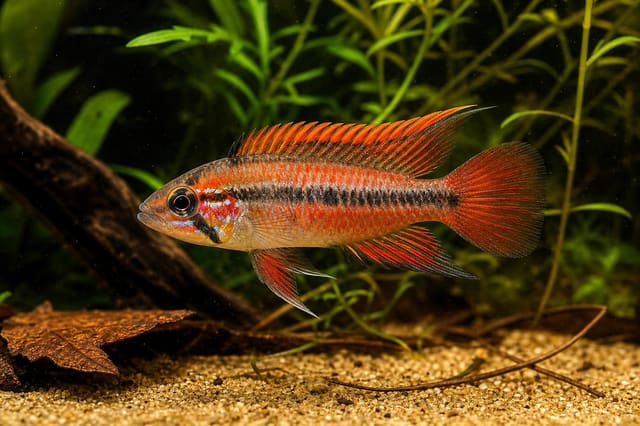
Super Red Agassiz’s Dwarf Cichlid (Apistogramma agassizii)
26–27°C · pH 6–7 · 54L
£18.99
South American Cichlids · Buying Guide
UK guide to Apistogramma agassizii, the spade-tailed Agassiz's dwarf cichlid: ID vs cockatoo apistos, soft-water care & in-stock strains. Read or listen.
8 products in stock today
Live prices and stock. Every fish covered by our Live Arrival Guarantee.
26–27°C · pH 6–7 · 54L
22–29°C · pH 5–7
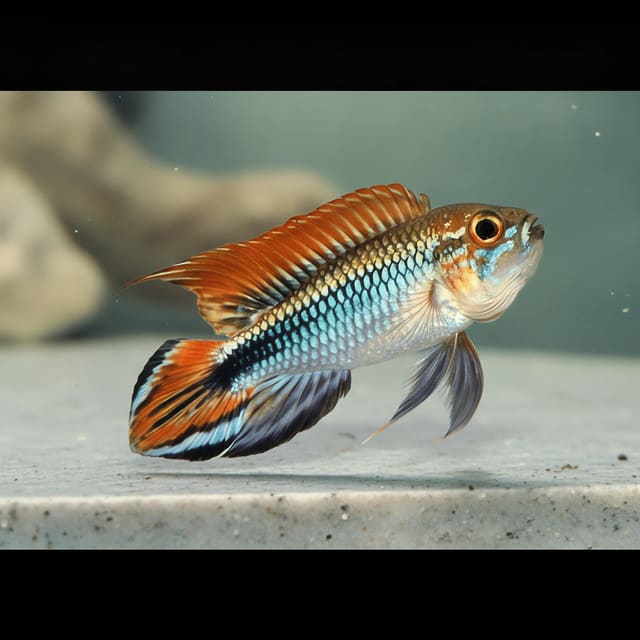
26–27°C · pH 6–7 · 54L
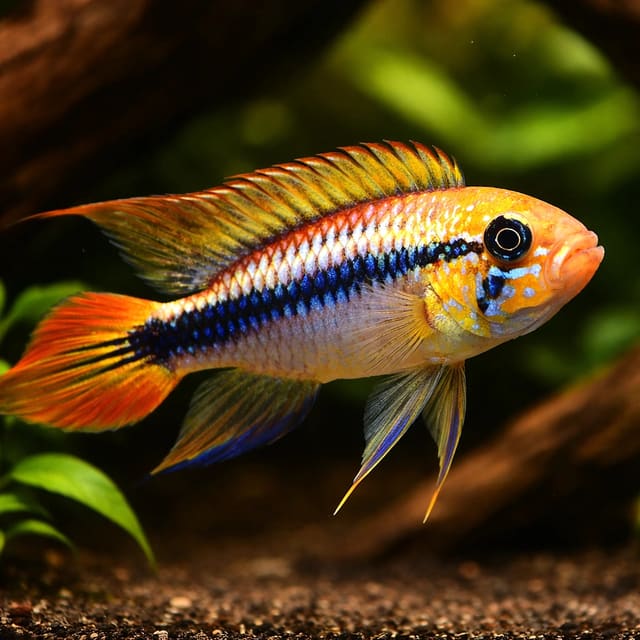
22–27°C · pH 6–7 · 54L
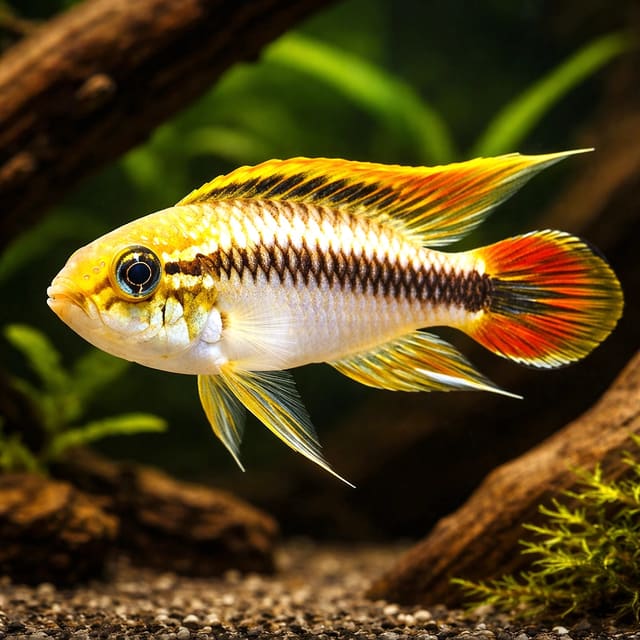
24–27°C · pH 5.5–7 · 75L
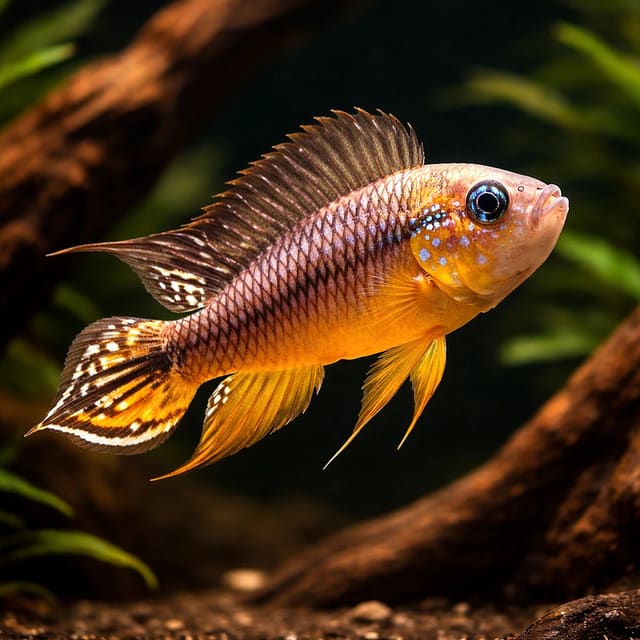
26–27°C · 54L

23–27°C · pH 5.5–7 · 60L
27–30°C · pH 5–7 · 54L
The shaded band shows the range apistogramma agassizii is comfortable in. Match it to your tap water before you buy.
Our trained assistant knows this apistogramma agassizii page inside out. Ask it anything — water parameters, tank mates, how many to buy — or have it read the guide aloud while you set up your tank.
You searched "apistogramma agassizii", which tells me you're past the beginner stage and looking at one specific dwarf cichlid — and you've probably already noticed the problem. Half the results lump every Apistogramma together as "dwarf cichlids, soft water, done", and the other half can't even tell you which apisto is in the photo. Neither helps you with the two questions that actually matter: is this the fish I think it is, and can I keep it in my water?
I'm Dr Aisha Rahman. I hold a PhD in ichthyology and I review the scientific claims in every guide we publish — particularly anything that touches water chemistry or fish physiology, which is most of what makes or breaks an Apistogramma tank. This page is the answer I'd give a keeper who messages us saying "I've kept rams, I've got soft water, I want something with more personality — talk me through agassizii."
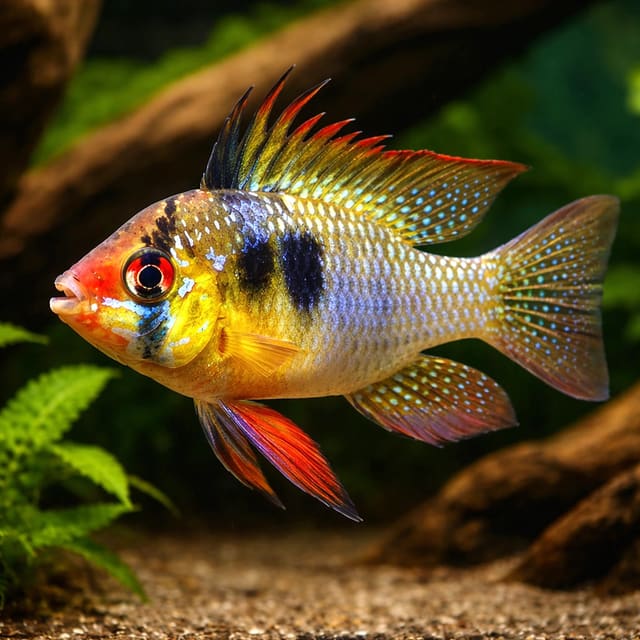
A male "Super Red" — one of the line-bred ornamental forms. Note the dorsal fin: it runs low and even along the back, and the tail comes to a soft point. That silhouette is the single fastest way to separate agassizii from the crested cockatoo apisto. Product photo · our warehouse.
This is the comparison that stops you buying the wrong fish. Both are South American dwarf cichlids sold as "apistos", both want soft water and harem keeping — but they are different species with a different silhouette.
| What to look at | Agassiz's (A. agassizii) | Cockatoo (A. cacatuoides) |
|---|---|---|
| Dorsal fin | Low and even along the whole back | Tall, spiky crest raised at the front |
| Tail shape | Spade / ping-pong-paddle — comes to a soft point | Broad fan, often lyre-edged in males |
| Overall vibe | Streamlined torpedo with a pointed tail | Showy, crested, flag-finned |
| Male size | ~7.5 cm total | ~8 cm total |
| Water | Soft, acidic; tank-bred unfussy | Soft, acidic; among the more adaptable apistos |
| Care difficulty | Intermediate | Intermediate (slightly more forgiving) |
If the fish has a flat dorsal and a pointed spade tail, it's agassizii. If it has a spiky raised crest and a fanned tail, it's the cockatoo [4]. For the full cockatoo profile, see our Apistogramma cacatuoides guide; for the genus as a whole — every apisto we stock and how the groups differ — start with the Apistogramma overview.
Like most popular dwarf cichlids, agassizii is sold both as wild-type collections and as line-bred ornamental forms. The Super Red, Fire Red, double red and gold strains are stabilised aquarium lines selected for colour intensity — they are not wild varieties, and because wild agassizii vary so much by locality [2], there's no single "correct" wild look to compare them against. They're the same fish to keep; you're choosing a colour, not a harder animal.
For a first agassizii tank I'd run a 75-litre with soft, slightly acidic water (RO blended back up to about 4–8 °dGH, pH around 6.0–6.5), a bed of fine sand, two or three small caves (clay pots or coconut shells), and a generous layer of botanicals — catappa leaves, alder cones, a tangle of spiderwood. Add one male and two females, keep the lights gentle, and feed small frozen and live foods. The tannins aren't decoration: they nudge the water toward the blackwater conditions the species evolved in.
Agassizii are not shoaling fish — they're territorial dwarf cichlids — so the stocking logic is different from a tetra. The standard structure is a harem: one male to two or three females [4]. A single dominant male will claim a territory and court each female in turn; giving him several females means no single fish absorbs all his attention, which is the usual cause of a stressed, hiding female.
A lone pair can work, but only in a tank with enough broken sightlines — plants, wood, leaf litter — that the female can get out of view when she wants to. Two males in one tank needs real space (90–120 L and up) and a floor divided into territories neither can see across, or the subordinate male will be relentlessly pushed into a corner [5].
Here's where agassizii flips the usual British advantage on its head. The hard, alkaline tap water that suits livebearers and many community fish is the opposite of what this species wants. Tank-bred agassizii are relatively unfussy and do well across roughly pH 5.0–7.0 and 0–12 °dGH [1] — but much of southern and eastern England is supplied with water classified as hard to very hard [6], well above the soft end this fish prefers, and at a higher pH than is ideal.
That doesn't rule them out — it just means soft-water keepers have the easy ride here, and hard-water keepers need a plan. The cleanest solution is to cut your tap with RO (reverse-osmosis) water and remineralise lightly to a low hardness, then let botanicals (catappa leaves, alder cones, peat) gently acidify the tank. Whatever you do, prioritise stability over hitting a number: a steady pH 6.8 is far better for the fish than a pH that swings between 6.0 and 7.5 as you chase the textbook figure.
Search your postcode on your water company's site (Thames Water, Severn Trent, Anglian, Yorkshire Water, etc.) for a hardness figure in mg/l CaCO₃ or °Clarke. If you're in a soft-water area (much of Scotland, Wales, Cornwall, the Lake District), agassizii will be straightforward. If you're in a hard-water area, budget for an RO unit or remineralised RO water before you commit — keeping a soft-water cichlid in hard tap water is a slow welfare problem, not a quick fix.
Agassizii live near the bottom and defend a territory there, especially when breeding, so the ideal companions occupy other layers, stay peaceful, and share the same soft, warm, acidic water. The classic combination is a dwarf cichlid below and a shoal of small dither fish above to draw it out and signal "no predators about":
Avoid: dwarf shrimp (they're food [5]), boisterous barbs, and anything that competes for the bottom or wants hard alkaline water.
Transcript / what you're seeing (0:00–0:20): a heavily planted aquarium with small fish cruising the mid-water while the lower layers stay shaded and broken up by wood and leaves. That structure is exactly what a dwarf cichlid needs — the open mid-water gives dither fish room to shoal, while the shaded, cluttered floor gives each apisto a territory it can hold and retreat into. A bare, brightly-lit tank does the opposite: it leaves a territorial fish with nowhere to feel secure, which is when you see hiding, clamped fins and stalled breeding.
Sexing mature agassizii is usually straightforward: males are larger, more colourful, and have longer, more extended dorsal and tail fins, while females are smaller, plainer, and turn an intense yellow when in breeding condition or guarding fry [4]. That yellow female is one of the loveliest sights in the hobby.
They are cave spawners. Give a pair a small cave — a clay pot on its side, a coconut shell, a purpose-made cichlid cave — and a conditioned female will lay her eggs on the cave roof. From there the roles split: the female guards and tends the eggs and fry, fanning them and herding the wrigglers around the territory, while the male patrols the wider territory and keeps other fish away [4]. Soft, warm, acidic water and a steady supply of live food are what tip a settled harem into spawning.
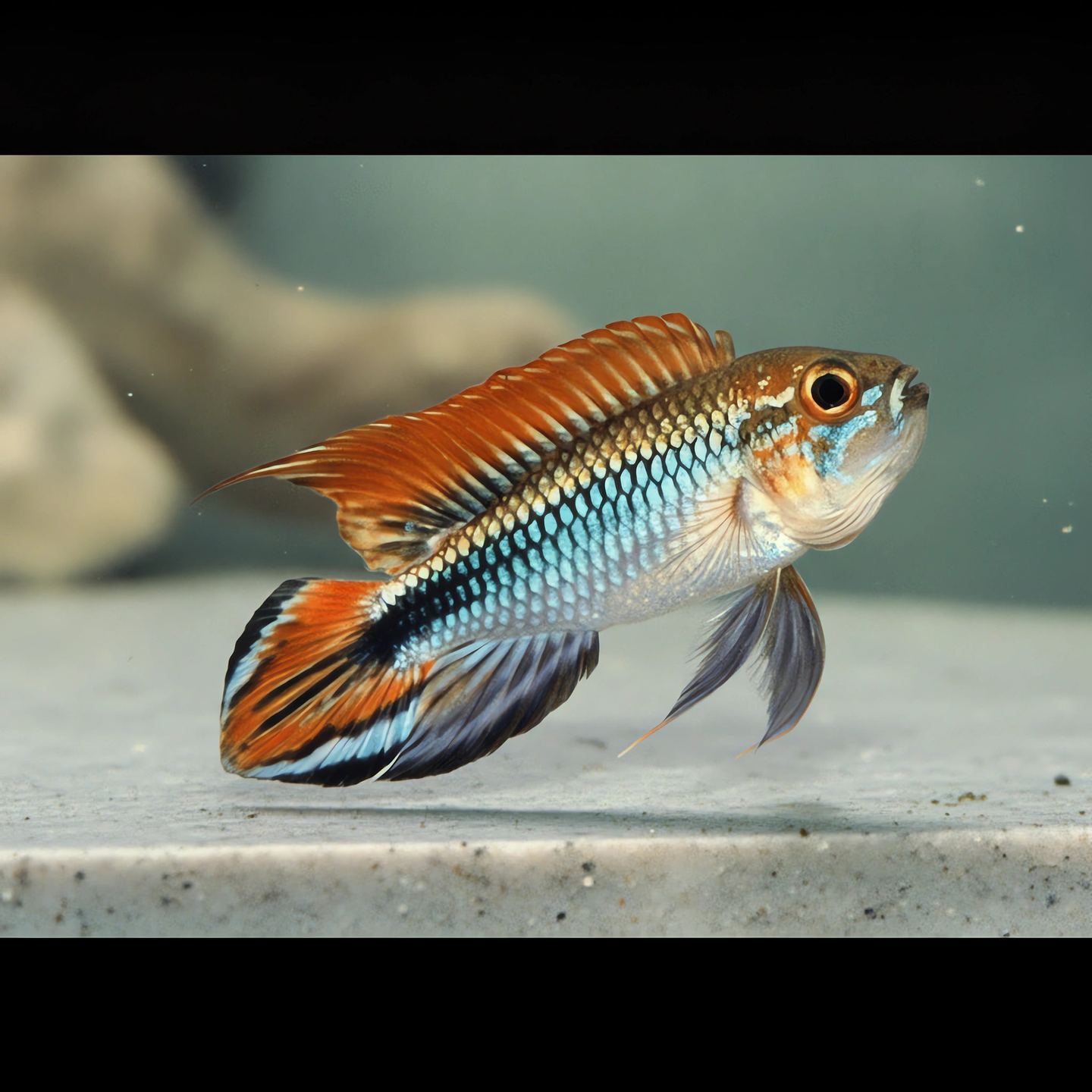
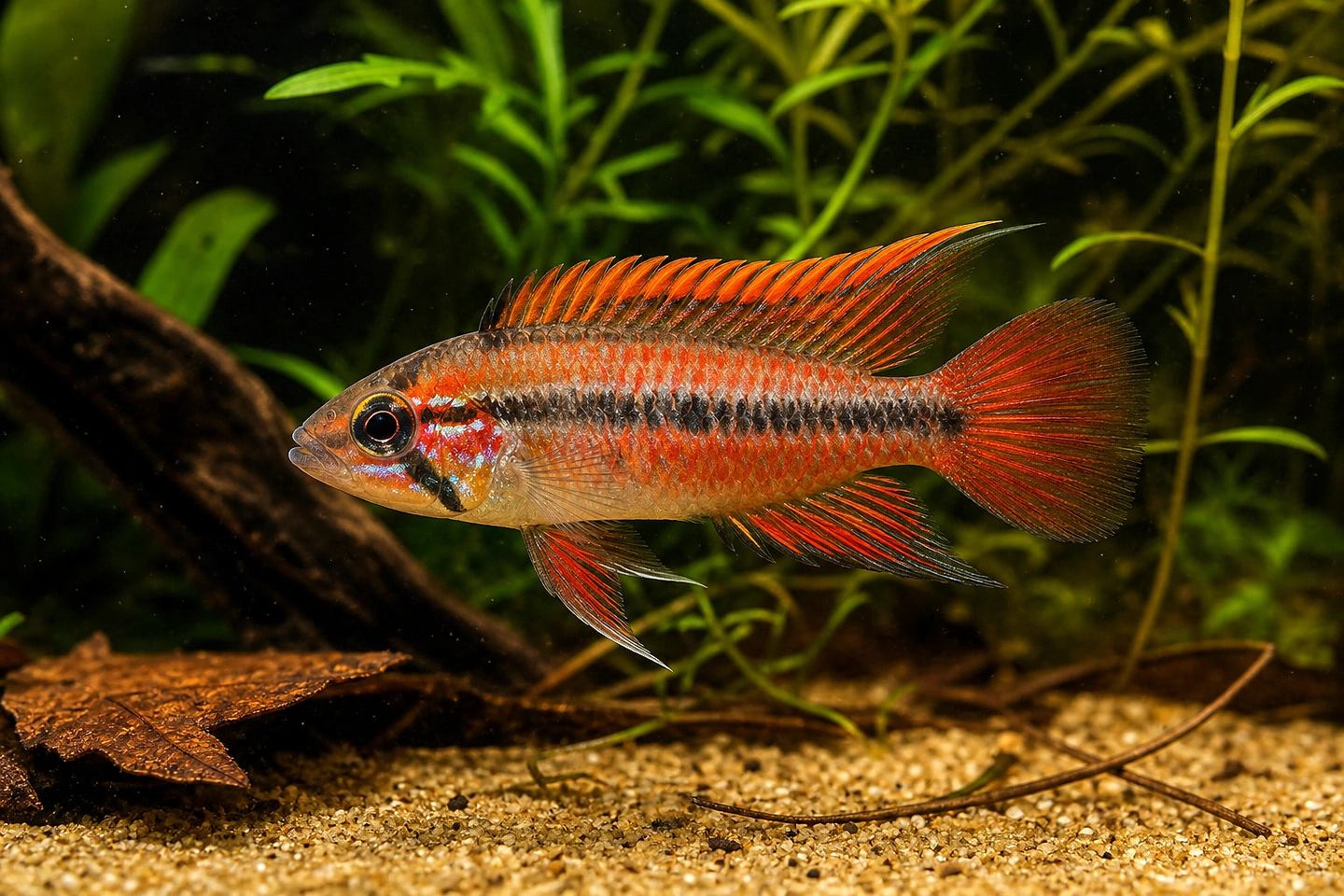
A "red dorsal" male. Even on a heavily line-bred colour form, the dorsal fin keeps the species' low, even profile — there's no spiky crest. This is the trait to fix in your mind: it's what separates agassizii from the cockatoo apisto at a glance, in any colour.
Whether you buy from us or anyone else, dwarf cichlids reward a careful buyer. These are the welfare markers I check:
Dwarf cichlids have a devoted following, and the depth of knowledge in the hobby far outstrips any single care sheet — especially for a fish as genetically tangled as agassizii:
These are where the rarer wild localities and well-kept lines actually change hands — usually between hobbyists, not off a shop shelf.
Dwarf cichlids are more sensitive to chemistry swings than hardy community fish, and the parameter that matters most here is the move into soft, acidic water — a sudden shift in pH or hardness is the main thing that stresses them. Take it slowly:
Visual route into the rest of our UK live-fish range.
Material factual claims cite the sources below; store policy and cautious inference are labelled in the article. Sources are grouped by type so you can judge their weight at a glance.
Peer-reviewed evidence that 'A. agassizii' is not one species but a geographic mosaic of potentially tens of species across the Amazon.
Documents the extreme genetic structure of agassizii populations even over tiny geographic distances — the science behind 'buy from one locality'.
Used for taxonomy (Steindachner, 1875), pH range (5.0–7.0), hardness, temperature and Amazon-basin distribution.
Independent cross-check of adult size, harem structure, spade-tail morphology, cave-spawning brood care and water parameters.
Practical husbandry — harem keeping, tank-bred adaptability, dither fish, and the warning that apistos will eat dwarf shrimp.
UK authority confirming much of southern and eastern England is hard (200–300 mg/l CaCO₃) to very hard — the opposite of what agassizii wants.
Fishkeeping moves fast and we want every guide spot-on. If you think something here is wrong, out of date, or could be clearer, tell us — our team reads every message and updates the page.
Suggest an editCompare African lake, South American and Central American cichlids by adult size, water, social behaviour and aquarium footprint before choosing.
Keep cardinal tetras thriving in UK water: check tank size, group size, tank mates, temperature and cardinal vs neon differences before you buy.
Scientific Reviewer · PhD Ichthyology · 20+ years in the hobby
Dr. Rahman holds a PhD in Ichthyology from the University of Southampton (2012), with a dissertation on freshwater fish stress physiology. She runs her own 600-litre Rift Lake display at home and reviews Tropical Fish Co's guides for scientific accuracy — particularly any claim that touches fish physiology, water chemistry, or disease.