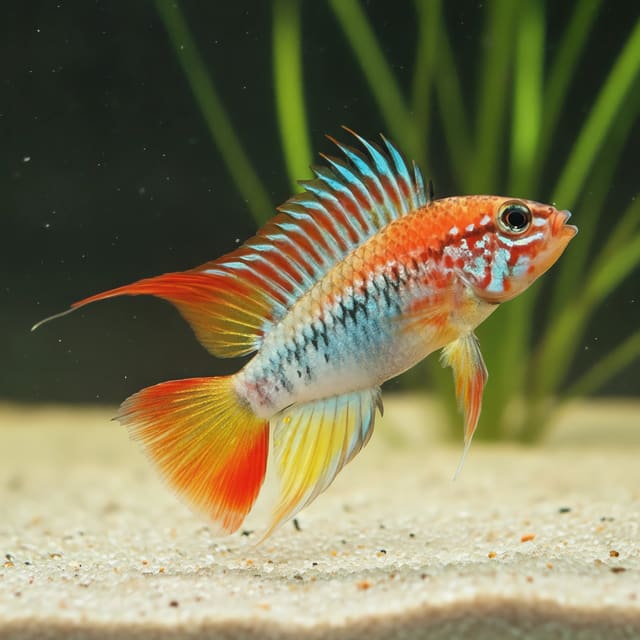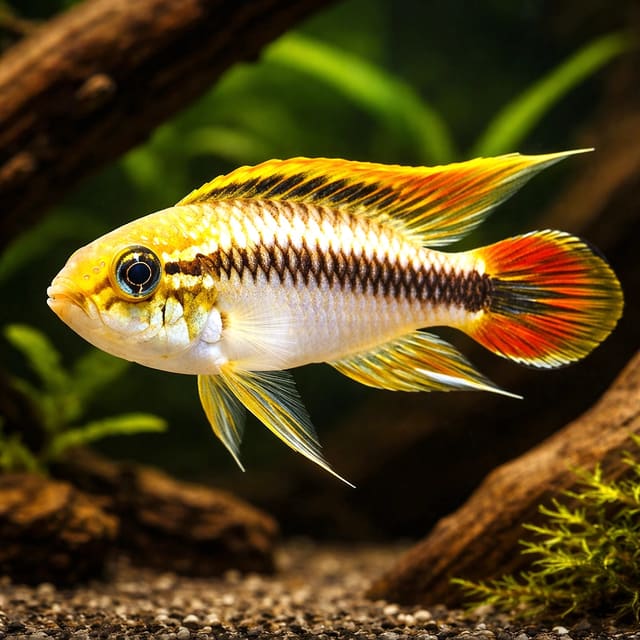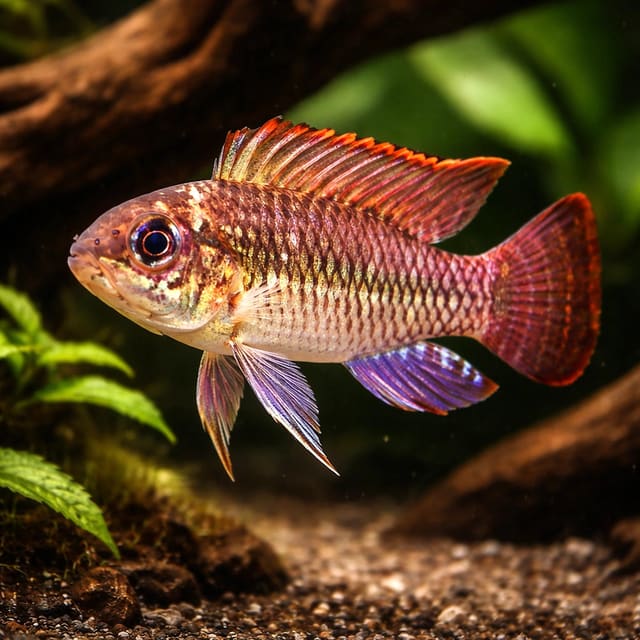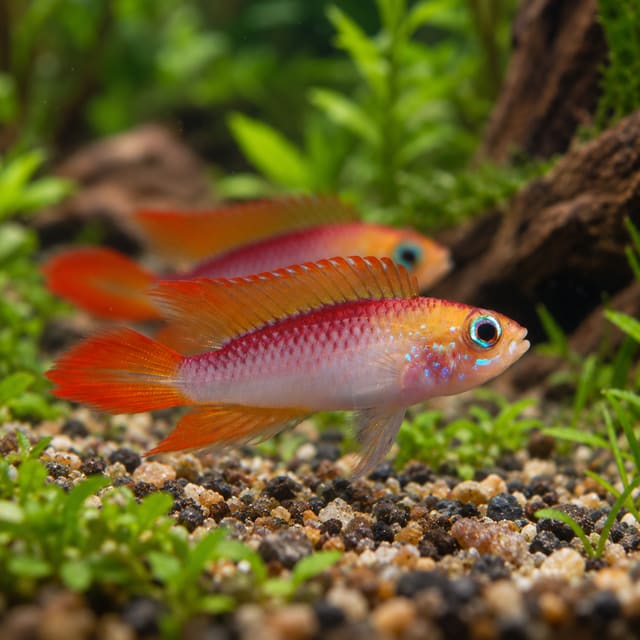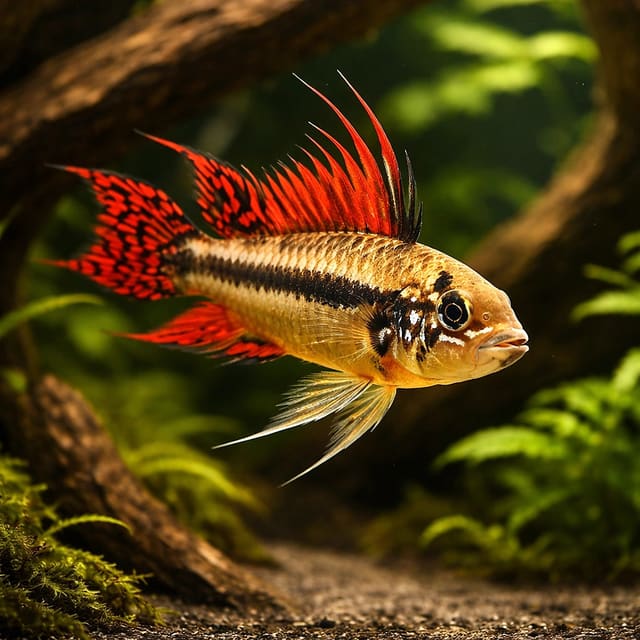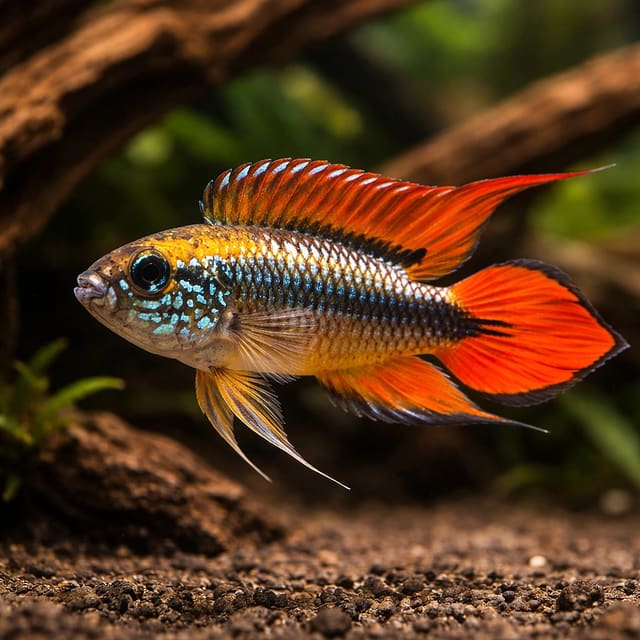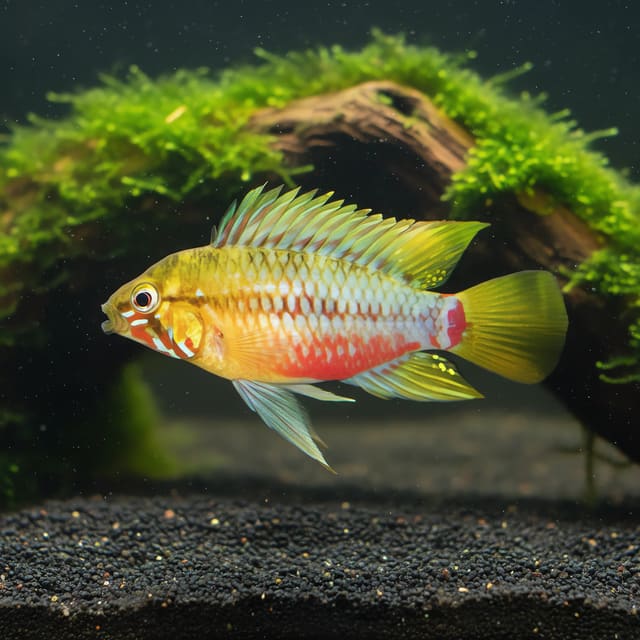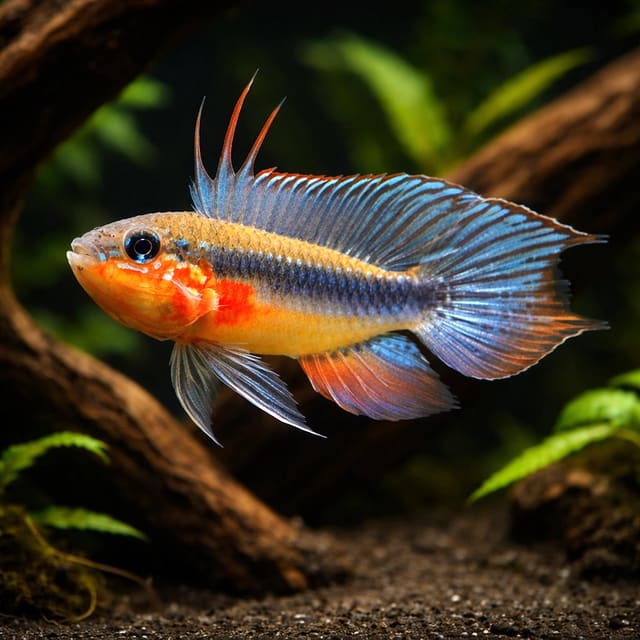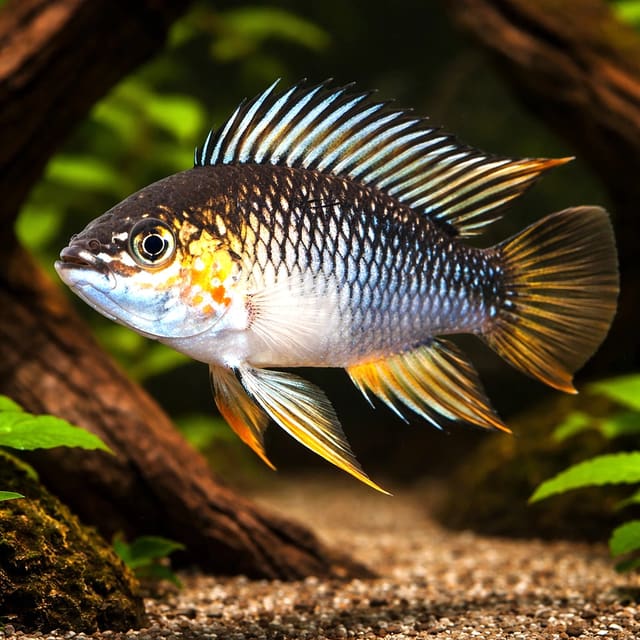
Opal Dwarf Cichlid (Apistogramma sp. opal)
22–27°C · pH 6–8
£12.99

The Red Point Dwarf Cichlid (Apistogramma sp.) is a small South American cichlid, sold as one live fish per purchase at 2.5–3 cm or in the XL size. It suits a matured, well-filtered aquarium with caves, plants and wood, shared with a shoal of quick dither fish.
Apistogramma sp.
Save when buying multiple fish. Each quantity is one fish; sex and pair formation are not guaranteed unless the selected variant explicitly states them.
The Red Point Dwarf Cichlid (Apistogramma sp.) is a small South American cichlid, sold as one live fish per purchase at 2.5–3 cm or in the XL size. It suits a matured, well-filtered aquarium with caves, plants and wood, shared with a shoal of quick dither fish.
Cichlids are a family of roughly 1,800 accepted species, not one care type. Before buying, identify the exact species and source, then compare adult measurement, usable tank dimensions, social system, territory, tested water, diet and an exit plan. No family-wide minimum tank, water range or tank-mate list is safe.
Maintain these water conditions for optimal health and vibrant colors
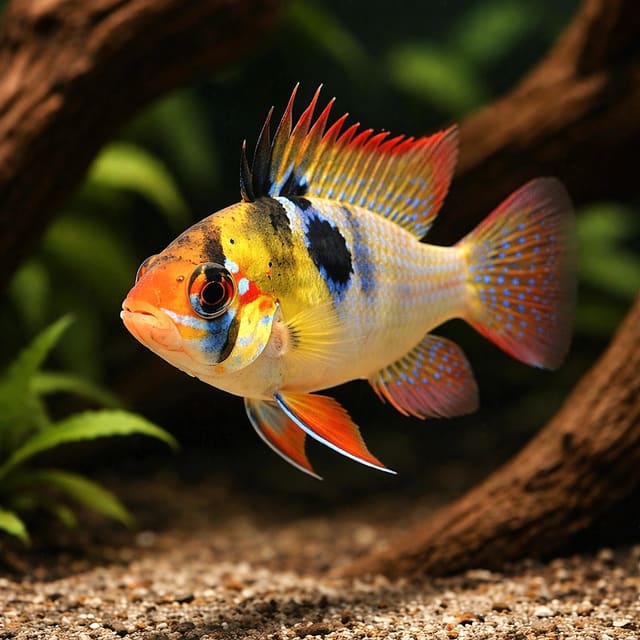
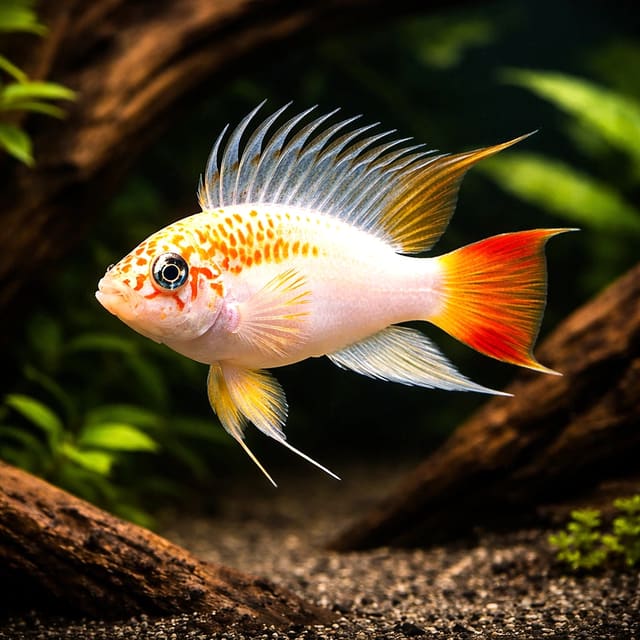
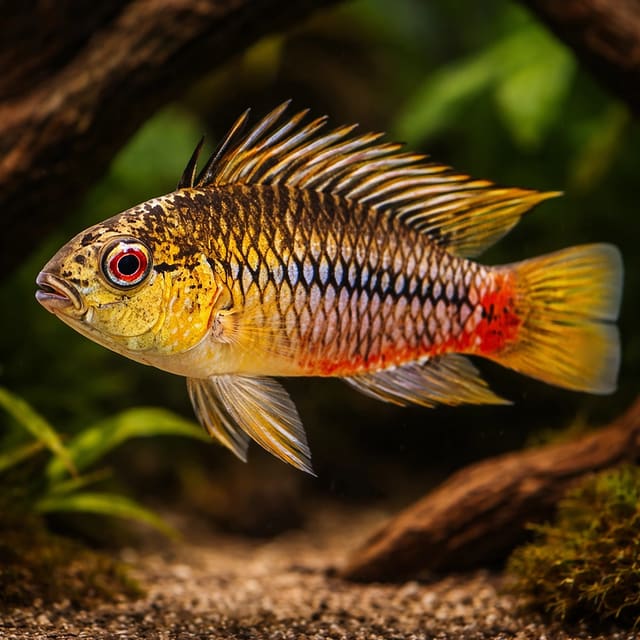
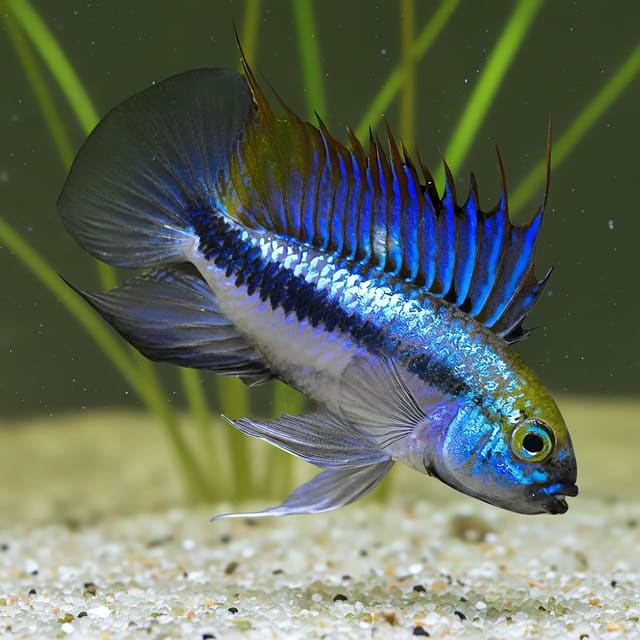
The Red Point Dwarf Cichlid is a small South American cichlid from the genus Apistogramma, sold here as one live fish in the size you choose. Red Point is a trade name rather than a scientific one, so the fish carries the label Apistogramma sp. It does best in a matured, well-filtered aquarium furnished with caves, plants and wood, alongside a shoal of quick, small companions that help it feel secure without crowding its patch.
The World Register of Marine Species lists Apistogramma as an accepted genus in the cichlid family, Cichlidae. The Wikipedia account of the genus describes a large group of freshwater dwarf cichlids native to South America and widely kept in aquariums, which mostly feed on tiny animals and whose breeding behaviour varies with the exact species. That last point matters here. The exact species has not been identified, so the care advice here follows the genus Apistogramma and its care group. In practice, the water values, tank sizes and feeding routine on this page come from the UK trade body OATA's advice for dwarf cichlids, and they are chosen to keep you inside safe, stable limits.
Two sizes are offered: 2.5–3 cm and XL. The XL size is sold by that label rather than by a centimetre measurement. The size you select is the size supplied, not the adult size. Dwarf cichlids stay small, and OATA notes that the larger species do not exceed 10 cm, but with the species unknown no single adult length can be quoted for this fish. Plan the aquarium around the advice below rather than around a number.
| Suits | A matured, stable aquarium with caves, plants and wood, looked after by someone who tests the water every week |
|---|---|
| Supplied as | One live fish per purchase, at 2.5–3 cm or in the XL size |
| Scientific label | Apistogramma sp., family Cichlidae |
| Water (OATA dwarf cichlid advice) | 22–27°C, pH 6.0–8.0, general hardness 4–12°dH |
| Aquarium | At least 60 litres for a pair kept on their own; at least 80 litres will be needed to mix them with other fish |
| Behaviour | Can be territorial, especially when breeding; best with a shoal of quick dither fish |
| Diet | Good-quality flake or granules, plus small live or frozen foods |
Dwarf cichlids are popular for their small size and bright colours, and an Apistogramma brings real cichlid character to a modest aquarium. Expect a fish that takes an interest in caves and shelter, treats a patch of the tank as its own, and relies on its surroundings to feel secure. Cover to retreat into and a shoal of dither fish nearby provide that security. Without cover, and alongside very active or boisterous companions, a shy Apistogramma will not do well. OATA also notes that some dwarf cichlids are more demanding than others about water quality and tank set-up, so treat this as a fish for a settled, well-run aquarium rather than a newly filled one.
Sex is guaranteed only when the selected option explicitly states male or female. This Red Point Dwarf Cichlid listing has no sex-guaranteed option. Buying two fish therefore does not guarantee one of each sex, which is worth knowing if you are hoping for a pair.
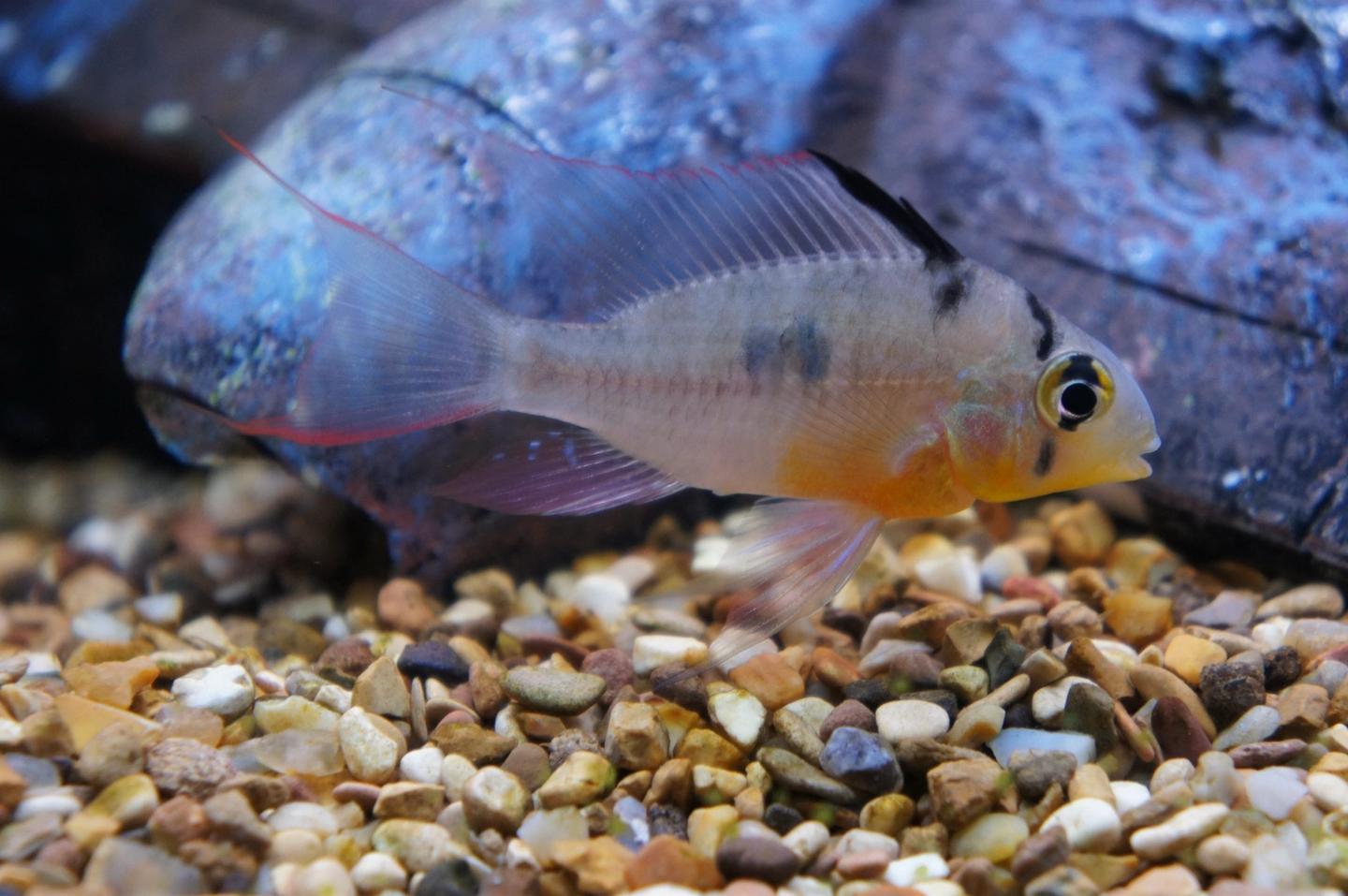
Gallery images have been digitally enhanced to improve image quality. Natural colour, pattern, size and maturity can vary between live animals. Judge a new arrival on its health and behaviour rather than on how closely it matches the photographs.
According to the OATA care sheet for dwarf cichlids, these fish are usually undemanding of water chemistry. Water quality is a different matter. OATA stresses that good husbandry is essential because dwarf cichlids can be stressed by even the smallest amounts of ammonia. For this fish, clean and stable water matters far more than hitting an exact pH.
The figures below are OATA's general guide for the dwarf cichlid group as a whole. OATA advises checking for any requirements particular to a species before buying, and because this fish's species is unknown, the sensible course is to hold your aquarium steadily within these limits and avoid sudden swings.
| Temperature | 22–27°C |
|---|---|
| pH | 6.0–8.0 |
| General hardness | Soft to medium, 4–12°dH |
| Carbonate hardness | Soft to medium, 3–10°dKH |
| Ammonia | Zero |
| Nitrite | Zero |
| Nitrate | No more than 20 mg per litre above your normal tap water level |
Fish release ammonia into the water all the time, and it is toxic. The RSPCA's guidance on the fish environment explains how a working biological filter lets beneficial bacteria break it down: ammonia is converted to nitrite, which is also toxic, and then to nitrate, which is safer. That is why the table asks for zero ammonia and zero nitrite, and why nitrate is held within a set margin of your tap water rather than left to climb.
For a small cichlid that OATA describes as easily stressed by ammonia, this cycle is the heart of good care. A tank with a working, matured filter and a steady weekly routine gives the fish far more than any adjustment to pH or hardness could.
If you are new to testing, our guide to aquarium water parameters and what to test explains each reading and why it matters. Once you have results, the water parameter matcher lets you compare them with the ranges above before your fish arrives.
OATA's general rule is to buy an aquarium as large as you reasonably can, because a larger volume keeps temperature and water quality more stable. For dwarf cichlids it gives two clear figures. If just a pair is being kept, an aquarium of at least 60 litres is recommended. To keep them with other fish, an aquarium of at least 80 litres will be needed.
| Your plan | Aquarium to allow |
|---|---|
| A pair of dwarf cichlids on their own | At least 60 litres |
| Dwarf cichlids with dither fish or other companions | At least 80 litres, and larger is better |
| Hoping the fish will breed in a community tank | Enough space that every other resident can keep clear of a breeding territory |
Whatever the size of the tank, a filter is always essential. No fish should be kept without a well set up and maintained filter, because the bacteria living in it deal with the waste the fish produce. Mature the filter before the fish arrives. Our step-by-step guide to setting up a first tropical tank covers preparing and maturing an aquarium before livestock goes in.
Use aquarium gravel or sand as the base, and ideally include live plants, which give cover, especially for the shyer members of the group. If you prefer not to use live plants, plastic plants and suitable ornaments do the same job. OATA suggests plant pots, model caves, wood and leaf litter as shelter.
Shelter is not decoration for this fish. Some dwarf cichlids can be territorial, especially when breeding, and even well-settled pairs will often chase each other, so plenty of cover is essential. A fish that is being chased needs somewhere to go, and a well-furnished tank gives it that without you having to step in.
The "sp." in Apistogramma sp. is the usual way of writing a genus name when the species is not named. It tells you what kind of fish this is, a dwarf cichlid from a large South American genus, without pinning it to one species and its particular preferences. That shapes how you plan, and it is easy to manage.
None of this makes the fish difficult. It simply means looking after it the way careful keepers look after any dwarf cichlid: stable water, plenty of cover and patient observation.
Wikipedia notes that Apistogramma mostly feed on tiny animals, and OATA describes dwarf cichlids in the aquarium as omnivores that will take most food types. The two fit together neatly in practice: a good-quality prepared food every day, with small live or frozen foods alongside it.
Feed dwarf cichlids once a day, and only give what they can eat within a few minutes. Take care not to overfeed. Uneaten food breaks down and releases toxic waste into the water, which undoes the work of your filter and water changes.
Watch this fish at feeding time. Apistogramma can be quite shy, and OATA notes that they will not do well alongside very active or boisterous tankmates. If faster fish are clearing the food before the cichlid reaches it, that is a sign the mix of fish needs rethinking, not a reason to add more food.
In a mixed aquarium, check that the cichlid is actually eating rather than assuming it is. Watch the first minute or two of each feed. Small granules or frozen foods that drift down towards its shelter give a shy fish a fair chance, while flake that is snapped up at the surface may never reach it.
If you see these, feed less and use the siphon to lift out uneaten food at the next water change.
Good husbandry is what keeps a dwarf cichlid well, and OATA's weekly routine is simple enough to follow exactly.
A quarter of the water each week is a gentle change for the fish and steadily removes the waste that the filter turns into nitrate. Keeping to the same day each week makes the routine easy to hold, and pairing it with the weekly test means you always know what the water was like before you changed it.
Every fish varies a little in behaviour and appearance, so it is changes that give the early warning. OATA lists these to keep an eye on:
If you notice any of these, test your water quality first, then get in touch with us for further guidance.
A healthy dwarf cichlid has clear, bright eyes, undamaged fins, intact scales, no ulcers or bumps, and swims normally. Those are the same things to look for on arrival day and through the first few weeks.
Your fish is hand-bagged in pure oxygen and packed in an insulated poly box, with a heat pack when the weather calls for it. A licensed live-animal courier carries the parcel on a tracked service, and we email you the tracking number and your confirmed delivery date so you know when to be in. The full terms are on our delivery and Live Arrival Guarantee page.
If anything has gone wrong, contact us the same day, with WhatsApp the fastest route, and send your order number with the unboxing video. We will then arrange a replacement or refund. The guarantee also depends on someone being at the address to receive the parcel and on the parcel being opened and inspected on the day it arrives.
Before any fish goes in, check that ammonia and nitrite both read zero. Then add fish slowly. The beneficial bacteria in a matured filter need to increase every time more fish are added and feeding increases. Overstocking, or stocking too quickly, can result in what OATA calls new tank syndrome: there are not enough nitrifying bacteria to cope with the extra waste, ammonia and nitrite rise to unhealthy levels, and fish may become ill or die.
So if this cichlid is joining an existing community, let it settle before adding anything else, and keep testing through the first weeks. Apistogramma can be quite shy, so some time spent in cover is expected at first. A fish that hides all the time, stops eating or shows any of the warning signs above needs its water checked straight away.
Dwarf cichlids can live in a community aquarium, but OATA stresses that care has to be taken when mixing them with other species, because they can be territorial, especially if breeding. Every other resident needs enough space should the cichlids start to breed, which is one reason an aquarium of at least 80 litres will be needed before you mix these fish with others.
| Tank mate type | How it fits |
|---|---|
| Shoals of small, quick dither fish | The best choice. Dither fish give dwarf cichlids a sense of security and are quick enough to swim away if the cichlids become territorial. |
| Very active or boisterous fish | Avoid. Apistogramma can be quite shy and will not do well in aquariums with very active or boisterous tankmates. |
| Fish that disturb spawning sites or eat fry | Avoid if you intend to breed your cichlids. |
| Fish that need very different water | Choose companions that are comfortable within the same temperature and water range. |
Dither fish are a shoal of other fish kept with a cichlid to give it a sense of security. The qualities that matter are the ones OATA names: they are quick enough to get out of the way if the cichlid turns territorial, and they should not be so active or boisterous that they unsettle a shy Apistogramma. Keep them as a proper shoal rather than a token few, and make sure the tank has the 80 litres or more that mixing requires.
Expect some chasing even when things are going well, because even well-settled pairs will often chase each other. That is why cover is essential rather than optional. If one fish is pursued constantly and has nowhere to go, add more shelter or rethink the stocking before the stressed fish starts to show the warning signs described in the care section.
Breeding behaviour in Apistogramma varies depending on the exact species, and with this fish's species unknown, no single spawning method can be described with confidence. The dwarf cichlid advice is still clear on three points: these fish are especially territorial when breeding, tankmates need enough space should breeding begin, and anyone intending to breed them should avoid tank mates that might disturb spawning sites or prey on the fry. Sex cannot be chosen on this listing, so two fish bought together may not turn out to be a male and a female.
If you are still deciding on a species, you can browse our South American cichlid range to compare other dwarf cichlids. Each has its own needs, so treat anything you find there as a separate choice to research, not as a ready-made companion for this fish.
Its exact adult size cannot be given, because the species has not been identified. Dwarf cichlids stay small as a group, and OATA notes that the larger species do not exceed 10 cm. Fish are supplied at 2.5–3 cm or in the XL size, and the size you select is the size you receive.
Following the OATA dwarf cichlid care sheet, a pair kept on their own should have an aquarium of at least 60 litres, and at least 80 litres will be needed to keep them with other fish. A larger tank keeps temperature and water quality more stable.
For this Apistogramma sp., plan space around a pair: at least 60 litres for two fish kept on their own. Sex cannot be chosen, so two fish may not be a male and a female. Give each fish its own cave or shelter, and only add more cichlids if the tank is large enough.
It suits a keeper whose aquarium is already matured and stable. Dwarf cichlids are usually undemanding of water chemistry, but they can be stressed by even the smallest amounts of ammonia and need care when mixed with other fish. Weekly testing and a 25% weekly water change keep it on track.
The genus mostly feeds on tiny animals, and dwarf cichlids take most aquarium foods. Offer a good-quality flake or granule, with small live or frozen foods such as daphnia, brine shrimp or tubifex. Feed once a day, giving only what is eaten within a few minutes.
The OATA dwarf cichlid care sheet gives 22–27°C, pH 6.0–8.0 and general hardness of 4–12°dH as broad guidance for the group. With the species unidentified, keep conditions stable within that range and avoid sudden changes.
It can be territorial, especially when breeding, and even well-settled pairs will often chase each other. Plenty of caves, plants and wood give a chased fish somewhere to retreat, and quick dither fish can simply move out of the way.
Shoals of small dither fish suit it best, because they help the cichlid feel secure and are quick enough to swim away if it turns territorial. Avoid very active or boisterous tankmates, and if you plan to breed it, avoid fish that might disturb spawning sites or prey on the fry.
It is hand-bagged in pure oxygen, packed in an insulated poly box with a heat pack when the weather calls for it, and carried by a licensed live-animal courier with tracking. Someone must be in to receive it. Film a continuous unboxing video from the sealed parcel to the fish in the bag, open and check it the same day, then float the bag for 20–30 minutes before releasing the fish without its bag water.
No reviews for this item yet. Bought one? Honest reviews only, good or bad.
What customers say about ordering from us
I have a small group of long finned mountain minnows. So was delighted to be able to order ten of this variety to increase the genetics in my tank . The ones I recieved are healthy but it’s to early to give a verdict on wether they are of a long finned type since they are small currently.
Gordon Walker · 23 Sept 2026
100% success travel and "installation". Pleased with quality of purchase. The Siamese fighter a bit "shy" so have not yet seen him at his best yet but looking good. Happy customer. GG
George E Garratt · 21 Sept 2026
Reviews of our shop, collected by Judge.me, an independent third-party review collector. Newest first.