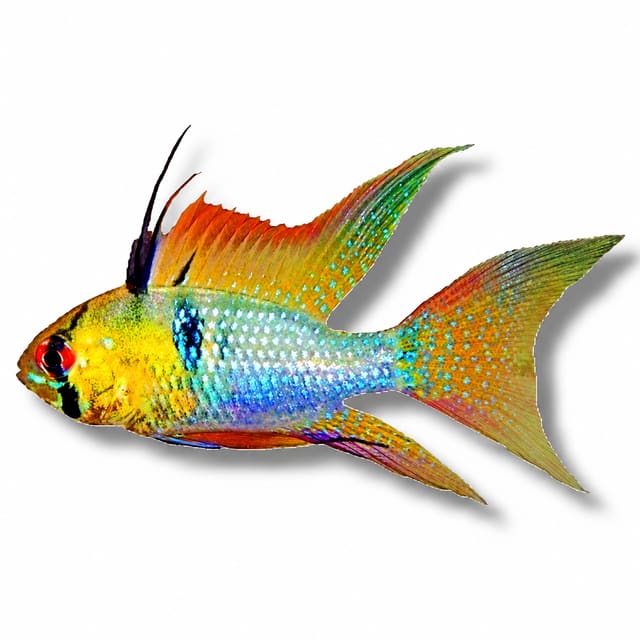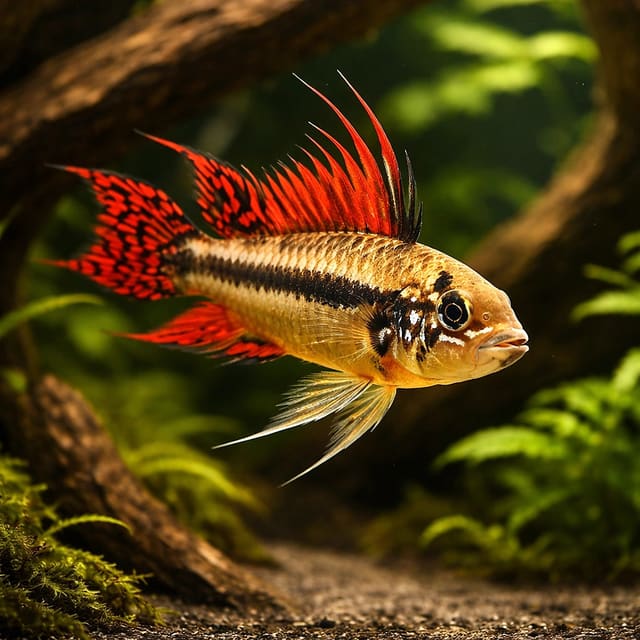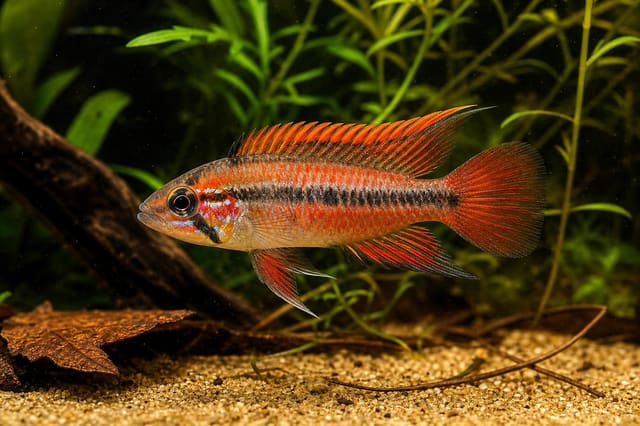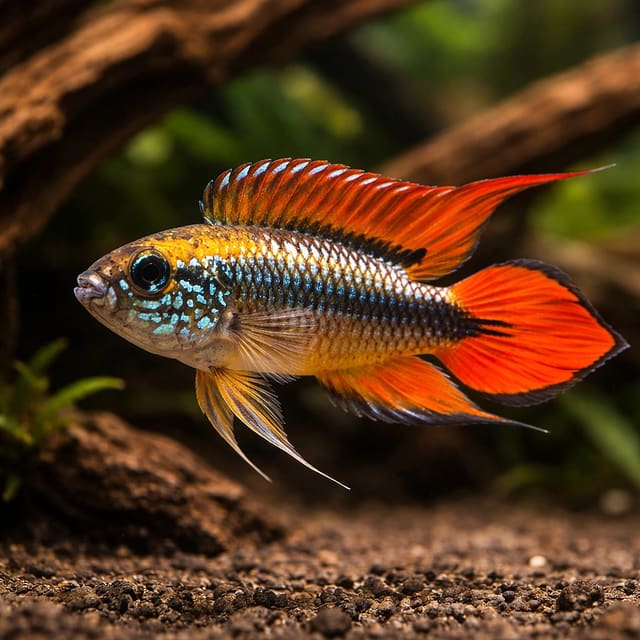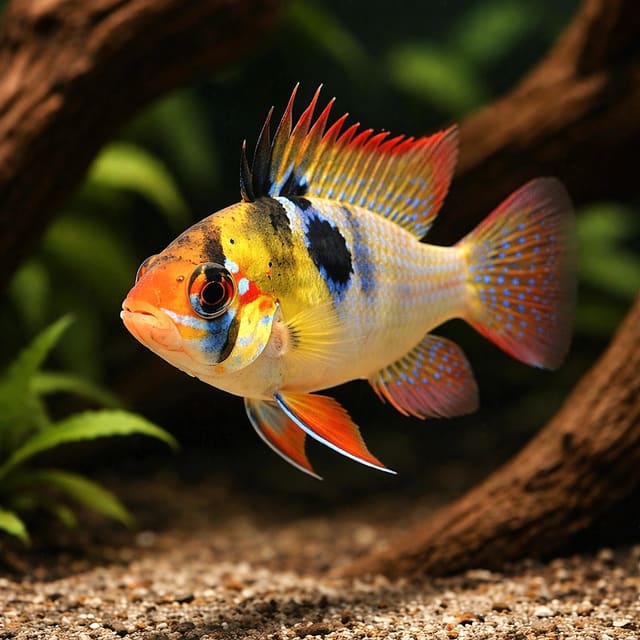
Asia Form Ram Cichlid (Mikrogeophagus ramirezi)
27–30°C · pH 4–7 · 54L
£5.99

The Red-Tailed Dwarf Cichlid (Apistogramma macmasteri) is a freshwater cichlid from Colombia’s upper Meta River drainage that reaches 7 cm. It suits a structured aquarium; the FishBase and Seriously Fish ranges overlap at 24–28°C, pH 6.0–6.5 and 2–4 dGH, with a single, pair or carefully planned group. Sold individually in 3 - 4 cm and XL dispatch sizes.
Adult size is the maximum length this species reaches at full maturity (scientific sources). The livestock you receive will be younger and smaller — pick a size above for the actual shipping size. Product-photo provenance and any image-specific limitations are stated on the listing.
Apistogramma macmasteri
Save when buying multiple fish. Each quantity is one fish; sex and pair formation are not guaranteed unless the selected variant explicitly states them.
The Red-Tailed Dwarf Cichlid (Apistogramma macmasteri) is a freshwater cichlid from Colombia’s upper Meta River drainage that reaches 7 cm. It suits a structured aquarium; the FishBase and Seriously Fish ranges overlap at 24–28°C, pH 6.0–6.5 and 2–4 dGH, with a single, pair or carefully planned group. Sold individually in 3 - 4 cm and XL dispatch sizes.
Adult size is the maximum length this species reaches at full maturity (scientific sources). The livestock you receive will be younger and smaller — pick a size above for the actual shipping size. Product-photo provenance and any image-specific limitations are stated on the listing.
Cichlids are a family of roughly 1,800 accepted species, not one care type. Before buying, identify the exact species and source, then compare adult measurement, usable tank dimensions, social system, territory, tested water, diet and an exit plan. No family-wide minimum tank, water range or tank-mate list is safe.
Maintain these water conditions for optimal health and vibrant colors
The Red-Tailed Dwarf Cichlid (Apistogramma macmasteri) is a small freshwater member of the cichlid family from South America. FishBase places it in Colombia’s upper Meta River drainage, including the Guaytiquía and Metica rivers of the Orinoco basin, and records a maximum adult length of 7 cm total length. It is a benthopelagic fish, so plan its surroundings around the lower part of the aquarium rather than treating open water alone as usable space.
This cichlid suits a keeper who can maintain warm, soft, slightly acidic water and provide caves, shade and visual barriers. Its compact adult size does not remove the need for territory. Dwarf cichlids may become territorial, especially when breeding, and even well-settled pairs will often chase one another. The aquarium therefore needs enough floor area and enough separate shelters for a fish to move out of sight.
Choose it when you can measure the aquarium’s temperature, pH and hardness before purchase and keep those values stable. It is a poor match for a busy aquarium dominated by very active or boisterous fish. A calm, carefully screened community can work when every occupant shares the same water requirements and has enough room to withdraw from breeding territory.
For other fish from the same region and broad aquarium category, browse our South American cichlids. Treat each species as a separate compatibility decision rather than assuming that two South American cichlids can share an aquarium.
One purchase supplies one Red-Tailed Dwarf Cichlid in the selected size. The live size selector shows 3 - 4 cm and XL. The size you select is the size supplied, not the adult size. Use the 7 cm maximum recorded length when planning permanent space, cover and stocking; a dispatch grade is not a promise of sex, age or eventual individual size.
FishBase records the 7 cm maximum as total length. Seriously Fish records smaller sex-specific standard lengths, but the 7 cm figure remains the practical planning maximum for this offer. Standard length excludes the tail, and individual fish need not finish at exactly the maximum.
Sex is guaranteed only when the selected option explicitly states male or female. This Red-Tailed Dwarf Cichlid listing has no sex-guaranteed option.
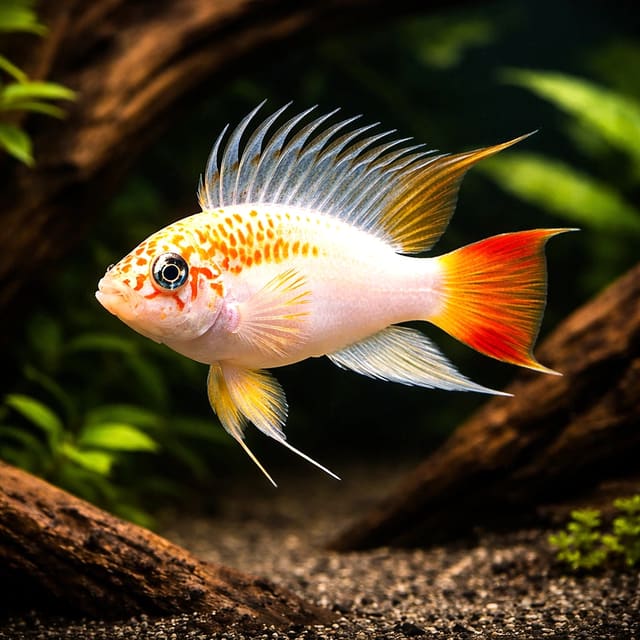
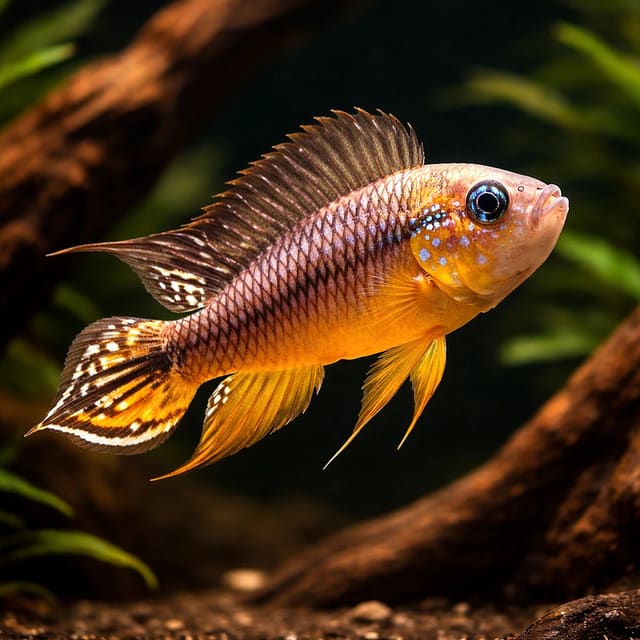
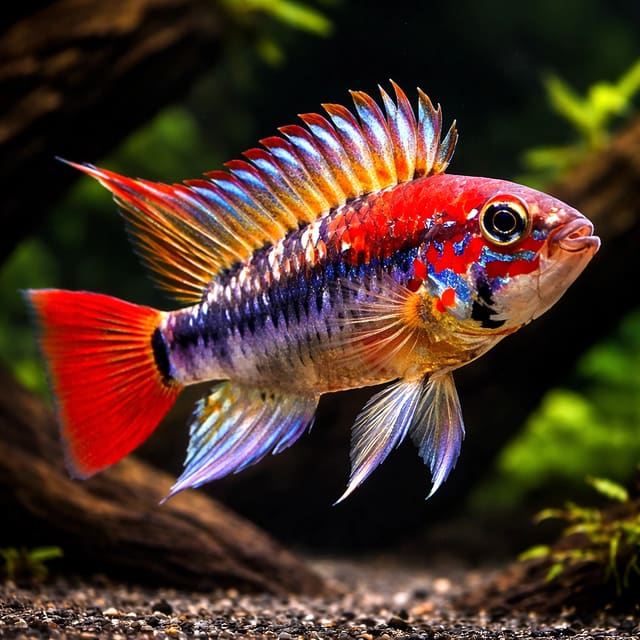
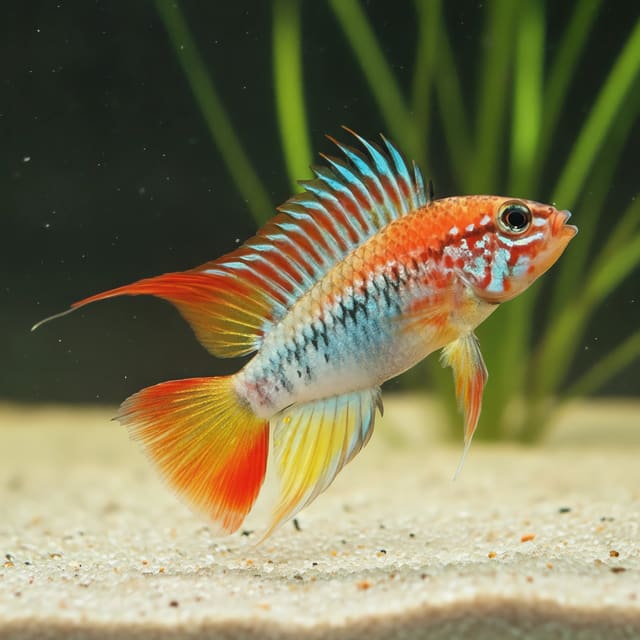
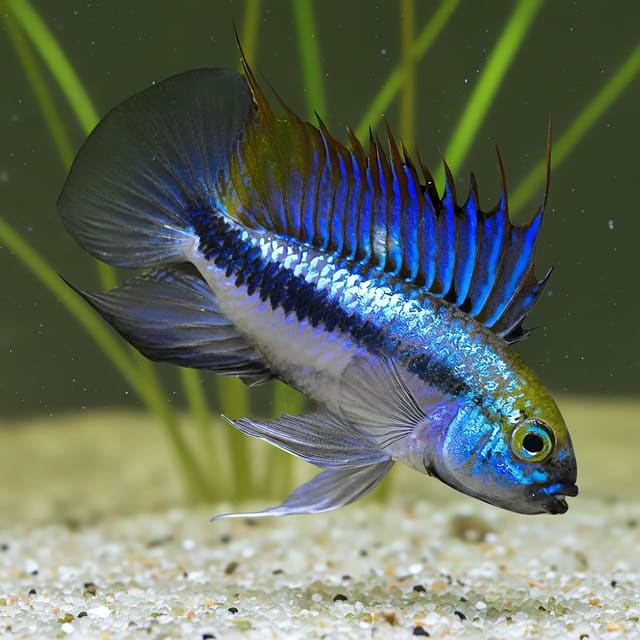
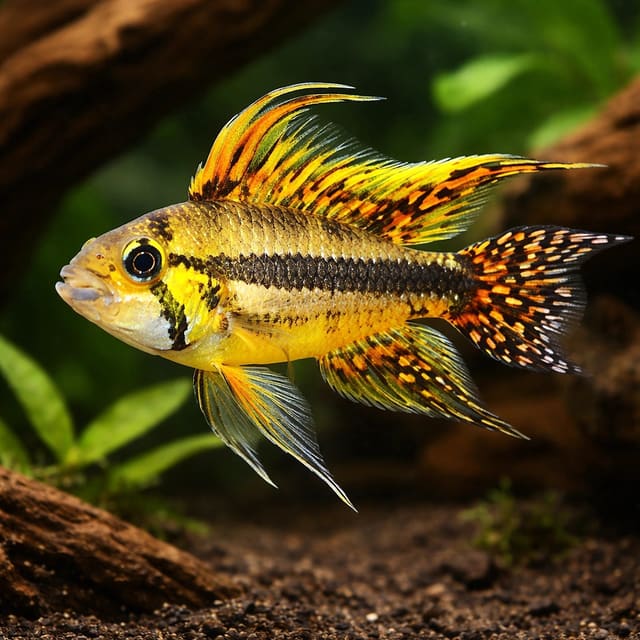
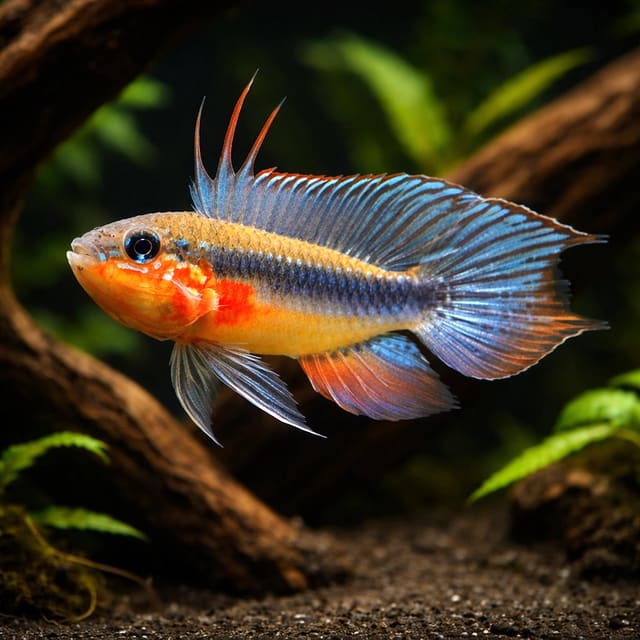
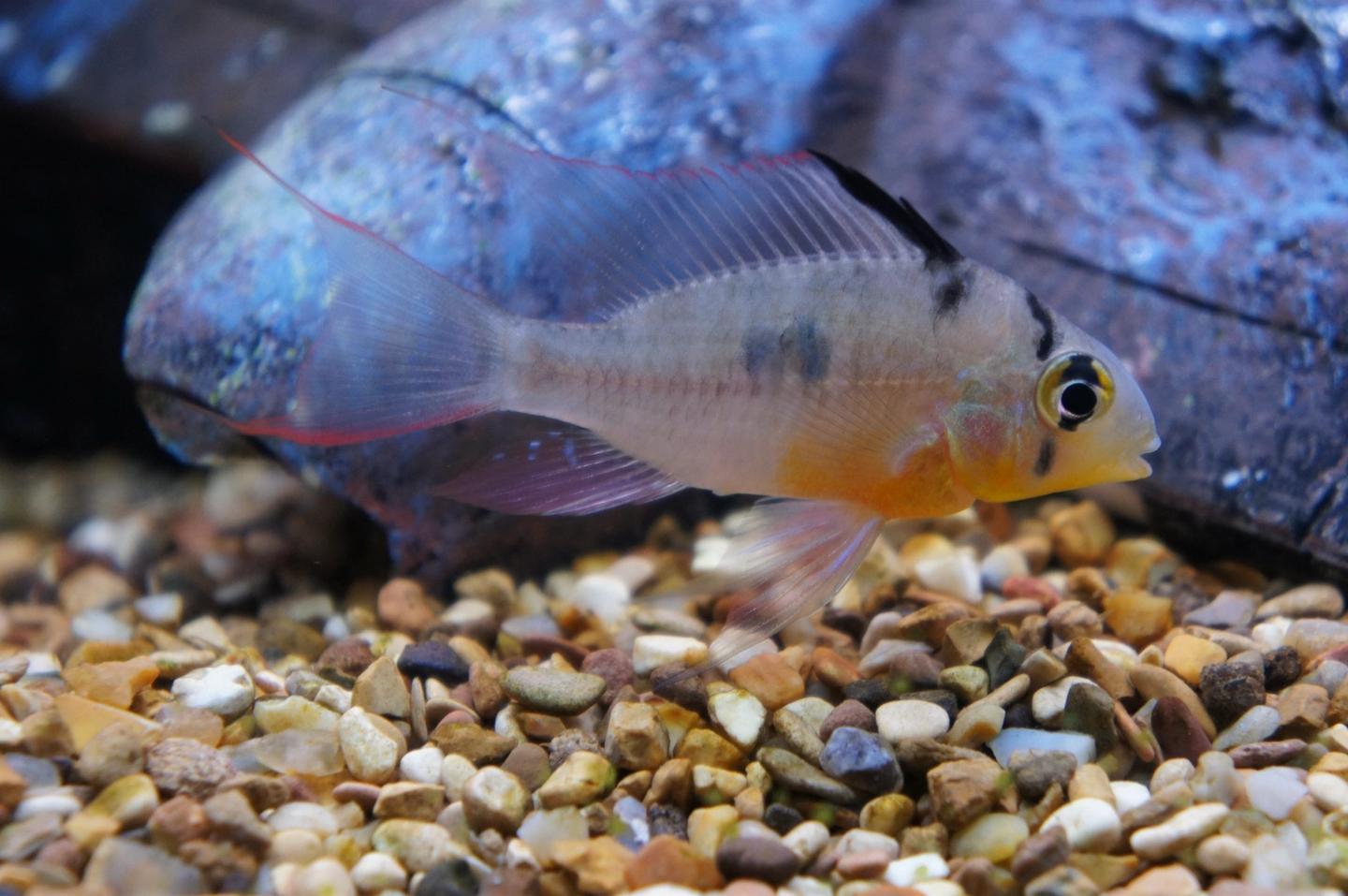
Some gallery images have been digitally enhanced to improve image quality. They show the listed type of animal rather than guaranteeing the exact markings of the individual supplied, so natural colour and pattern can vary.
Do not use gallery colour, fin extension or body size to decide the sex or life stage of the animal supplied. The visible selector describes dispatch size only, while the offer paragraph above gives the complete quantity and sex terms.
Keep this species at 24–28°C, pH 6.0–6.5 and 2–4 dGH. These routine values are the overlap of the FishBase environmental range and the Seriously Fish aquarium range, giving a target that sits inside both. Measure all three rather than relying on water being described only as warm or soft.
For space, Seriously Fish calls for a base measuring at least 45 × 30 cm and gives approximately 41 litres for a single or pair, with larger quarters for a group. OATA’s dwarf-cichlid guidance uses at least 60 litres for a pair and at least 80 litres when dwarf cichlids are mixed with other fish. Those more cautious volumes are group planning figures, not a species-specific optimum.
| Suits | Not suited to |
|---|---|
| Warm water at 24–28°C | An aquarium outside the shared temperature range |
| Soft water at 2–4 dGH | Water that cannot be kept within the stated hardness |
| Caves, shade and broken sight lines | An exposed layout with little cover |
| A single, pair or carefully planned group | A group placed in single-or-pair floor space |
| Calm, screened companions | Very active or boisterous tank mates |
Use the larger plan whenever a community, group or breeding territory will place extra demands on the same floor area. Aquarium volume is useful, but base dimensions, shelter placement and the number of territories determine how effectively that water volume can be used.
Start with a base of at least 45 × 30 cm for a single or pair, and increase the footprint for a group. Seriously Fish associates that base with approximately 41 litres, while OATA recommends at least 60 litres for a pair and at least 80 litres for a mixed aquarium. Using the larger OATA planning figure gives more room for cover and separation without changing the species’ water requirements.
FishBase records an aquarium length of at least 60 cm. Check both the aquarium’s external length and its internal base area because a tall, narrow aquarium may hold a similar volume while offering less territory along the bottom.
Prepare and mature the aquarium before the fish arrives. Our first tropical aquarium guide explains the setup sequence. The working aquarium must already have an established biological filter capable of processing the waste created by its occupants.
Do not plan a small temporary aquarium around the dispatch measurement. The permanent layout should accommodate the 7 cm planning maximum from the beginning, including the caves, wood, plants and clear routes needed to reduce repeated encounters.
Use a soft sandy substrate with wood roots or branches arranged to create shade, caves and broken sight lines. Seriously Fish also identifies ceramic flowerpots, lengths of plastic pipe and other suitable artificial structures as useful shelter. OATA adds aquarium gravel or sand, live plants, model caves, wood and leaf litter to the range of appropriate furnishings.
The purpose of the layout is practical: a fish being chased should be able to leave the other fish’s view rather than reaching a dead end. Place shelters in separate parts of the base and turn their entrances in different directions. Dense planting or wood between them can divide one open floor into several usable areas.
Leaf litter can encourage beneficial microbe colonies as it decomposes, providing a secondary food source for fry. It can also release tannins and other substances into the water. Continue testing the aquarium rather than assuming a natural-looking arrangement will automatically produce the required pH or hardness.
Leave enough open area for observation and feeding. Cover should create choices, not make it impossible to check breathing, body condition, fins or whether each fish is eating.
Keep the aquarium at 24–28°C, pH 6.0–6.5 and 2–4 dGH. FishBase records 23–30°C, pH 6.0–6.5 and 2–4 dH, while Seriously Fish uses 24–28°C, pH 5.5–7.0 and 0–5 dGH. The stated routine targets are the overlap of those two ranges.
Test the actual aquarium rather than estimating from the tap-water area or from previous fishkeeping experience. Our water chemistry guide explains what pH, general hardness, ammonia, nitrite and nitrate measurements mean. Once measured, the water matcher can help compare the results with the target values.
OATA advises that nitrate should not exceed 20 mg per litre above the normal level in the tap water. This is not a substitute for ammonia and nitrite testing: those two readings should remain at zero.
Stability comes from a mature filter, sensible stocking and regular maintenance. Add fish slowly because the beneficial bacterial population must increase as animal numbers and feeding increase. Adding too many fish too quickly can leave the filter unable to process the extra waste, allowing harmful ammonia or nitrite to rise.
Run a well-established, maintained filter at all times. The RSPCA explains that biological filtration supports bacteria which convert toxic ammonia into nitrite and then into the safer nitrate. OATA adds that dwarf cichlids can be stressed by even small amounts of ammonia and nitrite, so both should remain at zero.
Seriously Fish describes the species as favouring gentle water movement. For an aquarium of approximately 41 litres, it identifies a filter flow of 80–125 litres per hour. Treat that figure as a worked example for that aquarium volume rather than applying it unchanged to every tank. The filter still needs enough capacity for the aquarium and its full stocking plan.
If filter media needs cleaning, do not run it under the tap. Rinse it lightly in aquarium water removed during the partial water change; this reduces the number of beneficial bacteria lost. Avoid replacing or aggressively cleaning all biological media during routine maintenance.
Respond to an unexpected ammonia or nitrite reading by checking stocking, feeding, filter flow and recent changes. Reduce the source of excess waste and continue testing. A clear-looking aquarium can still contain harmful dissolved waste, so appearance alone is not a water-quality test.
Base the diet on foods suited to a primarily carnivorous fish that feeds mostly on benthic invertebrates in nature. Seriously Fish names live and frozen Artemia, Daphnia and chironomid larvae such as bloodworm, and recommends offering live or frozen foods regularly. Many specimens will also learn to accept dried food, with pellets generally preferred to flakes.
Use appropriately small items that the fish can take without leaving excess food on the substrate. OATA’s dwarf-cichlid feeding guidance sets the portion and schedule: feed once a day and give only what can be eaten within a few minutes. Remove the assumption that a larger portion improves condition; uneaten food breaks down and adds toxic waste to the water.
Feed where you can see whether the fish approaches, takes and swallows the food. Reduced intake or a sudden lack of interest is one of OATA’s warning signs, particularly when it appears with unusual swimming, colour, breathing or hiding.
Adjust the amount to observed consumption, not to a fixed pinch or spoon measurement. Fish number, food size and food type change the amount that can be eaten within a few minutes, while the once-daily schedule remains the practical starting point.
Prepare the aquarium first by confirming the intended water values and zero ammonia and nitrite. Keep the stocking plan gradual so the established filter can respond to the added waste. These aquarium checks belong before the delivery procedure begins.
The fish is hand-bagged in pure oxygen and placed in an insulated box, with a heat pack when the weather calls for it. Read the current delivery and Live Arrival Guarantee policy before the delivery date so someone is ready to receive and film the sealed parcel.
After release, observe breathing, swimming, colour, fins and use of cover. Do not use the dispatch measurement or gallery colour as a health diagnosis. Look for changes from the animal’s own normal appearance and behaviour, then pair that observation with immediate water testing when something changes.
Check the fish daily while feeding and during ordinary activity. OATA identifies several changes that may indicate a developing problem: hanging at the surface, sitting on the bottom, erratic swimming, becoming darker or paler, increased aggression, unusual hiding, faster or slower gill movement, white spots, fluffy growths, damaged fins or scales, changes in body condition and reduced feeding.
A single observation needs context. This species uses lower areas and shelter naturally, so record what changed: whether the fish stopped leaving a familiar cave, began breathing differently, refused food or developed a visible mark. Comparing a clear description over time is more useful than labelling every use of cover as illness.
Keep disease treatment out of guesswork. The listed signs can have different causes, while water-quality correction begins with measured results. Continue the established maintenance routine and do not run biological filter media under the tap during troubleshooting.
Observation is especially important in pairs and groups because territorial pressure may appear as chasing, hiding, fin damage or reduced access to food. If one fish cannot leave another’s view, revise the cover and territory layout rather than waiting for repeated encounters to resolve themselves.
This is not a schooling fish. Seriously Fish describes a single or pair as possible in the stated base area and says that a group requires larger quarters. FishBase records several females for one male as an aquarium arrangement. Because this offer does not guarantee sex, do not build a ratio around an animal whose sex is being assumed from colour, fins or dispatch size.
A single fish removes the need to manage interaction with another Apistogramma macmasteri, but it still needs caves, shade and a structured lower area. A pair needs multiple shelters because OATA notes that even well-settled pairs often chase one another. A larger group needs more floor space, more separated caves and enough visual barriers to prevent one route or shelter becoming the only retreat.
Do not use the visible presence of two fish in a gallery image as a recommendation to buy two. The image describes a scene, while the aquarium plan must be based on space, water values, known sex information and the behaviour observed between the actual animals.
A community is conditional, not automatic. All companions must fit 24–28°C, pH 6.0–6.5 and 2–4 dGH, and the aquarium should be at least 80 litres under OATA’s mixed dwarf-cichlid plan. They also need enough room to move away if the cichlid becomes territorial during breeding.
Avoid other Apistogramma. Seriously Fish recommends that wild examples are kept alone or with small dither fish such as Nannostomus species and ideally not mixed with other Apistogramma. OATA broadly favours shoals of dither fish because they can give dwarf cichlids a sense of security and move away quickly when territorial behaviour begins.
Small dither fish are a kind named by the guidance, not a universal compatibility promise. Species, number, adult size, activity and water requirements still need checking. No shrimp, snail or bottom-dwelling fish receives a blanket approval here.
If you want a stocking assessment for a named companion, ask us with the aquarium dimensions, measured water values, existing occupants and intended numbers. Those details allow the proposed combination to be assessed against space and water rather than by common name alone.
Territorial behaviour can intensify when dwarf cichlids breed. FishBase records that the eggs are attached to the ceiling of caves and that the female cares for the eggs and larvae. Seriously Fish describes the species as a substrate spawner using crevices or cavities and says the female is responsible for post-spawning care of the eggs and fry.
Provide several caves and enough cover for other fish to move away from the chosen site. In smaller aquaria, the female may become hyper-aggressive and the male may need to be removed. That possibility is another reason to avoid treating the minimum base as spare community space.
These facts explain why a normally manageable community can change once a cave is occupied. They are not a home-breeding recipe. Continue to prioritise measured water quality, a mature filter, controlled feeding and enough territory for every adult fish.
Breeding behaviour also makes universal labels such as “peaceful” misleading. Plan for a territorial dwarf cichlid whose behaviour can vary with the aquarium, companions and reproductive activity.
It reaches a maximum recorded adult length of 7 cm total length according to FishBase. Plan the permanent aquarium around that figure rather than the dispatch size.
Plan at least 60 litres for a pair and at least 80 litres for a community; OATA sets these as dwarf-cichlid group guidance. Seriously Fish also calls for a base of at least 45 × 30 cm.
A single or pair can be kept, while FishBase also records several females for one male. A group needs larger quarters, and this offer does not guarantee sex.
Choose it only if you can maintain 24–28°C, pH 6.0–6.5 and 2–4 dGH, run a mature filter and provide several caves with broken sight lines.
Feed suitable live or frozen Artemia, Daphnia and bloodworm regularly, with an appropriately sized quality pellet as an accepted dried alternative. Offer once daily and only what it eats within a few minutes.
Keep it at 24–28°C and pH 6.0–6.5, with hardness at 2–4 dGH. These values are the overlap of the FishBase and Seriously Fish ranges.
Plan for territorial chasing, especially during breeding. Provide enough floor area, several shelters and broken sight lines so every fish can withdraw.
Suitably matched shoals of dither fish may work; Seriously Fish names small Nannostomus species for wild examples. Avoid other Apistogramma, and use caution with very active or boisterous companions.
Start filming the sealed parcel before opening it, then keep one continuous take through opening and the fish still in the sealed bag. Be present to receive it, inspect it the same day, float the bag for 20–30 minutes before releasing, and contact us the same day with the order number and video for a claim.
No reviews for this item yet. Bought one? Honest reviews only, good or bad.
What customers say about ordering from us
I have a small group of long finned mountain minnows. So was delighted to be able to order ten of this variety to increase the genetics in my tank . The ones I recieved are healthy but it’s to early to give a verdict on wether they are of a long finned type since they are small currently.
Gordon Walker · 23 Sept 2026
100% success travel and "installation". Pleased with quality of purchase. The Siamese fighter a bit "shy" so have not yet seen him at his best yet but looking good. Happy customer. GG
George E Garratt · 21 Sept 2026
Reviews of our shop, collected by Judge.me, an independent third-party review collector. Newest first.